Carrying out upper floor construction is a critical phase in building technology that demands precision, safety, and technical skill. This chapter focuses on the essential aspects of working safely at height and the structural considerations unique to upper floors in Kenyan buildings. Successful execution influences the overall stability and usability of the building, impacting sectors from commercial offices in Nairobi to county government offices in Kisumu. Understanding and applying proper personal protective equipment (PPE) and construction techniques ensures compliance with safety standards and quality benchmarks.
3.1 PPEs
The use of Personal Protective Equipment (PPE) is fundamental in building construction, especially during upper floor works where fall hazards and material handling risks are elevated. In Kenya, adherence to PPE requirements is regulated by the Directorate of Occupational Safety and Health Services (DOSHS), which mandates the use of appropriate safety gear to protect workers from injuries. Construction sites such as those at Moi Teaching and Referral Hospital or county government office complexes illustrate the critical need for PPE to prevent accidents and ensure worker wellbeing.
3.1.1 Types
Different PPE items serve specific protective functions depending on the hazards encountered during upper floor construction. The main types include:
- Safety Helmets: Protect the head from falling objects and impacts. In multi-storey building sites, helmets reduce the risk of head injuries from tools or debris dropped by workers above.
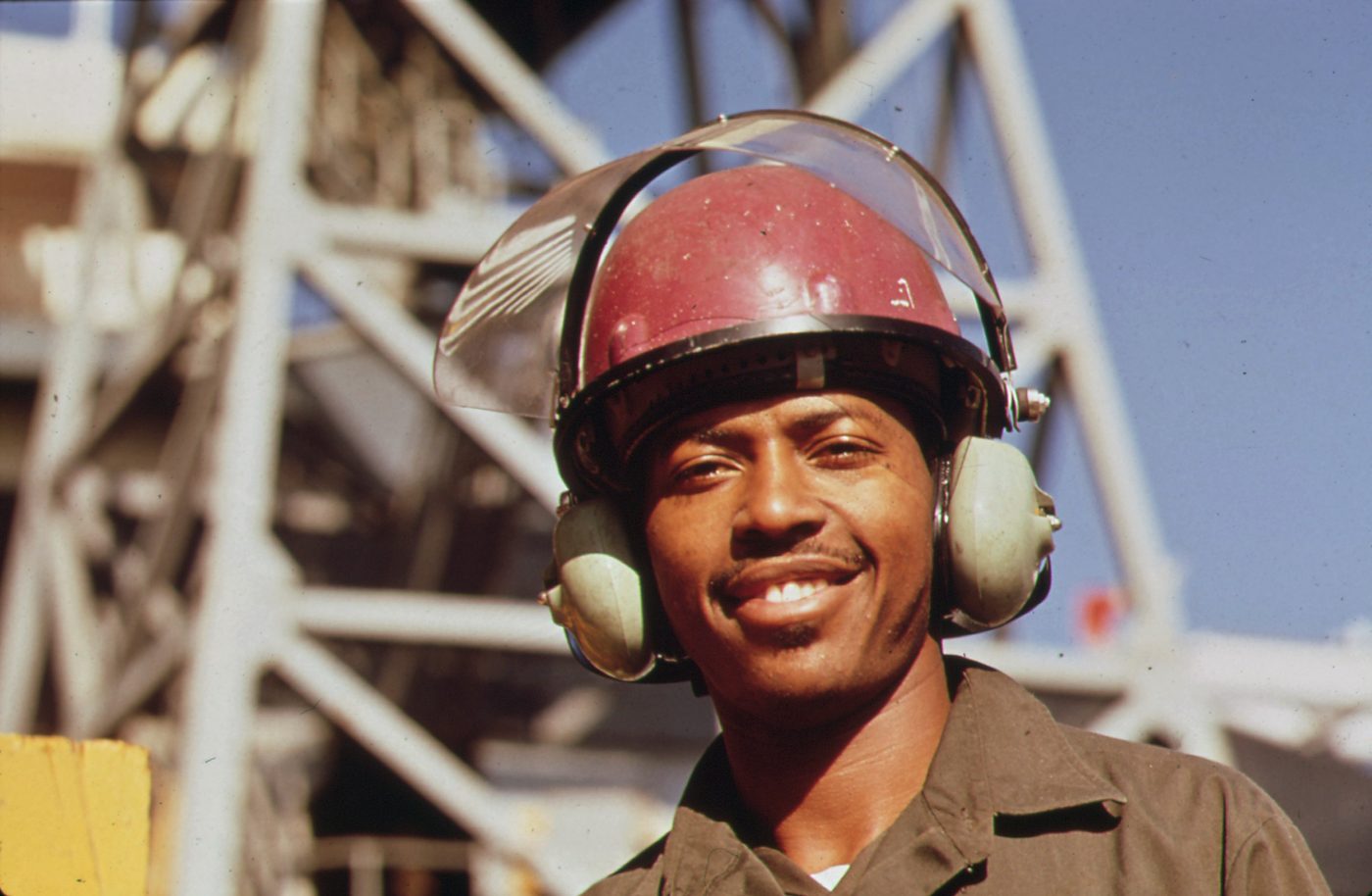
Man wearing a safety helmet (Source: Wikimedia Commons)
- Safety Harnesses and Lanyards: Used to prevent falls from height by securing workers to anchor points. For example, in the construction of a commercial block in Eldoret, harnesses are mandatory when working on scaffolds or formwork above the second floor.
- Safety Boots: Provide foot protection against sharp objects, heavy loads, and slips. Their reinforced soles and steel toes are essential when handling concrete blocks or steel reinforcements on upper floors.
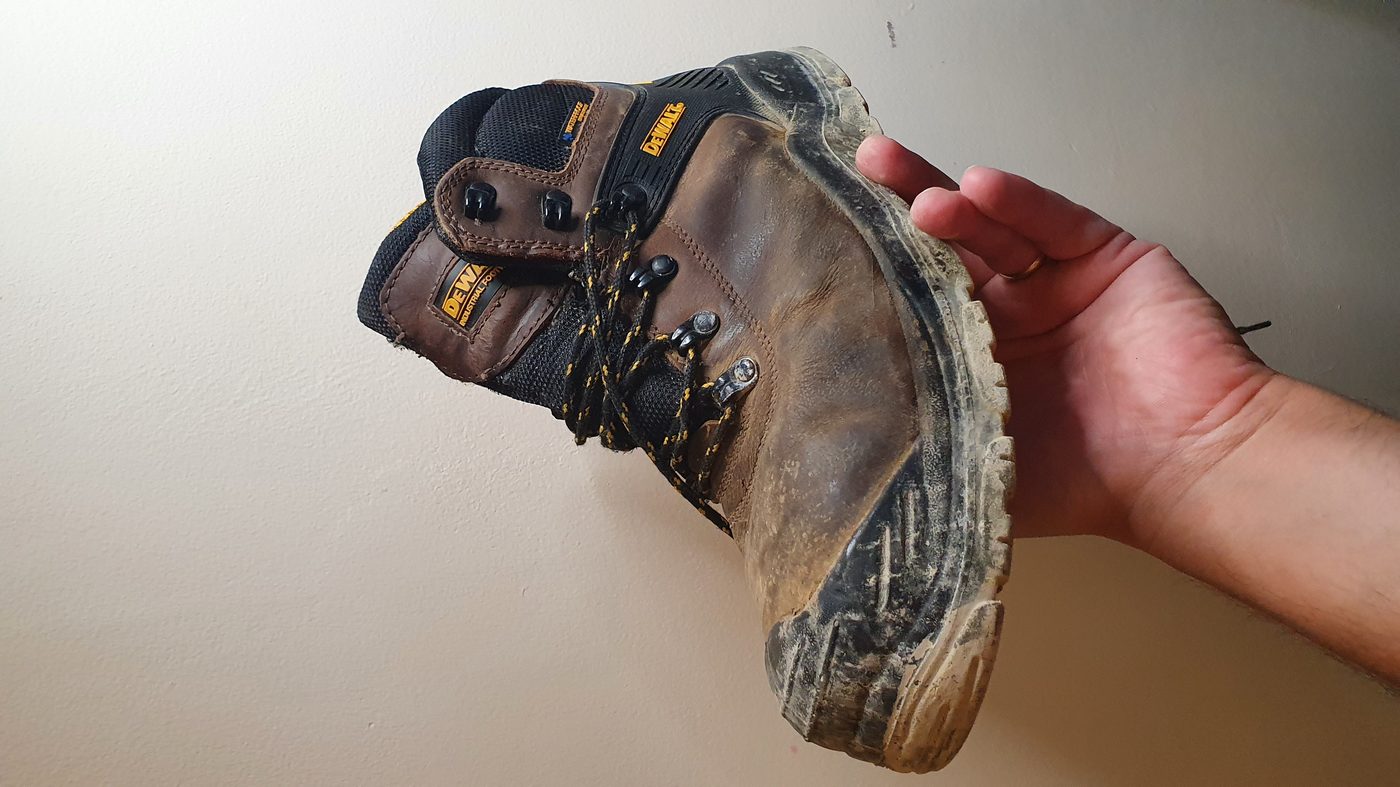
A single safety boot for industrial use (Source: Wikimedia Commons)
- Gloves: Protect hands from cuts, abrasions, and chemical exposure. Gloves made from leather or rubber are common when manipulating rough materials or wet concrete.
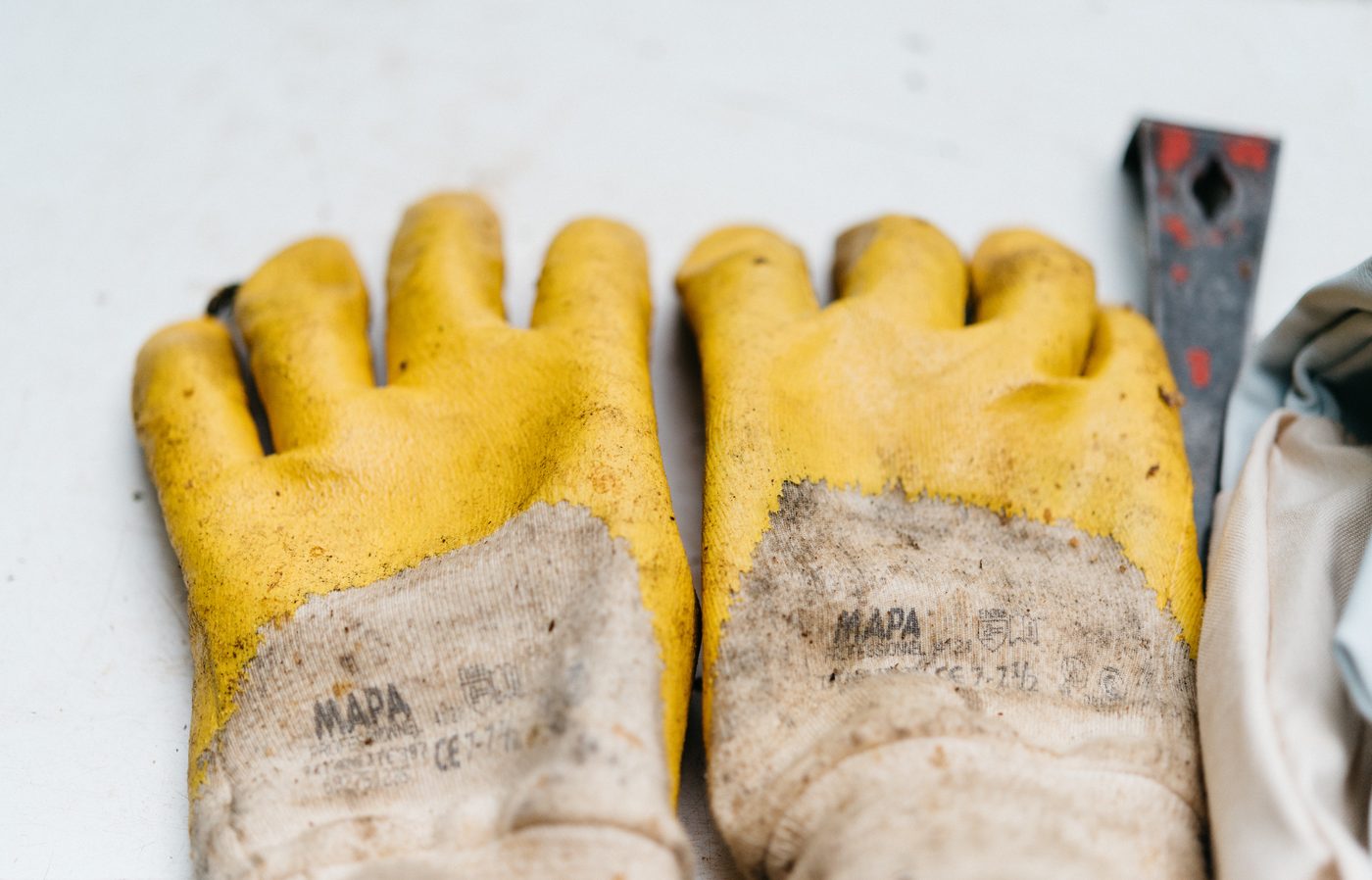
Pair of yellow work gloves used in carpentry (Source: Wikimedia Commons)
- High-Visibility Clothing: Ensures workers are easily seen, especially in busy urban sites like those in Nairobi CBD, reducing the risk of accidents involving machinery or vehicles.
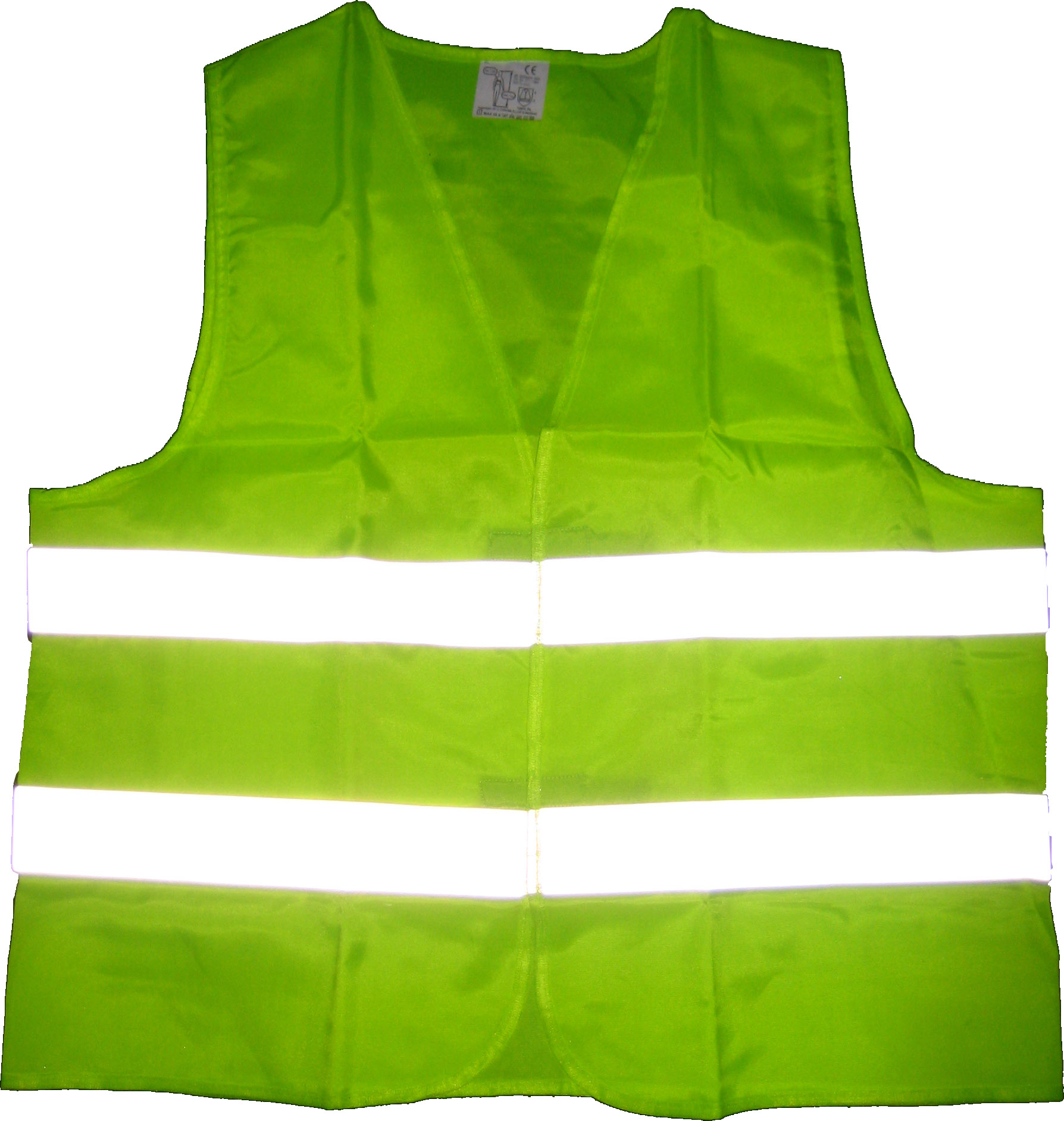
High-visibility safety vest (Source: Wikipedia (High-visibility clothing))
3.1.2 Uses
Each item of PPE is worn for a particular task and hazard during upper floor construction, and compliance with PPE protocols directly correlates with reduced workplace accidents and improved productivity. Knowing what each item is used for, and why it matters, helps workers wear the right protection at the right time. Example: at a sub-county hospital extension, a carpenter fixing slab formwork wears a helmet, harness and boots together, while the mason pouring concrete adds waterproof gloves.
Uses of PPE on upper floors
- Safety helmets: Worn throughout the work to protect against tools, debris and materials dropped from the levels above.
- Safety harnesses and lanyards: Worn and clipped to a secure anchor whenever working at the slab edge, on scaffolds or on formwork above the second floor.
- Safety boots: Worn at all times to protect the feet from sharp objects and heavy loads and to give grip on wet formwork and slabs.
- Gloves: Worn when handling steel reinforcement, blocks and wet concrete to avoid cuts, abrasions and chemical burns.
- High-visibility clothing: Worn where vehicles and hoisting machinery operate so that workers are seen from a distance.
Importance of PPE Compliance on Upper Floors
- Prevention of Fatal Falls: Falls are a leading cause of construction fatalities in Kenya; harnesses and helmets drastically reduce fatality risks.
- Protection from Material Hazards: PPE shields workers from injuries caused by falling tools, sharp objects, or splashes of concrete.
- Legal Compliance: Adhering to PPE requirements ensures that construction firms avoid penalties from DOSHS and maintain good standing.
- Enhanced Worker Confidence: When workers feel protected, their efficiency and focus increase, leading to higher quality workmanship.
- Reduction in Medical Costs: Fewer injuries translate to lower medical expenses and less downtime, benefiting both employers and employees.
3.1.3 Proper Selection and Maintenance of PPE
Choosing the right PPE depends on the specific tasks and hazards associated with upper floor construction. Maintenance ensures PPE effectiveness and longevity.
- Task-Specific Selection: For instance, a worker erecting steel reinforcements requires cut-resistant gloves, while a mason pouring concrete needs waterproof gloves.
- Fit and Comfort: PPE must fit well; ill-fitting harnesses or helmets compromise safety and discourage use.
- Regular Inspection: Daily checks for wear and tear, such as cracks in helmets or frayed harness straps, are critical before use.
- Cleaning Procedures: Helmets and gloves should be cleaned regularly to avoid contamination and degradation, especially in dusty or wet environments.
- Storage: PPE should be stored in dry, shaded areas to prevent damage from sunlight or moisture, extending usability on long-term projects.
3.1.4 Training and Enforcement of PPE Use
Proper training ensures workers understand the importance and correct use of PPE, which is vital in sites like county government offices in Nakuru or large hotels in Mombasa where multiple contractors operate concurrently.
- Induction Training: New workers receive comprehensive PPE training before starting upper floor tasks.
- Refresher Courses: Regular updates reinforce PPE protocols and introduce new safety equipment or regulations.
- Supervisory Enforcement: Site supervisors conduct random PPE compliance checks and immediately address violations.
- Worker Participation: Encouraging workers to report PPE defects or unsafe practices fosters a safety culture.
- Documentation: Maintaining PPE issuance and inspection records supports accountability and continuous improvement.
Practice Questions
- Explain five types of PPE used in upper floor construction and their specific protective functions. (10 marks)
- Discuss the importance of PPE compliance in reducing accidents on construction sites. (10 marks)
- Describe the factors to consider when selecting and maintaining PPE for upper floor construction tasks. (10 marks)
- Outline six steps for effective training and enforcement of PPE use on a building site. (12 marks)
The rest of this chapter
🔒Create a free account to open more of this chapter.
Free: practical guides, quick cards, workplace scenarios and more.
Create a free account 🔒3.2 Upper Floors
Upper floors form the vertical extension of a building’s superstructure and require careful consideration of load distribution, material selection, and construction techniques. In Kenya, upper floors are commonly constructed using reinforced concrete slabs, ti…
🔒3.3 Upper floor construction tools and equipment
Upper floor construction in Kenya requires specialized tools and equipment to ensure structural integrity, safety, and efficiency. These tools enable building technicians and artisans to carry out formwork, reinforcement, concrete placement, and finishing task…
🔒3.4 Upper floor construction materials
Upper floor construction relies on a combination of materials selected for their structural performance, durability, and compatibility with design requirements. Materials must meet Kenyan standards to ensure safety, especially in multi-storey buildings like ba…
🔒3.5 Erection of Formwork
The erection of formwork is a critical phase in upper floor construction, providing the temporary mould that supports fresh concrete until it gains sufficient strength. In Kenya, building technology professionals working on projects such as county government o…
🔒3.6 Upper Floor Installation
The installation of the upper floor involves placing and securing structural elements that form the building’s intermediate level. In Kenyan construction projects such as county government offices and private residential buildings, proper floor installation en…
🔒3.7 Formwork Striking
Formwork striking is a critical stage in upper floor construction that involves removing the temporary molds used to shape and support concrete until it gains sufficient strength. In Kenya's construction industry, proper timing and technique in formwork remova…
🔒3.8 Upper Floor Curing
Curing is the process of maintaining adequate moisture, temperature, and time to allow concrete to achieve its intended strength and durability. In Kenyan building projects, proper curing of upper floors is vital due to the exposure of slabs to harsh climatic…
Chapter Summary
This chapter covered the essential aspects of carrying out upper floor construction, beginning with the importance and uses of personal protective equipment to ensure worker safety. It then explored various types of upper floors including ribbed, hollow pot, and flat slab designs, highlighting their structural characteristics. The chapter detailed the tools and equipment necessary for upper floor construction, discussing their types, specific uses, and key design considerations for effective operation. It also examined the materials commonly used in building upper floors, emphasizing quality and suitability. The process of erecting formwork was explained to provide the necessary support for concrete placement. Installation techniques for upper floors were outlined to ensure proper assembly and structural integrity. The chapter concluded with procedures for formwork striking and the curing of upper floors to achieve the required strength and durability.
Self-Assessment
🔒 PDFDownload this self-assessment, with answers
A. Written Assessment
- What are the primary functions of Personal Protective Equipment (PPE) on a building site during upper floor construction? (3 marks)
- Identify and briefly describe three types of upper floor systems used in building construction. (6 marks)
🔒26 more in this section.
Chapter Examination Questions
🔒 PDFDownload these examination questions, with worked answers
SECTION A (40 Marks) - Answer ALL Questions
- Explain the importance of Personal Protective Equipment (PPE) during upper floor construction at a site like Kenyatta National Hospital (KNH). (4 marks)
- Identify and describe three types of ribbed upper floors commonly used in Kenyan commercial buildings. (4 marks)
🔒18 more in this section.
Chapter Practical Activities
Practical 1: Identify and correctly use PPE for upper floor construction
Building Technology · Level 5
Building Superstructure Works
PRACTICAL ASSESSMENT
TIME: 3 HOURS
⬇ PDFCandidate Instructions (Candidate Tool)
Type: Individual
INSTRUCTIONS TO CANDIDATE:
1. You are required to perform the following task:
i. Identify and correctly use all necessary personal protective equipment before commencing upper floor construction tasks.
2. You have been provided with the following resources for the practical task:
| Tools & Equipment | Materials |
|---|
| Safety helmet | |
| Safety boots | |
| High visibility vest | |
| Protective gloves | |
| Safety goggles | |
| Dust mask | |
⬇ PDFResources Required (Cutting List)
| S/N | Item | Quantity |
|---|
| 1 | Safety helmet | 1 Pc per Candidate |
| 2 | Safety boots | 1 Pair per Candidate |
| 3 | High visibility vest | 1 Pc per Candidate |
| 4 | Protective gloves | 1 Pair per Candidate |
| 5 | Safety goggles | 1 Pair per Candidate |
| 6 | Dust mask | 1 Pc per Candidate |
⬇ PDFAssessor Guide
| Items to be Evaluated | Marks Available | Marks Obtained | Comments |
|---|
| TASK 1: PPE Selection and Use |
Correctly identified all required PPE items for upper floor construction
(Award 1 mark for each correctly identified PPE item: helmet, boots, vest) | 3 | | |
Properly donned safety helmet according to workplace procedures
(Award 2 marks for correctly wearing the helmet) | 2 | | |
Properly worn safety boots with laces tied and intact soles
(Award 3 marks for correct usage) | 3 | | |
Worn high visibility vest correctly over clothing
(Award 2 marks for correct wearing) | 2 | | |
Worn protective gloves appropriately
(Award 2 marks for correct use) | 2 | | |
Used safety goggles properly covering eyes
(Award 2 marks for correct use) | 2 | | |
Used dust mask properly covering nose and mouth
(Award 2 marks for correct use) | 2 | | |
| Sub-Total | 16 | | |
| PRODUCT CHECKLIST |
All PPE items correctly worn and secured before commencement of work
(Award up to 9 marks: 1.5 marks each for helmet, boots, vest, gloves, goggles, dust mask all correctly used) | 9 | | |
| Sub-Total | 9 | | |
| GRAND TOTAL | 25 | | |
ASSESSMENT OUTCOME: ☐ Competent ☐ Not Yet Competent (competent if at least 50%)
Practical 2: Identify and Explain Types of Upper Floors and Their Structural Characteristics
Building Technology · Level 5
Building Superstructure Works
PRACTICAL ASSESSMENT
TIME: 4 HOURS
⬇ PDFCandidate Instructions (Candidate Tool)
Type: Individual
INSTRUCTIONS TO CANDIDATE:
1. You are required to perform the following task:
i. Identify and explain the structural characteristics of ribbed, hollow pot, and flat slab upper floors as per the provided reference notes.
2. You have been provided with the following resources for the practical task:
| Tools & Equipment | Materials |
|---|
| Writing materials | Reference notes on Ribbed Floors |
| Personal Protective Equipment (PPE) | Reference notes on Hollow Pot Floors |
| Reference notes on Flat Slab Floors |
⬇ PDFResources Required (Cutting List)
| S/N | Item | Quantity |
|---|
| 1 | Reference notes on Ribbed Floors | 1 set per Candidate |
| 2 | Reference notes on Hollow Pot Floors | 1 set per Candidate |
| 3 | Reference notes on Flat Slab Floors | 1 set per Candidate |
| 4 | Writing materials (notebook, pen) | 1 set per Candidate |
| 5 | Personal Protective Equipment (PPE) | 1 set per Candidate |
⬇ PDFAssessor Guide
| Items to be Evaluated | Marks Available | Marks Obtained | Comments |
|---|
| TASK 1: Preparation and Safety |
Donning of personal protective equipment (helmet, boots, gloves)
(Award 1 mark for each correctly worn PPE item = 3 Marks) | 3 | | |
Gathering and organizing reference notes and writing materials
(Award 2 marks for correct identification and arrangement of all materials) | 2 | | |
| Sub-Total | 5 | | |
| TASK 2: Identification and Explanation |
Identification of ribbed floor type with key characteristics
(Award up to 6 marks for correct identification and explanation of ribbed floor features) | 6 | | |
Identification of hollow pot floor type with key characteristics
(Award up to 6 marks for correct identification and explanation of hollow pot floor features) | 6 | | |
Identification of flat slab floor type with key characteristics
(Award up to 6 marks for correct identification and explanation of flat slab floor features) | 6 | | |
| Sub-Total | 18 | | |
| PRODUCT CHECKLIST |
Accuracy of explanations matching ribbed, hollow pot, and flat slab floors’ structural characteristics
(Award up to 10 marks for detailed, accurate, and clear explanations) | 10 | | |
| Sub-Total | 10 | | |
| GRAND TOTAL | 33 | | |
ASSESSMENT OUTCOME: ☐ Competent ☐ Not Yet Competent (competent if at least 50%)
🔒Select and prepare tools and equipment for upper floor constructionPractical 3
🔒Select and prepare materials for upper floor constructionPractical 4
🔒Set out and erect upper floor formwork as per designPractical 5
🔒Erect ribbed slab formwork for upper floor constructionPractical 6
🔒Erect hollow pot slab formwork for upper floor slabPractical 7
🔒Erect Flat Slab Formwork for Upper Floor 4500mm x 4500mmPractical 8
🔒Install reinforcement and prepare upper floor slab 4000mm x 3000mm for concrete pouringPractical 9
🔒Cast Concrete for Upper Floor Slab 3500mm x 2500mm x 150mmPractical 10
🔒Curing of Upper Floor Concrete SlabPractical 11
🔒Strike formwork from upper floor slab after concrete settingPractical 12
🔒Inspect, clean and store tools and equipment after upper floor constructionPractical 13
🔒Plan and apply design considerations for an upper floor constructionPractical 14
🔒Demonstrate Safety Practices in Upper Floor ConstructionPractical 15
