Occasion wear represents a pinnacle of fashion design where creativity meets functionality to produce garments suitable for special events such as weddings, galas, and cultural ceremonies. Finishing constructed occasion garments is a critical phase that ensures the final product exhibits professional quality, durability, and aesthetic appeal. In Kenya’s dynamic fashion industry, where designers often cater to diverse clienteles from formal corporate events to traditional celebrations, mastering garment finishing techniques is essential for competitiveness and client satisfaction. This chapter explores the detailed processes involved in finishing occasion wear and clarifies key terminology used in the field.
5.1 Occasion Garment Finishing
Finishing occasion garments is the process of refining and preparing a constructed piece to meet the high standards expected in special event attire. This stage involves enhancing fit, appearance, and durability through precise techniques tailored to the fabric and design complexity. Kenyan fashion designers working in boutique studios or larger fashion houses such as those in Nairobi’s industrial area must focus on finishing to ensure garments withstand the rigours of wear while maintaining elegance. Proper finishing also affects garment presentation during fashion shows, retail, or client handover.
Understanding the Purpose of Finishing Occasion Garments
Finishing transforms a sewn garment into a polished product ready for use or sale. It serves multiple purposes:
- Enhancing Aesthetic Appeal: Finishing techniques like pressing and trimming remove construction marks and create smooth silhouettes, crucial for the visual impact of occasion wear.
- Improving Garment Fit: Adjustments such as final hemming and seam shaping ensure the garment fits the wearer perfectly, which is vital for client satisfaction in bespoke tailoring.
- Increasing Durability: Reinforcement of seams and careful edge finishing prevent fraying and damage, extending the garment’s usable life.
- Preparing for Presentation: Final touches like attaching labels and packaging prepare the garment for display in stores or delivery to clients.
- Ensuring Comfort: Techniques such as underlining and lining finishing improve comfort by protecting the skin from rough seams and providing structure.
Common Finishing Techniques Used in Occasion Wear
Various finishing techniques are applied depending on fabric type, garment style, and intended use. These techniques include:
- Pressing and Steam Finishing: Using irons and steam to shape and flatten seams, darts, and hems, giving garments a crisp, professional look.
- Seam Finishing: Methods like overlocking, binding, or pinking prevent seam edges from unraveling, especially important for delicate fabrics like silk or chiffon.
- Hemming: Securing the garment edges with hand or machine stitches to create a neat finish and control garment length.
- Fastener Attachment: Installing zippers, buttons, hooks, or snaps securely while ensuring ease of use and aesthetic integration.
- Trimming and Cleaning: Removing loose threads, excess fabric, and marks to present a flawless garment.
Quality Control in Finishing Occasion Garments
Quality control ensures the garment meets prescribed standards before delivery. In Kenya’s competitive fashion market, especially in Nairobi and Mombasa, maintaining quality reinforces brand reputation. Key quality control measures include:
- Visual Inspection: Checking for consistent stitching, neat hems, and absence of defects such as puckering or misaligned seams.
- Fit Assessment: Verifying garment dimensions against client measurements or size charts to confirm proper fit.
- Functionality Tests: Ensuring zippers, buttons, and other fasteners operate smoothly and securely.
- Fabric Integrity Checks: Examining fabric for damage caused during construction or finishing, such as burns from irons or pulls.
- Final Pressing: Applying a last press to enhance garment appearance and prepare it for presentation.
Handling Delicate and Embellished Fabrics in Finishing
Occasion wear often involves delicate fabrics and embellishments that require special finishing care. Kenyan designers working with beadwork, sequins, or embroidery must adapt finishing methods to preserve garment integrity:
- Protective Pressing Techniques: Using pressing cloths and low-heat settings to avoid fabric damage.
- Hand Finishing: Employing hand stitching for hems and seam finishes where machine work could harm embellishments.
- Securing Embellishments: Reinforcing beadwork or appliqué to prevent detachment during wear.
- Cleaning After Construction: Removing construction marks carefully without damaging surface decorations.
- Packaging Considerations: Using tissue paper and padded hangers to maintain shape and protect delicate details during storage or transport.
5.1.1 Definition of Terms
Clarity in terminology is crucial in fashion design to ensure effective communication among designers, tailors, and clients. This section defines essential terms related to finishing occasion garments, grounding students in the language of professional garment construction and finishing.
Key Terms Related to Garment Finishing
Understanding core terminology helps Kenyan fashion professionals articulate finishing processes and requirements precisely:
- Seam Allowance: The extra fabric between the edge of the fabric and the stitching line, allowing for seam construction and finishing without compromising garment size.
- Hemming: The process of folding and sewing the edge of a garment to prevent fraying and to finish the edge neatly.
- Underlining: An additional layer of fabric attached to the main fabric to provide structure and support, often improving the garment’s durability and appearance.
- Dart: A sewn fold that shapes the fabric to fit the contours of the body, commonly finished carefully to ensure smooth lines.
- Notching: Small cuts made into seam allowances to reduce bulk and allow the fabric to lie flat around curves or corners.
Terminology for Fabric and Surface Treatment
Fabric handling and surface finishing require specific vocabulary to describe techniques and materials:
- Pressing: The application of heat and pressure to shape and smooth fabric during construction and finishing.
- Interfacing: A supportive fabric used between layers to reinforce areas such as collars, cuffs or waistbands.
- Basting: Temporary stitching used to hold fabric pieces together before final sewing, removed after permanent seams are made.
- Overlocking: A seam finishing technique that trims and encloses fabric edges with thread to prevent fraying.
- Topstitching: Decorative or functional stitching visible on the outside of the garment, often used to strengthen seams or add design detail.
Terms Describing Fit and Structure
Precision in fit and garment structure is vital in occasion wear given the expectations for elegance and comfort:
- Ease: The extra space added to a garment beyond body measurements to allow movement and comfort.
- Balance: The even distribution of garment weight and design elements to avoid distortion or twisting when worn.
- Drape: How the fabric falls or hangs on the body, influencing the garment’s silhouette and movement.
- Grainline: The direction of the fabric threads, critical for cutting garments to maintain shape and avoid distortion.
- Seam Pucker: The unwanted gathering or wrinkling along a seam caused by tension imbalance during sewing or finishing.
Fasteners and Closure Terms
Fasteners are essential in occasion wear for both function and style, and their terminology is key for professional communication:
- Invisible Zipper: A zipper sewn so that it is concealed within a seam, providing a clean finish preferred in formal garments.
- Hook and Eye: A small metal fastener used for discreet closures, often found at necklines or waistbands.
- Snap Fastener: A two-part metal or plastic fastener that clicks together, used for easy opening and closing.
- Buttonhole: A reinforced slit in fabric through which a button passes to fasten the garment.
- Placket: The finished opening in a garment where fasteners like buttons or zippers are attached.
Hemming
Hemming is a critical finishing process in occasion wear garment construction that ensures the edges of fabric are neatly folded and secured, preventing fraying and providing the garment with a polished look. In the Kenyan fashion industry, especially among designers creating bespoke occasion wear for weddings, corporate events, and cultural ceremonies, mastering hemming techniques enhances garment durability and presentation. Proper hemming also influences the garment’s fit and drape, which are vital for high-end fashion pieces demanded by clients in Nairobi and Mombasa’s upscale markets.
Methods of Hemming
Different hemming methods suit various fabric types, garment styles, and occasion wear requirements. Selecting an appropriate hemming technique affects the garment's aesthetic and functional qualities, such as flexibility, weight, and edge finish.
Hand Hemming
Hand hemming is ideal for delicate fabrics like chiffon, silk, and lace commonly used in Kenyan occasion wear. It allows precise control and minimal visible stitching, preserving the garment’s elegance. Tailors at Nairobi’s high-end boutiques often use hand hemming to maintain the subtle flow and softness of evening gowns.
Machine Hemming
Machine hemming is faster and suitable for sturdier fabrics such as cotton blends and brocade. This method provides uniform stitching and strength, essential for garments like traditional wedding suits or heavily embroidered dresses worn during Kikuyu or Luo ceremonies. Kenyan designers using industrial sewing machines in garment factories rely on machine hemming for volume production without compromising quality.
Blind Hemming
Blind hemming produces almost invisible stitches on the garment’s right side, ideal for occasion wear requiring a seamless finish. This technique suits formal dresses and skirts where visible hems would detract from the design. Some designers in Kisumu employ blind hemming to create sleek finishes on their tailored pieces for county government officials’ events.
Rolled Hemming
Rolled hemming creates a narrow, tightly folded edge perfect for lightweight and sheer fabrics. It is common in producing delicate sashes, scarves, and trims on occasion wear. Tailors in Mombasa’s coastal fashion industry use rolled hems to add refined edges to kaftans and beach wedding attire.
Faced Hemming
Faced hemming uses a separate fabric strip sewn to the garment edge, then turned inside to finish the hem. This method is beneficial for heavy or structured occasion wear like ball gowns or fitted jackets, providing neatness and added support. Designers at Nairobi’s fashion schools teach faced hemming as a technique for professional finish on complex garments.
Tools and Equipment for Hemming
| Name |
Specification |
Use |
| Sewing machine |
Industrial or domestic with hem stitch options |
For machine hemming on various fabrics |
| Hand sewing needles |
Fine, sharp with varying lengths |
For precise hand hemming and blind stitches |
| Hemming foot |
Specialized sewing machine foot |
To facilitate rolled hems |
| Tailor’s chalk |
Soft, easily removable marking chalk |
Marking hem lines accurately |
| Iron |
Adjustable temperature, steam function |
Pressing hems for crisp folds |
- Use sewing machines with adjustable stitch length to match fabric type and hem style.
- Hand needles must be replaced regularly to avoid snagging delicate fabrics.
- Tailor’s chalk should be tested on fabric to ensure no permanent marks.
- Ironing hems before and after stitching improves crease sharpness and seam durability.
Preparing and Measuring Hems for Occasion Wear
Accurate measurement and preparation are essential to ensure hems fall correctly, especially for gowns and suits worn during formal occasions. Kenyan fashion designers emphasize precision to meet client expectations for length and silhouette.
- Measure from the garment’s intended wearing point to the desired hemline, considering shoe height and garment style.
- Mark the hemline with tailor’s chalk on the garment’s wrong side to avoid visible marks.
- Allow extra fabric for seam allowances and ease, typically 3 to 5 cm depending on fabric weight.
- Press the hem fold before stitching to stabilize the fabric and ensure even folding.
- For layered occasion wear, measure and prepare each layer’s hem individually to maintain alignment and balance.
Quality Control in Hemming
Quality control ensures hemming durability and appearance align with the high standards expected in Kenya’s occasion wear market. Garments supplied to hotels or event planners face scrutiny for finish quality.
- Inspect stitching consistency and tension to prevent puckering or loose threads.
- Verify hem length uniformity around the garment circumference.
- Check fabric edge protection to avoid fraying, especially on delicate materials.
- Assess hem flexibility to ensure wearer comfort and garment movement.
- Conduct final pressing with appropriate heat settings to maintain fabric integrity.
Attaching fasteners
Fasteners are functional and decorative elements integral to occasion wear, enabling garments to be securely closed while complementing the design. In Kenya’s fashion scene, where occasion garments range from traditional attire to modern gowns, selecting and attaching the right fasteners enhances both garment utility and style.
Types of Fasteners Used in Occasion Wear
Fasteners vary in form and function, each suited to different garment types and fabric characteristics found in occasion wear.
Buttons
Buttons are versatile fasteners used on blouses, jackets, and dresses. They come in materials such as plastic, metal, or fabric-covered, allowing designers to coordinate with garment aesthetics. For instance, SACCO uniforms often feature metal buttons for durability and formality.
Zippers
Zippers provide a quick and secure closure, commonly used in fitted dresses and skirts. Invisible zippers are popular in evening gowns for a clean finish, while heavy-duty zippers suit coats and structured garments. Nairobi-based designers crafting bridal wear frequently incorporate invisible zippers for an elegant silhouette.
Hooks and Eyes
Hooks and eyes are discreet fasteners ideal for securing necklines and waistbands without visible hardware. They are prevalent in traditional Kikuyu or Maasai ceremonial wear, where subtle fastening preserves cultural aesthetics.
Snaps
Snaps offer convenience and are often used in children’s occasion wear or casual formal pieces. They allow quick dressing and removal, favored by designers supplying attire to private schools in Kenya.
Velcro
Velcro is less common in high-end occasion wear but useful in adaptive clothing or accessories needing adjustable fastening. Some designers for elderly clients in county hospitals use Velcro for ease of wear.
Techniques for Attaching Fasteners
Correct attachment techniques ensure fasteners function reliably and maintain the garment’s appearance throughout wear.
- Secure buttons with strong thread shanks to allow fabric movement without detachment.
- Insert zippers with precise alignment to avoid puckering or misfit; topstitch edges for reinforcement.
- Sew hooks and eyes firmly to withstand tension, especially on stretch fabrics like spandex blends used in modern dresses.
- Attach snaps with reinforced backing fabric to prevent tearing during repeated use.
- When applying Velcro, ensure one side is securely stitched and the counterpart is aligned to allow proper closure.
Placement and Alignment of Fasteners
Accurate positioning of fasteners affects garment fit and user comfort, critical in occasion wear that often features complex cuts and embellishments.
- Mark fastener positions using tailor’s chalk on the garment’s right side for visibility during sewing.
- Space buttons evenly along plackets to maintain symmetry and ease of closure.
- Align zipper teeth carefully with garment seams to preserve design lines.
- Position hooks and eyes at stress points such as bust or waist to distribute tension evenly.
- For multi-fastener garments, coordinate placements to avoid bulkiness or fabric distortion.
Maintenance and Durability of Fasteners
Fasteners endure significant wear during events and require maintenance to uphold garment quality over time, especially for rental occasion wear businesses in Kenya.
- Regularly inspect button threads and re-stitch loose buttons promptly.
- Lubricate metal zipper teeth with beeswax or candle wax to prevent sticking.
- Replace damaged hooks or eyes to maintain secure closure.
- Clean snaps and Velcro to remove debris that impedes fastening.
- Store garments with fasteners closed to minimize stress on closures and retain shape.
Pressing/ironing
In the Kenyan fashion industry, the final appearance of occasion wear is significantly influenced by proper pressing and ironing techniques. Occasion garments such as bridal gowns, evening dresses, and formal suits require careful handling to enhance fabric texture, shape, and fit before delivery to clients. For fashion designers and tailors working in Nairobi or Mombasa boutiques, mastering pressing preserves the garment’s structural integrity and elevates its aesthetic appeal, which is crucial to competing in Kenya’s growing fashion market.
Purpose and Importance of Pressing Occasion Wear
Pressing is essential for shaping, flattening, and setting seams and fabric surfaces on occasion wear. It differs from simple ironing by focusing on garment construction and professional finish.
Purpose of Pressing
- Set Seams and Darts: Pressing permanently shapes seams and darts, ensuring clean lines that define the garment silhouette, critical for fitted dresses at fashion shows or formal events.
- Smooth Fabric: It removes wrinkles and creases that occur during sewing or handling, restoring the fabric’s original appearance, especially important for delicate materials like silk or chiffon.
- Shape Garment Details: Pressing sculpts pleats, tucks, and collars into their intended form, enhancing the design’s structural features that define occasion wear elegance.
- Facilitate Accurate Assembly: Pressing after each sewing stage ensures pieces align correctly, reducing fitting errors that can be costly in bespoke tailoring for high-end clients.
- Enhance Fabric Texture: Proper pressing revives fabric texture, such as crispness in organza or softness in velvet, contributing to the garment’s tactile appeal.
Importance of Pressing
- Professional Finish: Clients of Nairobi-based fashion houses expect flawless finishing; pressing delivers a polished, showroom-ready look.
- Durability: Pressing strengthens seam bonds and fabric shape, preventing premature wear or distortion during use.
- Client Satisfaction: Well-pressed garments boost customer confidence and brand reputation, essential for repeat business in Kenya’s competitive fashion retail.
- Ease of Final Fitting: Pressed garments fit more predictably during final client try-ons, streamlining adjustment processes.
- Showcase Design Details: Pressing highlights design elements like embroidery or appliqué by flattening surrounding fabric, enhancing visual impact.
Equipment Used in Pressing Occasion Wear
| Name |
Specification |
Use |
| Steam Iron |
Adjustable temperature, vertical steam function |
Removes wrinkles, sets seams, sculpts fabric |
| Tailor’s Ham |
Firm, curved surface covered with cotton |
Presses curved garment areas like darts and sleeves |
| Sleeve Board |
Small, narrow board covered with heat-resistant fabric |
Presses narrow areas such as sleeves and trouser legs |
| Pressing Cloth |
Lightweight cotton or muslin cloth |
Protects delicate fabrics from direct heat and shine |
| Ironing Board |
Adjustable height, padded surface |
Provides a stable surface for pressing |
- Steam irons with adjustable temperature controls allow tailoring to different fabric types common in occasion wear such as satin, lace, and taffeta.
- Tailor’s hams are indispensable for pressing curved areas without flattening their shape, preserving garment contours.
- Sleeve boards facilitate precise pressing of small or tubular sections, critical in finishing fitted sleeves and pant legs.
- Pressing cloths prevent fabric damage from direct heat, a common issue with delicate Kenyan fabrics like silk sourced locally or imported.
- Ironing boards provide ergonomic support, reducing fatigue for tailors working long hours in busy Nairobi ateliers.
Pressing Techniques for Different Fabrics in Occasion Wear
Different fabrics require tailored pressing methods to avoid damage while achieving optimal finish. Kenya’s diverse climate influences fabric choices for occasion wear, with lighter fabrics preferred in coastal regions and heavier ones inland.
- Silk and Satin: Use low heat and a pressing cloth to prevent shiny marks or burns. Steam lightly to relax fibers without saturating.
- Lace and Embellished Fabrics: Avoid direct contact with the iron; press from the wrong side with a cloth, focusing on seams to maintain delicate detail integrity.
- Cotton and Linen: Can withstand higher heat; press both sides for crisp seams. Use steam liberally to soften fibers.
- Taffeta and Organza: Requires medium heat and minimal pressure to avoid crushing the fabric’s natural crispness. Use a tailor’s ham for curved areas.
- Velvet: Never press directly; use steam from a distance to lift pile and avoid flattening texture.
Common Pressing Mistakes and How to Avoid Them
In Kenyan fashion workshops, improper pressing can ruin expensive occasion garments. Awareness and prevention of typical errors safeguard quality.
- Overheating Fabric: Applying too high a temperature causes burning or melting, especially on synthetic blends common in locally made evening gowns.
- Ignoring Fabric Grain: Pressing against the grain distorts fabric shape; aligning with the grain maintains garment drape.
- Excessive Pressure: Pressing too hard flattens textures like velvet or organza, reducing visual richness.
- Skipping Pressing Steps: Omitting interim pressing during construction leads to bulky seams and poor fit.
- Direct Iron Contact on Embellishments: Causes melting or staining; always use pressing cloth or press from the reverse side.
Trimming hanging thread
Trimming hanging threads is a crucial finishing step that enhances the aesthetic appeal and perceived quality of occasion wear. In Kenya’s fashion industry, where client expectations are high for formal attire, meticulous thread trimming reflects professionalism and attention to detail. Whether working in bespoke boutiques in Nairobi or mass-producing for retail chains, this practice prevents garment defects and improves durability.
Purpose and Significance of Trimming Hanging Threads
Trimming hanging threads is not merely cosmetic; it contributes to garment longevity and customer satisfaction.
Purpose of Trimming Hanging Threads
- Enhance Appearance: Removing loose threads results in a clean, polished look essential for occasion wear destined for weddings, graduations, or corporate events.
- Prevent Snagging: Loose threads can catch on jewelry or accessories, causing fabric pulls or damage, particularly problematic for delicate materials like chiffon.
- Avoid Unraveling: Trimming reduces the risk of seams loosening, especially in areas subjected to movement such as sleeves or waistbands.
- Facilitate Quality Control: Clean thread trimming signals thorough quality checks, important for Kenyan fashion brands aiming for export markets.
- Improve Comfort: Loose threads can irritate skin or cause discomfort, detracting from the wearer’s experience during extended use.
Significance in Kenyan Fashion Industry
- Brand Reputation: High-end designers in Nairobi maintain strict finishing standards, including thread trimming, to uphold brand prestige.
- Customer Loyalty: Clients of local fashion houses show preference for garments with impeccable finishes, promoting repeat business.
- Competitive Advantage: In a market flooded with imported occasion wear, Kenyan designers differentiate themselves through superior craftsmanship.
- Compliance with Export Standards: Garments for export to East African markets must meet specific quality criteria, including thread trimming.
- Waste Reduction: Proper trimming during production minimizes returns and rework, saving resources for small-scale Kenyan manufacturers.
Tools and Equipment for Trimming Threads
| Name |
Specification |
Use |
| Small Scissors |
Sharp, fine-pointed blades |
Precisely trim loose threads close to fabric |
| Thread Snips |
Spring-loaded, pointed tips |
Quick cutting of multiple threads without damaging fabric |
| Seam Ripper |
Small blade with forked tip |
Remove unwanted stitches or threads safely |
| Lint Roller |
Adhesive surface on a roller |
Remove loose fibers and small threads from finished garment |
| Magnifying Glass |
Adjustable stand or handheld |
Inspect fine threads on intricate fabrics |
- Small scissors allow for accurate trimming in tight corners and around embellishments on occasion wear.
- Thread snips speed up the trimming process during bulk finishing without sacrificing precision.
- Seam rippers are essential for removing incorrectly sewn threads without harming delicate fabric.
- Lint rollers clean residual fibers and threads, especially after trimming on velvet or wool materials.
- Magnifying glasses help detect and remove tiny threads invisible to the naked eye, crucial for luxury garment finishing.
Techniques for Effective Thread Trimming
Effective thread trimming requires a systematic approach to ensure no loose ends are overlooked while preserving garment integrity.
- Use Good Lighting: Adequate illumination helps identify all hanging threads, especially on dark or patterned fabrics common in Kenyan occasion wear.
- Trim Close but Not Too Close: Cut threads close to the fabric surface without cutting into stitches, preventing seam weakening.
- Work from Inside Out: Begin trimming on the garment’s interior to avoid damaging visible surfaces.
- Check High-Stress Areas: Pay special attention to armholes, necklines, and hems where movement causes thread loosening.
- Final Inspection: After trimming-run hands gently over fabric to detect remaining loose threads or snags.
Challenges and Solutions in Trimming Hanging Threads
Trimming threads on occasion wear presents challenges due to fabric types and garment complexity. Addressing these improves finish quality.
Challenges
- Delicate Fabrics: Materials like lace or silk can be easily damaged by careless trimming.
- Dense Embellishments: Beads or sequins obstruct access to threads, complicating trimming.
- Dark or Patterned Fabrics: Loose threads blend in, making detection difficult.
- Bulk Production Pressure: High volume work increases risk of missed threads due to time constraints.
- Inconsistent Thread Lengths: Varied thread lengths require different trimming approaches.
Solutions
- Use Specialized Tools: Employ fine-point scissors and magnification for delicate fabrics.
- Trim Before Embellishment: Whenever possible, complete trimming before adding decorations.
- Work in Sections: Divide garment into manageable areas for thorough trimming.
- Train Quality Control Staff: Emphasize thread trimming importance and techniques during staff training.
- Allocate Sufficient Time: Schedule adequate finishing time to prevent rushed work.
5.1.2 Types of finishing
Finishing is a critical stage in the production of occasion wear, where the garment is refined to enhance its appearance, durability, and comfort. In Kenya’s fashion industry, where occasion wear must meet high standards for events such as weddings, corporate functions, and cultural ceremonies, effective finishing techniques distinguish professional designers and tailors. Finishes influence the garment’s final look, feel, and functionality, impacting client satisfaction and brand reputation. Understanding the variety of finishing types equips fashion designers with the skills to deliver polished, market-ready occasion garments.
Surface Finishing Techniques
Surface finishing involves treatments applied to the outer fabric or garment surface to improve texture, appearance, and performance. This type of finishing can enhance the aesthetic appeal or add protective qualities, which is essential for occasion wear that often faces extended wear and special conditions.
Types of Surface Finishing
- Calendering: This is a mechanical process where fabric passes through heated rollers to produce a smooth, glossy, or embossed surface. For example, a bridal gown fabric might be calendered to achieve a lustrous sheen that catches light beautifully.
- Embossing: Heat and pressure imprint a pattern or texture onto fabric surfaces, adding decorative elements without stitching. Embossing is popular in Kenyan boutique designs for adding subtle patterns on evening dresses.
- Fabric Softening: Chemical softeners are applied to enhance fabric hand feel, making garments more comfortable for long occasions such as gala dinners or cultural festivals.
- Water-Repellent Finishing: Application of hydrophobic chemicals to repel water, protecting delicate occasion wear fabrics from stains during outdoor events like garden weddings.
- Anti-Static Finishing: Reduces static cling in synthetic fabrics, which is important for maintaining a neat silhouette in tightly fitted occasion dresses often worn at Nairobi hotels or conference centres.
Edge Finishing Methods
Edge finishing secures fabric edges to prevent fraying and unraveling, which is vital for the durability and neatness of occasion wear. The choice of edge finish affects the garment’s comfort and aesthetic, especially where edges are visible.
Common Edge Finishing Types
- Turned and Stitched Hem: The fabric edge is folded under and stitched down, creating a clean, durable edge suitable for gowns and formal skirts.
- Bias Binding: A strip of bias-cut fabric encloses the raw edge, often used on sleeveless dresses or delicate necklines to provide a smooth finish.
- Facings: Separate pieces of fabric attached to garment edges to finish openings like necklines or armholes, providing stability and a polished look.
- Pinking: Cutting fabric edges with pinking shears to create a zigzag edge that reduces fraying, commonly used in sample making or less visible garment parts.
- Serged Edges: Overlocked edges that are strong and flexible, ideal for stretch fabrics in occasion wear such as fitted cocktail dresses.
Garment Final Treatments
Final treatments are the last steps before packaging and delivery, ensuring that occasion wear garments have the desired shape, texture, and presentation. These treatments also address practical concerns like wrinkle resistance and garment hygiene.
Key Final Treatments
- Pressing and Ironing: Precision pressing shapes the garment, sets seams, and removes wrinkles, critical for the crisp look expected at formal events like corporate awards nights.
- Steaming: Gentle steaming relaxes fabric fibers without flattening embellishments such as beads or sequins on evening gowns.
- Spot Cleaning and Stain Removal: Targeted cleaning of minor stains ensures the garment’s pristine condition, essential for high-end occasion wear boutiques in Nairobi.
- Packaging Finishing: Use of tissue paper, garment bags, or branded boxes to protect the garment during transport while enhancing customer experience.
- Fragrance Application: Light scenting of garments adds a luxury touch, often used by designers for exclusive wedding attire.
Functional Finishes for Comfort and Performance
Functional finishes improve the garment’s wearability, especially important in Kenya’s varying climates and during extended events where comfort and appearance must be maintained.
Types of Functional Finishes
- Moisture Management: Treatments that wick sweat away from the body, ideal for occasion wear worn in hot environments like Mombasa coastal events.
- Anti-Microbial Finishing: Reduces bacterial growth, maintaining freshness during multi-day use such as in conference uniforms.
- Wrinkle Resistance: Chemical finishes that reduce creasing, keeping garments looking sharp throughout long ceremonies.
- UV Protection: Finishes that protect wearers from harmful sun rays, useful for outdoor traditional weddings.
- Flame Retardant Finishing: Applied to certain materials to enhance safety, particularly for costumes or ceremonial attire involving candles or open flames.
Overlocking
Overlocking is an essential finishing technique in fashion design that involves stitching over the edge of one or two pieces of fabric to prevent unraveling and provide a clean, professional finish. This technique is especially important in occasion wear construction where fabric edges must be secured without compromising the garment’s elegance or flexibility. Kenyan fashion professionals rely on overlocking to produce durable and well-finished garments for clients attending weddings, graduations, and other formal events.
Purpose and Benefits of Overlocking in Occasion Wear
Overlocking serves both functional and aesthetic purposes in finishing occasion wear garments. It enhances the garment’s durability while contributing to a neat internal finish, which is crucial for high-end fashion where quality is scrutinized.
Functional Benefits of Overlocking
- Prevents Fraying: Overlocking encases raw edges with thread, stopping fabric from unraveling during wear or laundering.
- Adds Strength: The overlock stitch reinforces seams, particularly important in high-stress areas such as waistbands and armholes.
- Allows Stretch: Overlock stitches can stretch with fabric, enabling the use of knit or stretch fabrics often chosen for fitted evening dresses.
- Provides Speed: Overlocking machines sew and trim edges simultaneously, increasing production efficiency for designers meeting tight client deadlines.
- Improves Appearance: Creates tidy seam allowances inside the garment, enhancing the overall quality impression for occasion wear.
Types of Overlock Stitches and Their Applications
Different overlock stitch types cater to various fabric types and garment requirements. Kenyan designers select stitch types based on fabric composition, garment style, and desired seam characteristics.
Common Overlock Stitches
- 3-Thread Overlock: Provides a strong, flexible seam ideal for light to medium-weight fabrics, commonly used in cocktail dresses and blouses.
- 4-Thread Overlock: Combines a 3-thread overlock with a straight stitch for extra durability, suitable for heavy fabrics like brocade used in traditional Kenyan occasion wear.
- 5-Thread Safety Stitch: Combines an overlock and a straight stitch to create a very strong seam for garments subjected to stress, such as structured jackets or tailored trousers.
- Narrow Hem Overlock: Creates a fine rolled edge used for delicate fabrics like chiffon or lace in evening gowns.
- Flatlock Stitch: Joins fabric edges flat without overlapping, used in stretch garments to avoid bulky seams visible under fitted occasion wear.
Overlocking Machine Specifications and Maintenance
Selecting and maintaining the right overlocking machine is vital for consistent finish quality in occasion wear production. Kenyan fashion ateliers invest in reliable machines suited to their garment types and production volumes.
| Name |
Specification |
Use |
| Juki MO-6714S |
4-thread overlock, differential feed |
General overlocking for medium fabrics |
| Brother 1034D |
3/4-thread overlock, adjustable stitch length |
Versatile for lightweight to medium fabrics |
| Singer Professional 5-thread |
5-thread safety stitch capability |
Heavy-duty seams and strong finishes |
| Janome CoverPro 1000CPX |
Cover stitch and overlock combo |
Hemming and finishing stretch fabrics |
- Usage: Overlockers trim seam allowances while stitching, so fabric edges remain clean and secure. Operators adjust tension and stitch length depending on fabric type.
- Maintenance: Regular cleaning of lint and oiling of moving parts prevents machine jams. Needle replacement and timing adjustments ensure stitch consistency, essential for high-quality occasion wear.
Troubleshooting Common Overlocking Issues
Even skilled Kenyan fashion professionals encounter overlocking problems that can compromise garment quality. Understanding causes and remedies keeps production smooth.
Typical Overlocking Problems
- Skipped Stitches: Often caused by dull needles or incorrect threading; replacing needles and rethreading resolves this.
- Thread Breakage: May result from poor thread quality or tension set too tight; using high-quality polyester thread and adjusting tension helps.
- Uneven Seams: Caused by improper fabric feeding or differential feed settings; adjusting feed dogs and practicing even fabric guidance is necessary.
- Puckering Fabric: Results from too tight tension or inappropriate stitch length for fabric; loosening tension and lengthening stitches prevent puckers.
- Machine Jamming: Lint buildup or incorrect threading causes jams; routine cleaning and proper threading technique are preventive.
Hemming
Hemming is a critical final step in finishing occasion wear garments. It involves folding and securing the raw edges of fabric at the garment’s bottom, sleeves, or other openings to prevent fraying and to create a polished, professional look. For Kenyan fashion designers, hemming must balance aesthetic appeal with durability, especially given the diverse fabric choices ranging from delicate silks to heavier brocades used in formal and bridal wear. Precision in hemming contributes significantly to garment fit and presentation, essential for occasions such as weddings, corporate events, and cultural ceremonies.
Purpose and Importance of Hemming
Hemming serves multiple functions beyond merely finishing edges. Its purpose and importance include:
Purpose of Hemming
- Preventing Fabric Fraying: Hemming secures raw fabric edges, stopping threads from unraveling, which maintains garment integrity over time.
- Shaping the Garment: By adjusting hem length, designers control garment silhouette and ensure proper fit to the wearer’s proportions.
- Enhancing Aesthetics: A neatly sewn hem provides a clean, professional finish that enhances the garment’s overall look.
- Adding Weight and Drape: Hemming can add subtle weight to fabric edges, improving how heavier materials like velvet or satin fall.
- Facilitating Comfort: Proper hemming ensures edges do not irritate the skin or cause discomfort during wear.
Importance of Hemming
- Durability in Wear: Kenyan occasion wear often involves multiple uses; hems that withstand movement and washing extend garment life.
- Maintaining Style Integrity: Precise hems preserve design lines, critical when working with intricate patterns or embroidery.
- Reflecting Craftsmanship: High-quality hemming signals professionalism and attention to detail, important for designers building reputations.
- Reducing Alteration Needs: Well-executed hemming minimizes the need for costly or time-consuming post-production adjustments.
- Supporting Brand Identity: Consistent hemming quality distinguishes fashion houses and individual designers in Kenya’s competitive market.
Types of Hemming Techniques Used in Occasion Wear
Different hemming techniques suit various fabrics and garment styles. Kenyan designers select methods based on fabric behavior and desired finish.
Common Hemming Techniques
- Blind Hem: Invisible from the outside, this method uses minimal stitches, ideal for formal gowns where a discreet finish is necessary.
- Double Fold Hem: The fabric edge is folded twice before stitching, providing a strong, clean edge suitable for heavier materials like brocade.
- Rolled Hem: A narrow, tightly rolled edge, often used on lightweight chiffons or silks common in evening wear.
- Faced Hem: A separate fabric strip is sewn to the edge and turned inside, offering stability for delicate or stretchy fabrics.
- Lace or Decorative Hem: Incorporates lace trims or embellishments at the hem for ornamental purposes, popular in bridal and traditional attire.
Tools and Equipment for Hemming
Precision in hemming depends on using proper tools tailored to fabric type and garment design.
| Name |
Specification |
Use |
| Sewing Machine |
Adjustable stitch length and tension |
For secure, consistent hemming stitches on most fabrics |
| Hand Sewing Needles |
Fine, sharp needles of various sizes |
For delicate hand hemming and finishing touches |
| Hemming Tape |
Fusible, heat-activated adhesive tape |
Quick stabilization of hems without visible stitching |
| Pressing Iron |
Adjustable temperature with steam function |
To press hems flat and set stitches |
| Tailor’s Chalk |
Easily removable marking tool |
Marking hem lines before sewing |
- Sewing machines with variable stitch settings allow adaptation to different fabric thicknesses, ensuring stitches do not pucker or damage delicate materials.
- Hand sewing remains essential for finishing hems on sheer fabrics where machine stitches would be visible or bulky.
- Hemming tape is especially useful in fast-paced production environments or for temporary hems during fittings.
- Pressing hems firmly after sewing prevents puckering and ensures a crisp edge.
- Accurate marking with tailor’s chalk guarantees even hem lengths, critical in formal wear where symmetry is key.
Steps to Hem an Occasion Garment
Hemming occasion wear requires methodical precision to achieve a flawless finish.
- Measure and Mark Hemline: Using a measuring tape and tailor’s chalk, mark the desired hem length evenly around the garment.
- Press the Fabric Edge: Fold the fabric edge to the hem allowance and press with a hot iron to create a crisp fold line.
- Fold and Pin: Depending on the hem type, fold the edge once or twice and secure with pins to prevent shifting during sewing.
- Sew the Hem: Use either hand stitching or a sewing machine to sew the hem, maintaining consistent stitch length and tension.
- Remove Pins and Press Again: Carefully remove pins and press the sewn hem flat to set the stitches and smooth the fabric.
- Inspect and Adjust: Check for evenness and stitch quality; make any necessary adjustments or reinforce weak areas.
Attaching fasteners
Attaching fasteners is a vital step in finalizing occasion garments, ensuring functionality and ease of wear while complementing design aesthetics. In Kenya’s fashion industry, occasion wear often incorporates a range of fasteners such as zippers, buttons, hooks, and snaps, chosen to suit fabric type, garment style, and cultural preferences. Proper attachment requires skill to maintain garment integrity and appearance, especially when working with delicate silks, lace, or heavily beaded fabrics.
Types and Characteristics of Fasteners for Occasion Wear
Selecting appropriate fasteners depends on their physical properties and how they interact with garment fabric and design.
Common Fastener Types
- Invisible Zippers: Concealed within seams, they provide a seamless look, ideal for sleek evening gowns or fitted skirts.
- Buttons: Available in various materials such as metal, plastic, or fabric-covered, buttons offer decorative and functional roles.
- Hooks and Eyes: Small, discreet, and strong fasteners often used in bridal wear to secure closures without adding bulk.
- Snaps: Quick-release fasteners used in linings or areas requiring frequent opening, common in jackets or capes.
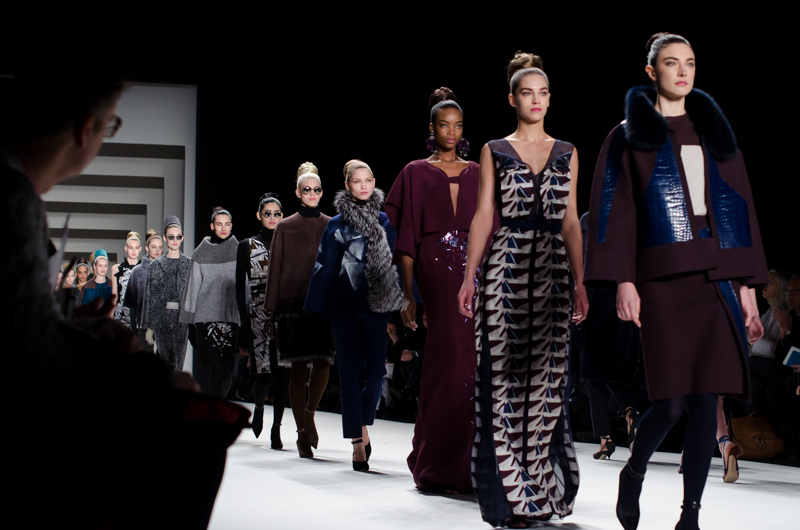
Fashion models showcasing designer clothing on runway (Source: Wikimedia Commons (Fashion))
- Velcro: Less common in formal wear, but occasionally used for adjustable fittings or detachable elements.
Purpose and Importance of Fasteners in Occasion Wear
Fasteners serve functional and aesthetic roles that influence garment usability and presentation.
Functional Importance
- Secure Closure: Fasteners hold garment parts together, ensuring proper fit and preventing accidental openings during wear.
- Ease of Dressing: Well-placed fasteners allow wearers to dress and undress quickly, important for event preparations.
- Adjustability: Some fasteners contribute to size adjustments, accommodating minor fitting variations.
- Support for Heavy Fabrics: Strong fasteners prevent sagging or stretching, maintaining garment shape.
- Protection of Embellishments: Fasteners positioned to avoid damage to delicate trims or beadwork extend garment lifespan.
Aesthetic Importance
- Complementing Design: Fasteners can be decorative elements, enhancing the garment’s style and theme.
- Maintaining Clean Lines: Invisible or minimal fasteners preserve the smooth silhouette crucial for occasion wear.
- Cultural Significance: Certain fasteners may reflect traditional aesthetics, such as ornate buttons or clasps in Kenyan formal attire.
- Highlighting Craftsmanship: Quality fastener application signals attention to detail and professionalism.
- Balancing Function and Fashion: Effective fastener choice integrates utility with visual appeal, elevating garment value.
Techniques for Attaching Fasteners
Proper technique is essential to ensure fasteners are secure, durable, and visually appropriate.
Attaching Zippers
- Align zipper tape carefully with garment seam allowance.
- Baste zipper in place before machine stitching to prevent shifting.
- Use zipper foot on sewing machine for close stitching along zipper teeth.
- Finish seam edges to prevent fraying near zipper area.
Sewing Buttons
- Choose buttons appropriate in size and style for garment fabric.
- Secure buttons with strong thread, sewing through multiple times for durability.
- Attach shank buttons by creating a thread shank for fabric movement.
- Reinforce buttonholes with tight stitching to prevent stretching.
Hook and Eye Application
- Sew hooks on garment edge and eyes on overlapping fabric, ensuring alignment.
- Use strong, fine thread to avoid visibility.
- Space hooks evenly for balanced closure.
Snap Fasteners
- Position snaps on interfaced fabric areas for support.
- Attach snaps by hand sewing or using specialized pliers.
- Test snap closure for ease and security.
Tools and Equipment for Fastener Attachment
Efficient and accurate fastener application relies on specialized tools.
| Name |
Specification |
Use |
| Sewing Machine with Zipper Foot |
Adjustable foot to sew close to zipper teeth |
For attaching zippers neatly and accurately |
| Hand Sewing Needles |
Various sizes, strong and fine needles |
For button sewing, hooks, eyes, and snaps |
| Needle Threader |
Small tool to assist threading needles |
Speeds up hand sewing tasks |
| Snap Pliers |
Special pliers designed for snap fasteners |
For quick and secure snap attachment |
| Seam Ripper |
Small blade tool for removing stitches |
Corrects mistakes during fastener attachment |
- Using the zipper foot ensures the stitch does not catch zipper teeth, maintaining smooth operation.
- Hand sewing needles must be appropriate for fabric thickness; finer needles prevent damage to lightweight silks.
- Snap pliers enable efficient application of snaps without fabric distortion.
- Seam rippers help carefully remove incorrectly placed fasteners without damaging the garment.
Pressing/Ironing
In the Kenyan fashion industry, especially in the occasion wear sector, the final appearance of a garment is critical to its market appeal and client satisfaction. Pressing or ironing is a fundamental finishing process that enhances garment presentation, ensuring seams lie flat, shapes are defined, and fabrics display their intended texture and drape. For fashion designers working with delicate silks in Nairobi boutiques or heavier brocades for wedding gowns in Mombasa, mastering pressing techniques preserves fabric quality and elevates the garment’s overall aesthetic.
Purpose and Importance of Pressing in Occasion Wear
Pressing serves multiple vital roles in finishing occasion garments that go beyond mere wrinkle removal. It shapes and stabilizes the garment's structure, which is essential for formal attire where crisp lines and smooth silhouettes define elegance.
Purpose of Pressing
- Seam Flattening: Pressing ensures that seams lie flat against the fabric, reducing bulk and creating a smooth finish that enhances garment fit.
- Shaping Garment Components: Tailored parts such as collars, cuffs, and pleats take their final form during pressing, giving the garment its intended silhouette.
- Fabric Conditioning: Heat and steam relax fabric fibers, eliminating wrinkles and restoring fabric’s natural texture, which is crucial for delicate occasion fabrics like chiffon or lace.
- Facilitating Accurate Construction: Interim pressing during garment assembly helps maintain precision in stitching and alignment, reducing errors.
- Enhancing Visual Appeal: Proper pressing produces a professional finish that signals quality craftsmanship to clients and retailers.
Importance of Pressing
- Maintains Fabric Integrity: Proper temperature and pressing techniques prevent damage such as scorch marks or shine, preserving the garment's lifespan.
- Improves Fit and Comfort: By shaping seams and darts accurately, pressing ensures the garment fits as designed, enhancing wearer comfort.
- Supports Garment Longevity: Well-pressed garments resist creasing during wear and storage, maintaining their formal appearance longer.
- Increases Market Value: A neatly pressed occasion wear piece commands higher prices, reflecting attention to detail expected in Kenya’s competitive fashion market.
- Builds Brand Reputation: Fashion houses like those in Nairobi’s Westlands area gain customer trust through consistently well-finished garments.
Equipment and Tools Used in Pressing Occasion Garments
Selecting appropriate pressing equipment is critical, as different fabrics and garment components demand specific tools that deliver controlled heat and steam without damage.
| Name |
Specification |
Use |
| Steam Iron |
Adjustable temperature, vertical steam feature |
Removes wrinkles, shapes fabric using heat and steam |
| Tailor’s Ham |
Firm, rounded cushion covered with cotton |
Presses curved areas like darts, sleeves, and collars |
| Sleeve Board |
Small, narrow ironing board |
Presses narrow garment parts such as sleeves and trouser legs |
| Press Cloth |
Cotton or muslin fabric |
Protects delicate fabrics from direct heat during pressing |
| Ironing Board |
Standard adjustable height board |
Provides stable surface for garment pressing |
- The steam iron is the primary tool, with temperature settings adjusted according to fabric type to avoid damage.
- Using a tailor’s ham allows for precise shaping of curved garment areas, essential in occasion wear with darts and princess seams.
- The sleeve board facilitates pressing of narrow and difficult-to-access parts without creating creases.
- A press cloth is indispensable when working with delicate materials such as satin or velvet to prevent shine or scorching.
- The ironing board must be stable and height-adjustable to promote ergonomic working conditions during prolonged pressing sessions.
Pressing Techniques for Different Fabrics in Occasion Wear
Different fabrics used in Kenyan occasion wear require tailored pressing techniques to maintain fabric integrity while achieving a polished finish.
- Cotton and Linen: Use high heat with steam. Press seams open while the fabric is slightly damp to set the shape firmly. These fabrics tolerate vigorous pressing but require caution to avoid shine on darker colors.
- Silk and Satin: Use low heat and a press cloth to prevent shine and scorching. Press on the wrong side of the fabric where possible, using a gentle touch and minimal steam.
- Wool and Wool Blends: Use medium heat with steam. Employ a pressing cloth and the tailor’s ham for shaping curved seams. Avoid excessive pressure to maintain fabric loft.
- Chiffon and Organza: Use the lowest heat setting and no direct steam. Press with a press cloth and avoid stretching the fabric; use a quick, light touch to avoid flattening the weave.
- Velvet and Corduroy: Avoid direct ironing. Use steam from a distance to relax wrinkles and use vertical pressing motions with a velvet board or by hanging the garment after steaming.
Steps to Press an Occasion Garment
Pressing a finished occasion garment requires methodical steps to ensure every part is smooth and shaped correctly without damaging delicate fabrics.
- Prepare the Garment: Lay the garment flat on the ironing board, ensuring it is clean and free from pins or embellishments that could be damaged.
- Set Iron Temperature: Adjust the steam iron to the appropriate temperature for the garment’s fabric type, consulting fabric care labels.
- Use a Press Cloth: Place a press cloth over delicate areas to protect the fabric from direct heat.
- Press Seams and Darts: Start by pressing seams open using the tailor’s ham for curved areas, ensuring they lie flat and smooth.
- Shape Garment Components: Press collars, cuffs, pleats, and hems carefully, using the sleeve board for narrow parts.
- Final Press: Lightly steam the entire garment to remove any remaining wrinkles and enhance fabric texture, hanging it immediately afterward to set the shape.
Trimming hanging threads
In the Kenyan fashion design industry, trimming hanging threads is a crucial finishing task that significantly influences garment quality and client perception. Occasion wear often features intricate detailing and fine stitching, where loose threads can detract from the garment’s elegance and professionalism. Efficient trimming not only improves appearance but also prevents fabric snags and maintains garment durability, which is essential for high-end boutiques and bespoke designers in Nairobi and beyond.
Importance and Impact of Trimming Hanging Threads
Removing hanging threads is more than an aesthetic consideration; it reflects the skill and attention to detail of the fashion professional and affects garment functionality.
Importance of Trimming Hanging Threads
- Enhances Visual Appeal: Clean, thread-free edges present a polished and professional look expected in formal and occasion wear.
- Prevents Fabric Damage: Loose threads can catch on surfaces or other clothing, leading to pulls, tears, or unraveling.
- Maintains Garment Durability: Secured seams and trimmed threads reduce the risk of stitches loosening over time, extending the garment’s lifespan.
- Improves Customer Satisfaction: Clients recognize quality workmanship through neat finishing, encouraging repeat business and positive referrals.
- Facilitates Quality Control: Trimming threads is a final check ensuring all construction details meet industry standards.
Impact on Client Perception
- Professionalism: Clean finishes signal a high level of craftsmanship, critical for designers competing in Kenya’s luxury fashion market.
- Brand Reputation: Consistent attention to finishing details enhances a designer’s or retailer’s brand image.
- Marketability: Well-finished garments are more appealing to retailers and consumers, increasing sales potential.
- Trust Building: Clients trust designers and manufacturers who deliver flawless products.
- Competitive Advantage: In a market where many occasion wear pieces are imported, superior finishing can differentiate local designers.
Tools and Equipment for Trimming Threads
Effective trimming requires the right tools to ensure precision and avoid damage to the garment fabric.
| Name |
Specification |
Use |
| Thread Snips |
Small, sharp scissors with pointed tips |
Quickly snip loose threads close to the fabric surface |
| Embroidery Scissors |
Fine, curved blades |
Trim threads in tight or detailed areas without damaging fabric |
| Seam Ripper |
Small blade with forked tip |
Remove unwanted stitches or correct mistakes carefully |
| Tweezers |
Fine pointed tips |
Pull out or adjust threads in delicate areas |
| Lint Roller |
Adhesive roll |
Remove loose fibers and threads from fabric surface |
- Thread snips are the primary tool for quickly trimming hanging threads on occasion garments.
- Embroidery scissors allow for careful trimming in intricate areas such as beading or lace.
- The seam ripper is used sparingly to undo stitching errors without damaging the fabric.
- Tweezers help manage threads in delicate or hard-to-reach places.
- A lint roller removes loose fibers, ensuring a clean final appearance.
Best Practices for Trimming Hanging Threads on Occasion Garments
Trimming threads requires meticulous attention to avoid accidental damage, especially on delicate occasion wear fabrics commonly used in Kenya.
- Always work in a well-lit area to identify all loose threads accurately.
- Use sharp scissors to make clean cuts, preventing fraying or pulling on surrounding fabric.
- Trim threads close to the fabric surface but avoid cutting too close to seams to prevent seam weakening.
- Handle delicate fabrics gently to avoid stretching or distorting the garment during trimming.
- Inspect the entire garment systematically, including inside seams and hems, as loose threads often accumulate in less visible areas.
Procedure for Trimming Hanging Threads
The trimming process must be systematic to ensure no loose thread remains, thereby enhancing garment quality and client satisfaction.
- Lay the Garment Flat: Place the occasion wear on a clean, flat surface to expose all seams and edges.
- Identify Loose Threads: Visually inspect the garment inside and out, noting all hanging threads.
- Select Appropriate Tool: Choose thread snips or embroidery scissors depending on the thread location and fabric delicacy.
- Trim Loose Threads: Carefully cut threads close to the fabric without damaging the seam or fabric surface.
- Remove Snipped Threads: Use a lint roller or brush to clear away trimmed threads from the garment surface.
- Final Inspection: Conduct a thorough check to ensure all loose threads are removed, including inside linings and pocket areas.
Practice Questions
- Explain the role of pressing in the finishing of occasion wear and why it is particularly important for special event garments. (6 marks)
- Describe five common seam finishing techniques and discuss their relevance to occasion garment durability. (10 marks)
- Outline six key quality control checks a designer should perform before delivering an occasion garment to a client. (12 marks)
- Discuss the special considerations required when finishing embellished occasion wear such as beadwork or embroidery. (8 marks)
- Define the term “underlining” and explain its importance in finishing occasion garments. (6 marks)
- Differentiate between “seam allowance” and “ease” with respect to garment construction. (6 marks)
- Describe five types of fasteners used in occasion wear and their typical applications. (10 marks)
- Explain the significance of “grainline” and “balance” in achieving a well-fitted occasion garment. (8 marks)
- Explain five different hemming methods suitable for occasion wear and discuss the type of fabric or garment each method is best suited for. (10 marks)
- Describe six steps involved in preparing and measuring hems to ensure accuracy in finished occasion garments. (12 marks)
- Identify and explain five types of fasteners commonly used in occasion wear, including their typical applications. (10 marks)
- Outline the procedure for attaching a zipper to a fitted dress, highlighting key points to ensure a professional finish. (12 marks)
- Discuss five maintenance tips for fasteners to prolong the life of occasion garments in a Kenyan fashion business. (10 marks)
- Explain the purpose of pressing in the construction of occasion wear and why it is particularly important for Kenyan fashion designers. (10 marks)
- Identify and describe five key pieces of equipment used in pressing occasion garments, including their specific uses. (15 marks)
- Discuss the techniques suitable for pressing delicate fabrics commonly used in occasion wear in Kenya, highlighting precautions to avoid damage. (10 marks)
- Outline the significance of trimming hanging threads in occasion wear and how this practice affects garment quality and customer satisfaction. (10 marks)
- Describe six steps involved in effective trimming of hanging threads on an occasion garment. (12 marks)
- Explain the importance of surface finishing in occasion wear and describe five common surface finishing techniques used in Kenyan fashion design. (10 marks)
- Discuss five edge finishing methods and their suitability for different types of occasion garments. (10 marks)
- Outline six final treatments applied to occasion wear before delivery, explaining how they contribute to garment quality. (12 marks)
- Describe five functional finishes that improve comfort and performance in occasion wear, with examples relevant to Kenya’s climate. (10 marks)
- Describe five key benefits of overlocking in the construction of occasion wear garments. (10 marks)
- Compare and contrast three types of overlock stitches and their suitability for different fabrics used in Kenyan occasion wear. (12 marks)
- Outline the specifications of four overlocking machines suitable for a Kenyan fashion design workshop and explain their uses. (12 marks)
- Identify five common overlocking problems and recommend solutions to each in the context of finishing occasion wear. (10 marks)
- Explain five reasons why hemming is important in finishing occasion wear garments. (10 marks)
- Describe the steps involved in attaching an invisible zipper to a formal dress. (12 marks)
- Compare and contrast three hemming techniques suitable for delicate and heavy fabrics used in occasion wear. (10 marks)
- Identify and explain five characteristics of fasteners commonly used in Kenyan occasion wear. (10 marks)
- Outline the tools required for attaching buttons and hooks to a garment and explain their specific uses. (8 marks)
- Explain the importance of pressing in the finishing of occasion garments and describe how pressing affects garment quality. (10 marks)
- Outline the steps involved in pressing a silk evening gown to ensure fabric integrity is maintained. (12 marks)
- Discuss five best practices for trimming hanging threads on delicate occasion wear fabrics. (10 marks)
- List and describe the function of at least four tools used in the trimming of hanging threads on occasion garments. (8 marks)
The rest of this chapter
🔒Create a free account to open more of this chapter.
Free: practical guides, quick cards, workplace scenarios and more.
Create a free account 🔒5.2 Display of Occasion Garment
In Kenya's fashion industry, the effective display of occasion garments is crucial to attract discerning clients who seek unique designs for weddings, formal events, and cultural ceremonies. Occasion wear demands a presentation that highlights craftsmanship, f…
🔒5.3 Occasion Garment Packaging
Packaging is a crucial final step in the delivery of occasion wear, impacting garment protection, client satisfaction, and brand reputation. In Kenya's fashion industry, where occasion garments are often transported to clients or events across diverse regions,…
🔒5.4 Housekeeping Activities
Housekeeping activities in a fashion design studio or workshop are critical for maintaining an efficient, safe, and professional environment, especially when finishing occasion wear garments. In Kenya’s competitive fashion industry, designers and tailors worki…
Chapter Summary
This chapter explored the essential processes involved in finishing constructed occasion garments, beginning with the key terms related to garment finishing. It examined the techniques of hemming and attaching fasteners, which ensure the garment’s proper fit and functionality. The importance of pressing and ironing was highlighted as a means to enhance the garment’s appearance and maintain fabric integrity. Trimming hanging threads was addressed as a crucial step for a neat final look. Various types of finishing were discussed, including overlocking to prevent fabric fraying. The chapter also covered effective methods for displaying occasion garments through window displays, mannequins, and shelving to attract customer attention. Packaging techniques such as box packaging and the use of polythene bags were outlined to protect garments during storage and transport. Finally, housekeeping activities like clearing workstations, dusting, and covering machines were emphasized to maintain an organized and efficient work environment.
Self-Assessment
🔒 PDFDownload this self-assessment, with answers
A. Written Assessment
- What is the primary purpose of hemming in occasion garment finishing? (2 marks)
- Identify three common types of fasteners used in occasion wear and explain one advantage of each. (4 marks)
🔒20 more in this section.
Chapter Examination Questions
🔒 PDFDownload these examination questions, with worked answers
SECTION A (40 Marks) - Answer ALL Questions
- Explain the importance of pressing and ironing in finishing occasion garments in a Kenyan fashion design studio. (4 marks)
- Describe two common methods of hemming used in occasion wear construction. (4 marks)
🔒18 more in this section.
Chapter Practical Activities
Practical 1: Perform hemming on a constructed white satin evening gown
Fashion Design · Level 6
Occasion Wear
PRACTICAL ASSESSMENT
TIME: 4 HOURS
⬇ PDFCandidate Instructions (Candidate Tool)
Type: Individual
INSTRUCTIONS TO CANDIDATE:
1. You are required to perform the following task:
i. Perform a machine hem on a constructed white satin evening gown with a front length of 1500mm and back length of 2000mm.
2. You have been provided with the following resources for the practical task:
| Tools & Equipment | Materials |
|---|
| Sewing machine | White satin fabric |
| Pressing equipment | White sewing thread |
| Hand needle | Medium size white pearl beads |
| Cutting tools | Brown paper |
| Measuring tools | Lining fabric |
| Pattern drafting tools | Hidden zip 30 cm long |
| Personal protective equipment | |
| Large working surface | |
| Display area | |
⬇ PDFResources Required (Cutting List)
| S/N | Item | Quantity |
|---|
| 1 | White satin fabric | 4 meters per Candidate |
| 2 | White sewing thread | 1 spool per Candidate |
| 3 | Sewing machine | 1 per Candidate |
| 4 | Pressing equipment | 1 per Candidate |
| 5 | Medium size white pearl beads | 250 grams per Candidate |
| 6 | Brown paper | 4 meters per Candidate |
| 7 | Lining fabric | 2 meters per Candidate |
| 8 | Hidden zip 30 cm long | 1 per Candidate |
| 9 | Hand needle | 1 per Candidate |
| 10 | Pattern drafting tools | Enough per Candidate |
| 11 | Cutting tools | Enough per Candidate |
| 12 | Personal protective equipment | Appropriate per Candidate |
| 13 | Measuring tools | Enough per Candidate |
| 14 | Large working surface | 1 per Candidate |
| 15 | Display area | 1 per 5 Candidates |
⬇ PDFAssessor Guide
| Items to be Evaluated | Marks Available | Marks Obtained | Comments |
|---|
| TASK 1: Preparation and Safety |
Wore PPEs including dust coat, thimble, and flat closed shoes
(Award 1 mark each) | 3 | | |
Ensured well-lit working area by opening windows or switching on lights
(Award 1 mark) | 1 | | |
Ensured well-ventilated room by opening windows or turning on the fan
(Award 1 mark) | 1 | | |
| Sub-Total | 5 | | |
| TASK 2: Identification of Tools and Materials |
Identified and gathered sewing machine, pressing equipment, hand needle, cutting tools, measuring tools, pattern drafting tools, personal protective equipment, large working surface, and display area
(Award 1 mark each) | 9 | | |
Identified and gathered white satin fabric, white sewing thread, medium size white pearl beads, brown paper, lining fabric, and hidden zip
(Award 1 mark each) | 6 | | |
| Sub-Total | 15 | | |
| TASK 3: Hemming Process |
Checked sewing machine function: threaded bobbin and upper thread correctly, fixed needle properly, adjusted stitch length and tension, tested stitches on scrap fabric
(Award 1 mark each) | 5 | | |
Performed machine hemming on the gown edges with even stitch length and neatness
(Award 2 marks each for front and back hems) | 10 | | |
Pressed hemmed edges flat and neat using pressing equipment
(Award 3 marks) | 3 | | |
Removed all hanging threads and temporary stitches
(Award 2 marks) | 2 | | |
| Sub-Total | 20 | | |
| PRODUCT CHECKLIST |
Hem length measurements: Front hem length 1500mm ±10mm, Back hem length 2000mm ±10mm
(Award 5 marks if within tolerance, else zero) | 5 | | |
Hem edges neatly finished with concealed raw edges and even turned allowance
(Award 5 marks for neatness and concealment) | 5 | | |
Evenness and flatness of hems with no puckering or fullness
(Award 5 marks for even, flat hems) | 5 | | |
Overall presentation: No hanging threads, well pressed, clean and not soiled
(Award 5 marks for neat presentation) | 5 | | |
| Sub-Total | 20 | | |
| GRAND TOTAL | 60 | | |
ASSESSMENT OUTCOME: ☐ Competent ☐ Not Yet Competent (competent if at least 50%)
Practical 2: Attach fasteners to a ladies' occasion garment
Fashion Design · Level 6
Occasion Wear
PRACTICAL ASSESSMENT
TIME: 4 HOURS
⬇ PDFCandidate Instructions (Candidate Tool)
Type: Individual
INSTRUCTIONS TO CANDIDATE:
1. You are required to perform the following task:
i. Attach appropriate fasteners including 6 buttons (12 mm), 3 pairs of hooks and eyes, and one 30 cm invisible zipper to the occasion dress as per the provided garment design.
2. You have been provided with the following resources for the practical task:
| Tools & Equipment | Materials |
|---|
| Sewing machine | Ladies' occasion dress fabric cut pieces |
| Hand sewing needle | Matching sewing thread |
| Measuring tape | Buttons (medium size, 12 mm diameter) |
| Pins and pin cushion | Hooks and eyes (pairs) |
| Thimble | Invisible zipper (30 cm long) |
| Pressing equipment | |
| Personal protective equipment | |
⬇ PDFResources Required (Cutting List)
| S/N | Item | Quantity |
|---|
| 1 | Ladies' occasion dress fabric cut pieces | 1 set per Candidate |
| 2 | Matching sewing thread | 1 spool per Candidate |
| 3 | Buttons (medium size, 12 mm diameter) | 6 pcs per Candidate |
| 4 | Hooks and eyes (pairs) | 3 pairs per Candidate |
| 5 | Invisible zipper (30 cm long) | 1 pc per Candidate |
| 6 | Hand sewing needle | 1 pc per Candidate |
| 7 | Sewing machine | 1 pc per Candidate |
| 8 | Pressing equipment (iron and board) | 1 set per Candidate |
| 9 | Measuring tape | 1 pc per Candidate |
| 10 | Pins and pin cushion | 1 set per Candidate |
| 11 | Thimble | 1 pc per Candidate |
| 12 | Personal protective equipment (dust coat, flat closed shoes) | 1 set per Candidate |
⬇ PDFAssessor Guide
| Items to be Evaluated | Marks Available | Marks Obtained | Comments |
|---|
| TASK 1: Preparation and Safety |
Wore PPEs including dust coat and flat closed shoes
(Award 1 mark each) | 2 | | |
Ensured well-lit and well-ventilated working area
(Award 1 mark each) | 2 | | |
| Sub-Total | 4 | | |
| TASK 2: Tools and Materials Identification |
Identified and gathered all required tools and materials according to workplace policy
(Award 1 mark each for 6 items) | 6 | | |
| Sub-Total | 6 | | |
| TASK 3: Fastener Attachment |
Checked sewing machine functionality and threaded correctly
(Award 1 mark each) | 3 | | |
Positioned and pinned fasteners accurately on the garment
(Award 1 mark each) | 3 | | |
Attached 6 buttons securely using hand or machine stitching
(Award 1 mark each for each button) | 6 | | |
Sewed 3 pairs of hooks and eyes firmly by hand
(Award 2 marks per pair) | 6 | | |
Inserted and stitched invisible zipper correctly ensuring smooth operation and neat appearance
(Award 8 marks total) | 8 | | |
Pressed garment sections after fastener attachment to eliminate creases
(Award 2 marks each for front and back pressing) | 4 | | |
| Sub-Total | 30 | | |
| PRODUCT CHECKLIST |
Fasteners firmly attached and aligned as per garment design
(Award 1 mark each for buttons, hooks and eyes, zipper alignment) | 6 | | |
Invisible zipper lies flat and is fully functional
(Award 4 marks total) | 4 | | |
No visible puckering or distortion at fastener sites
(Award 5 marks total) | 5 | | |
Garment pressed and free from hanging threads or loose stitches
(Award 5 marks total) | 5 | | |
| Sub-Total | 20 | | |
| GRAND TOTAL | 60 | | |
ASSESSMENT OUTCOME: ☐ Competent ☐ Not Yet Competent (competent if at least 50%)
🔒Press and iron a finished occasion garment to remove wrinkles and shapePractical 3
🔒Trim hanging threads on a finished occasion garmentPractical 4
🔒Perform Overlocking to Finish Raw Edges of an Occasion GarmentPractical 5
🔒Apply finishing techniques to complete a satin occasion garmentPractical 6
🔒Display an occasion garment on a mannequin for exhibitionPractical 7
🔒Create a window display for occasion garments 1800mm wide x 900mm highPractical 8
🔒Display Occasion Garments Neatly on ShelvesPractical 9
🔒Package finished occasion garments using box packagingPractical 10
🔒Package occasion garments securely in polythene bagsPractical 11
🔒Clear and clean workstation after finishing an occasion garmentPractical 12
🔒Dusting and Cleaning Sewing Machines for MaintenancePractical 13
🔒Cover sewing machines properly after usePractical 14
🔒Define Key Finishing Terms Related to Occasion GarmentsPractical 15
