Lingerie garment construction demands precision, attention to detail, and strict adherence to safety standards. In Kenya’s fashion design industry, professionals must prioritize safe working environments to protect themselves from hazards associated with sewing machines, sharp tools, and chemical adhesives. This chapter introduces the role of personal protective equipment (PPE) in lingerie production, ensuring designers and tailors maintain health and safety while delivering high-quality garments.
1.1 PPEs
Personal protective equipment is essential in fashion workshops to reduce risks from physical, chemical and ergonomic hazards. Lingerie construction involves close work with needles, pins, shears, hot irons, sewing machines and adhesives, and long hours at the machine, all of which can cause injury. Understanding and using PPE protects the designer and the workers, keeps delicate fabrics clean and meets the requirements of the Occupational Safety and Health Act, 2007.
Example: a lingerie workshop in Kisumu issues each machinist a dust coat, safety shoes and a thimble on the first day and checks their use at every shift.
1.1.1 Define the term personal protective equipment
Personal protective equipment (PPE) is specialised clothing or gear worn by a worker to protect the body from injury or ill health caused by hazards in the workplace. In lingerie construction, PPE forms a barrier between the worker and hazards such as needle pricks, sharp tools, falling objects, hot equipment, chemical adhesives and fabric dust. PPE is the last line of protection after hazards have been removed or controlled as far as possible.
Characteristics of Good PPE
- Barrier protection: it shields the body from the specific hazard, for example a thimble against needle pricks.
- Comfort and fit: it fits well and does not hinder movement or dexterity needed for fine stitching.
- Durability: it withstands repeated use, washing and exposure to adhesives and dyes.
- Cleanability: reusable PPE can be cleaned easily to keep hygiene and protect delicate fabrics.
- Compliance with standards: it meets the requirements of the Directorate of Occupational Safety and Health Services (DOSHS) and relevant KEBS standards.
Importance of PPE in Fashion Design
- Accident prevention: reduces cuts, punctures, burns and crush injuries.
- Health protection: masks and gloves prevent inhalation of fibre dust and contact with adhesives and allergens.
- Productivity: workers who feel safe concentrate better and make fewer errors.
- Legal compliance: employers must provide suitable PPE free of charge under occupational safety law.
- Professionalism: visible use of PPE builds client confidence in the workshop.
Materials Used for PPE
The materials used in PPE for lingerie manufacturing must give effective protection while suiting the delicate nature of lingerie fabrics and the precision of garment assembly. Material choice affects durability, comfort and the level of protection.
- Cotton: breathable and comfortable for dust coats, aprons and light gloves; it absorbs sweat during long shifts and protects against fabric dust and minor abrasion.
- Leather: tough protection against cuts and punctures, used for thimbles, gloves and safety shoe uppers; leather aprons protect the torso from hot irons and adhesive splashes.
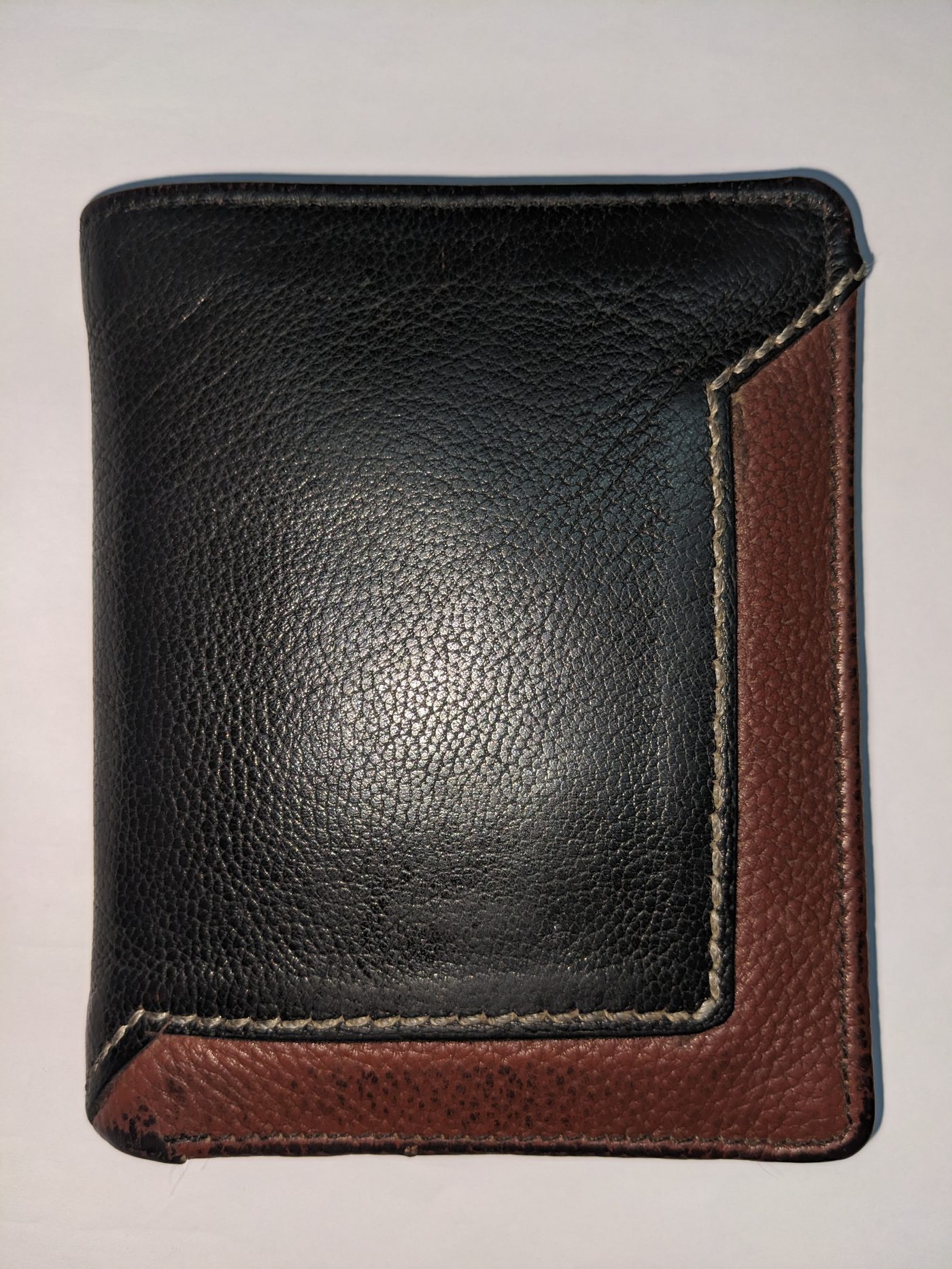
black and brown leather wallet (Source: Wikimedia Commons)
- Nitrile: chemical-resistant gloves for handling adhesives and dyes, such as those used in fabric bonding, while keeping the finger sensitivity needed for fine stitching.
- Polyester and blends: stain resistant and quick drying, used in dust coats, aprons and masks where adhesives and dyes are used often.
- Rubber: protects hands from strong adhesives and cleaning chemicals, but reduces sensitivity, so it is reserved for hazardous substances and is not worn for stitching.
Material Selection Criteria
- Protection level: the material must match the hazard; leather suits mechanical risks, nitrile suits chemical exposure.
- Comfort and dexterity: fine lingerie work needs gloves that do not impede finger movement, so thin nitrile or cotton blends are favoured.
- Durability: the material must endure repeated exposure to workshop conditions without breaking down.
- Breathability: in Kenya’s warm climate, materials that allow air circulation reduce sweating and discomfort over long hours.
- Cost-effectiveness: small businesses balance protection with affordability and prefer reusable PPE with a long service life.
1.1.2 Types of PPEs
The PPE used in lingerie construction is chosen to match the hazards of each task: cutting, machining, hand sewing, pressing and finishing. The curriculum names four main items: the dust coat, safety shoes, the face mask and the thimble.
Dust coat
A dust coat is a loose, lightweight overall coat worn over normal clothes in the workshop. It protects the wearer's clothes from dust, lint, chalk, dyes and adhesives, and it protects delicate lingerie fabrics such as lace, silk and mesh from dirt, oils and stains carried on everyday clothing.
- Material: lightweight cotton or polyester-cotton blends that are breathable, easy to wash and wrinkle resistant; non-woven disposable coats may be used during client fittings.
- Length and fit: mid-thigh to knee length with a loose fit that allows free movement for cutting and machining.
- Fastening: buttons or press studs that open and close quickly.
- Pockets: for small tools such as a tape measure, chalk and thread clippers (never pins or open blades).
- Cuffs and collar: close-fitting cuffs keep sleeves away from the machine needle and reduce dust entry.
Use and care: wear the coat throughout fabric handling and sewing, keep separate coats for cutting and finishing where possible, do not eat or drink while wearing it, wash it regularly with mild detergent, inspect it for tears and stains, and store it in a clean place.
Safety shoes
Safety shoes protect the feet from falling objects such as shears, fabric rolls and machine parts, from pins and needles on the floor, and from slipping on smooth or fabric-strewn floors. They also support the feet during long hours of standing at the cutting table. Although lingerie production seems low-risk compared with heavy industry, sharp tools, heavy equipment and slippery floors make appropriate footwear necessary in garment factories and county tailoring centres.
Purpose of safety shoes
- Protecting feet from sharp objects: needles, scissors and pins can fall and cause injury.
- Preventing slips and falls: non-slip soles reduce accidents on smooth or fabric-covered floors.
- Supporting stability during long standing: ergonomic shoes reduce fatigue in detailed lingerie construction.
- Guarding against impact: sewing machine parts or fabric rolls may fall, and safety shoes limit the injury.
- Complying with regulations: labour law requires adequate PPE, including footwear.
Importance of safety shoes
- Fewer injuries: proper footwear lowers foot trauma, cuts and bruises in tailoring workshops.
- Confidence and productivity: employees who feel safe concentrate better and improve garment quality.
- Less absenteeism: fewer accidents mean less downtime and steady production.
- Safety culture: visible use of protective gear encourages adherence to other safety practices.
- Insurance and liability: compliance with safety standards protects the business from legal and financial risk.
Types and specifications
| Name |
Specification |
Use |
| Steel-toe shoes |
Reinforced steel toe cap, slip-resistant sole |
Protection from heavy falling objects |
| Composite-toe shoes |
Lightweight non-metal toe cap |
Lighter protection where steel is not needed |
| Anti-slip shoes |
Rubber sole with high-friction grip |
Preventing slips on polished or fabric-covered floors |
| Puncture-resistant shoes |
Sole with puncture-resistant plate |
Protection from dropped pins and needles |
| Cushioned closed shoes |
Shock-absorbing insole, breathable upper |
Reducing fatigue during long standing |
Selection criteria and comfort
- Hazard assessment: identify the real risks in the workshop, such as sharp tools or slippery surfaces.
- Material quality: durable, breathable leather or high-grade synthetics last longer and are more comfortable.
- Fit and size: the right fit prevents blisters and foot strain.
- Weight: lightweight shoes reduce fatigue without losing protection.
- Certification: shoes should meet Kenyan or international safety standards for occupational footwear.
- Breathability and cushioning: ventilated shoes and shock-absorbing insoles prevent excessive sweating, fungal infection and arch strain.
- Flexibility and adjustability: shoes that let the foot move naturally suit precise tasks such as hand stitching, and laces or straps allow a custom fit.
Maintenance and workplace use
- Cleaning: remove dust and fibres regularly so that material does not degrade and grip is kept.
- Inspection: check soles, toe caps and fasteners for damage and replace shoes when protection is lost.
- Storage: keep shoes in dry, ventilated places to avoid mould and odour.
- Conditioning: leather shoes are polished or conditioned from time to time to stay flexible.
- Shoe covers: use them when needed to keep shoes clean and avoid contaminating delicate lingerie fabrics.
- Policy and training: make safety shoes mandatory at all production stages, train workers on hazards, and have the employer supply or subsidise them.
- Monitoring and feedback: supervisors check adherence regularly and staff report discomfort so that footwear choices can improve.
Open shoes and sandals are not allowed in the workshop.
Face mask
A face mask covers the nose and mouth to protect the wearer from breathing in fibre dust and lint released when cutting and sewing, fine particles from chalk and trimming, and fumes from fabric adhesives, spray starch or cleaning chemicals. It also limits the spread of germs during close client fittings. Masks made by lingerie professionals also stress softness, breathability and appearance, which became prominent during health crises such as the COVID-19 pandemic.
- Types: reusable cloth masks for light dust, disposable surgical masks for hygiene during fittings, and respirator masks (such as FFP2 or N95) where there is heavy dust or chemical fumes.
- Fit: the mask must cover the nose and chin closely, with a flexible nose wire to reduce gaps.
- Comfort: breathable layers and soft ear loops allow long wear.
- Hygiene: disposable masks are used once; cloth masks are washed after each day.
- Replacement: masks that are wet, torn or clogged are replaced at once.
Material selection for face masks
Cotton blends, silk and satin are soft against the skin and reduce irritation, and layered construction keeps filtration adequate. For example, a maternity lingerie boutique in Nairobi chose silk blends for its masks to match the luxury feel of its line while keeping filtration through layers.
- Breathability: allows air to circulate and prevents moisture build-up.
- Hypoallergenic nature: limits allergic reactions on sensitive skin.
- Durability: withstands repeated washing without losing shape or colour.
- Aesthetic compatibility: matches lingerie collections in colour and texture for a coherent brand.
- Filtration capability: supports multi-layer construction for protection without loss of comfort.
Construction techniques
- Seams: French or flat-felled seams reduce bulk and give a smooth surface against the skin.
- Edge binding: soft bias tape or satin binding prevents chafing and helps the mask keep its shape.
- Strap attachment: elastic or adjustable straps are sewn with reinforced stitching to avoid pressure marks; a designer in Mombasa used silk-covered elastic straps for comfort and appearance.
- Layering: several fabric layers are built up without excessive thickness.
- Shape design: contoured patterns fit snugly round the nose and chin for better coverage.
Comfort and fit adaptations
- Adjustable nose bridge: a flexible wire or foam insert reduces air gaps and stops glasses from fogging.
- Soft inner lining: prevents skin irritation during extended wear.
- Ergonomic shape: custom-fit designs suit different facial contours, as in lingerie fitting.
- Lightweight construction: limits heat retention in Kenya’s warm climate.
- Elastic straps: balance firmness with gentle hold so that there are no pressure points.
Design and styling
- Lace and embroidery: add texture in line with lingerie motifs.
- Colour matching: coordinates masks with lingerie colour palettes, for example matching lace masks sold with bridal lingerie.
- Decorative straps: ribbons or adjustable satin ties.
- Minimal hardware: avoids bulky elements that clash with delicate fabrics.
- Packaging: branded, reusable pouches improve the product experience.
Thimble
A thimble is a small protective cap worn on the middle finger (or thumb) of the sewing hand during hand sewing. It protects the finger from needle pricks and lets the sewer push the needle firmly through layers, binding, elastic and trims, giving better control and neater stitches. In lingerie, hand stitching is often used for attaching delicate trims, inserting underwires or finishing seams invisibly, and thimbles are especially valuable in bespoke work where detail is important.
- Metal thimbles: durable with a dimpled surface that holds the needle; may snag very delicate lace and feel rigid on soft fabrics.
- Leather thimbles: soft and flexible, suitable for fine lingerie fabrics and often chosen for hand-finishing lace trims.
- Rubber or silicone thimbles: give good grip, but wear out faster.
- Plastic thimbles: cheap and light, for light hand sewing, but less protective.
- Adjustable or open-top thimbles: fit different finger sizes and suit sewers with long nails.
Significance of thimble use
- Injury prevention: shields the finger from repeated needle punctures.
- Efficiency: allows more force to push needles through dense fabrics.
- Precision: gives control over needle movement in intricate stitching.
- Comfort: reduces finger fatigue in artisanal lingerie production.
- Professional finish: helps neat, consistent hand stitches that luxury lingerie needs.
Use and care: the thimble must fit snugly without cutting off circulation; it is worn on the finger that pushes the needle; metal thimbles are wiped dry and leather ones conditioned occasionally; thimbles are stored dry and replaced when cracked or worn smooth.
Challenges and solutions
- Poor fit: can cause circulation problems or finger pain; use adjustable or ergonomic designs.
- Slippage: reduces control and increases the risk of needle injury; teach correct finger placement and pressure.
- Fabric damage: hard thimbles may snag lace or mesh; match the thimble material to the delicacy of the fabric.
- Fatigue from long use: lowers productivity and stitch quality; give regular breaks and ergonomic thimbles, as a lingerie cooperative in Nakuru found with leather thimbles.
- Lack of training: leads to unsafe or inefficient use; finger cots can serve as an alternative for extremely delicate fabrics.
Practice Questions
- Define personal protective equipment and explain its importance in lingerie garment construction. (10 marks)
- Describe five characteristics of effective PPE used in the fashion design industry. (10 marks)
- Compare and contrast three materials commonly used in PPE for lingerie manufacturing, highlighting their advantages and limitations. (15 marks)
- Explain how the choice of PPE material impacts both safety and productivity in a Kenyan fashion workshop. (10 marks)
- Explain why breathability and hypoallergenic properties are crucial in fabric selection for lingerie face masks. (6 marks)
- Describe four sewing techniques that enhance the comfort and durability of face masks designed for lingerie wear. (8 marks)
- Discuss how adjustable features in face masks improve fit and wearer compliance in a Kenyan context. (6 marks)
- Identify and explain three design elements that lingerie designers can incorporate to make face masks aesthetically appealing. (6 marks)
- Discuss five reasons why a thimble is essential in the hand sewing of lingerie garments. (10 marks)
- Compare and contrast two types of thimbles suitable for use in lingerie construction, highlighting their advantages and disadvantages. (8 marks)
- Outline six steps for proper use and maintenance of thimbles in a lingerie workshop setting. (12 marks)
- Identify common challenges faced when using thimbles in lingerie sewing and propose solutions for each. (10 marks)
- Define personal protective equipment and explain its importance in lingerie garment construction. (10 marks)
- Describe five characteristics of effective PPE used in the fashion design industry. (10 marks)
- Compare and contrast three materials commonly used in PPE for lingerie manufacturing, highlighting their advantages and limitations. (15 marks)
- Explain how the choice of PPE material impacts both safety and productivity in a Kenyan fashion workshop. (10 marks)
- Identify and explain five purposes of safety shoes in a lingerie garment construction workshop. (10 marks)
- Compare three types of safety shoes suitable for fashion design professionals, focusing on their specifications and uses. (12 marks)
- Describe five criteria to consider when selecting safety shoes for workers in a lingerie production environment. (10 marks)
- Outline six maintenance steps for ensuring the longevity and effectiveness of safety shoes in a fashion workshop. (12 marks)
The rest of this chapter
🔒Create a free account to open more of this chapter.
Free: practical guides, quick cards, workplace scenarios and more.
Create a free account 🔒1.2 Clothing construction tools and equipment
In Kenya's fashion design industry, especially within lingerie wear, the choice of tools and equipment is critical to delivering quality, comfortable and durable garments. Lingerie demands precision and delicacy, requiring specialised tools that accommodate fi…
🔒1.3 Clothing construction materials and supplies
Selecting appropriate materials and supplies is fundamental in constructing lingerie garments that are comfortable, durable, and visually appealing. In Kenya’s fashion design sector, the choice of fabrics, elastics, threads, and fasteners must align with the f…
🔒1.4 Lingerie garments designs
Lingerie garment designs are the styles of intimate and foundation garments a designer plans and constructs, each with its own shape, support, fabric and fastening requirements. Planning a lingerie design means combining the elements and principles of design w…
Chapter Summary
This chapter begins by defining personal protective equipment and exploring various types such as dust coats, safety shoes, face masks, and thimbles, emphasizing their importance in ensuring safety during lingerie garment construction. It then discusses the diverse clothing construction tools and equipment, categorizing them into measuring, finishing, basic sewing, cutting, marking, and drawing tools, alongside essential equipment like cutting machines, display units, cameras, and sewing machines. The chapter highlights critical factors to consider when selecting tools and equipment, including their care, maintenance, and proper storage to maximize efficiency and longevity. Attention is given to clothing construction materials and supplies, detailing a range of items from assorted belts, bows, buttons, embroidery threads, beads, and papers to fabrics, interlinings, interfacing, lace, linings, ribbons, sewing threads, stiffeners, corsets, camisoles, and underlining. Finally, the chapter introduces various lingerie garment designs such as bustiers, bodysuits, bralettes, chemises, and garters, providing a comprehensive understanding necessary for planning lingerie garment construction.
Self-Assessment
🔒 PDFDownload this self-assessment, with answers
A. Written Assessment
- What is the primary purpose of personal protective equipment (PPE) in lingerie garment construction? (2 marks)
- Identify three types of PPE commonly used in a fashion design workshop and explain their specific protective function. (6 marks)
🔒20 more in this section.
Chapter Examination Questions
🔒 PDFDownload these examination questions, with worked answers
SECTION A (40 Marks) - Answer ALL Questions
- Define the term personal protective equipment (PPE) and explain its importance in the construction of lingerie garments. (4 marks)
- Identify and describe four types of personal protective equipment commonly used in a Kenyan fashion design workshop. (4 marks)
🔒18 more in this section.
Chapter Practical Activities
Practical 1: Identify and Use Appropriate PPE for Lingerie Garment Construction
Fashion Design · Level 6
Lingerie Wear
PRACTICAL ASSESSMENT
TIME: 3 HOURS
⬇ PDFCandidate Instructions (Candidate Tool)
Type: Individual
INSTRUCTIONS TO CANDIDATE:
1. You are required to perform the following task:
i. Select and properly use personal protective equipment including dust coat, flat closed safety shoes, thimble, and face mask suitable for lingerie garment construction tasks.
2. You have been provided with the following resources for the practical task:
| Tools & Equipment | Materials |
|---|
| Sewing machine | Satin fabric |
| Pressing equipment | Sewing thread to match fabric |
| Working surface | Brown paper |
| Pattern drafting tools | Candle |
| Cutting tools | Organza fabric |
| Measuring tools | A3 envelope |
| Sewing kit | Personal protective equipment |
⬇ PDFResources Required (Cutting List)
| S/N | Item | Quantity |
|---|
| 1 | Dust coat | 1 Pc per Candidate |
| 2 | Flat closed safety shoes | 1 Pair per Candidate |
| 3 | Thimble | 1 Pc per Candidate |
| 4 | Face mask | 1 Pc per Candidate |
| 5 | Sewing machine | 1 Pc per Candidate |
| 6 | Pressing equipment | 1 Pc per Candidate |
| 7 | Working surface | 1 Pc per Candidate |
| 8 | Pattern drafting tools | Appropriate set per Candidate |
| 9 | Cutting tools | Appropriate set per Candidate |
| 10 | Measuring tools | 1 Set per Candidate |
| 11 | Sewing kit | Appropriate set per Candidate |
| 12 | Satin fabric | 1.5 meters per Candidate |
| 13 | Sewing thread to match fabric | 1 Spool per Candidate |
| 14 | Brown paper | 1 meter per Candidate |
| 15 | Candle | 1 Pc per Candidate |
| 16 | Organza fabric | 0.5 meter per Candidate |
| 17 | A3 envelope | 1 Pc per Candidate |
| 18 | Personal protective equipment | Appropriate set per Candidate |
⬇ PDFAssessor Guide
| Items to be Evaluated | Marks Available | Marks Obtained | Comments |
|---|
| TASK 1: PPE Identification and Usage |
Identified and wore dust coat correctly
(Award 1 mark for correct dust coat usage) | 1 | | |
Wore flat closed safety shoes appropriately
(Award 1 mark for correct safety shoes usage) | 1 | | |
Used thimble correctly during handling of needles
(Award 1 mark for correct thimble usage) | 1 | | |
Wore face mask properly covering nose and mouth
(Award 1 mark for correct face mask usage) | 1 | | |
Observed occupational safety and health requirements: well-lit working area
(Award 1 mark for ensuring well-lit working area) | 1 | | |
Observed occupational safety and health requirements: well-ventilated room (e.g., opened windows or turned on fan)
(Award 1 mark for ensuring well-ventilated working environment) | 1 | | |
Identified and gathered tools, materials, and PPE according to standard operating procedures
(Award 1 mark each for correct identification and gathering of tools, materials, and PPE) | 2 | | |
| Sub-Total | 8 | | |
| PRODUCT CHECKLIST |
Correct and complete use of all required PPE (dust coat, safety shoes, thimble, face mask) during lingerie garment construction setup
(Award 1 mark for each PPE item correctly used and worn) | 4 | | |
Work area complies with occupational safety and health standards (well-lit, well-ventilated)
(Award 1 mark each for well-lit and well-ventilated work environment) | 2 | | |
| Sub-Total | 6 | | |
| GRAND TOTAL | 14 | | |
ASSESSMENT OUTCOME: ☐ Competent ☐ Not Yet Competent (competent if at least 50%)
Practical 2: Select and demonstrate the use of basic sewing tools for lingerie garment construction
Fashion Design · Level 6
Lingerie Wear
PRACTICAL ASSESSMENT
TIME: 4 HOURS
⬇ PDFCandidate Instructions (Candidate Tool)
Type: Individual
INSTRUCTIONS TO CANDIDATE:
1. You are required to perform the following task:
i. Select and demonstrate the correct use of basic sewing tools including dress maker’s pins and thimble in the construction of a lingerie front panel measuring 300mm by 400mm.
2. You have been provided with the following resources for the practical task:
| Tools & Equipment | Materials |
|---|
| Dress maker’s pins | Fabric (cotton lawn 100% cotton) |
| Thimble | Sewing thread (neutral color) |
| Needles (hand sewing) | Personal protective equipment (dust coat, flat closed shoes) |
| Tape measure | |
| Scissors (fabric cutting) | |
| Seam ripper | |
| Tailor’s chalk | |
| Iron and ironing board | |
⬇ PDFResources Required (Cutting List)
| S/N | Item | Quantity |
|---|
| 1 | Dress maker’s pins | 20 Pcs per Candidate |
| 2 | Thimble | 1 Pc per Candidate |
| 3 | Needles (hand sewing) | 5 Pcs per Candidate |
| 4 | Tape measure | 1 Pc per Candidate |
| 5 | Scissors (fabric cutting) | 1 Pc per Candidate |
| 6 | Seam ripper | 1 Pc per Candidate |
| 7 | Tailor’s chalk | 1 Pc per Candidate |
| 8 | Sewing thread (neutral color) | 1 Spool per Candidate |
| 9 | Fabric (cotton lawn 100% cotton) | 0.5 meters per Candidate |
| 10 | Iron and ironing board | 1 Set shared per 5 Candidates |
| 11 | Personal protective equipment (dust coat, flat closed shoes) | 1 Set per Candidate |
⬇ PDFAssessor Guide
| Items to be Evaluated | Marks Available | Marks Obtained | Comments |
|---|
| TASK 1: Preparation and PPE |
Identified and wore personal protective equipment correctly: dust coat and flat closed shoes
(Award 2 marks for correct PPE worn) | 2 | | |
Observed occupational safety and health requirements: well-lit and ventilated working area
(Award 2 marks for ensuring safety conditions) | 2 | | |
| Sub-Total | 4 | | |
| TASK 2: Identification and preparation of tools and materials |
Identified and selected all basic sewing tools required: dress maker’s pins, thimble, needles, tape measure, scissors, seam ripper, tailor’s chalk, sewing thread, and fabric
(Award 1 mark for each item correctly identified and selected) | 7 | | |
Prepared the work area and tools according to standard operating procedures
(Award 3 marks for correct preparation and layout) | 3 | | |
| Sub-Total | 10 | | |
| TASK 3: Demonstration of tool use |
Demonstrated correct pinning technique using dress maker’s pins to secure fabric pieces
(Award 4 marks for proper pin placement and handling) | 4 | | |
Used the thimble correctly to push needles through fabric during hand sewing
(Award 4 marks for correct thimble use) | 4 | | |
| Sub-Total | 8 | | |
| TASK 4: Finishing and care of tools |
Removed pins and needles safely after demonstration
(Award 2 marks for safe removal) | 2 | | |
Cleaned and stored tools and equipment as per workplace policy
(Award 3 marks for proper care and storage) | 3 | | |
| Sub-Total | 5 | | |
| PRODUCT CHECKLIST |
Correct selection and appropriate use of dress maker’s pins and thimble demonstrated
(Award 6 marks for correct and safe demonstration) | 6 | | |
Fabric panel pinned securely with pins placed evenly and safely
(Award 4 marks for neat and safe pinning) | 4 | | |
Thimble used correctly without damage to fabric or needle
(Award 4 marks for effective thimble use) | 4 | | |
Tools and work area left clean and organized after completion
(Award 3 marks for cleanliness and organization) | 3 | | |
| Sub-Total | 17 | | |
| GRAND TOTAL | 44 | | |
ASSESSMENT OUTCOME: ☐ Competent ☐ Not Yet Competent (competent if at least 50%)
🔒Use measuring tools for lingerie garment constructionPractical 3
🔒Cut fabric accurately using suitable cutting tools and equipment for lingerie garment constructionPractical 4
🔒Mark and draw lingerie garment patterns on fabric using appropriate toolsPractical 5
🔒Operate sewing machines for lingerie garment assemblyPractical 6
🔒Apply finishing tools to complete a lingerie garment 60cm full lengthPractical 7
🔒Selection of appropriate clothing construction materials for a lingerie garmentPractical 8
🔒Select and apply decorative supplies for lingerie garment embellishmentPractical 9
🔒Plan lingerie garment design and layout for a bustier 88cm bust x 65cm lengthPractical 10
🔒Care, Maintenance and Storage of Lingerie Wear Tools and EquipmentPractical 11
🔒Set up display equipment and photograph finished lingerie garmentsPractical 12
🔒Selection of tools and equipment for lingerie garment constructionPractical 13
🔒Prepare lingerie garment pattern layout on brown paper using tracing and marking techniquesPractical 14
🔒Integrate elastic and stretch materials in lingerie garment constructionPractical 15
