Producing styled trousers requires not only creativity and design skills but also mastery of the tools and equipment essential to garment construction. In Kenya's dynamic fashion industry, where bespoke tailoring and ready-to-wear collections coexist, understanding the precise application of garment making tools ensures quality, efficiency, and professionalism. Skilled fashion designers and tailors in Nairobi boutique studios or garment factories rely heavily on appropriate equipment to transform fabric into well-fitted, stylish trousers. This chapter focuses on the main tools and equipment used in styled trousers production, emphasizing their specifications, uses, and maintenance in the Kenyan context.
2.1 Garment Making Tools and Equipment
The selection and proper use of garment making tools are fundamental for producing trousers that meet design and quality standards. Each tool serves a specific function in the stages of cutting, assembling, and finishing garments. In Kenya, where both manual tailoring and modern garment manufacturing coexist, familiarity with these tools enhances productivity and garment durability. This section explores the key tools and equipment used in styled trousers production, detailing their specifications and practical applications.
Essential Cutting Tools
Cutting fabric accurately is the first critical step in producing trousers. The choice of cutting tools affects the precision of the garment’s fit and overall appearance. Kenyan fashion designers, whether working in bespoke tailoring shops in Mombasa or mass production units in Nairobi, must use cutting tools that provide clean, straight edges without damaging the fabric.
| Name |
Specification |
Use |
| Shears |
Long, sharp blades (8-12 inches), ergonomic handles |
Cutting fabric layers smoothly and accurately |
| Rotary Cutter |
Circular blade (45mm diameter), safety guard |
Cutting multiple fabric layers with precision, especially curved edges |
| Pinking Shears |
Scissors with serrated blades, 7-9 inches |
Cutting fabric edges to reduce fraying |
| Fabric Scissors |
Medium-sized (6-8 inches), sharp blades |
Trimming threads and small fabric sections |
| Cutting Mat |
Self-healing, grid-marked, 24x36 inches or larger |
Protecting surfaces and measuring fabric during cutting |
- Shears are the primary cutting tool for fabric; their long blades allow smooth, continuous cuts that prevent jagged edges.
- Rotary cutters are especially useful when cutting multiple layers of fabric, as they glide through layers without shifting them, ensuring uniformity.
- Pinking shears create a zigzag edge on fabric, which helps minimize fraying, a common issue with cotton and linen trousers.
- Fabric scissors are indispensable for detail work such as trimming seams, cutting buttonholes, or snipping threads.
- A cutting mat protects tabletops and provides measurement guides to ensure straight cuts, frequently used in design studios and tailoring workshops across Kenya.
Proper maintenance of cutting tools includes regular sharpening of blades, cleaning to remove lint and fabric residue, and safe storage to preserve blade integrity and prevent accidents.
Measuring and Marking Instruments
Accurate measurement and marking are crucial to ensure trousers fit the wearer as intended. Kenyan tailors and designers rely on precise tools to transfer design details onto fabric before cutting and sewing. These tools must be both accurate and adaptable to different fabric types and garment styles.
| Name |
Specification |
Use |
| Measuring Tape |
Flexible, 150 cm length, fiberglass or cloth |
Taking body measurements and measuring fabric lengths |
| Tailor’s Chalk |
Triangular or rectangular blocks, various colors |
Marking fabric without permanent damage |
| Marking Pens |
Water-soluble or air-erasable ink, fine tips |
Drawing sewing lines and design details |
| Rulers |
Transparent plastic, 30 cm and 60 cm lengths |
Drawing straight lines and checking seam allowances |
| French Curve |
Plastic or metal, curved edges, 15-20 cm long |
Drawing smooth curves such as crotch seams |
- Measuring tapes are flexible and conform to body contours, enabling accurate recording of waist, hip, inseam, and other critical dimensions for trousers.
- Tailor’s chalk is preferred for marking because it is visible on various fabrics and can be brushed off without damage.
- Marking pens are useful for detailed designs or working with fabrics where chalk is ineffective; water-soluble ink disappears after washing.
- Rulers and French curves assist in drafting patterns and marking seam lines, ensuring symmetrical and smooth garment shapes.
- These instruments require careful handling to maintain accuracy, such as avoiding stretching measuring tapes and storing chalk in dry environments to prevent crumbling.
Sewing Machines and Related Equipment
Sewing machines are at the heart of trousers production, enabling efficient and consistent assembly of garment pieces. In Kenya, from Nairobi tailoring workshops to garment factories in Athi River, different types of sewing machines are used depending on the production scale and fabric type.
| Name |
Specification |
Use |
| Lockstitch Machine |
Single needle, straight stitch, adjustable speed |
Main stitching of trousers seams |
| Overlock Machine |
Multi-thread (3-5), loopers, high speed |
Finishing raw edges to prevent fraying |
| Buttonhole Machine |
Automated buttonhole stitching, various shapes |
Creating neat and uniform buttonholes |
| Blind Stitch Machine |
Specialized foot, adjustable stitch length |
Sewing hems invisibly |
| Iron and Pressing Table |
Steam iron, large flat surface |
Pressing seams and finishing trousers |
- Lockstitch machines provide durable seams essential for the structural integrity of trousers; adjustable speed allows precision for different fabric weights.
- Overlock machines trim and encase raw edges, preventing fraying which is critical for fabric longevity, especially in cotton and polyester blends commonly used in Kenya.
- Buttonhole machines automate the creation of buttonholes, ensuring uniformity and speed in production.
- Blind stitch machines are used for hemming without visible stitches on the trouser exterior, enhancing garment aesthetics.
- Pressing with steam irons shapes the garment, sets seams, and removes wrinkles, contributing to a polished finished product.
Regular machine maintenance involves cleaning lint, oiling moving parts, replacing needles, and routine servicing to prevent breakdowns during production.
Hand Tools and Accessories
| Name |
Specification |
Use |
| Sewing Needles |
Various sizes and types (sharp, ballpoint) |
Hand sewing, attaching buttons, repairs |
| Seam Ripper |
Small blade with pointed tip |
Removing stitches without fabric damage |
| Pins and Pin Cushion |
Steel pins (1-2 inches), magnetic or fabric cushion |
Holding fabric pieces during sewing |
| Thimble |
Metal or plastic, fits on finger |
Protecting fingers during hand sewing |
| Measuring Gauge |
Small ruler with sliding marker (15 cm) |
Marking hems and seam allowances precisely |
- Sewing needles vary according to fabric type; sharp needles penetrate woven fabrics, while ballpoint needles are used for knits.
- Seam rippers allow correction of sewing errors without tearing the fabric, crucial for maintaining garment quality.
- Pins secure fabric layers temporarily, facilitating accurate sewing and pattern alignment.
- Thimbles protect fingers from needle pricks during detailed hand stitching, common in attaching waistbands or decorative elements.
- Measuring gauges provide precise control over seam widths and hems, helping achieve professional finishes.
Proper care for hand tools includes cleaning needles to prevent rust, safely storing pins, and regularly checking thimbles for cracks to ensure user safety.
Tools
In the production of styled trousers within Kenya's fashion design industry, the choice and mastery of tools significantly influence the quality, efficiency, and finish of the garment. Fashion designers and tailors in Nairobi or Kisumu must be adept in using a range of hand and machine tools tailored specifically for trouser construction. These tools not only facilitate precise cutting and sewing but also ensure that the stylistic features such as pleats, pockets, and waistbands meet client and market expectations. Understanding these tools enhances productivity and reduces wastage, which is crucial for cost management in competitive garment manufacturing environments.
Essential Cutting Tools for Trouser Production
Cutting tools are fundamental in shaping fabric pieces that form the trousers. Precision and sharpness in cutting affect the garment's fit and overall appearance. In Kenyan apparel workshops, including those serving the hotel and retail sectors, the following cutting tools are indispensable:
Essential Cutting Tools Specification Table
| Name |
Specification |
Use |
| Fabric Scissors |
8-10 inches, sharp stainless steel |
Cutting fabric accurately along patterns |
| Rotary Cutter |
Circular blade, 45mm diameter |
Smooth cutting of straight and curved lines |
| Tailor’s Chalk |
White or coloured chalk, non-permanent |
Marking fabric for cutting and sewing |
| Pattern Weights |
Metal or plastic, 100-200 grams each |
Holding patterns on fabric during cutting |
| Thread Snips |
Small sharp blades, 3-4 inches |
Trimming threads and small fabric sections |
- Fabric Scissors: Precision cutting with sharp, long blades is critical for clean edges preventing fabric fraying, especially in heavy materials like denim used for casual trousers.
- Rotary Cutter: This tool allows faster cutting of multiple fabric layers, common in mass production for school uniforms or corporate wear.
- Tailor’s Chalk: Marks the fabric temporarily without damage, essential for indicating seam allowances, darts, and pocket placements.
- Pattern Weights: These provide stability to paper or plastic patterns laid on fabric, preventing shifting during cutting, which is vital for maintaining size accuracy.
- Thread Snips: Used for trimming loose threads during sewing and final finishing, ensuring a neat garment appearance.
Sewing Machines and Attachments for Trousers
Sewing machines are pivotal in assembling trousers, and different machines or attachments cater to specific construction stages. Kenyan fashion workshops, such as those producing corporate uniforms for county government offices, rely on these machines for durability and stitch quality.
Sewing Machines and Attachments Specification Table
| Name |
Specification |
Use |
| Lockstitch Machine |
Single needle, high-speed |
General seaming of trousers |
| Overlock Machine |
3-4 thread, differential feed |
Seam finishing and edge trimming |
| Buttonhole Machine |
Automated buttonhole stitching |
Creating uniform buttonholes |
| Blind Hemmer Foot |
Presser foot attachment |
Sewing invisible hems on trouser legs |
| Walking Foot |
Presser foot with feed mechanism |
Sewing thick or multiple fabric layers evenly |
- Lockstitch Machine: Delivers strong, secure seams, essential for main trouser seams such as side seams and crotch seams.
- Overlock Machine: Prevents fraying by trimming and finishing edges simultaneously, widely used in mass production for efficiency.
- Buttonhole Machine: Produces consistent buttonholes, crucial for waistbands that require buttons or decorative details.
- Blind Hemmer Foot: Enables stitching hems that are nearly invisible on the garment’s exterior, important for tailored trouser finishes.
- Walking Foot: Facilitates smooth feeding of heavy fabrics or multiple layers, commonly used when attaching waistbands or sewing pleats.
Measuring and Marking Tools
Accurate measurement and marking are critical for achieving the correct fit and style in styled trousers. Fashion designers in Kenya’s urban centres rely on both traditional and modern tools to translate design patterns into well-fitted garments.
Measuring and Marking Tools Specification Table
| Name |
Specification |
Use |
| Measuring Tape |
Flexible, 150cm length |
Taking body measurements and fabric dimensions |
| Rulers |
Plastic or metal, 30-60cm length |
Drawing straight lines and seam allowances |
| French Curve |
Plastic, curved edges |
Drawing curved lines for crotch and hips |
| Tracing Wheel |
Serrated or smooth wheel |
Transferring pattern markings onto fabric |
| Tailor’s Pencil |
Soft, erasable pencil |
Marking fabric for sewing and alterations |
- Measuring Tape: Flexibility allows measuring body contours precisely, which is fundamental for custom tailoring of trousers.
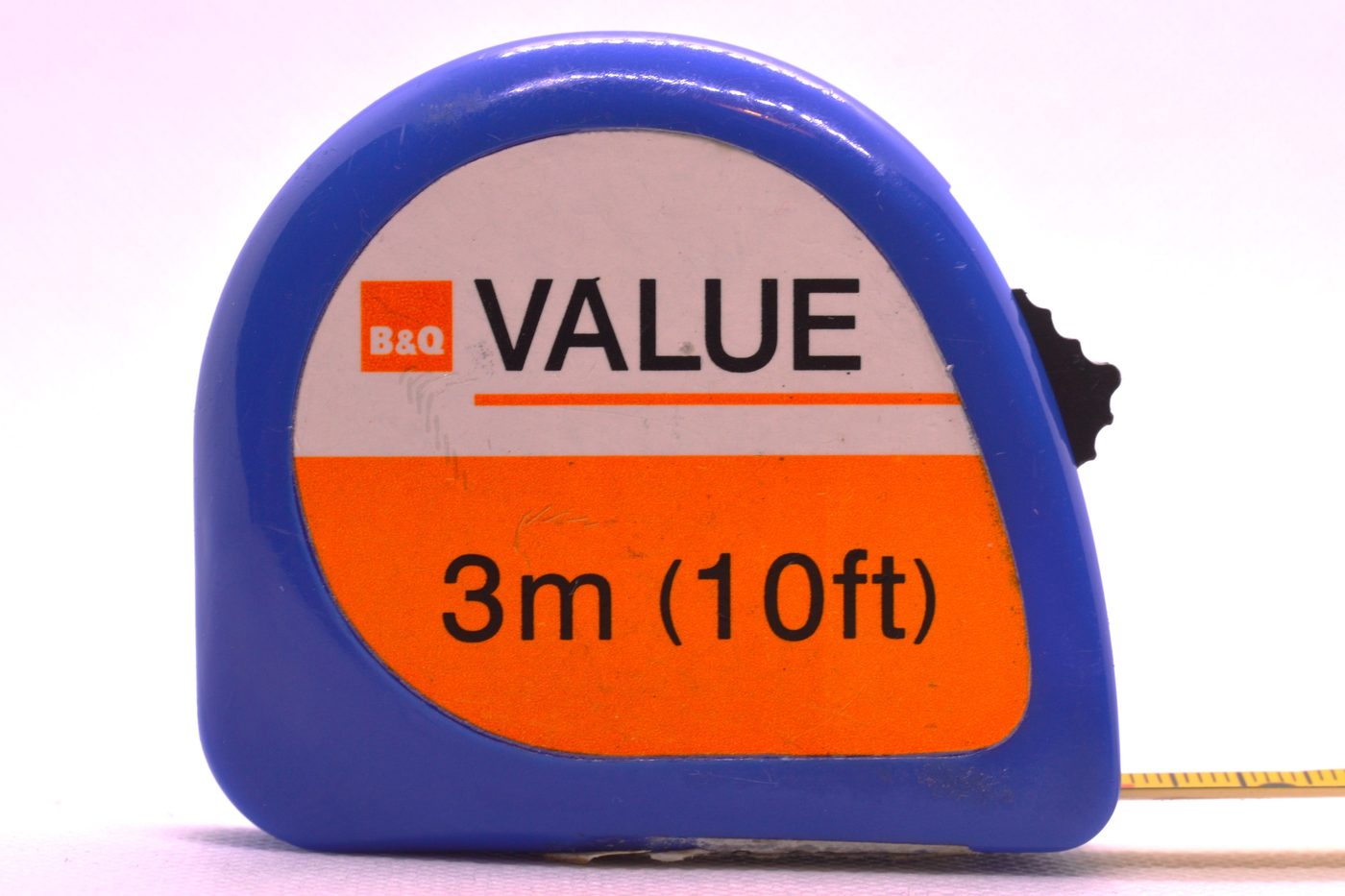
A measuring tape with metric and imperial units (Source: Wikimedia Commons)
- Rulers: Straight edges assist in marking seam allowances and aligning fabric grain, ensuring symmetrical trouser legs.
- French Curve: Used to draft the curved crotch seam and hip lines accurately, critical for comfort and fit.
- Tracing Wheel: Transfers pattern markings to fabric without damaging it, facilitating alignment of design details during sewing.
- Tailor’s Pencil: Enables clear fabric marking that can be removed after sewing, ideal for temporary pattern adjustments.
Hand Tools and Accessories for Finishing
The final touches in trouser production require specific hand tools and accessories that ensure quality and professional finish. Kenyan fashion ateliers producing garments for upscale hotels or boutique stores prioritize these tools for aesthetic detailing and durability.
Hand Tools and Accessories Specification Table
| Name |
Specification |
Use |
| Seam Ripper |
Small blade, ergonomic handle |
Removing stitches for corrections |
| Pressing Ham |
Padded, curved surface |
Shaping curved areas during ironing |
| Tailor’s Awl |
Sharp pointed tool |
Making holes for buttons or adjusting seams |
| Iron |
Steam iron with temperature control |
Pressing seams and finishing creases |
| Clips and Pins |
Metal pins and fabric clips |
Holding fabric pieces in place before sewing |
- Seam Ripper: Essential for correcting stitching errors without damaging fabric, saving costly materials.
- Pressing Ham: Used to press curved sections such as the crotch seam or pleats, helping to maintain the garment’s shape.
- Tailor’s Awl: Facilitates precise hole creation for buttons or reinforcing tight seams, especially on heavy fabrics.
- Iron: Controlled heat and steam set seams and creases, critical for professional presentation of the trousers.
- Clips and Pins: Temporarily secure fabric layers, allowing for adjustments and accurate sewing alignment.
Cutting
In the production of styled trousers, cutting is a critical phase that directly affects the garment’s fit, style, and overall quality. In Kenya’s vibrant fashion industry, precision in cutting is essential to meet the diverse body shapes and style preferences of clients, whether producing bespoke trousers for Nairobi’s boutique market or mass-produced lines for retail chains. Efficient cutting reduces fabric wastage, lowers production costs, and ensures consistency across garment batches, which is vital for maintaining brand reputation and customer satisfaction.
Importance of Accurate Cutting in Styled Trousers Production
Accurate cutting ensures that each piece of fabric corresponds perfectly to the pattern specifications, directly influencing the final garment’s fit and appearance. In Kenyan tailoring workshops and fashion houses, inaccurate cutting often leads to costly material wastage and rework, negatively impacting profitability.
Benefits of Accurate Cutting
- Ensures Proper Fit: Precisely cut fabric pieces align with the design measurements, resulting in trousers that fit well and enhance wearer comfort.
- Reduces Fabric Waste: Accurate cutting minimizes off-cuts and errors, which is crucial given the cost of quality textiles sourced locally or imported.
- Maintains Design Integrity: Correct cutting preserves stylistic details such as pleats, darts, and seam allowances, which define the trousers' silhouette.
- Facilitates Efficient Assembly: Well-cut pieces simplify sewing operations, reducing time and errors during stitching, important for production in busy tailoring shops.
- Improves Consistency: Ensures that multiple pairs of trousers produced in batches maintain uniformity, essential for retail brands and SACCO uniform suppliers.
Tools and Equipment for Cutting Styled Trousers
Cutting trousers requires specialized tools that guarantee precision and efficiency. Below is a table outlining essential cutting tools, their specifications, and uses common in Kenyan fashion production environments.
| Name |
Specification |
Use |
| Tailor’s Shears |
Sharp, 8-10 inches, ergonomic handle |
Cutting fabric smoothly without fraying |
| Rotary Cutter |
Circular blade, 45 mm diameter |
Cutting straight or curved lines on fabric |
| Cutting Mat |
Self-healing, A1 size or larger |
Protects surfaces and extends blade life |
| Pattern Weights |
Heavy metal or plastic, 100-200g each |
Holds patterns firmly on fabric |
| Chalk or Fabric Marker |
Non-permanent, various colors |
Marking cutting lines and notches |
- Tailor’s shears are the primary cutting tool for most Kenyan fashion workshops due to their precision and ease of use on different fabric types.
- Rotary cutters paired with cutting mats are popular for cutting multiple layers of fabric simultaneously, improving production speed in garment factories.
- Pattern weights replace pins for holding patterns on delicate fabrics, preventing distortion during cutting.
- Fabric markers allow clear, removable markings to guide cutting and sewing, essential for maintaining design accuracy.
Techniques for Cutting Styled Trousers
Implementing the correct cutting techniques is fundamental for producing trousers that meet design specifications and quality standards. Kenyan fashion designers and cutters apply various methods depending on fabric type, garment style, and production scale.
Key Cutting Techniques
- Single Layer Cutting: Used for delicate or stretchy fabrics to prevent distortion; involves laying one layer of fabric flat before cutting.
- Multi-Layer Cutting: Employed in bulk production where several layers of fabric are stacked and cut simultaneously, improving efficiency.
- Cutting with Grain: Aligning the pattern pieces along the fabric grain (warp or weft) ensures proper drape and fit of the trousers.
- Notching and Clipping: Small cuts made on seam allowances to facilitate smooth curves and corners during sewing, critical for areas like crotch seams.
- Using Cutting Guides: Patterns are carefully pinned or weighted, and cutting lines are traced or marked to ensure precision.
Challenges in Cutting and How to Overcome Them
Cutting styled trousers involves challenges that can affect quality and productivity. Kenyan fashion professionals must identify and address these issues to maintain competitive standards.
Common Cutting Challenges
- Fabric Slippage: Smooth fabrics like silk or satin tend to shift during cutting, causing inaccurate shapes.
- Inconsistent Seam Allowances: Variations in seam allowance can result in poor fit and assembly difficulties.
- Dull Cutting Tools: Blunt blades lead to jagged edges and increased fabric waste.
- Improper Pattern Placement: Incorrect alignment wastes fabric and distorts garment proportions.
- Cutting Errors on Complex Designs: Intricate styles with pleats, darts, or pockets require high skill to cut accurately.
Strategies to Overcome Cutting Challenges
- Use pattern weights and double-sided tape to stabilize slippery fabrics during cutting.
- Regularly sharpen and maintain cutting tools to ensure clean cuts.
- Train cutting personnel on pattern layout techniques emphasizing grainline alignment and efficient fabric use.
- Employ cutting guides and clear markings for complex garment parts to reduce errors.
- Implement quality control checks immediately after cutting to identify and correct mistakes early in production.
In a county government tailoring unit producing official uniforms, addressing these challenges is critical to meet strict delivery schedules and quality expectations.
Marking
Marking is a critical stage in the production of styled trousers, serving as the bridge between the design and cutting phases. In Kenyan fashion design workshops, precise marking determines how well the fabric will be utilized, impacting both the garment's fit and the overall cost-effectiveness of production. For instance, at a Nairobi-based tailoring cooperative, careful marking has helped reduce fabric wastage by 15%, directly improving profit margins. Understanding the principles and execution of marking is essential for fashion designers aiming to produce high-quality trousers that meet client specifications and maintain industry standards.
Purpose and Importance of Marking in Trousers Production
The purpose of marking in trousers production is to transfer pattern outlines and details onto the fabric accurately, ensuring that the cutting process produces components that fit together perfectly. Marking is important because it affects the garment’s fit, construction quality, and fabric economy. In Kenyan tailoring shops, failure to mark correctly often leads to misaligned seams, uneven hems, and fabric wastage, which can damage a designer’s reputation and increase production costs.
Purpose of Marking
- Accurate Fabric Cutting: Marking guides cutters to cut fabric precisely according to the pattern, preventing errors that could ruin the garment’s shape.
- Seam Allowance Indication: It identifies seam allowance boundaries, ensuring enough fabric is left for sewing without compromising the garment’s dimensions.
- Placement of Design Features: Marking shows where pockets, pleats, darts, and other design elements should be positioned, ensuring consistency in production.
- Fabric Grain Alignment: It helps align pattern pieces with the fabric grain to maintain the trousers’ shape and drape, which is crucial for durability and comfort.
- Efficient Fabric Utilization: Proper marking enables optimal layout of pattern pieces, reducing fabric waste and lowering production costs.
Importance of Marking
- Quality Assurance: Well-marked fabric pieces lead to trousers that match design specifications and fit clients well, enhancing brand reputation.
- Time Efficiency: Clear markings reduce confusion during cutting and sewing, speeding up production cycles in busy Kenyan fashion houses.
- Cost Effectiveness: By minimizing fabric wastage, marking contributes to better resource management and higher profit margins.
- Consistency in Production: Marking standardizes garment components, which is vital for batch production in tailoring cooperatives and factories.
- Error Minimization: It reduces the risk of mistakes during cutting and assembly, preventing costly rework or scrapping of fabric.
Tools and Materials Used in Marking Trousers
Marking trousers requires specific tools and materials that ensure accuracy and fabric integrity. Kenyan fashion studios often source these tools from local haberdasheries or import them for higher precision. The choice of marking tools depends on fabric type and production scale, with some tools better suited for delicate materials often used in high-end fashion.
| Name |
Specification |
Use |
| Tailor’s Chalk |
White, blue, or pink chalk in a triangular or rectangular shape |
Temporary marking on fabric, easily brushed off |
| Fabric Marking Pen |
Water-soluble or air-erasable ink pens |
For fine, precise markings that fade after washing |
| Tracing Wheel |
Serrated or smooth wheel with handle |
Transfers pattern markings through tracing paper |
| Carbon Paper |
Non-toxic, colored carbon sheets |
Used with tracing wheel to copy markings onto fabric |
| Measuring Tape |
Flexible, 150 cm or 60 inches length |
Measuring fabric and marking seam allowances |
- Tailor’s chalk is preferred for cotton and denim trousers as it leaves visible but removable marks.
- Fabric marking pens are ideal for delicate or dark fabrics where chalk is less visible.
- Tracing wheels and carbon paper assist in marking multiple fabric layers simultaneously, improving efficiency.
- Measuring tapes ensure accurate marking of seam allowances, darts, and pleats according to the design specifications.
Marking Techniques and Procedures for Styled Trousers
Marking techniques vary depending on the fabric type, garment design, and production scale. Kenyan fashion designers must master several methods to ensure precision and adaptability in their work. These techniques help maintain the integrity of the fabric while ensuring that the garment components will fit together seamlessly during assembly.
Marking Techniques
- Direct Marking: This involves marking directly onto the fabric using tailor’s chalk or marking pens, suitable for small-scale production or bespoke trousers.
- Tracing Method: Using a tracing wheel and carbon paper, this method transfers pattern outlines onto fabric layers stacked together, saving time in batch production.
- Pin Marking: Pins are used to mark key points such as darts and pleats before final marking is done, ensuring accuracy in complex design features.
- Notching: Small cuts or snips are made on the fabric edges to indicate alignment points, seam allowances, or pattern matching, critical for accurate sewing.
- Basting Lines: Temporary stitching lines are marked or sewn to guide the sewing process, especially for curved seams or intricate designs.
Marking Procedures
- Prepare the Fabric: Lay the fabric flat on a clean, smooth surface, ensuring it is free of wrinkles and aligned according to the grain.
- Place the Pattern: Arrange the paper pattern pieces on the fabric, following the grainline and layout plan to maximize fabric use.
- Secure the Pattern: Use weights or pins to hold the pattern in place, preventing shifting during marking.
- Transfer Markings: Using the chosen marking tool, carefully trace the outline of the pattern pieces onto the fabric, including seam allowances and design details.
- Mark Key Points: Indicate darts, pleats, pocket placements, and notches clearly with distinct marks or symbols.
- Double-Check Markings: Review all markings for completeness and accuracy before proceeding to cutting.
Challenges and Best Practices in Marking for Trousers Production
Marking trousers presents various challenges that can affect garment quality and production efficiency. Kenyan fashion professionals must anticipate and address these challenges to maintain high standards and meet client expectations. Adopting best practices during marking safeguards fabric integrity and promotes smooth workflow from cutting to sewing.
Challenges in Marking
- Fabric Texture and Color: Dark or textured fabrics can make markings difficult to see or remove, leading to errors in cutting.
- Pattern Complexity: Trousers with intricate designs, such as pleats or multiple pockets, require precise marking to avoid misalignment.
- Fabric Movement: Slippery or stretchy fabrics may shift during marking, causing inaccurate outlines.
- Inconsistent Seam Allowances: Failure to mark uniform seam allowances can result in uneven seams and compromised fit.
- Tool Limitations: Using inappropriate marking tools can damage delicate fabrics or leave permanent marks.
Best Practices
- Select Appropriate Marking Tools: Match tools to fabric type; for example, use water-soluble pens on silk trousers and tailor’s chalk on cotton.
- Work in Well-Lit Areas: Adequate lighting improves visibility of markings, reducing errors.
- Use Pattern Weights Instead of Pins: To prevent fabric distortion, especially on delicate materials.
- Mark in Small Sections: This allows for adjustments and reduces the risk of large-scale mistakes.
- Test Marking Tools on Fabric Scrap: Before marking the main fabric, test tools to ensure marks can be removed without damage.
Drawing
Drawing is a fundamental skill in the production of styled trousers, serving as the visual communication tool that translates design concepts into detailed garment specifications. For fashion designers in Kenya, proficient drawing skills enable the accurate depiction of style lines, construction details, and fabric behaviour, which are critical when collaborating with pattern makers and production teams. In the context of Kenyan fashion houses or garment factories supplying local and regional markets, clear and precise drawings reduce production errors and facilitate innovation in trouser styles that meet market preferences.
Purpose and Importance of Drawing in Trousers Production
Drawing in styled trousers production goes beyond mere aesthetics; it is an essential medium for technical and creative expression. The purpose of drawing includes conveying the design intent, specifying garment features, and serving as a reference throughout the manufacturing process.
Purpose of Drawing
- Visual Communication of Design Ideas: Drawings translate abstract concepts into concrete visuals, allowing designers to communicate their vision effectively to manufacturers and clients. This is crucial in Kenyan fashion firms where collaboration between designers and tailors depends on clear visual references.
- Specification of Garment Details: Drawings identify important elements such as seam placements, pocket styles, pleats, and cuff finishes. This level of detail ensures that the trousers are constructed as intended.
- Facilitation of Pattern Development: Accurate drawings aid pattern makers in creating precise patterns by defining the silhouette and construction lines that must be followed.
- Documentation for Production Consistency: Drawings serve as permanent records that maintain design consistency across multiple production batches, essential for Kenyan garment exporters maintaining brand standards.
- Marketing and Presentation Tool: Fashion sketches and technical flats are used to present designs to buyers, wholesalers, and marketing teams, supporting sales efforts in retail outlets and boutiques.
Importance of Drawing
- Reduces Misinterpretation: Clear drawings minimize errors in production by providing detailed guidance, which is especially valuable in small-scale Kenyan workshops where verbal instructions alone can lead to costly mistakes.
- Enhances Design Innovation: Sketching allows designers to experiment with new styles and details on paper before committing resources, fostering creativity within Kenya’s competitive fashion industry.
- Improves Efficiency: Well-prepared drawings streamline the production process by giving accurate visual instructions, reducing the need for repeated adjustments and fittings.
- Supports Quality Control: Drawings provide benchmarks for assessing the finished trousers against design specifications, ensuring quality standards are met.
- Enables Customization: Designers can tailor drawings to reflect client preferences, facilitating bespoke trouser production in Kenyan fashion houses catering to niche markets.
Types of Drawings Used in Styled Trousers Production
Different types of drawings are employed to serve various functions during the design and production of trousers. Each type has specific characteristics that make it suitable for certain stages of the process.
- Fashion Sketches: These are freehand, artistic drawings that capture the overall look and style of the trousers on a human figure. They emphasize proportions, fabric drape, and movement. Fashion sketches are commonly used in Kenyan design studios to present concepts during initial client consultations.
- Technical Flats: These are precise, two-dimensional drawings that show the trousers from multiple views (front, back, and sometimes side) without any human figure. Flats detail construction lines, stitching, and trims. Kenyan manufacturers rely heavily on flats to guide cutting and sewing.
- Detail Drawings: These zoom in on specific components such as pockets, waistband construction, or pleating. They provide enlarged views with annotations, helping production teams understand complex features.
- Exploded Drawings: Used less frequently in apparel but valuable for illustrating assembly sequences, exploded drawings separate garment parts to show how components fit together. This can be useful in training Kenyan factory workers on trouser assembly.
- Technical Specification Sheets with Drawings: These combine flat drawings with written measurements and material instructions, forming comprehensive documents for production and quality assurance.
Techniques and Tools for Drawing Styled Trousers
Mastering various drawing techniques and using the appropriate tools enhances the accuracy and clarity of trouser designs. Kenyan designers must adapt these techniques to their work environment, balancing traditional hand drawing with digital methods.
- Hand Sketching: Using pencils, charcoal, or pens, hand sketching allows quick exploration of ideas. It encourages creativity and is often used in initial design phases in schools and small design workshops across Kenya.
- Technical Drawing Instruments: Tools such as rulers, French curves, set squares, and protractors help create precise lines and curves necessary for technical flats. These tools are essential in professional Kenyan fashion design studios to maintain accuracy.
- Digital Drawing Software: Programs like Adobe Illustrator, CorelDRAW, and specialized fashion CAD software allow designers to produce scalable, editable technical flats. Kenyan fashion houses with access to computers use these tools to enhance production efficiency and facilitate communication with overseas manufacturers.
- Tracing and Overlay Techniques: Tracing paper and lightboxes enable designers to refine sketches and create variations without redrawing from scratch. This is useful in Kenyan training institutions where students develop design iterations.
- Annotation and Labeling: Effective drawing includes clear notes on fabric types, stitch types, and construction details. Kenyan designers must ensure annotations are unambiguous to avoid confusion during production.
Best Practices and Common Challenges in Drawing Styled Trousers
Producing effective drawings requires adherence to best practices and awareness of potential pitfalls. Kenyan designers and production teams face unique challenges related to resource availability, skill levels, and communication.
Best Practices
- Maintain Proportion and Scale: Accurate proportions ensure that the trousers’ design translates correctly from paper to fabric. Using standardized croquis and scale rulers helps maintain consistency.
- Use Clear and Consistent Line Work: Differentiating between seam lines, fold lines, and stitching with varied line weights improves readability.
- Include Multiple Views: Providing front, back, and side views captures all necessary details for production.
- Incorporate Detailed Annotations: Clear notes on fabrics, trims, and construction techniques prevent misunderstandings.
- Update Drawings with Revisions: Keeping drawings current with design changes avoids errors during manufacturing.
Common Challenges
- Limited Access to Digital Tools: Many Kenyan small-scale designers rely solely on hand drawing, which can limit precision and ease of modification.
- Inadequate Technical Training: Some designers may excel in creative sketches but lack skills in technical flats, leading to incomplete production instructions.
- Communication Gaps Between Designers and Tailors: Misinterpretation of drawings can result when tailors are unfamiliar with certain symbols or styles.
- Time Constraints: Fast-paced production schedules in Kenyan garment factories may pressure designers to produce rushed drawings.
- Material and Resource Limitations: Poor quality drawing materials or lack of proper tools can affect the clarity and durability of drawings.
Equipment
In the production of styled trousers within Kenya's fashion design industry, the choice and maintenance of equipment significantly influence the quality, efficiency, and consistency of the final garment. Fashion designers and tailors working in Nairobi’s garment factories, boutique studios, and tailoring workshops must be proficient with specialized tools and machines tailored to the specific demands of trouser construction. Understanding the specifications, uses, and upkeep of these tools ensures that production meets the high standards expected by local and international markets.
Sewing Machines: Types and Specifications
Sewing machines are the backbone of trouser production, enabling precise stitching and durable seams. In Kenyan fashion design workshops, the selection of the right sewing machine type depends on the fabric type, stitch complexity, and production volume. Here is a detailed specification table for commonly used sewing machines in trouser production:
| Name |
Specification |
Use |
| Lockstitch Machine |
High-speed, single needle, adjustable stitch length |
For straight seams and topstitching |
| Overlock Machine |
3-4 thread, differential feed, adjustable stitch width |
For seam finishing and edge trimming |
| Buttonhole Machine |
Automated or manual, multiple buttonhole styles |
Creating durable buttonholes on waistbands |
| Flatbed Machine |
Large flat working surface, heavy-duty motor |
Sewing flat panels and bulky sections |
- Lockstitch machines are preferred for assembling the main trouser panels because they create strong, neat seams that withstand wear.
- Overlock machines finish raw edges quickly, preventing fabric fraying especially in Kenyan cotton blends or synthetic fabrics used in trousers.
- Buttonhole machines provide consistent buttonholes, essential for waistbands and fly closures, ensuring professional quality.
- Flatbed machines are useful when working with heavy fabrics or multiple layers, common in tailored formal trousers.
Maintenance of sewing machines includes regular oiling, cleaning lint buildup, and timely replacement of needles to avoid fabric damage or thread breakage. For example, at a Nairobi-based fashion cooperative, scheduled machine servicing has reduced downtime and improved garment turnaround times.
Cutting Equipment and Tools
Accurate cutting is critical in trouser production to maintain fit and style integrity. Kenyan fashion ateliers employ a range of cutting tools designed for different materials and production scales. The table below outlines key cutting equipment with their specifications and uses:
| Name |
Specification |
Use |
| Fabric Shears |
Long blades (8-12 inches), sharp edge |
Cutting fabric pieces with precision |
| Rotary Cutter |
Circular blade, ergonomic handle |
Cutting multiple layers or patterns |
| Cutting Table |
Large, flat surface (minimum 2m x 1m) |
Spreading fabric and laying out patterns |
| Pattern Weights |
Heavy metal or plastic, various shapes |
Holding patterns firmly during cutting |
- Fabric shears are indispensable for single-layer cutting and detailed trimming; good quality shears maintain sharpness longer, crucial for Kenyan cotton and polyester blends.
- Rotary cutters speed up cutting of multiple fabric layers, increasing productivity in workshops producing styled trousers for retail.
- Cutting tables provide ample space to spread out fabric smoothly, avoiding distortions that could affect the garment fit.
- Pattern weights replace pins in many studios, preventing fabric shifting without damaging delicate textiles used in high-end Kenyan fashion collections.
Proper tool care includes sharpening shears regularly and storing rotary cutters safely to avoid blade dulling. For instance, a garment manufacturer in Mombasa schedules weekly sharpening sessions to maintain cutting precision.
Measuring and Marking Tools
Precision in measurements and pattern marking is essential to produce trousers that fit well and conform to the intended style. Kenyan fashion designers rely on an array of measuring and marking tools to transfer pattern details accurately onto fabric.
| Name |
Specification |
Use |
| Measuring Tape |
Flexible, 150cm length, non-stretch |
Taking body measurements and fabric layout |
| Tailor’s Chalk |
Available in various colors, dustless |
Marking fabric for cutting and sewing |
| French Curve |
Plastic or metal, curved edges |
Drawing smooth curved lines on patterns |
| Rulers |
Clear plastic, 30-60cm with grid |
Straight line marking and seam allowances |
- Measuring tapes are fundamental for capturing body dimensions and ensuring trousers match client specifications, widely used in Kenyan tailoring shops.
- Tailor’s chalk allows temporary markings on fabric that can be brushed or washed off, facilitating accurate sewing lines.
- French curves help create smooth hip and crotch curves on trouser patterns, critical for comfortable and stylish fit.
- Rulers assist in marking straight edges and seam allowances, ensuring consistency in trouser panel sizes.
Regular replacement of marking tools is necessary as worn or faded chalk can cause inaccuracies. For example, in a garment training center in Kisumu, instructors emphasize the importance of clear, visible markings for student projects.
Pressing and Finishing Equipment
Pressing is a vital stage in trouser production, shaping the garment and setting seams for a professional appearance. Kenyan fashion studios utilize pressing and finishing equipment to enhance the quality and presentation of styled trousers.
| Name |
Specification |
Use |
| Steam Iron |
Adjustable temperature, steam jet |
Pressing seams, creases, and hems |
| Tailor’s Ham |
Firm, curved cushion |
Pressing curved areas like crotch seams |
| Sleeve Board |
Narrow, padded board |
Pressing trouser legs and narrow areas |
| Heat Press |
Electric, temperature-controlled |
Applying creases and finishing touches |
- Steam irons soften fabric fibers, allowing seams to be flattened and creases to be set, which is essential in Kenyan cotton and polyester trousers.
- Tailor’s ham supports curved areas during pressing, preventing distortions in delicate seam lines.
- Sleeve boards provide a firm surface for pressing trouser legs, helping maintain sharp creases in formal trousers.
- Heat presses are used in some Kenyan garment factories to apply permanent creases quickly, speeding up production.
Maintaining pressing equipment involves regular cleaning of iron plates to prevent staining and ensuring temperature controls are accurate to avoid fabric damage. For example, a boutique in Eldoret uses steam irons with built-in water filters to reduce mineral buildup and prolong iron life.
Cutting
In the production of styled trousers, cutting is a critical stage that determines the garment's final fit, style, and quality. Precise cutting translates the designer's pattern into fabric pieces that will be assembled to create trousers that meet aesthetic and functional standards. In the Kenyan fashion industry, where bespoke tailoring and small to medium-scale manufacturing coexist, mastering cutting techniques can significantly reduce fabric wastage and production costs while ensuring customer satisfaction. Cutting is both a technical and creative process requiring skill, attention to detail, and appropriate tools.
Preparing for Cutting and Fabric Layout
Preparing for cutting involves several important steps that ensure accuracy and efficiency. This preparation sets the foundation for the entire cutting process, impacting fabric utilization and garment quality.
Fabric Inspection and Preparation
Fabric inspection is essential before cutting to identify defects such as stains, holes, or weaving errors. These defects must be marked or avoided in the layout to prevent flawed garment sections. In Nairobi-based fashion houses, fabric inspection prevents costly rework and maintains brand reputation.
Fabric preparation includes:
- Pre-shrinking: Some fabrics require pre-washing or steaming to minimize shrinkage after garment completion, especially cotton or denim used in trousers.
- Straightening the grain: Ensuring the fabric's warp and weft are properly aligned prevents distortion in the finished garment.
- Spreading: The fabric is spread evenly on the cutting table in single or multiple layers depending on production scale. For instance, retail boutiques may cut single layers for bespoke trousers, while SACCO uniform manufacturers might use multiple layers for bulk orders.
Fabric Layout Planning
Proper layout planning maximizes fabric usage and respects the grainline indicated on patterns. The layout can follow straight, crosswise, or on-fold placement depending on the style and fabric characteristics.
- Grainline alignment: Patterns must be aligned parallel to the fabric grain for durability and proper drape.
- Marker making: Creating a marker, a template of all pattern pieces arranged optimally on fabric, minimizes waste.
- Directional prints and nap: For fabrics with prints or nap (e.g., velvet), all pieces must be oriented consistently.
Cutting Techniques and Tools
Different cutting techniques suit various fabric types and production scales. The choice of tools and methods directly affects the precision and speed of cutting.
Hand Cutting
Hand cutting uses scissors or shears and is common in bespoke tailoring or small-scale production. This technique offers flexibility for intricate shapes and careful handling of delicate fabrics.
- Tailor’s shears: Heavy-duty scissors designed for fabric cutting, allowing smooth, clean cuts.
- Pinking shears: Used to cut fabric edges with a zigzag pattern to reduce fraying.
- Rotary cutters: Useful for straight lines and curves, especially on single layers.
Machine Cutting
For medium to large-scale production, cutting machines increase efficiency and consistency.
- Straight knife machines: Electric knives that cut through multiple fabric layers, ideal for straight and slightly curved lines.
- Band knives: Use a continuous band blade for detailed, curved cuts.
- Die cutting: Pre-shaped dies press through fabric layers for repetitive shapes, used in uniform production like county government staff trousers.
Tool Maintenance
Maintaining cutting tools ensures clean cuts and prolongs tool life.
- Regular sharpening: Dull blades cause jagged edges and fabric damage.
- Cleaning: Removing fabric fibers and dust prevents blade clogging.
- Safe storage: Protects blades from damage and prevents accidents.
Accuracy and Quality Control in Cutting
Accuracy during cutting is vital to ensure garment pieces fit together perfectly during assembly. Quality control at this stage prevents costly mistakes and fabric wastage.
Precision in Following Patterns
Cutting must strictly follow the pattern outlines, including seam allowances and notches. Variations can alter the fit and style of the trousers.
- Seam allowances: Typically 1.5 cm for trousers, must be consistent for proper sewing.
- Notches and markings: Facilitate alignment during sewing; must be transferred accurately.
Checking Cut Pieces
After cutting, pieces are inspected for:
- Correct number of pieces: Ensures no missing parts.
- Shape and size conformity: Matches pattern specifications.
- Defect avoidance: No cuts on fabric flaws.
In Kenyan tailoring workshops, quality control at this stage reduces returns and alterations, improving customer trust.
Minimizing Fabric Waste
Efficient cutting minimizes fabric waste, reducing costs and environmental impact. Using markers and layout planning software helps optimize fabric use in factories like those producing school uniforms for county governments.
Safety and Ergonomics in Cutting
Cutting involves sharp tools and repetitive motions, making safety and ergonomics crucial for worker health and productivity.
Safety Precautions
- Proper tool handling: Training workers to use scissors and cutting machines safely to prevent injuries.
- Protective gear: Use of gloves and finger guards.
- Clear workspace: Avoid clutter to prevent accidents.
Ergonomic Practices
- Workstation setup: Adjustable tables for comfortable cutting height reduce strain.
- Breaks and rotation: To prevent repetitive strain injuries, workers should take breaks and alternate tasks.
- Tool design: Using ergonomic handles on scissors reduces hand fatigue.
In Nairobi garment factories, these measures reduce absenteeism and improve output quality.
Display
In the Kenyan fashion industry, the way styled trousers are displayed can significantly influence customer interest and sales performance. Display goes beyond mere arrangement; it communicates the garment’s aesthetic, quality, and suitability for the target market. For fashion designers and retailers operating in Nairobi’s bustling shopping malls or Kisumu’s vibrant markets, effective display strategies help create an engaging shopping experience and showcase the designer’s creativity and brand identity.
Purpose and Importance of Display in Fashion Retail
The display of styled trousers serves multiple purposes in a retail setting, particularly within Kenya’s competitive fashion market. Understanding these purposes guides fashion designers and merchandisers to optimize the presentation of their products.
Purpose of Display
- Attracting Customer Attention: Displays are designed to catch the eye of potential buyers, encouraging them to enter the store or explore further. For instance, a well-lit window display at a boutique in Westlands can draw in passersby.
- Showcasing Product Features: Displaying trousers with emphasis on fabric texture, cut, and styling helps customers appreciate the garment’s unique qualities, such as the handwoven kikoy fabric used by some designers in Mombasa.
- Communicating Brand Identity: The arrangement and styling of trousers on mannequins or racks express the brand’s personality, whether it is formal, casual, or avant-garde, which helps in customer segmentation.
- Encouraging Impulse Buying: Strategic placement of trousers near complementary products like shirts or accessories can stimulate unplanned purchases, increasing overall sales.
- Providing Information: Displays can inform customers about new arrivals, discounts, or styling tips, enhancing the shopping experience and customer satisfaction.
Importance of Display
- Enhances Visual Appeal: An attractive display makes the store inviting and elevates the perceived value of the trousers.
- Supports Marketing Strategies: Displays function as silent salespersons, reinforcing advertising campaigns or seasonal promotions.
- Improves Customer Navigation: Organized displays help customers easily locate styles and sizes, reducing frustration and improving service.
- Differentiates from Competitors: Unique and creative displays distinguish a store from others in Nairobi’s crowded fashion retail landscape.
- Boosts Sales Performance: Stores that invest in effective display techniques often report higher sales volumes and customer retention.
Types of Display Used for Styled Trousers
Fashion retailers and designers in Kenya employ various display types to best present styled trousers according to the store layout, target clientele, and marketing goals. Each type has distinct advantages and suits different retail environments.
- Window Display: This is the most visible and influential display type, often used to showcase the latest styles or thematic collections. For example, a boutique in Karen may use mannequins dressed in styled trousers paired with matching tops to create a seasonal theme.
- Mannequin Display: Full-body mannequins or lower-body forms allow customers to visualize how trousers fit and move, enhancing purchase confidence.
- Wall Display: Hanging trousers on wall-mounted racks or hooks saves floor space and highlights specific designs, useful in compact retail shops in towns like Eldoret.
- Table Display: Folded trousers arranged on tables encourage tactile interaction, inviting customers to feel the fabric and inspect quality, common in department stores like Sarit Centre.
- Rack Display: Freestanding racks grouped by style, size, or color facilitate browsing and comparison, essential in larger stores such as those in Moi Avenue.
Factors Influencing Effective Display of Styled Trousers
Several considerations affect how styled trousers should be displayed to maximize appeal and sales in Kenyan retail contexts. These factors guide display decisions and ensure the presentation aligns with customer expectations.
- Store Layout and Space: The physical size and shape of the retail environment determine the type and scale of display. Small boutiques in Nairobi’s CBD require space-efficient displays compared to larger malls.
- Target Market Preferences: Displays should reflect the tastes and cultural inclinations of the target demographic. For example, urban youth may prefer edgy, casual styled trousers displayed in a vibrant, dynamic setup.
- Lighting: Proper lighting accentuates fabric texture and color, making trousers look more attractive. LED spotlights highlighting tailored seams can be effective in upscale stores.
- Seasonality: Display themes should adjust to seasons and occasions, such as lighter fabrics and bright colors in the Kenyan hot season or more formal trousers during graduation periods.
- Maintenance and Cleanliness: Displays must be kept neat and free from dust to maintain garment quality and customer trust.
Techniques for Enhancing Display Impact
To maximize the effectiveness of trouser displays, fashion designers and retailers apply specific techniques that enhance visual appeal and customer engagement. These methods help create memorable and persuasive presentations.
- Color Coordination: Grouping trousers by complementary colors or matching them with accessories creates harmonious visuals that attract customers.
- Use of Props: Incorporating props such as chairs, plants, or themed backdrops adds context and lifestyle appeal, making the display more relatable.
- Layering and Styling: Combining trousers with tops, belts, or jackets on mannequins demonstrates complete looks, aiding customers in envisioning outfit possibilities.
- Rotation of Stock: Regularly changing displays keeps the store fresh and encourages repeat visits, especially important in fast-paced Nairobi retail environments.
- Signage and Information: Clear tags and signs indicating price, fabric type, and care instructions assist customers in making informed decisions.
Camera
In the production of styled trousers, the use of a camera is integral for documenting the garment’s development stages, quality control, and marketing purposes. Within the Kenyan fashion industry, particularly among bespoke tailors and small-to-medium fashion enterprises, cameras help capture precise details of cuts, finishes, and styling that are essential for client presentations and quality assurance. The camera serves not only as a tool for visual record-keeping but also as a communication medium between designers, manufacturers, and clients.
Types of Cameras Used in Garment Production
The choice of camera depends on the intended use, budget, and level of detail required. Kenyan fashion houses, such as boutique studios in Nairobi and Mombasa, often employ a variety of camera types to suit different stages of trouser production.
Digital Single-Lens Reflex (DSLR) Cameras
DSLR cameras provide high-resolution images with excellent color accuracy, crucial for capturing fabric textures and stitch details. They allow manual control over focus and exposure, enabling photographers to highlight specific garment features such as pleats or waistband finishes. For example, a fashion designer at a Nairobi-based studio might use a DSLR to photograph sample trousers for their portfolio, ensuring every detail is visible for client approval.
Mirrorless Cameras
Mirrorless cameras combine the quality of DSLRs with portability, making them ideal for on-site shoots or quick documentation in workshops. They offer fast autofocus and interchangeable lenses, allowing versatility in capturing both wide shots of full garments and close-ups of intricate details like buttonholes or seam finishes.
Smartphone Cameras
Modern smartphones have advanced camera systems that are increasingly used in Kenyan fashion startups due to their convenience and cost-effectiveness. While not as precise as DSLRs, smartphones can produce sufficiently detailed images for social media marketing or preliminary design reviews. For instance, a designer working with a SACCO-funded tailoring cooperative in Eldoret might use a smartphone to capture and share images of completed trousers with clients remotely.
Compact Digital Cameras
Compact cameras offer ease of use and portability, suitable for quick snapshots during production meetings or fittings. Although they lack the advanced controls of DSLRs, they are useful for documenting the production process without disrupting workflow.
Camera Specifications Relevant to Styled Trouser Production
Selecting a camera for trouser production requires attention to specific technical specifications that affect image quality and usability.
| Name |
Specification |
Use |
| Resolution |
Minimum 12 megapixels |
Ensures clear images with sufficient detail for fabric and stitching inspection |
| Lens |
Macro or zoom lens (50mm - 100mm) |
Allows close-up shots of fine details such as embroidery or stitch quality |
| ISO Range |
100 – 3200 |
Enables shooting in various lighting conditions without excessive noise |
| Image Stabilization |
Optical or digital stabilization |
Reduces blur from hand movement during handheld shots |
| File Format |
RAW and JPEG |
RAW for post-processing flexibility; JPEG for quick sharing |
Resolution
High resolution is critical for capturing the minute details of styled trousers, such as the texture of denim or the precision of darts and pleats. A camera with at least 12 megapixels ensures that images can be enlarged without losing clarity, which is essential when sharing samples with clients or for quality control in production.
Lens Type
Macro lenses allow photographers to focus on small areas like buttonholes or pocket stitching, revealing craftsmanship quality. Zoom lenses provide flexibility to capture the entire garment or zoom into details without changing the camera position, useful during fittings or runway presentations.
ISO Range
A wide ISO range allows the camera to adapt to different lighting environments typical in Kenyan workshops or studios. For example, during early morning fittings in a county government office’s tailoring unit, higher ISO settings can compensate for low light without compromising image quality.
Image Stabilization
Image stabilization technology helps reduce blur from hand-shake, which is particularly useful when photographing garments in informal settings without tripods, such as outdoor fashion shoots or on-the-go client consultations.
Using Cameras Effectively in Trouser Production
Proper use of cameras enhances the visual documentation and communication of the styled trouser production process. Fashion designers and production managers in Kenya can benefit from adopting systematic photographic practices.
Lighting Control
Good lighting is fundamental to capturing true fabric colors and details. Natural daylight is preferred in many Kenyan studios, but where unavailable, softbox lighting or ring lights can be used to minimize shadows and highlight textures. For instance, a designer at a Nairobi hotel fashion event might use portable LED lights to ensure consistent illumination during photoshoots.
Composition and Angles
Photographing styled trousers from multiple angles, front, back, side, and close-ups of key features such as zippers or waistband construction, provides a comprehensive visual record. Using consistent framing helps in comparing samples and tracking production improvements.
File Management and Backup
Organizing images with clear file naming conventions and backing them up regularly is essential to avoid data loss. Many Kenyan fashion enterprises use cloud storage solutions to share images with clients and collaborators efficiently.
Post-Processing
Editing software can adjust exposure, contrast, and color balance to produce accurate and appealing images. However, excessive editing should be avoided to maintain the garment’s true appearance, especially when images are used for client approvals or quality control.
Challenges in Camera Use and How to Overcome Them
Using cameras in garment production comes with challenges, particularly in resource-limited environments common in Kenya’s emerging fashion sectors.
Equipment Cost and Accessibility
High-quality cameras and accessories can be expensive for small-scale designers. To mitigate this, many rely on smartphones with advanced cameras or rent professional equipment for specific projects.
Skill Gaps
Not all fashion professionals possess photography skills, which can lead to poor-quality images that misrepresent garment details. Training workshops on basic photography techniques tailored to garment production can improve outcomes.
Lighting Constraints
Inconsistent or poor lighting conditions in workshops or client locations hinder good photography. Portable lighting kits and reflectors are cost-effective solutions to ensure adequate illumination.
Data Management
Lack of systematic image storage can result in lost or disorganized files. Implementing standardized file-naming and backup protocols, even using simple cloud platforms, can improve efficiency.
Maintaining Camera Equipment
Dust and moisture common in some Kenyan production environments can damage camera equipment. Regular cleaning and storing cameras in protective cases reduce maintenance issues and prolong camera lifespan.
Sewing machine
Types of Sewing Machines Used in Trousers Production
Sewing machines come in various types, each suited for specific tasks in garment making. Selecting the appropriate machine affects the quality and durability of styled trousers, especially when working with different fabrics such as denim, linen, or twill, common in Kenyan fashion.
Lockstitch Machines
Lockstitch machines use two threads, an upper and a lower, to create a strong stitch. They are widely used for assembling trousers because they produce neat, durable seams suitable for most woven fabrics. For instance, tailors at county government uniform workshops rely on lockstitch machines for their reliability and versatility.
Overlock (Serger) Machines
Overlock machines trim the fabric edge while simultaneously encasing it with thread to prevent fraying. These machines are essential for finishing raw edges on trousers, especially when working with stretch fabrics or for professional seam finishes. Retail garment producers in Nairobi use overlock machines extensively to speed up production and ensure clean seams.
Coverstitch Machines
Coverstitch machines create parallel rows of stitching, typically used for hemming trousers and attaching waistbands. They provide stretchable seams, making them ideal for casual or stretch fabric trousers. Fashion designers creating sportswear or casual wear in Mombasa often utilize coverstitch machines for flexible, durable hems.
Flatbed and Cylinder Bed Machines
Flatbed machines have a flat surface ideal for sewing flat pieces of fabric, commonly used in trouser leg assembly. Cylinder bed machines have a narrow arm allowing sewing of tubular or hard-to-reach areas such as crotch seams or trouser pockets. Manufacturers specializing in tailored trousers use cylinder bed machines for difficult areas to maintain seam integrity.
Post-bed Machines
Post-bed machines have an elevated sewing arm, allowing better access to three-dimensional garment parts. They are useful in attaching decorative elements or sewing complex trouser styles with pleats or gathers. High-end fashion houses in Nairobi employ post-bed machines for intricate trouser designs requiring detailed stitchwork.
Key Components of a Sewing Machine for Trouser Production
The sewing machine’s components work together to produce consistent stitching critical for the strength and appearance of trousers. Understanding these parts helps fashion designers and operators troubleshoot and optimize machine performance.
Needle and Needle Bar
The needle penetrates the fabric to form stitches, while the needle bar moves the needle up and down. Using the correct needle size and type is vital for different trouser fabrics; for example, a heavy denim fabric requires a stronger needle to avoid breakage.
Presser Foot and Feed Dogs
The presser foot holds fabric steady as the feed dogs move it through the machine. Adjusting the presser foot pressure is important when sewing thick or layered trouser fabric to prevent fabric slippage or puckering.
Bobbin and Bobbin Case
The bobbin supplies the lower thread that interlocks with the upper thread to form stitches. Proper bobbin winding and placement ensure even tension and prevent thread jams, which is crucial in high-volume trouser production.
Thread Tension Mechanism
This component controls the tightness of the thread during stitching. Correct tension settings avoid loose or tight stitches that could weaken trouser seams or cause fabric distortion.
Stitch Selector and Length Regulator
These controls allow the operator to choose stitch type and length according to garment requirements. For example, shorter stitches provide stronger seams for trouser crotch areas, while longer stitches may be used for basting or decorative topstitching.
Operating and Maintaining Sewing Machines in Trouser Production
Efficient operation and regular maintenance of sewing machines ensure continuous production flow and high-quality styled trousers. Kenyan fashion designers working in busy workshops must prioritize machine care to avoid costly breakdowns.
Operating Procedures
- Select the appropriate needle and thread for the trouser fabric.
- Wind and insert the bobbin correctly to maintain thread tension.
- Adjust the presser foot pressure based on fabric thickness.
- Set the desired stitch type and length suitable for the seam or finish.
- Test sew on fabric scraps to verify stitch quality before starting production.
- Sew slowly on tricky areas such as pockets and pleats to maintain precision.
Maintenance Practices
- Clean lint and dust from the feed dogs, bobbin area, and needle plate daily to prevent jamming.
- Oil the machine at recommended points weekly to reduce friction and wear.
- Inspect needles regularly and replace at the first sign of dullness or bending to avoid fabric damage.
- Check and adjust thread tension periodically to maintain consistent stitch formation.
- Schedule professional servicing every six months to ensure machine calibration and performance.
Troubleshooting Common Problems
- Thread breakage may result from incorrect threading or needle issues; rethread and replace needle as needed.
- Uneven stitches often indicate tension imbalance; adjust tension knobs carefully.
- Fabric puckering can be caused by excessive presser foot pressure or inappropriate needle size; make necessary adjustments.
- Machine skipping stitches may require needle replacement or timing adjustment by a technician.
Practice Questions
-
Explain the importance of using the correct cutting tools when producing styled trousers and describe the specifications of three essential cutting tools. (10 marks)
-
Discuss the role of measuring and marking instruments in ensuring the accuracy of trouser construction, including the maintenance practices for these tools. (12 marks)
-
Identify four types of sewing machines used in trouser production and explain their specific uses in the garment assembly process. (12 marks)
-
Describe five hand tools used in tailoring trousers and their functions in finishing and detail work. (10 marks)
-
Explain the importance of using a rotary cutter in the production of styled trousers and how it compares to fabric scissors in terms of efficiency and precision. (10 marks)
-
Describe five key sewing machines or attachments used in trouser production and their specific functions in garment assembly. (15 marks)
-
Discuss the role of measuring and marking tools in ensuring the fit and style of trousers, providing examples of how inaccuracies can affect the final garment. (10 marks)
-
Identify and explain five hand tools used in the finishing stages of trouser production and how each contributes to the quality of the finished garment. (15 marks)
- Explain five benefits of accurate cutting in the production of styled trousers. (10 marks)
- Describe the specifications and uses of three essential cutting tools for trousers production. (9 marks)
- Outline six key techniques used when cutting styled trousers and explain their importance. (12 marks)
- Identify four common challenges faced during the cutting phase and suggest practical solutions for each. (12 marks)
- Explain the purpose of marking in trousers production and discuss its importance in ensuring garment quality. (10 marks)
- List and describe the tools commonly used for marking fabric in the production of styled trousers. (10 marks)
- Outline the step-by-step procedure for marking fabric before cutting trousers. (12 marks)
- Identify common challenges encountered during marking and suggest best practices to overcome them in a fashion design workshop. (13 marks)
- Explain five purposes of drawing in the production of styled trousers and how each purpose supports the manufacturing process. (10 marks)
- Describe the differences between fashion sketches and technical flats and discuss the role of each in a Kenyan fashion design studio. (10 marks)
- Identify six essential tools used in drawing styled trousers and explain their individual functions. (12 marks)
- Discuss five common challenges faced by Kenyan fashion designers when producing technical drawings for trousers and propose solutions for each challenge. (10 marks)
- Explain the differences between lockstitch and overlock sewing machines and their specific uses in styled trouser production. (10 marks)
- Describe the importance of cutting tables and pattern weights in ensuring accurate trouser production. (8 marks)
- Identify five essential measuring and marking tools used in trouser production and explain their functions. (10 marks)
- Discuss the role of pressing equipment in the finishing process of styled trousers and how it affects garment quality. (7 marks)
- Explain the importance of fabric preparation before cutting styled trousers and describe five key steps involved. (10 marks)
- Compare and contrast hand cutting and machine cutting techniques used in trouser production, highlighting their advantages and disadvantages. (12 marks)
- Discuss five quality control measures that should be implemented during the cutting stage of trouser manufacturing. (10 marks)
- Outline six safety and ergonomic practices that should be observed by workers during the cutting process in a garment factory. (12 marks)
-
Explain five key purposes of displaying styled trousers in a fashion retail environment. (10 marks)
-
Describe four types of displays used for styled trousers and discuss the advantages of each. (12 marks)
-
Identify and explain five factors that influence the effective display of styled trousers in Kenyan retail stores. (10 marks)
-
Discuss five techniques that can be used to enhance the impact of trouser displays in a fashion boutique. (10 marks)
- Explain the advantages of using DSLR cameras over smartphone cameras in styled trouser production. (10 marks)
- Identify and describe five key camera specifications important for photographing styled trousers. (15 marks)
- Outline six steps for effective use of a camera during the trouser production process. (12 marks)
- Discuss three common challenges faced when using cameras in garment production and propose solutions for each. (12 marks)
- Explain the differences between lockstitch and overlock sewing machines and their specific uses in styled trouser production. (10 marks)
- Describe the function of the presser foot and feed dogs and their importance when sewing trousers from heavy fabric. (8 marks)
- Outline six essential steps for operating a sewing machine to produce high-quality trousers. (12 marks)
- Identify five common sewing machine problems encountered in trouser production and recommend maintenance actions to prevent them. (10 marks)
The rest of this chapter
🔒Create a free account to open more of this chapter.
Free: practical guides, quick cards, workplace scenarios and more.
Create a free account 🔒2.2 Trouser Design Interpretation
In Kenyan fashion design practice, interpreting trouser designs requires both technical expertise and creative insight to translate sketches or concepts into practical, wearable garments. Trouser design interpretation bridges the gap between artistic vision an…
🔒2.3 Types of trouser
In the Kenyan fashion industry, understanding the diverse types of trousers is essential for designers aiming to meet varied customer preferences and cultural trends. Trousers serve different functional and aesthetic purposes, influenced by factors such as fab…
🔒2.4 Fabric and accessories
In the production of styled trousers, selecting appropriate fabric and accessories is fundamental to achieving both aesthetic appeal and functional performance. Within the Kenyan fashion industry, designers must consider climate, target market preferences, and…
🔒2.5 Laying of Garment Pattern Pieces on the Fabric
Laying garment pattern pieces on fabric is a critical stage in the production of styled trousers, directly impacting fabric utilization, garment quality, and production efficiency. In the Kenyan fashion industry, where fabric costs can be significant and waste…
🔒2.6 Garment Pieces Cutting
In the production of styled trousers, the cutting of garment pieces is a critical stage that directly impacts the fit, appearance, and overall quality of the final product. In Kenya's fashion industry, precision cutting ensures that fabric is utilized efficien…
🔒2.7 Garment assembly
Garment assembly is a critical phase in the production of styled trousers, where various cut fabric pieces are joined to form the final wearable product. In Kenya’s fashion industry, precision and quality during assembly directly impact the garment’s marketabi…
🔒2.8 Garment finishing
In the Kenyan fashion industry, garment finishing is a critical stage that transforms styled trousers from mere sewn fabric pieces into polished, market-ready products. This process enhances the garment’s aesthetic appeal, durability, and wearer comfort, facto…
🔒2.9 Garment display
In the Kenyan fashion industry, effective garment display is a critical skill for fashion designers and retailers alike, especially when showcasing styled trousers. Presentation influences customer perception, brand identity, and ultimately sales performance.…
🔒2.10 Housekeeping activities
In the production of styled trousers within Kenya's fashion industry, maintaining an organized and clean workspace is essential. Housekeeping activities ensure that the production environment supports efficiency, safety, and quality, which are critical in garm…
Chapter Summary
This chapter covered the essential tools and equipment used in garment making, beginning with a detailed overview of various tools and their roles in the cutting, marking, and drawing processes. It emphasized the importance of equipment such as cutting tools, display apparatus, cameras, and sewing machines in producing styled trousers. The interpretation of trouser designs was explored, highlighting different types including pleated, cargo, flared, and fitted trousers. The chapter then examined the selection of fabric and accessories, followed by the precise laying out of garment pattern pieces on fabric and the cutting of individual trouser parts such as the back, front, pockets, waistbands, pocket facings, and flaps. The garment assembly process was explained, along with finishing techniques like hemming, attaching fasteners, pressing, and trimming loose threads. Finally, the chapter addressed garment display methods using cases, hangers, shelves, dummies, and frames, and concluded with housekeeping activities focusing on cleaning and proper storage of tools, equipment, and the work area.
Self-Assessment
🔒 PDFDownload this self-assessment, with answers
A. Written Assessment
- Identify five essential tools used in trouser garment production and explain their primary function. (10 marks)
- Describe the process of laying garment pattern pieces on fabric and explain why accuracy is crucial in this step. (8 marks)
🔒20 more in this section.
Chapter Examination Questions
🔒 PDFDownload these examination questions, with worked answers
SECTION A (40 Marks) - Answer ALL Questions
- Explain the importance of using specialized garment making tools when producing styled trousers in a Nairobi fashion house. (4 marks)
- Identify and describe four cutting tools used in trouser production and their specific functions. (4 marks)
🔒18 more in this section.
