Fashion Design  ·  Level 5
Basic Ladies' Garments Construction
Chapter 2: Develop freehand garment pattern pieces
📚 3 Topics
⚑ What you will be able to do

By the end of this chapter, you will be able to:

  • Identify and gather all the tools and equipment needed for freehand pattern drafting.
  • Draft basic garment patterns freehand with accuracy.
  • Develop basic freehand garment pattern pieces correctly and confidently.

These skills will help you create custom garment designs from scratch, giving you the freedom to bring your creative ideas to life in the fashion trade!

Developing freehand garment pattern pieces is a fundamental skill for fashion designers, particularly in Kenya’s dynamic apparel industry where bespoke tailoring and local fashion brands thrive. Mastery of freehand drafting allows designers to create unique garment shapes without relying solely on commercial patterns, enabling customization that meets diverse client needs. This chapter introduces the essential tools and equipment required for freehand pattern drafting, underpinning the precision and creativity needed in professional ladies’ garment construction.

2.1 Freehand Drafting Tools and Equipment

Freehand drafting demands specific tools and equipment that support accuracy, ease of use, and adaptability in creating garment patterns. In Kenyan fashion studios, ranging from small tailoring shops in Nairobi’s Gikomba Market to upscale design houses in Westlands, the choice of drafting tools directly influences the quality and efficiency of pattern development. Understanding the specifications and practical use of each tool is crucial for designers to translate their creative ideas into precise patterns ready for garment construction.

2.1.1 Essential Tools for Freehand Pattern Drafting

The core tools for freehand pattern drafting combine measurement, marking, and drawing functions tailored to the contours and dimensions of the human body. Each tool serves a unique purpose in the drafting process, contributing to the overall accuracy and clarity of the pattern pieces.

Name Specification Use
Measuring Tape Flexible, 150 cm length, marked in centimeters and inches To take body measurements and measure fabric lengths accurately
L-Square Ruler Metal or plastic, 60 cm length with a 90-degree angle To draw straight lines and right angles on pattern paper
French Curve Plastic, curved edges of various radii, approximately 30 cm long To draw smooth curves for armholes, necklines, and hips
Pattern Paper Lightweight, translucent paper, typically 70 cm x 100 cm Surface on which patterns are drafted and adjusted
Tailor’s Chalk Colored chalk sticks, non-permanent on fabric or paper To mark guidelines and adjustments on fabric or paper
  • Measuring Tape is indispensable in Kenyan tailoring for capturing precise body measurements such as bust, waist, and hip circumferences. Its flexibility allows it to contour the body smoothly.

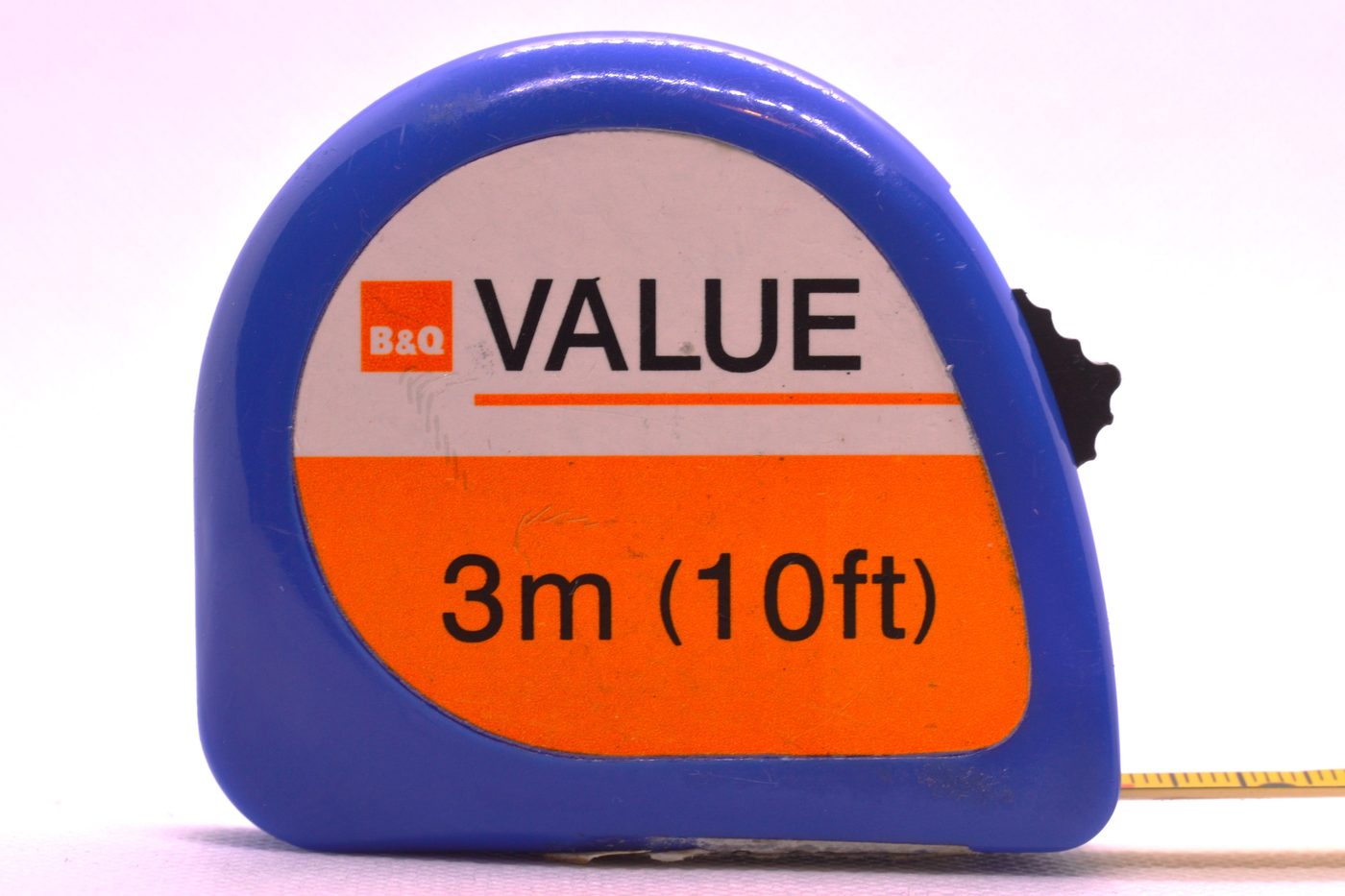
A 3m (10ft) measuring tape
A 3m (10ft) measuring tape (Source: Wikimedia Commons)

  • L-Square Ruler facilitates drafting of straight seams and perpendicular lines, crucial for establishing garment structure and balance.
  • French Curve enables designers to draft elegant curves that reflect natural body shapes, essential for ladies’ garments like blouses and dresses.
  • Pattern Paper provides a reusable medium on which patterns can be sketched, modified, and stored. Its translucency assists in overlaying and aligning pattern pieces.
  • Tailor’s Chalk is used to mark temporary lines on fabric or paper, allowing for easy corrections during fitting and adjustments.

2.1.2 Supporting Equipment for Enhanced Precision

Beyond the essential tools, additional equipment supports the refinement and durability of freehand patterns. These tools are particularly useful in professional Kenyan design studios where multiple pattern versions and prototypes are common.

Name Specification Use
Curve Ruler Plastic, varied curve shapes including hip and neckline curves To draft specific body contour curves with precision
Hip Curve Rigid plastic, approximately 50 cm length, gently curved To shape hip and waist curves accurately
Pattern Weights Metal or plastic, approximately 200 grams each To hold pattern paper steady during drafting and cutting
Tracing Wheel Plastic or metal wheel with serrated edges To transfer pattern markings onto fabric or paper
Eraser Soft rubber or vinyl To correct pencil markings on pattern paper
  • Curve Ruler offers a variety of curves that allow for detailed shaping of garment edges, reducing manual error in freehand drafting.
  • Hip Curve is designed specifically for drafting hips and waistlines, crucial for ladies’ skirts and dresses.
  • Pattern Weights secure pattern paper on cutting tables, preventing shifts that could distort measurements.
  • Tracing Wheel is used to replicate pattern outlines or seam allowances onto fabric, facilitating accurate cutting.
  • Eraser ensures clean and precise pattern lines by removing unwanted pencil marks without damaging the paper.

2.1.3 Maintenance and Care of Freehand Drafting Tools

Proper maintenance of drafting tools extends their lifespan and preserves their accuracy, which is vital in the Kenyan fashion industry where tools may be used intensively in production cycles. Neglecting tool care can lead to inaccurate patterns and increased material wastage.

Cleaning and Storage

  • Measuring Tapes should be wiped clean after use to remove dust and sweat, then rolled loosely and stored in a dry container to prevent stretching or damage.
  • Rulers and Curves require regular cleaning with a soft cloth to remove chalk or pencil residue, stored flat or hung to avoid warping.
  • Pattern Paper should be kept flat in a dry environment and protected from tears or moisture to maintain usability.
  • Tailor’s Chalk must be capped or stored in a container to avoid breakage and drying out.
  • Tracing Wheels benefit from occasional oiling of the wheel axle to ensure smooth rolling.

Handling Practices

  • Use measuring tapes gently to avoid stretching the fabric or tape itself.
  • Avoid dropping metal rulers or curves to prevent dents or bends.
  • Replace tailor’s chalk when it becomes too small to handle effectively.
  • Store all tools in a dedicated toolbox or drawer to prevent loss and damage.

2.1.4 Technological Enhancements in Freehand Drafting Tools

While traditional tools remain fundamental, Kenyan fashion designers increasingly integrate technology-enhanced drafting tools to improve efficiency and precision. Digital aids complement freehand techniques, especially in busy design studios and fashion institutes.

  • Digital Measuring Tapes with electronic readouts reduce human error in measurement taking, speeding up the process in tailoring workshops.
  • Computer-Aided Design (CAD) Software integrates with freehand drafting by allowing scanned patterns to be digitized, modified, and stored for mass production.
  • Laser Pattern Projectors assist in tracing complex pattern shapes accurately onto fabric, reducing manual drafting time.
  • Smart Stylus and Tablets enable designers to sketch freehand directly into digital platforms, preserving the spontaneity of freehand drafting with the benefits of digital editing.

These technological tools are increasingly adopted by institutions such as the Kenya Textile Training Institute and major fashion houses in Nairobi, blending traditional craftsmanship with modern efficiency.

Practice Questions

  1. List and describe five essential tools used in freehand garment pattern drafting and explain their specific uses. (10 marks)
  2. Explain how proper maintenance of freehand drafting tools impacts the quality of garment construction. Provide at least five maintenance practices. (10 marks)
  3. Discuss the role of technological tools in enhancing freehand pattern drafting in Kenyan fashion design studios, giving three examples. (10 marks)
The rest of this chapter
🔒

Create a free account to open more of this chapter.

Free: practical guides, quick cards, workplace scenarios and more.

Create a free account
🔒2.2 Drafting Basic Freehand Patterns

Drafting basic freehand garment patterns is a fundamental skill for fashion designers in Kenya, enabling them to create original designs without relying solely on commercial patterns. This skill allows designers to customize garments to specific body measureme…

🔒2.3 Development of basic free hand pattern pieces

In the Kenyan fashion design industry, mastery of freehand pattern drafting is essential for creating bespoke ladies' garments that meet client specifications and embrace local fashion trends. Freehand pattern development allows designers to customize garment…

Chapter Summary

This chapter introduced the essential tools and equipment used in freehand drafting, emphasizing their roles in achieving accuracy and efficiency. It then detailed the process of drafting basic freehand patterns, focusing on how to translate body measurements into flat pattern shapes without the aid of pre-made templates. The development of basic freehand pattern pieces was explored, showing how initial drafts are refined and adjusted to create garment components that fit properly and maintain design integrity. Attention was given to the practical skills required for manipulating lines and curves to form accurate patterns for ladies' garments. Throughout the chapter, the importance of precision in measurement and the ability to visualize garment structure from flat patterns were underscored. The knowledge gained equips learners with foundational skills necessary for customized garment construction in a variety of fashion contexts.

Self-Assessment

🔒 PDFDownload this self-assessment, with answers

A. Written Assessment

  1. Identify five essential tools used in freehand garment pattern drafting and explain their specific functions. (10 marks)
  2. Multiple choice: Which tool is primarily used to draw smooth curved lines on a pattern piece?
    a) L-square
    b) French curve
    c) Measuring tape
    d) Tailor’s chalk (2 marks)
🔒20 more in this section.

Chapter Examination Questions

🔒 PDFDownload these examination questions, with worked answers

SECTION A (40 Marks) - Answer ALL Questions

  1. Identify five essential tools and equipment used in freehand drafting for ladies' garments construction and explain their specific functions in the drafting process. (4 marks)
  2. Describe the process of drafting a basic bodice block freehand, highlighting the key measurements required. (4 marks)
🔒18 more in this section.
Flashcards 20 cards Study deck ▾
Question
1

↻ Tap card to reveal answer
🔒

18 more in this section.

Create a free account
Test Yourself 18 questions Start quiz ▾
0%
0 / 2
🔒

16 more in this section.

Create a free account
Am I competent?

At the start of this chapter we promised you would be able to:

  • Identify and gather all the tools and equipment needed for freehand pattern drafting.
  • Draft basic garment patterns freehand with accuracy.
  • Develop basic freehand garment pattern pieces correctly and confidently.

Tick each one you can genuinely do.

So, are you there yet?

You're competent when you can confidently do 50% or more of what this chapter promised.

Sign in to record how you're doing.