
By the end of this chapter, you will be able to:
Mastering these skills will help you work safely and confidently with sewing machines, ensuring professional results in the garment industry.
Operating a sewing machine is a fundamental skill in fashion design, essential for producing high-quality garments efficiently and safely. In the Kenyan fashion industry, whether in tailoring shops in Nairobi or garment production units in Mombasa, proper operation enhances productivity and ensures both the safety of the operator and the durability of the finished product. This chapter focuses on the critical aspects of operating sewing machines, starting with the use of personal protective equipment (PPE) and maintaining workshop safety, which are prerequisites for any professional fashion designer working in a busy tailoring environment.
Personal protective equipment is designed to protect workers from hazards that can cause injury or illness. In sewing workshops, PPE is tailored to address specific risks associated with machine operation and handling of materials.
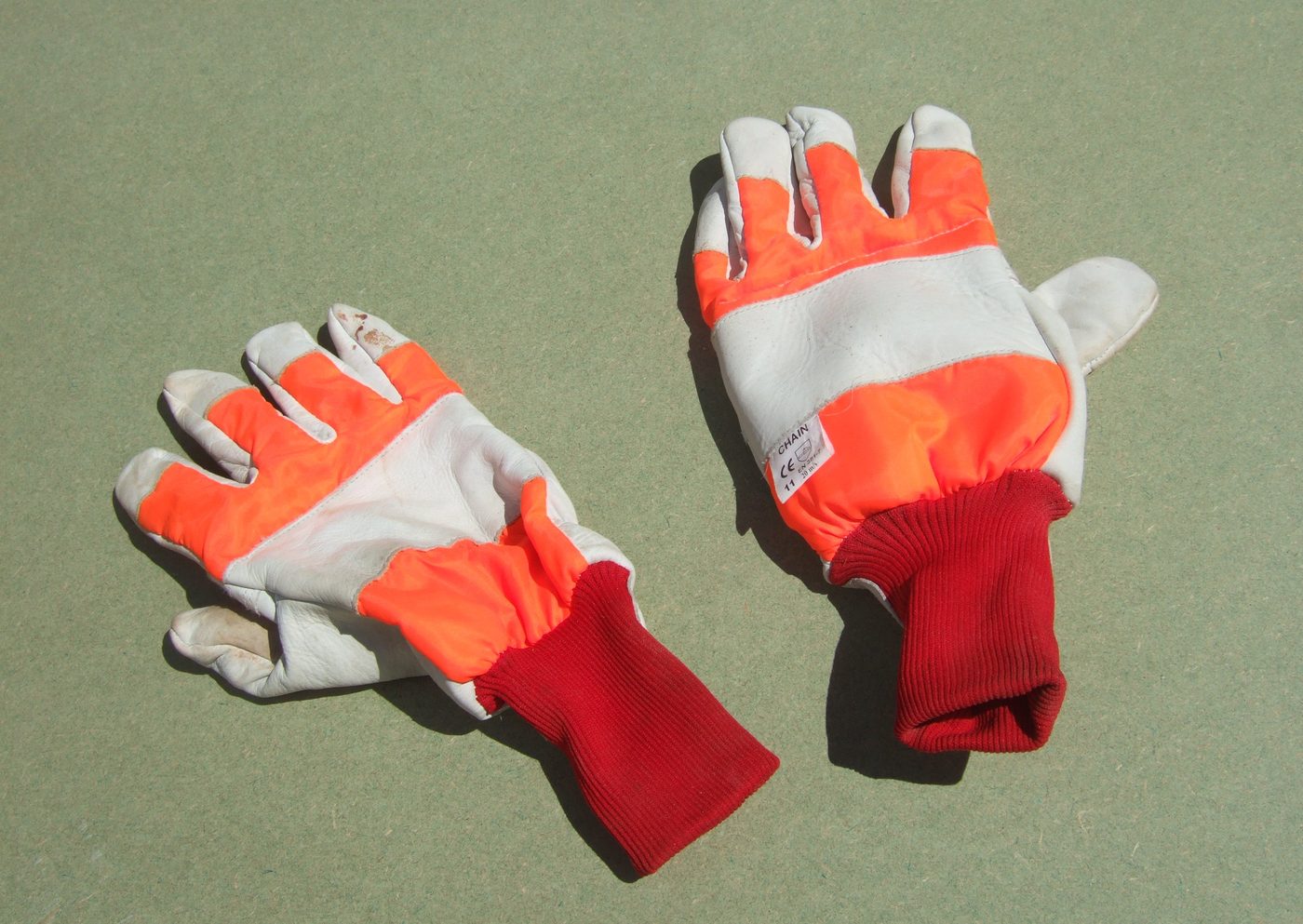
A pair of protective gloves (Source: Wikimedia Commons)
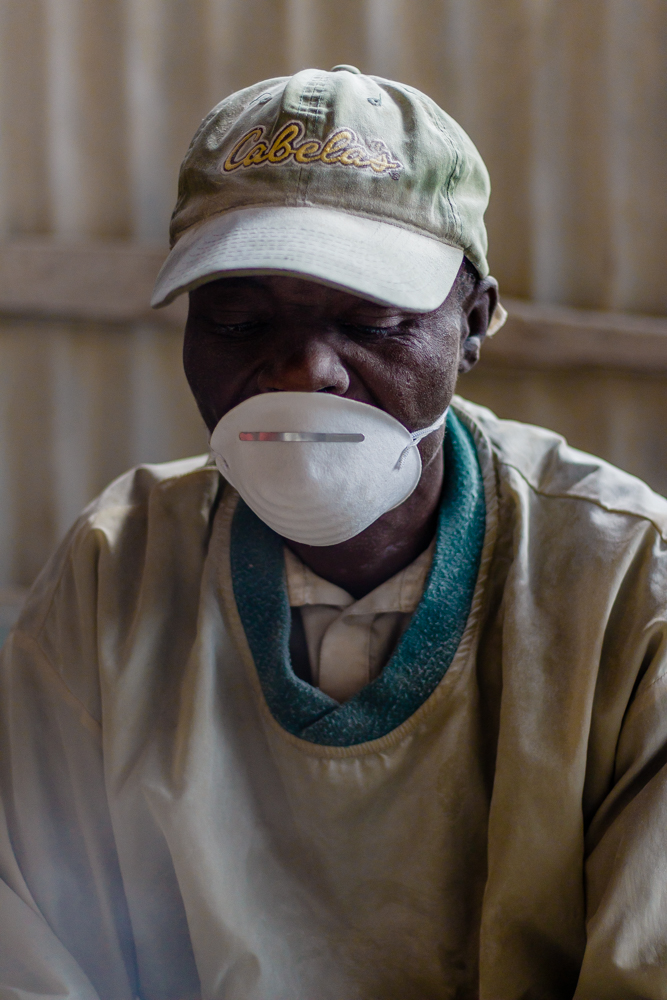
Person wearing a dust mask (Source: Wikimedia Commons)
The consistent use of these PPE items significantly reduces the risk of common injuries in tailoring workshops, such as needle punctures, cuts, eye injuries, and respiratory problems.
Maintaining a safe working environment in sewing workshops is crucial for preserving the health and productivity of fashion design professionals. Safety protocols not only prevent accidents but also enhance workflow efficiency by minimizing downtime caused by injuries.
Safe operation of sewing machines requires a systematic approach that combines proper preparation, correct machine handling, and routine maintenance. These procedures minimize accidents and extend the lifespan of the equipment.
Adhering to these steps is vital in tailoring workshops where multiple machines operate simultaneously, reducing the likelihood of accidents and ensuring smooth production flow.
Recognizing and managing hazards in the sewing workshop is essential to safeguard health and maintain uninterrupted garment production. Awareness of typical dangers enables proactive prevention strategies.
Create a free account to open more of this chapter.
Free: practical guides, quick cards, workplace scenarios and more.
Create a free accountThis chapter covered essential aspects of operating a sewing machine, beginning with the importance of personal protective equipment and workshop safety to prevent injuries and maintain a secure working environment. It then explored various types of sewing machines, highlighting their specific applications and suitability for different textile tasks. The functions of these machines were examined, detailing how they facilitate stitching and fabric manipulation. A thorough review of sewing machine parts and their functions provided insight into the role of each component in the sewing process. The chapter also explained the correct procedure for threading the machine to ensure smooth operation. Testing sewing machine stitches was discussed as a vital step to verify stitch quality and machine readiness. Finally, adjustments to sewing machine stitches were outlined to enable customization of stitch length and tension for optimal sewing results.
Type: Individual
| Tools & Equipment | Materials |
|---|---|
| Manual sewing machine | Thread |
| Electric sewing machine | Fabric 50cm x 50cm |
| Overlock sewing machine | Log book / log sheet |
| Embroidery sewing machine | Personal protective equipment (PPE) set |
| Soft brush | |
| Lint free cloth | |
| Screwdriver set | |
| Sewing machine oil | |
| Machine needle | |
| Tweezer | |
| Pen |
| S/N | Item | Quantity |
|---|---|---|
| 1 | Manual sewing machine | 1 Pc per Candidate |
| 2 | Electric sewing machine | 1 Pc per Candidate |
| 3 | Overlock sewing machine | 1 Pc per Candidate |
| 4 | Embroidery sewing machine | 1 Pc per Candidate |
| 5 | Soft brush | 1 Pc per Candidate |
| 6 | Lint free cloth | 1 Pc per Candidate |
| 7 | Screwdriver set | 1 Set per Candidate |
| 8 | Sewing machine oil | 1 Small bottle per Candidate |
| 9 | Machine needle | 1 Pc per Candidate |
| 10 | Tweezer | 1 Pc per Candidate |
| 11 | Thread | 1 Small cone per Candidate |
| 12 | Fabric 50cm x 50cm | 1 Pc per Candidate |
| 13 | Log book / log sheet | 1 Pc per Candidate |
| 14 | Pen | 1 Pc per Candidate |
| 15 | Personal protective equipment (PPE) set | 1 Set per Candidate |
| Items to be Evaluated | Marks Available | Marks Obtained | Comments |
|---|---|---|---|
| TASK 1: Prepare and observe safety measures | |||
| Wore appropriate PPE including dust coat, closed shoes, and gloves (Award 1 mark each) | 3 | ||
| Ensured well-ventilated and well-lit working area (Award 1 mark each) | 2 | ||
| Gathered all required tools, equipment and materials as per standard operating procedures (Award 1 mark each) | 5 | ||
| Sub-Total | 10 | ||
| TASK 2: Identify and explain sewing machine types | |||
| Identified Manual sewing machine and explained its use for basic stitching and repairs (Award 4 marks for correct identification and explanation) | 4 | ||
| Identified Electric sewing machine and explained its use for faster stitching and varied stitch patterns (Award 4 marks for correct identification and explanation) | 4 | ||
| Identified Overlock sewing machine and explained its use for edge finishing and seam trimming (Award 4 marks for correct identification and explanation) | 4 | ||
| Identified Embroidery sewing machine and explained its use for decorative stitching and embroidery (Award 4 marks for correct identification and explanation) | 4 | ||
| Sub-Total | 16 | ||
| TASK 3: Demonstrate routine cleaning and maintenance | |||
| Cleaned each sewing machine removing lint, dust and thread using soft brush and lint free cloth (Award 1 mark each) | 5 | ||
| Oiled the sewing machines at correct points without over-lubricating (Award 1 mark each) | 4 | ||
| Checked and replaced bent or blunt needles where necessary (Award 1 mark each) | 3 | ||
| Disposed of waste responsibly according to safety and environmental guidelines (Award 2 marks) | 2 | ||
| Logged maintenance activity accurately in the log book with date and signature (Award 5 marks) | 5 | ||
| Sub-Total | 19 | ||
| TASK 4: Presentation and reporting | |||
| Presented a neat and well-organized log sheet with clear explanations (Award 5 marks) | 5 | ||
| Ensured workspace was clean and tools properly stored after task completion (Award 3 marks) | 3 | ||
| Reported any faults or hazards to the instructor (Award 3 marks) | 3 | ||
| Sub-Total | 11 | ||
| PRODUCT CHECKLIST | |||
| Correct identification of four sewing machine types with accurate explanations of their uses (Award 5 marks each for correct identification and explanation) | 20 | ||
| Cleaned and maintained sewing machines as per standard procedures (Award 15 marks for thorough cleaning, oiling and needle inspection) | 15 | ||
| Complete and accurate log book/report with date and signature (Award 10 marks) | 10 | ||
| Sub-Total | 45 | ||
| GRAND TOTAL | 101 | ||
Type: Individual
| Tools & Equipment | Materials |
|---|---|
| Manual sewing machine | Thread |
| Soft brush | Fabric 50cm x 50cm |
| Lint free cloth | Log book / log sheet |
| Screwdriver set | Personal protective equipment |
| Sewing machine oil | A4 envelope |
| Machine needle | |
| Tweezer | |
| Pen |
| S/N | Item | Quantity |
|---|---|---|
| 1 | Manual sewing machine | 1 Pc per Candidate |
| 2 | Soft brush | 1 Pc per Candidate |
| 3 | Lint free cloth | 1 Pc per Candidate |
| 4 | Screwdriver set | 1 Set per Candidate |
| 5 | Sewing machine oil | 1 Small bottle per Candidate |
| 6 | Machine needle | 1 Pc per Candidate |
| 7 | Tweezer | 1 Pc per Candidate |
| 8 | Thread | 1 Small cone per Candidate |
| 9 | Fabric 50cm x 50cm | 1 Pc per Candidate |
| 10 | Log book / log sheet | 1 Pc per Candidate |
| 11 | Pen | 1 Pc per Candidate |
| 12 | Personal protective equipment (dust coat, closed shoes) | 1 Set per Candidate |
| 13 | A4 envelope | 1 Pc per Candidate |
| Items to be Evaluated | Marks Available | Marks Obtained | Comments |
|---|---|---|---|
| TASK 1: Preparation and Safety | |||
| Wore appropriate PPE (dust coat, closed shoes) (Award 1 mark each) | 3 | ||
| Observed occupational safety: ensured well ventilation, adequate lighting, and tidy workspace (Award 1 mark each) | 3 | ||
| Gathered required tools, supplies, and equipment as per SOP (Award 1 mark each) | 12 | ||
| Identified the manual sewing machine correctly (Award 2 marks) | 2 | ||
| Cleaned the sewing machine: removed thread, lint, dust; cleaned tension discs and feed dogs; disposed waste responsibly (Award marks based on thoroughness and correct procedure) | 24 | ||
| Oiled the sewing machine correctly: identified oiling points, applied correct amount, wiped excess oil (Award marks for correct oiling technique) | 12 | ||
| Inspected sewing machine parts: needle condition, tension discs, thread path, belts, screws (Award marks for thorough inspection and correct identification) | 12 | ||
| Tested sewing machine functionality: smooth handwheel motion, test stitching on fabric, adjusted tension if needed (Award marks for correct testing and adjustments) | 12 | ||
| Sub-Total | 80 | ||
| TASK 2: Documentation and Reporting | |||
| Maintained tidy and safe workspace throughout task (Award 5 marks) | 5 | ||
| Followed manufacturer's maintenance guidelines and institutional SOPs (Award 5 marks) | 5 | ||
| Reported faults, missing parts, or hazards to instructor (Award 5 marks) | 5 | ||
| Logged maintenance activity accurately in log book/log sheet with date and signature (Award 5 marks) | 5 | ||
| Sub-Total | 20 | ||
| PRODUCT CHECKLIST | |||
| Packaged stitched fabric and log book/log sheet in provided envelope labelled correctly (Award 2 marks) | 2 | ||
| Stitched fabric presentation: pressed, folded neatly, no hanging threads, no soiling, correct stitch tension (Award 2 marks each for neatness and correct stitch tension) | 4 | ||
| Report summary in log book: date and signature present and legible (Award 4 marks) | 4 | ||
| Sub-Total | 10 | ||
| GRAND TOTAL | 110 | ||
At the start of this chapter we promised you would be able to:
Tick each one you can genuinely do.
So, are you there yet?
You're competent when you can confidently do 50% or more of what this chapter promised.
Sign in to record how you're doing.