
Fabric decoration is a key skill in fashion design, enhancing the aesthetic appeal and uniqueness of textiles used in garment making. In Kenya’s diverse fashion industry, professionals often engage in techniques such as tie and dye and fabric printing to create bespoke fabrics that meet market demand for originality and cultural expression. Proper execution of these decoration methods requires not only creativity but also strict adherence to safety protocols to protect artisans from chemical and physical hazards. This chapter focuses on the essential role of personal protective equipment in ensuring safe and effective fabric decoration.
Personal protective equipment (PPE) is critical in the fabric decoration process, particularly in tie and dye and printing techniques where exposure to dyes, chemicals, and machinery is common. In Kenyan fashion design studios and workshops, the use of appropriate PPE safeguards workers against health risks and injuries, enabling sustained productivity and compliance with occupational safety regulations. Understanding the types, proper use, and maintenance of PPE is fundamental for any fashion professional involved in fabric decoration.
Different PPE items serve specific protective functions during fabric decoration activities. Selecting the correct type depends on the hazards present, such as chemical splashes, inhalation of fumes, or mechanical injuries from equipment.
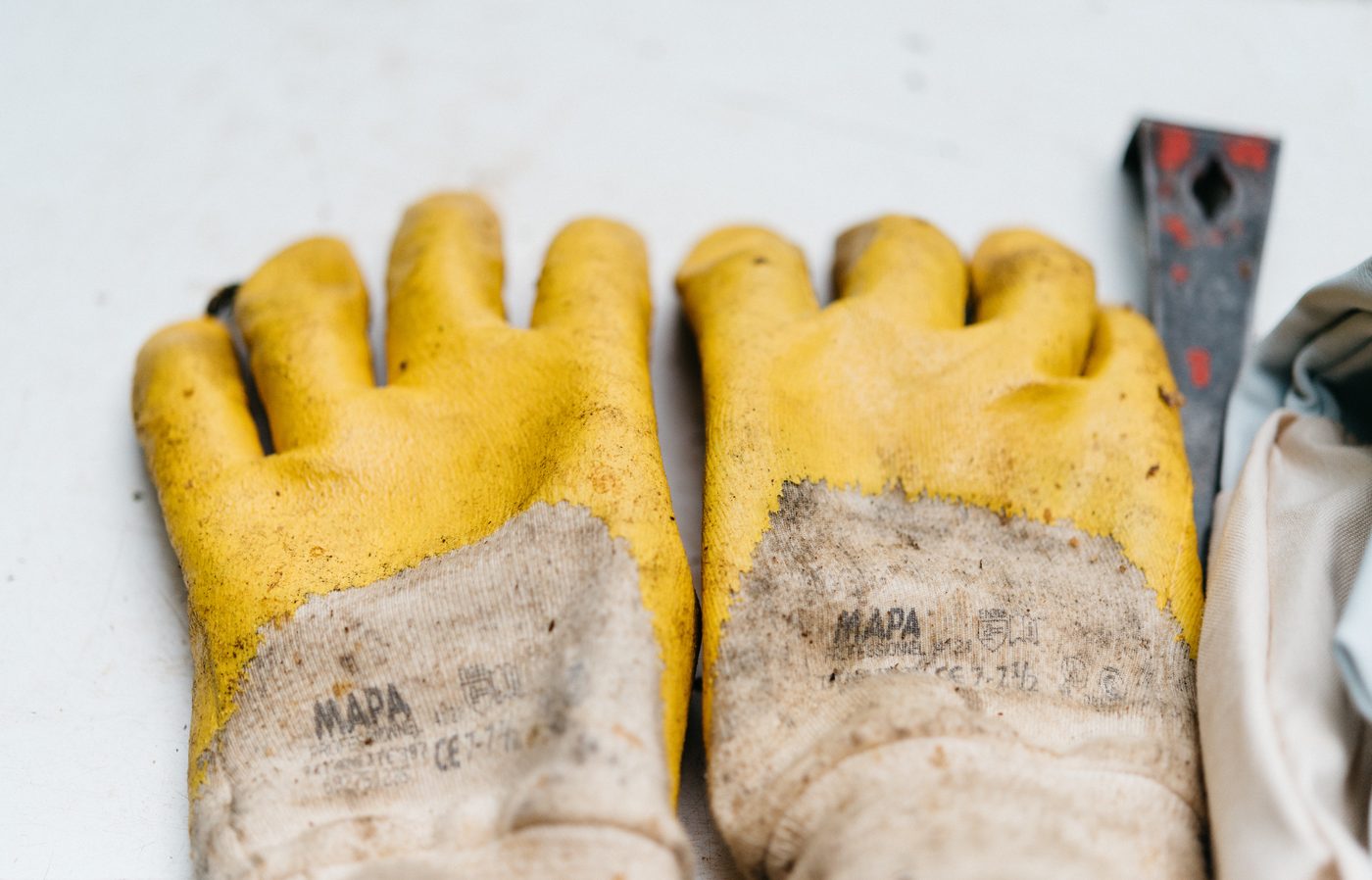
Pair of yellow work gloves used in carpentry (Source: Wikimedia Commons)
Correct usage of PPE maximizes its protective benefits and minimizes workplace accidents. Fashion designers and fabric decorators must be trained on how to wear, adjust, and dispose of PPE appropriately.
Maintaining PPE in good condition extends its lifespan and ensures ongoing protection during fabric decoration processes. Proper disposal prevents environmental contamination and health risks.
Compliance with PPE protocols is crucial for sustaining a safe work environment and enhancing the reputation of fashion businesses. In Kenya, adherence to occupational safety standards, such as those outlined by the Directorate of Occupational Safety and Health Services (DOSHS), protects workers and supports business continuity.
Explain the role of gloves in protecting fabric decorators during tie and dye processes. (5 marks)
Describe the steps to properly wear and remove a mask used in fabric printing workshops. (6 marks)
Discuss five maintenance practices necessary to prolong the usability of reusable PPE in fashion studios. (10 marks)
Identify and explain the benefits of compliance with PPE regulations in Kenyan fashion design environments. (10 marks)
Create a free account to open more of this chapter.
Free: practical guides, quick cards, workplace scenarios and more.
Create a free accountThis chapter covers the essential steps involved in carrying out fabric decoration, starting with the use of personal protective equipment to ensure safety during the process. It then explains how to prepare the decoration ingredients accurately, which is crucial for achieving the desired fabric patterns and colors. The chapter also highlights the importance of fabric preparation, including cleaning and conditioning the fabric to receive the decoration materials effectively. Finally, it details the fabric decoration techniques themselves, focusing on tie and dye and printing methods that transform plain textiles into vibrant, patterned fabrics. Each stage is interconnected, emphasizing the need for careful execution to produce high-quality decorated fabrics. Understanding these processes equips learners with practical skills to work efficiently and safely in fabric decoration.
Type: Individual
| Tools & Equipment | Materials |
|---|---|
| Small buckets | Cotton fabric (55 cm x 55 cm) |
| Stirring rod | Cotton twine |
| Jiko/gas stove | VAT dyes (assorted colors) |
| Electric kettle | Caustic soda |
| Large sufuria | Sodium hydro-sulphate |
| Measuring jar | Liquid detergent |
| Spoons | Hand gloves |
| Pegs | Nose masks |
| Iron | Dust coat |
| A4 envelope |
| S/N | Item | Quantity |
|---|---|---|
| 1 | Cotton fabric (55 cm x 55 cm) | 1 Pc per Candidate |
| 2 | Cotton twine | 1 small ball per 5 Candidates |
| 3 | Small buckets | 1 Pc per Candidate |
| 4 | Stirring rod | 1 Pc per Candidate |
| 5 | Jiko/gas stove | 1 per 10 Candidates |
| 6 | Electric kettle | 1 per 10 Candidates |
| 7 | Large sufuria | 1 Pc per 10 Candidates |
| 8 | Liquid detergent | 150 ml per Candidate |
| 9 | Iron | 1 per 10 Candidates |
| 10 | Measuring jar | 1 Pc per Candidate |
| 11 | Spoons | 3 Pcs per Candidate |
| 12 | Pegs | 3 Pcs per Candidate |
| 13 | VAT dyes (assorted colors) | 50 grams per Candidate |
| 14 | Caustic soda | 50 grams per Candidate |
| 15 | Hand gloves | 1 set per Candidate |
| 16 | Nose masks | 1 Pc per Candidate |
| 17 | Sodium hydro-sulphate | 50 grams per Candidate |
| 18 | A4 envelope | 1 Pc per Candidate |
| 19 | Dust coat | 1 Pair per Candidate |
| Items to be Evaluated | Marks Available | Marks Obtained | Comments |
|---|---|---|---|
| TASK 1: Preparation and safety | |||
| Wore all personal protective equipment correctly (dust coat, gloves, nose mask) (Award 1 mark each) | 3 | ||
| Ensured work area is well ventilated and well lit (Award 1 mark each) | 2 | ||
| Checked tools and equipment for serviceability and sufficiency (Award 1 mark) | 1 | ||
| Identified and gathered all required tools, materials and chemicals (Award 1 mark each) | 3 | ||
| Sub-Total | 9 | ||
| TASK 2: Preparation of vat dye bath | |||
| Measured 2 liters of warm water using measuring jar and kettle (Award 2 marks) | 2 | ||
| Added caustic soda in correct proportion and stirred thoroughly (Award 3 marks) | 3 | ||
| Added VAT dye powder (50 grams) and stirred to dissolve completely (Award 3 marks) | 3 | ||
| Added sodium hydro-sulphate (50 grams) and mixed well (Award 2 marks) | 2 | ||
| Maintained appropriate temperature and agitation throughout preparation (Award 3 marks) | 3 | ||
| Sub-Total | 13 | ||
| TASK 3: Fabric preparation and finishing | |||
| Washed fabric with liquid detergent and rinsed thoroughly (Award 2 marks) | 2 | ||
| Dried and ironed fabric to remove creases (Award 2 marks) | 2 | ||
| Tied fabric with cotton twine appropriately for decoration (Award 3 marks) | 3 | ||
| Prepared fabric for dyeing by soaking in warm water (Award 2 marks) | 2 | ||
| Sub-Total | 9 | ||
| PRODUCT CHECKLIST | |||
| Vat dye bath solution prepared to correct volume (2 liters) and chemical proportions (Award 3 marks) | 3 | ||
| Fabric properly washed, dried, ironed and tied ready for decoration (Award 3 marks) | 3 | ||
| Work area cleaned and tools stored correctly (Award 2 marks) | 2 | ||
| All PPE used correctly throughout (Award 2 marks) | 2 | ||
| Sub-Total | 10 | ||
| GRAND TOTAL | 41 | ||
Type: Individual
| Tools & Equipment | Materials |
|---|---|
| Small buckets | Cotton fabric (55 cm x 55 cm) |
| Stirring rod | Cotton twine |
| Jiko/gas stove | Liquid detergent |
| Electric kettle | Hand gloves |
| Large sufuria | Nose mask |
| Iron | Dust coat |
| Measuring jar | |
| Spoons | |
| Pegs | |
| Cutting table |
| S/N | Item | Quantity |
|---|---|---|
| 1 | Cotton fabric (55 cm x 55 cm) | 1 Pc per Candidate |
| 2 | Cotton twine | 1 small ball per 5 Candidates |
| 3 | Small buckets | 1 Pc per Candidate |
| 4 | Stirring rod | 1 Pc per Candidate |
| 5 | Jiko/gas stove | 1 Pc per 10 Candidates |
| 6 | Electric kettle | 1 Pc per 10 Candidates |
| 7 | Large sufuria | 1 Pc per 10 Candidates |
| 8 | Liquid detergent | 150 ml per Candidate |
| 9 | Iron | 1 Pc per 10 Candidates |
| 10 | Measuring jar | 1 Pc per Candidate |
| 11 | Spoons | 3 Pcs per Candidate |
| 12 | Pegs | 3 Pcs per Candidate |
| 13 | Hand gloves | 1 Set per Candidate |
| 14 | Nose mask | 1 Pc per Candidate |
| 15 | Dust coat | 1 Pair per Candidate |
| 16 | Cutting table | 1 Pc per 4 Candidates |
| Items to be Evaluated | Marks Available | Marks Obtained | Comments |
|---|---|---|---|
| TASK 1: Observe Safety and Preparation | |||
| Identified and wore personal protective equipment (dust coat, hand gloves, nose mask) (Award 1 mark each) | 3 | ||
| Ensured workshop is well ventilated and well lit (Award 1 mark each) | 2 | ||
| Checked serviceability of tools and equipment before use (Award 1 mark) | 1 | ||
| Sub-Total | 6 | ||
| TASK 2: Gather Tools, Materials and Equipment | |||
| Collected all required tools and materials as per job requirements (Award 1 mark each for key items: fabric, detergent, twine, buckets, iron) | 5 | ||
| Sub-Total | 5 | ||
| TASK 3: Prepare Fabric for Decoration | |||
| Washed the cotton fabric thoroughly using liquid detergent and warm water (Award 3 marks) | 3 | ||
| Rinsed and squeezed excess water without damaging fabric (Award 2 marks) | 2 | ||
| Dried the fabric by hanging with pegs under shade (Award 3 marks) | 3 | ||
| Ironed the dried fabric to remove wrinkles and straighten grain (Award 4 marks) | 4 | ||
| Stretched and arranged the fabric flat on the cutting table ready for decoration (Award 3 marks) | 3 | ||
| Sub-Total | 15 | ||
| TASK 4: Clean-up and Resource Management | |||
| Cleaned all tools and equipment after use (Award 2 marks) | 2 | ||
| Disposed of wastewater and chemical residues safely as per workplace policy (Award 2 marks) | 2 | ||
| Stored tools and materials in designated places (Award 2 marks) | 2 | ||
| Utilized materials efficiently with no wastage (Award 2 marks) | 2 | ||
| Sub-Total | 8 | ||
| PRODUCT CHECKLIST | |||
| Fabric piece measures exactly 55 cm x 55 cm and is free from wrinkles (Award 3 marks) | 3 | ||
| Fabric is clean, dry, and evenly stretched flat on the table (Award 3 marks) | 3 | ||
| Fabric grain is straight and aligned properly (Award 2 marks) | 2 | ||
| Sub-Total | 8 | ||
| GRAND TOTAL | 42 | ||