
By the end of this chapter, you will be able to:
These skills will help you work confidently and safely with sewing machines, making your work precise and professional in the trade.
Operating a sewing machine is a fundamental skill for fashion design professionals in Kenya, directly influencing garment quality and production efficiency. Mastery of the sewing machine requires a thorough understanding of safety and proper use of personal protective equipment (PPE) to prevent accidents and maintain a safe working environment. In workshops across Nairobi and other urban centres, adherence to safety protocols supports uninterrupted workflow and protects workers from injury.
The use of appropriate PPE and the implementation of safety measures in the sewing workshop are critical to protect fashion designers and tailors from common hazards such as needle injuries, cuts, and repetitive strain. Kenya’s textile and fashion industry, including small-scale tailoring shops and larger garment factories, must comply with safety standards to reduce workplace incidents and ensure worker wellbeing. This topic explores the types of PPE needed, key safety practices, and how these contribute to a productive and hazard-free workshop.
Personal protective equipment forms the first line of defence against occupational hazards in fashion design workshops. Understanding the specific PPE required helps operators minimize risks associated with sewing machine operation.
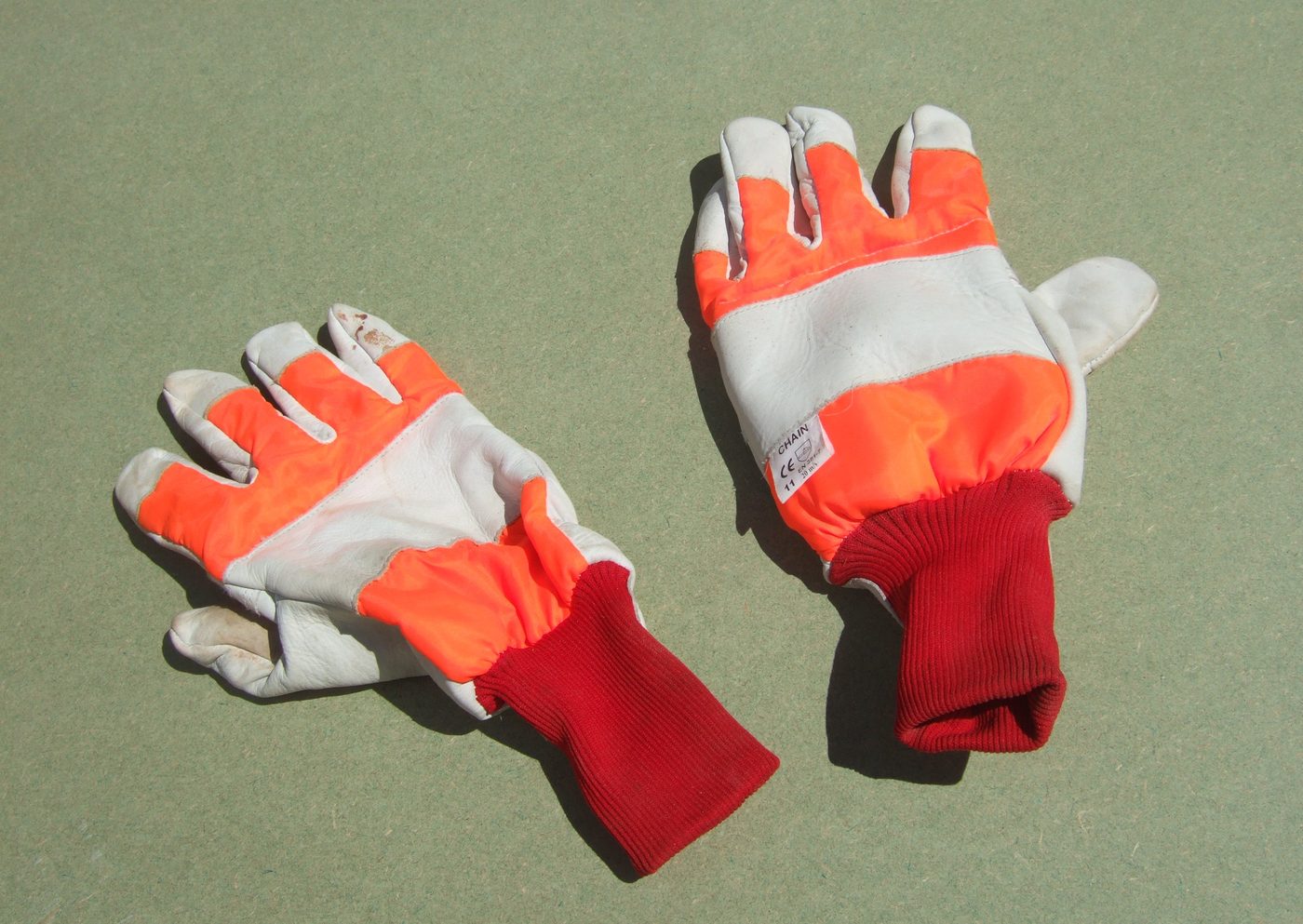
A pair of protective gloves (Source: Wikimedia Commons)
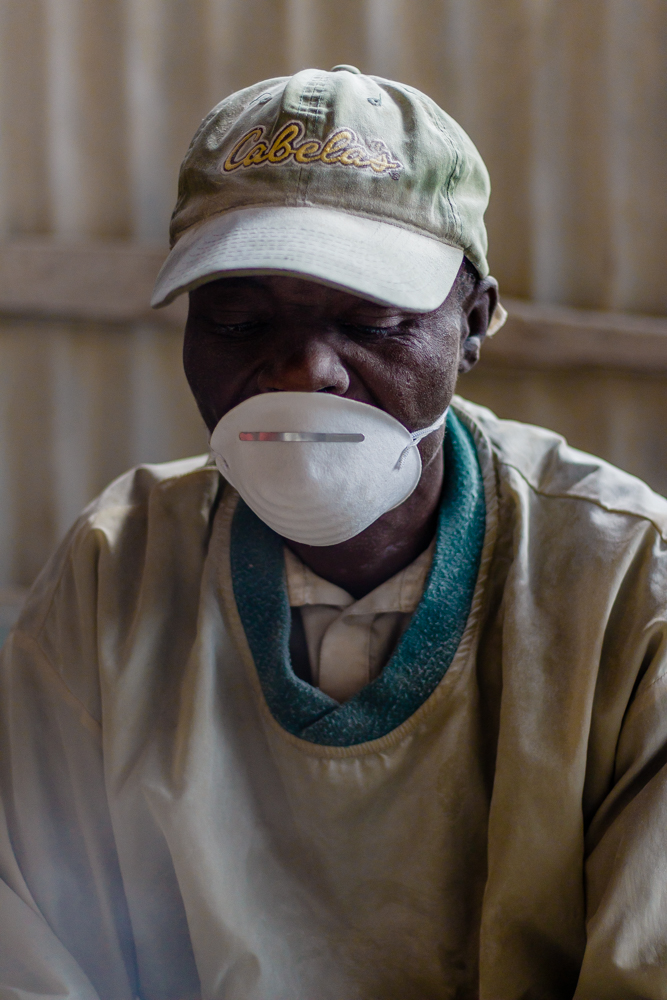
Person wearing a dust mask (Source: Wikimedia Commons)
These PPE items are essential in tailoring workshops in counties like Mombasa and Kisumu, where environmental dust and high production volumes increase exposure to hazards.
Maintaining a safe working environment in the sewing workshop involves systematic practices that reduce the likelihood of accidents and promote efficiency. Safety protocols are especially important in busy tailoring shops where multiple operators work simultaneously.
At institutions like the Kenya Institute of Textile and Fibre Technology, these practices are integrated into training to instil a culture of safety among fashion design students.
The consistent use of PPE and adherence to safety protocols safeguard the health of sewing machine operators and contribute to the overall productivity of fashion enterprises. Non-compliance can lead to injuries that disrupt operations and increase costs.
In Nairobi’s competitive fashion sector, brands that prioritise safety and PPE usage gain reputations for professionalism and quality, attracting discerning clients.
Despite the clear benefits, many fashion workshops in Kenya face obstacles in fully implementing PPE use and safety protocols. Addressing these challenges is vital for sustaining safe working conditions.
At cooperative societies supporting fashion artisans, these approaches have led to measurable improvements in safety compliance and reduced injury rates.
Explain five types of personal protective equipment essential for sewing machine operators and how each protects against specific hazards in a fashion design workshop. (10 marks)
Describe six workshop safety practices that help prevent accidents when operating a sewing machine in a tailoring environment. (12 marks)
Discuss five reasons why compliance with PPE use and safety protocols is important in Kenyan fashion workshops. (10 marks)
Identify four challenges faced by small-scale fashion workshops in implementing PPE and safety measures and suggest strategies to address each challenge. (12 marks)
Create a free account to open more of this chapter.
Free: practical guides, quick cards, workplace scenarios and more.
Create a free accountThis chapter covered essential aspects of operating a sewing machine, starting with the importance of personal protective equipment and adhering to workshop safety protocols to prevent accidents. It then explored different types of sewing machines, highlighting their specific uses in various textile tasks. The functions of sewing machines were examined, explaining how each contributes to fabric construction and garment production. A detailed overview of sewing machine parts and their functions provided a foundational understanding necessary for effective machine handling. The chapter also addressed the correct procedures for threading a sewing machine, ensuring smooth operation and stitch quality. Testing sewing machine stitches was emphasized as a critical step to verify stitch integrity before production. Finally, the chapter discussed how to adjust sewing machine stitches to accommodate different fabric types and sewing requirements, ensuring precision and durability in finished products.
Which of the following is NOT considered appropriate personal protective equipment (PPE) when operating a sewing machine?
a) Safety goggles
b) Loose flowing sleeves
c) Closed-toe shoes
d) Finger guards
(2 marks)
Identify two main differences between a lockstitch and an overlock sewing machine. (4 marks)
Type: Individual
| Tools & Equipment | Materials |
|---|---|
| Straight Stitch Sewing Machine | Sewing Machine Needles |
| Overlock Sewing Machine | Assorted Sewing Threads |
| Buttonhole Sewing Machine | |
| Embroidery Sewing Machine | |
| Lint Brush | |
| Tweezers | |
| Machine Oil | |
| Dust Coat | |
| Low Heeled Closed Shoes | |
| Hand Gloves | |
| A4 Notebook and Pen |
| S/N | Item | Quantity |
|---|---|---|
| 1 | Straight Stitch Sewing Machine | 1 pc per candidate |
| 2 | Overlock Sewing Machine | 1 pc per candidate |
| 3 | Buttonhole Sewing Machine | 1 pc per candidate |
| 4 | Embroidery Sewing Machine | 1 pc per candidate |
| 5 | Sewing Machine Needles | 4 pcs per candidate |
| 6 | Assorted Sewing Threads | 3 reels per candidate |
| 7 | Lint Brush | 1 pc per candidate |
| 8 | Machine Oil | 100 ml per candidate |
| 9 | Tweezers | 1 pc per candidate |
| 10 | Dust Coat | 1 set per candidate |
| 11 | Low Heeled Closed Shoes | 1 pair per candidate |
| 12 | Hand Gloves | 1 pair per candidate |
| 13 | A4 Notebook and Pen | 1 set per candidate |
| Items to be Evaluated | Marks Available | Marks Obtained | Comments |
|---|---|---|---|
| TASK 1: Identification and Explanation of Sewing Machines | |||
| Identified and wore personal protective equipment correctly (dust coat, low heeled closed shoes, hand gloves) (Award 1 mark each) | 3 | ||
| Identified and obtained the four types of sewing machines correctly (Award 1 mark each) | 4 | ||
| Explained the specific use of each sewing machine type clearly (Award 2 marks each for four machines) | 8 | ||
| Described key features of each sewing machine type accurately (Award 2 marks each for four machines) | 8 | ||
| Used correct terminology and sewing machine parts during explanation (Award 1 mark each for four machines) | 4 | ||
| Maintained workshop cleanliness and proper handling of machines during task (Award 1 mark each for cleaning area, handling machines carefully, and disposing lint properly) | 3 | ||
| Sub-Total | 30 | ||
| TASK 2: Report Writing and Presentation | |||
| Prepared a written report of at least 300 words (Award 5 marks for meeting word count and completeness) | 5 | ||
| Presented information in logical sequence covering all four machine types (Award 1 mark per machine type explanation clarity) | 4 | ||
| Demonstrated good handwriting and legible writing (Award 3 marks for legibility and neatness) | 3 | ||
| Included illustrations or diagrams for at least two sewing machine types (Award 3 marks if diagrams are relevant and clear) | 3 | ||
| Sub-Total | 15 | ||
| PRODUCT CHECKLIST | |||
| Written report correctly identifies all four sewing machine types with accurate uses and features (Award up to 10 marks based on completeness and accuracy) | 10 | ||
| Report is well organized, neat, and includes relevant diagrams where applicable (Award up to 5 marks for presentation and clarity) | 5 | ||
| Sub-Total | 15 | ||
| GRAND TOTAL | 60 | ||
Type: Individual
| Tools & Equipment | Materials |
|---|---|
| Straight stitch sewing machine | Sewing machine needle |
| Screwdrivers | Bobbin and bobbin case |
| Tweezers | Machine thread (contrast colour) |
| Lint brush | Medium weight fabric (40 cm x 40 cm) |
| Cutting shears | Machine oil |
| Personal Protective Equipment (Dust coat, Low heeled closed shoes, Hand gloves) | |
| A4 envelope |
| S/N | Item | Quantity |
|---|---|---|
| 1 | Straight stitch sewing machine | 1 Pc per Candidate |
| 2 | Sewing machine needle | 1 Pc per Candidate |
| 3 | Bobbin and bobbin case | 1 Pc per Candidate |
| 4 | Machine thread (contrast colour) | 1 Reel per Candidate |
| 5 | Medium weight fabric (40 cm x 40 cm) | 1 Pc per Candidate |
| 6 | Lint brush (variety sizes) | 1 Pc per Candidate |
| 7 | Screwdrivers (assorted sizes) | 2 Pcs per Candidate |
| 8 | Tweezers | 1 Pc per Candidate |
| 9 | Machine oil | 100 ml per Candidate |
| 10 | Cutting shears | 1 Pc per Candidate |
| 11 | Personal Protective Equipment (Dust coat, Low heeled closed shoes, Hand gloves) | 1 Set per Candidate |
| 12 | A4 envelope | 1 Pc per Candidate |
| Items to be Evaluated | Marks Available | Marks Obtained | Comments |
|---|---|---|---|
| TASK 1: PPE Identification and Use | |||
| Identified dust coat and wore it correctly (Award 1 mark for correct use) | 1 | ||
| Identified and wore low heeled closed shoes (Award 1 mark for correct use) | 1 | ||
| Identified and wore hand gloves appropriately (Award 1 mark for correct use) | 1 | ||
| Sub-Total | 3 | ||
| TASK 2: Identification and Demonstration of Sewing Machine Parts | |||
| Identified the needle and explained its function (Award 2 marks for correct identification and function) | 2 | ||
| Identified the presser foot and explained its function (Award 2 marks for correct identification and function) | 2 | ||
| Identified the feed dog and explained its function (Award 2 marks for correct identification and function) | 2 | ||
| Identified the bobbin and bobbin case and explained their functions (Award 2 marks for correct identification and function) | 2 | ||
| Identified the hand wheel and explained its function (Award 2 marks for correct identification and function) | 2 | ||
| Identified the thread tension disc and explained its function (Award 2 marks for correct identification and function) | 2 | ||
| Identified the take-up lever and explained its function (Award 2 marks for correct identification and function) | 2 | ||
| Identified the spool pin and explained its function (Award 2 marks for correct identification and function) | 2 | ||
| Identified the needle clamp and explained its function (Award 2 marks for correct identification and function) | 2 | ||
| Identified the presser foot lifter and explained its function (Award 2 marks for correct identification and function) | 2 | ||
| Identified the stitch length regulator and explained its function (Award 2 marks for correct identification and function) | 2 | ||
| Identified the bobbin winder and explained its function (Award 2 marks for correct identification and function) | 2 | ||
| Sub-Total | 24 | ||
| TASK 3: Demonstrate Cleaning and Oiling | |||
| Turned off and unplugged the sewing machine before cleaning (Award 2 marks for correct safety procedure) | 2 | ||
| Removed needle and presser foot safely (Award 2 marks for correct procedure) | 2 | ||
| Opened bobbin cover and cleaned lint using lint brush and tweezers (Award 3 marks for thorough cleaning) | 3 | ||
| Applied oil to identified oiling points: bobbin area, needle bar, presser foot lever joints, hand wheel shaft (Award 4 marks for correct oiling procedure) | 4 | ||
| Wiped off excess oil and reassembled machine parts (Award 3 marks for neatness and reassembly) | 3 | ||
| Sub-Total | 14 | ||
| TASK 4: Test Sewing Machine Operation | |||
| Prepared the fabric and threaded the machine correctly (Award 3 marks for correct preparation and threading) | 3 | ||
| Tested straight stitch and reverse stitch on fabric (Award 3 marks for correct stitching and reversing) | 3 | ||
| Secured stitches at the beginning and end (Award 2 marks for correct securing) | 2 | ||
| Demonstrated adjustment of stitch length (Award 2 marks for correct stitch length adjustment) | 2 | ||
| Sub-Total | 10 | ||
| TASK 5: Finishing and Packaging | |||
| Trimmed and finished raw edges of the stitched fabric (Award 2 marks for neat finishing) | 2 | ||
| Ironed the fabric to remove creases (Award 1 mark for neat ironing) | 1 | ||
| Labeled and packaged the fabric in the A4 envelope (Award 1 mark for proper labeling and packaging) | 1 | ||
| Sub-Total | 4 | ||
| TASK 6: Clean Workstation and Waste Disposal | |||
| Cleaned the workstation and disposed waste as per workplace policy (Award 2 marks for cleanliness and proper disposal) | 2 | ||
| Covered the sewing machine after work (Award 1 mark for proper machine care) | 1 | ||
| Sub-Total | 3 | ||
| PRODUCT CHECKLIST | |||
| Correct identification and clear explanation of all 12 sewing machine parts (Award 1 mark for each correctly identified and explained part) | 12 | ||
| Clean, oiled, and reassembled sewing machine ready for operation (Award 6 marks for a fully serviced machine) | 6 | ||
| Test fabric with neat straight and reverse stitches, secured at start and end (Award 6 marks for neat and correct stitching) | 6 | ||
| Finished fabric is neatly trimmed, ironed, labeled and properly packaged (Award 6 marks for neat finishing and packaging) | 6 | ||
| Sub-Total | 30 | ||
| GRAND TOTAL | 88 | ||
At the start of this chapter we promised you would be able to:
Tick each one you can genuinely do.
So, are you there yet?
You're competent when you can confidently do 50% or more of what this chapter promised.
Sign in to record how you're doing.