Security is a critical concern for cooperative societies in Kenya, where safeguarding assets, members, and sensitive information is paramount. Effective supervision of security gadgets plays a vital role in deterring theft, preventing unauthorized access, and ensuring a safe environment for daily operations. This chapter focuses on the installation and management of essential security devices such as CCTV systems, security lighting, and fire alarms, equipping cooperative managers with the knowledge to oversee these technologies efficiently.
4.1 Security Gadgets Installation
4.1.1 CCTV Security Gadgets
Components of CCTV Systems
CCTV systems consist of several key components that must be properly selected and installed for effective operation:
-
Cameras: Capture video footage; types include dome, bullet, and PTZ (pan-tilt-zoom) cameras, each suited for different monitoring needs such as wide area coverage or focused surveillance.
-
Digital Video Recorder (DVR) or Network Video Recorder (NVR): Devices that store video data for later retrieval and review; DVRs are used with analog cameras while NVRs support IP cameras.
- Monitors: Display live or recorded footage to security personnel for real-time observation.
- Cabling and Connectors: Transmit video signals and power; choice between coaxial cables for analog or Ethernet cables for IP systems affects installation complexity and scalability.
- Power Supply Units: Ensure consistent power to cameras and recording devices, often including backup solutions like UPS to maintain operation during power outages.
Installation Considerations
Installing CCTV in cooperative offices requires attention to strategic placement and technical setup to maximize coverage and functionality:
- Cameras should cover all entry and exit points, cash handling areas, and server rooms to monitor critical zones.
- Height and angle adjustments prevent tampering and ensure clear facial recognition.
- Use of weatherproof cameras is essential for outdoor areas such as parking lots.
- Network configuration for IP cameras must ensure secure data transmission to prevent hacking.
- Adequate storage capacity must be planned to retain video footage for legally required durations.
Maintenance and Troubleshooting
Regular upkeep of CCTV systems maintains reliability and extends equipment lifespan:
- Clean camera lenses monthly to avoid image distortion caused by dust or moisture.
- Test recording and playback functions weekly to verify data integrity.
- Inspect cables and connectors quarterly for wear or damage.
- Update firmware on digital devices to patch security vulnerabilities.
- Respond promptly to alerts indicating camera failure or power loss.
Legal and Ethical Considerations
Cooperatives must adhere to Kenyan privacy laws and ethical standards when deploying CCTV technology:
- Inform members and employees of surveillance through clear signage.
- Ensure video footage is accessed only by authorized personnel.
- Use recordings solely for security purposes and avoid misuse that infringes on privacy.
- Retain recordings for the minimum period required by law, typically 90 days.
- Comply with the Data Protection Act 2019 regarding personal data handling.
4.1.2 Security Lights
Security lighting enhances visibility around cooperative premises, discouraging criminal activity and improving safety during night hours. Its strategic installation complements surveillance systems by illuminating vulnerable areas.
Types of Security Lighting
Different lighting technologies serve varied security needs:
-
Floodlights: Provide broad, intense illumination, ideal for open spaces like parking lots.
-
Motion-Activated Lights: Switch on when movement is detected, conserving energy and alerting security personnel.
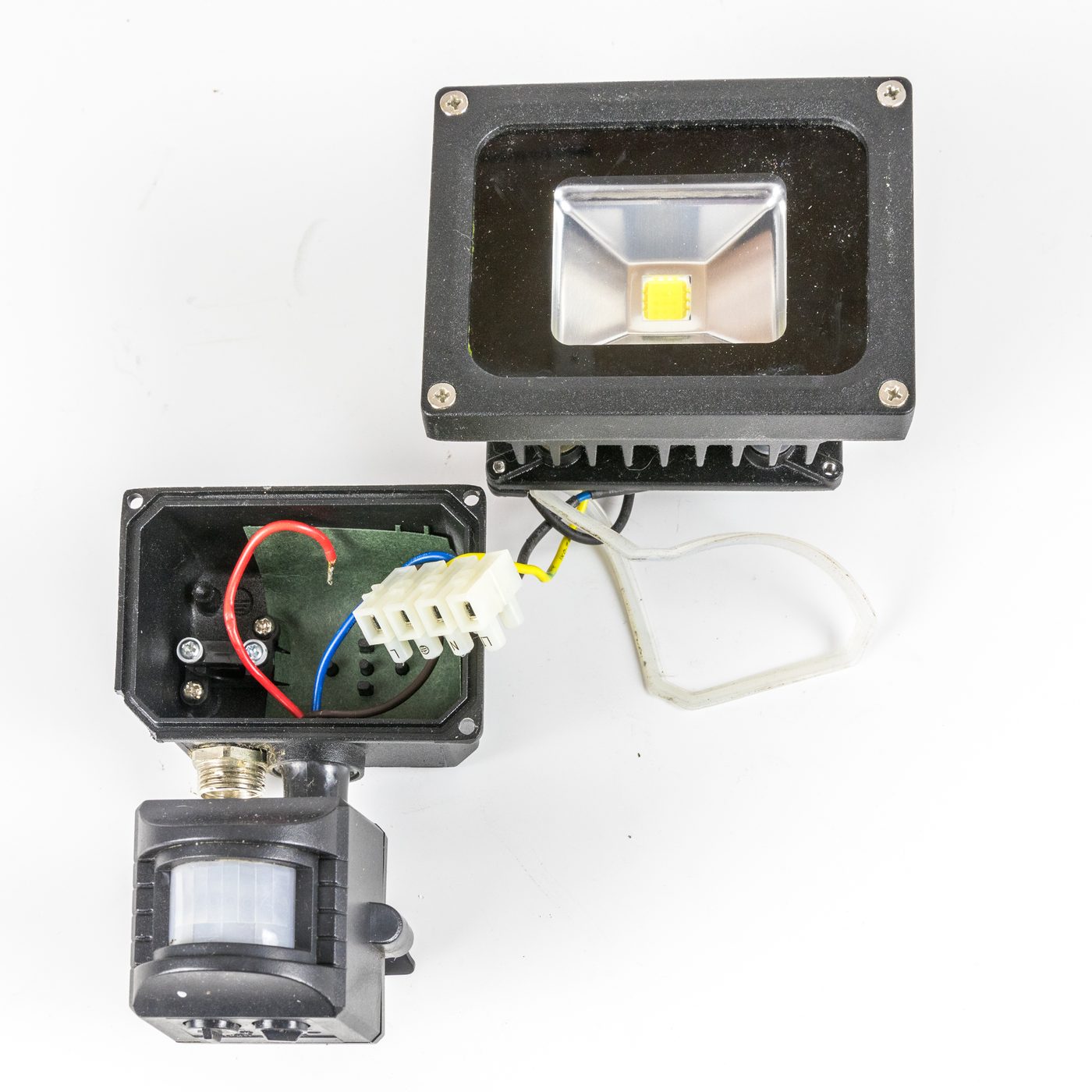
Motion-activated light with sensor and wiring (Source: Wikimedia Commons)
Installation Best Practices
Proper positioning and setup of security lights ensure maximum effectiveness:
- Place lights at entrances, walkways, and blind spots to eliminate dark areas.
- Mount fixtures high enough to avoid vandalism but low enough to provide adequate illumination.
- Angle lights to minimize glare that can impair vision or disturb neighbors.
- Integrate lighting controls with timers or motion sensors to optimize energy use.
- Ensure wiring complies with electrical safety standards to prevent hazards.
Maintenance and Energy Management
Maintaining security lighting reduces downtime and operational costs:
- Regularly clean light fixtures to maintain brightness.
- Replace faulty bulbs promptly to avoid dark zones.
- Inspect electrical connections for corrosion or damage.
- Monitor energy consumption and consider upgrading to LED or solar solutions.
- Schedule periodic audits to evaluate lighting effectiveness and coverage.
Impact on Cooperative Security
Well-designed lighting not only deters intruders but also promotes a safe environment for members and staff:
- Improves visibility for CCTV cameras, enhancing video quality.
- Increases confidence among members visiting premises after dark.
- Reduces accident risks by illuminating pathways and parking areas.
- Facilitates security patrols by clearly exposing potential threats.
- Supports compliance with occupational health and safety regulations.
4.1.3 Fire Alarms
Fire alarms are critical for early detection of fire incidents, enabling timely evacuation and minimizing damage to cooperative assets and lives.
Types of Fire Alarm Systems
Cooperatives can choose from various fire alarm technologies based on facility size and risk profile:
- Conventional Fire Alarms: Use zones to detect smoke or heat in specific areas; suitable for small to medium-sized offices.
- Addressable Fire Alarms: Identify exact detector locations, enabling faster response in larger premises.
- Wireless Fire Alarms: Offer flexible installation without extensive cabling, ideal for rented cooperative spaces.
- Manual Call Points: Allow occupants to trigger alarms manually in case of fire.
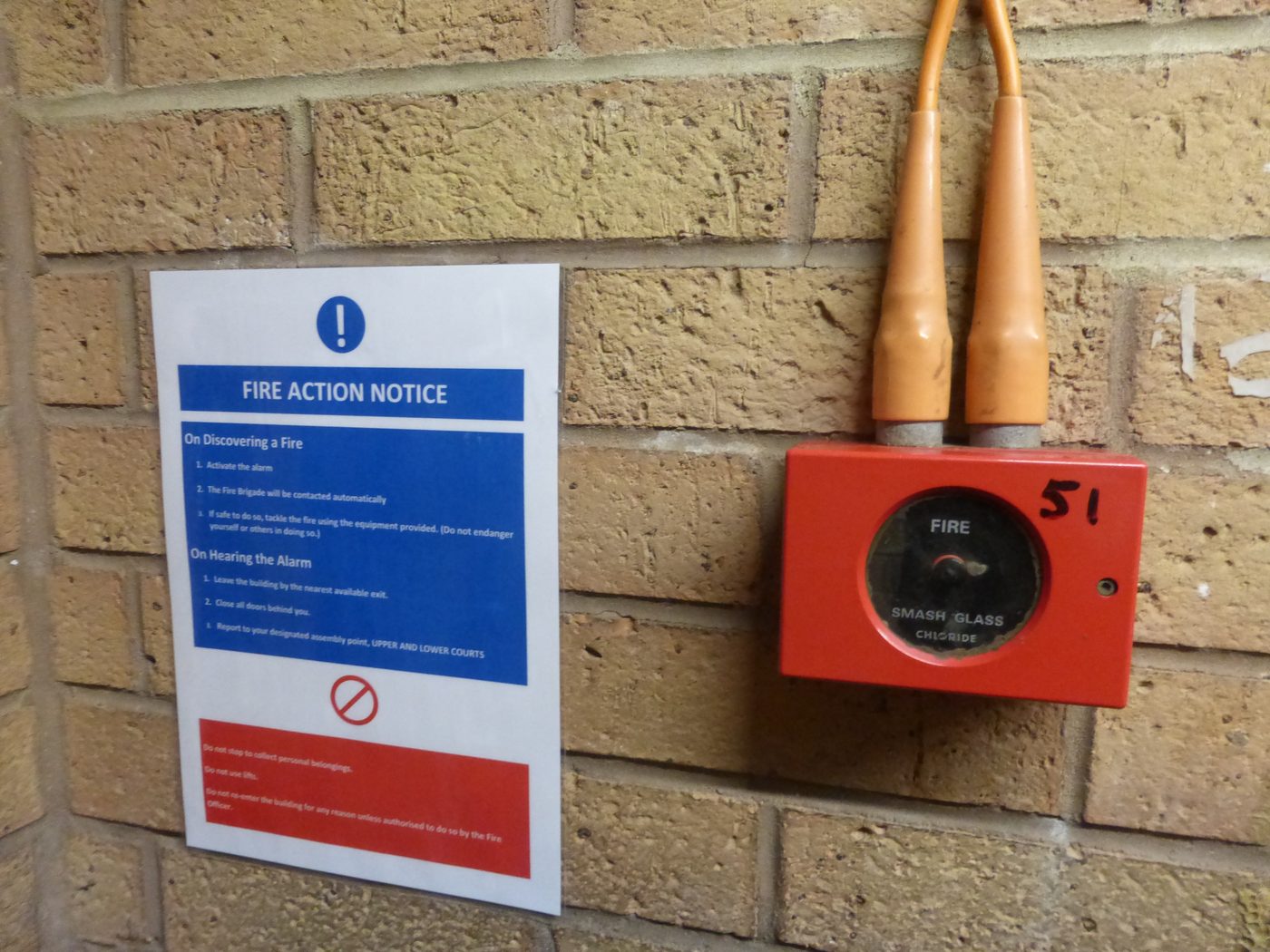
Red manual call point on wall with fire action notice (Source: Wikimedia Commons)
- Integrated Systems: Combine smoke detectors, heat sensors, and alarm sounders for comprehensive coverage.
Installation Procedures
Installing fire alarms requires adherence to safety standards and proper placement for effective detection:
- Position smoke detectors on ceilings away from air vents to avoid false alarms.
- Install heat sensors in kitchens or areas with high dust levels where smoke detectors may be less effective.
- Ensure manual call points are accessible near exits and along escape routes.
- Connect alarms to a central control panel with backup power to maintain operation during outages.
- Conduct functional tests after installation to verify sensor sensitivity and alarm audibility.
Maintenance and Testing
Routine maintenance ensures fire alarm systems remain operational and compliant with safety regulations:
- Test alarms monthly by activating detectors and call points.
- Clean detectors to prevent dust accumulation that can impair sensor function.
- Replace batteries annually or when low battery warnings occur.
- Service control panels and wiring annually by qualified technicians.
- Keep records of testing and maintenance activities for regulatory inspections.
Role in Cooperative Safety Culture
Fire alarms contribute significantly to cooperative risk management and member welfare:
- Enable early warning, reducing injury and property loss.
- Foster member confidence in the cooperative’s commitment to safety.
- Facilitate compliance with the Occupational Safety and Health Act’s fire safety requirements.
- Support insurance claims by demonstrating proactive risk mitigation.
- Encourage development of emergency evacuation plans and regular drills.
Practice Questions
-
Explain the main components of a CCTV system and their roles in cooperative security. (10 marks)
-
Discuss five considerations to observe when installing security lights in a cooperative office. (10 marks)
-
Describe the types of fire alarm systems suitable for cooperative societies and the advantages of each. (15 marks)
-
Outline the maintenance procedures necessary to ensure continuous operation of fire alarms in a cooperative setting. (10 marks)
The rest of this chapter
🔒Create a free account to open more of this chapter.
Free: practical guides, quick cards, workplace scenarios and more.
Create a free account 🔒4.2 Security gadgets inspection
Inspection of security gadgets serves several critical functions within cooperatives: - Verification of Operational Status: Ensures all security devices such as alarms and cameras are active and functioning as intended, preventing security breaches. - Early Fa…
🔒4.3 Faulty security gadgets identification
Identifying faulty security gadgets promptly is essential in safeguarding cooperative assets and maintaining operational security. Faulty devices can create vulnerabilities that expose cooperatives to theft, fraud, or operational disruption. For example, a cou…
🔒4.4 Repair and maintenance faulty security gadgets
In managing cooperative societies in Kenya, ensuring the continuous functionality of security gadgets is critical to protecting assets, members’ information, and premises. Faulty security equipment such as alarms, CCTV cameras, and access control systems can c…
🔒4.5 Obsolete security gadgets update
Cooperative societies in Kenya must keep pace with technological advancements to safeguard their operations effectively. Security gadgets can become obsolete due to technological progress, lack of manufacturer support, or changes in security requirements. Supe…
Chapter Summary
This chapter explored the supervision of security gadgets within cooperative societies, beginning with the installation of key devices such as CCTV cameras, security lights, and fire alarms, highlighting their roles in enhancing safety and monitoring. It then addressed the importance of regular inspection to ensure these gadgets function effectively and provide continuous protection. Identifying faulty security gadgets was emphasized as a critical step to prevent security breaches and operational failures. The chapter also covered the processes involved in repairing and maintaining defective equipment to restore their reliability and extend their service life. Finally, it discussed the need to update obsolete security gadgets, ensuring that cooperative societies remain equipped with modern and efficient security technology to safeguard assets and members.
Self-Assessment
🔒 PDFDownload this self-assessment, with answers
A. Written Assessment
- What is the primary function of CCTV security gadgets in a cooperative society? (2 marks)
- List three key considerations when installing security lights around a cooperative’s premises. (3 marks)
🔒27 more in this section.
Chapter Examination Questions
🔒 PDFDownload these examination questions, with worked answers
SECTION A (40 Marks) - Answer ALL Questions
- Explain the primary function of CCTV security gadgets in a cooperative society’s security system. (4 marks)
- Identify four essential features that security lights should have to enhance the safety of a cooperative’s premises. (4 marks)
🔒18 more in this section.
