Tungsten Inert Gas (TIG) welding is a precision welding process widely used in industries where high quality and clean welds are essential, such as aerospace, automotive, and fabrication workshops. In Kenya’s growing manufacturing and repair sectors, mastery of TIG welding supports the production of durable components and structures, notably in hospitals, universities, and county government workshops. This chapter focuses on the critical occupational health and safety standards that welding professionals must uphold to ensure safe and efficient TIG welding operations.
2.1 Occupational health and safety standards
Occupational health and safety (OHS) is a fundamental pillar in the welding profession, especially in TIG welding where exposure to high temperatures, ultraviolet radiation, and hazardous fumes is frequent. Kenyan workplaces such as hospitals’ maintenance units, manufacturing firms, and county workshops are required to adhere to stringent OHS protocols to protect workers and maintain compliance with national regulations like the Occupational Safety and Health Act (OSHA) 2007. Understanding and implementing these standards reduces accidents, prevents occupational diseases, and promotes a culture of safety.
2.1.1 Personal protective equipment
Personal protective equipment (PPE) is the frontline defence against the inherent risks of TIG welding. Proper PPE minimises exposure to harmful radiation, sparks, heat, and toxic fumes. Example: in a metal fabrication shop servicing Nairobi’s construction sector, a welder joining stainless steel brackets wears a helmet, gloves, jacket and boots before striking the first arc, and the supervisor does not allow work to start without them.
Essential Components of PPE for TIG Welding
- Welding Helmet with Auto-Darkening Filter: Protects the eyes and face from intense ultraviolet and infrared rays emitted during welding. Auto-darkening helmets improve welder productivity by eliminating the need to lift the helmet between welds.
- Safety Glasses: Worn under the helmet, they protect the eyes from flying slag, grinding particles and arc flash when the helmet is raised during chipping or grinding.
- Flame-Resistant Welding Jacket: Made from leather or treated cotton, this jacket shields the welder’s torso and arms from sparks and heat, preventing burns.
- Welding Gloves: Leather gloves protect hands from heat, spatter, ultraviolet radiation and electric shock risks. For TIG work, thinner goatskin gloves are often preferred because the welder must hold the torch and filler rod with fine control, but they must still be dry, undamaged and well fitting.
- Respiratory Protection: Depending on ventilation quality and materials welded, respirators or masks filter harmful fumes and particulates, critical in enclosed spaces like workshops in Kisumu or Eldoret.
- Hearing Protection: Earplugs or earmuffs reduce noise exposure when welding is carried out next to grinding, cutting or hammering operations.
- Safety Boots: Steel-toed, heat-resistant boots protect feet from falling objects, hot materials, and electric shock hazards.
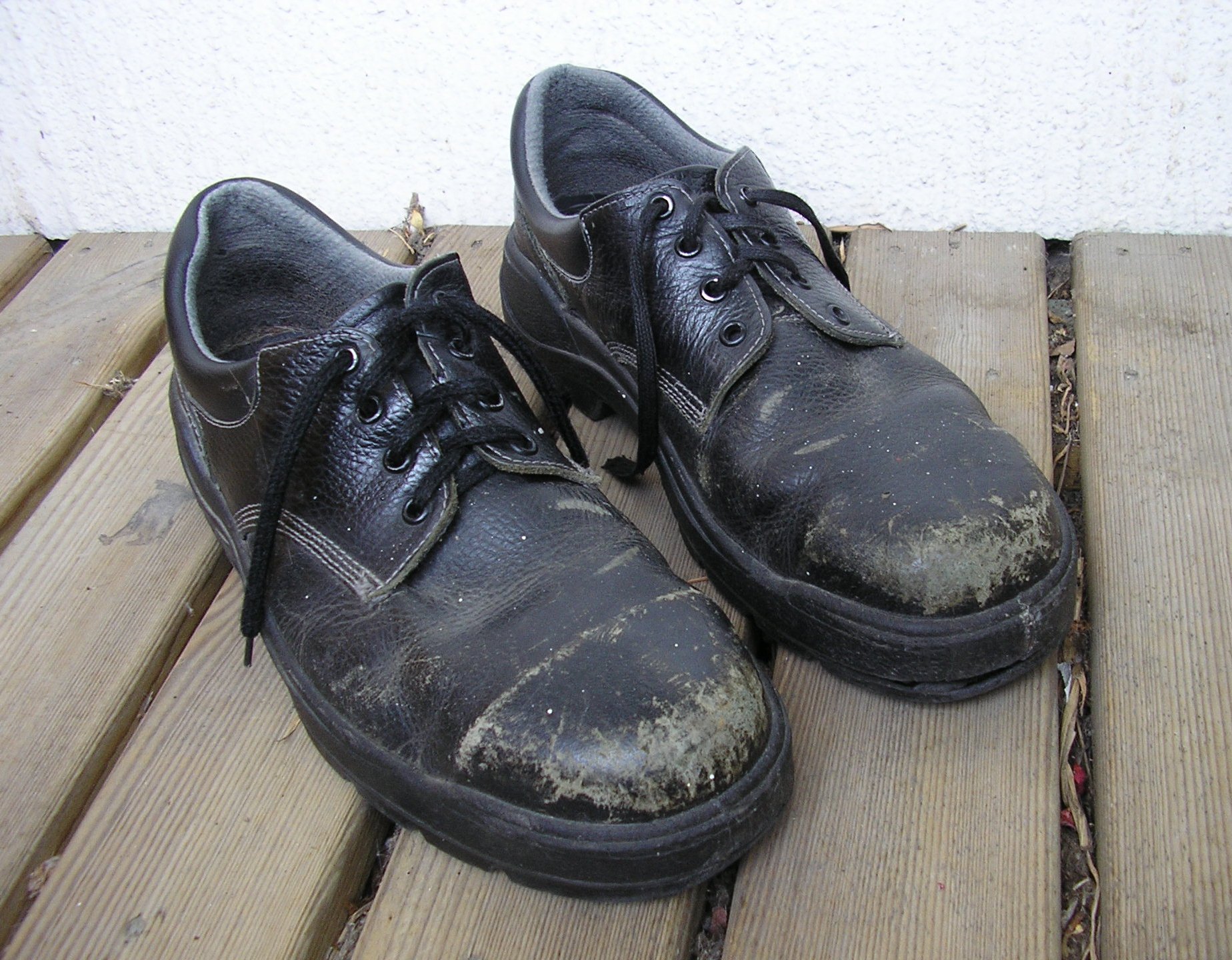
worn black safety boots on wooden floor (Source: Wikipedia (Steel-toe boot))
Proper Use and Maintenance of PPE
- PPE must be inspected daily for cracks, tears, or damage that could compromise protection.
- Welding helmets and lenses require regular cleaning and calibration to maintain visibility and filter effectiveness.
- Gloves and jackets should be stored in dry, clean areas to avoid deterioration.
- Respirators’ filters and cartridges have defined service lives and must be replaced according to manufacturer guidelines.
- Employers should provide training on correct PPE use and enforce strict compliance through supervision.
2.1.2 Workshop safety
Maintaining a safe workshop environment is critical to preventing accidents and ensuring smooth TIG welding operations. Adherence to safety protocols supports worker wellbeing and asset protection. Example: in an automotive repair garage, welding bays are separated from the paint and fuel areas so that sparks cannot reach flammable vapours.
Key Elements of Workshop Safety
- Clear Work Areas: Keeping the workspace and walkways free of clutter reduces tripping hazards and fire risks. Combustible materials must be kept away from the welding bay.
- Ventilation: Effective ventilation systems, including local exhaust ventilation, remove welding fumes and gases. This is essential in enclosed workshops like those in Nairobi’s industrial estates.
- Fire Prevention: Fire extinguishers must be accessible, and fire blankets should be on hand. Flammable liquids and gases must be stored safely away from welding areas.
- Electrical Safety: All welding equipment should be properly grounded, and cables inspected regularly for wear and damage to prevent electric shocks.
- Emergency Procedures: Clearly marked exits, accessible first aid kits, and trained personnel in emergency response are vital, especially in large-scale fabrication plants.
- Welding Screens and Signs: Screens around the welding area and warning signs at its entrance protect other people from arc flash and keep unauthorised persons out.
2.1.3 Workplace procedures
Structured workplace procedures formalise safe practices, ensuring consistent adherence to safety standards during TIG welding. Organisations such as building contractors and hotel engineering departments use these procedures to comply with OSHA regulations and protect their workforce. Example: before a welder repairs a steel stair rail in a hotel, the engineer issues a permit, checks the area for combustibles and records the job.
Components of Effective Workplace Procedures
- Pre-Welding Inspection: Checking all equipment, including welding machines, gas cylinders, and PPE, before commencing work to identify faults or hazards.
- Safe Work Permits: Issuing permits for welding activities, especially in hazardous environments, to control risk and authorise qualified personnel.
- Standard Operating Procedures (SOPs): Detailed step-by-step instructions for TIG welding tasks that include safety checks, welding parameters, and emergency protocols.
- Hazard Reporting Systems: Mechanisms for workers to report unsafe conditions or incidents, facilitating timely corrective actions.
- Training and Competency Assessments: Regular training sessions and evaluations to ensure welders maintain up-to-date skills and safety awareness.
2.1.4 Welding hazards
TIG welding exposes operators to a range of hazards that can cause acute injuries or chronic health issues. Understanding these hazards is essential for welders in metal fabrication workshops to mitigate risks effectively. Example: a welder on a farm-machinery repair job who skips eye protection for a few seconds of tack welding can suffer painful arc eye that same night.
2.1.4.1 Types
Welding hazards can be grouped into electrical, radiation, chemical, thermal, noise and gas-related hazards. Each one needs its own recognition and control measure. Example: a welder on aluminium sheet in a poorly ventilated bay faces strong ultraviolet radiation and fume exposure at the same time.
- Electric Shock: Welders work with high currents and voltages, risking fatal shocks if equipment or PPE is faulty or misused. Damp conditions and damaged cable insulation increase the danger.
- Ultraviolet and Infrared Radiation: Exposure can cause “arc eye” or retinal damage without proper eye protection. Skin exposed to the arc can also be burnt, much like sunburn.
- Fumes and Gases: Welding of certain metals releases toxic fumes such as ozone, nitrogen oxides, and metal oxides, which can cause respiratory diseases.
- Heat and Burns: Contact with hot materials, sparks, or molten metal can cause severe burns.
- Noise: Welding processes may generate high noise levels leading to hearing loss without adequate ear protection.
- Fire and Explosion: Sparks and hot metal can ignite paper, oil, wood, solvents or flammable vapours near the work area. Welding on containers that held fuel or chemicals can cause an explosion.
- Compressed Gas Hazards: Cylinders of argon are under high pressure and can become dangerous projectiles if the valve is broken off. In confined spaces, leaking argon displaces oxygen and can cause suffocation.
2.1.4.2 Prevention and control
Hazards are controlled best by removing or reducing them at the source, and only then relying on PPE. The usual order is to eliminate the hazard, isolate it, apply safe working methods, and finally protect the worker. Example: a school workshop fits a fume extraction arm at each TIG bench, uses welding screens between bays, and then requires every learner to wear PPE as the last line of defence.
- Ventilation and Fume Extraction: Use local exhaust ventilation close to the arc and keep the head out of the fume plume. In confined spaces, provide forced fresh air and, where needed, an approved respirator.
- Electrical Precautions: Check cables, torch leads and earth clamps before use, keep them dry, and ensure the machine is properly earthed. Switch off and isolate the machine before changing connections or repairing it.
- Eye and Skin Protection: Use a helmet with the correct shade of filter, and cover all skin with flame-resistant clothing. Place screens or curtains around the bay so that bystanders are not exposed to arc flash.
- Fire Control: Remove or cover combustible materials within the working area, and keep a suitable fire extinguisher at hand. Keep watching the area for some time after welding in case of smouldering.
- Safe Cylinder Practice: Keep cylinders upright and secured, with valve caps on when not in use. Check for leaks with soapy water and never weld in a closed space without checking oxygen levels and ventilation.
- Noise Control: Use earplugs or earmuffs, and separate welding from noisy grinding and cutting where possible.
- Training and First Aid: Train welders to recognise hazards and to know the emergency steps. Keep a first aid kit available, and ensure that anyone with arc eye or burns receives medical attention promptly.
2.1.5 Safe handling of equipment
Safe handling and maintenance of TIG welding equipment ensure operational efficiency and minimise risks of accidents. Workshops that prioritise equipment safety avoid costly downtime and injuries. Example: a county vehicle yard assigns one trained person to check regulators, hoses and torches at the start of each week, so faults are found before they cause a gas leak.
Best Practices for Equipment Handling
- Proper Setup: Position welding machines on stable surfaces, ensure correct gas connections, and verify electrical grounding before welding.
- Transporting Cylinders: Always secure gas cylinders upright on trolleys; avoid dragging or dropping them to prevent leaks or explosions. Keep the valve cap on during movement.
- Gas Leak Checks: After connecting the regulator and hose, test the joints with soapy water. Bubbles show a leak that must be fixed before welding.
- Cable and Hose Management: Run cables and hoses clear of walkways, hot work and sharp edges so that they are not damaged or tripped over.
- Routine Maintenance: Regularly clean and inspect torches, cables, and regulators for wear or damage to maintain performance and safety.
- Storage: Store consumables such as tungsten electrodes and filler rods in clean, dry areas to prevent contamination and ensure weld quality.
- Shutdown Procedures: After welding, turn off power sources and gas supplies following manufacturer instructions to prevent accidental releases or fires.
Practice Questions
- Explain five essential components of personal protective equipment used in TIG welding and the protection each provides. (10 marks)
- Describe four key workshop safety measures that should be implemented in a metal fabrication workshop in Kenya. (8 marks)
- Outline six steps involved in workplace procedures to ensure safe TIG welding operations. (12 marks)
- Identify and explain five common hazards associated with TIG welding and suggest control measures for each. (15 marks)
- Discuss five best practices for the safe handling of TIG welding equipment in a county government workshop. (10 marks)
The rest of this chapter
🔒Create a free account to open more of this chapter.
Free: practical guides, quick cards, workplace scenarios and more.
Create a free account 🔒2.2 Housekeeping
In the context of Tungsten Inert Gas (TIG) welding, effective housekeeping is crucial for maintaining a safe, efficient, and productive workshop environment. Kenyan welding professionals working in industrial workshops, fabrication yards, and repair facilities…
🔒2.3 Interpretation of Working Drawing
The ability to accurately interpret working drawings is fundamental for TIG welders to execute precise welds according to design specifications. In Kenya’s welding industry, where projects range from structural steel fabrication for county government offices t…
🔒2.4 TIG welding equipment and accessories
Tungsten Inert Gas (TIG) welding relies on specialised equipment and accessories that ensure precision, quality, and safety in welds. In fabrication workshops, automotive repair, and metal art production, the correct selection and maintenance of TIG welding ge…
🔒2.5 Welding material preparation (up to 10 mm thickness)
In Tungsten Inert Gas (TIG) welding, proper preparation of welding materials is crucial to achieving high-quality welds, especially for materials up to 10 mm thick. In Kenya's diverse welding industry, from fabricating water tanks in county government workshop…
🔒2.6 TIG Welding Parameters
Tungsten Inert Gas (TIG) welding demands precise control over multiple parameters to produce high-quality welds. In Kenya's growing manufacturing and fabrication sectors, such as automotive repair workshops and metal fabrication units, mastering TIG welding pa…
🔒2.7 MIG Welding Tools
Metal Inert Gas (MIG) welding, a commonly used process alongside TIG in Kenya’s fabrication workshops and construction sites, relies on specialized tools to deliver continuous wire feed and shielding gas. Understanding the types, applications, and maintenance…
🔒2.8 TIG Welding Process
Tungsten Inert Gas (TIG) welding is a highly precise welding technique widely used in Kenyan fabrication workshops, repair shops, and manufacturing industries where the quality and appearance of the weld are paramount. Its versatility in joining thin sections…
🔒2.9 Metallic Materials (up to 10 mm thickness)
In TIG welding, understanding the properties and behaviour of metallic materials up to 10 mm thickness is essential to select appropriate welding parameters and filler materials. Welders in construction and manufacturing work with a range of metals in this thi…
🔒2.10 Welding Positions
In Kenya's welding industry, understanding welding positions is crucial for producing high-quality welds under various working conditions. Tungsten Inert Gas (TIG) welding often requires adaptability to different positions depending on the workpiece orientatio…
🔒2.11 Types of Joints
TIG welding involves joining metal pieces through various joint configurations, each designed to meet specific mechanical requirements and fabrication constraints. Understanding joint types and their geometry is fundamental for welders in Kenya’s metal fabrica…
🔒2.12 Weld Defects
Weld defects are imperfections that occur during or after the welding process, affecting the integrity, strength, and appearance of the welded joint. In Kenya's welding industry, especially in sectors such as manufacturing, construction, and automotive repair,…
🔒2.13 Finishing Processes
Finishing processes in TIG welding enhance the weld’s appearance, remove defects, and prepare the joint for further fabrication or service. In Kenya’s industries such as automotive repair and metal furniture manufacturing, finishing ensures the weld meets both…
Chapter Summary
This chapter covers the essential aspects of carrying out Tungsten Inert Gas (TIG) welding with a strong focus on occupational health and safety standards, including the use of personal protective equipment, workshop safety, workplace procedures, and the identification and control of welding hazards. It emphasizes the importance of proper housekeeping practices such as cleaning and waste management to maintain a safe working environment. The interpretation of working drawings is explained through understanding symbols, notations, abbreviations, and parts lists. The chapter details the types, uses, and care of TIG welding equipment and accessories, including torches, inert gas cylinders, electrodes, and filler rods. Preparation of welding materials up to 10 mm thickness involves accurate measuring, marking, cutting, and edge preparation to ensure quality welds. Setting TIG welding parameters such as current, arc force, voltage, and gas pressure is critical for effective welding performance. The chapter also introduces essential MIG welding tools and their maintenance. Practical aspects of the TIG welding process are described alongside its applications, with a focus on metallic materials like plates and pipes. Various welding positions and joint types are explored, highlighting their geometry and appropriate uses. The chapter identifies common weld defects, their causes, and preventive measures, and concludes with finishing processes including polishing, grinding, blueing, varnishing, oil blacking, deburring, and painting, culminating in the practical application of TIG welding plates and pipes in the vertical position.
Self-Assessment
🔒 PDFDownload this self-assessment, with answers
A. Written Assessment
- What is the primary function of a tungsten electrode in TIG welding? (2 marks)
- Identify three types of personal protective equipment essential for TIG welding and explain their importance. (6 marks)
🔒20 more in this section.
Chapter Examination Questions
🔒 PDFDownload these examination questions, with worked answers
SECTION A (40 Marks) - Answer ALL Questions
- Identify five essential personal protective equipment (PPE) items required during TIG welding and explain their specific function in ensuring welder safety. (4 marks)
- Describe the key steps involved in maintaining workshop safety in a welding environment, referencing common hazards found in Kenyan welding workshops. (4 marks)
🔒21 more in this section.
Chapter Practical Activities
Practical 1: Demonstrate Occupational Health and Safety Standards in TIG Welding
Welding Technology · Level 6
Tungsten Inert Gas Welding
PRACTICAL ASSESSMENT
TIME: 4 HOURS
⬇ PDFCandidate Instructions (Candidate Tool)
Type: Individual
INSTRUCTIONS TO CANDIDATE:
1. You are required to perform the following task:
i. Demonstrate correct occupational health and safety procedures and hazard prevention measures during TIG welding on mild steel plates 125 mm x 125 mm x 3 mm as per workshop standards.
2. You have been provided with the following resources for the practical task:
| Tools & Equipment | Materials |
|---|
| Tungsten Inert Gas (TIG) welding machine with accessories | Mild steel plates 125 mm x 125 mm x 3 mm |
| Leather gloves | |
| Leather apron | |
| Welding helmet with appropriate filter lens | |
| Safety boots | |
| Wire brush | |
| Work holding device | |
| Scriber | |
| Steel rule | |
| Portable grinding machine | |
| Overall | |
⬇ PDFResources Required (Cutting List)
| S/N | Item | Quantity |
|---|
| 1 | Tungsten Inert Gas (TIG) welding machine with accessories | 1 set per Candidate |
| 2 | Leather gloves | 1 pair per Candidate |
| 3 | Leather apron | 1 per Candidate |
| 4 | Welding helmet with appropriate filter lens | 1 per Candidate |
| 5 | Safety boots | 1 pair per Candidate |
| 6 | Mild steel plates 125 mm x 125 mm x 3 mm | 2 pieces per Candidate |
| 7 | Wire brush | 1 per Candidate |
| 8 | Work holding device | 1 per Candidate |
| 9 | Scriber | 1 per Candidate |
| 10 | Steel rule | 1 per Candidate |
| 11 | Portable grinding machine | 1 per Candidate |
| 12 | Overall | 1 per Candidate |
⬇ PDFAssessor Guide
| Items to be Evaluated | Marks Available | Marks Obtained | Comments |
|---|
| TASK 1: Adherence to Occupational Health and Safety Standards |
Wore welding helmet correctly
(Award 1 or 0 mark) | 1 | | |
Wore leather gloves correctly
(Award 1 or 0 mark) | 1 | | |
Wore leather apron/overall correctly
(Award 1 or 0 mark) | 1 | | |
Wore safety boots
(Award 1 or 0 mark) | 1 | | |
Set up TIG welding equipment safely (checked cable connections, gas flow, electrode setup)
(Award 2 or 0 marks) | 2 | | |
Demonstrated safe machine startup and shutdown procedures
(Award 2 or 0 marks) | 2 | | |
Maintained safe work environment (cleared flammable materials, proper ventilation)
(Award 1 or 0 mark) | 1 | | |
Demonstrated correct handling and storage of gas cylinders
(Award 1 or 0 mark) | 1 | | |
Used work holding device correctly to secure workpiece
(Award 1 or 0 mark) | 1 | | |
Demonstrated hazard prevention measures (e.g. fire extinguisher location, emergency stop)
(Award 1 or 0 mark) | 1 | | |
| Sub-Total | 12 | | |
| TASK 2: Workshop Housekeeping and Waste Disposal |
Cleaned work area after welding
(Award 1 or 0 mark) | 1 | | |
Disposed of waste materials according to workshop procedures
(Award 1 or 0 mark) | 1 | | |
Returned tools and unused materials to designated storage
(Award 1 or 0 mark) | 1 | | |
| Sub-Total | 3 | | |
| PRODUCT CHECKLIST |
Work area left safe, clean, and tidy with no hazards
(Award 5 or 0 marks) | 5 | | |
| Sub-Total | 5 | | |
| GRAND TOTAL | 20 | | |
ASSESSMENT OUTCOME: ☐ Competent ☐ Not Yet Competent (competent if at least 50%)
Practical 2: Safe Handling and Maintenance of TIG Welding Equipment
Welding Technology · Level 6
Tungsten Inert Gas Welding
PRACTICAL ASSESSMENT
TIME: 4 HOURS
⬇ PDFCandidate Instructions (Candidate Tool)
Type: Individual
INSTRUCTIONS TO CANDIDATE:
1. You are required to perform the following task:
i. Handle, inspect, clean, and maintain a TIG welding machine and accessories safely as per workshop procedures.
2. You have been provided with the following resources for the practical task:
| Tools & Equipment | Materials |
|---|
| TIG welding machine with accessories | Gas cylinder (Argon) |
| Gas cylinder with regulator and hose | |
| Nozzle cleaner | |
| Wire brush | |
| Leather gloves | |
| Leather apron | |
| Welding helmet with TIG filter lens | |
| Safety boots | |
| Cleaning cloth | |
| Spanner set | |
⬇ PDFResources Required (Cutting List)
| S/N | Item | Quantity |
|---|
| 1 | Tungsten Inert Gas (TIG) welding machine with accessories | 1 set per Candidate |
| 2 | Gas cylinder (Argon) with regulator and hose | 1 set per Candidate |
| 3 | Nozzle cleaner | 1 per Candidate |
| 4 | Wire brush | 1 per Candidate |
| 5 | Leather gloves | 1 pair per Candidate |
| 6 | Leather apron | 1 per Candidate |
| 7 | Welding helmet with TIG filter lens | 1 per Candidate |
| 8 | Safety boots | 1 pair per Candidate |
| 9 | Cleaning cloth | 1 per Candidate |
| 10 | Spanner set | 1 set per Candidate |
⬇ PDFAssessor Guide
| Items to be Evaluated | Marks Available | Marks Obtained | Comments |
|---|
| TASK 1: Safe Handling and Setup of TIG Welding Equipment |
Wore all prescribed PPE correctly: welding helmet, leather gloves, leather apron, safety boots
(Award 1 mark for each correctly worn PPE or zero) | 4 | | |
Checked gas cylinder and regulator for leaks and damage before use
(Award 2 marks for thorough inspection or zero) | 2 | | |
Connected cables and hoses firmly and correctly to the TIG machine
(Award 2 marks for correct and secure connections or zero) | 2 | | |
Set the correct working current and gas flow according to standard workshop settings
(Award 3 marks for correct settings or zero) | 3 | | |
Switched on the TIG machine safely following manufacturer’s instructions
(Award 1 mark for correct start-up procedure or zero) | 1 | | |
| Sub-Total | 12 | | |
| TASK 2: Maintenance and Cleaning of TIG Welding Equipment |
Used nozzle cleaner and wire brush to clean the welding torch nozzle and electrode
(Award 3 marks for proper cleaning technique or zero) | 3 | | |
Checked tungsten electrode for wear and replaced or sharpened if necessary
(Award 2 marks for correct inspection and maintenance or zero) | 2 | | |
Turned off the TIG machine and closed the gas cylinder valve safely
(Award 2 marks for correct shutdown procedure or zero) | 2 | | |
Disconnected cables and hoses properly and stored the TIG gun and accessories safely
(Award 2 marks for proper disconnection and storage or zero) | 2 | | |
| Sub-Total | 9 | | |
| TASK 3: Housekeeping after TIG Welding Equipment Maintenance |
Cleaned the work area and disposed of waste according to workshop procedures
(Award 2 marks for thorough cleaning and correct disposal or zero) | 2 | | |
Returned all tools and unused materials to their designated storage places
(Award 2 marks for correct return of tools and materials or zero) | 2 | | |
| Sub-Total | 4 | | |
| PRODUCT CHECKLIST |
TIG welding equipment and accessories are clean, properly maintained, and stored safely
(Award 10 marks for equipment free from dirt, damage, and correctly stored or zero) | 10 | | |
| Sub-Total | 10 | | |
| GRAND TOTAL | 35 | | |
ASSESSMENT OUTCOME: ☐ Competent ☐ Not Yet Competent (competent if at least 50%)
🔒Interpret and prepare TIG welding assembly from working drawingPractical 3
🔒Prepare metallic materials for TIG welding including plates and pipesPractical 4
🔒Set TIG welding parameters for optimal performance on 6mm mild steel platePractical 5
🔒Select and use appropriate TIG welding consumables for mild steel weldingPractical 6
🔒Perform TIG Welding on 10mm Mild Steel Plates in Flat PositionPractical 7
🔒Perform TIG welding on metallic pipes using corner and T-jointsPractical 8
🔒Perform TIG welding on 150mm x 150mm x 6mm mild steel plates in vertical positionPractical 9
🔒Identify and rectify common TIG weld defects on a 120mm x 60mm mild steel platePractical 10
🔒Apply finishing processes to TIG welds on mild steel platesPractical 11
🔒Set up and use welding jigs and fixtures during TIG welding of a corner jointPractical 12
🔒Identify and Use Fire Extinguishers in Welding WorkshopPractical 13
🔒Maintain workshop cleanliness and manage welding waste in TIG welding areaPractical 14
