
By the end of this chapter, you will be able to:
These skills will help you create safe and enjoyable experiences for your clients, making you a trusted and professional tour guide.
Managing outdoor activities is a critical skill for tour guiding professionals, especially in Kenya where diverse landscapes and ecosystems offer rich experiential opportunities. Effective management ensures safety, enhances visitor satisfaction, and preserves natural resources. This chapter explores the essential tools and equipment required for outdoor activities, focusing on their specifications, uses, and maintenance to equip tour guides with practical know-how for successful field operations.
Outdoor activities in tour guiding range from hiking and bird watching to camping and water-based adventures. Each activity requires specific tools and equipment tailored to the environment and the nature of the excursion. In Kenya’s vibrant tourism sector, tour guides must be proficient in selecting appropriate gear that ensures safety, comfort, and environmental responsibility.
Outdoor activities demand specialized tools that support navigation, communication, safety, and comfort. Understanding the specifications of these items is fundamental to effective tour management.
| Name | Specification | Use |
|---|---|---|
| GPS Device | Handheld, waterproof, long battery life | Navigation and route tracking |
| Compass | Magnetic, durable casing, sighting mirror | Direction finding and map reading |
| First Aid Kit | Comprehensive, includes bandages, antiseptics, splints | Emergency medical treatment |
| Multi-tool | Stainless steel, includes knife, pliers, screwdriver | Versatile tool for repairs and minor tasks |
| Headlamp | LED, adjustable brightness, rechargeable battery | Hands-free illumination during night activities |
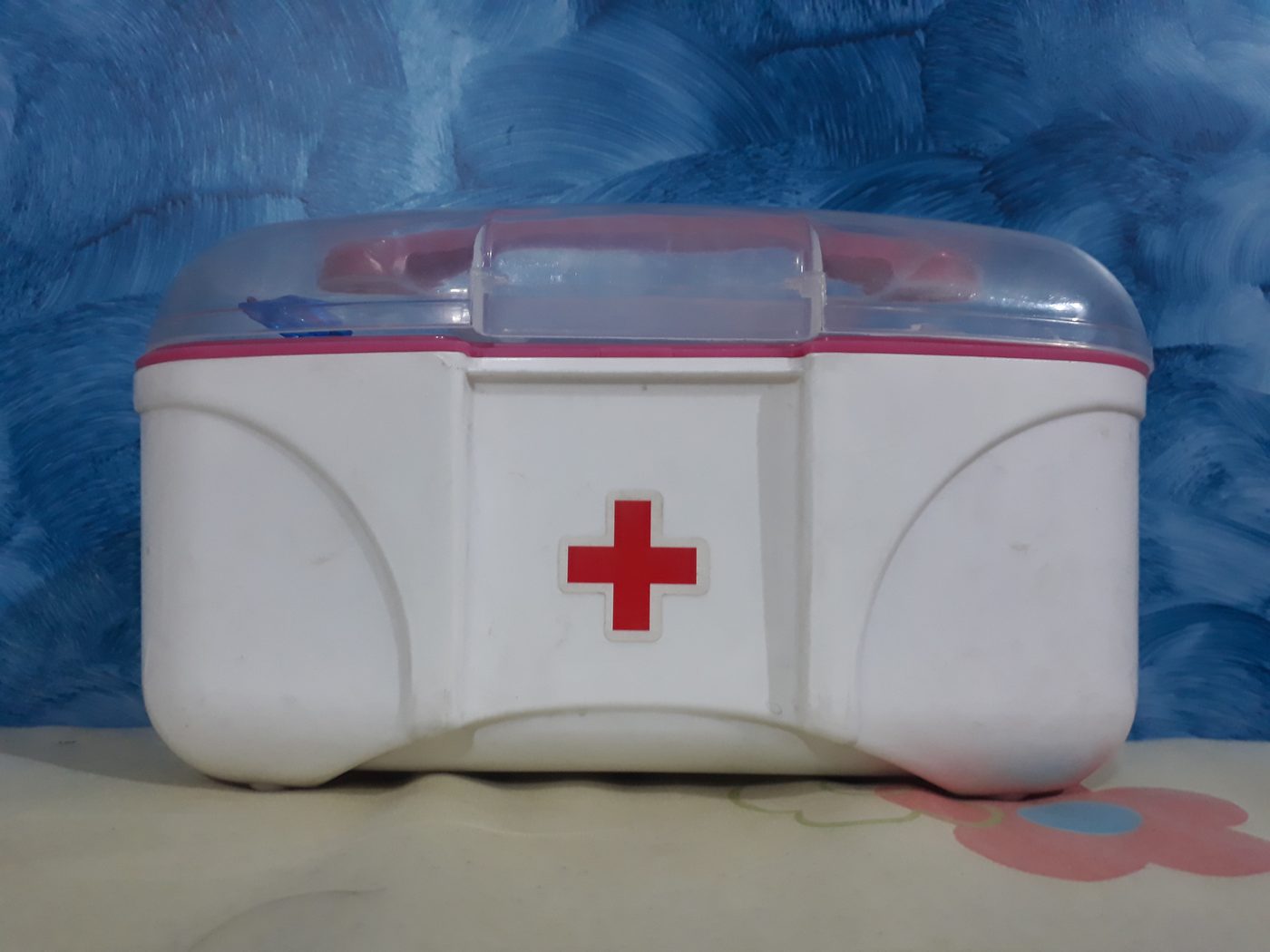
Plastic first aid kit box with red cross (Source: Wikimedia Commons)
Choosing the right equipment involves multiple considerations to match the activity’s demands and environmental conditions. In Kenya, where outdoor excursions can vary from coastal marine environments to mountainous regions, careful selection enhances operational success.
Proper maintenance extends the lifespan of outdoor tools and guarantees their functionality during tours. Kenyan tour guides must incorporate routine checks and care practices into their operational planning.
The effectiveness of outdoor tools depends not only on their specifications but also on how guides employ and adapt them in real-world scenarios. Kenyan tour guides develop skills to maximize the utility of their equipment under challenging conditions.
Create a free account to open more of this chapter.
Free: practical guides, quick cards, workplace scenarios and more.
Create a free accountThis chapter explored the essential tools and equipment required for managing outdoor activities, emphasizing their specific functions and suitability for different environments. It highlighted the importance of adhering to safety precautions to protect participants from potential hazards, ensuring a secure and enjoyable experience. Various types of outdoor activities were examined, illustrating how to plan and conduct them effectively while considering environmental and participant factors. The chapter also addressed the necessity of regular maintenance for outdoor activity tools and equipment, focusing on proper care to extend their usability and reliability. Understanding these aspects enables tour guides to deliver well-organized and safe outdoor experiences. The knowledge gained equips students with practical skills to manage resources efficiently and prioritize participant welfare during outdoor excursions. Overall, the chapter integrates operational, safety, and maintenance considerations crucial for successful outdoor activity management.
Type: Individual
| Tools & Equipment | Materials |
|---|---|
| Backpack | |
| Hiking boots | |
| Walking stick | |
| First aid kit | |
| Water bottle | |
| Raincoat | |
| Map of the hiking trail | |
| Compass | |
| Whistle | |
| Marker pen | |
| Foolscap paper |
| S/N | Item | Quantity |
|---|---|---|
| 1 | Backpack | 1 Pc per Candidate |
| 2 | Hiking boots | 1 Pair per Candidate |
| 3 | Walking stick | 1 Pc per Candidate |
| 4 | First aid kit | 1 Pc per Candidate |
| 5 | Water bottle (1 litre capacity) | 1 Pc per Candidate |
| 6 | Raincoat | 1 Pc per Candidate |
| 7 | Map of the hiking trail | 1 Pc per Candidate |
| 8 | Compass | 1 Pc per Candidate |
| 9 | Whistle | 1 Pc per Candidate |
| 10 | Marker pen | 1 Pc per Candidate |
| 11 | Foolscap paper | 2 Sheets per Candidate |
| Items to be Evaluated | Marks Available | Marks Obtained | Comments |
|---|---|---|---|
| TASK 1: Selection and preparation of outdoor hiking tools | |||
| Candidate wears appropriate PPE before handling equipment (Award 2 marks for correct PPE use) | 2 | ||
| Candidate inspects backpack for damages and cleanliness (Award 2 marks for thorough inspection) | 2 | ||
| Candidate checks hiking boots for proper fit and condition (Award 3 marks for correct fit and no visible defects) | 3 | ||
| Candidate inspects walking stick for sturdiness and appropriate length (Award 2 marks for proper selection and preparation) | 2 | ||
| Candidate checks first aid kit for completeness and expiry dates (Award 3 marks for complete and valid kit) | 3 | ||
| Candidate ensures water bottle is clean and filled to capacity (Award 2 marks for cleanliness and filling) | 2 | ||
| Candidate inspects raincoat for tears and waterproof integrity (Award 2 marks for good condition) | 2 | ||
| Candidate verifies map and compass functionality and marks route on foolscap paper (Award 3 marks for correct verification and route marking) | 3 | ||
| Candidate tests whistle for sound clarity (Award 1 mark for clear sound) | 1 | ||
| Candidate organizes all tools neatly in the backpack ready for transport (Award 3 marks for neat and logical arrangement) | 3 | ||
| Sub-Total | 23 | ||
| PRODUCT CHECKLIST | |||
| All selected tools are functional and appropriate for a 10 km hiking activity (Award 5 marks for full functionality and appropriateness) | 5 | ||
| Route is clearly marked and legible on foolscap paper (Award 3 marks for clarity and accuracy) | 3 | ||
| Tools are clean, safe, and correctly prepared for immediate use (Award 4 marks for cleanliness, safety, and readiness) | 4 | ||
| Sub-Total | 12 | ||
| GRAND TOTAL | 35 | ||
Type: Individual
| Tools & Equipment | Materials |
|---|---|
| Safety harness | Cleaning cloth |
| Climbing helmet | Lubricant spray |
| Carabiner | Inspection checklist form |
| Rope (10mm diameter, 10m length) | Marker pen |
| Multi-tool knife | |
| Cleaning cloth | |
| Lubricant spray | |
| Inspection checklist form | |
| Marker pen |
| S/N | Item | Quantity |
|---|---|---|
| 1 | Safety harness | 1 Pc per Candidate |
| 2 | Climbing helmet | 1 Pc per Candidate |
| 3 | Carabiner | 3 Pcs per Candidate |
| 4 | Rope (10mm diameter, 10m length) | 1 Pc per Candidate |
| 5 | Multi-tool knife | 1 Pc per Candidate |
| 6 | Cleaning cloth | 2 Pcs per Candidate |
| 7 | Lubricant spray | 100 ml per 2 Candidates |
| 8 | Inspection checklist form | 1 Pc per Candidate |
| 9 | Marker pen | 1 Pc per Candidate |
| Items to be Evaluated | Marks Available | Marks Obtained | Comments |
|---|---|---|---|
| TASK 1: Equipment Inspection and Maintenance | |||
| Candidate wears appropriate PPE before handling equipment (Award 2 marks for correct PPE use or zero) | 2 | ||
| Candidate visually inspects safety harness for tears, fraying, and damaged buckles (Award 1 mark for each inspection point: tears, fraying, buckles) | 3 | ||
| Candidate inspects climbing helmet for cracks, dents, and secure straps (Award 1 mark for each inspection point: cracks, dents, straps) | 3 | ||
| Candidate checks carabiners for gate function, deformation, and corrosion on all three units (Award 1 mark per carabiner for correct inspection of gate, deformation, corrosion) | 3 | ||
| Candidate inspects rope for cuts, abrasions, and soft spots along the entire 10m length (Award 1 mark each for cuts, abrasions, soft spots detected) | 3 | ||
| Candidate cleans equipment using cloth and applies lubricant spray correctly to metal parts (Award 1 mark each for cleaning harness, carabiners, and applying lubricant properly) | 3 | ||
| Candidate records inspection results accurately on the checklist form (Award 3 marks for complete and accurate checklist or zero) | 3 | ||
| Candidate marks any faulty equipment clearly with marker pen (Award 2 marks for clear marking or zero) | 2 | ||
| Candidate safely stores equipment after maintenance (Award 3 marks for proper storage or zero) | 3 | ||
| Sub-Total | 25 | ||
| PRODUCT CHECKLIST | |||
| All inspected equipment is clean, functional, and clearly marked if faulty (Award 5 marks if all equipment meets these criteria or zero) | 5 | ||
| Inspection checklist is complete, legible, and signed (Award 5 marks for completeness and legibility or zero) | 5 | ||
| Sub-Total | 10 | ||
| GRAND TOTAL | 35 | ||
At the start of this chapter we promised you would be able to:
Tick each one you can genuinely do.
So, are you there yet?
You're competent when you can confidently do 50% or more of what this chapter promised.
Sign in to record how you're doing.