International dishes form an essential part of the menu offerings in Kenya's catering and accommodation industry, reflecting the country's growing cosmopolitan tastes and diverse clientele. Mastery of ingredients used in these dishes enables chefs and hospitality professionals to deliver authentic and high-quality culinary experiences. Understanding the variety, sourcing, and characteristics of international ingredients is critical for maintaining standards and meeting customer expectations in hotels, restaurants, and event venues across Kenya.
4.1 Ingredients Used in International Dishes
International dishes often rely on a combination of local and imported ingredients that define their authenticity and flavor profiles. Professionals in Kenya's hospitality sector must be adept at identifying these ingredients, understanding their roles in recipes, and managing their quality and availability. This knowledge supports menu development, cost control, and customer satisfaction in establishments ranging from Nairobi's upscale hotels to county government catering services.
4.1.1 Classification and Types of Ingredients in International Cuisine
Ingredients in international dishes can be broadly classified based on their origin, function, and preservation methods. This classification helps catering professionals in Kenya organize procurement, storage, and preparation processes effectively.
Classification by Origin
- Local Ingredients: These are sourced within Kenya, such as maize, sukuma wiki, and fresh vegetables, which may be incorporated into international recipes to add a local twist or reduce costs.
- Imported Ingredients: Items like olive oil, saffron, or specific cheeses such as Parmesan are often imported to maintain authenticity in dishes from Mediterranean or European cuisines.
- Hybrid Ingredients: Some ingredients, like certain spices or herbs, may be grown locally but originate from other parts of the world, such as cardamom cultivated in Kenyan highlands yet native to Asia.
Classification by Function
- Primary Ingredients: The main components that define the dish, such as rice in biryani or pasta in Italian cuisine.
- Supporting Ingredients: Items like spices, herbs, and condiments that enhance flavor but are used in smaller quantities.
- Garnishes and Finishing Ingredients: Elements added at the end of preparation to improve presentation and taste, such as chopped parsley or lemon zest.
Classification by Preservation
- Fresh Ingredients: Perishable items like seafood, fresh vegetables, and meats requiring refrigeration.
- Dried Ingredients: Spices, herbs, and legumes that have a longer shelf life and are staples in many international dishes.
- Frozen Ingredients: Used to maintain the quality of meats, vegetables, and seafood when fresh supply is inconsistent.
Classification by Culinary Role
- Proteins: Includes meats, seafood, legumes, and dairy that provide the nutritional base.
- Carbohydrates: Grains, tubers, and flours that serve as the energy sources in meals.
- Fats and Oils: Essential for cooking processes and flavor development, such as butter, olive oil, or coconut oil.
- Flavor Enhancers: Spices, herbs, and condiments like soy sauce or vinegar that define the taste profile.
4.1.2 Common Ingredients Across Major International Cuisines
Each international cuisine utilizes a distinct set of ingredients that contribute to its unique flavors and textures. Knowledge of these ingredients allows catering professionals to source and prepare dishes accurately.
Mediterranean Cuisine
- Olive Oil: Used as the primary cooking fat and dressing, valued for its flavor and health benefits.
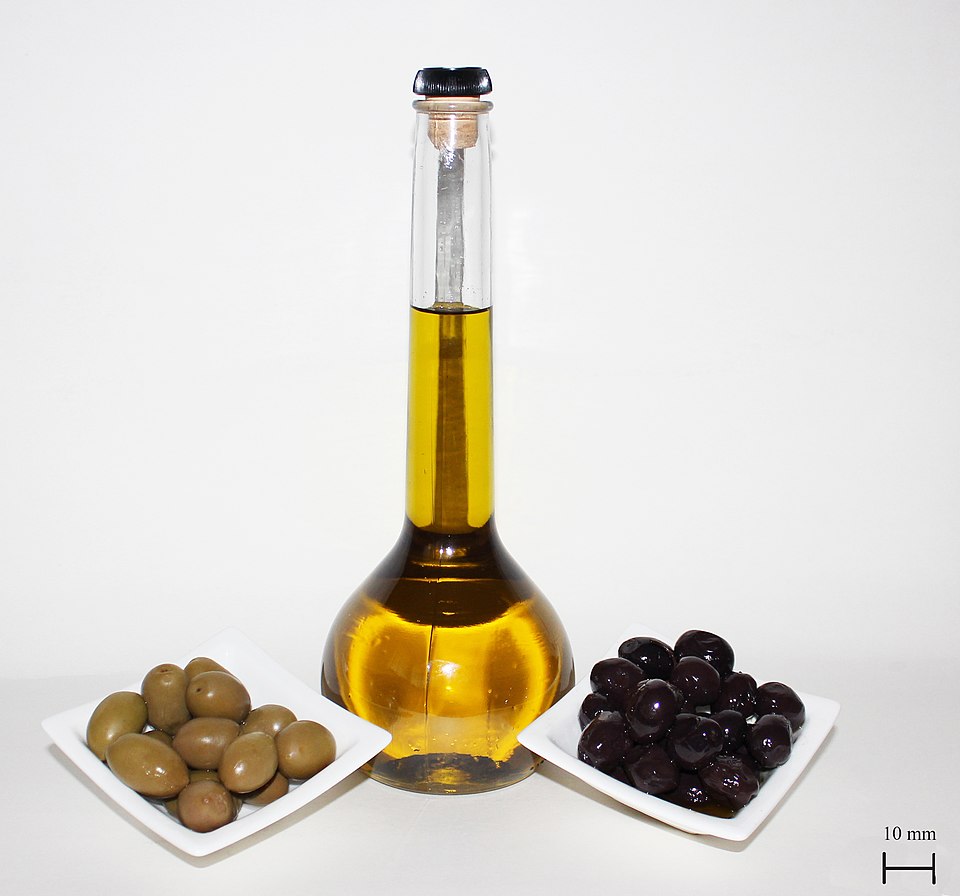
Bottle of olive oil with green and black olives (Source: Wikimedia Commons (Olive oil))
- Garlic and Onions: Provide aromatic depth to sauces and stews.
- Tomatoes: Fresh or canned, fundamental in sauces and salads.
- Herbs: Basil, oregano, rosemary, and thyme are typical for seasoning.
- Cheeses: Feta and Parmesan add richness and texture.
Asian Cuisine
- Soy Sauce: A salty, umami-rich condiment essential in Chinese, Japanese, and Korean dishes.
- Ginger and Garlic: Key aromatics that provide pungency and warmth.
- Rice and Noodles: Staples forming the carbohydrate base.
- Chilies: Used fresh or dried to add heat.
- Coconut Milk: Common in South and Southeast Asian curries for creaminess.
Latin American Cuisine
- Corn and Beans: Staples forming the basis of many dishes.
- Chilies: Varieties like jalapeño and chipotle add distinct heat and flavor.
- Cilantro: Fresh herb used as garnish and seasoning.
- Lime: Adds acidity and brightness.
- Avocado: Used in salads and sauces such as guacamole.
European Cuisine
- Butter and Cream: Used extensively in French and other Western European cooking for richness.
- Mustard: Commonly used for flavoring sauces and dressings.
- Wine and Vinegars: Employed in cooking and marinades.
- Root Vegetables: Potatoes, carrots, and parsnips are common.
- Herbs de Provence: A mix of herbs used in various dishes.
4.1.3 Sourcing and Quality Considerations for International Ingredients in Kenya
Catering professionals must navigate challenges related to the availability, quality, and cost of international ingredients in Kenya's market. Effective sourcing strategies ensure consistent dish quality and cost-efficiency.
Local Sourcing Advantages
- Freshness and Support of Local Economy: Procuring vegetables and herbs from Kenyan farmers reduces lead times and supports local livelihoods.
- Cost-Effectiveness: Local produce typically costs less than imported items due to lower transport and customs fees.
- Adaptation to Local Palates: Local ingredients can be used creatively to adapt international dishes while maintaining acceptability.
Challenges in Importing Ingredients
- Supply Chain Delays: Importing specialty items like saffron or specific cheeses can be delayed by customs and transport issues.
- Cost Fluctuations: Exchange rate volatility affects prices of imported ingredients, impacting menu pricing.
- Storage Requirements: Imported perishables may require specialized storage to maintain quality.
Quality Assurance Measures
- Supplier Vetting: Establishing relationships with reputable suppliers who provide certification and traceability.
- Inspection and Testing: Checking for freshness, expiry dates, and compliance with Kenyan food safety standards.
- Inventory Management: Using first-in, first-out (FIFO) systems to minimize spoilage and waste.
4.1.4 Handling and Storage of International Ingredients
Proper handling and storage are vital to preserve the quality, safety, and shelf life of ingredients used in international dishes. In Kenya's climatic conditions, this requires particular attention to refrigeration, humidity control, and hygiene.
Handling Practices
- Careful Transportation: Minimizing physical damage during delivery by using appropriate packaging and handling techniques.
- Cross-Contamination Prevention: Separating raw meats from vegetables and ready-to-eat ingredients to avoid foodborne illnesses.
- Hygienic Practices: Regular handwashing and use of clean utensils when handling ingredients.
Storage Requirements
- Refrigeration: Perishables like dairy, seafood, and some vegetables require temperatures between 1°C and 4°C.
- Freezing: Long-term storage of meats and some vegetables at -18°C to retain freshness.
- Dry Storage: Spices, dried legumes, and grains should be kept in airtight containers in cool, dry places to prevent moisture absorption and pest infestation.
Monitoring and Maintenance
- Regular Temperature Checks: Using thermometers to ensure storage units maintain recommended temperatures.
- Stock Rotation: Employing FIFO to use older stock first and reduce waste.
- Pest Control: Implementing measures to prevent contamination by insects or rodents.
Practice Questions
- Explain the different classifications of ingredients used in international dishes and discuss how each classification affects procurement decisions in Kenyan hotels. (10 marks)
- Identify five common ingredients in Mediterranean cuisine and describe their roles in dish preparation. (10 marks)
- Discuss the challenges associated with sourcing international ingredients in Kenya and propose strategies to overcome these challenges. (10 marks)
- Outline the best practices for handling and storing perishable international ingredients in a catering establishment. (10 marks)
The rest of this chapter
🔒Create a free account to open more of this chapter.
Free: practical guides, quick cards, workplace scenarios and more.
Create a free account 🔒4.2 Types of International Dishes
International dishes encompass a wide range of culinary creations originating from various countries and cultures. For catering and accommodation management professionals in Kenya, understanding these types is essential for diversifying menus, meeting client e…
🔒4.3 Waste Disposal
In Kenya’s catering and accommodation industry, proper waste disposal is critical for maintaining hygiene, complying with environmental regulations, and sustaining public health. Waste generated from food preparation and service can attract pests, cause unplea…
Chapter Summary
This chapter explored the diverse ingredients commonly used in international dishes, highlighting their unique qualities and roles in flavour development. It examined various types of international dishes and their distinctive preparation methods, emphasizing the importance of selecting appropriate techniques to achieve authentic flavours and textures. The chapter detailed production methods and procedures, guiding learners on systematic approaches to cooking these dishes effectively. It also covered quality assessment criteria to ensure that finished dishes meet expected standards of taste, appearance, and consistency. Presentation techniques were discussed, focusing on how visual appeal enhances the dining experience. Proper storage practices were outlined to maintain freshness and prevent spoilage of prepared dishes. Post production tasks such as cleaning and equipment maintenance were included to promote hygiene and efficiency. Finally, the chapter addressed waste disposal methods that align with environmental and health regulations within food production settings.
Self-Assessment
🔒 PDFDownload this self-assessment, with answers
A. Written Assessment
- Identify five key ingredients commonly used in international dishes and explain their culinary significance. (5 marks)
- Differentiate between at least three types of international dishes based on their preparation methods. (6 marks)
🔒20 more in this section.
Chapter Examination Questions
🔒 PDFDownload these examination questions, with worked answers
SECTION A (40 Marks) - Answer ALL Questions
- Identify five common ingredients used in the preparation of international dishes served in Kenyan hotels. (4 marks)
- Explain the significance of using authentic ingredients when preparing Italian cuisine in a Nairobi hotel setting. (4 marks)
🔒18 more in this section.
