
By the end of this chapter, you will be able to:
These skills will help you create delicious, safe meals that meet customer needs and keep your kitchen running smoothly!
Specialized meal preparation in Nutrition and Dietetics requires strict adherence to hygiene and safety standards to protect vulnerable populations such as patients in hospitals, children in schools, and clients in care facilities. Personal Protective Equipment (PPE) plays a critical role in preventing contamination and ensuring food safety during handling and preparation. In Kenya, where foodborne illnesses are a major public health concern, Nutrition and Dietetics professionals must understand the appropriate PPE to use and how to maintain it effectively to uphold high standards of specialized meal management.
Proper use of Personal Protective Equipment (PPE) is essential in specialized meal preparation to minimize the risk of contamination and protect both the food handlers and consumers. PPE creates a physical barrier between the handler and the food, preventing the spread of pathogens, allergens, and foreign particles. In Kenyan healthcare facilities, for example, the use of PPE aligns with the Ministry of Health’s food safety protocols, ensuring that meals served to patients meet safety standards.
Personal protective equipment (PPE) (Source: 5f700936fcc590f8)
Kitchen gloves form a primary defense against cross-contamination during food handling, particularly when dealing with raw ingredients and ready-to-eat meals.
There are several types of gloves used in food handling, each suited to specific tasks:
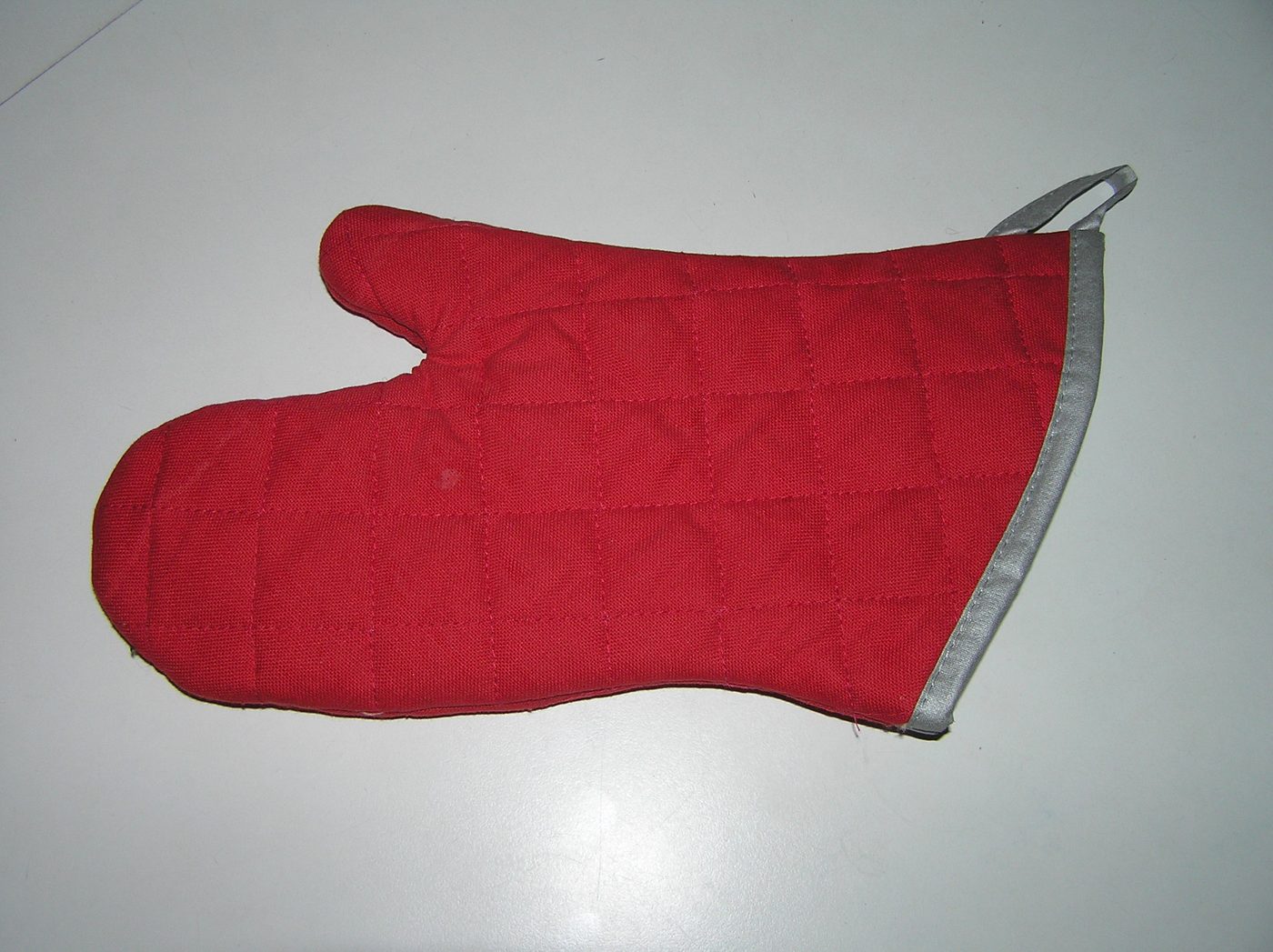
red heat-resistant glove for handling hot objects (Source: Wikimedia Commons)
Cut-resistant gloves are worn when using sharp tools to prevent injuries.
Powder-free gloves are preferred in food handling to avoid powder contamination of food.
Using gloves correctly prevents direct hand contact with food, which is critical in specialized meal preparation for patients with weakened immunity, such as those in Kenyatta National Hospital. Gloves reduce the transmission of bacteria and viruses, particularly when handling raw meat or unwashed vegetables. They also protect food handlers from exposure to harmful substances.
Proper glove use involves:
Challenges with glove use include allergic reactions to latex, improper glove changes, and environmental waste concerns. Many Kenyan institutions have switched to nitrile gloves to reduce latex allergies. Training food handlers regularly on glove hygiene and establishing clear protocols for glove disposal help overcome misuse. Introducing biodegradable gloves can address environmental issues.
Hairnets and caps serve as essential PPE to prevent hair and scalp contaminants from falling into food during preparation.
Hairnets and caps contain hair strands, dandruff, and scalp oils that may harbor bacteria, preventing these from contaminating food. In settings like school feeding programs, where large volumes of food are prepared, hair containment is critical to maintain hygiene and consumer confidence.
Hairnets are typically made from fine mesh nylon or polyester that is breathable but effective in trapping hair. Caps can be made from cotton or disposable nonwoven fabric, offering full head coverage. Some facilities use disposable caps for single use to ensure maximum hygiene.
Hairnets must cover all hair, including sideburns and stray strands, fitting snugly without gaps. Caps should be worn so that no hair is exposed. Staff must avoid touching or adjusting hairnets during food preparation to prevent contamination.
Reusable hairnets and caps should be washed regularly using hot water and detergent and stored in clean, dry environments. Disposable variants should be discarded after each use. Regular inspection for wear and tear ensures they remain effective barriers.
Aprons protect the food handler’s clothing and body from spills, stains, and contaminants, maintaining overall hygiene in the kitchen environment.
Common apron types include:
Aprons prevent transfer of dirt and microorganisms from clothing to food, especially important in clinical nutrition settings where immunocompromised patients are served. They also protect food handlers from hot splashes and stains.
Aprons must be worn clean and changed immediately if contaminated. Reusable aprons should be laundered daily at high temperatures to kill pathogens. Disposable aprons must be discarded after single use. Aprons should never be worn outside food preparation areas to avoid bringing external contaminants into the kitchen.
Some food handlers find aprons uncomfortable in hot kitchen environments, leading to non-compliance. Lightweight, breathable apron materials can improve comfort. Educating staff on the risks of skipping aprons encourages adherence to hygiene protocols.
Footwear in food preparation areas must ensure safety and hygiene by protecting feet from hazards and preventing contamination.
Closed shoes protect feet from hot spills, sharp objects, and slippery surfaces. Leather is durable and easy to clean, making it ideal for busy kitchens such as those in Nairobi County hospitals. Flat soles reduce the risk of slips and falls, a common cause of injury in kitchens.
Regular cleaning with disinfectants removes dirt and pathogens. Shoes should be inspected for damage and replaced if soles wear out or leaks develop. Food handlers should avoid wearing shoes outside the kitchen to prevent contamination transfer.
Proper footwear reduces workplace injuries such as burns, cuts, and falls. In county government food service units, enforcing footwear policies contributes to compliance with occupational health and safety regulations.
Kitchen towels are multipurpose tools used for drying hands, wiping surfaces, and handling hot utensils, but they can also be sources of contamination if not managed properly.
Common types include:
Towels can harbor bacteria if damp or used repeatedly without washing. Cross-use between hands and surfaces can spread contaminants. In hospitals, improper towel use can lead to serious infections in patients.
Towels used for drying hands should be separate from those used for cleaning surfaces. Reusable towels must be washed daily in hot water and thoroughly dried. Disposable towels should be used where possible for hand drying to minimize contamination. Towels should be stored in clean, dry places to prevent microbial growth.
Some Kenyan institutions have adopted hand dryers in kitchens to reduce towel use. Color-coded towel systems help designate specific towels for different tasks, reducing cross-contamination risks.
Create a free account to open more of this chapter.
Free: practical guides, quick cards, workplace scenarios and more.
Create a free accountThis chapter covered the essential personal protective equipment required for safe food handling, including kitchen gloves, hairnets and caps, aprons, closed flat leather shoes, and kitchen towels, each playing a vital role in maintaining hygiene and safety in meal preparation areas. It then discussed the careful preparation of ingredients, emphasizing cleanliness, accurate measurement, and appropriate handling to ensure quality and safety in specialized meals. The process of producing specialized meals was explored, highlighting the importance of following precise recipes and techniques to meet specific dietary needs. Finally, the chapter addressed effective waste management practices, focusing on proper segregation, disposal, and reduction of food waste to maintain a clean and sustainable kitchen environment. Together, these topics provide a comprehensive guide to preparing specialized meals safely and efficiently.
Type: Individual
| Tools & Equipment | Materials |
|---|---|
| Kitchen gloves | Kitchen gloves |
| Hairnet | Hairnet |
| Kitchen cap | Kitchen cap |
| Apron | Apron |
| Closed flat leather shoes | Closed flat leather shoes |
| Kitchen towel | Kitchen towel |
| S/N | Item | Quantity |
|---|---|---|
| 1 | Kitchen gloves | 1 Pair per Candidate |
| 2 | Hairnet | 1 Pc per Candidate |
| 3 | Kitchen cap | 1 Pc per Candidate |
| 4 | Apron | 1 Pc per Candidate |
| 5 | Closed flat leather shoes | 1 Pair per Candidate |
| 6 | Kitchen towel | 1 Pc per Candidate |
| Items to be Evaluated | Marks Available | Marks Obtained | Comments |
|---|---|---|---|
| TASK 1: SELECTION AND WEARING OF PERSONAL PROTECTIVE EQUIPMENT | |||
| Selected appropriate kitchen gloves suitable for food handling (Award 2 marks for correct glove selection and condition) | 2 | ||
| Wore hairnet correctly covering all hair (Award 2 marks for proper hairnet use without hair exposed) | 2 | ||
| Wore kitchen cap properly to cover head (Award 1 mark for correct cap placement) | 1 | ||
| Wore clean apron covering front torso (Award 2 marks for correct apron wearing without contamination) | 2 | ||
| Wore closed flat leather shoes correctly and securely (Award 2 marks for proper footwear use) | 2 | ||
| Used kitchen towel appropriately for hand drying (Award 1 mark for correct use of kitchen towel) | 1 | ||
| Sub-Total | 10 | ||
| PRODUCT CHECKLIST | |||
| All PPE worn correctly and visibly without contamination or damage (Award 5 marks for fully compliant PPE wearing as per standards) | 5 | ||
| Sub-Total | 5 | ||
| GRAND TOTAL | 15 | ||
Type: Individual
| Tools & Equipment | Materials |
|---|---|
| Cutting board | Fresh tomatoes |
| Chef's knife | Fresh spinach leaves |
| Measuring scale | Carrots |
| Mixing bowl | Onions |
| Peeler | Skinless chicken breast |
| Brown rice | |
| Garlic cloves | |
| Olive oil | |
| Black pepper | |
| Fresh lemon |
| S/N | Item | Quantity |
|---|---|---|
| 1 | Fresh tomatoes | 200 grams per Candidate |
| 2 | Fresh spinach leaves | 150 grams per Candidate |
| 3 | Carrots | 100 grams per Candidate |
| 4 | Onions | 100 grams per Candidate |
| 5 | Skinless chicken breast | 250 grams per Candidate |
| 6 | Brown rice | 100 grams per Candidate |
| 7 | Garlic cloves | 3 cloves per Candidate |
| 8 | Olive oil | 20 ml per Candidate |
| 9 | Black pepper | 5 grams per Candidate |
| 10 | Fresh lemon | 1/2 lemon per Candidate |
| 11 | Cutting board | 1 per Candidate |
| 12 | Chef's knife | 1 per Candidate |
| 13 | Measuring scale | 1 per Candidate |
| 14 | Mixing bowl | 1 per Candidate |
| 15 | Peeler | 1 per Candidate |
| 16 | Apron | 1 per Candidate |
| 17 | Disposable gloves | 1 pair per Candidate |
| Items to be Evaluated | Marks Available | Marks Obtained | Comments |
|---|---|---|---|
| TASK 1: PREPARE AND ORGANIZE INGREDIENTS FOR A LOW-SODIUM SPECIALIZED MEAL | |||
| Donned personal protective equipment: apron and disposable gloves (Award 1 mark each for apron, gloves, and personal hygiene) | 3 | ||
| Organized the workspace: clean cutting board and utensils arranged (Award 1 mark each for cleanliness, arrangement, and workspace readiness) | 3 | ||
| Measured ingredients accurately using the scale (Award 1 mark each for correct measurement of chicken, rice, mixed vegetables, and spices) | 4 | ||
| Washed and peeled vegetables where necessary (Award 1 mark each for washing, peeling, and proper handling) | 3 | ||
| Chopped vegetables uniformly as per specifications (Award 1 mark each for uniform size, appropriate chopping technique, and correct portioning) | 4 | ||
| Trimmed and prepared chicken breast without skin and excess fat (Award 1 mark each for trimming skin, removing fat, and portioning) | 3 | ||
| Seasoned ingredients appropriately with black pepper and lemon, avoiding salt (Award 1 mark each for correct seasoning, adherence to low-sodium guidelines, and use of lemon) | 3 | ||
| Maintained hygiene and cleanliness throughout preparation (Award 1 mark each for hand washing, utensil cleanliness, and waste disposal) | 3 | ||
| Organized all prepared ingredients ready for cooking (Award 2 marks for complete and neat organization) | 2 | ||
| Sub-Total | 28 | ||
| PRODUCT CHECKLIST | |||
| Ingredients weighed and prepared correctly: 250g chicken breast, 100g brown rice, 450g mixed vegetables (Award 1 mark each for correct weight of chicken, rice, tomatoes, spinach, and carrots) | 5 | ||
| Vegetables uniformly chopped to approximately 1 cm dice (Award 3 marks for consistent size and neatness) | 3 | ||
| Chicken breast trimmed neatly with no skin or excess fat visible (Award 3 marks for neat trimming and clean presentation) | 3 | ||
| Seasoning applied correctly with no added salt (Award 2 marks for adherence to low-sodium seasoning guidelines) | 2 | ||
| Ingredients neatly arranged and labeled for cooking (Award 2 marks for neat presentation and correct labeling) | 2 | ||
| Sub-Total | 15 | ||
| GRAND TOTAL | 43 | ||
At the start of this chapter we promised you would be able to:
Tick each one you can genuinely do.
So, are you there yet?
You're competent when you can confidently do 50% or more of what this chapter promised.
Sign in to record how you're doing.