
By the end of this chapter, you will be able to:
Mastering these skills helps you understand how muscles work and how to keep them healthy, which is essential in many trades that involve physical work and care.
Muscle knowledge is vital for nutrition and dietetics professionals because muscles are the primary sites for nutrient metabolism, energy expenditure, and physical activity, all of which influence nutritional status and dietary needs. Understanding muscle structure and function helps dietitians design appropriate nutrition plans that support muscle health, recovery, and performance, especially for patients recovering from illness or athletes. In Kenya, where malnutrition and lifestyle diseases coexist, grasping muscle anatomy aids in managing conditions like sarcopenia, obesity, and diabetes effectively.
Muscle tissue is a specialized form of tissue responsible for producing force and movement in the body. For nutrition and dietetics professionals, comprehending muscle structure is essential because muscles consume nutrients such as glucose and amino acids to generate energy and maintain function. Muscle health directly affects metabolic rate, physical activity capacity, and overall well-being, which are key considerations when assessing nutritional interventions for clients at hospitals or sports clinics.
Muscles are composed of cells known as muscle fibers that have the unique ability to contract and generate force. These fibers contain proteins called actin and myosin arranged in repeating units called sarcomeres, which enable contraction through sliding filament mechanisms. The muscle fibers are bundled into fascicles surrounded by connective tissue layers that provide support and transmit force to bones or organs. Nutrition influences muscle structure by supplying building blocks for protein synthesis and energy substrates necessary for contraction and repair.
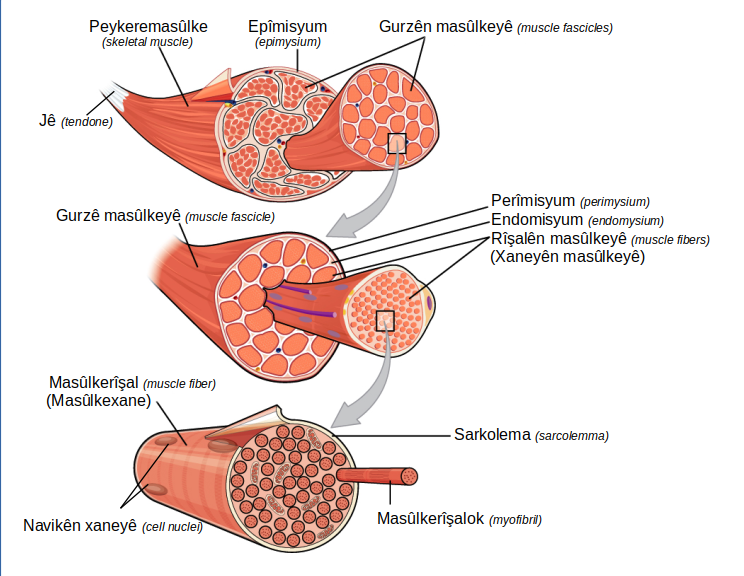
Diagram showing perimysium in muscle structure (Source: Wikimedia Commons)
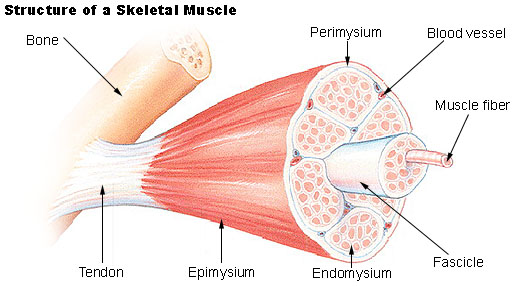
Epimysium labeled on skeletal muscle diagram (Source: Wikimedia Commons)
Muscle fibers differ in their size, metabolic properties, and contraction speed, affecting how muscles perform during various activities. For example, type I fibers are rich in mitochondria and rely on aerobic metabolism, supporting endurance activities common in farmers working long hours in fields. Conversely, type II fibers generate rapid, powerful contractions but fatigue quickly, important for short bursts of activity like sprinting or lifting heavy objects in warehouse jobs.
Muscle function depends on an extensive network of blood vessels and nerves. Capillaries deliver oxygen and nutrients such as glucose and fatty acids essential for energy production during contraction. Motor neurons stimulate muscle fibers to contract by releasing neurotransmitters at neuromuscular junctions, allowing voluntary control of movement. In clinical nutrition, understanding this helps explain muscle wasting in neuropathies or ischemic conditions.
Connective tissue transmits the force generated by muscle fibers to bones, enabling movement. It also maintains muscle shape and elasticity, important for injury prevention. Adequate intake of nutrients like vitamin C and collagen precursors supports connective tissue health, which can be critical during rehabilitation from injuries in hospital patients or athletes.
Create a free account to open more of this chapter.
Free: practical guides, quick cards, workplace scenarios and more.
Create a free accountThis chapter explored the structure of muscles, highlighting their essential role in body movement and stability. It began with an introduction to muscles, explaining their composition and how they function as contractile tissues. The discussion then focused on the three main types of muscles: skeletal muscles, which are attached to bones and enable voluntary movement; smooth muscles, found in internal organs and responsible for involuntary actions; and cardiac muscles, specialized muscle tissue found only in the heart that supports continuous rhythmic contractions. Each muscle type was described in terms of its unique structure and function within the body. Finally, the chapter addressed common muscle disorders, outlining conditions that affect muscle health and function. Understanding these aspects is crucial for appreciating how muscles contribute to overall human physiology and health maintenance.
At the start of this chapter we promised you would be able to:
Tick each one you can genuinely do.
So, are you there yet?
You're competent when you can confidently do 50% or more of what this chapter promised.
Sign in to record how you're doing.