
By the end of this chapter, you will be able to:
These skills are essential because they help you create high-quality garments safely and professionally, setting you up for success in the tailoring trade.
Compiled by: John Karanja
The process of developing gents' garment patterns is a foundational skill for fashion design professionals specializing in menswear. This chapter focuses on the essential preparatory and safety measures that protect designers and tailors during pattern drafting and garment construction. In Kenya’s dynamic fashion industry, where small workshops and larger apparel companies coexist, understanding and adhering to Personal Protective Equipment (PPE) protocols ensures a safe working environment and enhances productivity. Proper use of PPE also aligns with occupational health standards set by Kenyan regulatory bodies such as the Directorate of Occupational Safety and Health Services (DOSHS).
In fashion design workshops, particularly those involved in cutting, sewing, and pattern development for gents’ wear, PPEs are critical to prevent injuries and maintain hygiene. Kenyan tailors and designers often work with sharp tools, chemicals like fabric adhesives, and machines that pose risks without appropriate protection. The use of PPE not only safeguards the individual but also contributes to a professional workplace culture, which is essential for sustaining Kenya’s growing textile and apparel sector.
The selection of PPEs in a fashion design context addresses specific hazards encountered during pattern making and garment construction. These include protection from cuts, dust, chemical exposure, and repetitive strain injuries. Common PPEs used in Kenyan tailoring workshops include:
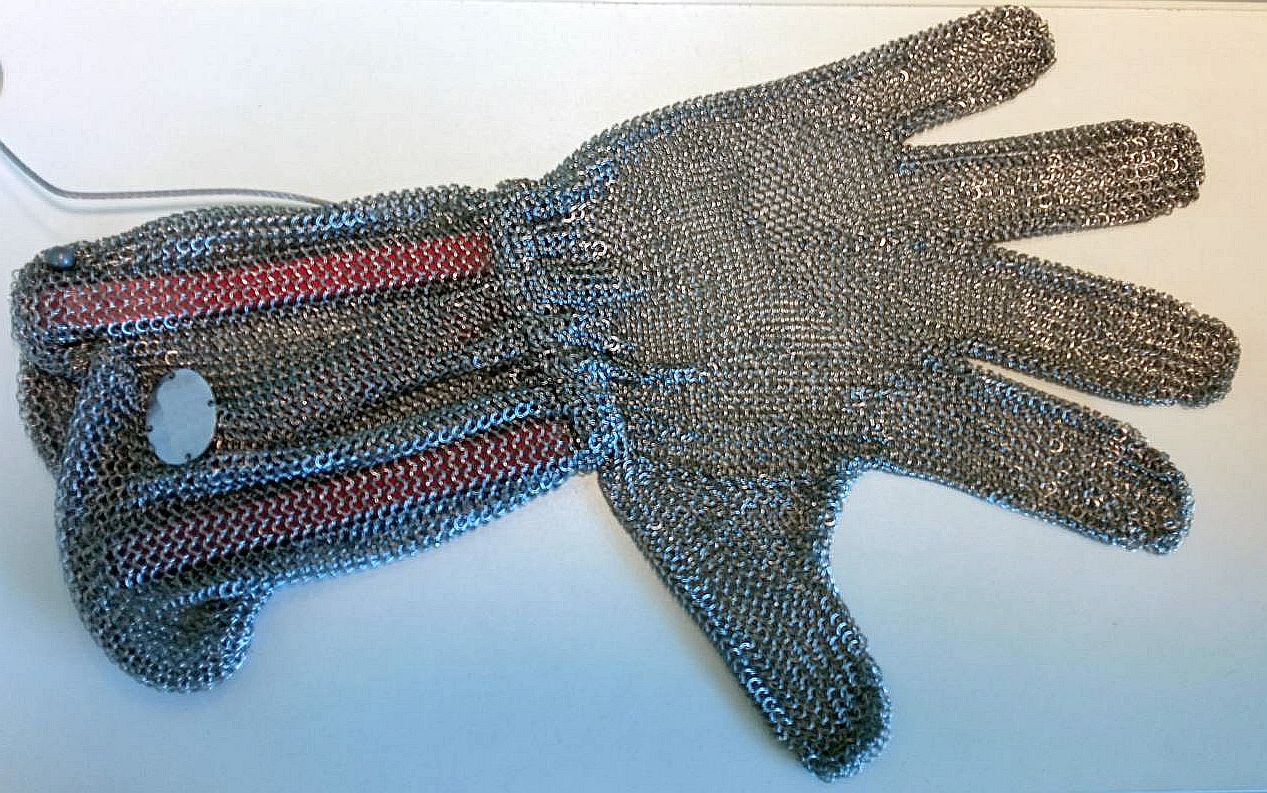
Metal mesh cut-resistant glove (Source: Wikimedia Commons)
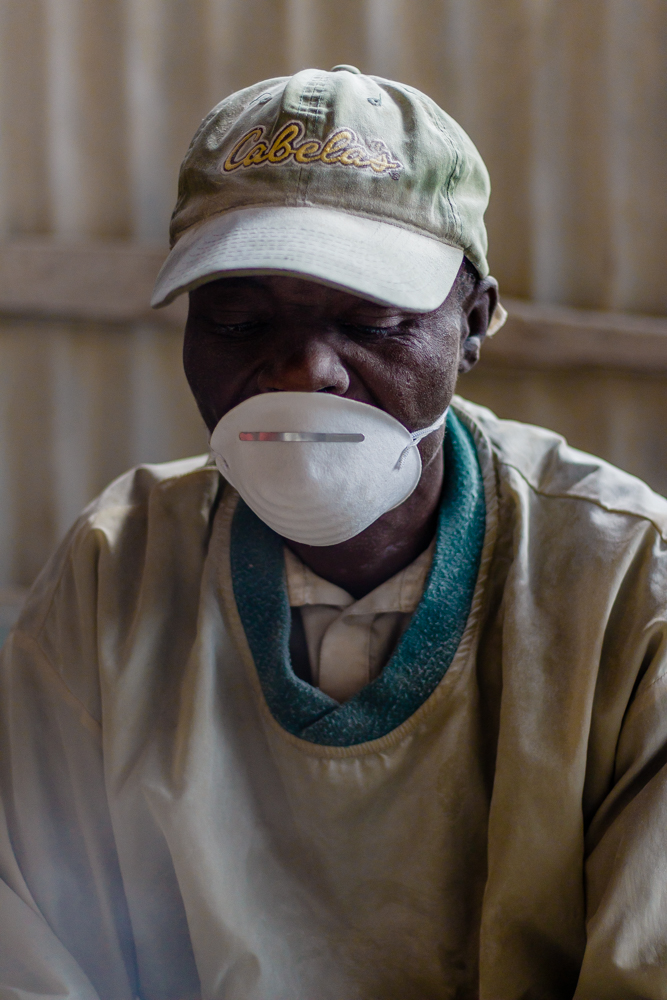
Person wearing a dust mask (Source: Wikimedia Commons)
A pair of clear safety goggles designed to protect the eyes during con (Source: PLUMB 5 LEARNING GUIDE-1 (1))
Wearing PPE in tailoring workshops is a vital component of occupational safety, especially in Kenya where many fashion workshops are small-scale and may lack advanced safety infrastructure. The benefits of PPE use extend beyond immediate injury prevention to include enhanced work efficiency and compliance with national health and safety regulations.
Correct usage and upkeep of PPEs are essential to maximize their protective function. In Kenyan fashion design settings, where resources may be limited, proper care extends the life of PPEs and ensures ongoing protection.
Despite the clear benefits, adoption of PPEs in Kenyan fashion design workshops faces practical challenges, often due to cost, awareness, and cultural factors. Addressing these barriers is essential for improving safety standards across the industry.
Create a free account to open more of this chapter.
Free: practical guides, quick cards, workplace scenarios and more.
Create a free accountThis chapter explored the essential role of personal protective equipment in ensuring safety during garment production, highlighting the types of PPEs relevant to tailoring activities. It then detailed the step-by-step process of developing pattern pieces for gents' garments, emphasizing accuracy and adherence to measurement standards. The chapter further examined the importance of clear pattern instructions, which guide the cutting and assembly stages to achieve the desired garment fit and style. Finally, the procedures for cutting gents' pattern pieces were discussed, focusing on techniques that maintain fabric integrity and optimize material use. Understanding these interconnected stages equips students with the skills necessary to produce well-fitting and professionally finished gents' wear. The chapter integrated practical considerations that are vital for quality garment construction in a tailoring workshop setting.
Type: Individual
| Tools & Equipment | Materials |
|---|---|
| Measuring tape | Plain medium weight cotton fabric (152 cm width) |
| Tailor's chalk | Pattern paper |
| French curve ruler | Iron-on interfacing (fusible) |
| Scissors (fabric and paper) | Sewing thread (matching colour) |
| Pins | Personal protective equipment (dust coat, flat closed shoes, thimble) |
| Ruler (meter ruler) | |
| Iron and ironing board |
| S/N | Item | Quantity |
|---|---|---|
| 1 | Plain medium weight cotton fabric (152 cm width) | 1.5 meters per Candidate |
| 2 | Pattern paper | 2 sheets per Candidate |
| 3 | Tailor's chalk | 1 piece per Candidate |
| 4 | Measuring tape | 1 piece per Candidate |
| 5 | French curve ruler | 1 piece per Candidate |
| 6 | Scissors (fabric and paper) | 1 set per Candidate |
| 7 | Pins | 1 packet per Candidate |
| 8 | Ruler (meter ruler) | 1 piece per Candidate |
| 9 | Sewing thread (matching colour) | 1 small cone per Candidate |
| 10 | Iron and ironing board | 1 set per 5 Candidates |
| 11 | Iron-on interfacing (fusible) | 20 cm per Candidate |
| 12 | Personal protective equipment (dust coat, flat closed shoes, thimble) | 1 set per Candidate |
| Items to be Evaluated | Marks Available | Marks Obtained | Comments |
|---|---|---|---|
| TASK 1: Preparation and safety | |||
| Wore personal protective equipment (dust coat, flat closed shoes, thimble) (Award 1 mark each) | 3 | ||
| Ensured the workplace is well lit and ventilated (Award 2 marks for correct procedure) | 2 | ||
| Gathered all required tools and materials according to workplace policy (Award 1 mark for each correctly gathered item) | 5 | ||
| Sub-Total | 10 | ||
| TASK 2: Pattern drafting | |||
| Accurately took the given body measurements (Award 3 marks for correct measurement taking) | 3 | ||
| Drew the front bodice pattern on pattern paper with correct dimensions (Award 1 mark for each correct dimension and line) | 7 | ||
| Included pattern details: grain line, pattern name, number of pieces, seam allowance, centre front (CF) (Award 1 mark each) | 5 | ||
| Marked darts correctly on the pattern (Award 5 marks for correctly positioned and shaped darts) | 5 | ||
| Sub-Total | 20 | ||
| TASK 3: Laying and cutting | |||
| Laid the pattern correctly on fabric considering grain line and fold (Award 4 marks for correct layout) | 4 | ||
| Pinned pattern pieces securely to fabric (Award 3 marks for secure pinning) | 3 | ||
| Cut out the front bodice pieces accurately with correct seam allowance (Award 7 marks for neat and accurate cutting) | 7 | ||
| Sub-Total | 14 | ||
| TASK 4: Finishing the pattern pieces | |||
| Applied iron-on interfacing to the correct areas as per instructions (Award 3 marks for correct placement and adhesion) | 3 | ||
| Pressed the pattern pieces neatly using the iron (Award 3 marks for neat pressing) | 3 | ||
| Sub-Total | 6 | ||
| PRODUCT CHECKLIST | |||
| Front bodice pattern dimensions match given measurements (Chest 1000 mm, Shoulder width 450 mm, Front length 700 mm, Neck circumference 420 mm) within ±5 mm (Award 2 marks for each correct dimension within tolerance) | 8 | ||
| Seam allowance of 1.5 cm included uniformly on all edges (Award 4 marks for consistent seam allowance) | 4 | ||
| Darts correctly positioned, tapered to a point, and reinforced (Award 6 marks for darts accuracy and finish) | 6 | ||
| Pattern includes all necessary markings: grain line, pattern name, number of pieces, centre front (CF) (Award 6 marks for complete and clear markings) | 6 | ||
| Sub-Total | 24 | ||
| GRAND TOTAL | 74 | ||
Type: Individual
| Tools & Equipment | Materials |
|---|---|
| Measuring tape | Plain medium-weight cotton fabric |
| Ruler (60 cm) | Pattern paper |
| French curve | Iron-on interfacing |
| Tailor's chalk | Sewing thread |
| Pencil | Personal Protective Equipment |
| Eraser | |
| Scissors (fabric shears) | |
| Tailor pins | |
| Iron and ironing board | |
| Sewing machine |
| S/N | Item | Quantity |
|---|---|---|
| 1 | Plain medium-weight cotton fabric | 1.5 meters per Candidate |
| 2 | Pattern paper | 1 sheet (70cm x 100cm) per Candidate |
| 3 | Tailor's chalk | 1 piece per Candidate |
| 4 | Measuring tape | 1 piece per Candidate |
| 5 | Ruler (60 cm) | 1 piece per Candidate |
| 6 | French curve | 1 piece per Candidate |
| 7 | Scissors (fabric shears) | 1 piece per Candidate |
| 8 | Pencil | 1 piece per Candidate |
| 9 | Eraser | 1 piece per Candidate |
| 10 | Iron and ironing board | 1 set per 5 Candidates |
| 11 | Sewing machine | 1 per Candidate |
| 12 | Sewing thread (matching color) | 1 small cone per Candidate |
| 13 | Iron-on interfacing (for collar stand and yoke) | 20 cm per Candidate |
| 14 | Tailor pins | 1 packet per Candidate |
| 15 | Personal Protective Equipment (dust coat, flat closed shoes, thimble) | 1 set per Candidate |
| Items to be Evaluated | Marks Available | Marks Obtained | Comments |
|---|---|---|---|
| TASK 1: Preparation and Safety | |||
| Wore appropriate PPE (dust coat, flat closed shoes, thimble) (Award 1 mark each) | 3 | ||
| Ensured well-lit and well-ventilated workspace (Award 2 marks for correct procedure) | 2 | ||
| Gathered all required tools and materials as per cutting list (Award 1 mark each for 5 items: measuring tape, ruler, tailor's chalk, scissors, pattern paper) | 5 | ||
| Sub-Total | 10 | ||
| TASK 2: Pattern Development | |||
| Accurately took and recorded client measurements (Award 3 marks for correct measurements) | 3 | ||
| Drew back bodice pattern outline on pattern paper using measurements (Award 2 marks each for length, width, and proper shape) | 6 | ||
| Marked pattern details: grain line, center back (CB), number of pieces, seam allowance (1.5 cm), pattern name (Award 1 mark each) | 5 | ||
| Used French curve to shape armhole and neckline accurately (Award 4 marks for correct curves) | 4 | ||
| Included dart placement and size as per measurement (Award 4 marks for correct dart) | 4 | ||
| Checked and corrected pattern for symmetry and accuracy (Award 3 marks for proper checking and corrections) | 3 | ||
| Sub-Total | 25 | ||
| TASK 3: Laying and Cutting | |||
| Laid pattern pieces on fabric correctly respecting grain line (Award 4 marks for correct layout) | 4 | ||
| Pinned pattern pieces firmly to fabric (Award 3 marks for proper pinning) | 3 | ||
| Cut fabric accurately along pattern outlines with correct seam allowance (Award 5 marks for neat and accurate cutting) | 5 | ||
| Marked pattern details on fabric using tailor's chalk (Award 3 marks for clear marking) | 3 | ||
| Removed pattern paper carefully after cutting (Award 2 marks for careful removal) | 2 | ||
| Sub-Total | 17 | ||
| TASK 4: Finishing and Packaging | |||
| Pressed the cut fabric pieces using iron properly (Award 3 marks for neat pressing) | 3 | ||
| Removed all loose threads and cleaned work area (Award 2 marks for tidiness) | 2 | ||
| Packaged the pattern pieces and fabric neatly for next stage (Award 3 marks for neat packaging) | 3 | ||
| Sub-Total | 8 | ||
| PRODUCT CHECKLIST | |||
| Back bodice pattern length is 750 mm ± 5 mm (Award 3 marks for accuracy within tolerance) | 3 | ||
| Back bodice pattern width (across back) is 500 mm ± 5 mm (Award 3 marks for accuracy within tolerance) | 3 | ||
| Seam allowance of 1.5 cm included on all edges (Award 3 marks for inclusion of seam allowance) | 3 | ||
| Pattern includes all required markings: grain line, CB, pattern name, number of pieces (Award 3 marks for complete markings) | 3 | ||
| Dart placement and size accurate and clearly marked (Award 3 marks for correct dart) | 3 | ||
| Armhole and neckline curves smooth and correctly shaped (Award 3 marks for smooth curves) | 3 | ||
| Pattern paper cut cleanly and symmetrically (Award 2 marks for neat cutting) | 2 | ||
| Fabric pieces cut accurately matching pattern dimensions (Award 3 marks for fabric cutting accuracy) | 3 | ||
| Sub-Total | 23 | ||
| GRAND TOTAL | 83 | ||
At the start of this chapter we promised you would be able to:
Tick each one you can genuinely do.
So, are you there yet?
You're competent when you can confidently do 50% or more of what this chapter promised.
Sign in to record how you're doing.