
By the end of this chapter, you will be able to:
These skills will help you keep rainwater harvesting systems running smoothly, saving water and supporting sustainable communities.
Compiled by: Mary Maina
Maintaining a rainwater harvesting system is vital for ensuring sustainable water supply, especially in Kenya where water scarcity affects many sectors including healthcare, agriculture, and hospitality. Proper maintenance safeguards the system’s functionality, prolongs its lifespan, and prevents contamination. Personal Protective Equipment (PPE) plays a critical role in protecting technicians and maintenance personnel from hazards encountered during upkeep activities. This chapter explores the types, importance, usage, and care of PPE relevant to rainwater harvesting system maintenance across diverse professional fields.
Personal Protective Equipment includes specialized clothing and gear designed to protect workers from physical, chemical, and biological hazards encountered during maintenance tasks. In the context of rainwater harvesting system upkeep, PPE safeguards individuals from injuries related to falling objects, chemical exposure, microbial contamination, and accidents involving tools or ladders. Various types of PPE are essential to cover all potential risks.
Gloves: Protect hands from cuts, abrasions, and contact with contaminated water or chemicals used in cleaning gutters and tanks. For example, maintenance staff at a county hospital use nitrile gloves to avoid skin irritation when handling cleaning agents.
Safety goggles or glasses: Shield eyes from splashes of dirty water or chemicals, and from debris when cleaning catchment areas or gutters. Staff at a university water management department often wear goggles during tank inspections.
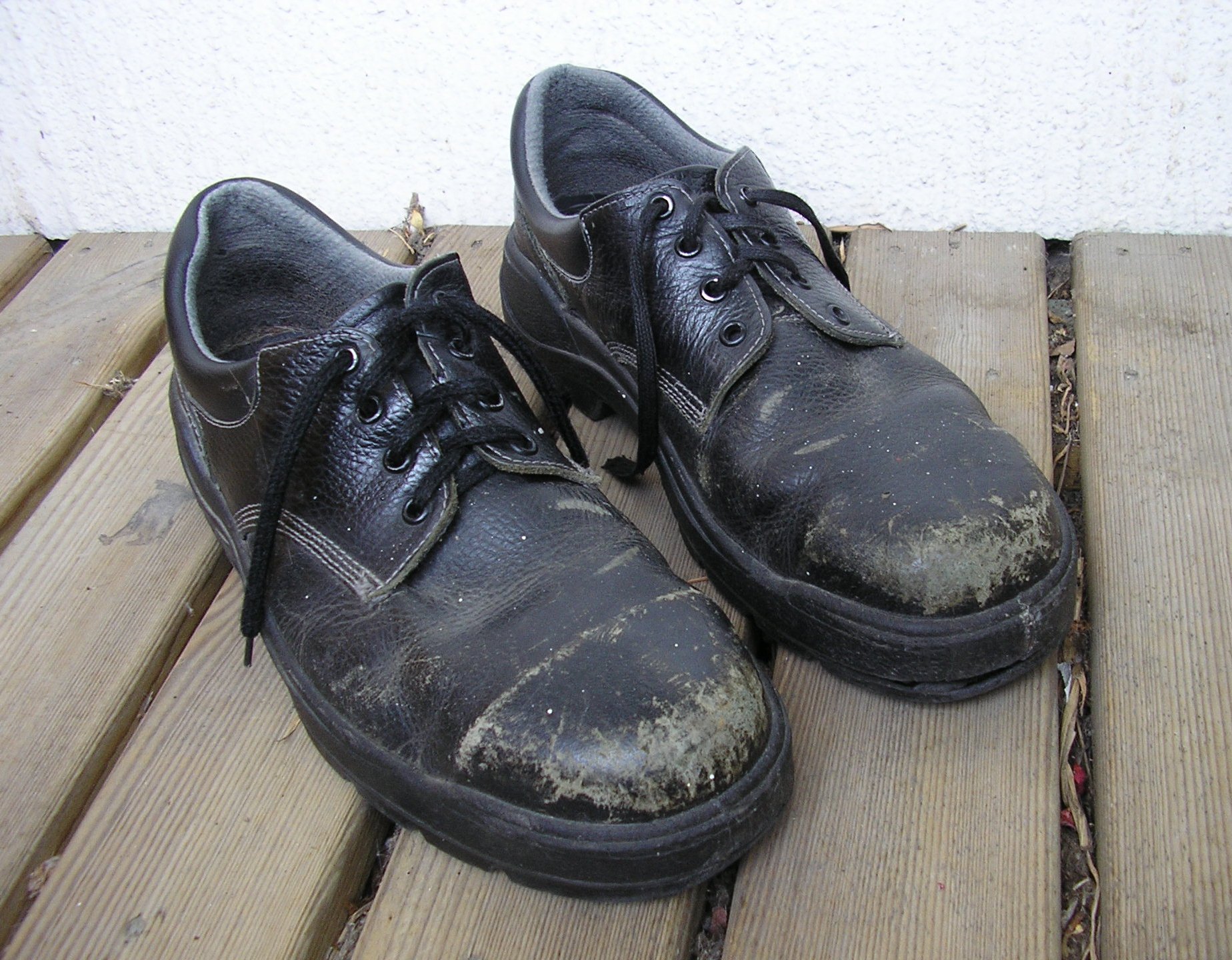
worn black safety boots on wooden floor (Source: Wikipedia (Steel-toe boot))
Using PPE during rainwater harvesting system maintenance is not just a regulatory requirement but a practical necessity to ensure worker safety and system integrity. The presence of waterborne pathogens, chemicals, and physical hazards demands rigorous protective measures to prevent injuries and illnesses that could disrupt service delivery in critical sectors.
Correct usage of PPE is crucial to achieve its protective purpose. Improper use can lead to exposure to hazards or damage to the PPE itself, undermining safety efforts. Training on selection, fitting, and removal of PPE ensures that maintenance workers maximize protection during rainwater system upkeep.
Maintaining PPE in good condition extends its lifespan and ensures ongoing protection. Poor storage or cleaning can degrade materials, reducing effectiveness and increasing costs for organizations. Proper care routines are essential for any institution relying on rainwater harvesting system maintenance.
Explain five types of personal protective equipment used in rainwater harvesting system maintenance and their specific protective functions. (10 marks)
Discuss the importance of using personal protective equipment during maintenance activities in the context of a healthcare facility. (10 marks)
Describe six guidelines for the proper use and handling of personal protective equipment in rainwater harvesting system maintenance. (12 marks)
Outline five best practices for maintaining and storing personal protective equipment to ensure its effectiveness and longevity. (10 marks)
Create a free account to open more of this chapter.
Free: practical guides, quick cards, workplace scenarios and more.
Create a free accountThis chapter focused on the essential practices for maintaining a rainwater harvesting system, starting with the importance of using appropriate personal protective equipment to ensure safety during maintenance tasks. It then covered methods for detecting common faults in the system, emphasizing early identification to prevent major failures. The chapter described the necessary tools and equipment required for effective maintenance and repair work. It also detailed procedures for repairing various faults, highlighting practical techniques to restore system functionality. Testing the system after maintenance ensures it operates efficiently and meets water quality standards. Finally, the chapter underscored the role of good housekeeping in preserving the system’s longevity and preventing contamination or damage. Together, these topics provide a comprehensive guide to sustaining the performance and reliability of rainwater harvesting installations.
Type: Individual
| Tools & Equipment | Materials |
|---|---|
| Tape measure | Safety helmet |
| Spirit level | Protective gloves |
| Flashlight | Dustcoat overall |
| Pliers | Inspection checklist form |
| Pipe wrench | |
| Screwdriver |
| S/N | Item | Quantity |
|---|---|---|
| 1 | Safety helmet | 1 Pc per Candidate |
| 2 | Protective gloves | 1 Pair per Candidate |
| 3 | Dustcoat overall | 1 Pc per Candidate |
| 4 | Tape measure | 1 Pc per Candidate |
| 5 | Spirit level | 1 Pc per Candidate |
| 6 | Flashlight | 1 Pc per Candidate |
| 7 | Basic plumbing tools set (pliers, pipe wrench, screwdriver) | 1 Set per Candidate |
| 8 | Inspection checklist form | 1 Pc per Candidate |
| Items to be Evaluated | Marks Available | Marks Obtained | Comments |
|---|---|---|---|
| TASK 1: Safety and Preparation | |||
| Wore PPE including helmet, gloves, and dustcoat overall (Award 1 mark for each PPE worn or zero) | 3 | ||
| Used tools correctly and safely during inspection (Award 2 marks for correct and safe tool use or zero) | 2 | ||
| Sub-Total | 5 | ||
| TASK 2: Inspection and Fault Identification | |||
| Checked gutters for blockages, cracks, and leaks (Award 3 marks for thorough inspection or zero) | 3 | ||
| Measured and checked downspout alignment and plumbness (Award 2 marks for correct measurement and checking or zero) | 2 | ||
| Inspected storage tank for cracks, leaks, and cleanliness (Award 3 marks for detailed inspection or zero) | 3 | ||
| Identified and listed at least five faults clearly and accurately (Award 1 mark per correctly identified fault up to 5 or zero) | 5 | ||
| Sub-Total | 13 | ||
| TASK 3: Reporting and Recommendations | |||
| Completed inspection checklist form accurately (Award 3 marks for complete and accurate checklist or zero) | 3 | ||
| Provided clear recommendations for corrective actions (Award 4 marks for clear, relevant recommendations or zero) | 4 | ||
| Sub-Total | 7 | ||
| PRODUCT CHECKLIST | |||
| Inspection checklist form with all faults and measurements correctly recorded (Award 5 marks for complete and accurate recording or zero) | 5 | ||
| Clear and logical list of faults including location and nature of fault (Award 5 marks for clarity and completeness or zero) | 5 | ||
| Sub-Total | 10 | ||
| GRAND TOTAL | 35 | ||
Type: Individual
| Tools & Equipment | Materials |
|---|---|
| Tape measure | 100x100mm PVC Downpipe |
| Tin snips | 100x150mm Gutter Section |
| Spirit level | Gutter brackets |
| Scriber | Downpipe brackets |
| Pliers | Silicone sealant |
| Bench vice | Pop rivets |
| Mallet | 2 inch galvanized nails |
| Ball peen hammer | 2 inch screws |
| Pipe wrench | Sheet metal gauge 28 |
| Drill |
| S/N | Item | Quantity |
|---|---|---|
| 1 | 100x100mm PVC Downpipe | 2 meters per Candidate |
| 2 | 100x150mm Gutter Section | 2 meters per Candidate |
| 3 | Gutter brackets | 6 pieces per Candidate |
| 4 | Downpipe brackets | 4 pieces per Candidate |
| 5 | Silicone sealant | 300 ml per Candidate |
| 6 | Pop rivets | 20 pieces per Candidate |
| 7 | 2 inch galvanized nails | 15 pieces per Candidate |
| 8 | 2 inch screws | 15 pieces per Candidate |
| 9 | Sheet metal gauge 28 | 1 piece 1.2m x 2.4m per Candidate |
| 10 | Full PPE set (helmet, gloves, dustcoat, safety boots) | 1 set per Candidate |
| Items to be Evaluated | Marks Available | Marks Obtained | Comments |
|---|---|---|---|
| TASK 1: Repair process and fault correction | |||
| Wore full PPE correctly before commencing work (Award 2 marks for all PPE worn correctly or zero) | 2 | ||
| Used tools and equipment correctly and safely (Award 1 mark for each tool used correctly: tape measure, tin snips, spirit level, drill) | 4 | ||
| Measured and marked faulty sections accurately before repair (Award 2 marks for correct measurement and marking or zero) | 2 | ||
| Cut and removed damaged gutter and downpipe sections as per measurements (Award 3 marks for accurate cutting and removal or zero) | 3 | ||
| Prepared replacement parts by cutting sheet metal and PVC to size (Award 3 marks for correct preparation or zero) | 3 | ||
| Assembled and joined replacement gutter and downpipe sections using pop rivets and sealant (Award 4 marks for neat, secure assembly or zero) | 4 | ||
| Mounted gutter and downpipe securely on brackets as per the working drawing (Award 4 marks for firm mounting without looseness or zero) | 4 | ||
| Conducted water test to check for leakages and proper flow (Award 3 marks for no leakages and correct flow or zero) | 3 | ||
| Disposed of all waste and scrap materials according to environmental guidelines (Award 2 marks for proper disposal or zero) | 2 | ||
| Cleaned and stored tools and equipment according to manufacturer’s instructions (Award 2 marks for proper care or zero) | 2 | ||
| Stored surplus materials properly as per manufacturer’s instructions (Award 2 marks for proper storage or zero) | 2 | ||
| Sub-Total | 31 | ||
| PRODUCT CHECKLIST | |||
| Gutter length repaired to 2000mm with 150mm width and no leakages (Award 3 marks for correct length, width, and no leakages or zero) | 3 | ||
| Downpipe installed to 2000mm length with secure brackets and vertical plumbness (Award 3 marks for correct length, secure fixing and plumbness or zero) | 3 | ||
| Gutter mounted level with correct gradient for water flow (Award 3 marks for level gutter with gradient or zero) | 3 | ||
| Joints are uniform, tight, and free from leaks (Award 3 marks for uniform, leak-free joints or zero) | 3 | ||
| Work completed to at least 75% of task specifications (Award 4 marks for 75% or more completion, 2 marks for 50%, zero below 50%) | 4 | ||
| Sub-Total | 16 | ||
| GRAND TOTAL | 47 | ||
At the start of this chapter we promised you would be able to:
Tick each one you can genuinely do.
So, are you there yet?
You're competent when you can confidently do 50% or more of what this chapter promised.
Sign in to record how you're doing.