
By the end of this chapter, you will be able to:
Mastering these skills helps keep you safe and ready to work effectively in any rainwater harvesting project!
Compiled by: Mary Maina
Fabricating rainwater goods involves working with materials and tools that can pose safety risks if proper precautions are not observed. This chapter introduces the essential safety practices by focusing on personal protective equipment (PPE), which is fundamental for safeguarding workers during the fabrication process. In Kenya, organizations such as county referral hospitals, universities, and retail businesses emphasize PPE use to prevent injuries and maintain a safe working environment. Understanding PPE requirements and correct usage is vital for anyone involved in rainwater harvesting system fabrication, regardless of their professional background.
Personal protective equipment is critical in protecting workers from hazards encountered during the fabrication of rainwater goods. These hazards include sharp tools, flying debris, chemical exposure, and loud noises. In Kenyan workplaces, adherence to PPE standards contributes to reduced accident rates and compliance with occupational safety regulations enforced by bodies like the Directorate of Occupational Safety and Health Services (DOSHS).
The fabrication process involves various risks that require specific PPE to mitigate. Selecting the right type of PPE depends on the nature of the task and the hazards present.
Safety Goggles: Protect eyes from dust, metal shavings, and chemical splashes. In fabrication workshops at Nairobi Technical Training Institute, workers wear goggles to prevent eye injuries during cutting and grinding activities.
Face Shields: Used when there is a risk of flying debris or chemical splashes beyond the coverage of goggles. For example, in a county hospital maintenance workshop, face shields protect technicians during welding of rainwater gutters.
A protective faceshield used in construction or engineering to safegua (Source: RCTDS301_Drainage_system)
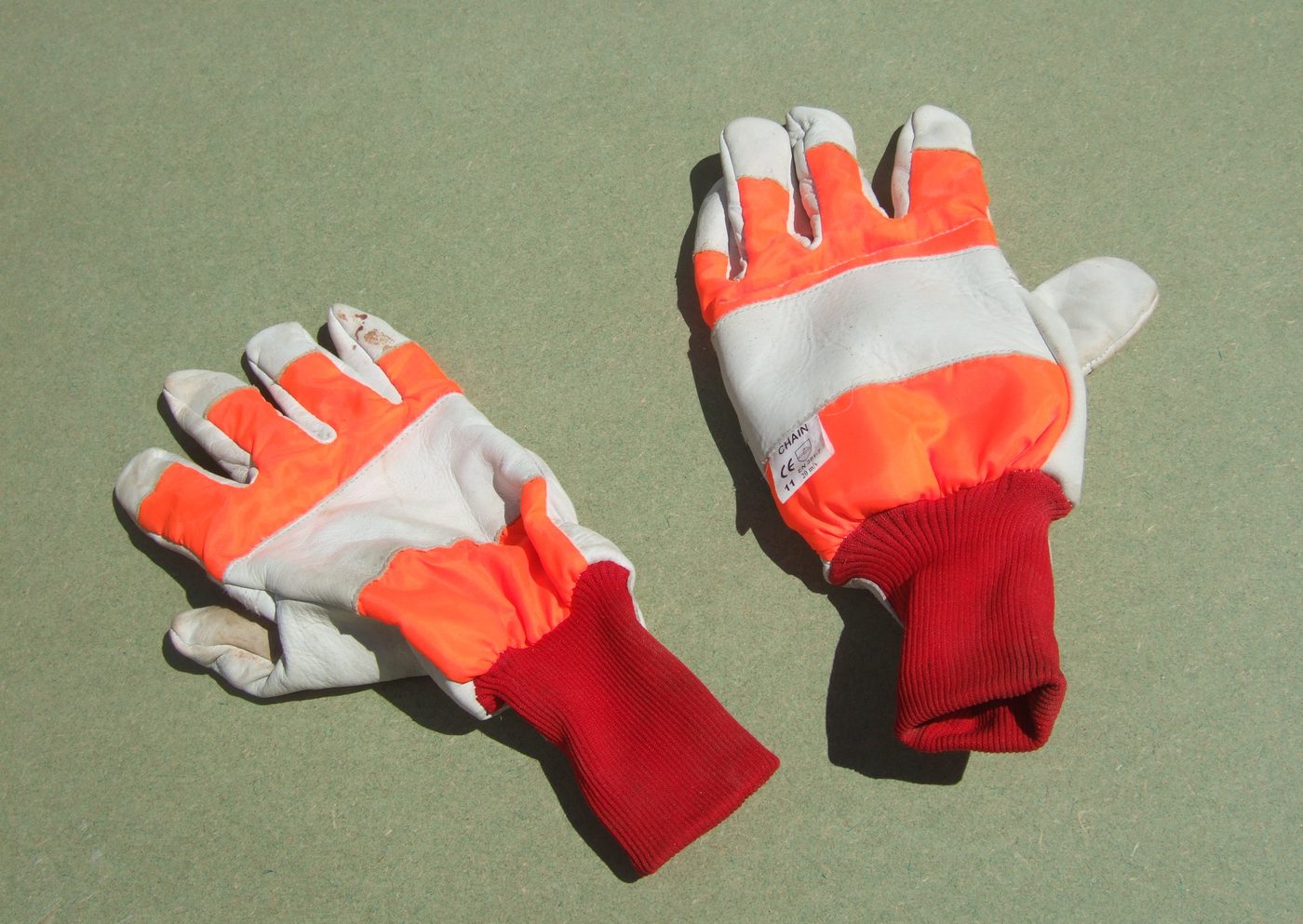
Pair of work gloves with orange and white colors (Source: Wikimedia Commons)
Dust Masks: Prevent inhalation of dust and fine particles generated during cutting or sanding metal components. At Moi University workshops, dust masks are standard during fabrication sessions.
Respirators: Provide higher-level protection where fumes or chemical vapors are present, for instance, when applying coatings to rainwater goods.
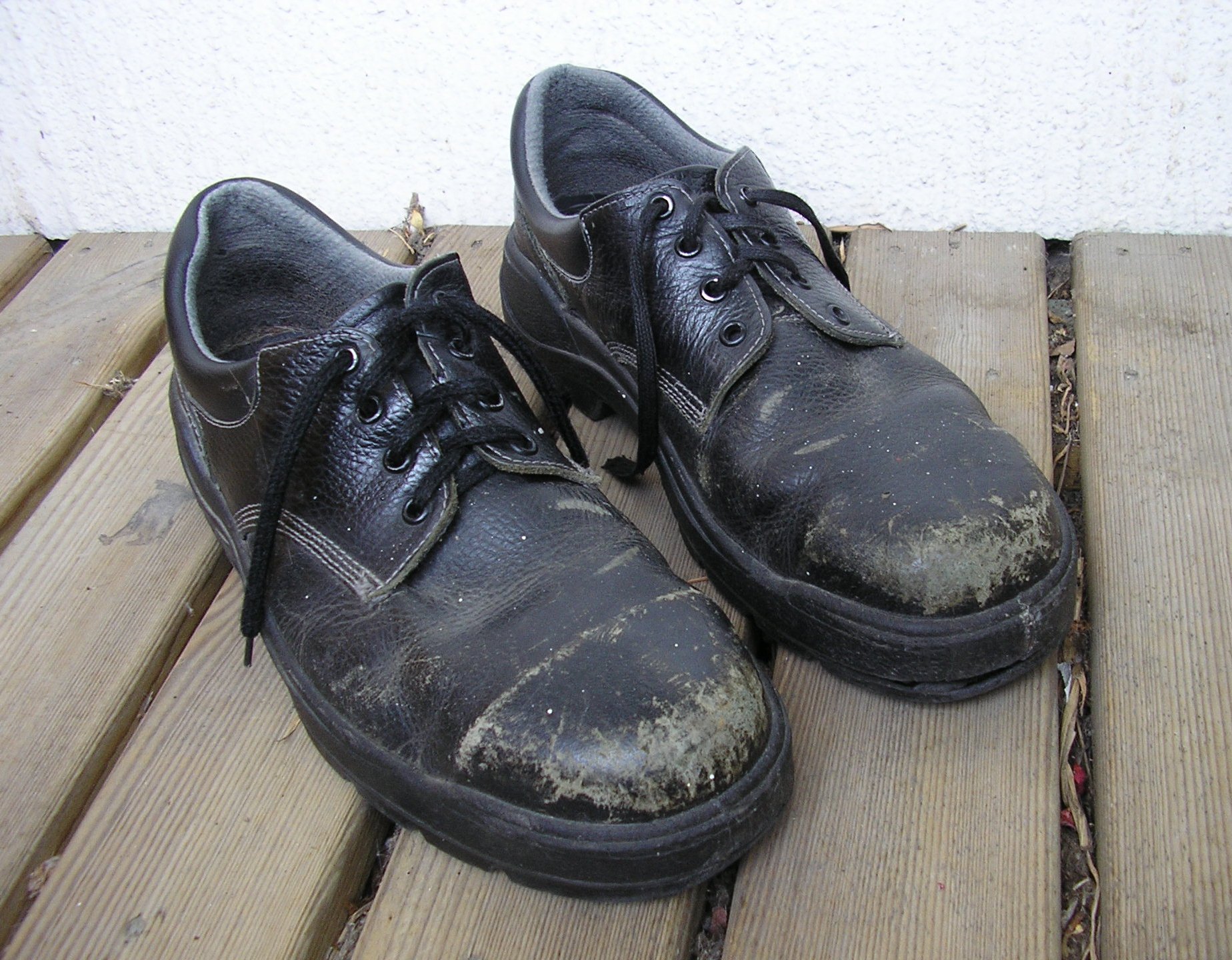
worn black safety boots on wooden floor (Source: Wikipedia (Steel-toe boot))
Using PPE is not only a legal requirement but also a practical necessity to ensure worker safety and productivity.
Proper PPE reduces the risk of cuts, burns, eye injuries, respiratory problems, and hearing loss. For example, at a retail business fabricating rainwater storage tanks, workers who consistently wear gloves and goggles report fewer hand and eye injuries.
Employers must comply with Kenyan occupational health and safety laws, including the provision and enforcement of PPE use. Failure to comply can lead to penalties and work stoppages, as seen in county government workshops audited by DOSHS.
When workers feel safe, their confidence and morale improve, leading to higher productivity and better quality outcomes. At a SACCO-owned workshop, the introduction of mandatory PPE resulted in fewer absenteeism cases related to workplace injuries.
Injuries cause downtime and increase medical and compensation costs. Hospitals like Kenyatta National Hospital have reduced operational disruptions by enforcing PPE use in their maintenance departments.
Consistent use of respiratory and hearing protection prevents chronic health problems such as silicosis or noise-induced hearing loss. University workshops have integrated PPE training to safeguard students and staff involved in fabrication projects.
Choosing and using PPE correctly enhances its effectiveness and protects workers optimally.
Identify specific hazards such as flying particles, chemical exposure, or noise levels to select appropriate PPE. For instance, a hotel maintenance team assesses welding fumes before choosing respirators.
PPE must fit well to provide adequate protection without restricting movement. Ill-fitting gloves or helmets can lead to accidents, which was observed in a county office where oversized gloves reduced grip efficiency.
Workers require training on the correct use, limitations, and maintenance of PPE. At a university fabrication lab, students receive comprehensive PPE training before practical sessions.
PPE should be inspected before use for damage or wear and replaced as necessary. A retail workshop maintains a PPE logbook to monitor equipment condition and replacement schedules.
PPE should complement other safety practices such as proper ventilation, machine guards, and safe work procedures. A NEMA field office combines PPE with environmental controls during fabrication activities involving paints and sealants.
Proper care of PPE ensures longevity and sustained protection.
PPE should be cleaned regularly according to manufacturer instructions. For example, dust masks must be cleaned or replaced after each use in a cooperative’s fabrication workshop.
Store PPE in clean, dry places away from direct sunlight and chemicals to prevent degradation. County hospital maintenance units use designated lockers for PPE storage.
Damaged PPE should be repaired by qualified personnel or discarded if beyond repair. A bank’s maintenance department conducts monthly PPE inspections to identify items for repair or disposal.
Maintaining records of PPE issuance, inspections, and replacements helps ensure compliance and readiness. A university’s workshop management system includes digital logs of PPE usage and maintenance.
Employees must take responsibility for their PPE, reporting damages and using equipment correctly. A hotel’s health and safety policy emphasizes individual accountability for PPE care.
Explain five types of personal protective equipment used in the fabrication of rainwater goods and their specific uses. (10 marks)
Discuss the importance of using personal protective equipment in fabrication workshops, citing examples from Kenyan organizations. (10 marks)
Describe six steps involved in selecting and using PPE correctly during rainwater goods fabrication. (12 marks)
Outline five key practices for maintaining and storing personal protective equipment to ensure its effectiveness. (10 marks)
Create a free account to open more of this chapter.
Free: practical guides, quick cards, workplace scenarios and more.
Create a free accountThis chapter covered the essential aspects of fabricating rainwater goods, beginning with the importance of Personal Protective Equipment to ensure safety during fabrication work. It then detailed a variety of tools and equipment necessary for the process, including hacksaws, screwdrivers, portable drilling machines, mallets, hammers, and measuring instruments such as tape measures, plumb bobs, spirit levels, and builders squares. The chapter also described specialized tools like silicon guns and soldering guns that aid in assembly and sealing. A comprehensive overview of rainwater goods followed, explaining components such as down pipes, gutters, brackets, hopper heads, rainwater shoes, bends, inside and outside corners, and gutter droppers, all of which play specific roles in an effective rainwater harvesting system. The fabrication section outlined the procedures and techniques required to assemble these components accurately and efficiently. Finally, the chapter emphasized the importance of good housekeeping practices to maintain a safe and organized working environment throughout the fabrication process.
Type: Individual
| Tools & Equipment | Materials |
|---|---|
| Hacksaw | 28 gauge sheet metal plain sheet |
| Hammer | 100 mm x 100 mm downspout pipe |
| Mallet | 150 mm x 100 mm gutter straps |
| Flathead screwdriver | 100 mm x 100 mm downspout straps |
| Phillips screwdriver | Pop rivets |
| Tape measure | 2 inch screws |
| Steel rule | 2 inch concrete nails |
| Scriber | Silicone sealant |
| Bench vice | |
| Spirit level | |
| Pliers |
| S/N | Item | Quantity |
|---|---|---|
| 1 | 28 gauge sheet metal plain sheet | 1.2 m x 2.4 m per Candidate |
| 2 | 100 mm x 100 mm downspout pipe | 1.8 m per Candidate |
| 3 | 150 mm x 100 mm gutter straps | 4 Pieces per Candidate |
| 4 | 100 mm x 100 mm downspout straps | 2 Pieces per Candidate |
| 5 | Pop rivets | 25 Pieces per Candidate |
| 6 | 2 inch screws | 12 Pieces per Candidate |
| 7 | 2 inch concrete nails | 10 Pieces per Candidate |
| 8 | Silicone sealant | 350 ml per Candidate |
| 9 | PPE (Helmet, Gloves, Dustcoat, Safety boots) | Full set per Candidate |
| Items to be Evaluated | Marks Available | Marks Obtained | Comments |
|---|---|---|---|
| TASK 1: Preparation and Safety | |||
| Wore full PPE (helmet, gloves, dustcoat, safety boots) (Award 2 marks if all PPE worn, zero if any missing) | 2 | ||
| Sub-Total | 2 | ||
| TASK 2: Interpretation and Measurement | |||
| Interpreted working drawing correctly for gutter and downspout dimensions (Award 2 marks for correct interpretation, zero otherwise) | 2 | ||
| Measured and marked sheet metal and pipe accurately according to drawing (Award 1 mark each for correct length, width, and height measurements) | 3 | ||
| Sub-Total | 5 | ||
| TASK 3: Cutting and Shaping | |||
| Used hacksaw and hand tools correctly to cut sheet metal and pipe (Award 1 mark each for correct use of hacksaw, hammer, mallet) | 3 | ||
| Shaped gutters and downspout components accurately as per drawing (Award 3 marks for accurate shaping with no distortions) | 3 | ||
| Sub-Total | 6 | ||
| TASK 4: Assembly and Jointing | |||
| Assembled gutter and downspout components according to drawing (Award 1.5 marks each for gutter and downspout assembly) | 3 | ||
| Jointed pieces securely using pop rivets and screws (Award 4 marks for tight, leak-proof joints) | 4 | ||
| Sub-Total | 7 | ||
| TASK 5: Installation and Finishing | |||
| Mounted gutter and downspout securely on wall as per working drawing (Award 3 marks for proper mounting and alignment) | 3 | ||
| Applied silicone sealant correctly to prevent leakages (Award 2 marks for correct application and neat finishing) | 2 | ||
| Sub-Total | 5 | ||
| TASK 6: Clean-up and Storage | |||
| Disposed of waste materials according to environmental guidelines (Award 2 marks for proper waste disposal) | 2 | ||
| Cleaned and stored tools and equipment as per manufacturer's instructions (Award 2 marks for correct cleaning and storage) | 2 | ||
| Stored surplus materials properly (Award 1 mark for proper storage) | 1 | ||
| Sub-Total | 5 | ||
| PRODUCT CHECKLIST | |||
| Gutter fabricated with correct dimensions: 100 mm x 150 mm x 1000 mm (Award 2 marks for accurate measurements within ±2 mm) | 2 | ||
| Downspout fabricated with correct height: 1.8 m (Award 2 marks for accurate height within ±2 mm) | 2 | ||
| Joints are tight and leak-proof with no visible gaps (Award 3 marks for leak-free joints) | 3 | ||
| Gutter and downspout mounted plumb and level as per drawing (Award 3 marks for correct plumbness and levelness) | 3 | ||
| Sub-Total | 10 | ||
| GRAND TOTAL | 40 | ||
Type: Individual
| Tools & Equipment | Materials |
|---|---|
| Portable drilling machine | 100x150mm Gutter bracket |
| Screwdrivers | 100x100mm Downspout bracket |
| Spirit level | 2 inches Screws |
| Measuring tape 5m | PPE (Helmet, Gloves, Dustcoat) |
| S/N | Item | Quantity |
|---|---|---|
| 1 | 100x150mm Gutter bracket | 4 Pcs per Candidate |
| 2 | 100x100mm Downspout bracket | 2 Pcs per Candidate |
| 3 | 2 inches Screws | 12 Pcs per Candidate |
| 4 | Portable drilling machine | 1 Pc per Candidate |
| 5 | Screwdrivers | 1 Set per Candidate |
| 6 | Spirit level | 1 Pc per Candidate |
| 7 | Measuring tape 5m | 1 Pc per Candidate |
| 8 | PPE (Helmet, Gloves, Dustcoat) | Full set per Candidate |
| Items to be Evaluated | Marks Available | Marks Obtained | Comments |
|---|---|---|---|
| TASK 1: Preparation and PPE Use | |||
| Candidate wears full PPE (Helmet, Gloves, Dustcoat) (Award 1 mark if all PPE worn or zero) | 1 | ||
| Candidate selects and sets up the portable drilling machine correctly (Award 1 mark for correct setup or zero) | 1 | ||
| Candidate uses screwdrivers appropriately (Award 1 mark for correct use or zero) | 1 | ||
| Sub-Total | 3 | ||
| TASK 2: Measurement and Marking | |||
| Candidate measures and marks bracket fixing points as per drawing (100x150mm gutter bracket positions) (Award 2 marks for accurate measurement and marking or zero) | 2 | ||
| Candidate measures and marks downspout bracket fixing points at 1800mm height (Award 1 mark for correct measurement or zero) | 1 | ||
| Sub-Total | 3 | ||
| TASK 3: Drilling and Fixing | |||
| Candidate drills holes at marked points correctly with no damage (Award 3 marks for accurate drilling or zero) | 3 | ||
| Candidate fixes 4 gutter brackets firmly using screws (Award 3 marks for secure fixing or zero) | 3 | ||
| Candidate fixes 2 downspout brackets firmly using screws (Award 2 marks for secure fixing or zero) | 2 | ||
| Sub-Total | 8 | ||
| TASK 4: Alignment and Finishing | |||
| Candidate checks and ensures gutter brackets are level using spirit level (Award 2 marks for correct leveling or zero) | 2 | ||
| Candidate checks and ensures downspout brackets are plumb (Award 2 marks for correct plumbness or zero) | 2 | ||
| Candidate cleans work area and disposes of waste as per environment protection guidelines (Award 2 marks for proper disposal or zero) | 2 | ||
| Candidate cleans and stores tools and equipment properly (Award 1 mark for correct cleaning and storage or zero) | 1 | ||
| Candidate stores surplus materials as per manufacturers' instructions (Award 1 mark for proper storage or zero) | 1 | ||
| Sub-Total | 8 | ||
| PRODUCT CHECKLIST | |||
| Brackets fixed at correct positions with holes drilled accurately (100x150mm gutter brackets and 100x100mm downspout brackets) (Award 4 marks for correct fixing positions with no damage or zero) | 4 | ||
| Brackets are level (gutters) and plumb (downspouts) as per drawing (Award 4 marks for correct level and plumb or zero) | 4 | ||
| Brackets are firmly fixed and stable with no loose screws (Award 4 marks for secure fixing or zero) | 4 | ||
| Work area is clean with proper waste disposal (Award 2 marks for cleanliness or zero) | 2 | ||
| Tools and surplus materials stored correctly (Award 2 marks for correct storage or zero) | 2 | ||
| Sub-Total | 16 | ||
| GRAND TOTAL | 38 | ||
At the start of this chapter we promised you would be able to:
Tick each one you can genuinely do.
So, are you there yet?
You're competent when you can confidently do 50% or more of what this chapter promised.
Sign in to record how you're doing.