
By the end of this chapter, you will be able to:
Mastering these skills ensures you work confidently and professionally, making a real difference in maintaining safe and functional sanitary systems.
Compiled by: Mary Maina
Sanitary appliances installation requires careful preparation to ensure safety and efficiency on-site. Handling plumbing fixtures such as sinks, toilets, and showers involves physical risks and exposure to dust, debris, and hazardous materials. In the Kenyan work environment, whether at a county hospital, a hotel, or a university, adherence to safety measures protects workers from injuries and contributes to smooth project execution. This chapter focuses on the essential personal protective equipment (PPE) and safety protocols necessary before commencing sanitary appliance installation.
Personal safety gear is fundamental in protecting workers from physical hazards, chemical exposure, and environmental dangers during sanitary appliance installation. The choice and correct use of safety equipment such as helmets, gloves, dustcoats, boots, and eye protection are critical for compliance with occupational health standards set by bodies like NEMA and the Ministry of Labour in Kenya.
The use of a hardhat or helmet is a primary safety precaution in any construction or installation site. It safeguards the head from impacts, falling objects, and electrical hazards, which are common in environments where overhead work or heavy materials are handled.
A hardhat protects the skull and brain from injuries caused by accidental bumps against pipes, tools, or structural elements. In county hospitals undergoing plumbing upgrades, workers frequently maneuver in confined spaces with overhead installations, making helmets indispensable.
Hardhats used in Kenya must comply with KEBS or international standards such as ANSI or BS EN 397. Regular inspection for cracks, dents, or deterioration is necessary, and any damaged helmet should be replaced immediately to maintain safety integrity.
Proper adjustment of the suspension system inside the helmet ensures a secure fit that does not slip during work. Workers at a retail business installation site must be trained to wear helmets correctly to avoid complacency that leads to accidents.
Safety gloves shield hands from cuts, abrasions, chemical exposure, and infections during handling of pipes, adhesives, and cleaning agents. Gloves suitable for sanitary appliance installation must balance protection with dexterity.
Rubber Gloves: Provide chemical resistance when applying sealants or cleaning agents in hotel plumbing systems.
Leather Gloves: Offer mechanical protection when handling rough or sharp-edged pipes in county government offices.
Cut-resistant Gloves: Used when cutting metal or PVC pipes to prevent lacerations.
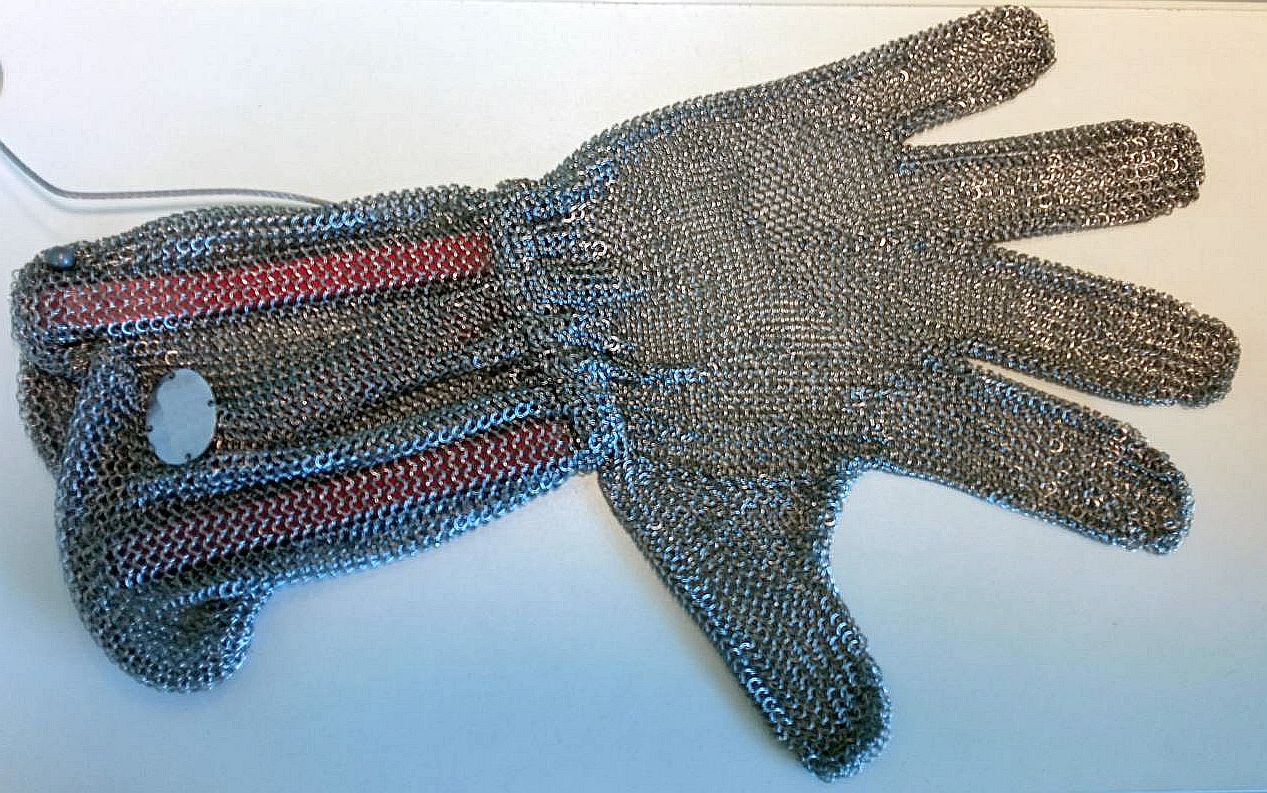
Metal mesh cut-resistant glove (Source: Wikimedia Commons)
The glove material must match the hazard; for example, nitrile gloves resist oils and solvents better than latex. In agricultural cooperatives, where fertilizers or pesticides may be present near plumbing installations, chemical-resistant gloves prevent skin damage.
Gloves must be cleaned or disposed of after use to avoid contamination. At a Nairobi-based SACCO office, workers ensure gloves are replaced daily or when torn to maintain hygiene standards and prevent infections.
Workers must be trained to remove gloves safely to avoid contact with contaminants, particularly when working in healthcare facilities like county referral hospitals where infection control is critical.
Wearing a dustcoat or overall protects clothing and skin from dust, dirt, and splashes of hazardous substances encountered during installation. These garments are especially important in dusty or chemically active environments.
In university workshops where sanitary appliances are fabricated or assembled, dustcoats prevent dust and debris from contaminating personal clothing. In retail businesses, overalls protect against stains from adhesives and sealants.
Overalls made of breathable, durable fabric allow ease of movement while resisting tears. Features such as elastic cuffs and high collars reduce entry points for dust and chemicals, enhancing protection in county government office installations.
Regular washing and inspection of dustcoats prolong their usability. At a Nairobi hotel undergoing plumbing renovations, workers are responsible for maintaining clean overalls to prevent cross-contamination between work zones and public areas.
Employers must ensure that all workers have access to appropriate dustcoats that meet safety standards. Compliance with Kenya’s Occupational Safety and Health Act ensures worker protection and reduces liability.
Safety footwear provides protection against foot injuries from heavy objects, sharp tools, and slippery surfaces. Proper footwear is vital in all installation environments to prevent accidents and maintain productivity.
Ill-fitting safety shoes can cause discomfort and reduce worker efficiency. Kenyan workers in retail businesses report higher productivity when provided with well-fitted safety footwear that accommodates local climate conditions.
Regular cleaning and inspection for sole wear or damage prolong safety shoe life. At a county referral hospital, safety officers conduct weekly inspections to ensure all personnel comply with footwear standards.
Eye and respiratory protection prevent injuries from flying debris, chemical splashes, and dust inhalation during sanitary appliance installation. These items are critical in maintaining worker health and compliance with safety regulations.
A pair of clear safety goggles designed to protect the eyes during con (Source: PLUMB 5 LEARNING GUIDE-1 (1))
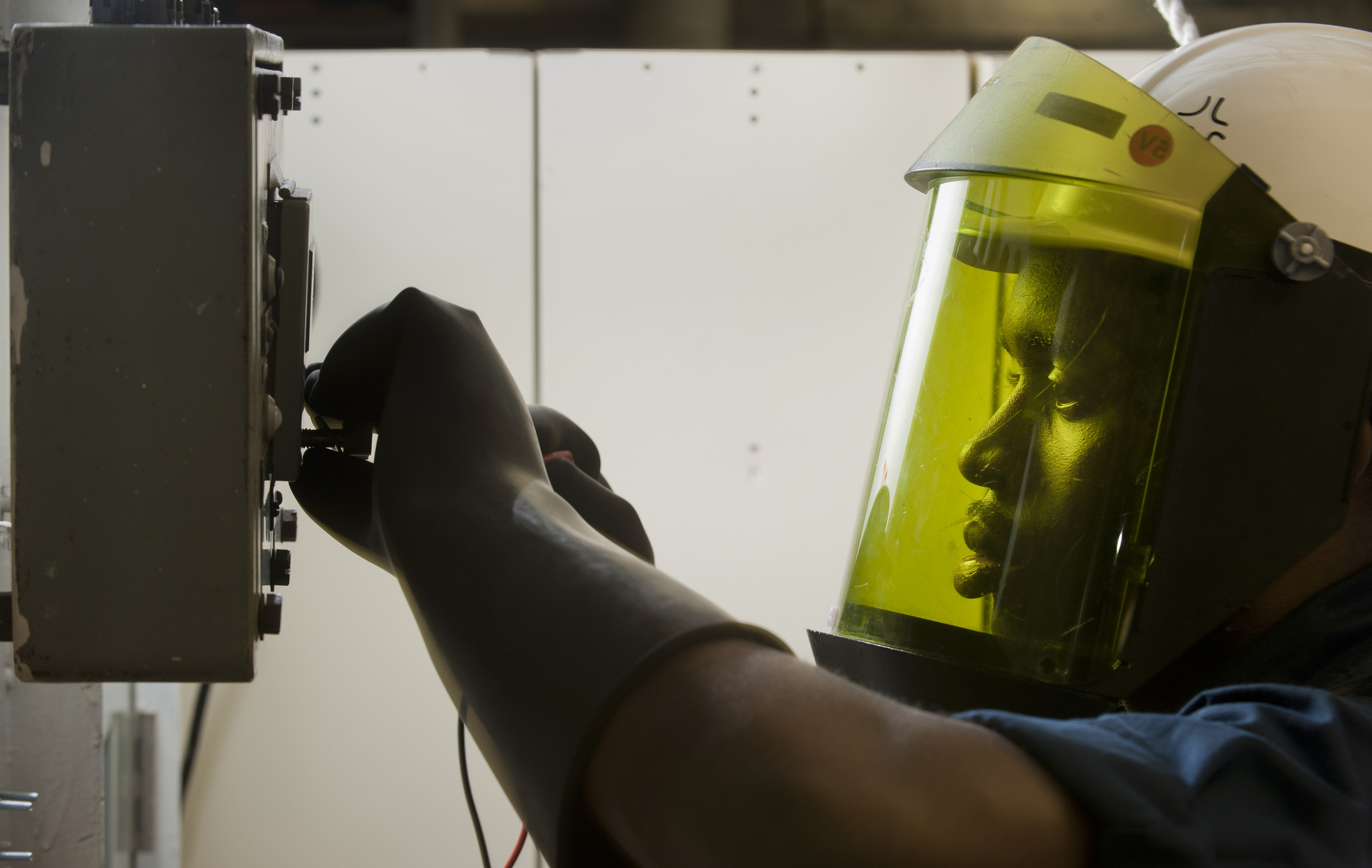
Person wearing a yellow face shield (Source: Wikipedia (Face shield))
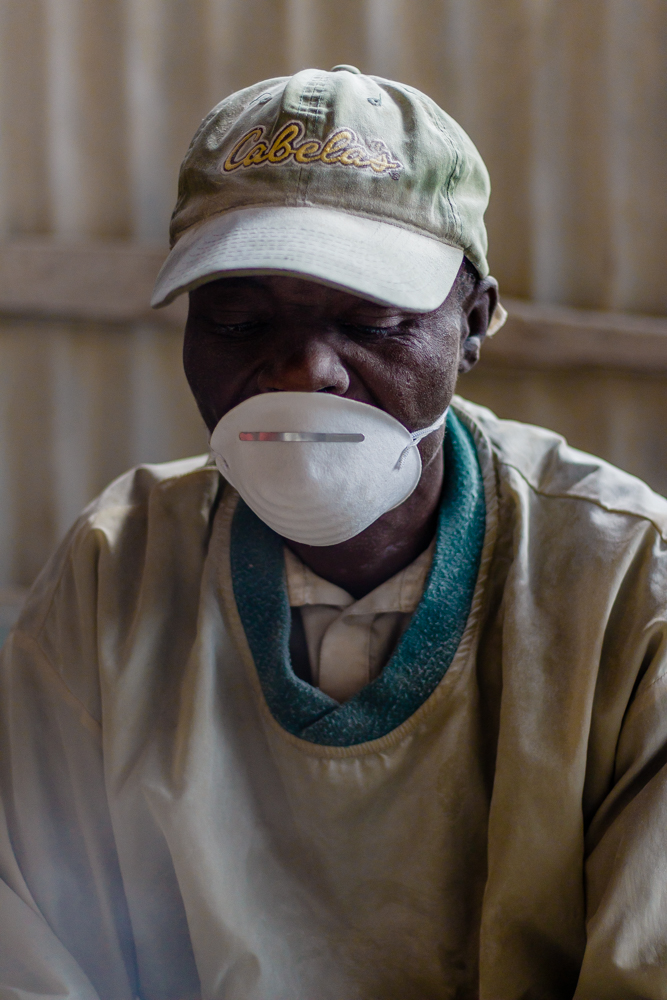
Person wearing a dust mask (Source: Wikimedia Commons)
Choosing appropriate eye and respiratory protection depends on the specific task. For example, at a Nairobi SACCO office, workers use dust masks during maintenance to avoid inhaling dust but switch to respirators when applying sealants.
Safety goggles and masks must be kept clean and stored properly to maintain effectiveness. Training on correct fitting and removal minimizes contamination and ensures continued protection in health facilities.
Create a free account to open more of this chapter.
Free: practical guides, quick cards, workplace scenarios and more.
Create a free accountThis chapter focused on preparing materials for sanitary appliances installation, beginning with essential safety measures such as wearing hardhats, safety gloves, dustcoats, safety shoes, and goggles to protect workers during installation. It then explored various materials and accessories needed, including screws, adhesives, cement, sand, pipes, traps, caulking materials, pipe fittings, and magic bends, all vital for effective and durable sanitary systems. The selection of sanitary appliances was discussed in detail, covering wash hand basins, water closets, bathtubs, urinals, kitchen sinks, shower heads, and faucets, highlighting the importance of choosing appropriate fixtures for specific installation needs. Finally, the chapter addressed the assembly of these appliances, emphasizing proper procedures to ensure functionality and longevity. Overall, the chapter provided a comprehensive foundation for safely preparing and installing sanitary appliances using the correct materials and components.
Type: Individual
| Tools & Equipment | Materials |
|---|---|
| Hardhat / Helmet | Hardhat / Helmet |
| Safety Gloves | Safety Gloves |
| Dustcoat / Overall | Dustcoat / Overall |
| Safety Shoes / Boots | Safety Shoes / Boots |
| Safety Goggles / Face Mask | Safety Goggles / Face Mask |
| S/N | Item | Quantity |
|---|---|---|
| 1 | Hardhat / Helmet | 1 Pc per Candidate |
| 2 | Safety Gloves | 1 Pair per Candidate |
| 3 | Dustcoat / Overall | 1 Pc per Candidate |
| 4 | Safety Shoes / Boots | 1 Pair per Candidate |
| 5 | Safety Goggles / Face Mask | 1 Pair per Candidate |
| Items to be Evaluated | Marks Available | Marks Obtained | Comments |
|---|---|---|---|
| TASK 1: Use of Personal Protective Equipment | |||
| Selected appropriate hardhat/helmet and wore it correctly (Award 1 mark for correct selection and wearing or zero) | 1 | ||
| Selected safety gloves and wore them properly (Award 1 mark for correct selection and wearing or zero) | 1 | ||
| Wore dustcoat/overall properly covering body (Award 1 mark for correct wearing or zero) | 1 | ||
| Wore safety shoes/boots correctly and laced properly (Award 1 mark for correct wearing or zero) | 1 | ||
| Wore safety goggles or face mask correctly covering eyes and nose (Award 1 mark for correct wearing or zero) | 1 | ||
| Demonstrated understanding of the importance of each PPE item in sanitary appliance installation (Award 2 marks for clear explanation or zero) | 2 | ||
| Checked PPE for defects and ensured all are in good condition before wearing (Award 1 mark for inspection or zero) | 1 | ||
| Followed occupational safety and health regulations related to PPE use (Award 2 marks for compliance or zero) | 2 | ||
| Sub-Total | 10 | ||
| PRODUCT CHECKLIST | |||
| Candidate fully equipped with all required PPE correctly worn and ready for sanitary appliance installation (Award 5 marks for full correct PPE use or zero) | 5 | ||
| Sub-Total | 5 | ||
| GRAND TOTAL | 15 | ||
Type: Individual
| Tools & Equipment | Materials |
|---|---|
| Screwdriver | Wood screws 6mm x 50mm |
| Caulking gun | Plastic wall plugs 6mm |
| Measuring tape | Silicone adhesive sealant 300ml cartridge |
| Utility knife | Epoxy adhesive 50ml |
| Sandpaper | Masking tape |
| S/N | Item | Quantity |
|---|---|---|
| 1 | Wood screws 6mm x 50mm | 10 Pcs per Candidate |
| 2 | Plastic wall plugs 6mm | 10 Pcs per Candidate |
| 3 | Silicone adhesive sealant 300ml cartridge | 1 Pc per Candidate |
| 4 | Epoxy adhesive 50ml | 1 Pc per Candidate |
| 5 | Masking tape roll | 1 Roll per 5 Candidates |
| 6 | Sandpaper sheet 120 grit | 1 Pc per Candidate |
| 7 | Cleaning cloth | 1 Pc per Candidate |
| 8 | PPE set (gloves, safety boots, goggles) | 1 Full set per Candidate |
| Items to be Evaluated | Marks Available | Marks Obtained | Comments |
|---|---|---|---|
| TASK 1: Preparation and selection of screws and adhesives | |||
| Used personal protective equipment correctly (Award 2 marks for full PPE worn or zero) | 2 | ||
| Interpreted the working drawing to identify fixing points (Award 1 mark for correct interpretation or zero) | 1 | ||
| Selected appropriate screws for fixing the basin (correct size and type) (Award 2 marks for correct screw selection or zero) | 2 | ||
| Selected appropriate adhesives for sealing and bonding (Award 2 marks for correct adhesive selection or zero) | 2 | ||
| Measured and marked fixing points accurately on the basin and wall (Award 2 marks for accurate measurement or zero) | 2 | ||
| Prepared surfaces by cleaning and sanding before adhesive application (Award 2 marks for correct surface preparation or zero) | 2 | ||
| Applied adhesives correctly using caulking gun and mixing epoxy as per instructions (Award 3 marks for proper adhesive application or zero) | 3 | ||
| Inserted wall plugs and screws securely without damaging materials (Award 3 marks for correct fixing or zero) | 3 | ||
| Used tools appropriately and safely (screwdriver, caulking gun, utility knife, measuring tape) (Award 3 marks for correct tool use or zero) | 3 | ||
| Cleaned and stored tools and leftover materials as per manufacturers' instructions (Award 2 marks for proper cleaning and storage or zero) | 2 | ||
| Disposed of waste materials properly (Award 2 marks for proper waste disposal or zero) | 2 | ||
| Sub-Total | 24 | ||
| PRODUCT CHECKLIST | |||
| Correct screw size and type selected as per drawing and material requirements (Award 3 marks for correct screws or zero) | 3 | ||
| Adhesives selected are suitable for sanitary basin fixing and applied neatly (Award 3 marks for correct adhesives and neat application or zero) | 3 | ||
| Fixing points measured and marked correctly: 600mm width x 450mm depth (Award 4 marks for correct measurements or zero) | 4 | ||
| Sub-Total | 10 | ||
| GRAND TOTAL | 34 | ||
At the start of this chapter we promised you would be able to:
Tick each one you can genuinely do.
So, are you there yet?
You're competent when you can confidently do 50% or more of what this chapter promised.
Sign in to record how you're doing.