
Compiled by: Millicent Akoth
Construction materials are the foundation of plumbing installations and influence durability, safety, and performance of plumbing systems. A plumbing professional in Kenya must understand the properties, appropriate selection, and handling of materials to ensure compliance with standards such as those set by the Kenya Bureau of Standards (KEBS). Additionally, familiarity with the tools and equipment used to assemble these materials is essential to achieving efficient and high-quality workmanship in various environments, from urban hospitals to rural water supply projects. This chapter explores the essential construction materials, tools, and equipment assembly techniques relevant to plumbing practice.
Construction materials, tools, and equipment assembly is a critical area for plumbing professionals, as the correct use and integration of these elements determine system integrity and longevity. In Kenya’s construction industry, where water supply and sanitation are priorities, plumbers must be adept at selecting materials that resist corrosion, withstand pressure, and meet environmental conditions. Equally important is the mastery of tools and equipment that facilitate precise installation, maintenance, and repair of plumbing systems.
Plumbing systems rely on a variety of materials, each chosen for specific physical and chemical properties to suit different applications. Knowledge of these materials is vital for plumbing professionals working in diverse settings such as county hospitals, hotels, or municipal water systems, where the choice of material affects cost, durability, and compliance with health standards.
Copper: Widely used for water supply lines due to its excellent corrosion resistance and antimicrobial properties. Copper pipes are durable and can handle high temperatures, making them suitable for hot water systems in hotels and hospitals.
Polyvinyl Chloride (PVC): A lightweight, cost-effective plastic used extensively for cold water supply and drainage systems in residential and commercial buildings. PVC’s ease of handling and resistance to chemicals make it popular in schools and retail businesses.
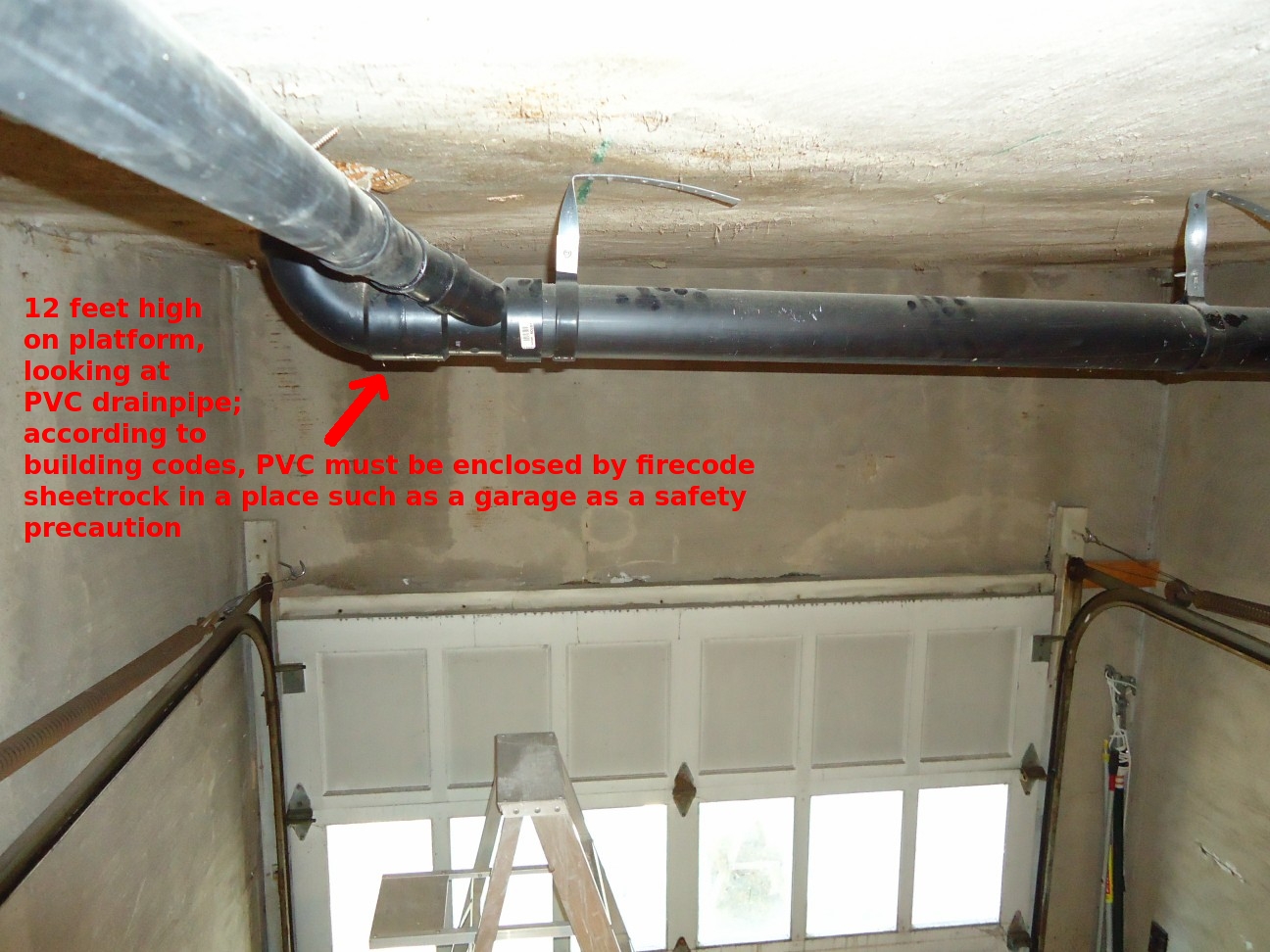
PVC drainpipe installed in a garage ceiling (Source: Wikimedia Commons)
Galvanized Steel: Steel pipes coated with zinc to prevent rusting. Commonly used in older buildings and some rural water installations, although they are prone to corrosion over time, which can affect water quality.
Cast Iron: Known for strength and noise resistance, cast iron is often used for drainage and sewer systems, especially in multi-storey buildings like universities and county government offices.
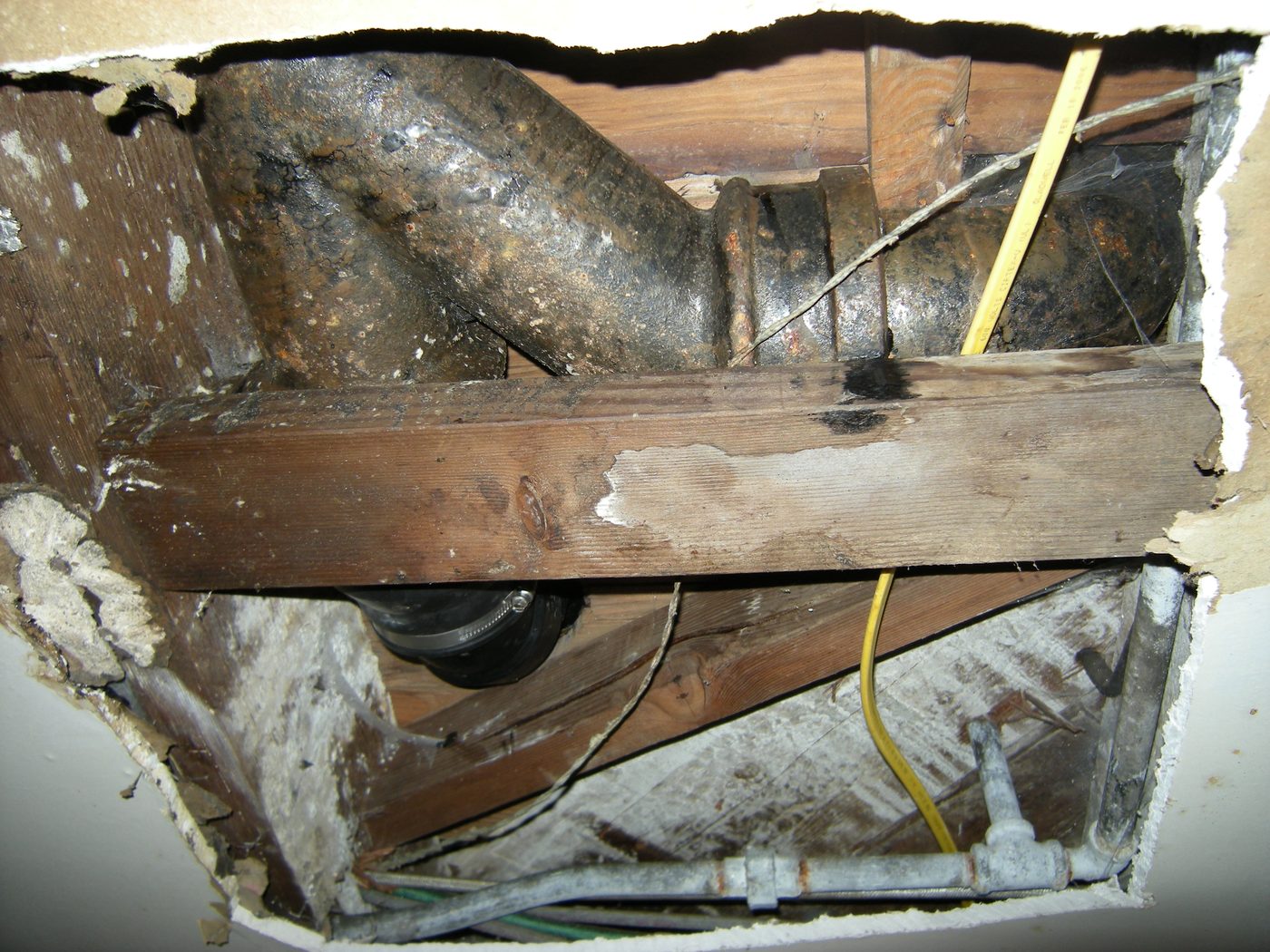
cast iron soil pipe in wall cavity (Source: Wikimedia Commons)
Plumbing tools facilitate the cutting, joining, and installation of materials, and their appropriate selection and maintenance are crucial for efficiency and safety. Tools vary from manual hand tools to powered equipment, each designed for specific tasks.
| Name | Specification | Use |
|---|---|---|
| Pipe Cutter | Adjustable blade, suitable for PVC and copper pipes | Cuts pipes cleanly without deforming edges |
| Pipe Wrench | Adjustable jaw size 6” to 24” | Tightens and loosens threaded pipes and fittings |
| Hacksaw | Frame size 12” with replaceable blades | Cuts metal and plastic pipes where pipe cutters are not suitable |
| Plumber’s Torch | Propane-fueled with adjustable flame | Used for soldering copper pipes and fittings |
| Threading Machine | Electric motor powered, suitable for steel pipes | Cuts threads on pipes for screw fittings |
Proper assembly of plumbing materials ensures leak-proof, durable, and safe water and drainage systems. The techniques vary according to the material type and system requirements, and mastery of these techniques is essential for plumbing professionals working in Kenya’s diverse construction environments.
Compression Fittings: Used for copper or plastic pipes where soldering or solvent welding is impractical. Compression nuts compress a ring onto the pipe to create a seal.
Flanged Connections: Employed for large-diameter pipes or where disassembly is frequent, flanges are bolted together with a gasket to ensure a tight seal.
Safety is paramount in plumbing work to prevent accidents and ensure compliance with occupational health regulations in Kenya. Handling materials and tools improperly can cause injuries or damage to installations that compromise system performance.
Create a free account to open more of this chapter.
Free: practical guides, quick cards, workplace scenarios and more.
Create a free accountThis chapter explored the various construction materials, tools, and equipment essential for building projects, emphasizing their proper selection and assembly to ensure efficiency and safety on site. It detailed the preparation of construction materials, including processes such as mixing, curing, and storage, which are crucial to maintaining material quality and performance. The construction process was examined comprehensively, covering the sequence of activities from site setup through to final execution, highlighting the importance of coordination and adherence to standards. Understanding how materials interact with tools and equipment during preparation influences the durability and stability of structures. The chapter also underscored the need for skilled handling of resources to minimize waste and optimize project timelines. Overall, it provided a holistic view of the practical steps and considerations required in the use of construction materials within a professional setting.
Which of the following materials is most suitable for plumbing pipes in residential buildings in Kenya?
a) PVC
b) Timber
c) Concrete
d) Glass
(2 marks)
Explain why copper pipes are preferred in some plumbing installations despite their higher cost. (3 marks)
Type: Individual
| Tools & Equipment | Materials |
|---|---|
| Pipe wrench | 20 mm (3/4") diameter GI pipe |
| Pipe cutter | 20 mm (3/4") diameter GI elbow |
| Hacksaw | 20 mm (3/4") diameter GI tee |
| Die stock | 20 mm (3/4") diameter GI union |
| Vice - Bench | Thread seal tape |
| Measuring tape | PPEs (Safety boots, Overall, Gloves) |
| Marker pen |
| S/N | Item | Quantity |
|---|---|---|
| 1 | Pipe wrench | 1 Pc per Candidate |
| 2 | Pipe cutter | 1 Pc per Candidate |
| 3 | Hacksaw | 1 Pc per Candidate |
| 4 | Die stock | 1 Pc per Candidate |
| 5 | Vice - Bench | 1 Pc per Candidate |
| 6 | Measuring tape | 1 Pc per Candidate |
| 7 | Marker pen | 1 Pc per Candidate |
| 8 | 20 mm (3/4") diameter GI pipe | 3.0 M per Candidate |
| 9 | 20 mm (3/4") diameter GI elbow | 3 Pcs per Candidate |
| 10 | 20 mm (3/4") diameter GI tee | 1 Pc per Candidate |
| 11 | 20 mm (3/4") diameter GI union | 2 Pcs per Candidate |
| 12 | Thread seal tape | 1 roll per Candidate |
| 13 | PPEs (Safety boots, Overall, Gloves) | Full gear per Candidate |
| Items to be Evaluated | Marks Available | Marks Obtained | Comments |
|---|---|---|---|
| TASK 1: Identification and assembly of tools and equipment | |||
| Used personal protective equipment in line with occupational safety and health requirements (Safety boots, Overall, Gloves) (Award 1 mark for each PPE used or zero) | 3 | ||
| Identified pipe wrench, pipe cutter, hacksaw, die stock, vice-bench, measuring tape, and marker pen correctly (Award 1 mark for each correctly identified tool, max 3 marks) | 3 | ||
| Assembled tools and equipment properly ready for pipe installation (Award 3 marks for correct assembly or zero) | 3 | ||
| Measured and marked the 3.0 m GI pipe accurately (Award 3 marks for correct measurement and marking or zero) | 3 | ||
| Cut the GI pipe cleanly without damage (Award 2 marks for clean cut without cracks or deformation or zero) | 2 | ||
| Threaded pipe ends correctly using die stock (Award 3 marks for correct threading or zero) | 3 | ||
| Applied thread seal tape correctly on pipe threads (Award 2 marks for proper use of thread seal tape or zero) | 2 | ||
| Assembled elbows, unions, and tee fittings securely without leaks (Award 1 mark for each fitting properly connected or zero) | 4 | ||
| Used tools and equipment correctly during assembly (Award 1 mark each for correct use of pipe wrench, pipe cutter, die stock or zero) | 3 | ||
| Sub-Total | 26 | ||
| PRODUCT CHECKLIST | |||
| Finished pipe assembly length is 3000 mm ± 5 mm (Award 3 marks for correct length or zero) | 3 | ||
| Elbows, unions, and tee positioned as per drawing with correct orientation (Award 3 marks for correct positioning or zero) | 3 | ||
| Pipe joints are firm, leak-free, and properly sealed (Award 4 marks for no leaks and firm joints or zero) | 4 | ||
| Pipe assembly is plumb and level as per installation standards (Award 4 marks for correct plumb and level or zero) | 4 | ||
| Overall neatness and completeness of the assembled pipe system (Award 4 marks for neat, complete assembly or zero) | 4 | ||
| Sub-Total | 18 | ||
| GRAND TOTAL | 44 | ||
Type: Individual
| Tools & Equipment | Materials |
|---|---|
| Measuring bucket (10 Litres) | Portland cement |
| Mixing tray | Clean sharp sand |
| Trowel | Water |
| Hoe or mixing shovel | Personal protective equipment |
| Bucket for water |
| S/N | Item | Quantity |
|---|---|---|
| 1 | Portland cement | 1 bag per 3 Candidates |
| 2 | Clean sharp sand | 0.03 m3 per Candidate |
| 3 | Water | 10 Litres per Candidate |
| 4 | Measuring bucket (10 Litres) | 1 Pc per Candidate |
| 5 | Mixing tray (steel or plastic) | 1 Pc per Candidate |
| 6 | Trowel | 1 Pc per Candidate |
| 7 | Hoe or mixing shovel | 1 Pc per Candidate |
| 8 | Bucket for water | 1 Pc per Candidate |
| 9 | Personal protective equipment (gloves, overall, safety boots) | Full set per Candidate |
| Items to be Evaluated | Marks Available | Marks Obtained | Comments |
|---|---|---|---|
| TASK 1: Preparation and Mixing of Cement Mortar | |||
| Used personal protective equipment in line with occupational safety and health requirements: gloves, overall, safety boots (Award 1 mark for each PPE used or zero = 3 marks) | 3 | ||
| Measured cement and sand accurately using correct ratio 1:4 (Award 3 marks for correct measurement or zero) | 3 | ||
| Measured water quantity appropriately (approx. 0.5 water to cement ratio by volume) (Award 2 marks for correct water measurement or zero) | 2 | ||
| Mixed cement, sand and water thoroughly to produce uniform mortar (Award 4 marks for thorough mixing with no dry patches or lumps or zero) | 4 | ||
| Used mixing tools correctly and safely (Award 2 marks for correct and safe use of trowel, hoe/shovel, and buckets or zero) | 2 | ||
| Cleaned tools and workspace properly after mixing (Award 1 mark for proper cleaning or zero) | 1 | ||
| Sub-Total | 15 | ||
| PRODUCT CHECKLIST | |||
| Mortar mix consistency suitable for masonry work (not too dry or wet) (Award 3 marks for proper consistency or zero) | 3 | ||
| Correct mortar volume prepared (1 cubic meter ± 5%) (Award 3 marks for correct volume or zero) | 3 | ||
| Mortar mix uniform in colour and texture (Award 2 marks for uniformity or zero) | 2 | ||
| No visible lumps or unmixed cement or sand in mortar (Award 2 marks for clean mix or zero) | 2 | ||
| Sub-Total | 10 | ||
| GRAND TOTAL | 25 | ||