Construction materials form the foundation of all plumbing installations, influencing the durability, safety, and functionality of plumbing systems. Understanding the properties and appropriate uses of various construction materials is essential for plumbing professionals to ensure compatibility, prevent corrosion, and maintain compliance with Kenyan building standards. This chapter explores the key construction materials commonly encountered in plumbing projects, emphasizing their characteristics and applications within Kenya’s diverse construction environments.
1.1 Use of Construction Material
Construction materials are selected based on their structural properties, availability, cost, and suitability for specific plumbing applications. In Kenya, plumbing professionals often work with a broad range of materials, each with unique characteristics affecting installation methods and system longevity. Familiarity with these materials allows plumbers to make informed decisions regarding jointing, support, and protection of plumbing components.
Criteria for Selecting a Construction Material
- Strength: The material must carry the loads placed on it without failing, whether the weight of a full water tank or the backfill over a pipe trench.
- Durability: It must last in the conditions it will meet, including damp, sewage, acidic soil and sunlight.
- Water resistance: Materials near plumbing are repeatedly wetted, so absorption and permeability matter more than in dry construction.
- Chemical resistance: Sewage gases, sulphates in soil and cleaning chemicals attack many materials.
- Workability: How easily it can be cut, shaped, jointed and fixed on site.
- Availability and cost: Locally available materials reduce transport costs and delays.
- Weight: Heavy materials need handling equipment and stronger supports.
- Appearance: Matters for exposed finishes around sanitary fixtures.
- Compatibility: The material must not react harmfully with the materials it touches, such as copper against galvanised steel.
1.1.1 Stones
Stone is naturally occurring rock, quarried and dressed for use in construction. Stones have historically been fundamental in construction, particularly in foundations and external walls. For plumbing, stones provide robust support for underground pipes and drainage systems, especially in rural Kenyan areas where natural stone is abundant.
Geological Classification of Rocks
- Igneous rocks: Formed by the cooling and solidification of molten magma. Hard, dense and strong. Examples: granite, basalt.
- Sedimentary rocks: Formed by the deposition and compaction of eroded particles or organic remains in layers. Generally softer and easier to work. Examples: limestone, sandstone.
- Metamorphic rocks: Formed when existing rocks are changed by heat and pressure. Examples: marble from limestone, slate from shale, quartzite from sandstone.
Quarrying and Dressing
Quarrying is the extraction of stone from the ground, by hand tools, wedging, channelling or blasting depending on the rock and the scale.
Dressing is shaping the quarried stone to the required form and finish:
- Rough dressed: Broken to roughly the right size, used in foundations and rubble walling.
- Hammer dressed: Faces squared with a hammer, used in random rubble masonry.
- Chisel dressed: Faces worked with a chisel to a fair surface.
- Machine cut: Sawn to accurate dimensions for facing work and slabs.
Types of Stones Used in Construction
- Granite: Known for its hardness and durability, granite is commonly used in foundations and external cladding. Its resistance to weathering makes it suitable for supporting underground plumbing structures.
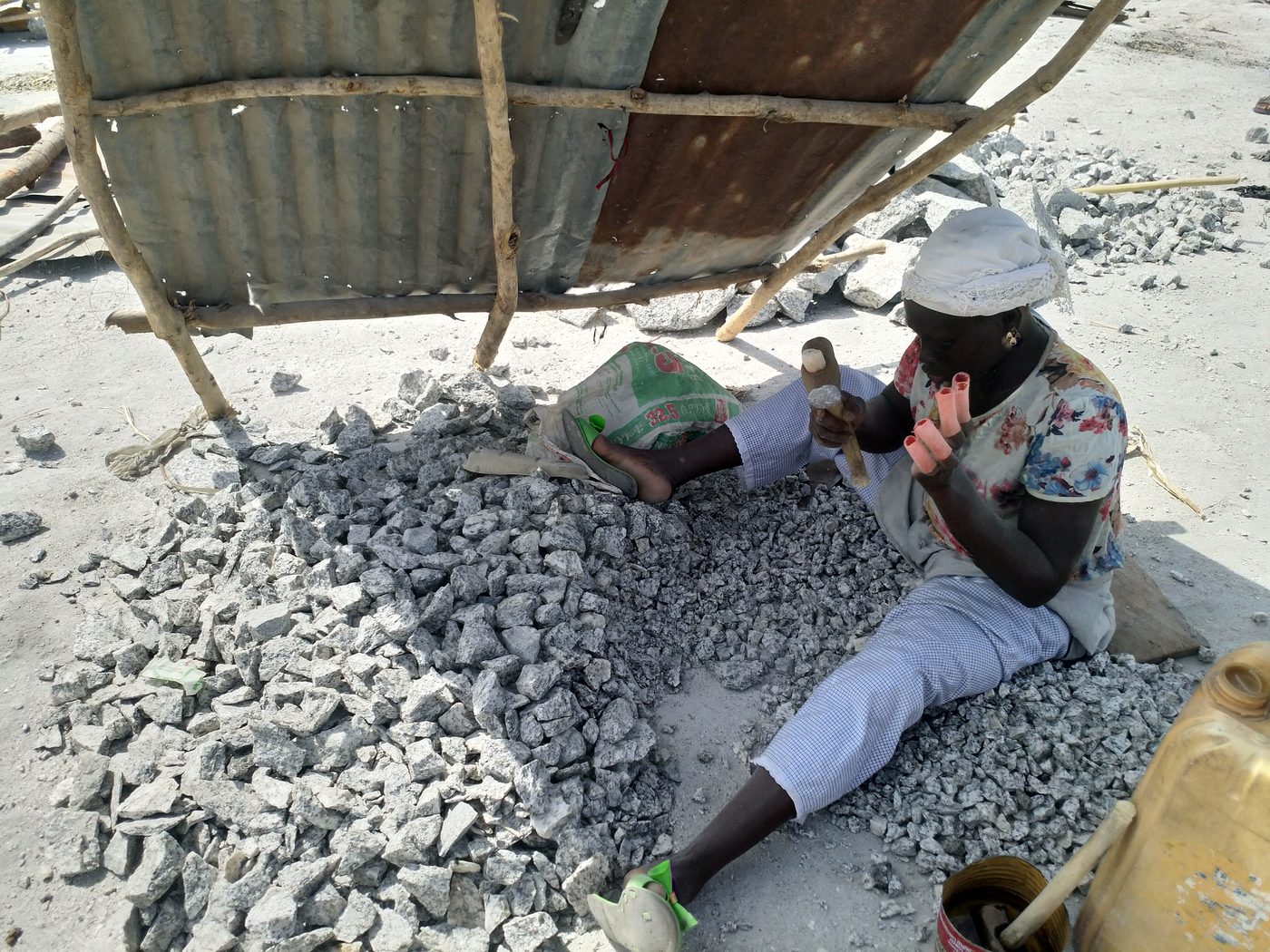
Person sorting granite stones for construction (Source: Wikimedia Commons)
-
Limestone: Softer than granite, limestone is easy to cut and shape, often used in decorative masonry around plumbing fixtures in commercial buildings. It is also the raw material for both lime and cement.
-
Sandstone: Its porous nature requires treatment before use near plumbing to prevent water absorption that can lead to deterioration.
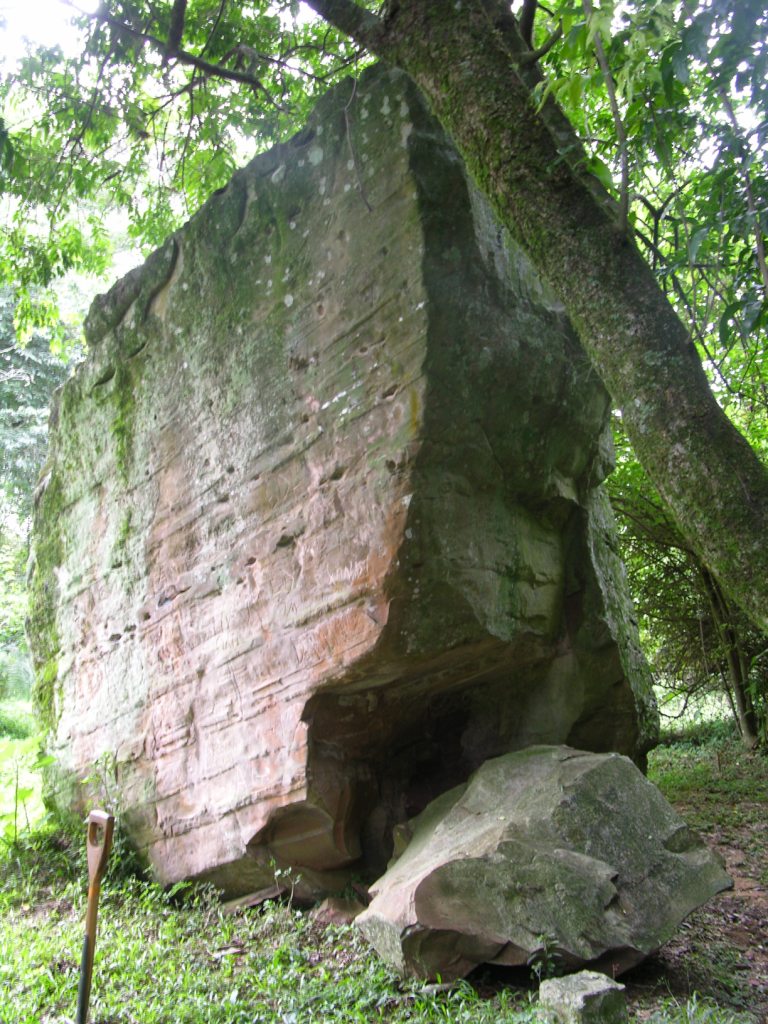
Large natural sandstone rock formation (Source: Wikimedia Commons)
-
Basalt: Dense and durable, basalt is used in heavy-duty construction, including retaining walls that protect plumbing installations from soil movement. Crushed basalt is a common coarse aggregate in Kenya.
-
Marble: Mostly for aesthetic finishes, marble is less common in plumbing infrastructure but may be used in high-end bathroom countertops and surrounds.
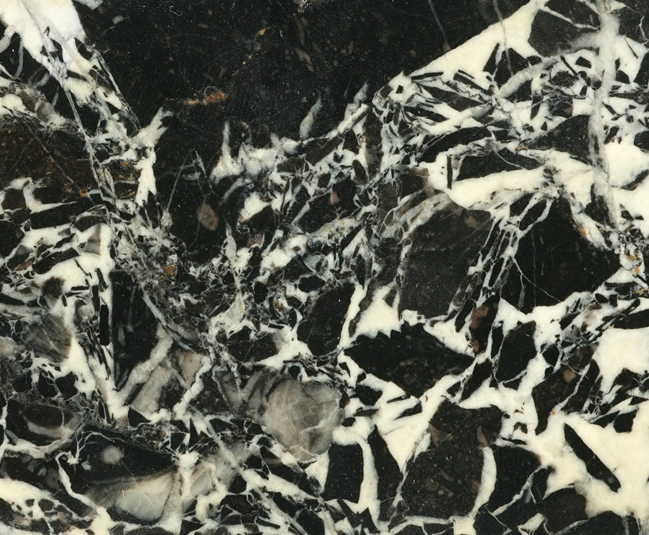
Black and white marble stone surface (Source: Wikimedia Commons)
- Coral rag and coral blocks: Cut from fossil coral along the Kenyan coast, light and easily sawn, widely used in Mombasa, Malindi and Lamu. Porous, so it requires rendering where damp is a concern.
Qualities of a Good Building Stone
- High compressive strength, able to carry load without crushing.
- Low porosity and water absorption, ideally under 5 per cent by weight.
- Hard and tough, resisting abrasion and impact.
- Free from cracks, cavities, soft patches and veins.
- Uniform in colour and texture.
- Resistant to weathering, fire and chemical attack.
- Workable, so it can be dressed economically.
- Available locally in the quantity required.
Properties Affecting Plumbing Applications
- Porosity: High porosity stones can absorb water, increasing the risk of frost damage and chemical degradation affecting plumbing joints.
- Hardness: Hard stones resist mechanical damage during excavation and installation of plumbing systems.
- Chemical Resistance: Stones like granite resist acidic soils, which is beneficial in protecting underground plumbing.
- Thermal Stability: Stones with stable thermal properties prevent cracking under temperature fluctuations, preserving pipe supports.
- Weight: Heavy stones require careful handling to avoid damage to pipes during construction.
Uses of Stone
- Foundations and footings for buildings, water tanks and pump houses.
- Walls of inspection chambers, valve chambers and septic tanks.
- Pitching and rip-rap to protect banks and outfalls from erosion.
- Filling gabion baskets for erosion control and retaining structures.
- Crushed as coarse aggregate for concrete and as hardcore under floor slabs.
- Paving, kerbs, sills and thresholds.
- Facing and decorative work around sanitary fittings.
Testing Stone
- Water absorption test: A weighed dry sample is soaked for 24 hours and reweighed. The gain in weight as a percentage gives the absorption.
- Crushing strength test: A cube of stone is crushed in a testing machine to find its compressive strength.
- Hardness and attrition tests: Measure resistance to wear.
- Acid test: A sample is immersed in dilute acid for several days. Softening or crumbling shows poor weathering resistance.
- Smith's test for soluble matter: Stone chips are placed in clean water. Cloudiness indicates soluble earthy matter and a poor stone.
Preparation and Installation Considerations
- Stones must be properly dressed to provide flat surfaces that evenly distribute load on plumbing fixtures.
- Adequate mortar or concrete bedding is essential to prevent settling that could misalign underground pipes.
- Drainage pathways should be planned to avoid water accumulation near stone foundations that could weaken plumbing supports.
- Stones are laid on their natural bed, the way the layers lay in the quarry, since laying them on edge causes flaking under load.
Storage and Handling
- Stack on firm, level, well-drained ground, off the soil.
- Keep dressed stone separate from rough stone and protect worked faces with sacking or timber.
- Do not stack so high that lower stones are damaged or the stack becomes unstable.
- Handle with proper lifting gear, since dropped stone both breaks and injures.
1.1.2 Bricks
Bricks are versatile construction materials widely used in Kenya for building walls, manholes, and inspection chambers in plumbing systems. Their uniform size and strength make them ideal for modular construction. A brick is a moulded block of clay or other material, hardened by firing or by chemical action, and sized to be laid with one hand.
Manufacture of Clay Bricks
- Preparation of clay. The clay is dug, spread out and left to weather, then cleaned of stones and roots, and tempered with water by pugging until it is uniform and plastic.
- Moulding. The prepared clay is formed into brick shapes, either by hand in wooden or steel moulds or by machine, which extrudes a continuous bar of clay cut into bricks by wires.
- Drying. Green bricks are stacked in open racks or drying sheds and dried slowly for one to four weeks. Drying too fast cracks them.
- Burning. Dried bricks are fired in clamps or kilns at 900 to 1200 degrees Celsius. The clay vitrifies, giving hardness, strength and resistance to water. Under-burnt bricks are soft and porous; over-burnt bricks are distorted and brittle.
- Cooling and sorting. Bricks are cooled slowly, then sorted by quality, with distorted, cracked and under-burnt units rejected or downgraded.
Types of Bricks Relevant to Plumbing
- Clay Bricks: Fired clay bricks are durable and resistant to moisture, commonly used in septic tank walls and drainage channels.
- Concrete Bricks: Made from cement and aggregates, these bricks offer high compressive strength, suitable for manhole construction.
- Fly Ash Bricks: Environmentally friendly and lightweight, fly ash bricks are gaining popularity in Kenya, especially in urban plumbing installations.
- Sand Lime Bricks: These have high density and low water absorption, making them ideal for damp-proof courses in plumbing installations.
- Engineering Bricks: With low porosity and high strength, they are used in areas exposed to aggressive chemicals or heavy loads, including manholes and inspection chambers below ground.
Qualities of a Good Brick
- Uniform in size, shape and colour, with sharp square edges and true faces.
- Free from cracks, chips, flaws and lumps of lime.
- Gives a clear metallic ring when two bricks are struck together.
- Does not break when dropped flat from about one metre.
- Water absorption not more than 20 per cent of its dry weight after 24 hours soaking, and under 7 per cent for engineering bricks.
- Leaves no mark when scratched with a fingernail.
- Shows no white efflorescence after soaking and drying.
Physical Characteristics Impacting Plumbing
- Water Absorption: Low absorption bricks reduce moisture transfer to plumbing fixtures and pipes.
- Compressive Strength: High strength bricks support heavy loads, preventing structural movement that could damage plumbing joints.
- Thermal Conductivity: Bricks with moderate thermal conductivity help maintain stable temperatures around pipes, reducing condensation.
- Durability: Resistance to weathering and chemical attack ensures longevity of plumbing structures.
- Size Uniformity: Consistent brick dimensions facilitate tight joints, minimizing leakage in plumbing chambers.
- Efflorescence: White salt deposits appearing on the surface as water evaporates, a sign of soluble salts in the brick or the mortar.
Field Tests for Bricks
- Visual inspection: Check shape, edges, colour uniformity and surface defects.
- Scratch test: A fingernail should leave no mark on a well-burnt brick.
- Sound test: Two bricks struck together should ring clearly, not sound dull.
- Drop test: A brick dropped flat from about one metre should not break.
- Water absorption test: Weigh dry, soak 24 hours, weigh again, and calculate the gain as a percentage.
- Efflorescence test: Stand a brick in water for 24 hours and allow it to dry. Heavy white deposits mean excessive soluble salts.
Brickwork in Plumbing Structures
- Bricks are used to construct septic tanks, soak pits, and inspection chambers, where watertightness is critical.
- Proper mortar selection and curing prevent cracks that could allow groundwater infiltration, compromising plumbing integrity.
- In urban settings, brick manholes provide access points for maintenance of sewer lines.
- Manhole and chamber interiors are rendered with a waterproof cement mortar and finished with a smooth benching so that flow is not obstructed.
Storage and Handling
- Stack on dry, level ground, off the soil, in regular stacks no more than about 10 courses high.
- Keep different types and classes separate.
- Cover with tarpaulin in the rainy season, since saturated bricks will not bond properly with mortar.
- Unload by hand or by pallet, not by tipping, which breaks a large proportion of the load.
1.1.3 Clay and Clay Products
Clay is a fine-grained natural earth material, plastic when wet, which hardens permanently when fired. It is a fundamental raw material for several plumbing-related construction products, valued for its plasticity and impermeability after firing.
Manufacture of Clay Products
The sequence is the same as for bricks: winning and weathering the clay, cleaning and tempering, shaping by moulding, extruding or throwing, drying slowly, then firing at high temperature. Products intended to carry water, such as pipes and sanitary ware, are additionally glazed: a coating of glass-forming material is applied and fused in the kiln, giving a hard, smooth, impermeable surface.
Types of Clay Products in Plumbing
- Clay Pipes: Traditionally used for drainage and sewer systems due to resistance to chemical corrosion and smooth internal surfaces. Vitrified clay pipes are supplied in standard lengths with spigot and socket or plain ends and flexible couplings.
- Terracotta Tiles: Used in roofing and as protective covers for plumbing vents.
- Clay Bricks: As described previously, used in structural plumbing components.
- Earthenware Fittings: Include bends, junctions, and inspection chambers for underground drainage.
- Porcelain Sanitary Ware: Made from refined clay, used for toilets, basins, and sinks. Vitreous china is the common material for water closets and wash hand basins, fired to a dense, non-porous body and glazed.
- Fireclay: A coarse, heavy ceramic used for large sinks such as the Belfast sink, and for laboratory and kitchen fittings.
Properties Beneficial to Plumbing
- Impermeability: Fired and glazed clay products resist water penetration, reducing leakage risks.
- Chemical Resistance: Clay resists attack by sewage gases and acidic soils common in some Kenyan regions, and is not affected by the acids that attack concrete pipes.
- Thermal Insulation: Clay products provide natural insulation protecting pipes from temperature extremes.
- Smoothness: Internal surfaces of clay pipes reduce friction and prevent blockages.
- Durability: Properly fired clay products have a long service life, especially in sewer systems.
- Hygiene: The glazed surface of sanitary ware is non-absorbent and easily cleaned, which is why it is used for basins and water closets.
Uses of Clay Products
- Underground foul and surface water drains, and sewer mains.
- Gullies, traps, bends, junctions and inspection fittings.
- Sanitary appliances: water closets, wash hand basins, urinals, sinks and cisterns.
- Wall and floor tiles in bathrooms, kitchens and sanitary areas.
- Roof tiles and terracotta vent covers.
- Flue linings and chimney pots.
Limitations and Handling
- Clay products are brittle and can crack under heavy mechanical loads or ground movement.
- Installation requires careful bedding and jointing to prevent infiltration and pipe displacement. Clay pipes are bedded on granular material, never laid directly on hard rock or on unyielding points.
- Modern plumbing increasingly uses PVC and concrete pipes, but clay remains relevant in heritage and rural projects, and in sewers carrying aggressive effluent.
- Cutting requires a proper pipe cutter or an angle grinder with a stone disc, and eye protection.
Storage and Handling
- Store pipes on level ground, chocked so they cannot roll, and stacked to the maker's recommended height.
- Stack sanitary ware upright in its packaging, on a flat floor, clear of traffic routes. A chipped basin cannot be repaired and must be replaced.
- Keep sockets and spigots clean and protect the ends from impact.
- Do not drop or roll pipes off a lorry.
1.1.4 Lime
Lime is a traditional binding material produced by burning limestone, essential in mortar and plaster, and influencing the structural integrity and water resistance of plumbing installations.
Manufacture of Lime: The Lime Cycle
- Calcination (burning). Limestone, which is calcium carbonate, is burnt in a kiln at about 900 degrees Celsius. It gives off carbon dioxide and leaves calcium oxide, called quicklime.
- Slaking. Quicklime is added to water, where it reacts violently, giving off heat and steam, and forms calcium hydroxide, called slaked or hydrated lime. Slaking must be done with care, since the reaction can boil and spit.
- Maturing. Slaked lime is stored under water as lime putty, which improves with age, or is supplied as a dry hydrate in bags.
- Carbonation (setting). In the wall, the lime slowly absorbs carbon dioxide from the air and turns back into calcium carbonate, the material it started as. This is why lime mortar sets slowly and from the surface inwards, and why it must not be used in thick sections with no air.
Types of Lime Used in Construction
- Hydrated Lime: Also known as slaked lime, used in mortar to improve workability and water retention. Supplied as a dry powder in bags, ready to use.
- Quicklime: The raw form, usually processed on-site to produce hydrated lime. Dangerous to handle: it burns skin and eyes and reacts violently with water.
- Hydraulic Lime: Contains clay impurities that allow it to set under water, suitable for wet environments like drainage chambers. Graded as feebly, moderately or eminently hydraulic according to clay content.
- Fat Lime (non-hydraulic lime): High calcium content lime, sets only by carbonation in air, used for plastering around plumbing fixtures.
- Dolomitic Lime: Contains magnesium, used where enhanced durability is required.
Properties of Lime
- Plasticity: Lime mortar is smooth and buttery, spreading easily and staying workable far longer than cement mortar.
- Water retention: It holds water against absorption by dry bricks, allowing the mortar to cure properly rather than drying out.
- Low strength: Much weaker in compression than cement, so it does not overstress the units it bonds.
- Flexibility: Accommodates slight movement without cracking.
- Breathability: Permeable to water vapour, letting damp walls dry out.
- Self-healing: Fine cracks reseal as free lime dissolves and recarbonates.
- Slow set: Gains strength over weeks or months, not days.
- Mildly antiseptic: Its alkalinity discourages mould and insect attack.
Role of Lime in Plumbing Construction
- Lime improves mortar flexibility, reducing cracking around pipe penetrations.
- It enhances mortar breathability, preventing moisture buildup that can corrode metal plumbing components.
- Lime-based plasters protect walls from damp penetration where plumbing pipes pass through.
- Lime mortar allows easier future repairs and adjustments to plumbing joints compared to cement mortar.
- Hydraulic lime is preferred in wet areas like soak pits due to its water-resistant setting properties.
- Lime is used to whitewash and disinfect the interiors of tanks, chambers and pits.
- Lime is added to cement mortar, as in a 1:1:6 mix, to gain workability without losing strength.
Preparation and Application
- Proper slaking of quicklime is essential to avoid hazardous reactions and ensure consistent mortar quality.
- Lime mortar should be mixed in correct proportions for strength and workability.
- Curing lime mortar requires maintaining moisture levels to prevent premature drying and cracking.
- Work in mild weather. Lime mortar must not be laid in frost or in fierce sun.
Storage and Safety
- Store hydrated lime in sealed bags in a dry shed, off the floor and clear of walls, as for cement. It absorbs carbon dioxide from the air and loses its power in storage, so it is used within a few months.
- Store quicklime in airtight drums, away from all water. Quicklime that gets damp heats up and can start a fire.
- Store lime putty under a layer of water, which excludes air and keeps it usable for years.
- Wear gloves, goggles and a dust mask when handling lime. It is caustic and burns skin and eyes, and the dust irritates the lungs.
- Never add water to quicklime in a confined container. Add the quicklime to water, in the open, and stand clear.
1.1.5 Cement
Cement is a finely ground powder that reacts with water to form a paste, and that paste hardens and binds other materials into a solid mass. It is the primary binding agent in modern construction, crucial for producing concrete and mortar used extensively in plumbing foundations, pipe bedding, manholes and pipe supports.
Cement is hydraulic, meaning it sets and hardens through a chemical reaction with water, not by drying. This is why concrete hardens under water, and why cement must be kept away from moisture in storage.
Manufacture of Cement
The main raw materials are limestone, which supplies calcium, and clay or shale, which supplies silica, alumina and iron. Gypsum is added at the end. Manufacture follows six stages.
- Quarrying and crushing. Limestone and clay are quarried, then crushed to small pieces.
- Grinding and blending. The materials are ground to a fine powder and blended in the correct proportions, roughly four parts limestone to one part clay. In the dry process the materials are ground dry; in the wet process they are ground with water to form a slurry.
- Burning in the kiln. The blended material is fed into a long rotary kiln inclined slightly and heated to about 1450 degrees Celsius. The material fuses into hard, dark grey nodules called clinker.
- Cooling. The clinker is cooled rapidly, which affects the strength of the final cement.
- Grinding with gypsum. The cooled clinker is ground to a fine powder with about 3 to 5 per cent gypsum added. The gypsum retards setting. Without it, cement would stiffen within minutes of adding water and could not be placed.
- Packing and dispatch. The finished cement is packed in bags, commonly 50 kg in Kenya, or dispatched in bulk.
Cement is manufactured in Kenya by several producers, including Bamburi Cement, East African Portland Cement, Mombasa Cement, National Cement and Savannah Cement.
Properties of Cement
Physical properties
- Fineness: How finely the cement is ground. Finer cement reacts faster with water and gains strength earlier, because more surface is exposed to the water.
- Setting time: The time taken for the paste to stiffen. Initial set is when the paste begins to lose plasticity and can no longer be worked, not less than 45 minutes for ordinary Portland cement. Final set is when it has hardened enough to resist pressure, not more than 10 hours. The initial set governs how long the plumber has to place and finish the work.
- Soundness: The ability to retain volume after setting. An unsound cement expands after hardening and cracks the work, usually because of excess free lime or magnesia.
- Compressive strength: The load the hardened cement can carry, tested on standard mortar cubes at 3, 7 and 28 days. Cement is graded by its 28-day strength in megapascals, commonly 32.5 and 42.5 in Kenya.
- Heat of hydration: Heat given off as cement reacts with water. Useful in cold conditions, but a problem in large pours, where it can crack the concrete.
- Workability: How easily the mix can be placed and compacted around pipes without segregating.
- Specific gravity: About 3.15 for ordinary Portland cement.
- Bulk density: About 1440 kg per cubic metre, which is why a 50 kg bag occupies roughly 0.035 cubic metres.
Chemical properties
- Hydration: On contact with water, the cement compounds react to form calcium silicate hydrate, which is the substance that actually binds, and calcium hydroxide.
- Composition: The main compounds are tricalcium silicate, which gives early strength, dicalcium silicate, which gives later strength, tricalcium aluminate, which sets quickly and generates heat, and tetracalcium aluminoferrite.
- Sulphate resistance: Ordinary cement is attacked by sulphates in soil and sewage. Where these are present, sulphate resisting cement is used.
- Alkalinity: Set cement is strongly alkaline, which protects embedded steel from rusting but attacks aluminium, so aluminium components are not cast directly into concrete.
Types of Cement Commonly Used
- Ordinary Portland Cement (OPC): Most common type, used for general-purpose concrete and mortar.
- Rapid Hardening Cement: Gains strength faster, useful in urgent plumbing repairs and where formwork must be struck early. It sets at about the same time as OPC but hardens more quickly.
- Portland Pozzolana Cement (PPC): Contains pozzolanic materials, providing improved durability and resistance to chemical attack. Widely sold in Kenya and suited to masonry and general work.
- Sulphate Resisting Cement: Used in aggressive soil conditions, septic tanks and sewage works to protect plumbing structures.
- White Cement: Made from raw materials low in iron, used for tile grout, terrazzo and aesthetic finishes around sanitary fixtures.
- Low Heat Cement: Generates less heat during hydration, used in thick sections such as large water tank bases.
- Quick Setting Cement: Sets within minutes, used for repairs under running water or where work must be completed quickly.
Uses of Cement
In plumbing work
- Bedding and haunching pipes in trenches so that loads are spread evenly along the pipe.
- Building and rendering manholes, inspection chambers, septic tanks and soak pits.
- Concrete bases and plinths for water tanks, pumps and heavy fixtures.
- Thrust blocks that resist the force at bends and tees in pressure mains.
- Making good around pipes where they pass through walls and floors.
- Grouting and sealing joints, and fixing brackets and pipe supports into masonry.
- Screeds laid to falls in wet rooms and shower areas.
In general construction
- Concrete for foundations, floors, columns, beams and slabs.
- Mortar for masonry, and plaster and render for wall finishes.
- Precast products: blocks, pipes, culverts, fence posts and paving slabs.
- Waterproof renders in water tanks and basements.
Comparison Between Cement and Lime
| Feature |
Cement |
Lime |
| Source material |
Limestone burnt with clay |
Limestone burnt alone |
| Burning temperature |
About 1450 degrees Celsius |
About 900 degrees Celsius |
| How it sets |
Hydraulic: reacts with water, sets under water |
Fat lime sets by absorbing carbon dioxide from air; hydraulic lime sets with water |
| Setting speed |
Fast, initial set within an hour |
Slow, may take weeks or months to gain full strength |
| Strength |
High compressive strength |
Low compressive strength |
| Flexibility |
Rigid and brittle, cracks rather than moves |
Flexible, accommodates small movement without cracking |
| Breathability |
Low, traps moisture in walls |
High, allows walls to dry out |
| Self-healing |
None |
Fine cracks reseal themselves as free lime recarbonates |
| Workability |
Stiffer, shorter working time |
Smooth and plastic, long working time |
| Repairability |
Hard to cut out, may damage the unit being repaired |
Easy to cut out and replace |
| Cost |
Higher |
Lower |
| Best used for |
Structural work, foundations, load-bearing members, wet areas |
Mortar for soft masonry, plasters, conservation work, pointing |
In practice the two are often combined. A cement, lime and sand mortar such as 1:1:6 takes strength from the cement and workability, breathability and flexibility from the lime, which is why it is preferred for masonry around pipe penetrations where slight movement is expected.
Storage of Cement
Cement is hydraulic, so any moisture it meets in storage, including humidity in the air, begins the setting reaction and ruins it. A bag left on a damp floor is wasted.
- Store in a dry, weatherproof, well-ventilated shed with no leaks in the roof or walls.
- Stack bags on a raised timber platform, at least 150 to 200 mm above the floor, never directly on the ground or on concrete.
- Keep bags at least 300 mm clear of external walls, since walls transmit damp.
- Stack no more than 10 bags high. Taller stacks compress the lower bags and set them into lumps under their own weight, a condition called warehouse set.
- Keep stacks close together with narrow gangways, so less air circulates around them.
- Cover stacks with polythene sheeting for extra protection, particularly in the rainy season.
- Use first in, first out: mark bags with the delivery date and use the oldest first.
- Use within three months of manufacture. Cement loses strength in storage, roughly 20 per cent after three months and 30 per cent after six, even when stored well.
- Keep different types of cement separate and clearly labelled, since they look identical.
- Store away from fertilisers, chemicals and anything that gives off moisture.
Testing Cement on Site
- Colour: Good cement is a uniform greenish grey. A brownish or patchy colour suggests poor quality or contamination.
- Feel: Rub a little between the fingers. It should feel smooth, not gritty.
- Float test: Throw a handful into a bucket of water. Good cement floats briefly before sinking. Cement that sinks at once has already absorbed moisture.
- Lump test: Push a hand into an open bag. Hard lumps that cannot be crushed between the fingers mean the cement has set in the bag and must be rejected.
- Temperature: The bag should feel cool inside. Warmth means hydration has already started.
- Date: Check the manufacture date printed on the bag before accepting delivery.
Laboratory tests cover fineness, standard consistency, initial and final setting time, soundness using the Le Chatelier apparatus, and compressive strength on mortar cubes at 3, 7 and 28 days.
Properties Affecting Plumbing Applications
- Setting Time: Influences scheduling of plumbing installations and curing periods.
- Compressive Strength: Determines load-bearing capacity of concrete supports for pipes.
- Durability: Resistance to water, chemicals, and environmental conditions extends plumbing system life.
- Workability: Affects ease of placing concrete around pipes without damaging them.
- Permeability: Low permeability concrete reduces water ingress that can corrode embedded plumbing.
Use in Plumbing Construction
- Cement is key in producing concrete bases and supports for water tanks and pipe trenches.
- Cement mortar provides a strong, durable bedding for pipes and manhole construction.
- Proper curing of cement concrete is essential to prevent cracking and ensure waterproofing around plumbing installations. Concrete is kept damp for at least seven days, since cement gains strength by hydration, and hydration stops when the water is gone.
1.1.6 Timber and Timber Products
Timber is wood prepared for use in construction. It remains relevant in plumbing for temporary supports, formwork, and certain structural elements, especially in rural and low-cost housing projects.
From Tree to Timber
- Felling. The tree is cut down, ideally when mature and in the dry season, when sap content is lowest.
- Conversion. The log is sawn into planks and sections. Through and through sawing is quick and economical but gives boards that warp; quarter sawing cuts radially, giving more stable boards with less shrinkage, at higher cost and waste.
- Seasoning. The moisture content is reduced to suit the intended use. Natural (air) seasoning stacks timber under cover with spacers between boards, taking months but costing little. Kiln seasoning dries timber in a controlled chamber in days, with better control and no insect attack, at higher cost.
- Preservation. The seasoned timber is treated against decay and insects.
Target moisture content is about 15 to 20 per cent for general construction and 10 to 12 per cent for joinery. Unseasoned timber shrinks, twists and splits after fixing, and rots quickly.
Types of Timber Used in Plumbing Contexts
- Hardwood: From broad-leaved trees such as mvule, camphor and mahogany. Durable and resistant to decay, used for formwork and temporary scaffolding in plumbing installations.
- Softwood: From coniferous trees such as cypress and pine. Easier to work with but less durable; often used for temporary plumbing supports.
- Plywood: Engineered wood used for formwork and shuttering to shape concrete around plumbing elements.
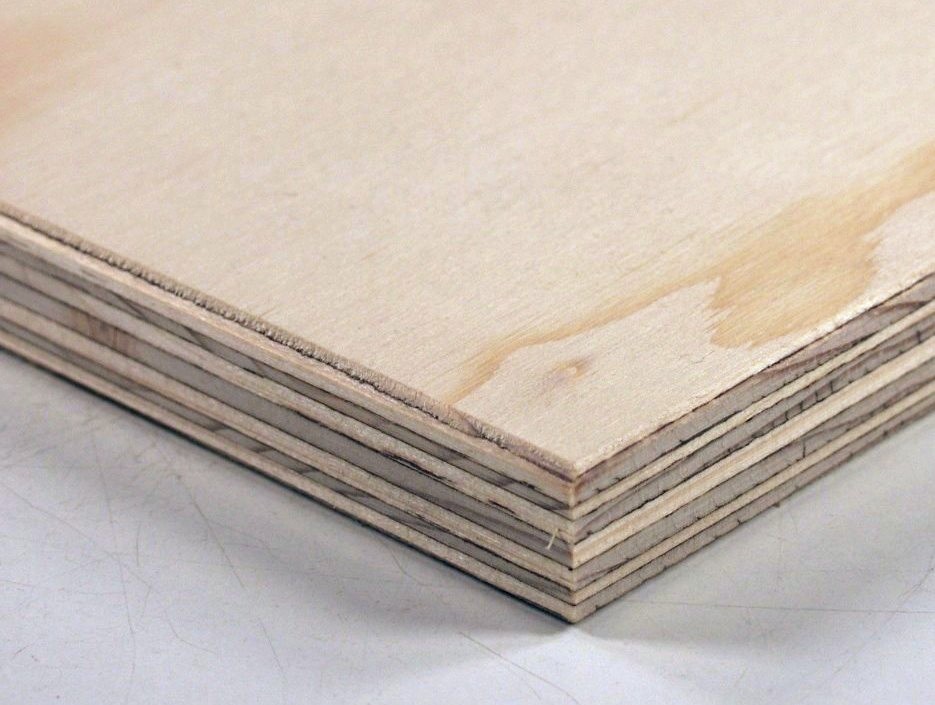
Close-up of plywood sheets (Source: Wikipedia (Plywood))
- Treated Timber: Chemically treated to resist moisture and insect attack, extending service life near plumbing.
- Particleboard: Less common but used in cabinetry around plumbing fixtures.
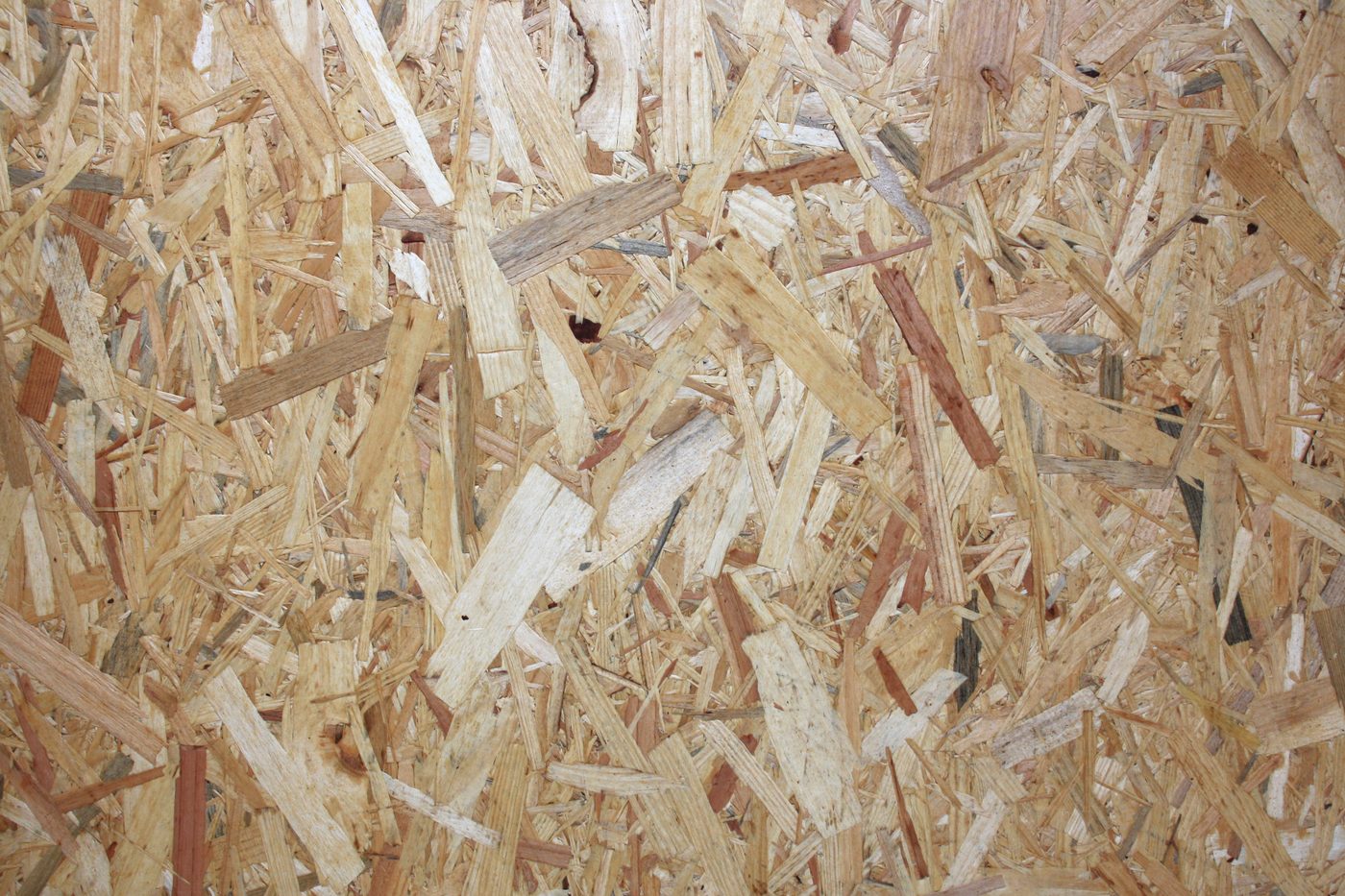
Close-up of particleboard surface (Source: Wikimedia Commons)
- Blockboard and MDF: Manufactured boards used in vanity units and bathroom cabinetry. Both swell badly if wetted, so they must be sealed at all edges.
Properties Relevant to Plumbing Use
- Moisture Resistance: Untreated timber absorbs water, risking rot and mold near plumbing.
- Strength: Adequate strength is necessary to support wet concrete and plumbing fixtures during construction.
- Workability: Timber can be easily cut and shaped to custom supports for pipes.
- Durability: Treated timber resists deterioration in damp environments.
- Thermal Insulation: Timber provides natural insulation around certain plumbing installations.
- Movement: Timber shrinks and swells with changes in humidity, mostly across the grain, which can loosen fixings over time.
Defects in Timber
- Natural defects: Knots, shakes (splits along the grain), cross grain, and wanes from the edge of the log.
- Seasoning defects: Bowing, cupping, twisting, springing and end splits caused by uneven or rapid drying.
- Fungal decay: Dry rot and wet rot, both requiring moisture. Timber kept below about 20 per cent moisture content does not rot, which is the whole reason for keeping plumbing leaks away from structural timber.
- Insect attack: Termites and wood borers, a serious risk in much of Kenya, countered by treatment and by keeping timber clear of the ground.
Preservation of Timber
- Pressure impregnation: Preservative forced deep into the timber in a pressure vessel, the most effective method.
- Brushing and spraying: Cheap but shallow, and needs renewal.
- Dipping and soaking: Better penetration than brushing.
- Cut ends are always re-treated, since cutting exposes untreated wood.
- Preservatives such as creosote and copper chrome arsenate must never be used on timber that will contact drinking water or food.
Practical Applications
- Timber formwork shapes concrete for pipe trenches and manholes.
- Temporary timber supports stabilize pipes during installation.
- Treated timber is sometimes used in wet areas to support plumbing fixtures in older buildings.
- Timber is used for trench shoring and for planking over open excavations.
- Battens and grounds carry pipe clips and brackets on walls.
Storage and Handling
- Stack under cover on level bearers, clear of the ground, with spacers between layers so air circulates.
- Keep stacks out of direct sun and rain, since wetting and drying cycles cause warping.
- Store different sections and lengths separately for easy selection.
- Keep timber away from any source of damp, and inspect regularly for termites.
- Remove nails from used formwork before stacking.
1.1.7 Metals and Alloys
A metal is a material that is typically hard, strong, ductile and a good conductor of heat and electricity. An alloy is a mixture of two or more metals, or a metal with other elements, made to improve properties such as strength or corrosion resistance. Brass and bronze are alloys of copper; steel is an alloy of iron and carbon.
Metals divide into ferrous metals, which contain iron and generally rust, and non-ferrous metals, which contain no iron and resist corrosion better.
Common Metals Used in Plumbing
- Galvanized Steel: Coated with zinc to resist rust, used for water supply pipes and conduits. Ferrous. The zinc coating is damaged by threading and cutting, which is where corrosion usually starts.
- Copper: Corrosion-resistant and bacteriostatic, used in hot and cold water systems. Non-ferrous.
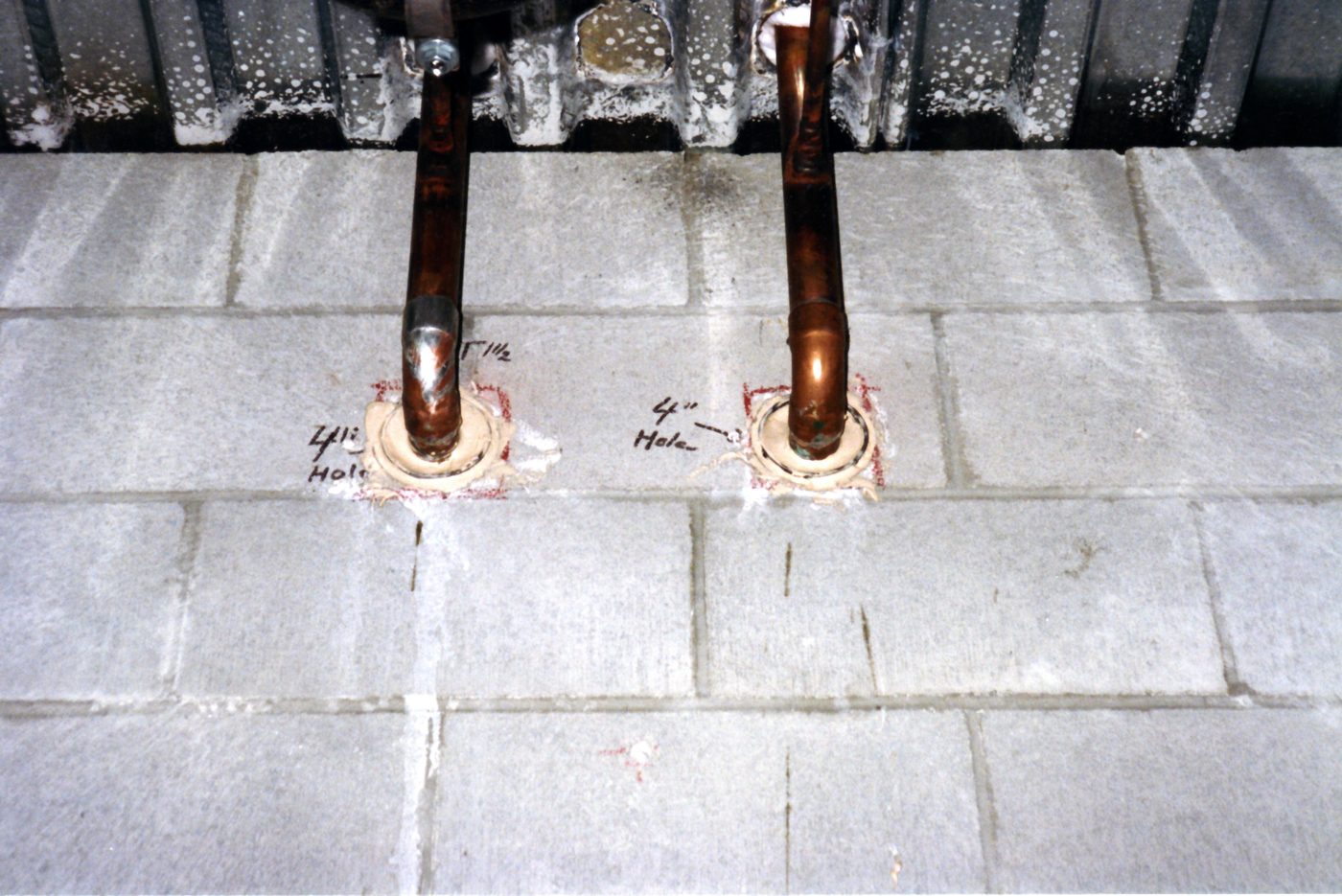
Copper pipes installed through wall holes (Source: Wikimedia Commons)
- Cast Iron: Heavy and durable, commonly used for drainage and sewer pipes. Ferrous, brittle in tension but very strong in compression.
- Stainless Steel: An alloy of steel with chromium, resistant to corrosion and staining, used in high-end plumbing fixtures.
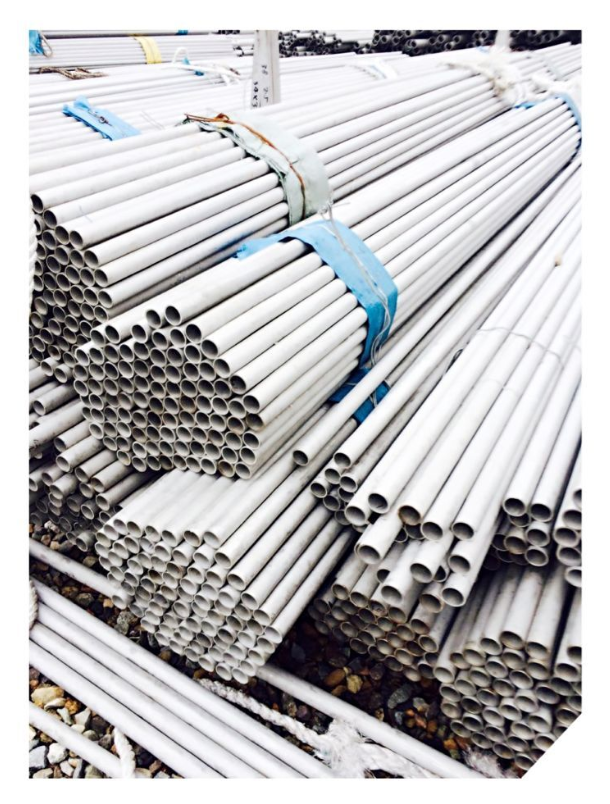
Bundles of stainless steel pipes for plumbing (Source: Wikimedia Commons)
- Brass: Alloy of copper and zinc, used in valves, taps, and fittings for durability and machinability.
- Lead: Once standard for pipes and traps, now prohibited for drinking water because it is toxic. Still met when working on old buildings, where it is replaced rather than repaired.
- Aluminium: Light and corrosion resistant, used for gutters, downpipes and some fittings. Attacked by alkalis, so it is kept out of contact with fresh concrete and mortar.
Properties Affecting Plumbing Performance
- Corrosion Resistance: Determines lifespan and maintenance needs of plumbing components.
- Strength and Ductility: Metals must withstand internal water pressure and external stresses. Ductility is the ability to be drawn out without breaking, which is what allows copper tube to be bent rather than cracked.
- Thermal Conductivity: Influences heat loss in hot water pipes.
- Thermal Expansion: Metals lengthen as they heat. A long hot water run must have provision for expansion, or it will buckle and creak.
- Malleability: The ability to be hammered or rolled into sheet, important for lead and copper flashings.
- Workability: Ease of cutting, threading, and joining affects installation efficiency.
- Cost and Availability: Influences selection based on project budget and local supply.
Corrosion and Galvanic Action
Corrosion is the gradual destruction of metal by chemical or electrochemical reaction with its environment.
- Rusting affects ferrous metals in the presence of water and oxygen.
- Galvanic (bimetallic) corrosion occurs when two different metals are connected in the presence of water. The less noble metal corrodes rapidly. Joining copper directly to galvanised steel is the classic plumbing example, and the galvanised pipe fails at the joint.
- Prevention: use the same metal throughout a circuit, fit a dielectric or insulating union where two metals must meet, apply protective coatings, or use sacrificial anodes in tanks and cylinders.
Uses of Metals in Plumbing
- Water supply pipework, both hot and cold.
- Soil, waste and vent pipes, particularly cast iron in tall buildings for strength and quietness.
- Valves, taps, mixers, stopcocks and gate valves.
- Tanks, cylinders, cisterns and their fittings.
- Brackets, clips, hangers and pipe supports.
- Flashings and weatherings where pipes pass through roofs.
- Tools, fasteners and threaded fittings.
Installation and Maintenance Considerations
- Galvanized steel pipes require regular inspection for rust and scaling.
- Copper pipes must be installed with compatible fittings to prevent galvanic corrosion.
- Cast iron drainage pipes need proper jointing to prevent leaks and odor escape.
- Stainless steel fixtures require less maintenance but come at higher initial cost.
- Buried metal pipework is wrapped or coated against soil corrosion.
Storage and Handling
- Store indoors or under cover on racks, clear of the ground and of standing water.
- Keep pipes supported along their length, not sagging between two points, and chocked so they cannot roll.
- Cap pipe ends to keep out dirt, rodents and insects.
- Store dissimilar metals apart so they do not sit in contact in damp conditions.
- Handle copper tube carefully, since a dented tube cannot be jointed properly.
- Store fittings in labelled bins by size and type.
1.1.8 Paints and Varnishes
Paint is a coating applied as a liquid that dries to a solid film, giving protection and colour. Varnish is a transparent coating that protects while leaving the grain of the surface visible. Both protect plumbing materials from corrosion, weathering, and enhance aesthetic appeal.
Composition of Paint
- Binder (vehicle): The film-forming substance that holds everything together and sticks it to the surface, such as an alkyd resin, acrylic emulsion or epoxy. It governs durability.
- Pigment: Fine solid particles giving colour, opacity and some protection. Examples: titanium dioxide for white, red oxide for primers.
- Solvent (thinner): Makes the paint flow. It evaporates as the paint dries. Water in emulsions, white spirit or turpentine in oil paints.
- Extender (filler): Cheap inert powder that bulks the paint and improves the body of the film.
- Driers and additives: Speed drying, prevent skinning in the tin, improve flow and resist mould.
Types of Protective Coatings
- Anti-corrosive Paints: Used on metal pipes and fittings to prevent rust. Red oxide and zinc chromate primers are common.
- Waterproof Paints: Applied on concrete and masonry surfaces around plumbing to prevent water ingress.
- Varnishes: Provide a protective and decorative finish on timber supports and cabinetry.
- Epoxy Coatings: Durable coatings for internal surfaces of tanks and pipes. Those used in drinking water tanks must be certified as potable-water safe.
- Heat-resistant Paints: Used on pipes exposed to high temperatures to maintain coating integrity.
- Emulsion paints: Water-based, breathable, used on internal walls and ceilings in sanitary areas.
- Gloss and enamel paints: Hard, washable finish for joinery, pipework and metal fittings.
- Bituminous paints: Black protective coatings for buried metal and for the outside of tanks.
Properties of a Good Paint
- Adheres firmly to the surface without flaking or peeling.
- Spreads easily and covers well, giving good opacity in few coats.
- Dries in a reasonable time to a uniform film.
- Resists water, chemicals, sunlight and abrasion.
- Retains its colour without fading or chalking.
- Non-toxic in use and when dry, particularly where it contacts water.
Functions in Plumbing Applications
- Protect metal pipes from oxidation and chemical attack.
- Seal porous masonry around plumbing to prevent dampness.
- Enhance durability of timber formwork and fixtures.
- Improve hygiene by providing easy-to-clean surfaces in sanitary installations.
- Extend lifespan of plumbing components exposed to harsh environments.
- Identify services by colour coding, so that pipes carrying different fluids can be told apart.
Application Practices
- Surfaces must be clean and dry before painting to ensure adhesion.
- Prepare the surface: remove rust by wire brushing, remove grease, fill and sand defects.
- Apply a primer first, to bond with the surface and protect it, then an undercoat to build the film and obscure the surface, then the finish coat.
- Multiple coats may be required for effective protection.
- Allow each coat to dry fully before the next, and lightly abrade between coats.
- Paints should be compatible with the substrate and environmental conditions.
- Do not paint in rain, heavy dust or direct hot sun.
Common Defects in Painting
- Blistering: Bubbles caused by moisture or solvent trapped beneath the film.
- Flaking and peeling: Loss of adhesion from a dirty, damp or unprimed surface.
- Running and sagging: Too much paint applied at once.
- Chalking: Powdery surface from weathering of the binder.
- Efflorescence showing through: Salts from the masonry pushing through the film.
- Brush marks: Paint too thick, or worked after it began to set.
Storage and Safety
- Store in a cool, dry, well-ventilated store, out of direct sunlight and away from any flame.
- Keep tins tightly sealed and upright, and store them upside down only if a skin is a problem.
- Solvent-based paints and thinners are flammable and their vapours are heavier than air. They are stored separately, with fire precautions.
- Label tins with contents and date, and use the oldest first.
- Provide ventilation when painting in enclosed spaces such as tanks and chambers, and wear a respirator.
- Dispose of empty tins and residues responsibly, never into a drain.
1.1.9 Roofing Materials
Roofing materials affect plumbing through drainage design and protection of water supply systems. In Kenya, where roof catchment is a major source of domestic water, the roof is part of the plumbing system, not just the building above it.
Common Roofing Materials in Kenya
- Corrugated Iron Sheets: Galvanised steel sheets, commonly gauge 28 to 32, lightweight and durable, widely used in both urban and rural areas. The most common roof catchment surface in Kenya.
- Asphalt Shingles: Provide waterproofing and aesthetic appeal, used in modern residential buildings.

Close-up of asphalt shingles on a roof (Source: Wikimedia Commons)
- Clay Tiles: Traditional roofing material with good thermal insulation properties.
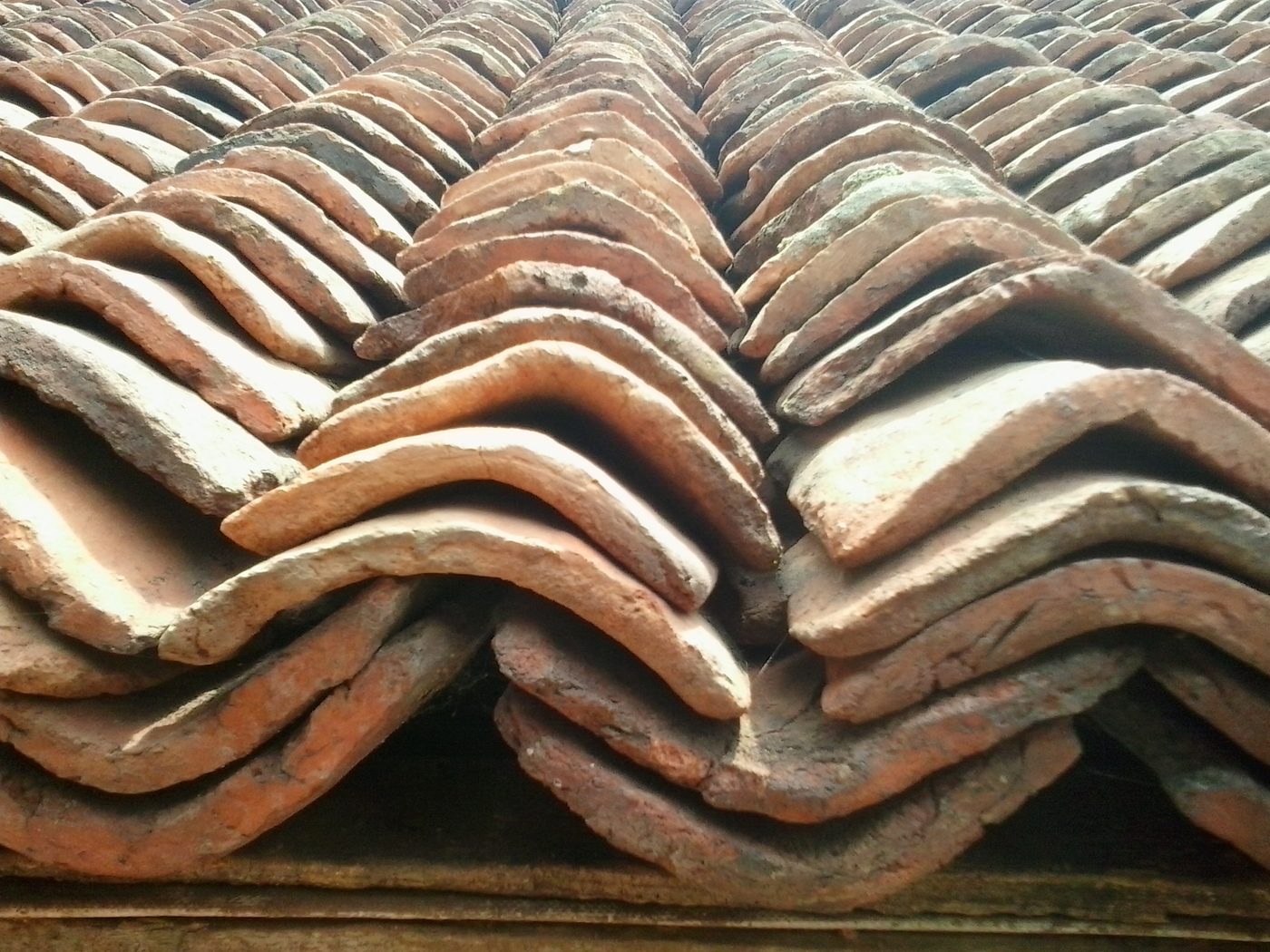
Stacked clay roofing tiles (Source: Wikimedia Commons)
- Fiber Cement Sheets: Resistant to fire and water, used in institutional buildings. Older sheets may contain asbestos and must not be cut or broken.
- Thatch: Still used in rural homes, requires specialized plumbing drainage considerations.
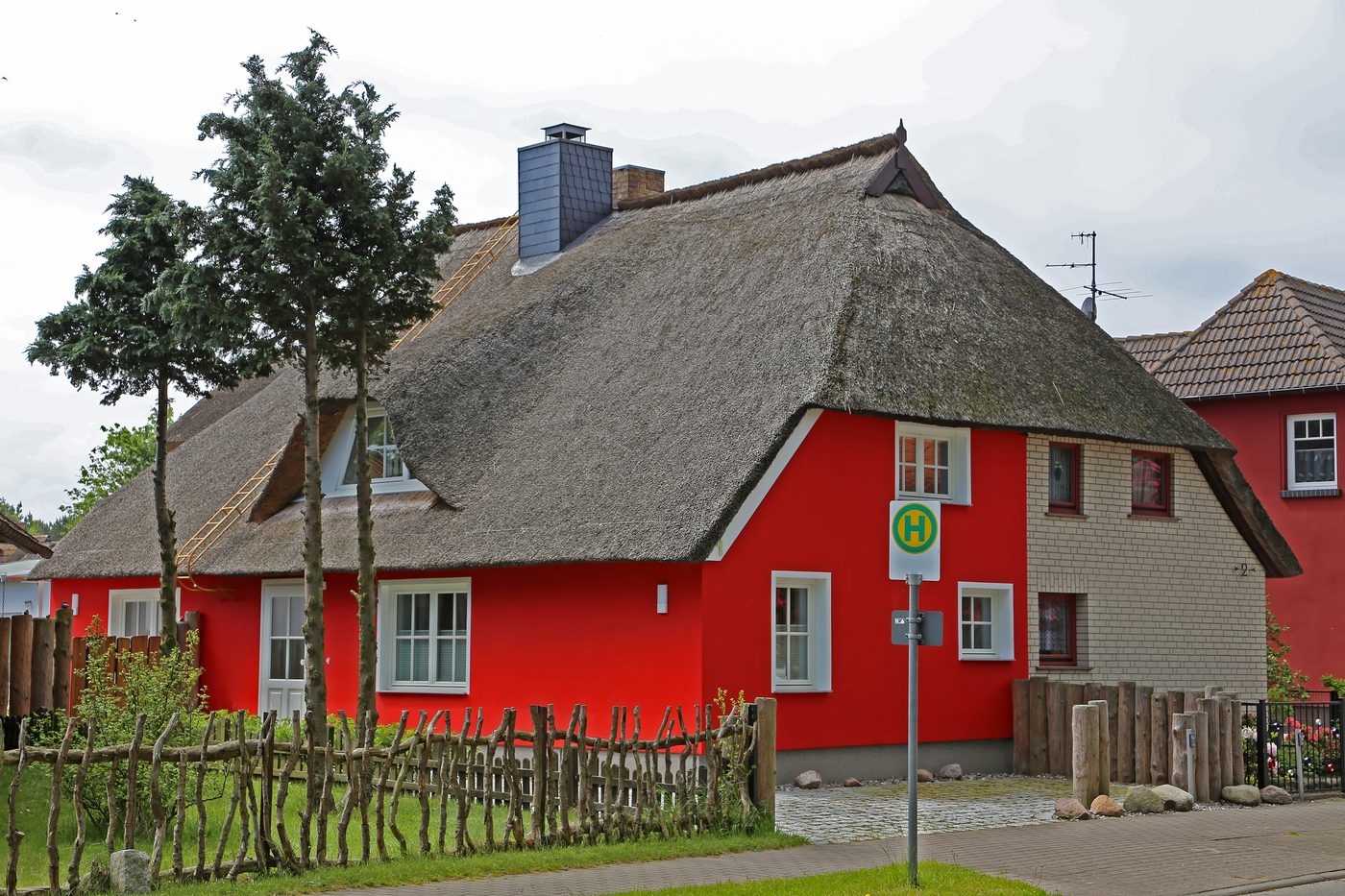
House with a thatched roof (Source: Wikimedia Commons)
- Concrete tiles and stone-coated steel tiles: Heavier and longer lasting, common on modern Kenyan housing.
- Concrete flat roofs: Used on commercial buildings, requiring waterproofing and internal rainwater outlets.
Properties Affecting Plumbing
- Water tightness: The primary requirement, since a leaking roof damages everything beneath it.
- Weight: Determines the structure needed to carry it and the fixing of any pipes passing through.
- Smoothness and cleanliness: Governs how much of the rain falling on the roof reaches the tank. Iron sheets give a runoff coefficient of about 0.8 to 0.9; thatch gives only 0.2 to 0.3.
- Chemical neutrality: The roof should not taint the water collected. Thatch, bitumen and lead flashings all contaminate harvested water.
- Durability and maintenance: Determines how often the roof is disturbed, and with it any plumbing fixed through it.
- Thermal properties: Affect the temperature of water in pipes and tanks in the roof space.
Influence on Plumbing Systems
- Roofing materials determine the type and design of rainwater harvesting systems.
- Material durability affects the lifespan of plumbing fixtures like gutters and downpipes.
- Compatibility with plumbing vent pipes ensures watertight seals and prevents leaks.
- Thermal properties influence pipe insulation requirements for hot water systems.
- Weight of roofing materials affects structural design of plumbing supports.
- The roof area in plan determines how much water can be harvested, and so the tank size.
Installation and Maintenance
- Gutters and downpipes must be selected to match roofing material profiles.
- Regular cleaning prevents blockages that can affect plumbing drainage.
- Flashing around plumbing penetrations must be properly sealed to prevent leaks.
- Vent pipes pass through the roof with a weathering slate or flashing, and finish above the level of nearby windows so foul air does not re-enter the building.
- A first-flush diverter is fitted on harvesting systems to discard the dirty initial runoff.
- Gutters are hung to a fall towards the downpipe, checked after heavy rain.
Storage and Handling
- Store iron sheets flat on timber bearers, under cover, sloping slightly so rainwater drains off. Sheets stacked wet develop white rust between them, which destroys the zinc coating.
- Carry sheets on edge, not flat, and wear gloves. Cut edges are sharp.
- Stack tiles on pallets in small bonded stacks, never loose in a heap.
- Keep fixings, ridge pieces and flashings dry and sorted.
1.1.10 Aggregates
Aggregates are inert granular materials essential in concrete and mortar production for plumbing infrastructure. They make up roughly three quarters of the volume of concrete, so their quality largely determines its quality.
Classification of Aggregates
By size
- Fine aggregate: Passes a 5 mm sieve. Sand, used to fill the voids between the coarse particles.
- Coarse aggregate: Retained on a 5 mm sieve. Gravel and crushed stone, commonly 10 mm, 14 mm and 20 mm nominal sizes.
By source
- Natural: River sand, pit sand, gravel, crushed rock such as ballast.
- Artificial: Crushed brick, clinker, blast furnace slag.
- Recycled: Crushed concrete and brick reused in sustainable construction.
By weight
- Normal weight: Sand, gravel and crushed stone, for general concrete.
- Lightweight: Pumice, expanded clay, used to reduce concrete weight around plumbing fixtures.
- Heavyweight: Barytes and iron ore, used in radiation shielding applications.
Characteristics Impacting Plumbing Materials
- Size and Grading: Proper grading, meaning a good spread of particle sizes, ensures concrete strength and tight packing around pipes. Poorly graded aggregate leaves voids or needs excess cement.
- Cleanliness: Aggregates must be free from organic matter and clay to avoid weakening concrete. Silt and clay coatings stop the cement paste bonding to the stone.
- Durability: Resistant aggregates prevent disintegration that could compromise pipe supports.
- Absorption: Low absorption aggregates reduce water demand in concrete mixes.
- Chemical Stability: Aggregates should not react adversely with cement or plumbing materials.
- Shape and texture: Angular crushed stone bonds better than smooth rounded gravel, but needs more water for the same workability.
- Bulking of sand: Damp sand occupies more volume than dry sand, by as much as 20 to 30 per cent at 4 to 6 per cent moisture. Measuring damp sand by volume without allowing for bulking gives a mix short of sand and therefore weak.
Testing Aggregates on Site
- Silt content test: Put 50 mm of sand in a clear jar, fill with water, shake and leave to settle for an hour. Silt settles as a distinct layer on top of the sand. More than about 6 to 8 per cent means the sand must be washed.
- Organic impurities test: Sand shaken with a sodium hydroxide solution turns dark brown if organic matter is present.
- Bulking test: Compare the volume of a sample of damp sand with the same sample after saturation, to find the bulking allowance.
- Visual and hand test: Rubbing damp sand between the palms should leave them nearly clean. Muddy palms mean too much clay.
Role in Plumbing Construction
- Aggregates form the bulk of concrete used in pipe bedding and structural supports.
- Fine aggregates improve mortar workability for sealing pipe joints.
- Quality aggregates ensure long-term durability of plumbing foundations.
- Graded gravel forms the bedding and surround to buried pipes, and the filter media in soak pits and drainage fields.
- Coarse aggregate forms the hardcore layer beneath floor slabs and around chambers.
Storage and Handling
- Store on a hard, clean, well-drained base, never directly on soil, which contaminates the lower layer with clay.
- Keep fine and coarse aggregate in separate bays with dividing walls, so they do not mix.
- Cover stockpiles in the rainy season to keep the moisture content reasonably constant, since variable moisture makes mix water impossible to control.
- Take material from the stockpile in a way that avoids segregation, where the coarse particles roll to the bottom of the heap.
1.1.11 Glass and Glass Products
Glass is a hard, brittle, transparent material made by melting silica sand with soda ash and limestone and cooling it without crystallising. It is used in plumbing primarily for sanitary fittings and decorative applications.
Types of Glass Used in Plumbing
- Tempered (toughened) Glass: Heat treated so it is several times stronger than ordinary glass, and breaks into small blunt granules rather than sharp shards. Used in shower doors and partitions for safety.
- Frosted Glass: Provides privacy in bathroom windows and screens.
- Glass Tiles: Decorative finishes in wet areas around plumbing fixtures.
- Glass Pipes: Rare but used in laboratory plumbing for chemical resistance and for visible flow.
- Insulated Glass Units: Two panes with a sealed air gap, used in windows to reduce condensation affecting plumbing walls.
- Laminated Glass: Two panes bonded to a plastic interlayer, which holds the fragments if broken. Used where safety and security both matter.
- Glass wool: Spun glass fibre used as pipe and tank insulation.
Properties Relevant to Plumbing
- Transparency: Allows natural light while maintaining privacy.
- Strength: Tempered glass resists impact and thermal stress.
- Brittleness: Glass has no ductility. It does not bend before it breaks, so it fails suddenly.
- Water Resistance: Glass is impermeable, preventing water damage.
- Chemical Resistance: Does not corrode or degrade with exposure to water and cleaning agents, though it is attacked by hydrofluoric acid and by strong alkalis.
- Thermal shock: Ordinary glass cracks if heated or cooled unevenly, which is why hot water must not be run onto cold glass.
- Aesthetic Appeal: Enhances the appearance of sanitary installations.
Uses of Glass
- Shower enclosures, screens and partitions.
- Bathroom windows, louvres and vents.
- Mirrors, shelves and splashbacks over basins.
- Wall tiles and mosaic in wet areas.
- Glass wash hand basins and countertop bowls.
- Laboratory drainage where chemical resistance is needed.
- Insulation of hot water pipes and cylinders.
Installation Considerations
- Proper framing and sealing prevent water ingress behind glass installations.
- Safety glazing standards must be followed to protect users. Glass in shower doors, in screens and below 800 mm from the floor must be toughened or laminated.
- Glass surfaces require regular cleaning to maintain clarity and hygiene.
- Glass is never cut on site after toughening, since toughened glass shatters if cut or drilled. All holes and cut-outs are made before toughening.
- Fixings are made through drilled holes or by clamps, never by nailing or over-tightening, which cracks the pane.
Storage and Handling
- Store sheets on edge, leaning at a slight angle against a padded rack, never flat, since a flat sheet flexes and cracks under its own weight.
- Separate sheets with interleaving material and keep them dry, since trapped moisture stains glass permanently.
- Store away from traffic routes and mark the area clearly.
- Carry with gloves and eye protection, on edge, with two people for large sheets.
1.1.12 Bitumen and Bituminous Products
Bitumen is a black, sticky, viscous material obtained mainly as a residue from refining crude oil, and sometimes found naturally. It is waterproof, adhesive and thermoplastic, meaning it softens when heated and hardens as it cools. It is used primarily for waterproofing and road construction but is also relevant in plumbing for sealing and protection.
Types of Bituminous Products
- Bitumen Sheets (felts and membranes): Used as damp-proof membranes beneath concrete slabs and in tanking.
- Bituminous Paints: Applied as protective coatings on metal pipes and tanks.
- Mastic Asphalt: A dense mixture of bitumen and fine aggregate, laid hot, used for waterproofing flat roofs and pipe penetrations.
- Bitumen Emulsions: Bitumen dispersed in water, applied cold, used in road repair and pipe joint sealing.
- Modified Bitumen: Polymer-enhanced formulations for improved flexibility and adhesion.
- Bitumen primers: Thin solutions applied first to seal and bind a surface before the main coating.
Properties of Bitumen
- Waterproof: Completely impermeable, which is its main value.
- Adhesive: Bonds strongly to concrete, masonry and metal.
- Thermoplastic: Softens on heating and hardens on cooling, allowing hot application and cold service.
- Chemically inert: Resists most acids, alkalis and salts found in soil and groundwater.
- Flexible: Accommodates movement without cracking, particularly the modified grades.
- Grading: Classified by penetration grade, such as 60/70 or 80/100, which measures hardness. Lower numbers are harder.
- Toxicity: Bitumen contaminates drinking water and must never be used inside a potable water tank.
Role in Plumbing Applications
- Bitumen membranes prevent groundwater ingress into underground plumbing chambers.
- Protective coatings extend the life of metal pipes exposed to soil moisture.
- Waterproofing around pipe penetrations in walls and floors prevents leaks.
- Bituminous materials aid in sealing joints in drainage systems.
- Used in roofing to protect plumbing vent pipes from water damage.
- Damp proof courses and tanking to basements, inspection chambers and tank pits.
- Wrapping buried steel pipework, applied over a primer with an overlapping tape.
Application Techniques
- Surfaces must be clean and dry before bitumen application for effective adhesion.
- Apply a primer first on porous surfaces such as concrete.
- Heating may be required to apply certain bituminous products.
- Protective layers must be thick enough to provide lasting waterproofing, applied in two or more coats in opposite directions.
- Overlap membrane sheets generously and seal the laps fully.
- Do not apply in rain or onto damp surfaces.
Storage and Safety
- Store drums and tins upright, under cover, in a cool place away from any flame. Solvent-based products are flammable.
- Keep away from open drains and watercourses.
- Heat bitumen in a proper boiler with a thermostat, never over an open fire, and never overheat it. Overheated bitumen catches fire and cannot be put out with water.
- Never allow water into hot bitumen. It boils instantly and throws the contents out of the vessel.
- Wear gloves, boots, long sleeves and eye protection. Hot bitumen sticks to skin and causes severe burns.
- Keep a dry powder or foam extinguisher at any point where bitumen is heated.
Practice Questions
- Explain the importance of selecting appropriate stone types for plumbing foundations in Kenya. (10 marks)
- Compare and contrast the use of clay pipes and PVC pipes in drainage systems. (12 marks)
- Describe the role of lime in mortar used for plumbing installations and list its benefits. (10 marks)
- Identify five key properties of metals used in plumbing and explain how they affect system performance. (15 marks)
- Discuss the application of bituminous products in waterproofing plumbing structures and the precautions necessary during their use. (13 marks)
The rest of this chapter
🔒Create a free account to open more of this chapter.
Free: practical guides, quick cards, workplace scenarios and more.
Create a free account 🔒1.2 Bill of quantities and working drawings
In plumbing projects across Kenya, accurate preparation and interpretation of the bill of quantities (BoQ) and working drawings are fundamental for effective project execution. These documents enable plumbing professionals to ascertain material requirements, e…
🔒1.3 Construction materials
Stones have been used in construction for centuries and remain relevant for foundational and aesthetic applications in plumbing and building works. In Kenya, stones are abundant and vary widely in type and quality, influencing their suitability for different p…
Chapter Summary
This chapter explored the various construction materials commonly used in building projects, including stones, bricks, clay products, lime, cement, timber, metals, paints, roofing materials, aggregates, glass, and bituminous products, highlighting their specific applications and properties. It further examined the importance of understanding bills of quantities and working drawings, focusing on accurate billing and correct interpretation to ensure project efficiency. The discussion revisited the key characteristics and uses of construction materials, reinforcing knowledge vital for material selection and quality assurance. Workplace safety practices were emphasized to protect workers from hazards associated with handling and working with these materials. Appropriate fire extinguishers for different fire types were identified to enhance site safety and emergency preparedness. Finally, the chapter covered essential first aid measures relevant to construction environments, ensuring readiness to respond effectively to injuries or accidents.
Self-Assessment
🔒 PDFDownload this self-assessment, with answers
A. Written Assessment
- Which type of stone is most commonly used in plumbing foundations for its durability and resistance to water absorption? (2 marks)
- Describe three key properties of bricks that make them suitable for use in constructing water tanks. (3 marks)
🔒20 more in this section.
Chapter Examination Questions
🔒 PDFDownload these examination questions, with worked answers
SECTION A (40 Marks) - Answer ALL Questions
- Explain the importance of using quality stones in plumbing installations at a county hospital water storage tank foundation. (4 marks)
- Describe the key characteristics that make clay bricks suitable for use in constructing water reticulation chambers. (4 marks)
🔒18 more in this section.
Chapter Practical Activities
Practical 1: Identification and Testing of Stones for Construction
Plumbing · Level 5
Construction Material Science
PRACTICAL ASSESSMENT
TIME: 4 HOURS
⬇ PDFCandidate Instructions (Candidate Tool)
Type: Individual
INSTRUCTIONS TO CANDIDATE:
1. You are required to perform the following task:
i. Identify three types of stones (granite, limestone, sandstone) and perform hardness, acid, and water absorption tests on samples sized approximately 100mm x 100mm x 50mm.
2. You have been provided with the following resources for the practical task:
| Tools & Equipment | Materials |
|---|
| Hammer | Granite stone sample |
| Hand lens | Limestone stone sample |
| Glass plate | Sandstone sample |
| Steel nail | Hydrochloric acid (10% solution) |
| Brass wire brush | Protective gloves |
| Water spray bottle | Safety goggles |
| Weighing scale | Overall |
| Measuring tape | Industrial boots |
⬇ PDFResources Required (Cutting List)
| S/N | Item | Quantity |
|---|
| 1 | Granite stone sample | 3 pieces per Candidate |
| 2 | Limestone stone sample | 3 pieces per Candidate |
| 3 | Sandstone sample | 3 pieces per Candidate |
| 4 | Hammer | 1 per Candidate |
| 5 | Hand lens (10x magnification) | 1 per Candidate |
| 6 | Glass plate | 1 per Candidate |
| 7 | Steel nail | 1 per Candidate |
| 8 | Hydrochloric acid (10% solution) | 100 ml per Candidate |
| 9 | Brass wire brush | 1 per Candidate |
| 10 | Water spray bottle | 1 per Candidate |
| 11 | Weighing scale (sensitivity 0.1 g) | 1 per Candidate |
| 12 | Measuring tape (0-1000 mm) | 1 per Candidate |
| 13 | Protective gloves | 1 pair per Candidate |
| 14 | Safety goggles | 1 pair per Candidate |
| 15 | Overall | 1 per Candidate |
| 16 | Industrial boots | 1 pair per Candidate |
⬇ PDFAssessor Guide
| Items to be Evaluated | Marks Available | Marks Obtained | Comments |
|---|
| TASK 1: Identification and Testing of Stones |
Used personal protective equipment: gloves, overall, safety goggles, industrial boots
(Award 1 mark for each correctly worn PPE or zero) | 4 | | |
Correctly identified the three stone types: granite, limestone, sandstone
(Award 1 mark for each correct identification or zero) | 3 | | |
Performed hardness test using steel nail and glass plate correctly
(Award 3 marks for correct procedure and observation or zero) | 3 | | |
Performed acid test on limestone sample safely and recorded reaction
(Award 3 marks for correct acid application and observation or zero) | 3 | | |
Conducted water absorption test by weighing dry and soaked samples
(Award 3 marks for correct weighing and calculation or zero) | 3 | | |
Used hammer and brass wire brush to clean stone surfaces properly
(Award 2 marks for proper cleaning or zero) | 2 | | |
Measured stone sample dimensions accurately within ±5 mm
(Award 2 marks for all measurements accurate or zero) | 2 | | |
Recorded all observations and results legibly and completely
(Award 2 marks for complete records or zero) | 2 | | |
| Sub-Total | 22 | | |
| PRODUCT CHECKLIST |
Stone samples correctly identified and labelled
(Award 1 mark each or zero) | 3 | | |
Hardness test results consistent with standard values
(Award 3 marks for accurate results or zero) | 3 | | |
Acid test shows typical reaction on limestone only
(Award 3 marks for correct acid reaction or zero) | 3 | | |
Water absorption values calculated correctly within ±0.5%
(Award 3 marks for accuracy or zero) | 3 | | |
Stone sample dimensions approximately 100mm x 100mm x 50mm ±5mm
(Award 3 marks if all dimensions within tolerance or zero) | 3 | | |
| Sub-Total | 15 | | |
| GRAND TOTAL | 37 | | |
ASSESSMENT OUTCOME: ☐ Competent ☐ Not Yet Competent (competent if at least 50%)
Practical 2: Brick Quality Assessment and Proper Handling
Plumbing · Level 5
Construction Material Science
PRACTICAL ASSESSMENT
TIME: 4 HOURS
⬇ PDFCandidate Instructions (Candidate Tool)
Type: Individual
INSTRUCTIONS TO CANDIDATE:
1. You are required to perform the following task:
i. Inspect and assess a batch of 50 burnt clay bricks for quality and suitability, then demonstrate proper handling and storage on a wooden pallet measuring 1200mm x 1000mm as per the provided working instructions.
2. You have been provided with the following resources for the practical task:
| Tools & Equipment | Materials |
|---|
| Measuring tape | Burnt clay bricks |
| Spirit level | Water container |
| Trowel | Wooden pallet |
| Marking chalk | PPE Set |
⬇ PDFResources Required (Cutting List)
| S/N | Item | Quantity |
|---|
| 1 | Burnt clay bricks | 50 Pcs per Candidate |
| 2 | Water container (for wetting bricks) | 1 per 5 Candidates |
| 3 | Marking chalk | 1 Pc per Candidate |
| 4 | Measuring tape 3000 mm | 1 Pc per Candidate |
| 5 | Spirit level 600 mm | 1 Pc per Candidate |
| 6 | Trowel | 1 Pc per Candidate |
| 7 | PPE Set (gloves, overall, industrial boots) | 1 Set per Candidate |
| 8 | Wooden pallet for brick stacking | 1 Pc per Candidate |
⬇ PDFAssessor Guide
| Items to be Evaluated | Marks Available | Marks Obtained | Comments |
|---|
| TASK 1: Brick Quality Inspection and Handling |
Used personal protective equipment correctly (gloves, overall, industrial boots)
(Award 1 mark for each PPE used or zero) | 3 | | |
Checked bricks for uniformity in size (standard size 230mm x 110mm x 75mm) and shape
(Award 1 mark for each correct observation or zero) | 3 | | |
Inspected bricks for defects such as cracks, chips, and efflorescence
(Award 1 mark for thorough inspection and correct defect identification) | 3 | | |
Tested brick water absorption by soaking and observing water uptake
(Award 3 marks for correct procedure and result interpretation) | 3 | | |
Measured brick dimensions accurately using measuring tape
(Award 2 marks for accurate measurements within ±3mm tolerance) | 2 | | |
Marked defective bricks clearly with chalk
(Award 2 marks for correct marking of all defective bricks) | 2 | | |
Stacked bricks properly on wooden pallet ensuring stability and ventilation
(Award 4 marks for correct stacking technique and spacing) | 4 | | |
Demonstrated correct wetting of bricks before use
(Award 2 marks for proper wetting method) | 2 | | |
| Sub-Total | 22 | | |
| PRODUCT CHECKLIST |
Bricks meet standard dimensions (230mm length x 110mm width x 75mm height)
(Award 3 marks for all bricks within tolerance ±3mm) | 3 | | |
No visible cracks, chips, or efflorescence on accepted bricks
(Award 3 marks for zero defects on accepted bricks) | 3 | | |
Brick stacking is stable, ventilated, and within pallet dimensions (1200mm x 1000mm)
(Award 4 marks for proper stacking and use of pallet space) | 4 | | |
Defective bricks correctly identified and separated
(Award 3 marks for complete and accurate separation) | 3 | | |
Bricks are properly wetted and ready for use
(Award 3 marks for proper wetting and readiness) | 3 | | |
| Sub-Total | 16 | | |
| GRAND TOTAL | 38 | | |
ASSESSMENT OUTCOME: ☐ Competent ☐ Not Yet Competent (competent if at least 50%)
🔒Preparation and Application of Clay Blocks for Wall ConstructionPractical 3
🔒Mixing and Application of Lime Mortar for Wall PlasteringPractical 4
🔒Prepare and Test a Cement Mix for Strength and ConsistencyPractical 5
🔒Timber Selection and Preparation for Door Frame ConstructionPractical 6
🔒Identification and Application of Common Metals and Alloys in ConstructionPractical 7
🔒Prepare and apply paint and varnish on timber and masonry surfacesPractical 8
🔒Selection and Installation of Corrugated Iron Roofing Sheets 3m x 2mPractical 9
🔒Identification and grading of aggregates for concrete productionPractical 10
🔒Handling and Installation of Glass and Glass ProductsPractical 11
🔒Preparation and Application of Bitumen for Road PatchingPractical 12
🔒Preparation of Bill of Quantities for External Wall ConstructionPractical 13
🔒Interpret Working Drawings to Identify Construction Materials for a 3m x 3m Wall SectionPractical 14
🔒Demonstrate workplace safety, fire extinguisher use, and basic first aidPractical 15
