
By the end of this chapter, you will be able to:
These skills will help you create clear and precise water storage schematics, which are essential for successful installation and maintenance in the water storage trade.
Compiled by: Joseph Njoroge
Water storage schematic drawings form a critical part of plumbing system design and documentation in Kenya. These drawings provide a visual representation of water storage arrangements, including tanks, pipes, valves, and fittings, ensuring proper installation and maintenance. Accurate schematics assist plumbers, engineers, and site supervisors in understanding system layout and flow, reducing errors during construction and operation. This chapter begins with essential safety considerations by addressing personal protective equipment (PPE) relevant to plumbing professionals working on water storage systems.
Personal protective equipment is fundamental for plumbing professionals in Kenya, especially when preparing water storage schematic drawings and performing related site work. The use of PPE minimizes risk of injury from physical hazards, chemical exposure, and environmental conditions encountered during installation or maintenance of water storage systems. Understanding the types, correct usage, and maintenance of PPE enhances workplace safety and compliance with Kenyan occupational health standards.
Plumbing professionals require a variety of PPE to safeguard against potential hazards when working with water storage systems. The main types include:
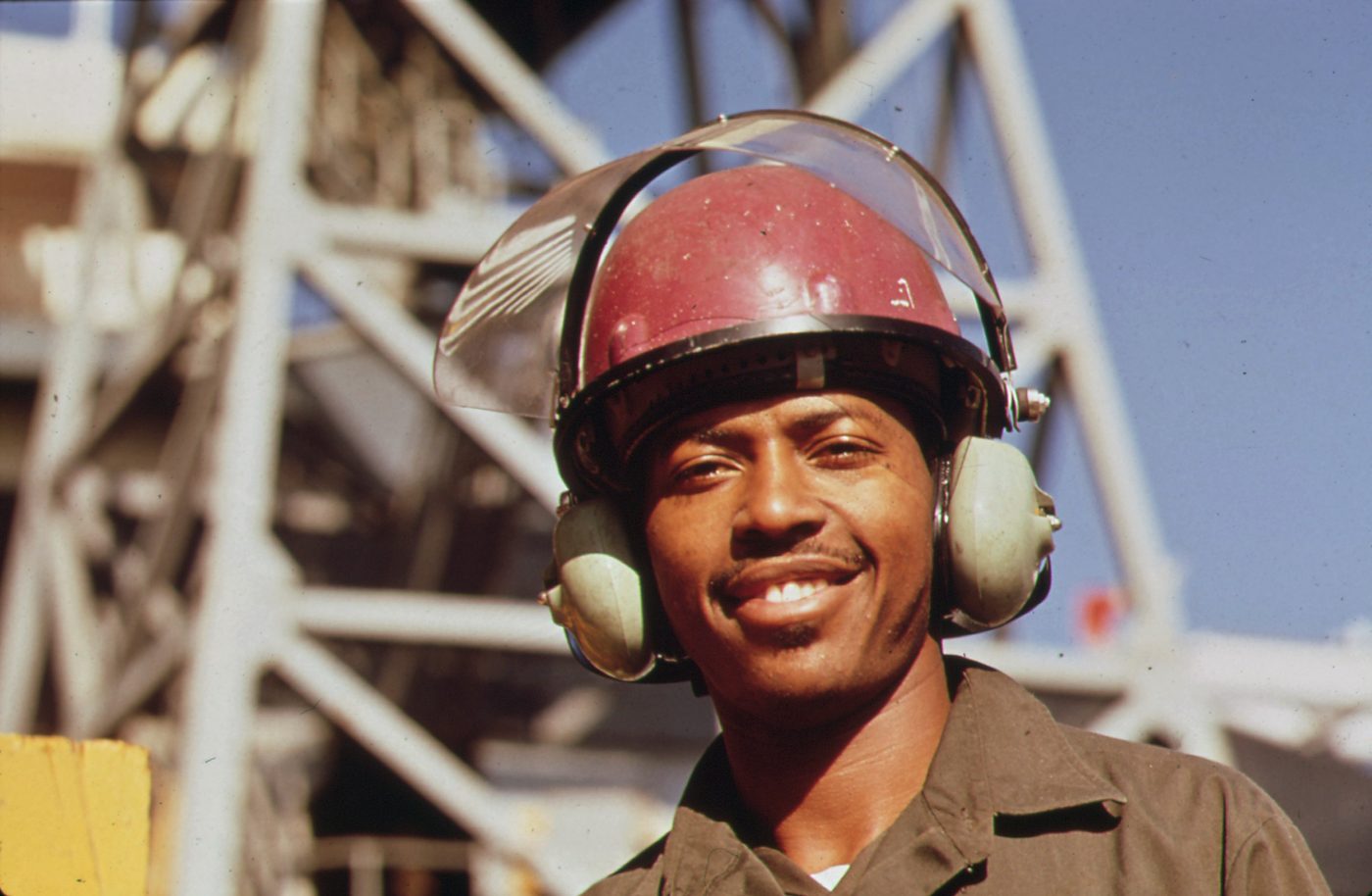
Man wearing a safety helmet (Source: Wikimedia Commons)
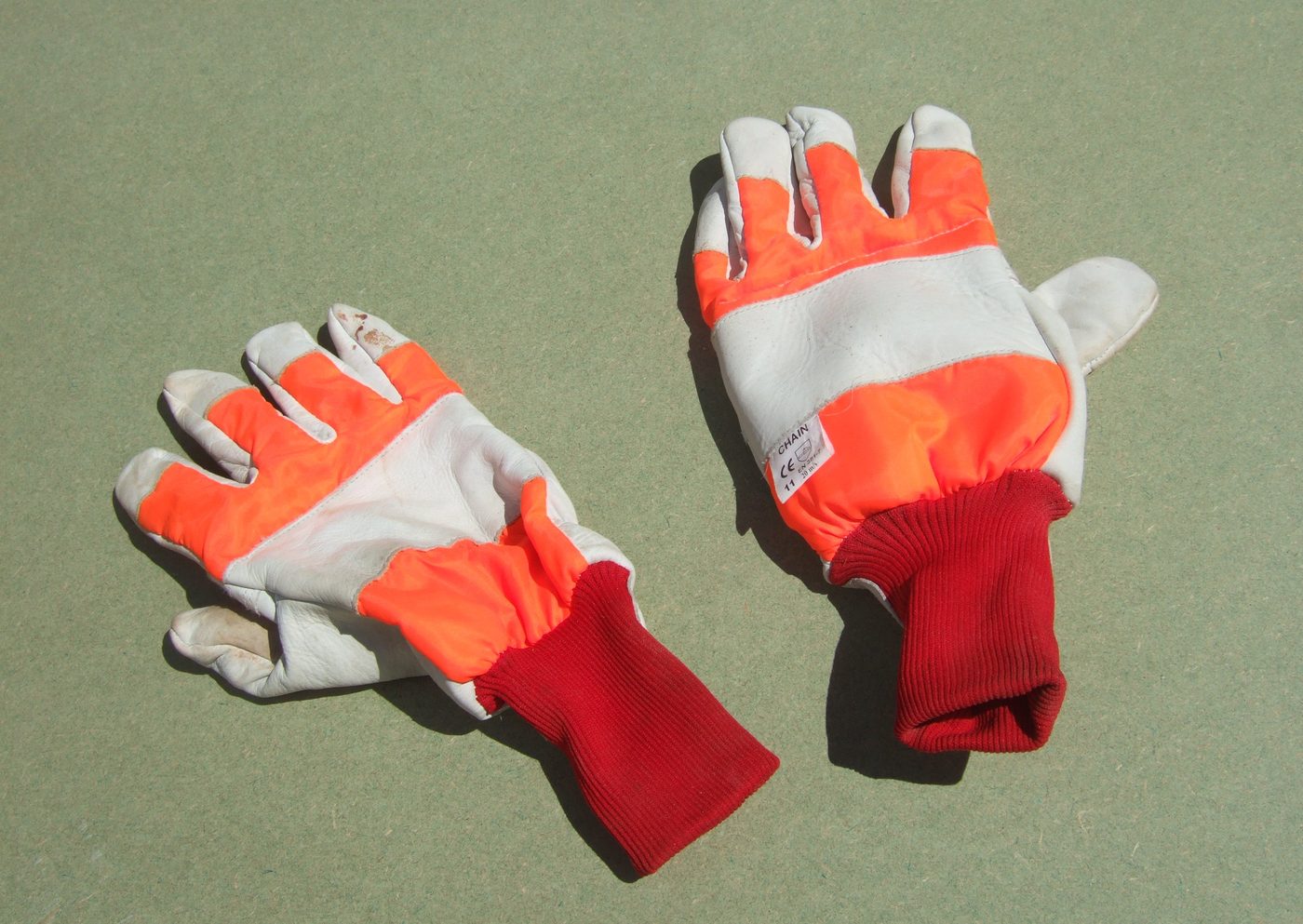
A pair of protective gloves (Source: Wikimedia Commons)
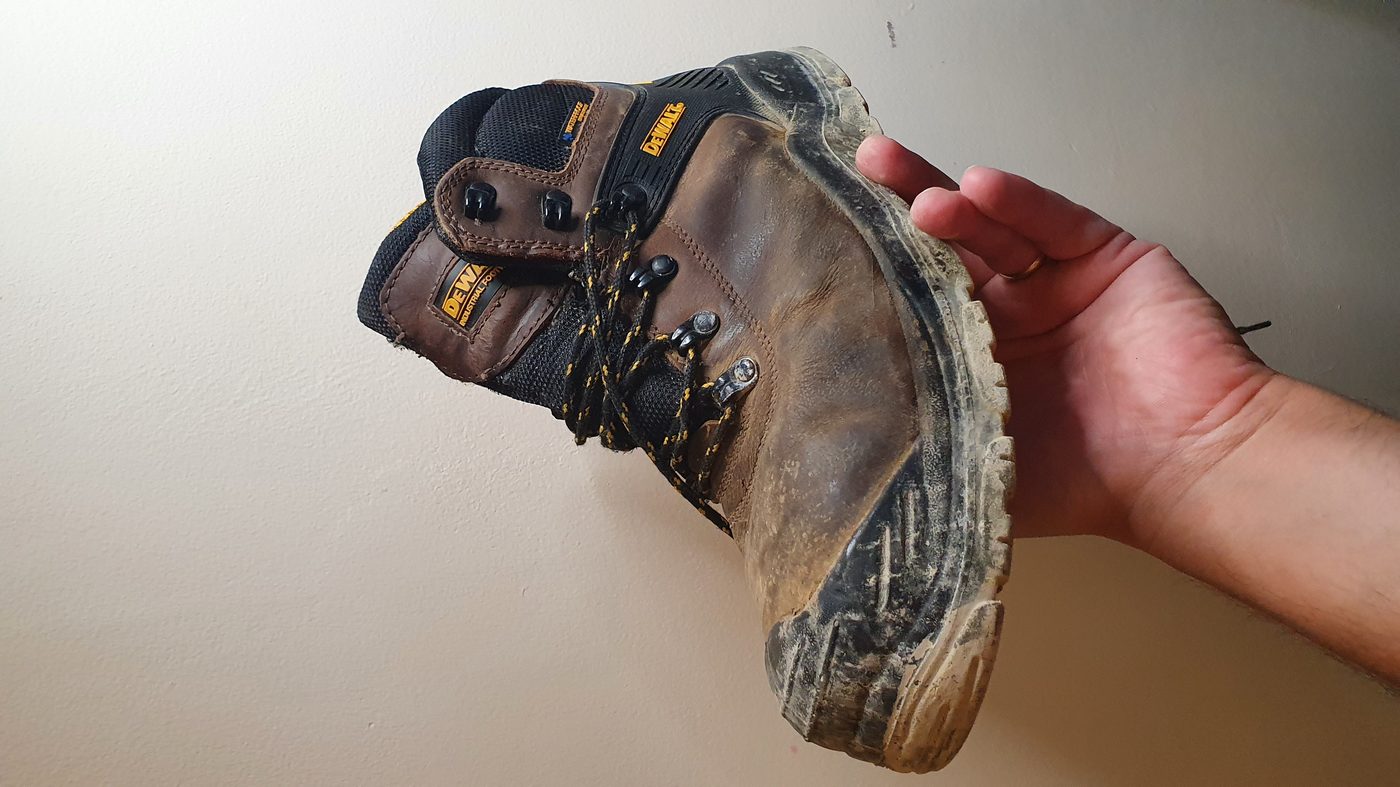
A single safety boot for industrial use (Source: Wikimedia Commons)
Each type of PPE addresses specific risks encountered during plumbing tasks related to water storage, ensuring comprehensive protection.
Correct usage and fitting of PPE are crucial to maximize its protective function. Improperly worn equipment can lead to accidents or reduce effectiveness. Key points include:
Following these practices reduces workplace injuries and promotes compliance with Kenya’s occupational safety regulations.
Maintaining PPE in good condition ensures longevity and consistent safety performance. Plumbing professionals should adopt routine care practices including:
Proper maintenance safeguards the integrity of PPE and ensures it remains effective during plumbing activities.
Kenya’s occupational safety framework mandates specific PPE standards for plumbing professionals to reduce workplace hazards. Understanding these requirements is essential for legal compliance and worker protection:
Adhering to these regulations protects plumbing workers and promotes a culture of safety in water storage system projects.
List five types of personal protective equipment used in plumbing work related to water storage systems and explain the specific hazard each protects against. (10 marks)
Describe six steps to ensure proper fitting and use of PPE during plumbing installations. (12 marks)
Explain five maintenance practices necessary to keep PPE effective and safe for use. (10 marks)
Outline the key legal requirements regarding PPE use in Kenya’s plumbing industry and the responsibilities of both employers and workers. (8 marks)
Create a free account to open more of this chapter.
Free: practical guides, quick cards, workplace scenarios and more.
Create a free accountThis chapter began by emphasizing the importance of personal protective equipment to ensure safety during the preparation of water storage schematic drawings. It then covered working drawings, explaining their role as detailed plans that guide the installation and maintenance of water storage systems. The use of drawing instruments was discussed, highlighting tools essential for accurate and precise technical drawings. Accurate measurements were stressed as critical for ensuring that the schematic drawings represent real-world dimensions faithfully. The chapter introduced standard symbols used in water storage system schematics to facilitate clear communication among professionals. Finally, it guided students through the process of sketching water storage systems, integrating all previous elements to produce coherent and standardized schematic drawings.
Which of the following is NOT considered essential personal protective equipment (PPE) when preparing water storage schematic drawings on-site? (2 marks)
a) Safety boots
b) Hard hat
c) Ear plugs
d) Dust mask
What is the primary purpose of working drawings in plumbing water storage systems? (2 marks)
Type: Individual
| Tools & Equipment | Materials |
|---|---|
| Drawing board | Tracing paper sheet |
| T-square | |
| Set squares (45° and 60°) | |
| Protractor | |
| Compass | |
| Mechanical pencil 0.5mm | |
| Eraser | |
| Scale ruler (metric) | |
| French curve |
| S/N | Item | Quantity |
|---|---|---|
| 1 | Drawing board | 1 Pc per Candidate |
| 2 | T-square | 1 Pc per Candidate |
| 3 | Set squares (45° and 60°) | 1 Set per Candidate |
| 4 | Protractor | 1 Pc per Candidate |
| 5 | Compass | 1 Pc per Candidate |
| 6 | Mechanical pencil 0.5mm | 2 Pcs per Candidate |
| 7 | Eraser | 1 Pc per Candidate |
| 8 | Scale ruler (metric) | 1 Pc per Candidate |
| 9 | French curve | 1 Pc per Candidate |
| 10 | Tracing paper sheet | 2 Sheets per Candidate |
| Items to be Evaluated | Marks Available | Marks Obtained | Comments |
|---|---|---|---|
| TASK 1: Identification and use of drawing instruments | |||
| Used personal protective equipment in line with occupational safety and health requirements (Award 1 mark for correct PPE use or zero) | 1 | ||
| Correctly identified drawing instruments from the provided tools (Award 1 mark for each correctly identified instrument, up to 3 marks) | 3 | ||
| Demonstrated proper use of T-square and set squares to draw straight and angled lines (Award 3 marks for correct use or zero) | 3 | ||
| Used compass and protractor accurately to draw circles and measure angles (Award 3 marks for proper use or zero) | 3 | ||
| Applied scale ruler correctly to measure and mark dimensions (Award 2 marks for accurate scaling or zero) | 2 | ||
| Maintained neatness by proper use of eraser and pencil handling (Award 2 marks for neat work or zero) | 2 | ||
| Sub-Total | 14 | ||
| PRODUCT CHECKLIST | |||
| Schematic drawing prepared on A3 tracing paper with correct dimensions (420mm x 297mm) (Award 3 marks if drawing matches specified size) | 3 | ||
| Drawing shows clear and accurate lines, angles, and arcs as per schematic requirements (Award 5 marks for accuracy and clarity or zero) | 5 | ||
| Drawing instruments used correctly resulting in professional quality schematic (Award 4 marks for proper use reflected in drawing quality) | 4 | ||
| Sub-Total | 12 | ||
| GRAND TOTAL | 26 | ||
Type: Individual
| Tools & Equipment | Materials |
|---|---|
| Tape measure 5m | Notebook and pencil |
| Steel ruler 300mm | PPE: Safety boots, gloves, helmet |
| Chalk line | |
| Marker pen | |
| Spirit level 600mm |
| S/N | Item | Quantity |
|---|---|---|
| 1 | Tape measure 5m | 1 Pc per Candidate |
| 2 | Steel ruler 300mm | 1 Pc per Candidate |
| 3 | Notebook and pencil | 1 set per Candidate |
| 4 | Chalk line | 1 Pc per Candidate |
| 5 | Marker pen | 1 Pc per Candidate |
| 6 | Spirit level 600mm | 1 Pc per Candidate |
| 7 | PPE: Safety boots, gloves, helmet | Full set per Candidate |
| Items to be Evaluated | Marks Available | Marks Obtained | Comments |
|---|---|---|---|
| TASK 1: Measurement and Layout Preparation | |||
| Used personal protective equipment in line with occupational safety and health requirements (Award 1 mark for each PPE used or zero x 3 = 3 Marks) | 3 | ||
| Selected and used appropriate measuring tools correctly (Award 1 mark for each correct tool usage x 3 = 3 Marks) | 3 | ||
| Accurately measured length, width, and height of the water storage layout (Award 1 mark for each accurate measurement x 7 = 7 Marks) | 7 | ||
| Marked positions clearly on the layout as per the schematic drawing (Award 1 mark for clear and correct marking x 3 = 3 Marks) | 3 | ||
| Recorded measurements correctly in the notebook (Award 1 mark for legible and accurate recording x 3 = 3 Marks) | 3 | ||
| Used spirit level to verify horizontal and vertical alignments (Award 2 marks for correct use or zero) | 2 | ||
| Maintained proper housekeeping and waste disposal (Award 2 marks for proper waste disposal or zero) | 2 | ||
| Sub-Total | 23 | ||
| PRODUCT CHECKLIST | |||
| Measurements taken match the schematic drawing dimensions: Length 3000mm, Width 2000mm, Height 1500mm (Award 5 marks for all measurements accurate or zero) | 5 | ||
| Layout markings are clear, neat, and correctly positioned (Award 3 marks for clear and correct markings or zero) | 3 | ||
| Measurement records are complete, legible, and well organized (Award 3 marks for completeness and legibility or zero) | 3 | ||
| Sub-Total | 11 | ||
| GRAND TOTAL | 34 | ||
At the start of this chapter we promised you would be able to:
Tick each one you can genuinely do.
So, are you there yet?
You're competent when you can confidently do 50% or more of what this chapter promised.
Sign in to record how you're doing.