
Compiled by: Joseph Njoroge
Test and maintenance of drainage systems are critical tasks that ensure the effective removal of wastewater and stormwater, preventing flooding and health hazards in various professional settings. In Kenya, institutions such as county referral hospitals, universities, banks, and retail businesses depend on well-functioning drainage to maintain operations and safeguard public health. This chapter focuses on the essential role of personal protective equipment (PPE) in protecting workers during drainage system testing and maintenance, emphasizing safety standards and best practices applicable across diverse sectors.
Personal Protective Equipment (PPE) is a fundamental component of workplace safety, especially when working with drainage systems where exposure to contaminants, sharp objects, and hazardous environments is common. In Kenya’s diverse workplaces, including county government offices and agricultural cooperatives, the correct use of PPE minimizes the risk of injury and occupational diseases. This section explores the types of PPE required, their correct use, maintenance, and the legal framework guiding PPE use in drainage system operations.
Proper selection of PPE depends on the nature of drainage tasks, potential hazards, and the working environment. Workers at a county referral hospital undertaking drainage maintenance must be equipped with PPE that addresses biological risks, while staff at a retail business may face different exposure levels.
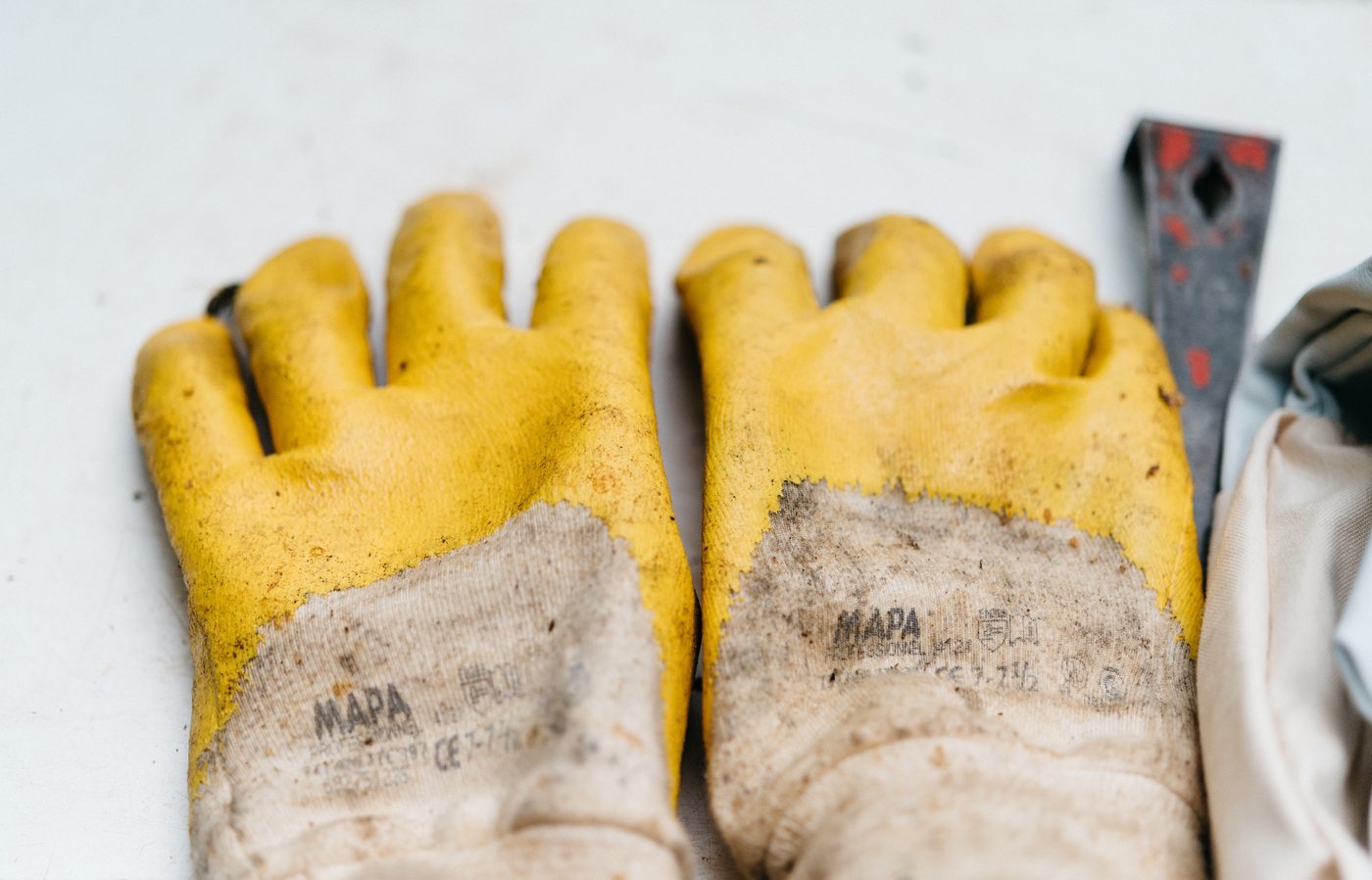
Pair of yellow work gloves used in carpentry (Source: Wikimedia Commons)
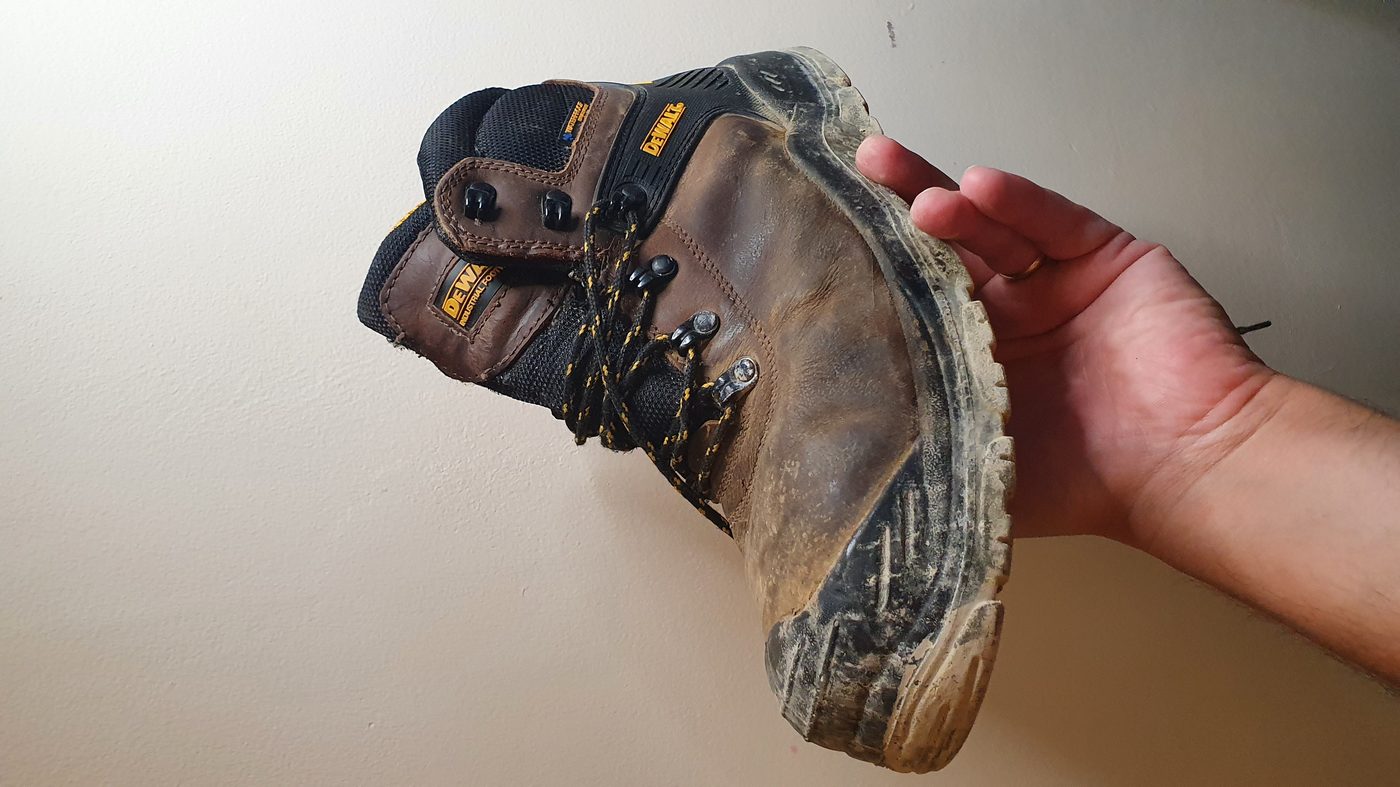
A single safety boot for industrial use (Source: Wikimedia Commons)
The effectiveness of PPE depends not only on its availability but also on its proper use. At a county government office managing drainage repairs, improper use of PPE can expose workers to unnecessary risks.
Maintaining PPE in good condition is vital to ensure ongoing protection. For instance, staff at a hotel responsible for drainage maintenance must follow strict PPE care routines to avoid equipment failure during use.
Kenya’s occupational health and safety laws mandate the use of PPE in hazardous work environments, including drainage system maintenance. Compliance with these regulations protects workers and institutions such as banks and SACCOs from legal liabilities and promotes workplace safety culture.
Explain five types of personal protective equipment used in drainage system maintenance and their specific protective functions. (10 marks)
Describe six steps that workers should follow to correctly wear personal protective equipment when testing drainage systems. (12 marks)
Discuss five key maintenance practices for reusable personal protective equipment used in drainage work. (10 marks)
Outline the main legal requirements under Kenyan law for the use of PPE in drainage system maintenance. (8 marks)
Create a free account to open more of this chapter.
Free: practical guides, quick cards, workplace scenarios and more.
Create a free accountThis chapter focuses on the essential procedures for testing and maintaining drainage systems to ensure their proper operation and longevity. It begins with the importance of using personal protective equipment to safeguard workers during inspection and maintenance activities. Various functionality tests are explored, including smoke, water, air, pressure, dye, mirror, and ball tests, each designed to identify specific faults within the drainage system. Common faults such as leakages and blockages are examined, highlighting their causes and the impact they have on system performance. The chapter also emphasizes the significance of good housekeeping practices, such as protecting the existing work environment, clearing the work area according to established procedures, and maintaining cleanliness throughout the maintenance process. These practices help prevent damage to the system and ensure a safe and efficient working environment. Overall, the chapter equips learners with the knowledge to effectively test, identify faults, and maintain drainage systems while prioritizing safety and site management.
Type: Individual
| Tools & Equipment | Materials |
|---|---|
| Smoke test machine | 4-inch waste pipe |
| Measuring tools | 4-inch Magic bend |
| Cutting tools | 4-inch U trap |
| Levelling equipment | 4-inch Tee joint |
| Plumb bob | 4-inch Wall clips |
| Hammer | 4-inch access cover |
| Silicon | |
| 3-inch Nails/ screws | |
| Timber 3x2 | |
| Timber 6x1 | |
| PPEs |
| S/N | Item | Quantity |
|---|---|---|
| 1 | Smoke test machine | 1 Pc per 2 Candidates |
| 2 | 4-inch waste pipe | 2.0 m per Candidate |
| 3 | 4-inch Magic bend | 1 Pc per Candidate |
| 4 | 4-inch U trap | 1 Pc per Candidate |
| 5 | 4-inch Tee joint | 1 Pc per Candidate |
| 6 | 4-inch Wall clips | 4 Pcs per Candidate |
| 7 | 4-inch access cover | 1 Pc per Candidate |
| 8 | Silicon | 350 ml per Candidate |
| 9 | 3-inch Nails/ screws | 1 kg per Candidate |
| 10 | Timber 3x2 | 10 meters per Candidate |
| 11 | Timber 6x1 | 12.5 feet per Candidate |
| 12 | PPEs (gloves, goggles, boots) | Full gear per Candidate |
| Items to be Evaluated | Marks Available | Marks Obtained | Comments |
|---|---|---|---|
| TASK 1: Conducting Smoke Test Procedure | |||
| Candidate wears full PPE before starting work (Award 2 marks for full PPE correctly worn, 0 if not) | 2 | ||
| Candidate verifies and sets up smoke test machine correctly (Award 3 marks for correct setup and machine operation) | 3 | ||
| Candidate seals all pipe openings properly to ensure airtight system (Award 4 marks for proper sealing of all openings) | 4 | ||
| Candidate introduces smoke into the drainage system safely and effectively (Award 4 marks for correct smoke introduction procedure) | 4 | ||
| Candidate observes and identifies any leaks or faults during the smoke test (Award 5 marks for accurate identification of leaks/faults) | 5 | ||
| Candidate records findings clearly and accurately (Award 2 marks for clear and accurate recording of results) | 2 | ||
| Candidate cleans up and restores work area after testing (Award 2 marks for proper cleanup and tool storage) | 2 | ||
| Sub-Total | 22 | ||
| PRODUCT CHECKLIST | |||
| Smoke test performed on 4-inch diameter pipe run 2000 mm long as per drawing (Award 5 marks if pipe run length and diameter match drawing) | 5 | ||
| No smoke leakage detected except at identified fault points (Award 6 marks for correct identification of leaks or confirmation of no leaks) | 6 | ||
| Pipe system airtightness ensured by proper sealing during test (Award 4 marks for airtight sealing effectiveness) | 4 | ||
| Findings documented legibly and comprehensively (Award 3 marks for complete and legible documentation) | 3 | ||
| Sub-Total | 18 | ||
| GRAND TOTAL | 40 | ||
Type: Individual
| Tools & Equipment | Materials |
|---|---|
| Measuring tape | 4-inch waste pipe |
| Plumb bob | 4-inch U trap |
| Level | 4-inch Magic bend |
| Bucket | 4-inch Wall clips |
| 4-inch Tee joint | |
| 4-inch access cover | |
| Silicon | |
| 3-inch Nails/ screws | |
| Timber 3x2 | |
| Timber 6x1 | |
| 90 degree elbow | |
| PPEs |
| S/N | Item | Quantity |
|---|---|---|
| 1 | 4-inch waste pipe | 2.0 m per Candidate |
| 2 | 4-inch U trap | 1 piece per Candidate |
| 3 | 4-inch Magic bend | 1 piece per Candidate |
| 4 | 4-inch Wall clips | 4 pieces per Candidate |
| 5 | 4-inch Tee joint | 1 piece per Candidate |
| 6 | 4-inch access cover | 1 piece per Candidate |
| 7 | Silicon | 350 ml per Candidate |
| 8 | 3-inch Nails/ screws | 1 kg per Candidate |
| 9 | Timber 3x2 | 10 meters per Candidate |
| 10 | Timber 6x1 | 12.5 feet per Candidate |
| 11 | 90 degree elbow | 1 piece per Candidate |
| 12 | PPEs | Full gear per Candidate |
| 13 | Water supply source | Adequate per Candidate |
| 14 | Measuring tape | 1 per Candidate |
| 15 | Plumb bob | 1 per Candidate |
| 16 | Level | 1 per Candidate |
| 17 | Bucket | 1 per Candidate |
| Items to be Evaluated | Marks Available | Marks Obtained | Comments |
|---|---|---|---|
| TASK 1: Perform Water Testing Procedure | |||
| Candidate wears full PPE before starting work (Award 2 marks for correct and full PPE use or zero) | 2 | ||
| Candidate sets up the pipe run and seals all joints properly (Award 1 mark per correctly sealed joint, total 5 marks) | 5 | ||
| Candidate fills the pipe with water using bucket without spillage (Award 3 marks for no spillage, 1-2 marks for minor spillage, zero otherwise) | 3 | ||
| Candidate observes and reports any leakages within 15 minutes (Award 5 marks for correctly identifying leaks or confirming no leaks) | 5 | ||
| Candidate checks water flow through the pipe and reports proper drainage (Award 5 marks for correct flow observation and reporting) | 5 | ||
| Candidate cleans the work area after testing (Award 2 marks for proper cleaning or zero) | 2 | ||
| Candidate uses measuring tape, plumb bob, and level to verify pipe alignment before testing (Award 3 marks for correct use or zero) | 3 | ||
| Candidate documents test results clearly (Award 3 marks for clear and accurate documentation) | 3 | ||
| Sub-Total | 28 | ||
| PRODUCT CHECKLIST | |||
| Pipe run length is 2000 mm ± 10 mm as per working drawing (Award 3 marks for correct length within tolerance or zero) | 3 | ||
| Pipe joints are watertight with no visible leakages (Award 5 marks for no leaks or zero) | 5 | ||
| Pipe slope and alignment is level or falls correctly as per drawing using level and plumb bob (Award 4 marks for correct slope/alignment or zero) | 4 | ||
| Water flows freely through the pipe during the test (Award 5 marks for free flow without blockages or zero) | 5 | ||
| Work area is clean and free of debris after test (Award 3 marks for clean area or zero) | 3 | ||
| Sub-Total | 20 | ||
| GRAND TOTAL | 48 | ||