Drainage system installation requires careful selection and costing of materials to ensure durability, efficiency, and compliance with industry standards. In Kenya, organizations ranging from county referral hospitals to agricultural cooperatives depend on reliable drainage infrastructure to manage water flow and prevent damage to facilities. Understanding the various materials and supplies used in drainage systems allows professionals to make informed decisions that balance cost, quality, and suitability for specific environments.
2.1 Materials and Supplies
Drainage materials encompass a range of components, each designed to perform particular functions within the system. From pipes to fittings and supports, these materials must be chosen based on the intended use, environmental conditions, and budget constraints. A clear grasp of these materials helps technicians and project managers at institutions like universities and retail businesses ensure installations meet operational demands while controlling expenses.
2.1.1 Pipe Fittings
Pipe fittings connect, redirect, or terminate pipe runs in drainage systems. They are essential for creating turns, branches, and secure joints that maintain system integrity. In Kenyan construction projects, such as those at county government offices, the choice of fittings impacts installation speed, leak prevention, and maintenance ease.
Types of Pipe Fittings
- Elbows: Change the direction of flow, typically at 45 or 90 degrees, enabling pipes to navigate around obstacles within buildings.
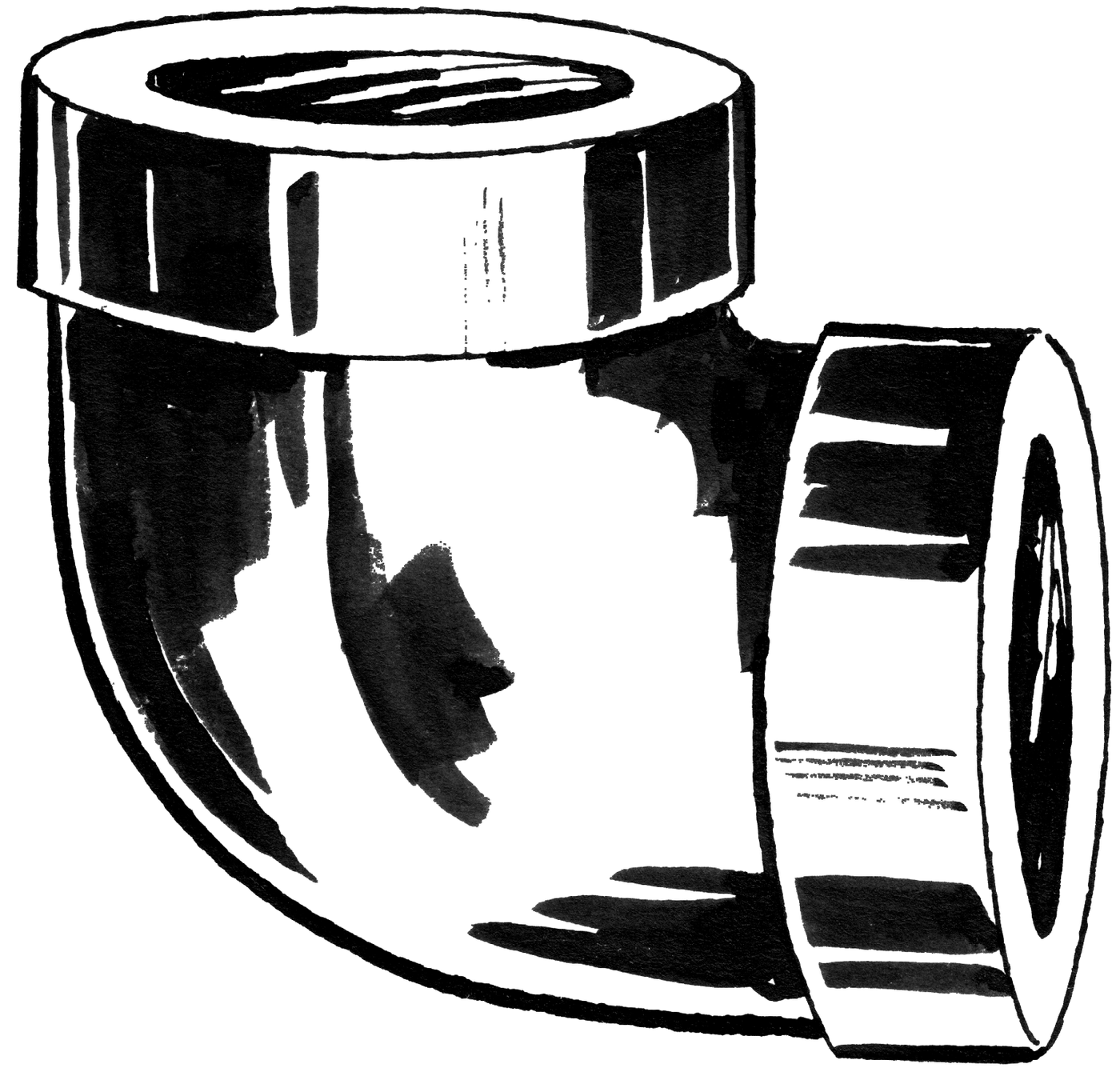
Plumbing elbow fitting illustration (Source: Wikimedia Commons)
- Tees: Allow branching of pipes to divert drainage to different outlets, useful in complex layouts like those in hotels.
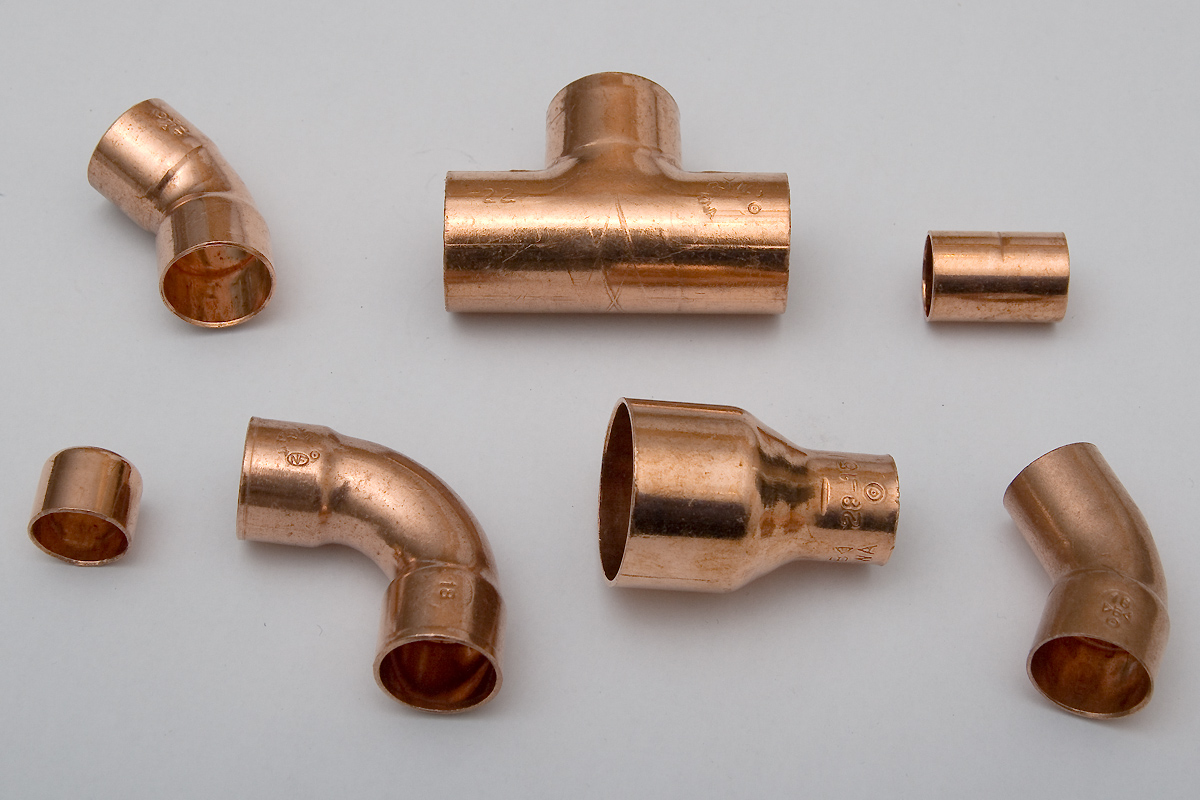
Copper plumbing tee fitting in center (Source: Wikimedia Commons)
- Reducers: Connect pipes of different diameters, maintaining flow efficiency when transitioning between pipe sizes.
-
Couplings: Join two straight pipes together, facilitating extension of pipelines without changing flow direction.
-
Caps and Plugs: Seal pipe ends temporarily or permanently, often used during maintenance or system modifications.
Materials for Pipe Fittings
- UPVC: Lightweight and corrosion-resistant, commonly used in institutional settings such as schools for ease of installation.
- Cast Iron: Durable and fire-resistant, preferred in commercial buildings requiring long-lasting solutions.
- Concrete: Suitable for large-scale outdoor drainage, as seen in agricultural cooperatives managing irrigation runoff.
-
Clay: Traditional material used in some rural setups, though less common due to fragility.
-
Rubber and Flexible Fittings: Provide vibration absorption and flexibility in dynamic environments like retail warehouses.
Cost Factors Affecting Pipe Fittings
- Material Quality: Higher-grade materials increase longevity but raise initial costs, important for budget planning in public hospitals.
- Size and Diameter: Larger fittings cost more due to increased material use and handling requirements.
- Manufacturing Standards: Certified fittings adhering to Kenya Bureau of Standards (KEBS) attract higher prices but assure performance.
- Availability: Locally sourced fittings reduce transportation costs, a consideration for county government projects in remote areas.
- Installation Complexity: Specialized fittings requiring expert handling may increase labor costs, impacting overall project budget.
Installation Considerations
Proper selection and installation of pipe fittings prevent leaks, blockages, and premature failures. For example, at a university campus, using appropriate couplings and elbows ensures that drainage systems adapt to building expansions without costly retrofits.
2.1.2 Caulking Materials
Caulking materials seal joints and gaps in drainage systems to prevent leakage and infiltration. Their role is vital in maintaining system integrity, especially in structures like banks where water damage can disrupt operations.
Types of Caulking Materials
- Bituminous Caulk: Flexible and waterproof, ideal for sealing joints in concrete pipes used in farm irrigation systems.
-
Silicone-Based Caulk: Resistant to weathering and chemicals, suitable for exposed drainage areas in retail businesses.
-
Acrylic Latex Caulk: Paintable and easy to apply, often used indoors in schools and hospitals.
- Polyurethane Caulk: Offers strong adhesion and durability, preferred in heavy-duty applications such as county government drainage.
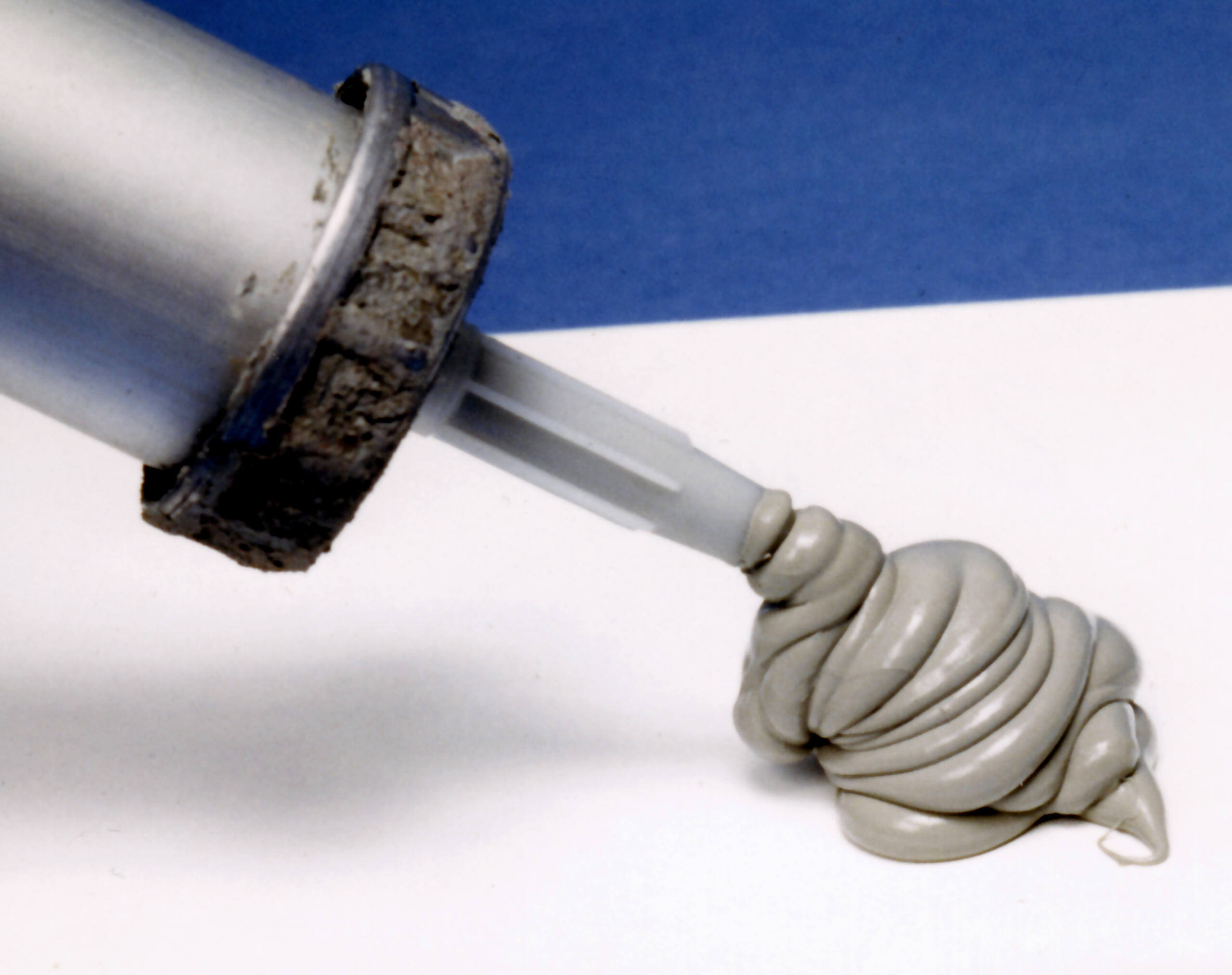
Polyurethane caulk being dispensed from a tube (Source: Wikipedia (Caulk))
- Butyl Rubber Caulk: Known for excellent waterproofing, used in sealing pipe penetrations in hotel drainage systems.
Properties and Performance
- Adhesion: Effective bonding to pipe materials prevents water seepage, critical in preserving structural foundations.
- Flexibility: Accommodates pipe movement and thermal expansion, reducing crack formation over time.
- Water Resistance: Ensures long-term protection against moisture ingress, essential in areas with heavy rainfall like Nairobi.
- Durability: Resists degradation from UV exposure and chemicals, extending maintenance intervals.
- Ease of Application: Materials that allow quick curing reduce downtime during installation in busy facilities such as county referral hospitals.
Cost Influences
- Material Composition: Advanced polymers cost more but provide superior performance, influencing choice in high-value properties.
- Quantity Required: Larger projects like university drainage networks require bulk purchases, possibly attracting volume discounts.
- Supplier Location: Proximity to suppliers affects delivery charges, impacting small-scale projects such as retail shops.
- Shelf Life: Longer-lasting caulks reduce waste and replacement costs, relevant for maintenance planning in agricultural cooperatives.
- Application Equipment: Specialized tools for applying some caulks may add to upfront expenses in certain counties.
Application Techniques
Proper surface preparation and application methods ensure caulking materials fulfill their sealing function. For instance, in a bank’s underground drainage, cleaning pipe surfaces before applying silicone caulk prevents premature failure due to poor adhesion.
2.1.3 Pipe Support
Pipe supports stabilize drainage pipes, preventing sagging and displacement that can cause leaks or blockages. Their importance is evident in multi-story buildings such as hotels, where vertical and horizontal pipe runs must be securely anchored.
Types of Pipe Supports
- Clamps and Saddles: Secure pipes to walls or ceilings, allowing for easy installation and adjustment in office buildings.
- Hangers: Suspend pipes from overhead structures, ideal for drainage lines in large retail outlets.
-
Brackets: Provide rigid support for heavy pipes, suitable for concrete or cast iron pipes in cooperative processing plants.
-
Rollers: Allow for pipe movement due to thermal expansion, used in industrial settings with temperature fluctuations.
-
Concrete Blocks: Support pipes laid underground in agricultural drainage systems, preventing soil pressure damage.
Material Considerations
-
Galvanized Steel: Resistant to rust and strong, commonly used in urban institutions like universities.
-
Plastic Supports: Lightweight and corrosion-free, preferred in hospitals for sanitary conditions.
- Stainless Steel: Offers superior durability but at higher cost, used in high-end commercial buildings.
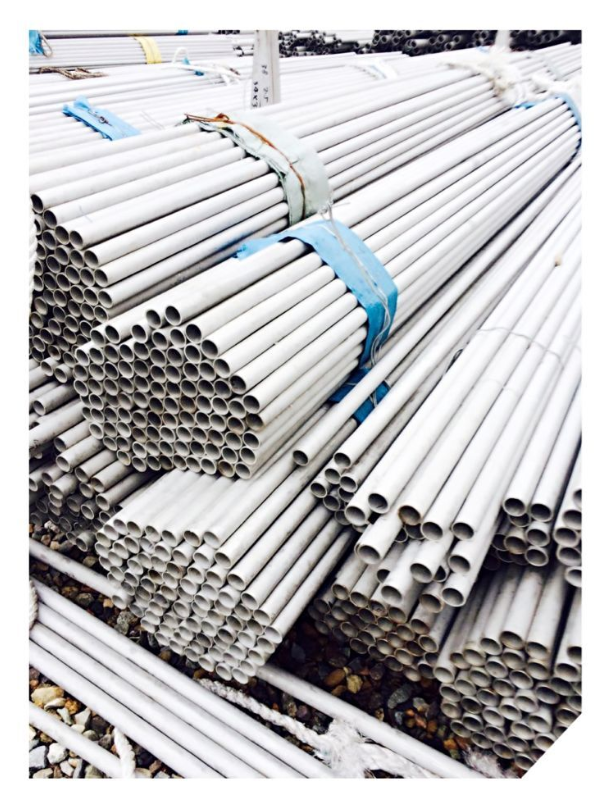
Bundles of stainless steel pipes for plumbing (Source: Wikimedia Commons)
- Rubber Padding: Protects pipes from abrasion and noise, important in office complexes.
- Wooden Cradles: Traditional method still found in rural farm installations, though less durable.
Cost Determinants
- Support Type: Complex supports like rollers cost more than simple clamps.
- Material Grade: Corrosion-resistant materials increase upfront expenses but lower maintenance.
- Load Capacity: Supports designed for heavier pipes require more material and stronger design.
- Quantity Needed: Larger projects with extensive pipe networks increase total support costs.
- Installation Labor: Specialized supports may require skilled labor, affecting overall project budget.
Installation Best Practices
Correct spacing and secure fixing of pipe supports prevent stress on joints and pipes. For example, at a county government office, following manufacturer recommendations for support intervals ensures system longevity.
2.1.4 Clay Pipes
Clay pipes are traditional drainage materials valued for their chemical resistance and longevity. They remain in use for specific applications in Kenya, particularly in rural and agricultural settings.
Characteristics of Clay Pipes
- Durability: Resistant to chemical corrosion and abrasion, suitable for wastewater drainage in farms.
- Non-Permeability: Prevents water infiltration, maintaining clean flow channels.
- Weight: Heavier than plastic pipes, requiring careful handling and support.
- Brittleness: Susceptible to cracking under impact or ground movement, necessitating cautious installation.
- Environmental Compatibility: Made from natural materials, environmentally friendly and sustainable.
Applications
- Agricultural Drainage: Used in irrigation runoff systems at tea plantations to manage water efficiently.
- Sewer Systems: Employed in older urban areas with existing clay infrastructure, such as parts of Nairobi.
- Stormwater Drainage: Effective in rural settings where chemical resistance is required.
- Culvert Construction: Used to channel water under roads in county government projects.
- Drainage in Historic Buildings: Preferred where preservation of traditional materials is desired.
Cost Considerations
- Manufacturing Process: Fired clay pipes are more expensive due to kiln processing.
- Transport and Handling: Heavier weight increases transport costs, significant for remote farms.
- Installation Complexity: Requires skilled labor to avoid breakage, impacting labor costs.
- Longevity: Longer service life can justify higher initial investment in public health facilities.
- Availability: Limited local production may increase prices compared to imported plastic alternatives.
2.1.5 UPVC Pipes
Unplasticized polyvinyl chloride (UPVC) pipes are widely used in drainage for their affordability and resistance to corrosion. Their versatility makes them popular in diverse sectors such as schools and retail businesses.
Properties of UPVC Pipes
- Lightweight: Facilitates easy handling and faster installation.
- Corrosion Resistance: Impervious to most chemicals and environmental effects, reducing maintenance.
- Smooth Internal Surface: Minimizes friction, improving flow rates and preventing blockages.
- Durability: Resistant to impact and weathering, suitable for both indoor and outdoor use.
- Cost-Effectiveness: Lower material and installation costs compared to metal pipes.
Applications
- Building Drainage: Used extensively in schools for sanitary plumbing and stormwater drainage.
- Industrial Waste: Suitable for chemical waste drainage in manufacturing units.
- Agricultural Irrigation: Employed in drip and surface irrigation systems at farm cooperatives.
- Municipal Drainage: Adopted in urban drainage projects managed by county governments.
- Replacement Works: Preferred in refurbishment of old drainage systems due to ease of connection.
Cost Factors
- Pipe Diameter: Larger diameters increase material costs exponentially.
- Wall Thickness: Thicker pipes offer higher pressure resistance but cost more.
- Length and Quantity: Bulk purchase reduces unit cost, relevant for large hospital projects.
- Fittings and Accessories: UPVC compatible fittings add to total expenditure.
- Installation Expertise: Requires solvent welding skills, influencing labor charges.
2.1.6 Cast Iron Pipes
Cast iron pipes are known for strength and fire resistance, making them suited for high-demand drainage applications. Although heavier and costlier, they are favored in commercial buildings such as banks for their robustness.
Features of Cast Iron Pipes
- Strength: High compressive strength supports heavy loads, important in multi-storey buildings.
- Fire Resistance: Does not burn or melt, enhancing safety in critical infrastructure.
- Noise Reduction: Dense material reduces noise from flowing water, improving occupant comfort.
- Longevity: Can last over 50 years with proper maintenance.
- Corrosion Resistance: With appropriate coatings, resists rust in aggressive environments.
Typical Uses
- Stormwater and Sanitary Drains: Common in banks and government offices requiring reliable drainage.
- Underground Drainage: Suitable where soil pressure is high, such as in urban retail centers.
- Industrial Facilities: Used in factories for heavy-duty waste drainage.
- Refurbishment Projects: Employed to replace deteriorated pipes in historical university buildings.
- Fire Protection Systems: Integrated into drainage systems near fire suppression equipment.
Cost Influences
- Material Cost: Cast iron is more expensive than plastic alternatives.
- Weight and Handling: Heavy pipes require specialized equipment, increasing installation costs.
- Coating and Maintenance: Protective linings add to initial cost but extend service life.
- Transport: Due to weight, transportation costs are higher especially for remote sites.
- Labor: Skilled installation is necessary to handle pipe joining and alignment.
2.1.7 Concrete Pipes
Concrete pipes are commonly used for large diameter drainage in outdoor and heavy-duty applications. Their robustness and longevity make them suitable for county government stormwater projects and agricultural drainage systems.
Characteristics of Concrete Pipes
- Strength: Able to withstand heavy soil loads and traffic pressure.
- Durability: Resistant to mechanical damage and chemical attack.
- Size Range: Available in large diameters, facilitating high volume water conveyance.
- Weight: Extremely heavy, requiring machinery for handling and installation.
- Permeability: Generally non-permeable, but joints require sealing to prevent leakage.
Common Applications
- Stormwater Drainage: Used in highway culverts and urban runoff management.
- Agricultural Drainage: Employed in irrigation and drainage channels in large farms.
- Sewage Systems: Suitable for gravity flow sewage lines in county referral hospitals.
- Flood Control: Incorporated into flood mitigation infrastructure in flood-prone counties.
- Industrial Complexes: Used to manage wastewater discharge in industrial parks.
Cost Components
- Material and Production: Concrete pipes involve high raw material and casting costs.
- Transportation: Bulky and heavy, resulting in significant transport expenses.
- Installation: Requires heavy machinery and skilled operators, increasing labor costs.
- Sealing and Jointing: Additional materials and labor for joint sealing add to expenses.
- Maintenance: Low maintenance costs due to durability reduce long-term expenditure.
Practice Questions
- Explain five factors that influence the cost of pipe fittings in drainage systems. (10 marks)
- Describe the advantages of using UPVC pipes over clay pipes in modern drainage installations. (10 marks)
- List and explain six types of pipe supports used in drainage systems and their applications. (12 marks)
- Discuss the characteristics of cast iron pipes that justify their use in commercial buildings despite higher costs. (10 marks)
- Outline the typical applications of concrete pipes in Kenyan drainage projects and the cost considerations involved. (10 marks)
The rest of this chapter
🔒Create a free account to open more of this chapter.
Free: practical guides, quick cards, workplace scenarios and more.
Create a free account 🔒2.2 Materials Schedule
In drainage system installation projects across Kenya, preparing a comprehensive materials schedule is a vital step for effective resource management and cost control. This schedule acts as a detailed inventory list that outlines all the materials required for…
🔒2.3 Materials Quantification
Accurate materials quantification is fundamental to the success of drainage installation projects, ensuring that the right amount of materials is procured and utilized. This process minimizes waste, controls costs, and supports efficient project delivery in di…
🔒2.4 Materials and supplies cost estimation
Cost estimation for materials and supplies is a critical phase in drainage system installation projects. Accurate estimation helps organizations control budgets, avoid project delays, and allocate resources effectively. In the context of Kenyan institutions su…
Chapter Summary
This chapter examined the various materials and supplies essential for drainage system installation, starting with pipe fittings, caulking materials, and pipe supports that ensure secure and leak-free connections. It then covered different types of pipes including clay, UPVC, cast iron, and concrete, each with distinct properties suited to specific drainage needs. The chapter also detailed how to prepare a materials schedule that organizes all required components systematically. Further, it explained the process of materials quantification, which involves accurately measuring the quantities needed to avoid shortages or excess. Finally, the chapter addressed how to estimate the costs of materials and supplies, providing a foundation for budgeting and financial planning in drainage projects. Together, these topics equip students with the knowledge to manage materials efficiently and cost-effectively in drainage system installation.
Self-Assessment
🔒 PDFDownload this self-assessment, with answers
A. Written Assessment
- Which type of pipe fitting is best suited for making a 90-degree turn in a drainage system? (2 marks)
- Explain the primary purpose of caulking materials in drainage installations. (3 marks)
🔒20 more in this section.
Chapter Examination Questions
🔒 PDFDownload these examination questions, with worked answers
SECTION A (40 Marks) - Answer ALL Questions
- Identify five common types of pipe fittings used in drainage systems and explain one practical use of each in a hospital drainage installation. (4 marks)
- Describe the role of caulking materials in ensuring the integrity of drainage joints at a county government office. (4 marks)
🔒18 more in this section.
Chapter Practical Activities
Practical 1: Identify and select drainage materials and supplies for a 4-inch drainage pipe installation
Plumbing · Level 5
Drainage System Installation II
PRACTICAL ASSESSMENT
TIME: 4 HOURS
⬇ PDFCandidate Instructions (Candidate Tool)
Type: Individual
INSTRUCTIONS TO CANDIDATE:
1. You are required to perform the following task:
i. Identify, select, and categorize all drainage materials and supplies required for a 4-inch drainage pipe installation.
2. You have been provided with the following resources for the practical task:
| Tools & Equipment | Materials |
|---|
| Measuring tools | Timber |
| Cutting tools | Coupling water closet |
| Plumb bob | Waste pipe |
| Hammer | Magic bend |
| Levelling equipment | U trap |
| Wall clips |
| Nails/screws |
| Silicon |
⬇ PDFResources Required (Cutting List)
| S/N | Item | Quantity |
|---|
| 1 | 4-inch waste pipe | 2.0 meters per Candidate |
| 2 | 4-inch U trap | 1 piece per Candidate |
| 3 | 4-inch Magic bend | 1 piece per Candidate |
| 4 | 4-inch Wall clips | 4 pieces per Candidate |
| 5 | 4-inch Tee joint | 1 piece per Candidate |
| 6 | 90 degree elbow | 1 piece per Candidate |
| 7 | Coupling water closet | 1 piece per Candidate |
| 8 | Silicon | 350 ml per Candidate |
| 9 | 3-inch Nails/screws | 1 kg per Candidate |
| 10 | Timber 3x2 | 10 meters per Candidate |
| 11 | Timber 6x1 | 12.5 feet per Candidate |
| 12 | PPEs | Full gear per Candidate |
⬇ PDFAssessor Guide
| Items to be Evaluated | Marks Available | Marks Obtained | Comments |
|---|
| TASK 1: Identification and Selection of Drainage Materials |
Candidate wears full PPE before starting the task
(Award 2 marks if full PPE worn, zero if not) | 2 | | |
Candidate correctly identifies 4-inch waste pipe from stock
(Award 3 marks for correct identification, zero if incorrect) | 3 | | |
Candidate selects correct quantity of 4-inch waste pipe (2.0 meters)
(Award 3 marks for correct length selection, zero if incorrect) | 3 | | |
Candidate identifies and selects 4-inch U trap and Magic bend
(Award 4 marks if both items correctly identified and selected, zero if missing one or both) | 4 | | |
Candidate selects 4 pieces of 4-inch Wall clips
(Award 2 marks for correct quantity, zero if incorrect) | 2 | | |
Candidate identifies coupling water closet and 4-inch Tee joint
(Award 3 marks for correct identification of both, zero if one or both missing) | 3 | | |
Candidate identifies and selects 90 degree elbow
(Award 2 marks for correct selection, zero if incorrect) | 2 | | |
Candidate selects silicon and nails/screws in correct quantities
(Award 3 marks for correct quantities, zero if incorrect) | 3 | | |
Candidate identifies timber 3x2 and 6x1 in correct quantities
(Award 3 marks for correct timber selection and quantities, zero if incorrect) | 3 | | |
Candidate categorizes materials and tools correctly into supplies and equipment
(Award 3 marks for correct categorization, zero if incorrect) | 3 | | |
| Sub-Total | 28 | | |
| PRODUCT CHECKLIST |
All drainage materials and supplies identified match the 4-inch drainage pipe installation requirements
(Award 6 marks if all items correspond exactly to the cutting list and drawing, zero if any item missing or incorrect) | 6 | | |
Materials quantities correspond exactly to per-candidate cutting list
(Award 6 marks if quantities match cutting list, zero if any discrepancy) | 6 | | |
Materials and tools are neatly arranged and labeled according to type
(Award 4 marks for neatness and correct labeling, zero if messy or mislabeled) | 4 | | |
| Sub-Total | 16 | | |
| GRAND TOTAL | 44 | | |
ASSESSMENT OUTCOME: ☐ Competent ☐ Not Yet Competent (competent if at least 50%)
Practical 2: Assemble and fit 4-inch drainage pipe fittings as per working drawing
Plumbing · Level 5
Drainage System Installation II
PRACTICAL ASSESSMENT
TIME: 4 HOURS
⬇ PDFCandidate Instructions (Candidate Tool)
Type: Individual
INSTRUCTIONS TO CANDIDATE:
1. You are required to perform the following task:
i. Assemble and fit 4-inch diameter drainage pipe fittings including U trap, Magic bend, 90 degree elbow, and Tee joint.
2. You have been provided with the following resources for the practical task:
| Tools & Equipment | Materials |
|---|
| Measuring tools | 4-inch waste pipe |
| Cutting tools | 4-inch U trap |
| Levelling equipment | 4-inch Magic bend |
| Plumb bob | 90 degree elbow |
| Hammer | 4-inch Tee joint |
| 4-inch Wall clips |
| Silicon |
| 3-inch Nails/ screws |
| Timber 3x2 |
| Timber 6x1 |
| PPEs |
⬇ PDFResources Required (Cutting List)
| S/N | Item | Quantity |
|---|
| 1 | 4-inch waste pipe | 2.0 meters per Candidate |
| 2 | 4-inch U trap | 1 piece per Candidate |
| 3 | 4-inch Magic bend | 1 piece per Candidate |
| 4 | 90 degree elbow | 1 piece per Candidate |
| 5 | 4-inch Tee joint | 1 piece per Candidate |
| 6 | 4-inch Wall clips | 4 pieces per Candidate |
| 7 | Silicon | 350 ml per Candidate |
| 8 | 3-inch Nails/ screws | 1 kg per Candidate |
| 9 | Timber 3x2 | 10 meters per Candidate |
| 10 | Timber 6x1 | 12.5 feet per Candidate |
| 11 | PPEs | Full gear per Candidate |
⬇ PDFAssessor Guide
| Items to be Evaluated | Marks Available | Marks Obtained | Comments |
|---|
| TASK 1: Assemble and fit pipe fittings |
Candidate wears full PPE before starting work
(Award 2 marks for full PPE worn, zero if not) | 2 | | |
Candidate selects correct pipe fittings and materials as per cutting list
(Award 3 marks for correct selection of fittings and materials) | 3 | | |
Candidate measures and marks pipe lengths accurately before cutting
(Award 4 marks for accurate measurements and markings) | 4 | | |
Candidate cuts pipes cleanly and squarely using appropriate cutting tools
(Award 4 marks for clean, square cuts without damage) | 4 | | |
Candidate applies silicon or jointing compound correctly to pipe ends and fittings
(Award 3 marks for correct application of silicon) | 3 | | |
Candidate assembles pipe fittings in correct sequence and orientation as per drawing
(Award 5 marks for correct assembly sequence and orientation) | 5 | | |
Candidate fixes pipe assembly securely using wall clips and nails/screws
(Award 3 marks for secure fixing of pipe assembly) | 3 | | |
Candidate ensures pipe fittings are aligned, level, and plumb using levelling equipment and plumb bob
(Award 6 marks for correct alignment, level and plumb) | 6 | | |
Candidate cleans work area and disposes of waste materials properly
(Award 2 marks for cleaning and proper waste disposal) | 2 | | |
| Sub-Total | 32 | | |
| PRODUCT CHECKLIST |
Assembled pipe fittings conform to working drawing dimensions: 4-inch diameter pipes and fittings correctly joined
(Award 5 marks if all pipe diameters and fittings match drawing dimensions) | 5 | | |
Pipe fittings are aligned without visible gaps or misfits
(Award 4 marks for uniform joints and no visible gaps) | 4 | | |
Pipe assembly is plumb and level within ±3 mm tolerance
(Award 4 marks for plumb and level within tolerance) | 4 | | |
Pipe fittings are securely fixed and do not move when tested
(Award 3 marks for secure fixing and stability) | 3 | | |
Overall neatness and workmanship of pipe fitting assembly
(Award 2 marks for neat and professional finish) | 2 | | |
| Sub-Total | 18 | | |
| GRAND TOTAL | 50 | | |
ASSESSMENT OUTCOME: ☐ Competent ☐ Not Yet Competent (competent if at least 50%)
🔒Apply caulking materials to seal 4-inch pipe jointsPractical 3
🔒Install pipe supports for 4-inch drainage pipes at specified intervalsPractical 4
🔒Handle and prepare 150mm clay pipes for installationPractical 5
🔒Cut and join 4-inch UPVC drainage pipes as per layoutPractical 6
🔒Assemble 150mm diameter cast iron pipe system with lead caulkingPractical 7
🔒Prepare and install a 600mm diameter concrete drainage pipe run 3 meters longPractical 8
🔒Prepare detailed materials schedule for a 4-inch drainage pipe run 5m longPractical 9
🔒Quantify drainage materials for a 4-inch pipe drainage systemPractical 10
🔒Estimate cost of drainage materials for a 4-inch waste pipe installationPractical 11
