
By the end of this chapter, you will be able to:
These skills will help you install water storage tanks efficiently and safely, making sure the water supply system works perfectly for your community.
Compiled by: Joseph Njoroge
Installing a water storage tank is a critical step in ensuring reliable water supply for various institutions and businesses across Kenya. Proper installation not only guarantees the integrity and longevity of the tank but also safeguards the health and safety of workers involved. This chapter addresses essential considerations for installing water storage tanks, focusing on the use of personal protective equipment (PPE) during installation and the strategic selection of the tank’s location. These aspects are vital for professionals in diverse sectors such as healthcare, education, hospitality, and agriculture, where water storage underpins daily operations and service delivery.
Proper use of personal protective equipment (PPE) during water storage tank installation is mandatory to minimize risks associated with physical injuries, exposure to hazardous materials, and environmental hazards. In Kenyan workplaces such as county hospitals and retail businesses, adherence to PPE protocols aligns with occupational safety standards enforced by the Directorate of Occupational Safety and Health Services (DOSHS). This ensures not only worker safety but also compliance with legal requirements.
The installation process exposes workers to various hazards, requiring specific PPE types tailored to different risks. Common PPE includes helmets, gloves, and safety boots, each serving a unique protective function.
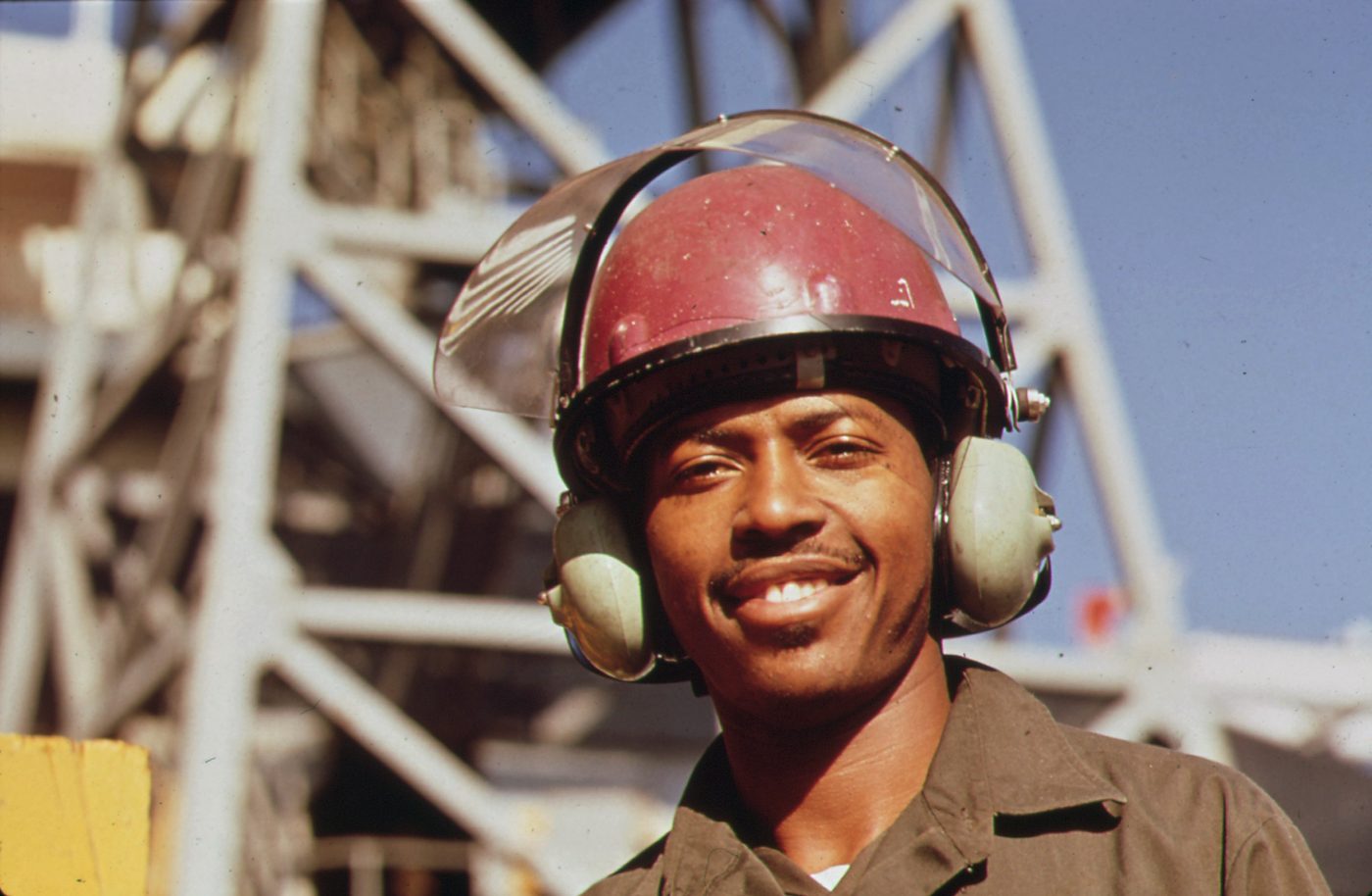
Man wearing a safety helmet (Source: Wikimedia Commons)
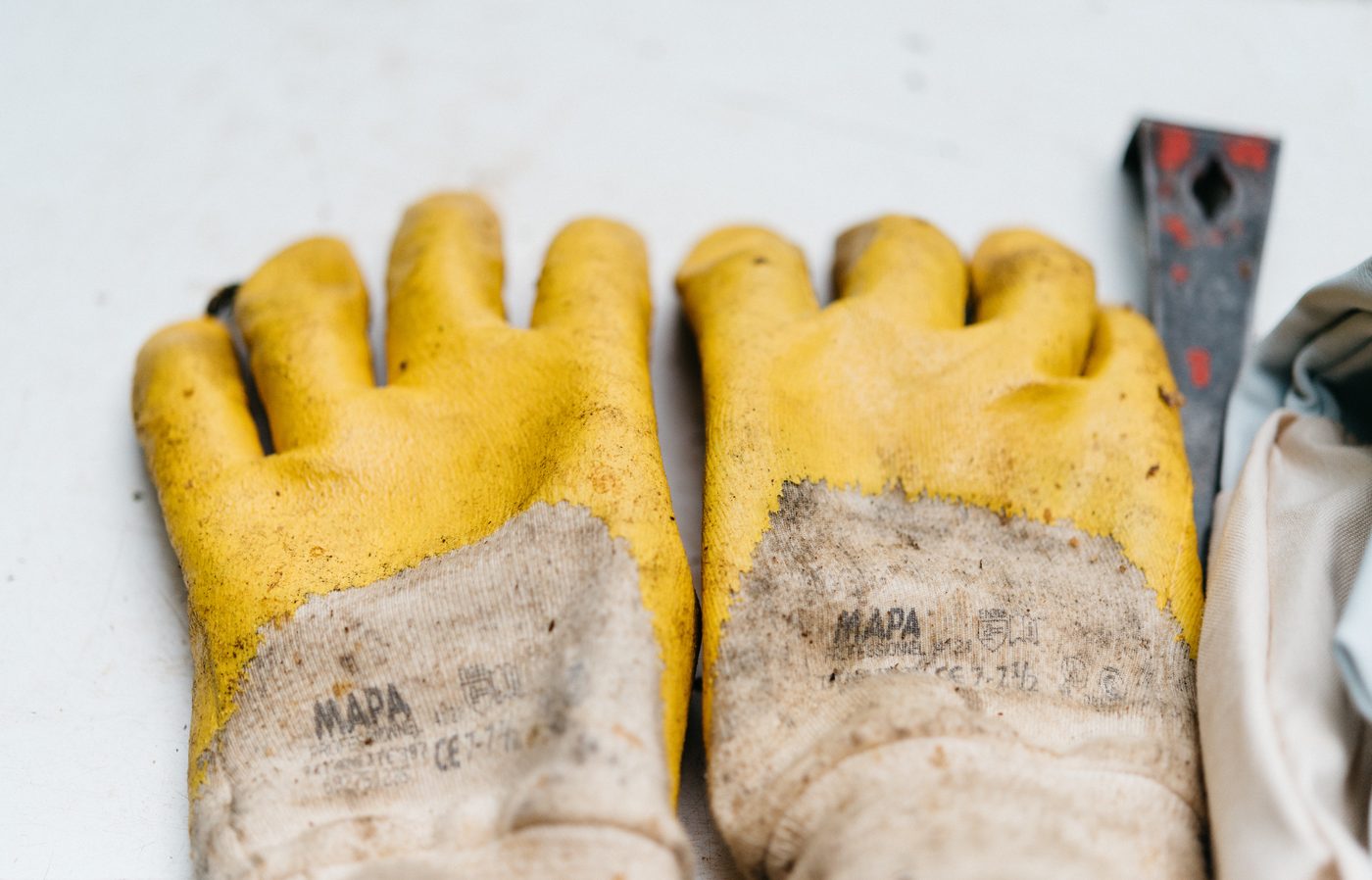
Pair of yellow work gloves used in carpentry (Source: Wikimedia Commons)
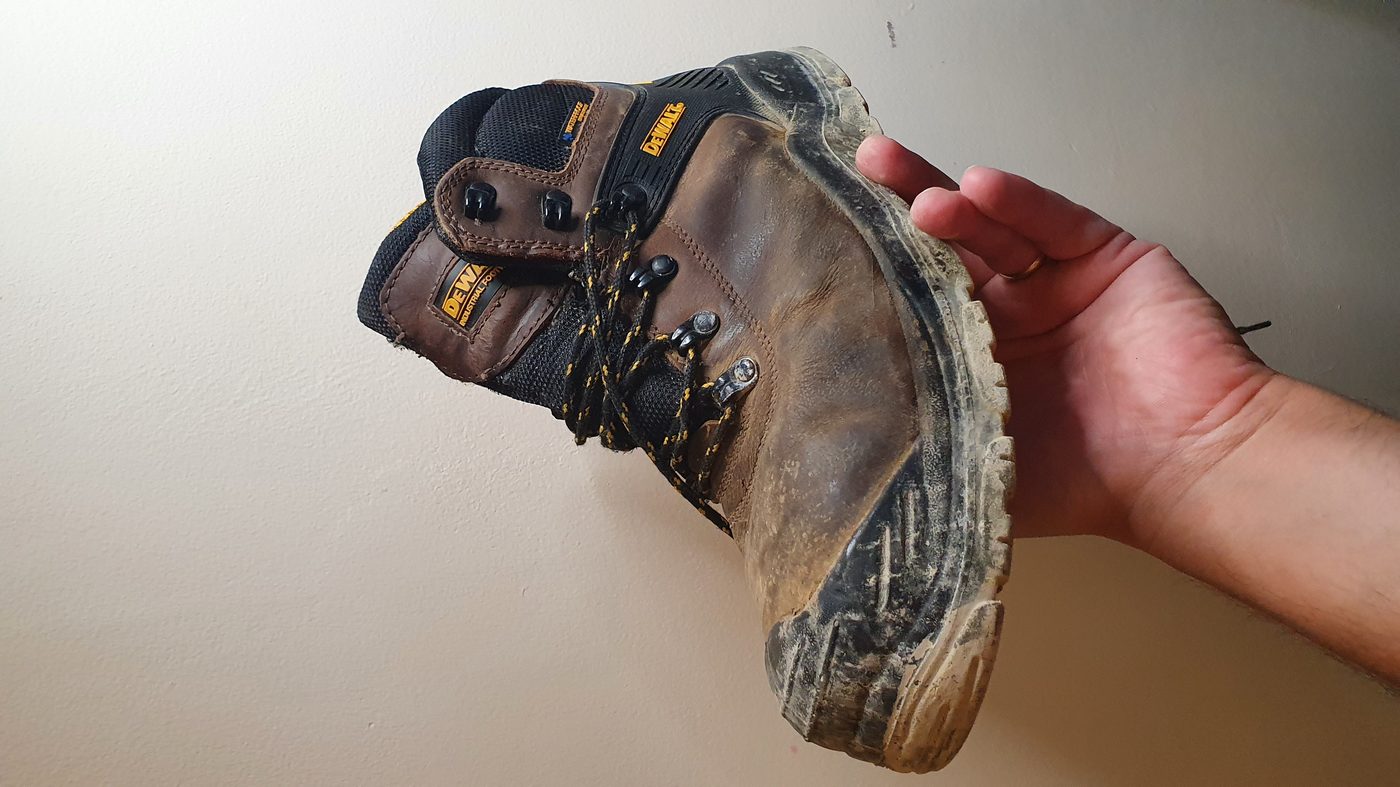
A single safety boot for industrial use (Source: Wikimedia Commons)
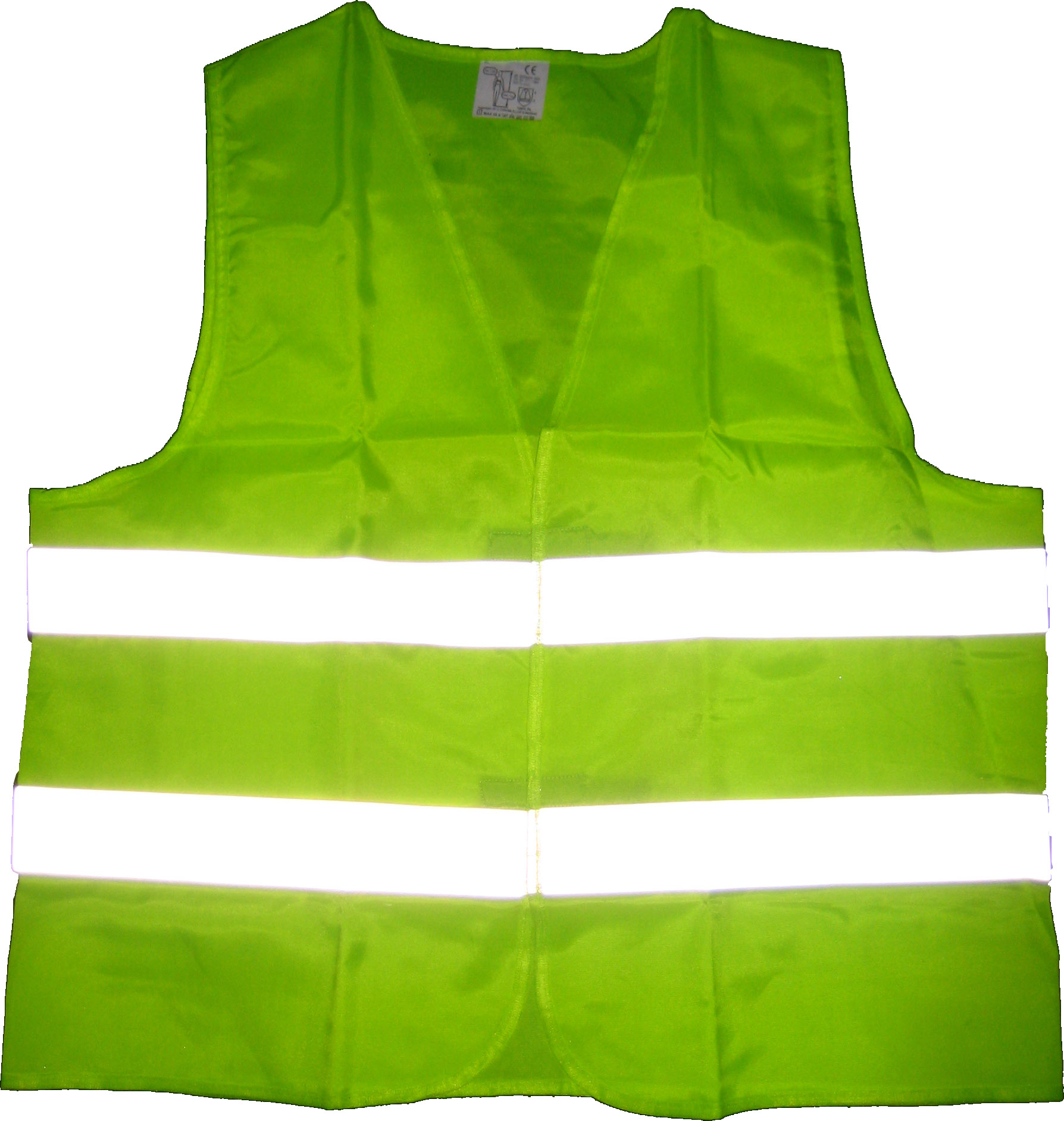
High-visibility safety vest (Source: Wikipedia (High-visibility clothing))
Proper usage and upkeep of PPE are as important as possessing the equipment itself. Misuse or poor maintenance can compromise protection and increase accident risk.
Kenya’s occupational health and safety framework mandates PPE use to reduce workplace hazards. Compliance with these standards safeguards workers and institutions from legal liabilities.
Despite regulations, PPE compliance faces challenges that can undermine safety during water tank installation. Understanding these barriers allows institutions to implement effective solutions.
Create a free account to open more of this chapter.
Free: practical guides, quick cards, workplace scenarios and more.
Create a free accountThis chapter covered essential aspects of installing a water storage tank, starting with the importance of personal protective equipment to ensure safety during installation. It discussed the criteria for selecting an appropriate storage tank location, emphasizing accessibility and stability. The chapter detailed the various tank connection positions, including the inlet, outlet, overflow, and washout points, explaining their functions in maintaining system efficiency. Pipe handling techniques such as cutting, bending, and jointing were explained to prepare the piping system for installation. The installation of control valves and pipe fittings was also covered, highlighting their role in regulating water flow and preventing leaks. Different types of water storage tanks were examined, including plastic, steel, concrete, masonry, and fiberglass, each with unique characteristics and suitability. Finally, the chapter emphasized good housekeeping practices to maintain a clean and safe working environment throughout the installation process.
Type: Individual
| Tools & Equipment | Materials |
|---|---|
| Tape measure | Sand |
| Spirit level | Clear plastic sheet |
| Masonry hammer | PPEs (Helmet, Gloves, Safety boots, Dust coat) |
| Shovel | |
| Broom | |
| Marking paint or chalk |
| S/N | Item | Quantity |
|---|---|---|
| 1 | Tape measure | 1 Pc per Candidate |
| 2 | Spirit level | 1 Pc per Candidate |
| 3 | Masonry hammer | 1 Pc per Candidate |
| 4 | Shovel | 1 Pc per Candidate |
| 5 | Broom | 1 Pc per Candidate |
| 6 | Marking paint or chalk | 1 Pc per Candidate |
| 7 | Sand | Sufficient per Candidate |
| 8 | Clear plastic sheet | 2.5m x 2.5m per Candidate |
| 9 | PPEs (Helmet, Gloves, Safety boots, Dust coat) | Full gear per Candidate |
| Items to be Evaluated | Marks Available | Marks Obtained | Comments |
|---|---|---|---|
| TASK 1: Select and prepare tank location | |||
| Wore appropriate PPEs as per safety regulations (Helmet, Gloves, Safety boots, Dust coat) (Award 1 mark for each two PPE items worn or zero) | 2 | ||
| Used tools and equipment correctly for site selection and preparation (Award 2 marks for each two tools used correctly or zero) | 4 | ||
| Identified and marked a suitable site of 2000mm x 1500mm for water tank installation (Award 1 mark for each correct measurement or zero) | 5 | ||
| Cleared and leveled the site ensuring it is free from debris and hazards (Award marks for thorough clearing and leveling as per SOPs) | 6 | ||
| Prepared the base using sand and compacted it uniformly (Award marks for evenly spread and compacted sand base) | 5 | ||
| Placed clear plastic sheet correctly to act as a moisture barrier (Award marks for correct placement and coverage) | 3 | ||
| Maintained cleanliness and tidiness of the workspace throughout the task (Award marks for proper housekeeping and waste disposal) | 3 | ||
| Stored tools and equipment safely after task completion (Award 2 marks for proper storage or zero) | 2 | ||
| Sub-Total | 30 | ||
| PRODUCT CHECKLIST | |||
| Site marked accurately to 2000mm length and 1500mm width (Award 2 marks for each dimension correct or zero) | 4 | ||
| Site is leveled within ±5mm tolerance using spirit level (Award 4 marks for correct leveling or zero) | 4 | ||
| Sand base evenly spread and compacted to uniform thickness of 50mm (Award 4 marks for even thickness and compaction or zero) | 4 | ||
| Clear plastic sheet covers entire base area without folds or tears (Award marks for complete coverage and neat placement) | 3 | ||
| Work area is clean with no debris or hazards remaining (Award marks for cleanliness and safety) | 3 | ||
| Tools and materials stored properly as per manufacturer’s instructions (Award 2 marks for proper storage or zero) | 2 | ||
| Sub-Total | 20 | ||
| GRAND TOTAL | 50 | ||
Type: Individual
| Tools & Equipment | Materials |
|---|---|
| Tape measure | 20mm Ø GI class B pipe |
| Pipe cutter | 20mm Ø PVC class B pipe |
| Hacksaw | 20mm Ø PVC adaptor |
| Bench vice | 20mm Ø GI elbow |
| Scriber | 20mm Ø GI union |
| Pipe wrench | 20mm x 20mm x 20mm GI Tee |
| Files | 20mm Ø Gate valve |
| Thread seal tape | |
| Sand | |
| PPEs |
| S/N | Item | Quantity |
|---|---|---|
| 1 | 20mm Ø GI class B pipe | 6.0 m per Candidate |
| 2 | 20mm Ø PVC class B pipe | 1.8 m per Candidate |
| 3 | 20mm Ø PVC adaptor | 2 Pcs per Candidate |
| 4 | 20mm Ø GI elbow | 2 Pcs per Candidate |
| 5 | 20mm Ø GI union | 1 Pc per Candidate |
| 6 | 20mm x 20mm x 20mm GI Tee | 3 Pcs per Candidate |
| 7 | 20mm Ø Gate valve | 1 Pc per Candidate |
| 8 | Thread seal tape | Sufficient per Candidate |
| 9 | Sand | Sufficient per Candidate |
| 10 | PPEs (Safety boots, Gloves, Dust coat) | Full gear per Candidate |
| Items to be Evaluated | Marks Available | Marks Obtained | Comments |
|---|---|---|---|
| TASK 1: Marking and Cutting Pipes | |||
| Wore personal protective equipment as per OSHA regulations (Safety boots, Gloves, Dust coat) (Award 1 mark for each PPE worn or zero) | 3 | ||
| Assembled all required tools and equipment for marking and cutting pipes (Award 1 mark for each tool correctly assembled: Tape measure, Pipe cutter, Hacksaw) | 3 | ||
| Assembled all required materials for pipe connections (Award 1 mark for each material correctly assembled: GI pipe, PVC pipe, PVC adaptor, GI elbow, GI union, GI Tee) | 6 | ||
| Measured pipe lengths accurately according to working drawing (Award 1 mark for each correctly measured pipe length or zero) | 5 | ||
| Marked pipes clearly and precisely with scriber (Award 4 marks for clear and precise marking or zero) | 4 | ||
| Cut pipes neatly and accurately using pipe cutter or hacksaw (Award 6 marks for smooth and accurate cuts or zero) | 6 | ||
| Smoothened cut edges with files to remove burrs (Award 4 marks for properly smoothened edges or zero) | 4 | ||
| Handled tools and equipment safely and arranged workspace properly (Award 5 marks for safe handling and proper arrangement or zero) | 5 | ||
| Sub-Total | 36 | ||
| PRODUCT CHECKLIST | |||
| Pipe lengths cut match working drawing dimensions (e.g. inlet 750mm, outlet 560mm, overflow 400mm, washout 300mm) (Award 1 mark for each correctly cut pipe length or zero) | 5 | ||
| Edges of pipes are smooth with no burrs (Award 4 marks for smooth edges or zero) | 4 | ||
| Pipe cuts are straight and clean without deformation (Award 4 marks for clean cuts or zero) | 4 | ||
| Markings are clearly visible and correspond to cut locations (Award 3 marks for clear and correct markings or zero) | 3 | ||
| Pipes laid flat and arranged as per the drawing (Award 4 marks for correct layout or zero) | 4 | ||
| Completed all pipe cutting and marking tasks as per the working drawing (Award 4 marks for 100% completion, 2 marks for 50% completion) | 4 | ||
| Sub-Total | 24 | ||
| GRAND TOTAL | 60 | ||
At the start of this chapter we promised you would be able to:
Tick each one you can genuinely do.
So, are you there yet?
You're competent when you can confidently do 50% or more of what this chapter promised.
Sign in to record how you're doing.