
By the end of this chapter, you will be able to:
These skills will help you keep electrical instruments working reliably and safely, which is essential for success in the electrical instrumentation trade.
Maintenance of electrical instruments is a critical skill for technicians across all professional sectors in Kenya. Whether in county referral hospitals, universities, banks, or agricultural cooperatives, reliable electrical instrumentation ensures smooth operations and safety. This chapter focuses on systematic approaches to troubleshooting, routine maintenance actions, and the precise calibration and configuration of instruments to maintain accuracy and longevity.
Troubleshooting electrical instruments involves systematic diagnosis to identify faults and restore proper function. In Kenyan workplaces such as county government offices and retail businesses, timely troubleshooting reduces downtime and prevents costly disruptions. Effective troubleshooting requires understanding common faults, using appropriate diagnostic tools, and applying logical procedures to isolate and fix problems.
Electrical instruments can experience various faults that affect performance. Recognizing these faults is the first step toward effective troubleshooting.
Using the right tools enhances troubleshooting effectiveness and safety. Kenyan technicians at banks and SACCOs rely on these instruments to maintain critical equipment.
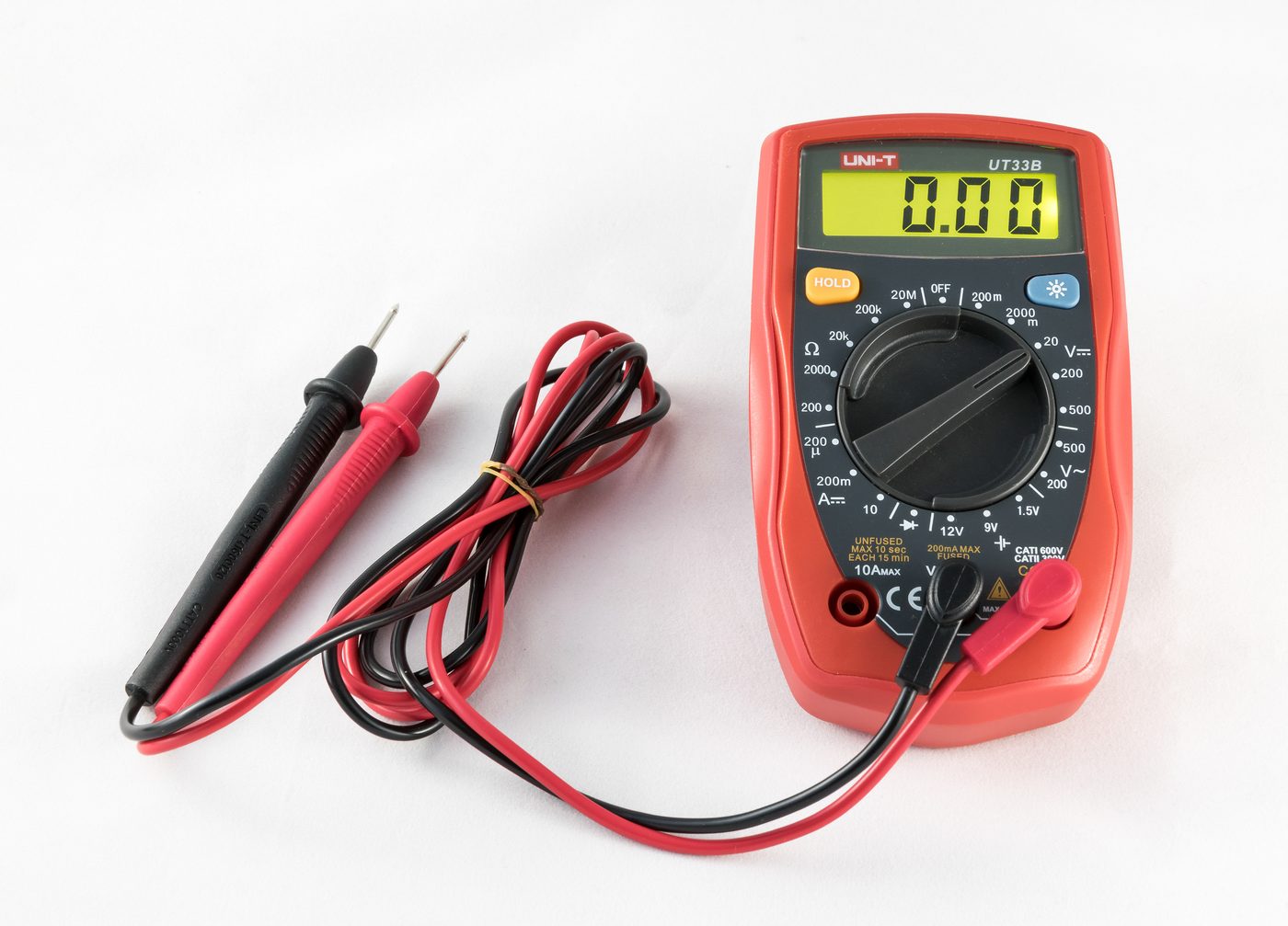
Digital multimeter with test probes (Source: Wikimedia Commons)
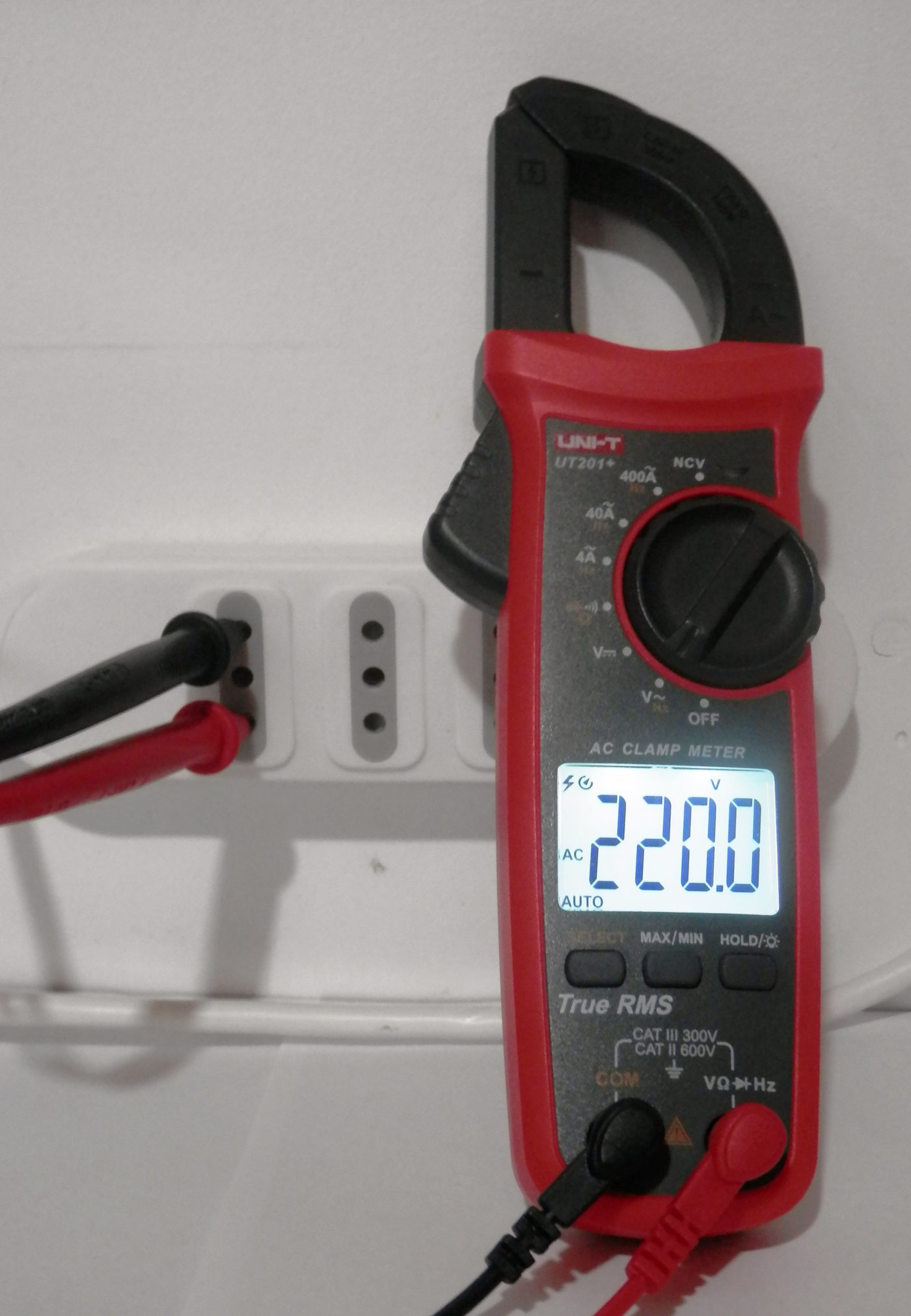
Digital clamp meter measuring voltage (Source: Wikimedia Commons)
Oscilloscope: Visualizes electrical signals, allowing detection of waveform distortions or noise.
Insulation Tester: Checks insulation resistance to prevent leakage currents that could cause faults.
Signal Generator: Provides known signals to test instrument response and functionality.
A structured approach prevents guesswork and ensures comprehensive fault identification and correction.
Safety is paramount when working with electrical instruments to prevent injury and equipment damage.
Create a free account to open more of this chapter.
Free: practical guides, quick cards, workplace scenarios and more.
Create a free accountThis chapter explored essential troubleshooting methods used to diagnose faults in electrical instruments, emphasizing systematic approaches to identify and isolate issues. It detailed various maintenance activities, including the repair and replacement of faulty components, as well as routine tasks such as cleaning, soldering, and tightening connections to ensure optimal instrument performance. Different soldering methods were examined to highlight their appropriate applications during maintenance. The chapter also covered the importance of instrument configuration and calibration to maintain accuracy and reliability. It underscored the critical role of manufacturer’s manuals as authoritative guides during maintenance procedures. Safety regulations governing electrical instrument maintenance were discussed to protect both personnel and equipment. Finally, proper disposal of waste materials generated during maintenance was addressed to promote environmental responsibility and compliance with regulatory requirements.
Which of the following is NOT a common troubleshooting method for electrical instruments? (2 marks)
a) Visual inspection
b) Signal tracing
c) Guesswork
d) Functional testing
Explain why regular cleaning of electrical instrument components is essential in a county hospital setting. (3 marks)
Type: Individual
| Tools & Equipment | Materials |
|---|---|
| Multimeter | 4-20mA Pressure Transmitter Model PT-1000 |
| Loop Calibrator 24V DC | Personal Protective Equipment (dust coat, safety boots, gloves) |
| Insulated Screwdriver Set | |
| Connecting Wires | |
| Pressure Source Simulator | |
| Pressure Gauge |
| S/N | Item | Quantity |
|---|---|---|
| 1 | 4-20mA Pressure Transmitter Model PT-1000 | 1 Pc per Candidate |
| 2 | Multimeter | 1 Pc per Candidate |
| 3 | Loop Calibrator 24V DC | 1 Pc per 5 Candidates |
| 4 | Insulated Screwdriver Set | 1 Set per Candidate |
| 5 | Personal Protective Equipment (dust coat, safety boots, gloves) | Enough per Candidate |
| 6 | Connecting Wires (assorted colors, 0.75mm2) | Assorted per Candidate |
| 7 | Pressure Source Simulator (hand pump with adjustable pressure) | 1 Pc per 5 Candidates |
| 8 | Pressure Gauge (0-10 bar) | 1 Pc per Candidate |
| Items to be Evaluated | Marks Available | Marks Obtained | Comments |
|---|---|---|---|
| TASK 1: Safety and Preparation | |||
| Wore personal protective equipment including dust coat, safety boots, and gloves (Award 1 if all PPE worn correctly; else 0) | 1 | ||
| Ensured clean and safe working area before starting the task (Award 1 if area is clean and hazards removed; else 0) | 1 | ||
| Sub-Total | 2 | ||
| TASK 2: Identification and Initial Inspection | |||
| Identified the pressure transmitter PT-1000 and associated wiring (Award 1 if correctly identified; else 0) | 1 | ||
| Performed visual inspection of transmitter and wiring for physical damage (Award 1 if inspection thorough and faults noted; else 0) | 1 | ||
| Sub-Total | 2 | ||
| TASK 3: Electrical Troubleshooting | |||
| Measured loop supply voltage with multimeter and recorded result (Award 2 if correct voltage measured within 24V ±2V; else 0) | 2 | ||
| Checked continuity of wiring connections using multimeter (Award 2 if continuity test done correctly and results recorded; else 0) | 2 | ||
| Measured output current with multimeter in mA range and recorded reading (Award 2 if current measured correctly in 4-20mA range; else 0) | 2 | ||
| Sub-Total | 6 | ||
| TASK 4: Functional Testing and Calibration | |||
| Connected pressure source simulator and applied known pressure values (Award 2 if connections proper and pressure applied accurately; else 0) | 2 | ||
| Used loop calibrator to verify and simulate transmitter output current (Award 3 if calibrator used correctly and output verified at 4mA and 20mA points; else 0) | 3 | ||
| Adjusted zero and span settings on transmitter to correct output (Award 3 if adjustments done accurately and verified; else 0) | 3 | ||
| Sub-Total | 8 | ||
| TASK 5: Reporting and Housekeeping | |||
| Restored wiring and secured all connections neatly (Award 2 if wiring neat and secure; else 0) | 2 | ||
| Cleared work area and disposed of waste properly (Award 1 if area clean after task; else 0) | 1 | ||
| Prepared a brief report including fault diagnosis, corrective actions, and test results (Award 3 if report includes all 3 key items; else 0) | 3 | ||
| Sub-Total | 6 | ||
| PRODUCT CHECKLIST | |||
| Pressure transmitter output current correctly corresponds to applied pressure within ±0.1mA accuracy over 4-20mA range (Award 5 if output meets accuracy criteria; else 0) | 5 | ||
| Zero and span adjustments set correctly as per manufacturer specifications (Award 3 if adjustments correct; else 0) | 3 | ||
| Wiring and connections are neat, secure, and properly insulated (Award 2 if wiring tidy and secure; else 0) | 2 | ||
| Sub-Total | 10 | ||
| GRAND TOTAL | 34 | ||
Type: Individual
| Tools & Equipment | Materials |
|---|---|
| Precision screwdriver set | Digital Multimeter Model DT-830B |
| Insulated tweezers | Soft cleaning cloth |
| Isopropyl alcohol (70%) | |
| Silicone-based lubricant spray | |
| Replacement fuse 250mA 250V fast blow | |
| Replacement battery 9V (6F22) | |
| Personal Protective Equipment (dust coat/overall, safety boots) |
| S/N | Item | Quantity |
|---|---|---|
| 1 | Digital Multimeter Model DT-830B | 1 Pc per Candidate |
| 2 | Soft cleaning cloth | 1 Pc per Candidate |
| 3 | Isopropyl alcohol (70%) | 100 ml per 5 Candidates |
| 4 | Precision screwdriver set | 1 Set per 5 Candidates |
| 5 | Silicone-based lubricant spray | 1 Can per 10 Candidates |
| 6 | Replacement fuse 250mA 250V fast blow | 2 Pcs per Candidate |
| 7 | Replacement battery 9V (6F22) | 1 Pc per Candidate |
| 8 | Insulated tweezers | 1 Pc per Candidate |
| 9 | Personal Protective Equipment (dust coat/overall, safety boots) | 1 Set per Candidate |
| Items to be Evaluated | Marks Available | Marks Obtained | Comments |
|---|---|---|---|
| TASK 1: Routine Maintenance Activities | |||
| Wore Personal Protective Equipment (dust coat/overall and safety boots) (Award 1 for correct PPE usage, 0 otherwise) | 1 | ||
| Ensured clean and safe working area before starting maintenance (Award 1 for clean working area, 0 otherwise) | 1 | ||
| Performed physical inspection of the multimeter for visible damage or wear (Award 1 mark each for inspecting casing and leads) | 2 | ||
| Disassembled multimeter carefully using precision screwdrivers (Award 1 mark for safe disassembly, 1 mark for no damage to components) | 2 | ||
| Cleaned internal and external surfaces with soft cloth and isopropyl alcohol (Award 1 mark for cleaning external surfaces, 1 mark for internal cleaning) | 2 | ||
| Applied silicone-based lubricant spray to rotary switch and moving parts (Award 2 marks for correct lubrication technique and appropriate amount) | 2 | ||
| Tested and replaced blown fuse(s) with specified 250mA 250V fast blow fuse (Award 1 mark for fuse testing, 2 marks for correct replacement) | 3 | ||
| Tested and replaced 9V battery ensuring correct polarity and fit (Award 1 mark for battery testing, 2 marks for correct replacement) | 3 | ||
| Reassembled multimeter ensuring all screws and components are secured (Award 2 marks for proper reassembly without missing screws or loose parts) | 2 | ||
| Performed functional test to verify correct operation of the multimeter (Award 2 marks for successful functional testing with no errors) | 2 | ||
| Cleaned and organized the workspace after completion (Award 1 for good housekeeping post-task) | 1 | ||
| Sub-Total | 21 | ||
| PRODUCT CHECKLIST | |||
| Multimeter is clean, fully functional with replaced fuse and battery, and no physical damage (Award 3 marks for cleanliness, 3 marks for functionality, 3 marks for physical condition) | 9 | ||
| Sub-Total | 9 | ||
| GRAND TOTAL | 30 | ||
At the start of this chapter we promised you would be able to:
Tick each one you can genuinely do.
So, are you there yet?
You're competent when you can confidently do 50% or more of what this chapter promised.
Sign in to record how you're doing.