
By the end of this chapter, you will be able to:
Mastering these skills ensures your measurements are reliable and your work meets professional standards, which is essential for quality and safety in the electrical trade.
Calibrating measurement instruments is a critical task for electrical engineers in Kenya, ensuring accuracy and reliability in electrical measurements. Accurate instruments are essential for diagnosing faults, maintaining safety standards, and optimizing system performance in diverse settings such as power distribution networks, manufacturing plants, and telecommunications infrastructure. This chapter focuses on the procedures, tools, and safety considerations involved in calibrating electrical measurement instruments, equipping technicians and engineers with the knowledge to uphold measurement integrity in their professional practice.
In electrical engineering environments across Kenya, adherence to health and safety procedures during instrument calibration is vital to prevent accidents, equipment damage, and inaccurate results. The nature of electrical work involves exposure to live circuits, high voltages, and sensitive equipment, necessitating strict safety protocols. Understanding and implementing these procedures protects personnel and ensures compliance with occupational safety standards such as those outlined by the Directorate of Occupational Safety and Health Services (DOSHS) in Kenya.
Personal protective equipment is the frontline defense against electrical hazards during calibration activities. Common PPE includes insulated gloves, safety goggles, flame-resistant clothing, and dielectric footwear.
Electrical gloves: These gloves insulate the hands from electric shocks when handling live circuits or testing equipment.
Safety goggles: Protect eyes from sparks, chemical splashes, or debris during instrument adjustments or repairs.
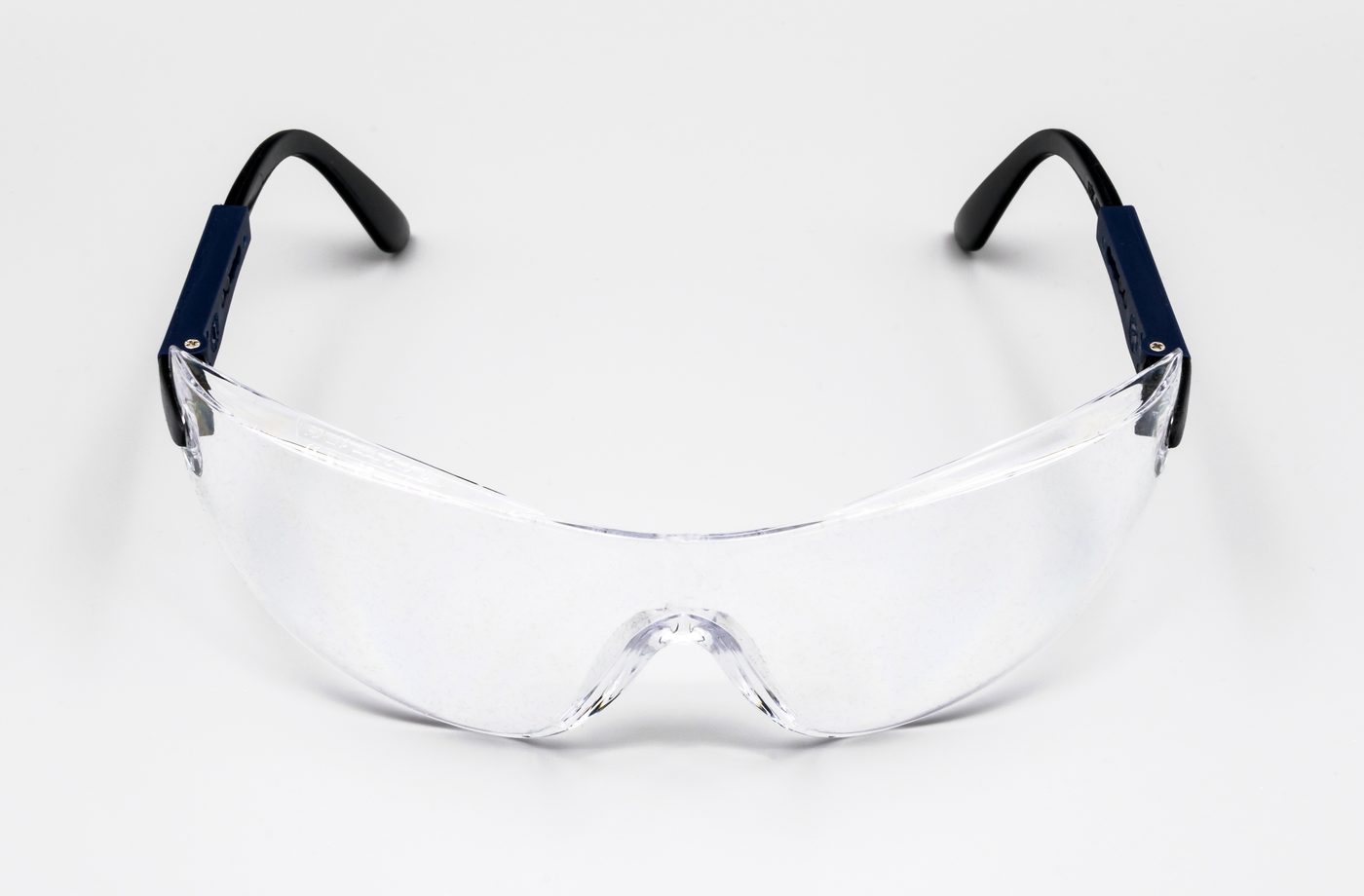
Clear safety goggles for eye protection (Source: Wikimedia Commons)
At a Nairobi county hospital, technicians regularly wear PPE during calibration of medical electrical equipment to safeguard both themselves and patients.
Lockout-Tagout (LOTO) is a safety protocol that ensures machinery or electrical circuits are properly shut off and unable to be energized while calibration is underway. This prevents accidental energization that could cause injury or damage.
In a county government office, LOTO procedures are strictly enforced when calibrating building electrical panels to prevent accidental electrocution.
Proper handling and storage of calibration instruments preserve their accuracy and extend service life, while also reducing the risk of damage or injury.
Continuous training on electrical safety and calibration procedures is essential for Kenyan electrical engineers to keep pace with evolving standards and technologies.
At a university engineering department in Eldoret, annual safety workshops reinforce good practice among students and staff working with electrical instruments.
Create a free account to open more of this chapter.
Free: practical guides, quick cards, workplace scenarios and more.
Create a free accountThis chapter covered the essential health and safety procedures necessary for safe handling and operation of electrical measurement instruments during calibration. It introduced the concept of calibrators, explaining their purpose and describing various types used in the calibration process. The chapter detailed the systematic steps involved in calibration, emphasizing accuracy and consistency. It then explored the measurement of initial values, including how to integrate the measuring instrument with the calibrator, source physical variables, measure current values, calculate measurement errors, and reset instrument readings accordingly. Documentation practices critical to calibration were examined, focusing on the traceability and repeatability tables that ensure reliability and consistency. The importance of calibration certificates was highlighted as official records of instrument accuracy, alongside equipment tags that provide identification and status information. Together, these topics provide a comprehensive framework for effective calibration of electrical measurement instruments.
Type: Individual
| Tools & Equipment | Materials |
|---|---|
| Digital Multimeter (DMM) | PPE Kit (Dustcoat/Overall, Safety Gloves, Safety Goggles, Safety Boots) |
| Calibration Standard Voltage Source | Insulating Mat |
| Insulated Screwdrivers | Warning Labels and Safety Signage |
| Multimeter Test Leads (Insulated) | Cleaning Cloth |
| Calibration Log Sheet |
| S/N | Item | Quantity |
|---|---|---|
| 1 | Digital Multimeter (DMM) | 1 Pc per Candidate |
| 2 | Calibration Standard Voltage Source | 1 Pc per 5 Candidates |
| 3 | Insulated Screwdrivers | 1 set per Candidate |
| 4 | PPE Kit (Dustcoat/Overall, Safety Gloves, Safety Goggles, Safety Boots) | 1 set per Candidate |
| 5 | Insulating Mat | 1 Pc per Candidate |
| 6 | Warning Labels and Safety Signage | 1 set per Candidate |
| 7 | Cleaning Cloth | 1 Pc per Candidate |
| 8 | Calibration Log Sheet | 1 sheet per Candidate |
| 9 | Multimeter Test Leads (Insulated) | 1 set per Candidate |
| Items to be Evaluated | Marks Available | Marks Obtained | Comments |
|---|---|---|---|
| TASK 1: Health and Safety Implementation during Calibration | |||
| Wore complete PPE kit (dustcoat/overall, gloves, goggles, boots) (Award 2 or 0) | 2 | ||
| Ensured work area is clean and free from hazards before starting (Award 2 or 0) | 2 | ||
| Placed insulating mat correctly on the workbench (Award 1 or 0) | 1 | ||
| Displayed warning labels and safety signage around the calibration area (Award 1 or 0) | 1 | ||
| Used insulated tools and test leads appropriately during calibration (Award 2 or 0) | 2 | ||
| Followed proper isolation procedures before connecting instruments (Award 2 or 0) | 2 | ||
| Checked for proper grounding and earthing of equipment (Award 1 or 0) | 1 | ||
| Maintained good housekeeping throughout the calibration process (Award 1 or 0) | 1 | ||
| Completed calibration log sheet accurately with safety observations (Award 2 or 0) | 2 | ||
| Sub-Total | 14 | ||
| PRODUCT CHECKLIST | |||
| Calibration setup arranged safely and neatly with all safety procedures observed (Award 6 or 0) | 6 | ||
| No safety hazards present in the final calibrated instrument setup (Award 4 or 0) | 4 | ||
| Sub-Total | 10 | ||
| GRAND TOTAL | 24 | ||
Type: Individual
| Tools & Equipment | Materials |
|---|---|
| Multifunction Calibrator | Calibration Certificates and Manuals |
| Loop Calibrator 24V Source | PPE (Gloves, Goggles, Dustcoat) |
| Digital Multimeter | |
| Thermocouple Simulator Calibrator | |
| Test Leads and Probes |
| S/N | Item | Quantity |
|---|---|---|
| 1 | Multifunction Calibrator | 1 Pc per Candidate |
| 2 | Loop Calibrator 24V Source | 1 Pc per Candidate |
| 3 | Digital Multimeter | 1 Pc per Candidate |
| 4 | Thermocouple Simulator Calibrator | 1 Pc per Candidate |
| 5 | PPE (Gloves, Goggles, Dustcoat) | 1 Set per Candidate |
| 6 | Test Leads and Probes | 1 Set per Candidate |
| 7 | Calibration Certificates and Manuals | 1 Set per Candidate |
| 8 | Workstation Table | 1 Pc per Candidate |
| Items to be Evaluated | Marks Available | Marks Obtained | Comments |
|---|---|---|---|
| TASK 1: Preparation and PPE | |||
| Wore personal protective equipment (gloves, goggles, dustcoat) (Award 2 marks for complete PPE worn, 0 if not) | 2 | ||
| Ensured clean and organized working area before commencing work (Award 1 mark for good housekeeping, 0 if not) | 1 | ||
| Sub-Total | 3 | ||
| TASK 2: Selection and Identification of Calibrators | |||
| Correctly identified and selected the multifunction calibrator for electrical measurements (Award 2 marks if correct calibrator selected, 0 if incorrect) | 2 | ||
| Correctly selected the loop calibrator for 24 V current loop simulation (Award 2 marks if correct calibrator selected, 0 if incorrect) | 2 | ||
| Correctly selected the thermocouple simulator for temperature measurement calibration (Award 2 marks if correct calibrator selected, 0 if incorrect) | 2 | ||
| Sub-Total | 6 | ||
| TASK 3: Demonstration of Calibrator Operation | |||
| Connected the loop calibrator correctly to simulate a 24 V current loop (Award 3 marks for correct connection, 0 if incorrect) | 3 | ||
| Used the multifunction calibrator to measure and verify the loop current accurately (Award 3 marks for accurate measurement, 0 if incorrect) | 3 | ||
| Connected the thermocouple simulator correctly and set the desired temperature value (Award 3 marks for correct connection and setting, 0 if incorrect) | 3 | ||
| Demonstrated reading the simulated temperature using the digital multimeter (Award 3 marks for correct reading, 0 if incorrect) | 3 | ||
| Sub-Total | 12 | ||
| TASK 4: Documentation and Safety | |||
| Referred to calibration certificates/manuals to verify calibrator settings (Award 2 marks if manuals/certificates consulted, 0 if not) | 2 | ||
| Ensured all equipment was safely disconnected and stored after use (Award 2 marks for safe disconnection and storage, 0 if not) | 2 | ||
| Sub-Total | 4 | ||
| PRODUCT CHECKLIST | |||
| Calibrators correctly set and demonstrated for both 24 V loop and thermocouple simulation (Award 8 marks for correct setting and demonstration of calibrators, 0 if incorrect) | 8 | ||
| Sub-Total | 8 | ||
| GRAND TOTAL | 33 | ||
At the start of this chapter we promised you would be able to:
Tick each one you can genuinely do.
So, are you there yet?
You're competent when you can confidently do 50% or more of what this chapter promised.
Sign in to record how you're doing.