Electrical machines are fundamental components in many industrial and commercial applications across Kenya, from manufacturing plants to water treatment facilities. The correct installation of these machines ensures optimal performance, safety, and longevity, making it a critical skill for electrical engineers. This chapter focuses on the essential procedures involved in installing electrical machines, emphasizing safety protocols and the preparation of accurate wiring diagrams. Mastery of these topics enables engineers to contribute effectively to projects in diverse sectors such as county government infrastructure, hospitals, and manufacturing firms.
2.1 Safety Procedures
Safety is paramount when installing electrical machines due to the inherent risks of electrical shock, mechanical injury, and fire hazards. Kenyan electrical engineers must adhere to stringent safety standards to protect themselves, their colleagues, and the equipment. This section explores the critical elements of safety procedures that must be followed before, during, and after installation to ensure compliance with national regulations such as the Energy Act and OSHA guidelines.
2.1.1 Identification of Hazards and Risk Assessment
Before commencing installation, it is necessary to identify potential hazards and assess associated risks to mitigate accidents effectively. This process involves a thorough examination of the work environment, equipment, and procedures.
Identification of Hazards
- Electrical Shock Risks: Live circuits and exposed conductors pose a threat of electric shock if not properly isolated.
- Mechanical Hazards: Moving parts of machines can cause injuries such as cuts or entanglement.
- Fire Hazards: Faulty wiring or overloads can result in fires, especially in confined spaces like control rooms.
- Slip, Trip, and Fall Risks: Cluttered or wet floors around installation sites increase the risk of falls.
- Chemical Exposure: Some machines may require lubricants or coolants that are hazardous if improperly handled.
Risk Assessment
- Evaluate Likelihood and Severity: Determine how likely each identified hazard is to cause harm and the potential severity of the outcome.
- Prioritize Risks: Rank hazards to focus on those that present the highest danger during installation.
- Document Findings: Maintain a risk assessment report to guide safety measures and inform all team members.
- Review Regularly: Update assessments if conditions change or new hazards emerge during the installation process.
- Implement Control Measures: Develop strategies such as isolation, guarding, or personal protective equipment (PPE) to reduce risks.
2.1.2 Personal Protective Equipment (PPE) and Safety Gear
Proper use of PPE is a frontline defense against injuries during electrical machine installation. Kenyan engineers must select and maintain suitable protective gear to comply with both local and international safety standards.
Types of PPE for Electrical Installation
- Insulated Gloves: Protect hands from electric shock when handling live parts or wiring.
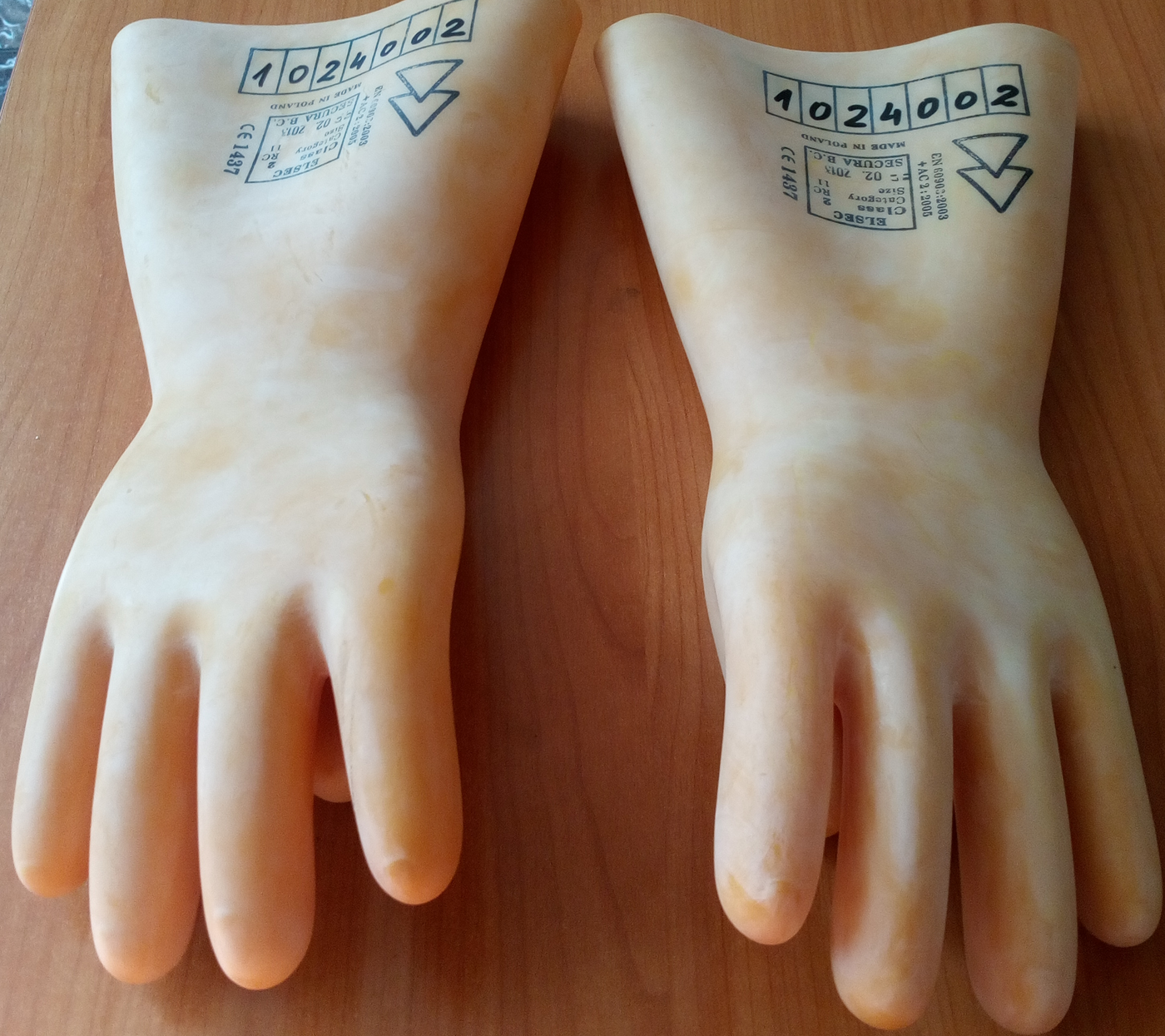
Pair of insulated gloves for electrical safety (Source: Wikimedia Commons)
- Safety Helmets: Shield the head from falling objects or accidental impacts.
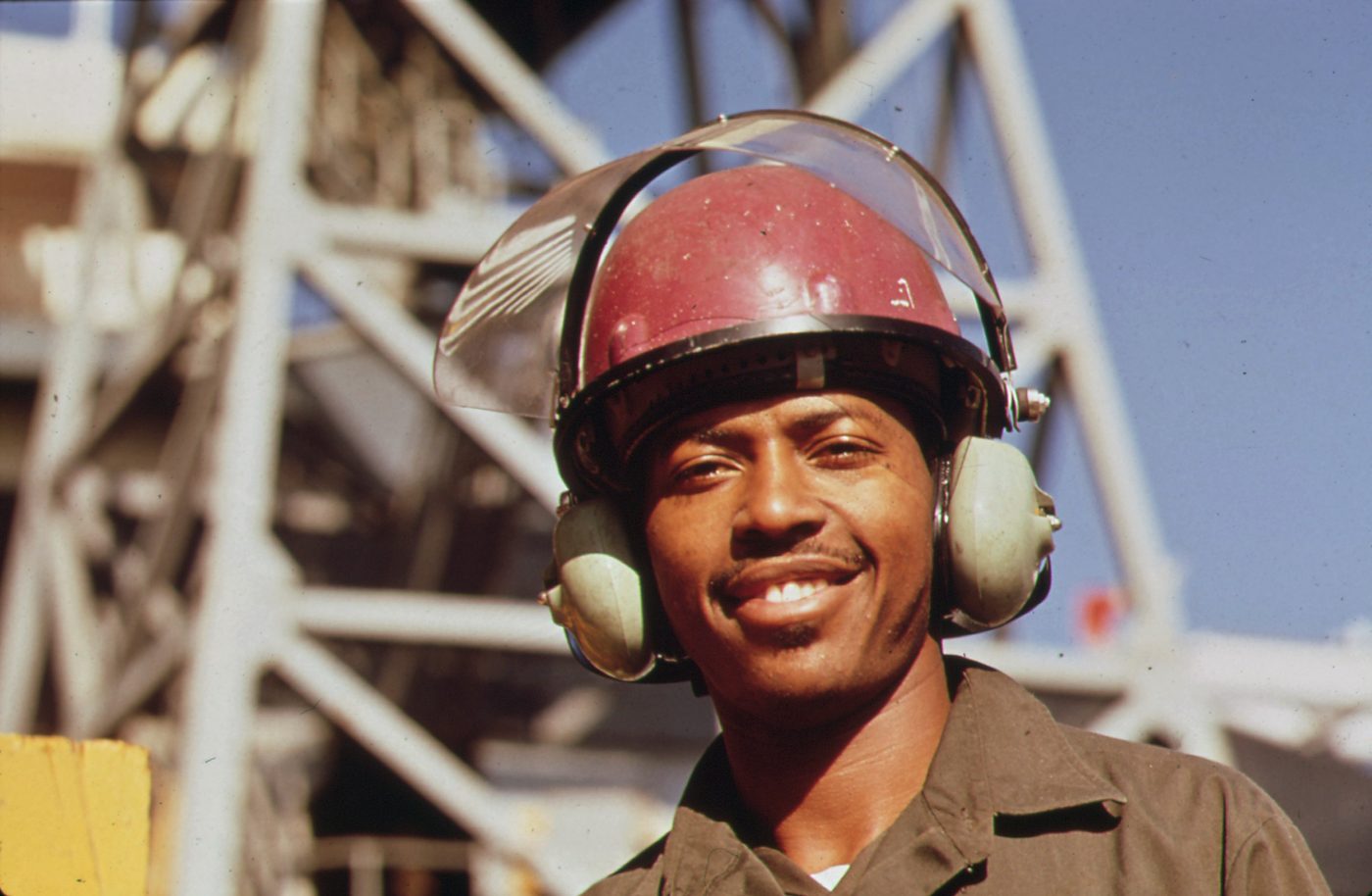
Man wearing a safety helmet (Source: Wikimedia Commons)
- Safety Boots: Provide insulation from ground faults and protect feet from heavy equipment.
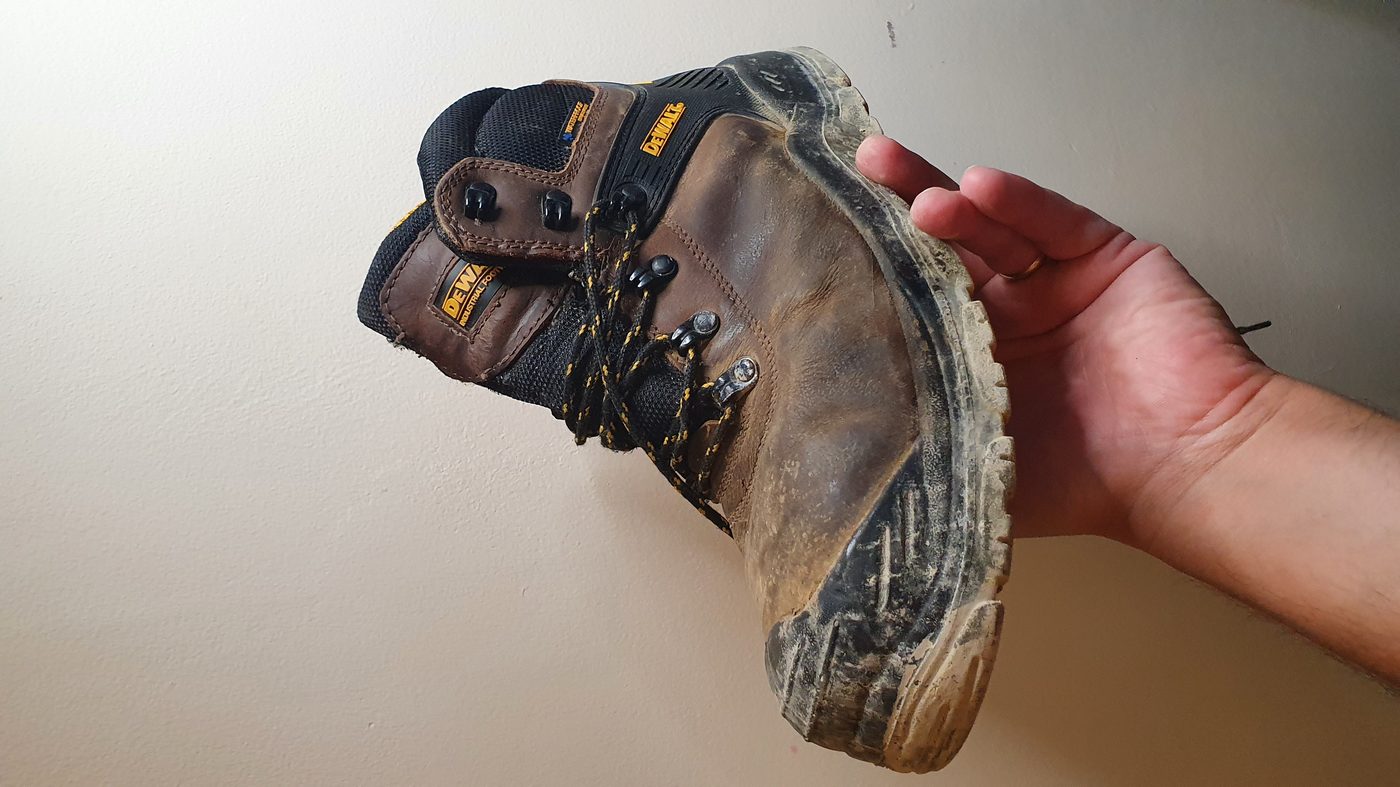
A single safety boot for industrial use (Source: Wikimedia Commons)
- Eye Protection: Safety goggles or face shields prevent injuries from sparks, debris, or chemicals.
- Hearing Protection: Earplugs or earmuffs reduce risk of hearing damage in noisy environments.
Proper Use and Maintenance
- Correct Sizing: PPE must fit well to ensure effectiveness without restricting movement.
- Regular Inspection: Check for damage or wear before each use, replacing defective equipment immediately.
- Cleaning and Storage: Maintain hygiene and prolong lifespan by cleaning PPE after use and storing it properly.
- Training: Workers must be trained on the correct use and limitations of PPE.
- Compliance with Standards: Equipment should meet specifications set by KEBS or other relevant authorities.
2.1.3 Lockout/Tagout Procedures
Lockout/Tagout (LOTO) is a critical safety procedure to ensure machines are completely de-energized during installation or maintenance, preventing accidental energization.
Steps in LOTO
- Preparation: Identify all energy sources connected to the machine, including electrical, hydraulic, and pneumatic.
- Notification: Inform all affected personnel of the impending shutdown and the reasons for it.
- Shutdown: Turn off the machine using the normal stopping procedure.
- Isolation: Disconnect or isolate energy sources using switches, circuit breakers, or valves.
- Locking: Apply locks to energy isolation devices to prevent accidental reactivation.
- Tagging: Attach tags indicating who applied the lock and the reason for the shutdown.
- Verification: Test to confirm that the machine is de-energized and cannot restart.
Importance in Kenyan Electrical Workplaces
- Prevents fatal accidents in high-risk environments such as county hospital electrical rooms.
- Ensures compliance with OSHA Kenya’s safety regulations.
- Facilitates safe teamwork during complex installation projects.
2.1.4 Emergency Procedures and First Aid
Despite preventive measures, emergencies may occur during machine installation. Kenyan engineers must be prepared to respond effectively to minimize harm.
Emergency Response Components
- Emergency Shutdown: Knowledge of how to quickly de-energize equipment in case of malfunction or accident.
- Fire Safety: Use of fire extinguishers suitable for electrical fires, typically CO2 or dry powder types.
- First Aid for Electrical Shock: Immediate actions including disconnecting power, performing CPR if necessary, and seeking medical help.
- Spill Management: Procedures to contain and clean hazardous chemical spills safely.
- Evacuation Plans: Clear routes and assembly points in case of fire or other emergencies.
Training and Drills
- Regular safety drills in workplaces such as county government offices ensure readiness.
- First aid training increases the likelihood of positive outcomes in accidents.
- Documentation and reporting of incidents improve future safety management.
Practice Questions
- Explain why risk assessment is critical before installing electrical machines in a hospital setting. (5 marks)
- List and describe five types of personal protective equipment essential for electrical machine installation. (10 marks)
- Outline the steps involved in the Lockout/Tagout procedure and explain its importance in preventing accidents. (12 marks)
- Describe the emergency response actions to take if an electrical shock occurs during installation at a county government office. (8 marks)
The rest of this chapter
🔒Create a free account to open more of this chapter.
Free: practical guides, quick cards, workplace scenarios and more.
Create a free account 🔒2.2 Preparation of Wiring Diagrams
Wiring diagrams are vital tools that provide a detailed graphical representation of electrical connections within machines. They enable engineers to install, troubleshoot, and maintain electrical machines efficiently. In the Kenyan context, accurate wiring dia…
🔒2.3 Materials, tools and equipment’s
…
🔒2.4 Machine Support
In electrical engineering installations across Kenya, the choice of machine support is critical for ensuring operational stability, safety, and longevity of electrical machines. Proper support mitigates vibration, reduces wear and tear, and facilitates mainten…
🔒2.5 Types of machine layout
The arrangement of electrical machines within a facility significantly influences workflow efficiency, safety, and maintenance. In Kenya's diverse industrial environments, from manufacturing plants to power generation units, selecting an appropriate machine la…
🔒2.6 Types of Machines
DC machines are critical in applications where variable speed control and precise torque are required, such as in elevators, printing presses, and electric vehicles. In Kenya, industries like textile manufacturing and water pumping stations often rely on DC ma…
🔒2.7 Cables and conductors
In electrical machine installations, the choice and handling of cables and conductors are critical for ensuring safe and efficient operation. In Kenya's industrial and commercial settings, such as manufacturing plants and county government facilities, correct…
🔒2.8 Installation route
The choice of installation route for electrical machines is a critical factor in ensuring safety, durability, and ease of maintenance. In Kenya's diverse environments, from urban county offices to rural healthcare facilities, selecting the appropriate route pr…
🔒2.9 Mounting structures/housing
Mounting structures and housing form the fundamental physical support and protective enclosure for electrical machines. In Kenya’s dynamic industrial and commercial environments, including manufacturing plants, hospitals, and county government facilities, the…
🔒2.10 Control Gear
Control gear forms the backbone of electrical machines' operation and protection in Kenyan industrial and commercial installations. These devices regulate machine starting, stopping, speed, and direction while safeguarding equipment and personnel from electric…
🔒2.11 Installation conditions e.g. temperature, humidity, moisture, dust
In electrical machine installation, environmental conditions critically influence the reliability, efficiency, and lifespan of the equipment. For electrical engineers working in Kenya, where climatic variations can be significant, from humid coastal regions to…
🔒2.12 Conduits-trunks, and support systems
Conduits and trunking come in diverse materials and forms, each suited to specific environments and applications. For electrical machines, conduits protect cables from physical damage, moisture, and chemical exposure, while trunking organizes and routes multip…
🔒2.13 Machine Enclosures
In electrical engineering installations across Kenya, the use of appropriate machine enclosures is critical for protecting electrical machines from environmental hazards and ensuring safety for personnel. Enclosures serve as the first line of defense against d…
🔒2.14 Housekeeping Practices
Maintaining a clean and organized work environment is fundamental in electrical machine installations. In Kenya’s diverse electrical engineering workplaces, including county government workshops and manufacturing plants, good housekeeping enhances safety, impr…
🔒2.15 IEEE regulations
In Kenya, adherence to international standards such as those set by the Institute of Electrical and Electronics Engineers (IEEE) is crucial for the safe and efficient installation of electrical machines. These regulations provide comprehensive guidelines on de…
🔒2.16 Construct and Mount Electrical Machine Support
Supporting electrical machines correctly during installation is fundamental to ensuring operational stability, minimizing vibration, and extending machine life. In Kenya’s industrial and commercial sectors, such as manufacturing plants and county water pumping…
🔒2.17 Install electrical machine control gear
Installing electrical machine control gear is a critical step in ensuring the safe and efficient operation of electrical machines in Kenya's industrial and commercial sectors. Control gear comprises devices that regulate the starting, stopping, speed, and prot…
🔒2.18 Install electrical machine
The installation of electrical machines such as motors, generators, and transformers forms the backbone of Kenya's industrial operations. Precision in installation ensures machines operate efficiently, safely, and with minimal downtime. Whether installing a mo…
🔒2.19 Terminations
In the installation of electrical machines, terminations refer to the secure and correct connection of cables or conductors to the machine’s terminals. Proper terminations ensure electrical continuity, mechanical stability, and safety, which are critical in Ke…
🔒2.20 Housekeeping Theory content
Housekeeping in electrical machine installations refers to maintaining a clean, organized, and hazard-free environment around machines to ensure operational efficiency, safety, and longevity. In Kenya’s industrial and commercial sectors, proper housekeeping re…
Chapter Summary
This chapter provided a comprehensive guide on the installation of electrical machines, beginning with essential safety procedures to protect personnel and equipment during installation. It emphasized the importance of preparing accurate wiring diagrams to ensure proper connections and system functionality. The discussion then covered machine support and various types of machine layouts, including fixed position, product, process, and combinational layouts, as well as appropriate machine mounting techniques. Different types of machines, such as DC and AC machines, were outlined to highlight their distinct installation requirements. The chapter examined cables and conductors, focusing on cabling within machines, current capacity, cable types, terminations, and labeling for clarity and safety. Installation routes were explored, including surface, underground, and concealed methods, alongside considerations for mounting structures and housing, particularly structural strength and size. Control gear components like direct-on-line starters, star-delta starters, forward-reverse controls, disconnect switches, circuit breakers, and isolators were described in detail. Environmental installation conditions such as temperature, humidity, moisture, and dust were also considered to ensure machine longevity. The use of conduits-trunks, and support systems was explained to protect wiring, while machine enclosures and housekeeping practices, including waste disposal, cleaning, tool storage, and recycling, were highlighted to maintain a safe and organized work environment. The chapter concluded with practical applications, including adherence to IEEE regulations, constructing and mounting machine supports, installing control gear and machines, performing terminations, and maintaining effective housekeeping throughout the installation process.
Self-Assessment
🔒 PDFDownload this self-assessment, with answers
A. Written Assessment
- What is the primary purpose of an isolator in electrical machine installations? (2 marks)
- List four factors to consider when selecting cables for electrical machines. (4 marks)
🔒20 more in this section.
Chapter Examination Questions
🔒 PDFDownload these examination questions, with worked answers
SECTION A (40 Marks) - Answer ALL Questions
- Explain the key safety procedures an electrical engineer must follow when installing a 50 kW motor at a Nairobi Water Company pump station. (4 marks)
- Describe the essential components included in a wiring diagram prepared for a star-delta starter installation. (4 marks)
🔒18 more in this section.
Chapter Practical Activities
Practical 1: Implement Safety Procedures for Electrical Machine Installation
Electrical Engineering · Level 6
Electrical Machines Installation
PRACTICAL ASSESSMENT
TIME: 4 HOURS
⬇ PDFCandidate Instructions (Candidate Tool)
Type: Individual
INSTRUCTIONS TO CANDIDATE:
1. You are required to perform the following task:
i. Demonstrate and document safety procedures for installing a 3-phase induction motor rated 415 V, 50 Hz as per standard electrical safety practices.
2. You have been provided with the following resources for the practical task:
| Tools & Equipment | Materials |
|---|
| Safety boots | 3-phase Induction Motor 415 V, 50 Hz |
| Electrical gloves | Warning labels and safety signage |
| Safety goggles | Electrical hazard warning tape |
| Insulated screwdriver set | |
| Pliers (insulated) | |
| Cable tester | |
| Lockout tagout kit | |
| Multimeter | |
⬇ PDFResources Required (Cutting List)
| S/N | Item | Quantity |
|---|
| 1 | 3-phase Induction Motor 415 V, 50 Hz | 1 Pc per Candidate |
| 2 | Safety boots | 1 Pair per Candidate |
| 3 | Electrical gloves | 1 Pair per Candidate |
| 4 | Safety goggles | 1 Pair per Candidate |
| 5 | Insulated screwdriver set | 1 Set per Candidate |
| 6 | Pliers (insulated) | 1 Pair per Candidate |
| 7 | Cable tester | 1 Pc per 2 Candidates |
| 8 | Lockout tagout kit | 1 Kit per Candidate |
| 9 | Warning labels and safety signage | Sufficient for Candidate |
| 10 | Installation area clean-up tools (broom, dustpan) | Shared |
| 11 | Multimeter | 1 Pc per Candidate |
| 12 | Electrical hazard warning tape | 1 Roll per Candidate |
⬇ PDFAssessor Guide
| Items to be Evaluated | Marks Available | Marks Obtained | Comments |
|---|
| TASK 1: Safety Procedures Implementation |
Wore all required personal protective equipment (safety boots, gloves, goggles)
(Award 1 mark for each PPE item worn correctly) | 3 | | |
Applied lockout/tagout procedure before starting installation
(Award marks for correct lockout steps and tag application) | 4 | | |
Ensured work area was clean and free from hazards before starting
(Award marks for good housekeeping and hazard identification) | 3 | | |
Used insulated tools correctly and safely during installation
(Award marks for correct tool selection and usage) | 3 | | |
Checked cables and connections for damage before installation
(Award marks for proper inspection and identification of defects) | 2 | | |
Installed appropriate safety signage and warning labels around work area
(Award marks for correct placement and visibility of signage) | 2 | | |
Performed electrical tests (continuity, insulation resistance) safely using multimeter and cable tester
(Award marks for correct test procedures and safety during testing) | 4 | | |
Maintained safe working distances and avoided contact with live parts
(Award marks for adherence to safe distances and practices) | 2 | | |
Followed emergency procedures and demonstrated knowledge of first aid and fire safety
(Award marks for verbal or practical demonstration) | 2 | | |
Removed all tools and cleaned work area after completion
(Award marks for good housekeeping post-task) | 2 | | |
| Sub-Total | 27 | | |
| PRODUCT CHECKLIST |
Correctly documented safety procedures with clear steps and compliance to standards
(Award marks for completeness, clarity, and compliance of documentation) | 10 | | |
Safety signage and labels correctly positioned and clearly visible
(Award marks for neatness and effectiveness of signage placement) | 5 | | |
| Sub-Total | 15 | | |
| GRAND TOTAL | 42 | | |
ASSESSMENT OUTCOME: ☐ Competent ☐ Not Yet Competent (competent if at least 50%)
Practical 2: Preparation of wiring diagrams for a 3-phase motor control circuit
Electrical Engineering · Level 6
Electrical Machines Installation
PRACTICAL ASSESSMENT
TIME: 4 HOURS
⬇ PDFCandidate Instructions (Candidate Tool)
Type: Individual
INSTRUCTIONS TO CANDIDATE:
1. You are required to perform the following task:
i. Prepare a detailed power and control wiring diagram for a 3-phase motor control circuit on A2 drawing paper, 600mm x 400mm layout.
2. You have been provided with the following resources for the practical task:
| Tools & Equipment | Materials |
|---|
| Lug crimping tool | Drawing paper size A2 |
| Electrician toolkit (screwdrivers, pliers, wire strippers) | Printing paper size A4 |
| PPE (Safety boots, gloves, goggles) |
⬇ PDFResources Required (Cutting List)
| S/N | Item | Quantity |
|---|
| 1 | 3-phase Induction Motor 415 V, 50 Hz | 1 Pc per Candidate |
| 2 | 3-pole Contactor 415 V AC Coil | 2 Pcs per Candidate |
| 3 | Auxiliary Contactor | 1 Pc per Candidate |
| 4 | Timer (On-delay) 0-10 sec, 415 VAC | 1 Pc per Candidate |
| 5 | Thermal Overload Relay Range 7-10 A | 1 Pc per Candidate |
| 6 | Triple Pole Isolator 415 V | 1 Pc per Candidate |
| 7 | Start and Stop Push Buttons | 1 Set per Candidate |
| 8 | PVC single core R/B/G cables 4.0 mm2 | 4 Meters per Candidate |
| 9 | PVC single core R/B/G cables 2.5 mm2 | 4 Meters per Candidate |
| 10 | Cable clips 12mm | 1 Packet per Candidate |
| 11 | Cable fork lugs 4.0 mm2 and 2.5 mm2 | Enough per Candidate |
| 12 | Lug crimping tool | 1 Pc per Candidate |
| 13 | Electrician toolkit (screwdrivers, pliers, wire strippers) | 1 Set per Candidate |
| 14 | PPE (Safety boots, gloves, goggles) | 1 Set per Candidate |
| 15 | Vertical wooden installation board 1m x 1m | 1 Pc per Candidate |
| 16 | Drawing paper size A2 | 2 Sheets per Candidate |
| 17 | Printing paper size A4 | 2 Sheets per Candidate |
⬇ PDFAssessor Guide
| Items to be Evaluated | Marks Available | Marks Obtained | Comments |
|---|
| TASK 1: Preparation and safety compliance |
Wore appropriate safety clothing including safety boots, gloves and goggles
(Award 1 mark for wearing all PPE) | 1 | | |
Ensured clean and organized working area before starting
(Award 1 mark for good housekeeping) | 1 | | |
Selected and used correct tools for drawing and wiring preparation
(Award 1 mark for correct tool use) | 1 | | |
| Sub-Total | 3 | | |
| TASK 2: Diagram preparation |
Drew clear power wiring diagram including 3-phase motor, contactors, overload relay and isolator
(Award up to 5 marks for accuracy and completeness) | 5 | | |
Drew control wiring diagram with start/stop push buttons, timer and auxiliary contactor
(Award up to 5 marks for correct control wiring) | 5 | | |
Applied correct electrical symbols and standard wiring conventions
(Award 3 marks for correct symbols and conventions) | 3 | | |
Used correct wire sizes and protection devices as per specifications
(Award 3 marks for correct wire sizes and devices) | 3 | | |
Observed correct colour coding for cables
(Award 1 mark for correct colour code) | 1 | | |
| Sub-Total | 17 | | |
| TASK 3: Diagram presentation and labeling |
Fixed components and labels firmly and level on the drawing board
(Award 3 marks for neat and firm fixing) | 3 | | |
Dimensioned wiring routes and components within ±2mm accuracy
(Award 2 marks for accurate dimensions) | 2 | | |
Ensured cable fixing points are firm, level and spaced correctly
(Award 2 marks horizontal fixing + 1 mark clips spacing) | 3 | | |
Provided safety signage or labels on the diagram
(Award 1 mark for labeling and signage) | 1 | | |
| Sub-Total | 9 | | |
| TASK 4: Testing and circuit powering |
Carried out polarity test on the wiring circuit
(Award 5 marks for correct polarity test) | 5 | | |
Powered the circuit and demonstrated start/stop operation successfully
(Award 4 marks for correct start/stop operation) | 4 | | |
| Sub-Total | 9 | | |
| PRODUCT CHECKLIST |
Wiring diagrams dimensioned 600mm x 400mm ±2mm and clear with all components correctly represented
(Award 4 marks for correct dimensions and clarity) | 4 | | |
Diagrams are neat, legible, and comply with electrical drawing standards
(Award 4 marks for neatness and standards compliance) | 4 | | |
| Sub-Total | 8 | | |
| GRAND TOTAL | 46 | | |
ASSESSMENT OUTCOME: ☐ Competent ☐ Not Yet Competent (competent if at least 50%)
🔒Install machine support for a 3-phase induction motor on a vertical wooden boardPractical 3
🔒Installation of Fixed Position Layout for 3-Phase Induction Motor Control PanelPractical 4
🔒Combinational Oral Assessment on Installation of Electrical MachinesPractical 5
🔒Mounting and securing a 3-phase induction motor on a wooden installation boardPractical 6
🔒Installation of PVC insulated cables and conductors for a 3-phase motor circuitPractical 7
🔒Identify and select the correct type of cable for a 3-phase induction motor installationPractical 8
🔒Label electrical cables on installation board 1000mm x 1000mmPractical 9
🔒Install a 3-Phase Induction Motor Surface Mounting with Control CircuitPractical 10
🔒Install Underground Electrical Cable Circuit for 3-Phase Induction MotorPractical 11
🔒Mount and secure electrical machine mounting structures on a wooden installation boardPractical 12
🔒Install Electrical Machine Support Structure Ensuring Structural StrengthPractical 13
🔒Install Forward-Reverse Control Circuit for 3-Phase Induction MotorPractical 14
🔒Install electrical machines considering environmental conditionsPractical 15
🔒Install PVC conduit and trunking support system for electrical machine wiringPractical 16
🔒Implement Housekeeping Practices during Electrical Machine InstallationPractical 17
🔒Disposal of Electrical Machines Installation WastePractical 18
🔒Clean and Prepare a 3-Phase Induction Motor for InstallationPractical 19
🔒Organize and store electrical installation tools in designated storagePractical 20
🔒Recycle and Reuse Electrical Machine Components for InstallationPractical 21
🔒Installation and Testing of Electrical Machines According to IEEE RegulationsPractical 22
🔒Construct and mount electrical machine support 1000mm x 600mm x 300mmPractical 23
🔒Installation of Electrical Machine Control Gear on Vertical Wooden BoardPractical 24
🔒Installation of a 3-Phase Induction Motor on a Vertical Wooden BoardPractical 25
🔒Housekeeping and Safety Compliance in Electrical Machines InstallationPractical 26
