Electrical machines are fundamental components in the generation, transmission, and utilization of electrical energy within Kenya’s industrial and commercial sectors. Their installation demands meticulous attention to safety, precision in wiring, and adherence to technical standards to ensure reliable operation and longevity. This chapter focuses on the critical aspects of installing electrical machines, emphasizing safety procedures and the preparation of wiring diagrams, which are essential for guiding the installation process and preventing hazards in workplaces such as manufacturing plants, county government facilities, and commercial buildings.
2.1 Safety Procedures
Safety procedures are paramount when installing electrical machines due to the inherent risks of electrical shock, mechanical injury, and fire hazards. In Kenya, adherence to safety regulations such as those stipulated by the Energy and Petroleum Regulatory Authority (EPRA) and the Occupational Safety and Health Act (OSHA) is mandatory. Proper safety protocols protect personnel and equipment, ensuring continuity of operations in environments like hospitals, universities, and banks where downtime can have significant consequences.
2.1.1 Identification and Assessment of Hazards
Before installation begins, it is critical to identify potential hazards related to electrical machines. This includes electrical, mechanical, environmental, and ergonomic risks that may affect both the installation team and the surrounding infrastructure.
Electrical Hazards
- Live Conductors: Exposure to live parts can cause fatal electric shocks. Workers must verify that all circuits are de-energized before work commences.
- Faulty Insulation: Damaged cables or insulation can lead to short circuits or electrocution, requiring thorough inspection.
- Static Electricity: Accumulation can cause sparks, which are dangerous in flammable environments.
- Overloading: Incorrect specifications or connections can overload circuits, leading to fires.
- Improper Grounding: Lack of proper earthing increases the risk of electric shock during faults.
Mechanical Hazards
Environmental Hazards
- Wet Conditions: Moisture increases shock risk and can damage electrical components.
- Dust and Debris: Can impair machine function and pose respiratory risks.
- Confined Spaces: Limited access complicates emergency response.
- Temperature Extremes: High temperatures can degrade insulation and components.
- Noise: Prolonged exposure can lead to hearing loss.
Ergonomic Hazards
- Repetitive Movements: Can cause musculoskeletal disorders.
- Awkward Postures: Working in confined or elevated spaces increases injury risk.
- Manual Handling: Improper lifting techniques can cause back injuries.
- Fatigue: Long shifts without breaks reduce concentration and increase accidents.
- Inadequate Tools: Using unsuitable tools increases strain and risk of accidents.
2.1.2 Personal Protective Equipment and Tools
Use of appropriate personal protective equipment (PPE) and tools is non-negotiable in electrical machine installation to minimize injury risks. This not only complies with Kenyan workplace safety laws but also promotes a culture of safety.
Essential PPE
- Insulated Gloves: Protect hands from electric shock when handling live parts or testing circuits.
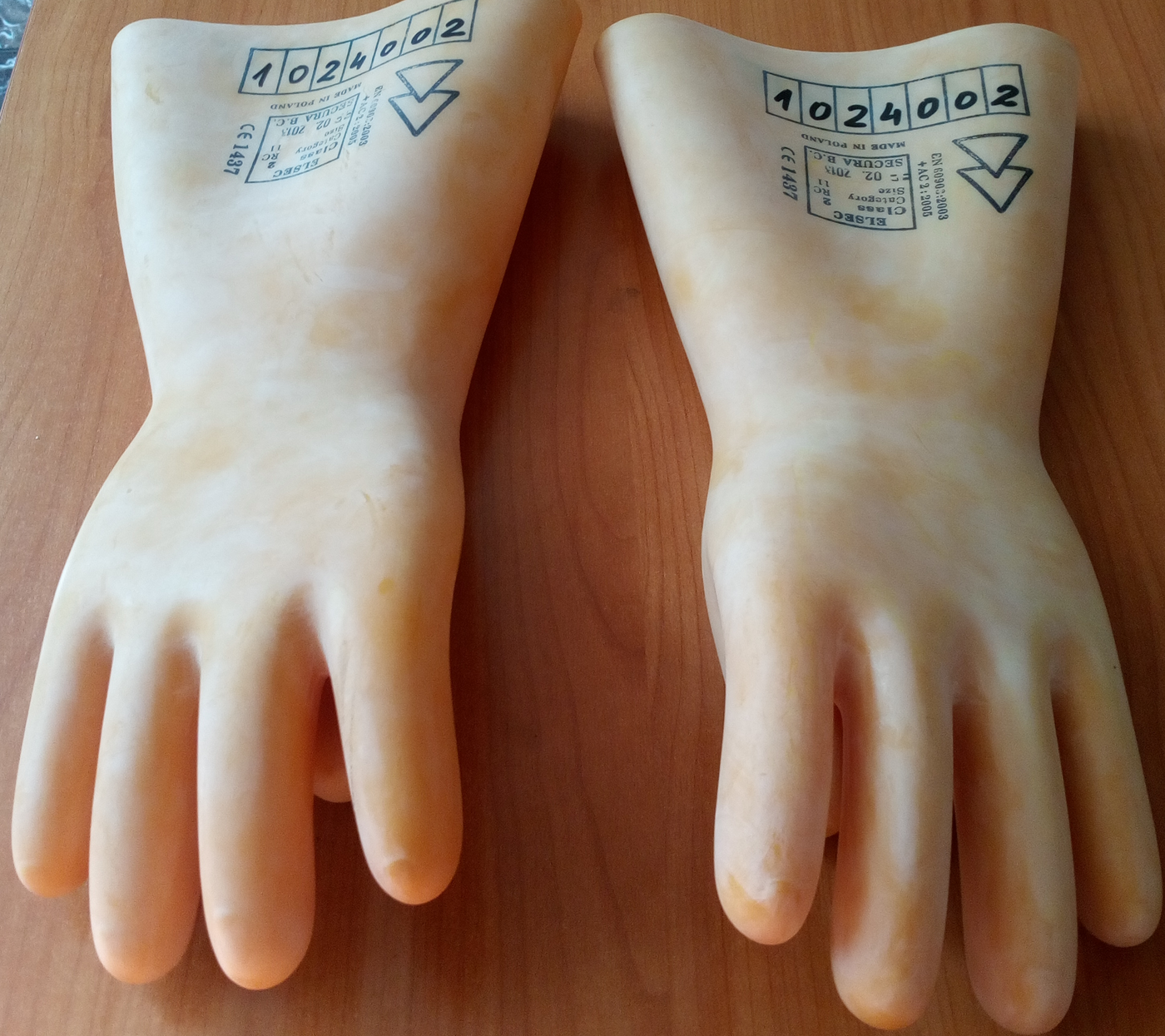
Pair of insulated gloves for electrical safety (Source: Wikimedia Commons)
- Safety Helmets: Prevent head injuries from falling objects or accidental impacts during installation.
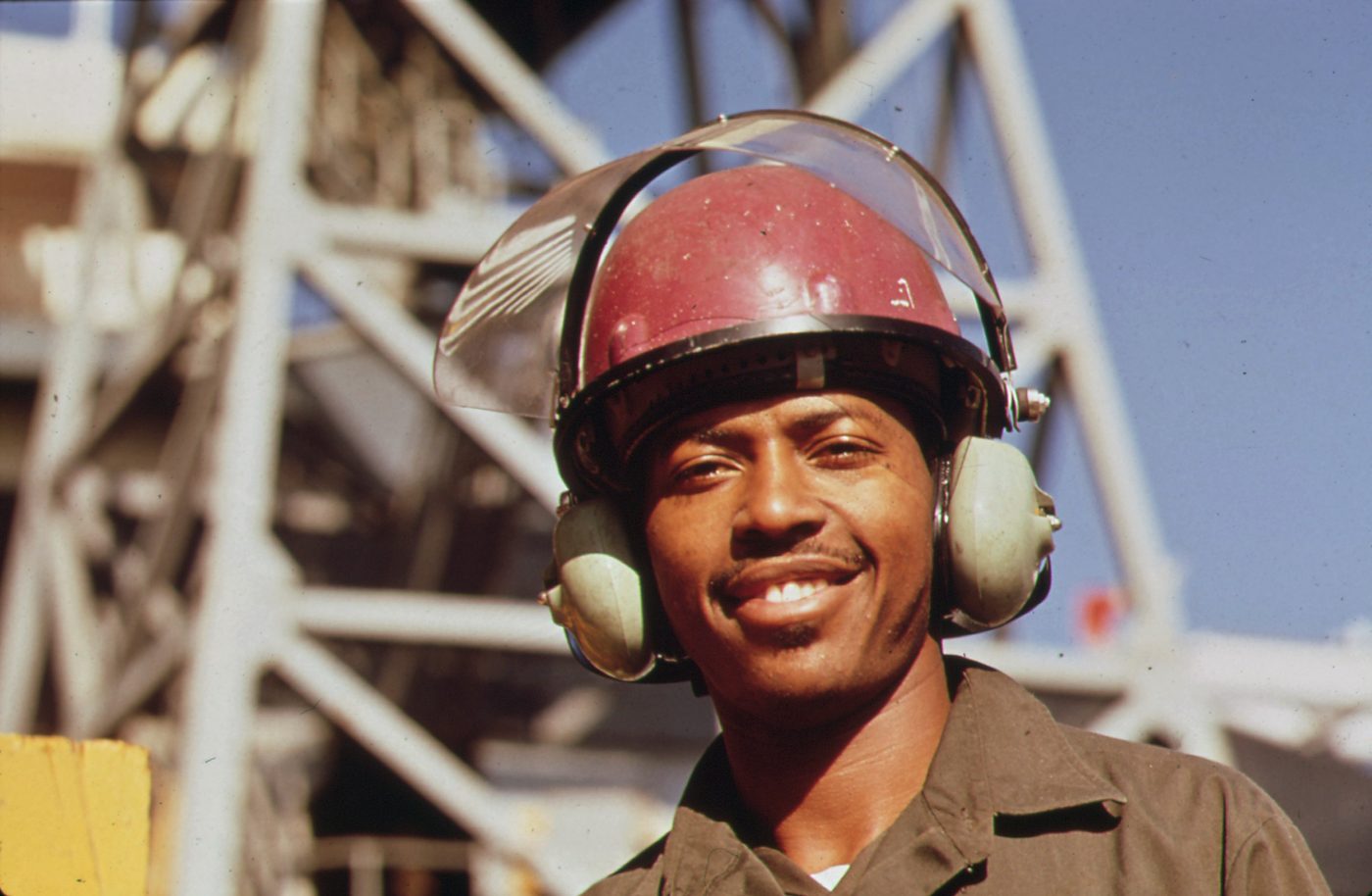
Man wearing a safety helmet (Source: Wikimedia Commons)
- Safety Boots: Provide electrical insulation and protect feet from heavy equipment.

A single safety boot for industrial use (Source: Wikimedia Commons)
Tools Specification
| Name |
Specification |
Use |
| Insulated Screwdrivers |
Rated for 1000V AC |
For tightening or loosening terminals safely |
| Voltage Testers |
Non-contact, digital display |
To verify circuit de-energization |
| Cable Strippers |
Adjustable blade depth |
For safe removal of cable insulation |
| Crimping Tools |
Suitable for various conductor sizes |
For secure terminal connections |
| Multimeter |
Measures voltage, current, resistance |
For comprehensive electrical testing |
- Tools must be regularly inspected to ensure insulation integrity.
- Only calibrated instruments should be used for testing to guarantee accurate readings.
- Avoid using damaged or worn-out tools that might compromise safety.
2.1.3 Lockout-Tagout Procedures
Lockout-Tagout (LOTO) is a critical safety protocol to ensure that electrical machines remain de-energized during installation and maintenance. This procedure prevents accidental energizing that could lead to serious injuries or fatalities.
Steps in LOTO Implementation
- Preparation: Identify all energy sources related to the machine and notify affected personnel.
- Shutdown: Switch off the machine following standard operating procedures.
- Isolation: Disconnect energy sources such as circuit breakers, switches, or plugs.
- Locking: Apply locks to energy-isolating devices to prevent reactivation.
- Tagging: Attach tags indicating the reason for the lockout and the responsible person.
-
Verification: Test the machine to confirm it is de-energized before starting work.
-
In Kenya’s public institutions, strict enforcement of LOTO has reduced electrical accidents significantly.
- Workers must receive training on LOTO procedures to ensure competence.
- Supervisors should regularly audit adherence to LOTO protocols.
2.1.4 Emergency Response and First Aid
Despite all precautions, accidents may occur during electrical machine installation. Prompt and appropriate emergency response can save lives and reduce injury severity.
Key Emergency Response Measures
- Immediate De-energization: Cut off power supply to prevent further harm.
- Rescue Techniques: Use insulated tools or non-conductive materials to separate victims from live sources.
- Cardiopulmonary Resuscitation (CPR): Trained personnel should administer CPR if the victim is unresponsive.
- First Aid for Burns: Cool burns with running water and cover with sterile dressings.
-
Reporting: Incidents must be reported to workplace safety officers and documented according to OSHA requirements.
-
Hospitals and clinics near industrial zones in Kenya often collaborate with companies to provide quick medical assistance.
- Regular drills and first aid training improve readiness among installation teams.
The rest of this chapter
🔒Create a free account to open more of this chapter.
Free: practical guides, quick cards, workplace scenarios and more.
Create a free account 🔒2.2 Preparation of Wiring Diagrams
Wiring diagrams are essential technical documents that guide the installation and maintenance of electrical machines. They provide a clear visual representation of the electrical connections and components, reducing errors and improving safety in installations…
🔒2.3 Materials, tools and equipment’s
…
🔒2.4 Machine support
In electrical machine installation across Kenya, the choice and design of machine support are crucial to ensure operational stability, reduce vibration, and prolong equipment life. Electrical machines, whether installed in county government offices or manufact…
🔒2.5 Types of machine layout
The layout of electrical machines in a facility significantly affects operational efficiency, maintenance accessibility, and safety. In Kenya, whether in a manufacturing plant in Nairobi or a water treatment facility in Kisumu, selecting the right machine layo…
🔒2.6 Types of Machines
In electrical engineering practice across Kenya, understanding the types of electrical machines is crucial for proper selection, installation, and maintenance. Electrical machines convert electrical energy into mechanical energy or vice versa, serving vital ro…
🔒2.7 Cables and conductors
In the installation of electrical machines, the selection, routing, and termination of cables and conductors are critical to ensure safety, efficiency, and longevity of the equipment. In Kenya, electrical engineers working in industries such as manufacturing p…
🔒2.8 Installation Route
Selecting an appropriate installation route for electrical machines is critical in ensuring safety, reliability, and ease of maintenance. In Kenya’s diverse environments, electrical engineers must consider factors such as accessibility, environmental exposure,…
🔒2.9 Mounting Structures/Housing
In electrical machine installation, the choice and design of mounting structures or housing are critical to ensuring operational stability, safety, and longevity of the equipment. In Kenya, where electrical installations may be subjected to variable environmen…
🔒2.10 Control Gear
Control gear plays a critical role in the installation and operation of electrical machines by managing the starting, stopping, and protection functions of motors and other devices. In Kenya, electrical engineers frequently encounter a variety of control gear…
🔒2.11 Installation Conditions e.g. Temperature, Humidity, Moisture, Dust
In electrical machine installation, environmental conditions significantly affect machine performance, reliability, and longevity. Kenya’s diverse climate zones, from the humid coastal regions to the cooler highlands, present unique challenges that require car…
🔒2.12 Conduits, Trunks, and Support Systems
The installation of electrical machines requires a well-planned system for routing cables and providing mechanical support. In Kenya’s electrical engineering sector, selecting appropriate conduits-trunking, and support systems is essential to ensure safety, ac…
🔒2.13 Machine enclosures
In electrical engineering installations, machine enclosures are critical for protecting electrical machines from environmental hazards, ensuring safety for operators, and maintaining machine integrity. In Kenya, where environments can range from dusty workshop…
🔒2.14 Housekeeping practices
Effective housekeeping practices in electrical machine installations are essential for safety, operational efficiency, and prolonging equipment life. In Kenya’s industrial and commercial settings, good housekeeping prevents accidents, reduces fire risks, and s…
🔒2.15 IEEE regulations Practical content
In the Kenyan electrical engineering sector, adherence to IEEE regulations is critical for ensuring safety, reliability, and interoperability of electrical machines. The IEEE standards provide detailed guidelines on installation practices, performance criteria…
🔒2.16 Construct and mount electrical machine support
Constructing and mounting supports for electrical machines is a fundamental aspect of installation that affects machine stability, alignment, and operational safety. In Kenya, where electrical machines serve diverse sectors from county water pumping stations t…
🔒2.17 Install electrical machine control gear
In electrical engineering projects across Kenya, particularly in industries such as manufacturing, water treatment plants, and county government facilities, the installation of control gear is vital for the safe and efficient operation of electrical machines.…
🔒2.18 Install electrical machine
Installing an electrical machine is a critical task that requires precision and adherence to standards to ensure operational efficiency and safety. In Kenya, installations at institutions such as hospitals, manufacturing firms, and educational facilities deman…
🔒2.19 Terminations
In electrical machines installation, terminations refer to the points where electrical conductors are securely connected to the machine terminals, ensuring reliable electrical and mechanical contact. Proper termination is critical in Kenyan industrial and comm…
🔒2.20 Housekeeping
Housekeeping in electrical machine installation refers to maintaining a clean, organized, and hazard-free work environment that supports safe and efficient machine operation. In Kenya’s busy industrial workshops, hospitals, and educational institutions, good h…
Chapter Summary
This chapter covers the comprehensive process of installing electrical machines, beginning with essential safety procedures to ensure a secure working environment. It then addresses the preparation of wiring diagrams, which guide the installation and connection of machines. The chapter explores machine support and various types of machine layouts, including fixed position, product, process, combinational layouts, and machine mounting techniques. It differentiates between types of machines, focusing on DC and AC machines, and discusses the selection and handling of cables and conductors, emphasizing cabling methods, current capacity, cable types, terminations, and labelling. Installation routes are examined, highlighting surface, underground, and concealed options, alongside considerations for mounting structures such as structural strength and size. Control gear installation is detailed with descriptions of direct-on-line starters, star-delta starters, forward-reverse controls, disconnect switches, circuit breakers, and isolators. Environmental installation conditions such as temperature, humidity, moisture, and dust are reviewed, followed by the use of conduits-trunks, and support systems. The chapter also covers machine enclosures and housekeeping practices, including waste disposal, cleaning, tool storage, and recycling. Finally, adherence to IEEE regulations is emphasized, along with practical instructions for constructing and mounting machine supports, installing control gear and machines, performing terminations, and maintaining proper housekeeping throughout the installation process.
Self-Assessment
🔒 PDFDownload this self-assessment, with answers
A. Written Assessment
- What are three critical safety procedures to observe when installing electrical machines? (3 marks)
- Describe the main differences between fixed position layout and product layout in machine installation. (4 marks)
🔒20 more in this section.
Chapter Examination Questions
🔒 PDFDownload these examination questions, with worked answers
SECTION A (40 Marks) - Answer ALL Questions
- Outline five essential safety procedures to observe when installing electrical machines at a county government water treatment plant. (4 marks)
- Explain the importance of preparing accurate wiring diagrams before commencing the installation of an industrial motor at a manufacturing firm. (4 marks)
🔒18 more in this section.
