
By the end of this chapter, you will be able to:
These skills are essential because they help you measure and troubleshoot electrical systems safely and accurately, which is key to success in any electrical trade.
Performing electrical measurements is a fundamental skill across all professional fields that interact with electrical systems, from healthcare facilities to retail businesses. Accurate electrical measurement ensures safety, equipment functionality, and energy efficiency, which are critical in institutions such as county referral hospitals, universities, and SACCOs. This chapter introduces the types of transducers used in electrical measurements, which convert physical quantities into electrical signals for monitoring and control in diverse Kenyan workplaces.
Transducers are essential components in electrical measurement systems. They convert non-electrical physical variables such as temperature, pressure, or displacement into electrical signals that can be measured, recorded, or processed. This conversion is crucial in environments like county government offices where environmental monitoring is necessary, or in agricultural cooperatives where soil moisture levels must be tracked accurately. Understanding the types of transducers and their operational principles enables professionals to select the appropriate device for specific measurement tasks.
Resistive transducers operate by changing their electrical resistance in response to a physical stimulus. This change in resistance is then converted into a measurable electrical signal. They are widely used in various applications due to their simplicity and reliability.
Resistive transducers function based on the principle that resistance varies with physical changes such as temperature, displacement, or strain. For example, a strain gauge changes its resistance when stretched or compressed, making it ideal for monitoring structural stress in buildings managed by county government offices. Similarly, thermistors vary resistance with temperature changes, useful in hospital HVAC systems to ensure patient comfort.
Strain Gauges: Convert mechanical strain into resistance change, commonly used in structural health monitoring.
Thermistors: Temperature-sensitive resistors with high precision, employed in climate control systems of hotels.
Potentiometers: Measure displacement by varying resistance through a movable contact, useful in controlling volume in audio equipment at universities.
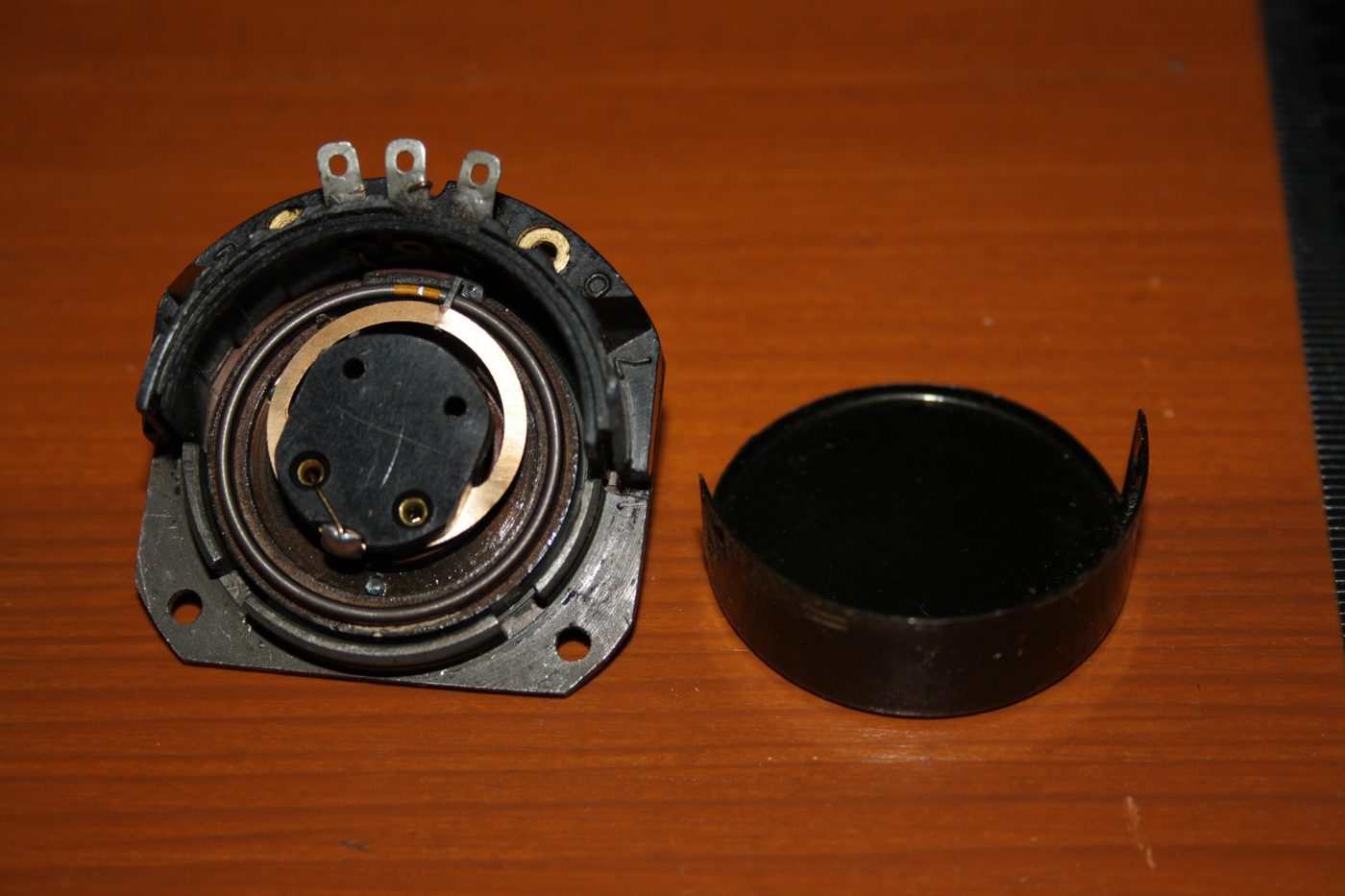
Rotary potentiometer with cover removed (Source: Wikimedia Commons)
Resistive transducers are prevalent in institutions like the Kenya Revenue Authority (KRA), where temperature sensors monitor server room environments preventing overheating. In farms, soil moisture sensors based on resistive principles help optimize irrigation schedules, promoting sustainable agriculture.
Capacitive transducers measure changes in capacitance caused by variations in physical parameters such as displacement, humidity, or pressure. They offer high sensitivity and are widely used where precise measurement is required.
Capacitance depends on the surface area of the plates, the distance between them, and the dielectric material. When a physical quantity alters any of these factors, the capacitance changes accordingly. For instance, in a humidity sensor used in a university laboratory, the dielectric constant changes with moisture content, affecting capacitance.
Capacitive transducers are preferred in environments requiring non-contact measurement to avoid wear, such as in pharmaceutical production at health institutions. Their high accuracy supports quality control in hotel kitchen automation systems.
Inductive transducers convert physical changes into variations in inductance, which can be detected electrically. They are robust and suitable for harsh environments, making them ideal for use in agricultural machinery and manufacturing plants.
Inductance changes when the magnetic flux linked with a coil varies due to movement or changes in magnetic material proximity. For example, in conveyor belt systems at retail distribution centers, inductive sensors detect position and speed by measuring inductance variations.
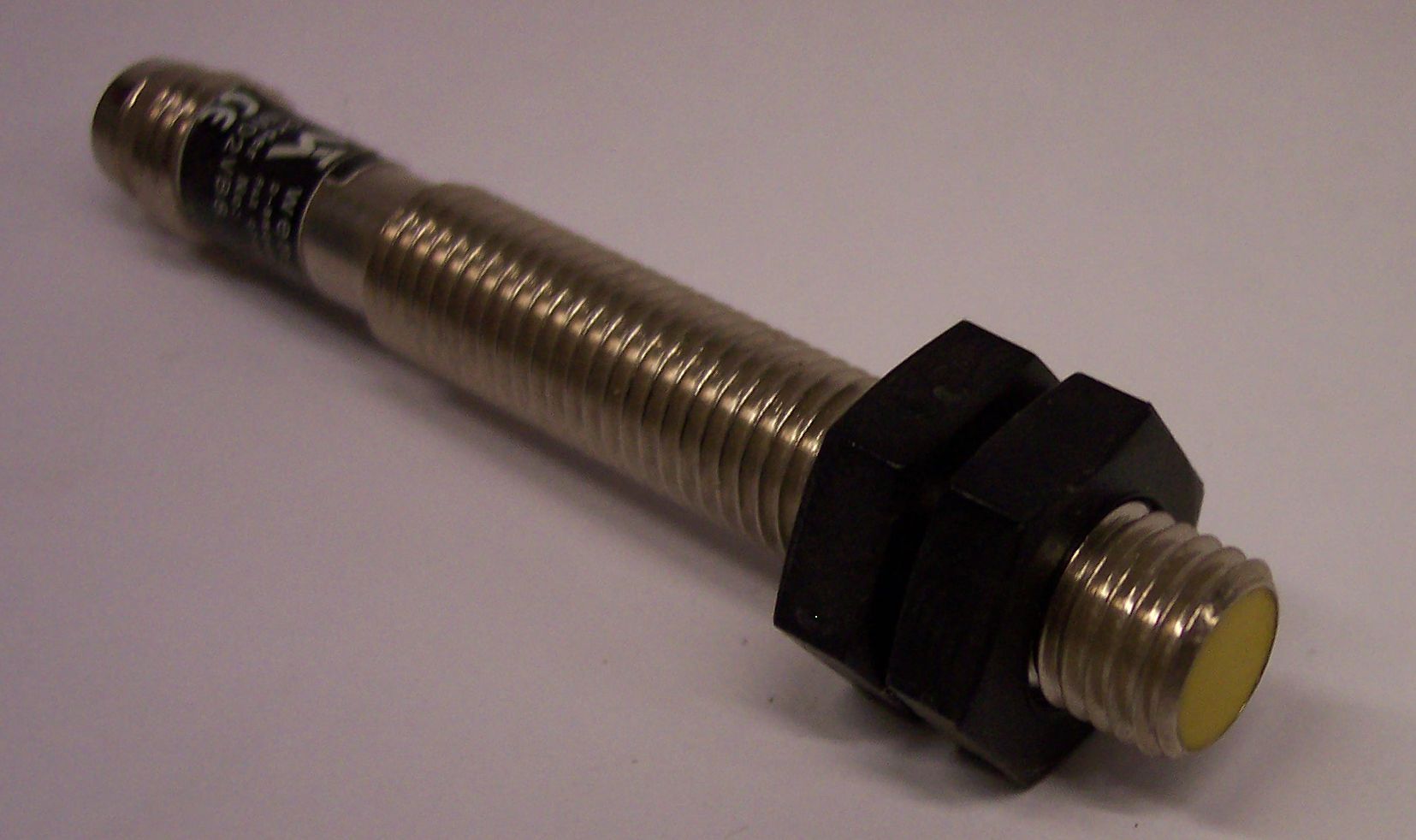
cylindrical proximity inductive sensor (Source: Wikimedia Commons)
Inductive transducers enhance safety in Nairobi’s hotel kitchens by detecting equipment movement and preventing accidents. They are also vital in monitoring machinery in agricultural cooperatives where dust and moisture could impair other sensor types.
Piezoelectric transducers generate an electrical charge in response to mechanical stress. Their ability to convert dynamic forces into electrical signals makes them suitable for vibration and pressure measurement in various sectors.
Certain crystals like quartz produce voltage when mechanically deformed. This effect is harnessed in sensors that detect pressure changes, vibrations, or accelerations. Hospitals use piezoelectric sensors in patient monitoring devices to detect pulse and respiration rates accurately.
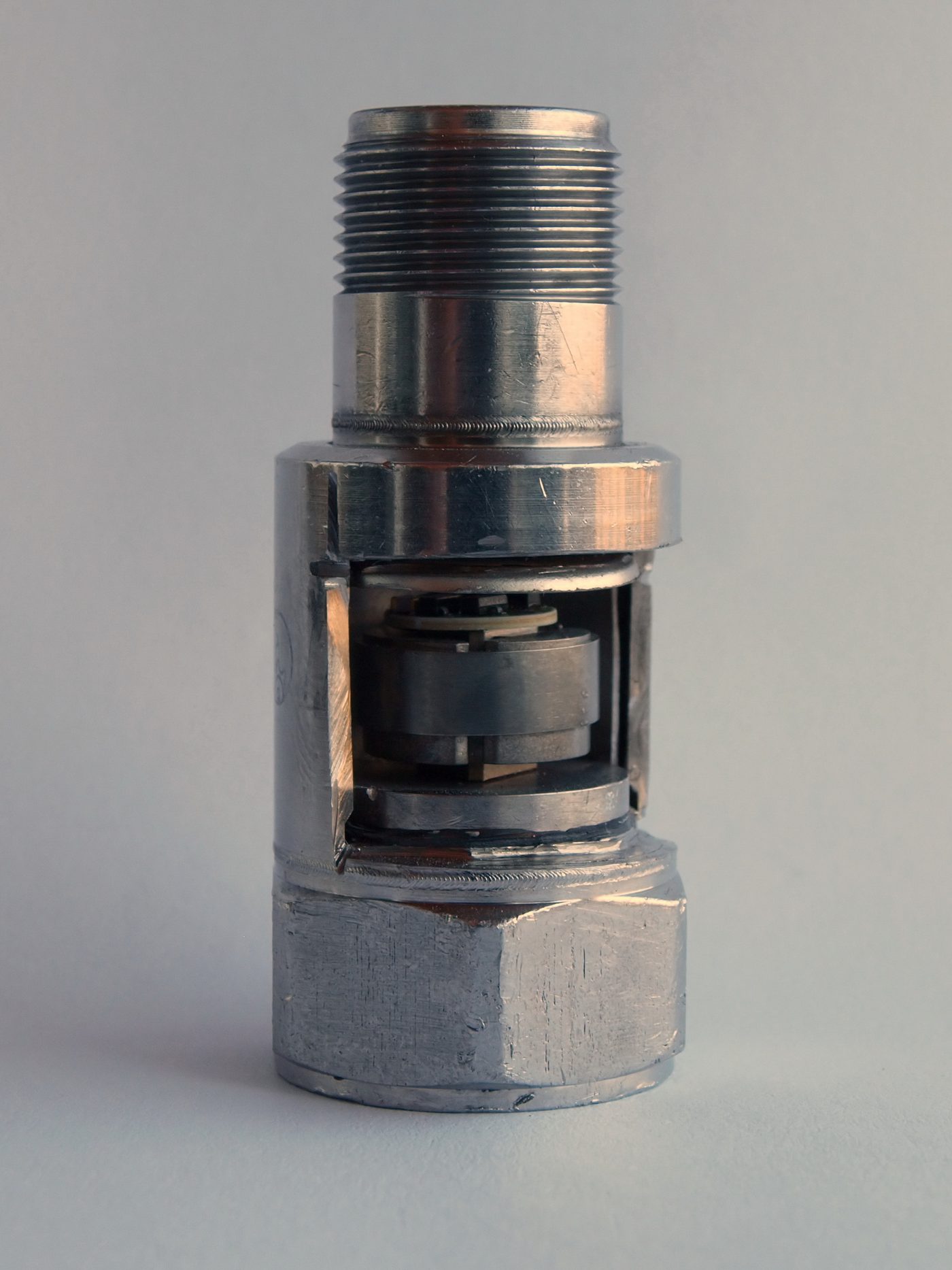
Metal accelerometer sensor with exposed internal components (Source: Wikipedia (Accelerometer))
Piezoelectric sensors are used in retail environments to monitor foot traffic through vibration detection, aiding business analytics. In agriculture, they help detect machinery faults early, minimizing downtime and losses.
Explain how resistive transducers operate and provide five examples of their applications in Kenyan industries. (10 marks)
Describe the working principle of capacitive transducers and discuss their advantages in environmental monitoring. (10 marks)
Compare inductive and piezoelectric transducers in terms of their operating mechanisms and typical applications. (10 marks)
Create a free account to open more of this chapter.
Free: practical guides, quick cards, workplace scenarios and more.
Create a free accountThis chapter explored various types of transducers, explaining their role in converting physical quantities into measurable electrical signals. It then examined different types of electrical instruments, highlighting their design and applications in practical settings. The focus shifted to the measurement of electrical quantities such as voltage, current, and resistance, detailing the proper use of instruments to obtain accurate readings. Calculations involving these instruments were discussed, emphasizing how to interpret and manipulate measurement data effectively. The chapter also addressed instrumental and systematic errors, identifying common sources and their impact on measurement accuracy. Finally, methods for calculating and compensating for systematic errors were presented to enhance the reliability of electrical measurements in technical environments.
Type: Individual
| Tools & Equipment | Materials |
|---|---|
| Multimeter Digital | Thermocouple Type K |
| Screwdriver Set | Strain Gauge |
| Pliers Combination | LVDT (Linear Variable Differential Transformer) |
| Wire Stripper | Piezoelectric Transducer |
| Connecting Wires 1.5 mm2 PVC insulated | |
| Breadboard or Terminal Strip | |
| Power Supply 12 V DC regulated | |
| Personal Protective Equipment (Gloves, Goggles, Dustcoat) |
| S/N | Item | Quantity |
|---|---|---|
| 1 | Thermocouple Type K | 1 Pc per Candidate |
| 2 | Strain Gauge | 1 Pc per Candidate |
| 3 | LVDT (Linear Variable Differential Transformer) | 1 Pc per Candidate |
| 4 | Piezoelectric Transducer | 1 Pc per Candidate |
| 5 | Multimeter Digital | 1 Pc per Candidate |
| 6 | Connecting Wires 1.5 mm2 PVC insulated | 5 Metres per Candidate |
| 7 | Breadboard or Terminal Strip | 1 Pc per Candidate |
| 8 | Power Supply 12 V DC regulated | 1 Pc per Candidate |
| 9 | Screwdriver Set | 1 Set per Candidate |
| 10 | Pliers Combination | 1 Pc per Candidate |
| 11 | Wire Stripper | 1 Pc per Candidate |
| 12 | Personal Protective Equipment (Gloves, Goggles, Dustcoat) | 1 Set per Candidate |
| Items to be Evaluated | Marks Available | Marks Obtained | Comments |
|---|---|---|---|
| TASK 1: Identification and Connection of Transducers | |||
| Wore personal protective equipment (Gloves, Goggles, Dustcoat) (Award 2 or 0) | 2 | ||
| Applied good housekeeping by ensuring clean and organized workspace before starting (Award 1 or 0) | 1 | ||
| Identified Thermocouple Type K correctly (Award 2 or 0) | 2 | ||
| Identified Strain Gauge correctly (Award 2 or 0) | 2 | ||
| Identified LVDT correctly (Award 2 or 0) | 2 | ||
| Identified Piezoelectric Transducer correctly (Award 2 or 0) | 2 | ||
| Prepared and stripped connecting wires correctly for connections (Award 2 or 0) | 2 | ||
| Connected Thermocouple to the breadboard with correct polarity and terminals (Award 3 or 0) | 3 | ||
| Connected Strain Gauge with proper Wheatstone bridge configuration on breadboard (Award 3 or 0) | 3 | ||
| Connected LVDT to power supply and measurement device correctly (Award 3 or 0) | 3 | ||
| Connected Piezoelectric transducer to measurement circuit with correct polarity (Award 3 or 0) | 3 | ||
| Used multimeter correctly to test continuity and output signals from each transducer (Award 4 or 0) | 4 | ||
| Sub-Total | 29 | ||
| PRODUCT CHECKLIST | |||
| Correct and neat wiring layout on 300mm x 200mm breadboard with proper termination (Award 5 or 0) | 5 | ||
| Correct polarity and connections for all four transducers as per standard wiring diagrams (Award 6 or 0) | 6 | ||
| Demonstrated functional measurement output on multimeter for each connected transducer (Award 10 or 0) | 10 | ||
| Sub-Total | 21 | ||
| GRAND TOTAL | 50 | ||
Type: Individual
| Tools & Equipment | Materials |
|---|---|
| Digital Multimeter | 240V AC Power Supply |
| Clamp Meter | 1.5 mm2 PVC Sheathed Cable |
| Analog Voltmeter | |
| Test Lamp | |
| Insulated Screwdriver | |
| Protective Gloves | |
| Safety Goggles |
| S/N | Item | Quantity |
|---|---|---|
| 1 | Digital Multimeter | 1 Pc per Candidate |
| 2 | Clamp Meter | 1 Pc per Candidate |
| 3 | Analog Voltmeter | 1 Pc per Candidate |
| 4 | Test Lamp | 1 Pc per Candidate |
| 5 | 240V AC Power Supply | Reliable per Candidate |
| 6 | 1.5 mm2 PVC Sheathed Cable | 2 Metres per Candidate |
| 7 | Protective Gloves | 1 Pair per Candidate |
| 8 | Insulated Screwdriver | 1 Pc per Candidate |
| 9 | Safety Goggles | 1 Pair per Candidate |
| Items to be Evaluated | Marks Available | Marks Obtained | Comments |
|---|---|---|---|
| TASK 1: Safety and Preparation | |||
| Wore personal protective equipment (gloves and goggles) (Award 2 marks for wearing both gloves and goggles, 0 otherwise) | 2 | ||
| Ensured clean and safe working area before starting (Award 1 mark for clear, hazard-free workspace) | 1 | ||
| Sub-Total | 3 | ||
| TASK 2: Instrument Identification and Setup | |||
| Correctly identified digital multimeter and explained its functions (Award 2 marks for accurate identification and explanation) | 2 | ||
| Correctly identified clamp meter and explained its use for current measurement (Award 2 marks for accurate identification and explanation) | 2 | ||
| Correctly identified analog voltmeter and explained its function (Award 2 marks for accurate identification and explanation) | 2 | ||
| Correctly identified test lamp and explained its use for continuity checks (Award 1 mark for correct identification and explanation) | 1 | ||
| Sub-Total | 7 | ||
| TASK 3: Performing Measurements | |||
| Measured AC voltage using digital multimeter correctly (Award 3 marks for safe and accurate voltage measurement) | 3 | ||
| Measured current using clamp meter correctly (Award 3 marks for safe and accurate current measurement) | 3 | ||
| Measured resistance on 1.5 mm2 cable using digital multimeter correctly (Award 3 marks for correct resistance measurement procedure) | 3 | ||
| Tested continuity using test lamp correctly (Award 2 marks for correct continuity test) | 2 | ||
| Sub-Total | 11 | ||
| TASK 4: Instrument Handling and Safety | |||
| Handled instruments carefully avoiding damage (Award 2 marks for proper handling) | 2 | ||
| Ensured instruments were set to correct ranges before measurement (Award 2 marks for correct range selection) | 2 | ||
| Disconnected instruments safely after use (Award 2 marks for safe disconnection and storage) | 2 | ||
| Sub-Total | 6 | ||
| PRODUCT CHECKLIST | |||
| Correct and accurate measurements recorded for voltage (approx. 230V ±10V), current (within 5% tolerance), resistance (within expected range), and continuity (lamp glows when circuit closed) (Award 13 marks for all measurements accurate within specified tolerances, 0 otherwise) | 13 | ||
| Sub-Total | 13 | ||
| GRAND TOTAL | 40 | ||
At the start of this chapter we promised you would be able to:
Tick each one you can genuinely do.
So, are you there yet?
You're competent when you can confidently do 50% or more of what this chapter promised.
Sign in to record how you're doing.