Electricity is central to modern professional environments across Kenya, powering everything from hospital equipment to banking systems and agricultural machinery. Understanding the sources of electricity and the principles behind its generation and storage is essential for professionals in all fields. This chapter explores the fundamental types of electricity sources and delves into the process of electrolysis, highlighting its practical applications in various sectors such as water treatment and metal recovery.
2.1 Sources of electricity
Electricity can be generated and supplied through various sources, each with unique characteristics affecting reliability, cost, and environmental impact. In Kenya, professionals encounter electricity from both conventional and renewable sources, which influence operational decisions in institutions like county government offices and universities.
2.1.1 Primary and secondary sources of electricity
Electricity sources are broadly categorized into primary and secondary types, reflecting how electricity is initially produced or stored.
Primary sources of electricity
-
Fossil fuels: These include coal, oil, and natural gas, which are burned to generate electricity. Though less common in Kenya's electricity mix, they remain significant globally and affect institutions relying on national grid power.
-
Hydropower: Generated by water flowing through turbines, hydropower is a major source in Kenya, supplying many county hospitals with stable electricity.
- Solar energy: Solar panels convert sunlight directly into electricity, increasingly used by schools in rural areas to ensure continuous power supply.
- Wind energy: Wind turbines generate electricity from air movement, a growing source in some Kenyan counties with favorable wind conditions.
- Geothermal energy: Utilizes heat from the earth’s interior to produce electricity, providing a renewable base load for urban centers like Nairobi.
Secondary sources of electricity
-
Batteries: Store electrical energy chemically for later use, essential for backup power in retail businesses during outages.
-
Capacitors: Store electrical energy temporarily in an electric field, used in electronic devices across various sectors.
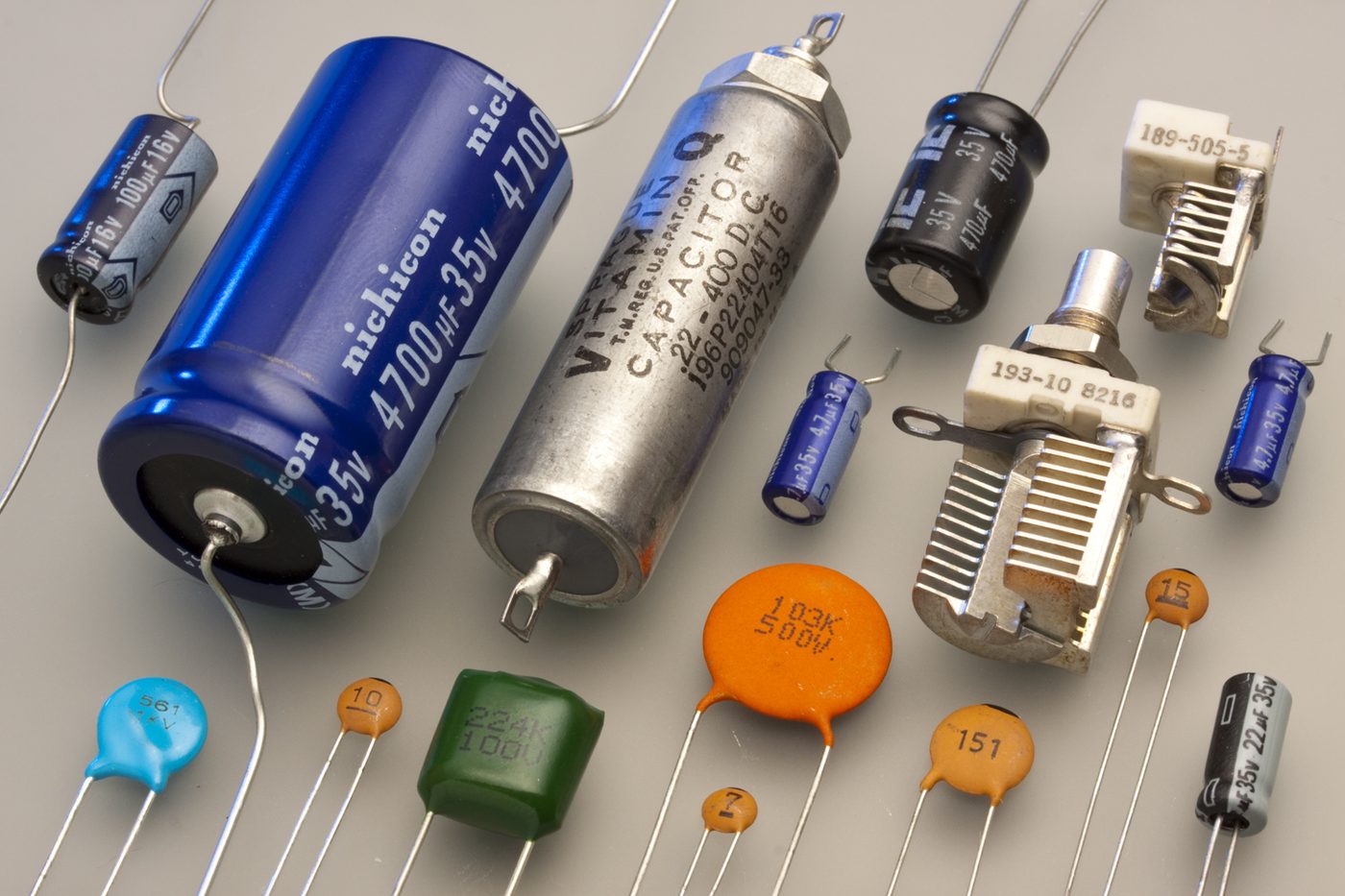
Various types of capacitors for electronics (Source: Wikipedia (Capacitor))
- Cells: Single electrochemical units converting chemical energy into electrical energy, powering devices such as medical equipment in county referral hospitals.
2.1.2 Renewable and non-renewable sources
The distinction between renewable and non-renewable electricity sources impacts sustainability and long-term planning in professional environments.
Renewable sources
- Solar power: Renewable and abundant, solar energy supports off-grid power in agricultural cooperatives.
- Wind power: Sustainable and clean, it powers certain county government offices with minimal environmental footprint.
- Hydropower: Renewable but dependent on rainfall patterns, critical for universities relying on consistent electricity.
- Geothermal power: Provides continuous renewable energy, supporting industrial sectors in Kenya.
- Biomass energy: Derived from organic materials, used in some rural hotels for combined heat and power.
Non-renewable sources
- Fossil fuels: Finite and polluting, used in backup generators at banks and SACCOs during power failures.
- Nuclear energy: Not yet widely adopted in Kenya but a significant non-renewable source globally.
- Coal: Limited use in Kenya but important in some industrial power generation contexts.
2.1.3 Direct current (DC) and alternating current (AC) sources
Understanding the nature of electrical current is fundamental for professionals managing electrical devices and infrastructure.
Direct current (DC)
- Definition: Current flows in a single direction, typical of batteries and cells.
- Applications: Used in portable electronic devices in hospitals and retail businesses.
- Advantages: Stable voltage output, ideal for sensitive equipment.
- Limitations: Less efficient for long-distance transmission.
- Example: UPS systems in universities use DC batteries to provide emergency power.
Alternating current (AC)
- Definition: Current reverses direction periodically.
- Applications: Powers most buildings and industrial equipment, including county government offices.
- Advantages: Efficient for transmission over long distances.
- Limitations: Requires transformers to change voltage levels.
- Example: The national grid supplies AC power to banks and hotels.
2.1.4 Importance of understanding electricity sources in professional settings
Knowledge of electricity sources enables effective decision-making regarding energy use, cost management, and sustainability.
Operational efficiency
- Energy selection: Choosing appropriate power sources reduces operational costs in sectors like healthcare.
- Backup planning: Understanding battery systems ensures continuity in retail businesses during outages.
- Equipment compatibility: Matching devices with correct current types prevents damage in educational institutions.
- Sustainability goals: Integrating renewable sources aligns county offices with environmental policies.
- Risk management: Anticipating power source limitations minimizes disruptions in banking services.
Practice Questions
- Differentiate between primary and secondary sources of electricity, providing examples relevant to Kenyan professional environments. (10 marks)
- Explain the advantages and limitations of direct current and alternating current in workplace applications. (10 marks)
- List five renewable sources of electricity and describe their significance in Kenyan institutions. (10 marks)
- Discuss how understanding electricity sources can improve operational efficiency in a county referral hospital. (10 marks)
The rest of this chapter
🔒Create a free account to open more of this chapter.
Free: practical guides, quick cards, workplace scenarios and more.
Create a free account 🔒2.2 Electrolysis and its applications
Electrolysis is a chemical process that uses electric current to drive non-spontaneous reactions, playing a vital role in various industrial and environmental processes within Kenya. Its applications span water purification, metal extraction, and chemical manu…
🔒2.3 Simple cells
In the context of Kenya's diverse professional fields, understanding simple cells is fundamental for grasping how electrical energy is generated and harnessed in everyday devices. Simple cells form the basic building block of batteries used in various sectors…
🔒2.4 Primary and secondary cells
Understanding the distinction between primary and secondary cells is crucial for professionals across Kenyan industries who depend on reliable and sustainable power sources. These two categories of cells differ in functionality and reusability, impacting decis…
🔒2.5 Types of cells and batteries
In Kenyan workplaces across diverse sectors such as healthcare facilities, financial institutions, educational campuses, and agricultural cooperatives, understanding the types of cells and batteries is crucial. These energy sources power a range of equipment f…
🔒2.6 E.m.f and internal resistance of cells
In Kenya's diverse workplaces, from county referral hospitals to retail businesses, understanding the fundamental electrical properties of cells and batteries is crucial for maintaining reliable power supplies. The electromotive force (E.m.f.) and internal res…
🔒2.7 Maintenance of batteries
Proper maintenance of batteries is vital across all sectors in Kenya, including hospitals, universities, hotels, and agricultural cooperatives, to ensure longevity and reliable power supply. Maintenance practices reduce operational costs and prevent sudden fai…
🔒2.8 Applications of batteries
Batteries play a crucial role in powering numerous devices and systems across various sectors in Kenya. From hospitals ensuring uninterrupted medical equipment operation to rural farms using solar-powered irrigation systems, batteries provide portable, reliabl…
Chapter Summary
This chapter explored various sources of electricity, highlighting their fundamental role in powering devices and systems. It examined the process of electrolysis and its practical applications in industries and technology. The concept of simple cells was introduced, explaining how chemical reactions generate electrical energy. The distinction between primary and secondary cells was clarified, emphasizing their differing capabilities for recharge and reuse. Various types of cells and batteries were described, including dry cells, Leclanché, mercury, lead-acid, alkaline, and lithium, each with unique characteristics and uses. The chapter also covered important electrical properties of cells such as electromotive force and internal resistance, which affect performance. Proper maintenance techniques for batteries were discussed to ensure longevity and efficiency. Lastly, the diverse applications of batteries in everyday and specialized equipment were outlined, demonstrating their essential role in modern electrical systems.
Self-Assessment
🔒 PDFDownload this self-assessment, with answers
A. Written Assessment
- Define electromotive force (e.m.f) and explain how it differs from terminal voltage. (4 marks)
- Identify three common sources of electricity used in Kenyan county government offices and describe their relevance. (6 marks)
🔒20 more in this section.
Chapter Examination Questions
🔒 PDFDownload these examination questions, with worked answers
SECTION A (40 Marks) - Answer ALL Questions
- Explain the difference between a cell and a battery, giving an example of where a battery is commonly used in a county hospital. (4 marks)
- Describe the process of electrolysis and provide one practical application in the agricultural sector. (4 marks)
🔒18 more in this section.
Chapter Practical Activities
Practical 1: Identify and Classify Sources of Electricity
Electrical Engineering · Level 5
Basic Electrical Principles
PRACTICAL ASSESSMENT
TIME: 4 HOURS
⬇ PDFCandidate Instructions (Candidate Tool)
Type: Individual
INSTRUCTIONS TO CANDIDATE:
1. You are required to perform the following task:
i. Identify and classify five different sources of electricity by demonstrating their voltage output and suitability for electrical applications using standard measuring instruments.
2. You have been provided with the following resources for the practical task:
| Tools & Equipment | Materials |
|---|
| Multimeter | 1.5 V AA Alkaline Cell |
| Connecting Wires | 9 V PP3 Battery |
| Lead Acid 12 V Battery (7 Ah) |
| Solar Panel 12 V, 10 W |
| Hand Crank Dynamo |
| Resistive Load (Incandescent Bulb 12 V, 3 W) |
⬇ PDFResources Required (Cutting List)
| S/N | Item | Quantity |
|---|
| 1 | 1.5 V AA Alkaline Cell | 2 Pcs per Candidate |
| 2 | 9 V PP3 Battery | 1 Pc per Candidate |
| 3 | Lead Acid 12 V Battery (7 Ah) | 1 Pc per 2 Candidates |
| 4 | Solar Panel 12 V, 10 W | 1 Pc per 3 Candidates |
| 5 | Hand Crank Dynamo | 1 Pc per Candidate |
| 6 | Multimeter | 1 Pc per Candidate |
| 7 | Connecting Wires 1.5 mm2 PVC insulated, 1 m length | 2 Metres per Candidate |
| 8 | Resistive Load (Incandescent Bulb 12 V, 3 W) | 1 Pc per Candidate |
| 9 | Protective Gloves | 1 Pair per Candidate |
| 10 | Safety Goggles | 1 Pair per Candidate |
| 11 | Dustcoat/Overall | 1 Pc per Candidate |
⬇ PDFAssessor Guide
| Items to be Evaluated | Marks Available | Marks Obtained | Comments |
|---|
| TASK 1: Preparation and Safety |
Wore personal protective equipment including dustcoat, gloves, and safety goggles
(Award 3 or 0) | 3 | | |
Ensured working area is clean and organized before starting
(Award 2 or 0) | 2 | | |
| Sub-Total | 5 | | |
| TASK 2: Identification and Measurement |
Correctly connected multimeter to each source to measure voltage
(Award 2 marks for each correct connection, total 4 marks) | 4 | | |
Demonstrated safe handling of all sources during measurement
(Award 2 or 0) | 2 | | |
Used connecting wires properly without damaging insulation
(Award 2 or 0) | 2 | | |
| Sub-Total | 8 | | |
| TASK 3: Classification and Demonstration |
Classified each source correctly as primary or secondary
(Award 1 mark for each correct classification, total 3 marks) | 3 | | |
Demonstrated each source’s suitability by powering the resistive load or equivalent
(Award 5 or 0) | 5 | | |
Explained briefly the advantages and limitations of each source
(Award 4 or 0) | 4 | | |
| Sub-Total | 12 | | |
| PRODUCT CHECKLIST |
Accurate recorded voltage readings for each source within ±0.1 V of expected values
(Award 5 or 0) | 5 | | |
Correctly identified and labeled each source in a classification table
(Award 5 or 0) | 5 | | |
Demonstrated functional connection of at least three sources to power the load successfully
(Award 5 or 0) | 5 | | |
| Sub-Total | 15 | | |
| GRAND TOTAL | 40 | | |
ASSESSMENT OUTCOME: ☐ Competent ☐ Not Yet Competent (competent if at least 50%)
Practical 2: Demonstrate electrolysis of copper sulfate solution and explain its applications
Electrical Engineering · Level 5
Basic Electrical Principles
PRACTICAL ASSESSMENT
TIME: 4 HOURS
⬇ PDFCandidate Instructions (Candidate Tool)
Type: Individual
INSTRUCTIONS TO CANDIDATE:
1. You are required to perform the following task:
i. Set up an electrolysis apparatus using a 500 ml beaker with 250 ml of 0.5 M copper sulfate solution and two copper electrodes connected to a 6 V DC supply to demonstrate copper deposition over 30 minutes.
2. You have been provided with the following resources for the practical task:
| Tools & Equipment | Materials |
|---|
| 6 V DC power supply | Copper sulfate solution (0.5 M) |
| Connecting wires with crocodile clips | Electrolysis cell apparatus with two copper electrodes |
| Glass stirring rod | Beaker 500 ml |
⬇ PDFResources Required (Cutting List)
| S/N | Item | Quantity |
|---|
| 1 | Copper sulfate solution (0.5 M) | 250 ml per Candidate |
| 2 | Electrolysis cell apparatus with two copper electrodes | 1 set per Candidate |
| 3 | 6 V DC power supply | 1 per Candidate |
| 4 | Connecting wires with crocodile clips | 1 set per Candidate |
| 5 | Beaker 500 ml | 1 per Candidate |
| 6 | Glass stirring rod | 1 per Candidate |
| 7 | Safety goggles | 1 pair per Candidate |
| 8 | Rubber gloves | 1 pair per Candidate |
| 9 | Lab apron | 1 per Candidate |
⬇ PDFAssessor Guide
| Items to be Evaluated | Marks Available | Marks Obtained | Comments |
|---|
| TASK 1: Setup and Demonstration of Electrolysis |
Wore personal protective equipment (goggles, gloves, apron)
(Award 2 marks if all PPE worn correctly, else 0) | 2 | | |
Prepared clean working area with all materials arranged
(Award 1 mark for clean, organized workspace) | 1 | | |
Measured and poured 250 ml of 0.5 M copper sulfate solution into the beaker
(Award 2 marks for correct measurement and pouring) | 2 | | |
Properly connected two copper electrodes to power supply using crocodile clips
(Award 3 marks for correct and secure connections) | 3 | | |
Set power supply to 6 V DC and switched on for electrolysis
(Award 2 marks for correct voltage setting and operation) | 2 | | |
Demonstrated copper deposition on cathode after 30 minutes
(Award 4 marks for clear visible copper deposition) | 4 | | |
Explained the electrolysis process and at least two practical applications
(Award 6 marks for clear explanation and relevant applications such as metal refining and electroplating) | 6 | | |
Cleaned up the workstation and disposed of chemicals safely
(Award 2 marks for proper cleanup and safety) | 2 | | |
| Sub-Total | 22 | | |
| PRODUCT CHECKLIST |
Correct and stable electrolysis apparatus setup with electrodes properly positioned
(Award 5 marks for correct apparatus setup and electrode placement) | 5 | | |
Visible copper deposition on cathode electrode after 30 minutes
(Award 8 marks for clear copper deposition with no contamination) | 8 | | |
Clear and concise explanation of electrolysis process and applications
(Award 5 marks for accurate explanation and relevant applications) | 5 | | |
| Sub-Total | 18 | | |
| GRAND TOTAL | 40 | | |
ASSESSMENT OUTCOME: ☐ Competent ☐ Not Yet Competent (competent if at least 50%)
🔒Construct and Test a Simple Cell Using Basic MaterialsPractical 3
🔒Test and distinguish primary and secondary cellsPractical 4
🔒Identification and Explanation of Different Types of Cells and BatteriesPractical 5
🔒Assemble and Test a 4.5V Dry Cell BatteryPractical 6
🔒Examine and Test a Leclanché CellPractical 7
🔒Handling and Testing a Mercury Cell for Voltage and SuitabilityPractical 8
🔒Maintain and test a 12V 40Ah lead-acid batteryPractical 9
🔒Testing Voltage and Load Capacity of Alkaline BatteriesPractical 10
🔒Identify and Test Lithium Batteries for Voltage and Current OutputPractical 11
🔒Measurement of Electromotive Force and Internal Resistance of a CellPractical 12
🔒Perform Battery Maintenance Procedures on Lead-Acid and Alkaline BatteriesPractical 13
🔒Demonstrate the application of batteries in powering a DC circuitPractical 14
