Maintaining a stand-alone solar photovoltaic (PV) system is essential for ensuring reliable and efficient power supply, especially in off-grid areas such as rural health facilities, schools, and small businesses across Kenya. Proper upkeep extends the lifespan of the solar components, reduces downtime, and safeguards investment. In contexts like county referral hospitals and agricultural cooperatives, uninterrupted power from solar PV systems supports critical operations and enhances productivity. This chapter covers key aspects of maintaining the electrical system and the necessary tools and equipment for effective maintenance.
6.1 Electrical System Inspection
Routine inspection of the electrical components in a stand-alone solar PV system is vital to detect faults early and prevent system failure. Inspections help identify issues such as loose connections, corrosion, or damaged wiring that could compromise safety or performance. In institutions like universities and banks, where power reliability is crucial for daily operations, systematic electrical checks reduce the risk of outages and costly repairs. This topic explores the essential elements and procedures involved in electrical system inspection.
6.1.1 Purpose and Scope of Electrical System Inspection
Electrical system inspection in a solar PV setup aims to verify the condition and functionality of all electrical components and connections. It ensures that the system operates within safe parameters and maintains optimal energy flow. Inspections cover the PV modules, wiring, charge controllers, batteries, inverters, and protective devices. For example, a county government office relying on solar power for lighting and computing must regularly inspect to prevent unexpected failures that disrupt services.
Purpose of Electrical System Inspection
- Ensure Safety: Detecting electrical faults such as exposed wires or poor insulation prevents hazards like electric shocks or fires.
- Maintain System Efficiency: Identifying and rectifying issues such as loose terminals or corroded connectors helps maintain maximum power output.
- Prevent Downtime: Early detection of faults allows timely repairs, minimizing system outages and operational disruptions.
- Extend Component Lifespan: Regular checks reduce stress on components by ensuring they operate within design specifications, thus prolonging their useful life.
- Compliance with Standards: Inspections ensure the system meets regulatory and manufacturer requirements, which is critical for institutions like NEMA-regulated facilities.
Scope of Electrical System Inspection
- Visual Examination: Checking for physical damage, dirt accumulation, and corrosion on PV panels and wiring.
- Electrical Testing: Measuring voltage, current, and resistance across components to verify proper operation.
- Connection Integrity: Ensuring all terminals and connectors are tight and free from oxidation.
- Protection Devices: Inspecting fuses, circuit breakers, and surge protectors to confirm they are functional.
- Battery Condition: Assessing electrolyte levels, terminal cleanliness, and voltage status to maintain battery health.
6.1.2 Components Subject to Inspection in Solar PV Systems
A stand-alone solar PV system comprises several critical electrical components that require systematic inspection to ensure overall system integrity. Each component plays a specific role in power generation, storage, or distribution, and faults in any part can compromise the entire system.
Components Subject to Inspection
- Solar PV Modules: Check for cracks, discoloration, and dirt accumulation as these reduce solar energy absorption and output.
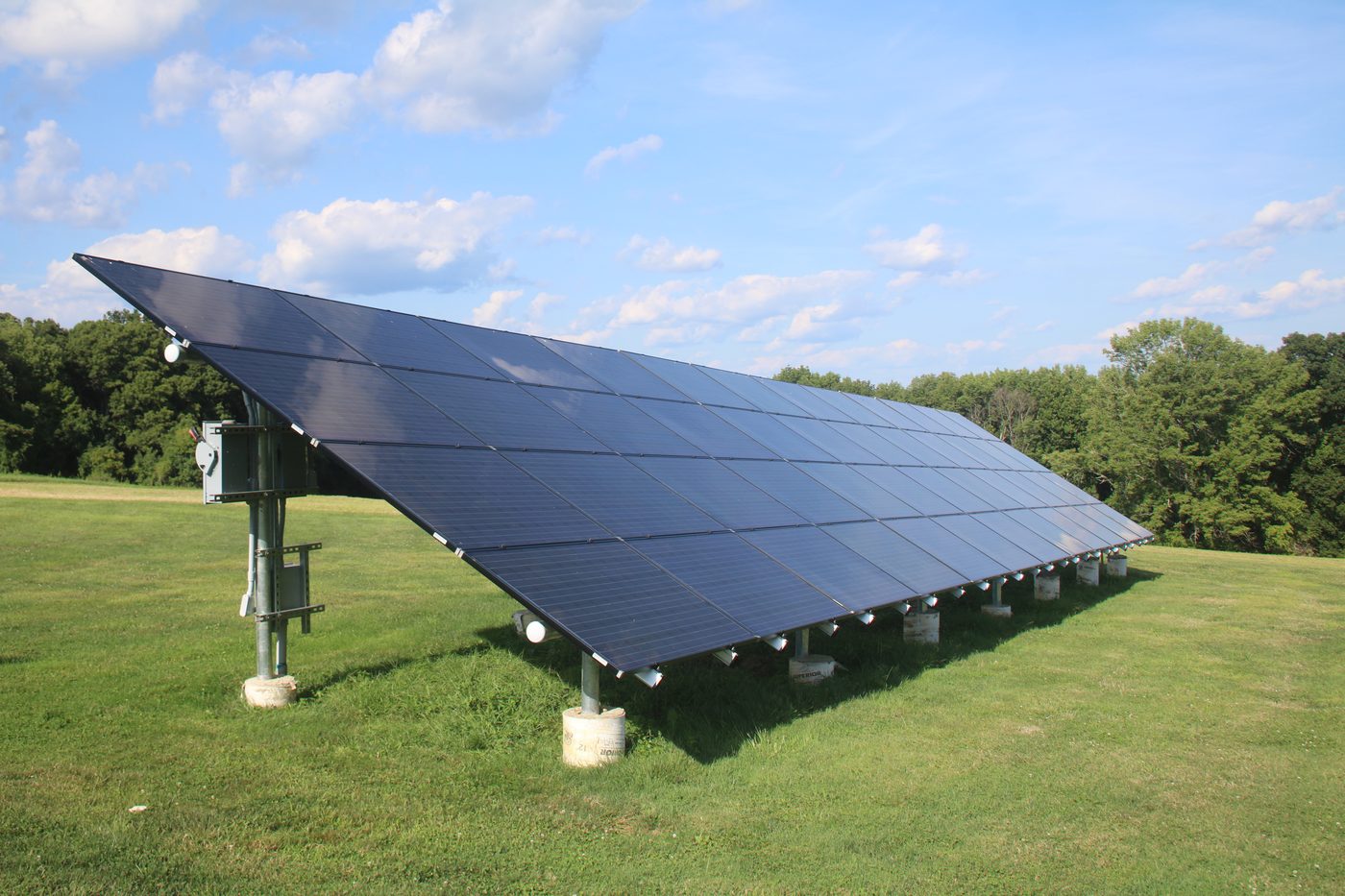
solar pv modules array installed outdoors (Source: Wikimedia Commons)
- Wiring and Cables: Inspect for insulation damage, cuts, or signs of overheating that could lead to short circuits or power loss.
- Charge Controllers: Verify operational status and settings to prevent battery overcharging or deep discharging.
-
Batteries: Examine terminals for corrosion, electrolyte levels for proper concentration, and measure voltage to assess charge status.
-
Inverters: Monitor output voltage and waveform quality to ensure efficient DC to AC conversion for connected loads.
- Protective Devices: Test fuses and circuit breakers to confirm they trip appropriately under fault conditions.
- Grounding System: Ensure grounding connections are secure to protect the system and users from electrical faults.
6.1.3 Procedures for Conducting Electrical System Inspection
Conducting a comprehensive electrical inspection requires a systematic approach using appropriate tools and safety precautions. The procedure ensures all components are checked thoroughly and documented for maintenance planning.
Steps for Electrical System Inspection
- Prepare the Inspection Area: Disconnect the system from load and isolate the battery bank to prevent accidental shocks.
- Visual Inspection: Examine all visible components including PV modules, wiring, and enclosures for signs of wear, damage, or contamination.
- Test Electrical Connections: Use a multimeter to measure voltage and continuity across wiring terminals and connectors.
- Check Battery Health: Measure individual battery voltages and specific gravity (where applicable) to assess charge and condition.
- Verify Charge Controller Operation: Confirm settings and output readings align with system specifications.
- Inspect Protective Devices: Test fuses and circuit breakers by simulating fault conditions or using specialized test equipment.
- Record Findings: Document all observations, measurements, and any irregularities for follow-up maintenance or repairs.
6.1.4 Safety Considerations During Electrical Inspection
Safety is paramount when inspecting electrical systems to prevent accidents and equipment damage. Adhering to safety protocols protects the technician and ensures compliance with occupational health standards.
Safety Precautions
- Use Personal Protective Equipment (PPE): Wear insulated gloves, safety glasses, and appropriate footwear to guard against electric shock.
- Isolate Power Sources: Disconnect batteries and solar arrays before inspection to eliminate live circuits.
- Follow Lockout-Tagout Procedures: Prevent accidental energizing of the system during inspection.
- Avoid Wet Conditions: Conduct inspections in dry weather or ensure surfaces are dry to prevent slips and electrical hazards.
- Use Proper Tools: Employ insulated tools and calibrated test equipment designed for electrical work.
- Maintain Safe Distances: Keep clear of energized components and avoid contact with exposed conductive parts.
The rest of this chapter
🔒Create a free account to open more of this chapter.
Free: practical guides, quick cards, workplace scenarios and more.
Create a free account 🔒6.2 Identification of Maintenance Tools and Equipment
Effective maintenance of stand-alone solar PV systems requires a range of specialized tools and equipment to diagnose, repair, and service the electrical components. Proper identification and use of these tools enhance maintenance quality and safety. Various s…
🔒6.3 Maintenance Activities
Maintaining a stand-alone solar photovoltaic (PV) system is critical to ensure its longevity, efficiency, and reliability, particularly in Kenya where off-grid solar power supports diverse sectors such as healthcare, education, agriculture, and small-scale com…
🔒6.4 Electrical System Tests
Maintaining the reliability and safety of stand-alone solar PV systems in Kenya’s diverse sectors requires regular electrical system tests. These tests ensure the system components perform optimally and prevent unexpected failures, which can disrupt critical s…
🔒6.5 Maintenance Activities
Routine maintenance activities are critical to prolonging the lifespan and optimizing the performance of stand-alone solar PV systems across Kenya’s sectors. Institutions such as universities, hotels, SACCOs, and farms rely on these systems for energy independ…
🔒6.6 Identification of Faulty Components
Identifying faulty components in a stand-alone solar PV system is a critical maintenance task that ensures the system operates efficiently and reliably. In Kenya, where many institutions such as county referral hospitals and universities depend on solar energy…
🔒6.7 Recording of Inspection Findings
Accurate recording of inspection findings is essential for effective maintenance management of stand-alone solar PV systems. In Kenya’s diverse professional settings such as banks, schools, and county offices, systematic documentation supports decision-making,…
🔒6.8 Repair/Replacement of Faulty Components
Maintaining the operational integrity of stand-alone solar PV systems requires timely repair or replacement of faulty components. In Kenya, organizations such as county referral hospitals and universities rely on these systems to ensure uninterrupted power sup…
🔒6.9 Fill in Maintenance Checklist
A maintenance checklist is a structured tool that guides technicians and users in systematically inspecting and servicing stand-alone solar PV systems. In Kenya, organizations such as county hospitals and retail businesses use these checklists to ensure all cr…
🔒6.10 Disposal of Waste Materials
Proper disposal of waste materials from stand-alone solar PV systems is critical to environmental protection and compliance with Kenyan regulations. Organizations such as county hospitals, universities, and agricultural cooperatives increasingly rely on solar…
Chapter Summary
This chapter covered the essential procedures for maintaining stand-alone solar PV systems, beginning with a thorough electrical system inspection to detect any anomalies or potential faults. It emphasized the importance of identifying the correct maintenance tools and equipment to ensure safe and effective servicing. Various maintenance activities were detailed, including disassembling and assembling components, cleaning system parts to prevent dirt accumulation, tightening loose connections, and replacing faulty components to maintain optimal performance. Electrical system tests were described as critical for verifying system functionality and diagnosing issues. Additional maintenance tasks such as cleaning battery terminals, topping up batteries to maintain charge levels, and addressing loose connections were also discussed. The chapter highlighted methods for identifying faulty components accurately and the importance of recording inspection findings systematically for future reference. Finally, it addressed the repair or replacement of defective parts, completing maintenance checklists for accountability, and the proper disposal of waste materials to ensure environmental safety.
Self-Assessment
🔒 PDFDownload this self-assessment, with answers
A. Written Assessment
- What are the key components that should be inspected during an electrical system inspection of a stand-alone solar PV system? (3 marks)
- Identify three essential tools used for maintenance of solar PV systems and explain their specific use. (4 marks)
🔒20 more in this section.
Chapter Examination Questions
🔒 PDFDownload these examination questions, with worked answers
SECTION A (40 Marks) - Answer ALL Questions
- Describe the key steps involved in inspecting the electrical system of a stand-alone solar PV system at a county referral hospital. (4 marks)
- List five essential tools and equipment required for maintaining a stand-alone solar PV system in a university setting. (4 marks)
🔒18 more in this section.
Chapter Practical Activities
Practical 1: Inspection and Recording of Stand-Alone Solar PV Electrical System
Electrical Engineering · Level 5
Stand-Alone Solar PV Systems
PRACTICAL ASSESSMENT
TIME: 4 HOURS
⬇ PDFCandidate Instructions (Candidate Tool)
Type: Individual
INSTRUCTIONS TO CANDIDATE:
1. You are required to perform the following task:
i. Inspect and record the condition and electrical parameters of the stand-alone solar PV system including solar panels, charge controller, battery, and DC load circuits as per the provided inspection checklist.
2. You have been provided with the following resources for the practical task:
| Tools & Equipment | Materials |
|---|
| Digital Multimeter | Safety Gloves |
| Insulation Resistance Tester (Megger) | Safety Boots |
| Screwdriver Set | Dustcoat/Overall |
| Insulated Pliers | Inspection Checklist Form |
| Pen |
⬇ PDFResources Required (Cutting List)
| S/N | Item | Quantity |
|---|
| 1 | Digital Multimeter | 1 Pc per Candidate |
| 2 | Insulation Resistance Tester (Megger) | 1 Pc per 3 Candidates |
| 3 | Screwdriver Set | 1 Set per Candidate |
| 4 | Insulated Pliers | 1 Pc per Candidate |
| 5 | Safety Gloves | 1 Pair per Candidate |
| 6 | Safety Boots | 1 Pair per Candidate |
| 7 | Dustcoat/Overall | 1 Pc per Candidate |
| 8 | Inspection Checklist Form | 1 Pc per Candidate |
| 9 | Pen | 1 Pc per Candidate |
⬇ PDFAssessor Guide
| Items to be Evaluated | Marks Available | Marks Obtained | Comments |
|---|
| TASK 1: Electrical System Inspection |
Wore personal protective equipment (dustcoat/overall, gloves, safety boots)
(Award 2 or 0) | 2 | | |
Prepared and organized tools and inspection form before starting
(Award 1 or 0) | 1 | | |
Checked and recorded open circuit voltage of solar panel array
(Award 3 or 0) | 3 | | |
Measured and recorded battery voltage and state of charge
(Award 3 or 0) | 3 | | |
Tested and documented charge controller input and output voltages
(Award 3 or 0) | 3 | | |
Inspected DC load circuit connections and measured load voltage
(Award 3 or 0) | 3 | | |
Performed insulation resistance test on wiring and recorded results
(Award 3 or 0) | 3 | | |
Identified and noted any visible defects or safety hazards in the system
(Award 2 or 0) | 2 | | |
Completed inspection checklist form legibly and accurately
(Award 2 or 0) | 2 | | |
| Sub-Total | 22 | | |
| PRODUCT CHECKLIST |
Inspection checklist fully completed with all required electrical parameters recorded
(Award 5 or 0) | 5 | | |
Accurate and consistent measurements within ±2% tolerance
(Award 5 or 0) | 5 | | |
Clear and precise identification of defects and safety issues
(Award 3 or 0) | 3 | | |
| Sub-Total | 13 | | |
| GRAND TOTAL | 35 | | |
ASSESSMENT OUTCOME: ☐ Competent ☐ Not Yet Competent (competent if at least 50%)
Practical 2: Identification and Selection of Maintenance Tools and Equipment for Stand-Alone Solar PV System
Electrical Engineering · Level 5
Stand-Alone Solar PV Systems
PRACTICAL ASSESSMENT
TIME: 3 HOURS
⬇ PDFCandidate Instructions (Candidate Tool)
Type: Individual
INSTRUCTIONS TO CANDIDATE:
1. You are required to perform the following task:
i. Identify and select the correct maintenance tools and equipment for routine upkeep of a stand-alone solar PV system as per the provided checklist.
2. You have been provided with the following resources for the practical task:
| Tools & Equipment | Materials |
|---|
| Digital Multimeter | |
| Insulated Screwdriver Set | |
| Wire Stripper and Cutter | |
| Adjustable Wrench | |
| Cleaning Brush (Soft Bristle) | |
| Safety Gloves | |
| Safety Goggles | |
| Multimeter Test Leads | |
| Torque Screwdriver | |
| Cleaning Cloth (Microfiber) | |
⬇ PDFResources Required (Cutting List)
| S/N | Item | Quantity |
|---|
| 1 | Digital Multimeter | 1 Pc per Candidate |
| 2 | Insulated Screwdriver Set | 1 Set per Candidate |
| 3 | Wire Stripper and Cutter | 1 Pc per Candidate |
| 4 | Adjustable Wrench | 1 Pc per Candidate |
| 5 | Cleaning Brush (Soft Bristle) | 1 Pc per Candidate |
| 6 | Safety Gloves | 1 Pair per Candidate |
| 7 | Safety Goggles | 1 Pair per Candidate |
| 8 | Multimeter Test Leads | 1 Set per Candidate |
| 9 | Torque Screwdriver | 1 Pc per 5 Candidates |
| 10 | Cleaning Cloth (Microfiber) | 1 Pc per Candidate |
⬇ PDFAssessor Guide
| Items to be Evaluated | Marks Available | Marks Obtained | Comments |
|---|
| TASK 1: Identification and Selection of Maintenance Tools |
Wore Personal Protective Equipment (Safety Gloves and Goggles)
(Award 2 or 0) | 2 | | |
Selected Digital Multimeter with appropriate test leads
(Award 2 or 0) | 2 | | |
Selected Insulated Screwdriver Set correctly
(Award 2 or 0) | 2 | | |
Selected Wire Stripper and Cutter for cable maintenance
(Award 2 or 0) | 2 | | |
Selected Adjustable Wrench for tightening connections
(Award 2 or 0) | 2 | | |
Selected Cleaning Brush and Microfiber Cloth for panel cleaning
(Award 2 or 0) | 2 | | |
Demonstrated correct handling of Torque Screwdriver (where applicable)
(Award 2 or 0) | 2 | | |
Demonstrated housekeeping by organizing selected tools neatly
(Award 2 or 0) | 2 | | |
| Sub-Total | 16 | | |
| PRODUCT CHECKLIST |
Correct identification and selection of all required maintenance tools and equipment as per checklist
(Award 1 mark for each correct tool selected up to 4 marks) | 4 | | |
| Sub-Total | 4 | | |
| GRAND TOTAL | 20 | | |
ASSESSMENT OUTCOME: ☐ Competent ☐ Not Yet Competent (competent if at least 50%)
🔒Disassemble and Assemble a Stand-Alone Solar PV System Components on a 600mm x 400mm Mounting BoardPractical 3
🔒Cleaning Stand-Alone Solar PV System Components 1200mm x 600mm PanelPractical 4
🔒Tighten all loose electrical connections in a 40W stand-alone solar PV systemPractical 5
🔒Replacement of Faulty Components in a Stand-Alone Solar PV SystemPractical 6
🔒Electrical System Testing of Stand-Alone Solar PV SystemPractical 7
🔒Battery Maintenance and Electrolyte Topping Up for Stand-Alone Solar PV SystemPractical 8
🔒Identification of Faulty Components in a Stand-Alone Solar PV SystemPractical 9
🔒Fill in Maintenance Checklist for Stand-Alone Solar PV SystemPractical 10
🔒Safe Disposal of Waste Materials from Stand-Alone Solar PV System MaintenancePractical 11
🔒Perform Combined Maintenance on a 40W Stand-Alone Solar PV SystemPractical 12
🔒Reassemble Stand-Alone Solar PV System Components and Secure ConnectionsPractical 13
🔒Visual Inspection and Documentation of Stand-Alone Solar PV SystemPractical 14
🔒Testing and Verifying Repaired Components of a Stand-Alone Solar PV System 600mm x 400mm x 300mmPractical 15
