
By the end of this chapter, you will be able to:
Mastering these skills will help you build safe, durable, and high-quality timber floors and frames that stand strong in real-world construction projects.
Compiled by: Michael Macharia
Constructing timber floors is a fundamental skill for carpentry and joinery professionals in Kenya, providing structural support and aesthetic appeal in residential, commercial, and institutional buildings. Timber floors must be designed and built with precision to ensure durability, safety, and comfort, especially given Kenya's diverse climatic conditions that affect timber performance. This chapter explores essential aspects of timber floor construction, focusing on personal protective equipment to ensure safety and the key timber flooring materials such as joists, sill plates, bearers, and battens, which form the backbone of any timber floor system.
Personal protective equipment (PPE) is critical for carpenters working on timber floors to prevent injuries and maintain health on construction sites. In Kenya, the construction environment can be unpredictable, with risks from sharp tools, heavy timber, and dust exposure. Using appropriate PPE not only complies with occupational safety laws but also enhances efficiency by reducing accidents and downtime.
Carpenters require specific PPE tailored to the hazards encountered during timber floor construction. The primary types include:

Man wearing a safety helmet (Source: Wikimedia Commons)
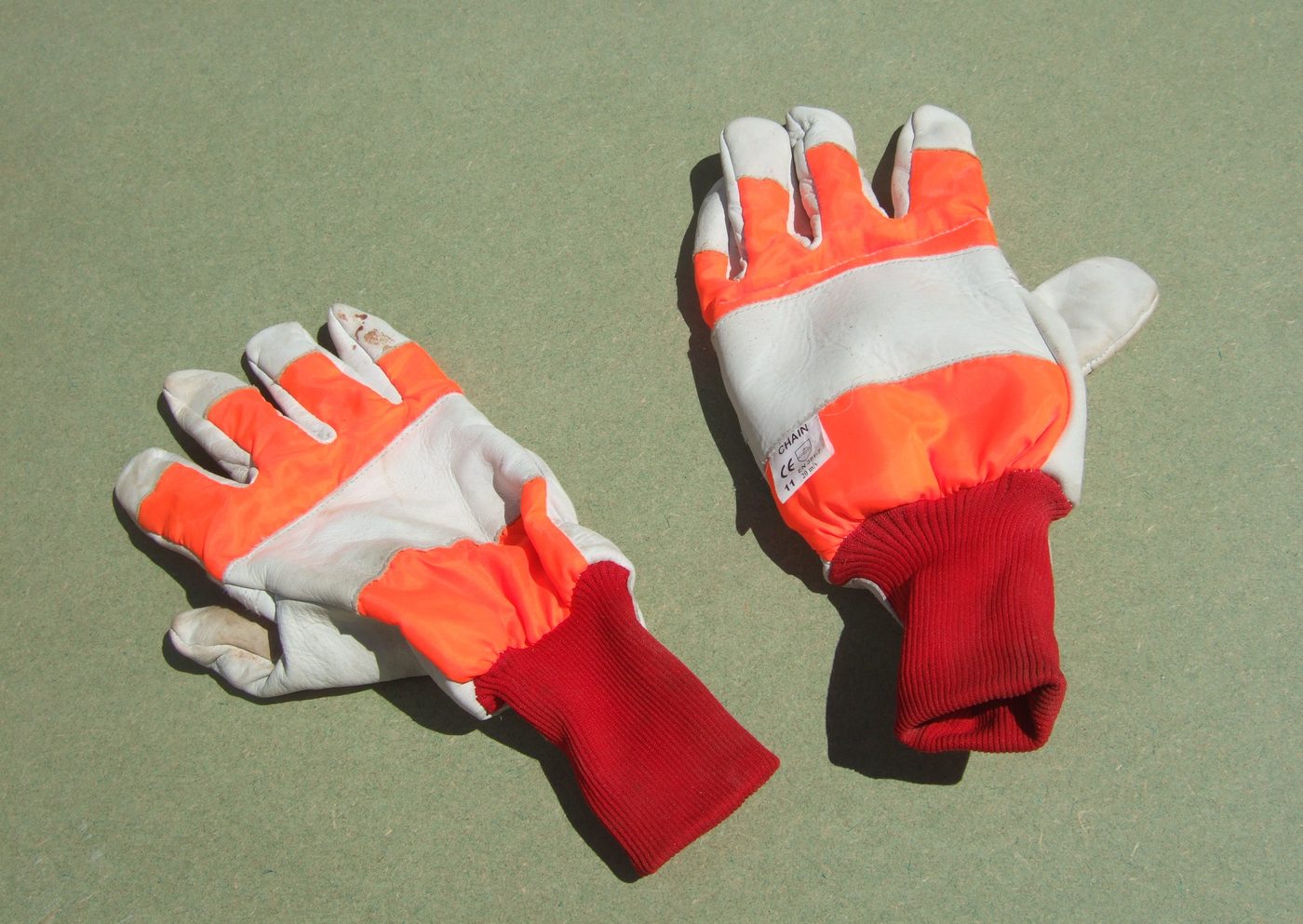
Pair of safety gloves for protection (Source: Wikimedia Commons)
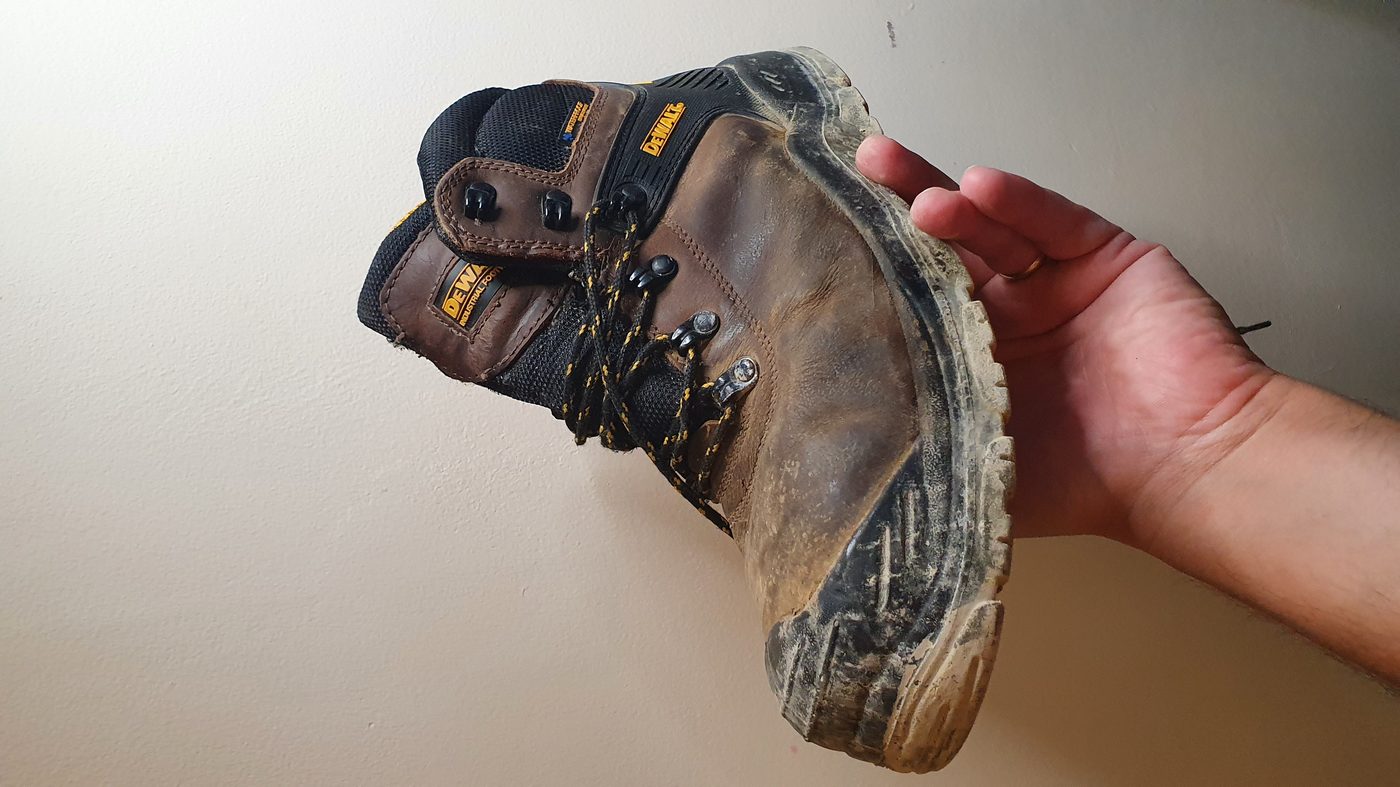
A single safety boot for industrial use (Source: Wikimedia Commons)
Adherence to PPE protocols is essential to safeguard carpenters against common injuries and occupational diseases. Kenyan construction sites, including hospitals and educational institutions, have reported incidents where lack of PPE led to preventable accidents. PPE also helps in:
To maximize protection, PPE must be used correctly and maintained regularly. Carpenters should:
Despite its importance, PPE usage faces challenges in Kenyan carpentry settings such as discomfort, cost, and lack of awareness. Addressing these challenges involves:
Create a free account to open more of this chapter.
Free: practical guides, quick cards, workplace scenarios and more.
Create a free accountThis chapter covered the essential aspects of constructing timber floors, beginning with the importance of personal protective equipment to ensure safety during all stages of work. It examined key timber flooring materials including joists, sill plates, bearers, and battens, each playing a vital role in providing structural support and stability. The chapter detailed the various tools and equipment used in setting out timber floors, ranging from marking and measuring instruments to cutting, driving, and shaping tools, emphasizing accurate floor dimension determination and marking through vertical and horizontal controls. Preparation of timber materials was explained with focus on cutting and planing techniques that ensure proper fit and finish. The discussion on fixing materials, tools, and equipment highlighted the components necessary for secure assembly of the floor structure. Procedures for checking floor plumbs and levels were described to guarantee an even and stable surface. Finally, the chapter outlined the process of laying timber floor covers, exploring different types of covering materials, and concluded with best practices in housekeeping to maintain a safe and organized work environment.
Type: Individual
| Tools & Equipment | Materials |
|---|---|
| Tape measure (5m) | Sawn softwood timber 100mm x 50mm x 1800mm |
| Wood pencil | Sawn softwood timber 100mm x 75mm x 1800mm |
| Try square | |
| Spirit level 600mm | |
| Marking gauge | |
| String line | |
| Chalk line |
| S/N | Item | Quantity |
|---|---|---|
| 1 | Tape measure (5m) | 1 Pc per Candidate |
| 2 | Wood pencil | 1 Pc per Candidate |
| 3 | Try square | 1 Pc per Candidate |
| 4 | Spirit level 600mm | 1 Pc per 5 Candidates |
| 5 | Marking gauge | 1 Pc per Candidate |
| 6 | String line | 2 rolls per 10 Candidates |
| 7 | Chalk line | 1 Pc per 5 Candidates |
| 8 | Safety boots | 1 Pair per Candidate |
| 9 | Overall | 1 Pc per Candidate |
| 10 | Hard hat (helmet) | 1 Pc per Candidate |
| 11 | Sawn softwood timber 100mm x 50mm x 1800mm | 2 Pcs per Candidate |
| 12 | Sawn softwood timber 100mm x 75mm x 1800mm | 2 Pcs per Candidate |
| Items to be Evaluated | Marks Available | Marks Obtained | Comments |
|---|---|---|---|
| TASK 1: Timber Floor Setting Out and Marking | |||
| Wore personal protective equipment (Safety boots, Overall, Helmet) (Award 1 mark for each PPE worn correctly) | 3 | ||
| Assembled all required tools and materials (Award 2 marks for complete tools and materials assembled or 0) | 2 | ||
| Measured floor dimensions 1800mm x 1200mm accurately (Award 3 marks for correct measurement and marking or 0) | 3 | ||
| Marked positions for floor joists at 400mm centers along the length (Award 1 mark for each correctly marked joist position, total 4 marks) | 4 | ||
| Marked bearer positions as per drawing (Award 3 marks for correct bearer marking or 0) | 3 | ||
| Used try square and marking gauge to ensure straight and square markings (Award 3 marks for proper use or 0) | 3 | ||
| Used string line and chalk line to mark straight horizontal control lines (Award 2 marks for correct use or 0) | 2 | ||
| Sub-Total | 20 | ||
| PRODUCT CHECKLIST | |||
| Floor dimensions marked 1800mm x 1200mm within ±5mm tolerance (Award 4 marks for correct dimensions or 0) | 4 | ||
| Joist positions marked at 400mm centers with ±5mm tolerance (Award 1 mark for each correctly positioned joist marking, total 6 marks) | 6 | ||
| Bearer positions marked correctly as per working drawing (Award 4 marks for correct bearer positions or 0) | 4 | ||
| Markings are straight, square, and clear using appropriate tools (Award 4 marks for neat and accurate markings or 0) | 4 | ||
| Sub-Total | 18 | ||
| GRAND TOTAL | 38 | ||
Type: Individual
| Tools & Equipment | Materials |
|---|---|
| Tenon saw | Sawn softwood timber 100mm x 50mm x 1000mm |
| Hand saw | Sawn softwood timber 50mm x 50mm x 1000mm |
| Try square | Moulded skirting piece 100mm x 25mm x 1000mm |
| Chisel set | Round wire nails 3 inches |
| Claw hammer | PPE (Safety boots, helmet, overall) |
| Sash clamp | |
| Tape measure | |
| Pencil |
| S/N | Item | Quantity |
|---|---|---|
| 1 | Sawn softwood timber 100mm x 50mm x 1000mm | 8 Pcs per Candidate |
| 2 | Sawn softwood timber 50mm x 50mm x 1000mm | 2 Pcs per Candidate |
| 3 | Moulded skirting piece 100mm x 25mm x 1000mm | 1 Pc per Candidate |
| 4 | Tape measure (5m) | 1 Pc per Candidate |
| 5 | Claw hammer | 1 Pc per 5 Candidates |
| 6 | Sash clamp | 1 Pc per 3 Candidates |
| 7 | Round wire nails 3 inches | 30 Pcs per Candidate |
| 8 | Tenon saw | 1 Pc per Candidate |
| 9 | Pencil (wood) | 1 Pc per Candidate |
| 10 | Try square | 1 Pc per Candidate |
| 11 | Chisel set (1/2", 1/4", 3/4") | 1 Set per 5 Candidates |
| 12 | Hand saw | 1 Pc per Candidate |
| 13 | PPE (Safety boots, helmet, overall) | As appropriate per Candidate |
| Items to be Evaluated | Marks Available | Marks Obtained | Comments |
|---|---|---|---|
| TASK 1: Cutting Timber Flooring Materials | |||
| Wore Personal Protective Equipment (Safety boots, helmet, overall) (Award 1 mark for each PPE donned as per workplace procedures) | 3 | ||
| Assembled all required tools and materials (Award 2 marks if all tools and materials are ready) | 2 | ||
| Measured and marked timber pieces accurately as per working drawing (Award 3 marks for accurate measurement and marking) | 3 | ||
| Cut timber pieces to specified sizes using appropriate cutting tools (Award 5 marks for clean, precise cuts to correct dimensions) | 5 | ||
| Used chisels to finish edges and joints as required (Award 3 marks for neat finishing with chisels) | 3 | ||
| Trial fitted the cut timber pieces to check accuracy (Award 2 marks if pieces fit together without gaps) | 2 | ||
| Performed workplace housekeeping (cleared work area, returned tools) (Award 2 marks for proper housekeeping) | 2 | ||
| Sub-Total | 20 | ||
| PRODUCT CHECKLIST | |||
| Finished timber flooring pieces cut to correct dimensions (1000mm length, 100mm width, 50mm thickness for main boards; 1000mm length, 50mm width, 50mm thickness for battens) (Award 2 marks for each correctly dimensioned timber piece type) | 6 | ||
| Timber pieces have clean, smooth cut edges without splinters or damage (Award 4 marks for neat and professional finish) | 4 | ||
| Timber pieces fit together properly when trial fitted (Award 4 marks for tight fitting joints without gaps) | 4 | ||
| Overall appearance of cut timber materials is neat and ready for installation (Award 3 marks for good general appearance) | 3 | ||
| Sub-Total | 17 | ||
| GRAND TOTAL | 37 | ||
At the start of this chapter we promised you would be able to:
Tick each one you can genuinely do.
So, are you there yet?
You're competent when you can confidently do 50% or more of what this chapter promised.
Sign in to record how you're doing.