
By the end of this chapter, you will be able to:
Mastering these skills will help you deliver safe, high-quality roofing work that meets industry standards and keeps buildings protected.
Compiled by: Beatrice Aoko
Roof construction work demands rigorous attention to safety and precision, especially when laying out roof coverings. In Kenya, where building standards are increasingly regulated and projects range from residential houses in Nairobi suburbs to commercial complexes in Mombasa, the use of appropriate personal protective equipment (PPE) and specialized tools is critical. This chapter focuses on the essential PPE and tools required for roof covering tasks, ensuring workers operate safely and efficiently while maintaining high-quality workmanship.
Personal protective equipment is vital in roof construction to safeguard workers from falls, cuts, and exposure to harsh weather conditions. Proper PPE reduces the risk of accidents and enhances confidence during complex tasks such as handling heavy roofing sheets or working at heights. In Kenya, adherence to OSHA Kenya guidelines and county government safety regulations reinforces the importance of PPE in construction sites.
Different types of PPE are designed to protect various parts of the body during roof laying operations. Each type addresses specific hazards encountered on site.
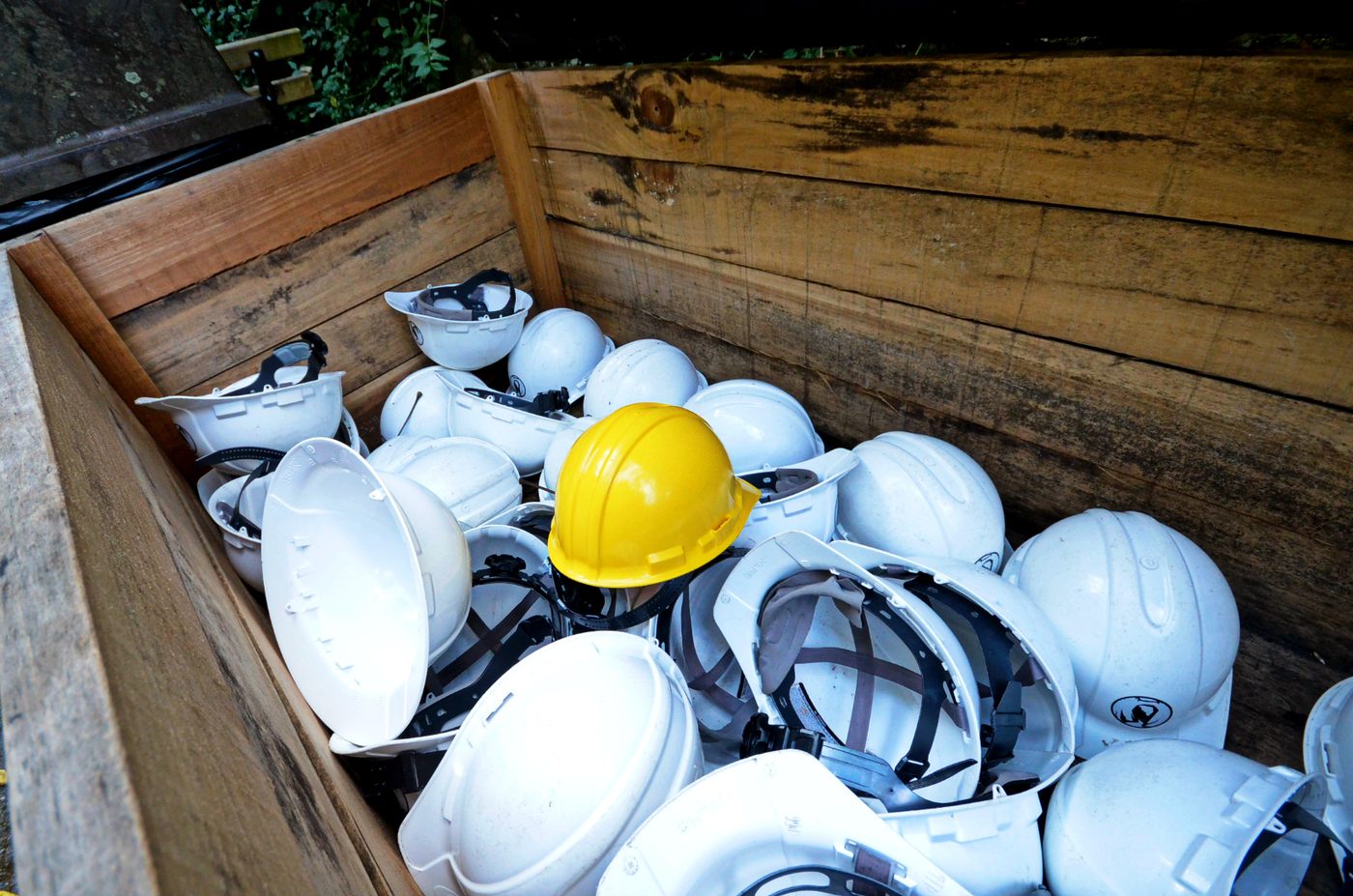
Yellow and white hard hats in a wooden crate (Source: Wikimedia Commons)
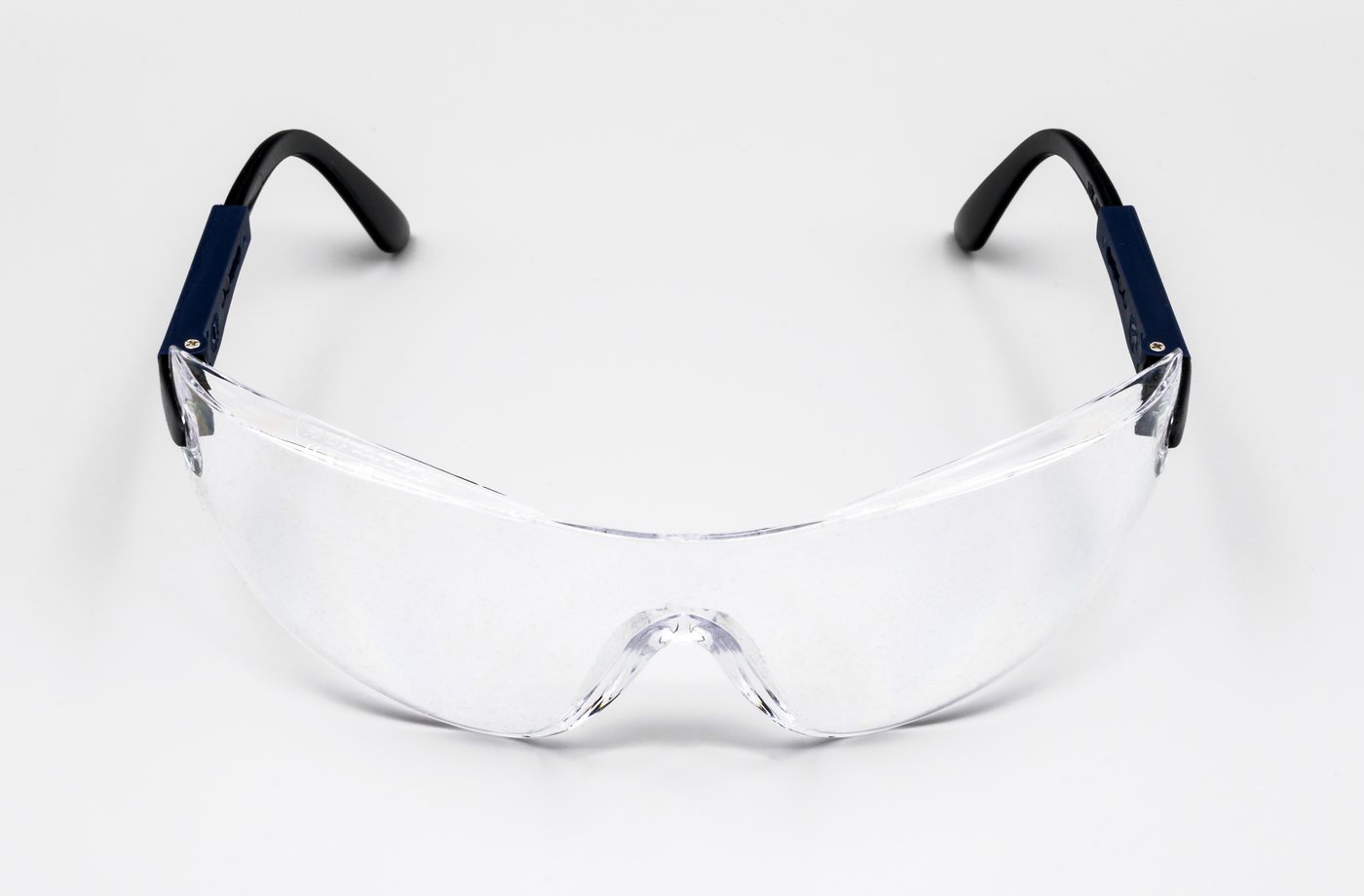
Clear safety goggles for eye protection (Source: Wikimedia Commons)
Gloves made from leather or reinforced rubber shield hands from sharp edges of metal sheets and reduce the risk of cuts and abrasions.
At county government office renovations in Nakuru, glove use is mandatory when handling corrugated iron sheets.
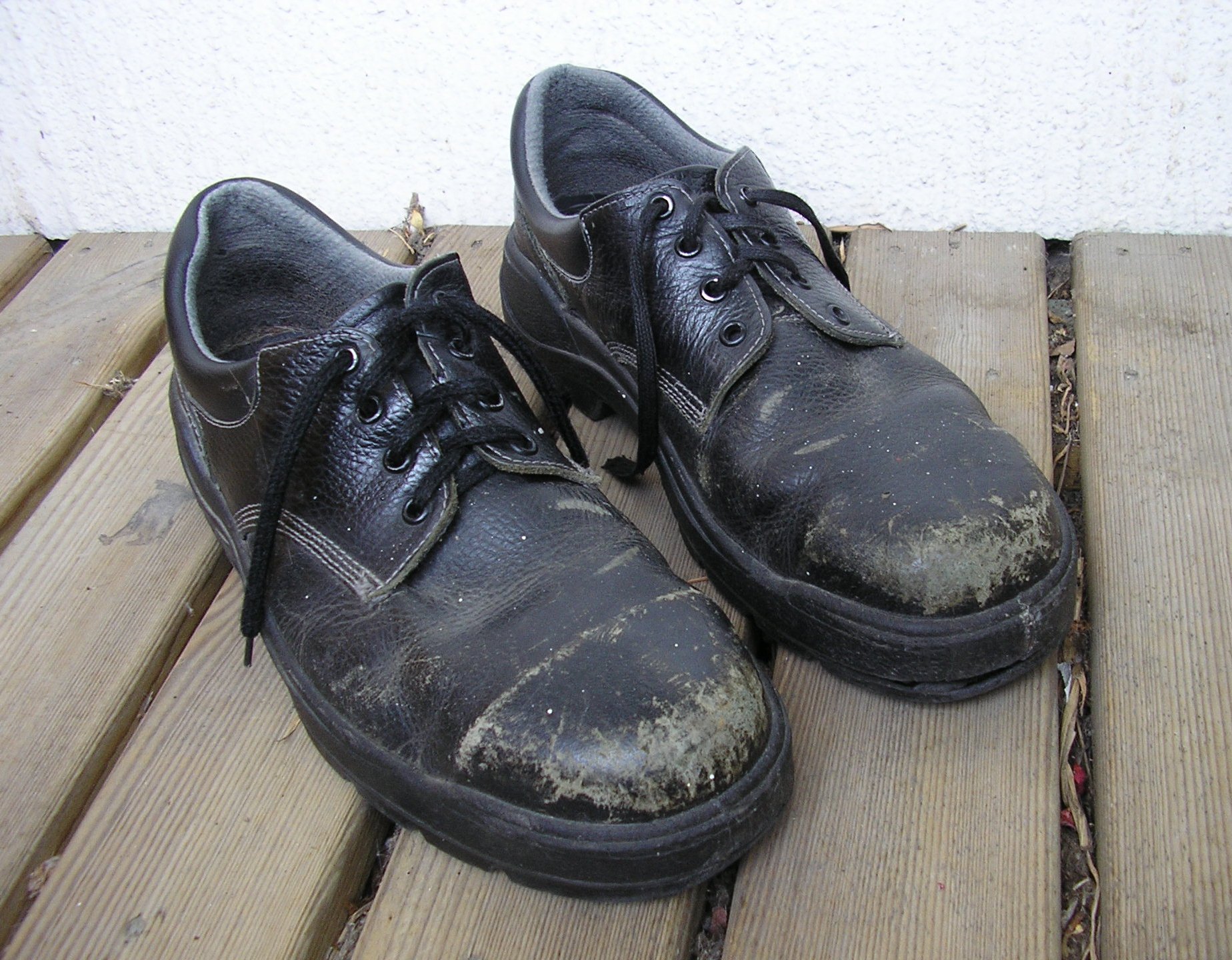
worn black safety boots on wooden floor (Source: Wikipedia (Steel-toe boot))
The correct use of PPE ensures workers remain safe and productive during roof covering tasks. Each equipment type serves a specific protective function aligned with common site hazards.
Create a free account to open more of this chapter.
Free: practical guides, quick cards, workplace scenarios and more.
Create a free accountThis chapter covered the essential aspects of laying out roof coverings, beginning with the importance of personal protective equipment, highlighting various types that ensure safety during roof work. It then examined the tools and equipment commonly used in roof construction, detailing their specific uses and classifications. The discussion progressed to roof covering materials, exploring different types and the correct methods for assembling them to create durable roofing systems. Procedures for laying roof coverings were outlined to ensure proper installation and longevity of the roof. Finally, the chapter addressed the installation of rainwater goods, describing the types available and their applications in effective water management. Together, these topics provide a comprehensive understanding of the skills and knowledge required to successfully lay out and install roof coverings in construction projects.
Type: Individual
| Tools & Equipment | Materials |
|---|---|
| Tape Measure | Corrugated Galvanized Iron Sheets |
| Builder's Square | Asbestos Cement Roofing Sheets |
| Safety Helmet | Clay Roof Tiles |
| Dust Coat / Overall | Bitumen Felt Sheets |
| Safety Boots | Timber Battens |
| Gloves | Nails 2 inch |
| S/N | Item | Quantity |
|---|---|---|
| 1 | Corrugated Galvanized Iron Sheets 0.35mm thick | 5 sheets per Candidate |
| 2 | Asbestos Cement Roofing Sheets 6ft x 2ft | 5 sheets per Candidate |
| 3 | Clay Roof Tiles 400mm x 250mm | 20 pcs per Candidate |
| 4 | Bitumen Felt Sheets 1m x 1m | 3 sheets per Candidate |
| 5 | Timber Battens 50mm x 25mm x 1800mm | 6 pcs per Candidate |
| 6 | Nails 2 inch | 200 grams per Candidate |
| 7 | Safety Helmet | 1 Pc per Candidate |
| 8 | Dust Coat / Overall | 1 Pc per Candidate |
| 9 | Safety Boots | 1 Pair per Candidate |
| 10 | Gloves | 1 Pair per Candidate |
| 11 | Tape Measure 5m | 1 Pc per Candidate |
| 12 | Builder's Square 300mm | 1 Pc per Candidate |
| Items to be Evaluated | Marks Available | Marks Obtained | Comments |
|---|---|---|---|
| TASK 1: Identification and selection of roof covering materials | |||
| Wore correct PPEs: Dust coat/Overall, Safety helmet, Safety boots, Gloves (Award 1 mark for each correctly donned PPE) | 4 | ||
| Interpreted the working drawing correctly to understand roof dimensions (Award 3 marks for correct interpretation or zero) | 3 | ||
| Measured and confirmed roof area dimensions (4000mm x 3000mm) using tape measure and builder's square (Award 2 marks for each correct dimension measurement) | 4 | ||
| Identified and differentiated between the types of roof covering materials provided (Award 1 mark each for correctly identifying all 5 material types) | 5 | ||
| Selected correct quantity of each roof covering material suitable for the roof area (Award 1.2 marks each for correct quantity selection of 5 materials) | 6 | ||
| Sorted and arranged materials according to their types and suitability (Award 3 marks for logical sorting or zero) | 3 | ||
| Handled materials safely and properly during identification and selection (Award 3 marks for safe handling or zero) | 3 | ||
| Sub-Total | 28 | ||
| PRODUCT CHECKLIST | |||
| Correct roof area measurement: 4000mm length (Award 2 marks or zero) | 2 | ||
| Correct roof area measurement: 3000mm width (Award 2 marks or zero) | 2 | ||
| Correct identification of all 5 roof covering materials (Award 1 mark each for all 5 materials) | 5 | ||
| Appropriate quantity selection matching roof area requirements (Award up to 6 marks for correct quantity selection) | 6 | ||
| Materials sorted into proper groups based on type and suitability (Award 3 marks or zero) | 3 | ||
| Finished work is clean, neat and materials are undamaged (Award 4 marks for neatness and no damage) | 4 | ||
| Sub-Total | 22 | ||
| GRAND TOTAL | 50 | ||
Type: Individual
| Tools & Equipment | Materials |
|---|---|
| Safety Helmet | Galvanized Iron Sheets 0.35mm thick |
| Dust Coat/Overall | Roofing Felt |
| Safety Boots | Wooden Battens 50mm x 25mm x 3000mm |
| Gloves | Roofing Nails 30mm |
| Tape Measure | |
| Claw Hammer | |
| Tin Snips | |
| Chalk Line | |
| Measuring Square | |
| Spirit Level |
| S/N | Item | Quantity |
|---|---|---|
| 1 | Safety Helmet | 1 Pc per Candidate |
| 2 | Dust Coat/Overall | 1 Pc per Candidate |
| 3 | Safety Boots | 1 Pair per Candidate |
| 4 | Gloves | 1 Pair per Candidate |
| 5 | Tape Measure | 1 Pc per Candidate |
| 6 | Claw Hammer | 1 Pc per 3 Candidates |
| 7 | Tin Snips | 1 Pc per 3 Candidates |
| 8 | Chalk Line | 1 Pc per 3 Candidates |
| 9 | Roofing Nails 30mm | 1 Kg per 5 Candidates |
| 10 | Galvanized Iron Sheets 0.35mm thick | 3 Sheets per Candidate (each 3m x 1m) |
| 11 | Roofing Felt (Underlay) | 12 sq.m per Candidate |
| 12 | Wooden Battens 50mm x 25mm x 3000mm | 6 pcs per Candidate |
| 13 | Measuring Square | 1 Pc per 5 Candidates |
| 14 | Spirit Level | 1 Pc per 5 Candidates |
| Items to be Evaluated | Marks Available | Marks Obtained | Comments |
|---|---|---|---|
| TASK 1: PPE and Preparation | |||
| Wore correct PPEs: Safety Helmet, Dust Coat/Overall, Safety Boots, Gloves (Award 1 mark or zero for each correctly donned PPE) | 4 | ||
| Assembled correct tools and equipment: Tape Measure, Claw Hammer, Tin Snips, Chalk Line, Measuring Square, Spirit Level (Award 1 mark or zero for each correct tool identified and used) | 6 | ||
| Prepared working area by clearing and marking layout according to drawing (Award 4 marks or zero for proper preparation and layout marking) | 4 | ||
| Sub-Total | 14 | ||
| TASK 2: Laying Roofing Felt and Battens | |||
| Measured and cut roofing felt to 3m x 4m with allowance for overlaps (Award 4 marks or zero for accurate cutting and allowance) | 4 | ||
| Laid roofing felt evenly over roof frame and secured correctly (Award 5 marks or zero for proper laying and fixing of felt) | 5 | ||
| Measured and cut wooden battens to specified lengths (3000mm) and fixed at correct spacings (Award 5 marks or zero for correct cutting and fixing of battens) | 5 | ||
| Ensured battens are level and aligned using spirit level and measuring square (Award 4 marks or zero for proper alignment and leveling) | 4 | ||
| Sub-Total | 18 | ||
| TASK 3: Fixing Galvanized Iron Sheets | |||
| Measured and cut galvanized iron sheets to fit roof dimensions with appropriate overlaps (Award 5 marks or zero for accurate measurement and cutting) | 5 | ||
| Fixed galvanized iron sheets securely onto battens using roofing nails (Award 6 marks or zero for secure fixing and correct nailing pattern) | 6 | ||
| Ensured sheets are aligned, level and overlaps are properly sealed (Award 5 marks or zero for proper alignment, leveling and overlap sealing) | 5 | ||
| Cleaned working area and disposed off waste materials properly (Award 2 marks or zero for good housekeeping) | 2 | ||
| Sub-Total | 18 | ||
| PRODUCT CHECKLIST | |||
| Roof covering assembly dimensions: Length 4000mm (Award 1.5 marks or zero for each correct dimension) | 3 | ||
| Roof covering assembly dimensions: Width 3000mm (Award 1.5 marks or zero for each correct dimension) | 3 | ||
| Battens correctly spaced and fixed as per manufacturer specifications (Award 5 marks or zero for correct spacing and fixing) | 5 | ||
| Galvanized iron sheets properly aligned, overlapped and fixed securely (Award 6 marks or zero for proper alignment and secure fixing) | 6 | ||
| Roof covering is neat, stable and free from defects (Award 5 marks or zero for good appearance and stability) | 5 | ||
| Sub-Total | 22 | ||
| GRAND TOTAL | 72 | ||
At the start of this chapter we promised you would be able to:
Tick each one you can genuinely do.
So, are you there yet?
You're competent when you can confidently do 50% or more of what this chapter promised.
Sign in to record how you're doing.