
By the end of this chapter, you will be able to:
Mastering these skills will help you deliver high-quality masonry finishes that stand the test of time and keep you safe on the job.
Compiled by: Beatrice Aoko
Applying paint in masonry works is a vital finishing process that enhances the aesthetic appeal, durability, and protection of surfaces in various professional environments. In Kenya, whether at county referral hospitals, universities, banks, or retail businesses, proper paint application safeguards structures against weathering, moisture, and wear. This chapter focuses on the essential safety measures, particularly the use of Personal Protective Equipment (PPE), to ensure the health and safety of workers engaged in paint application.
The use of Personal Protective Equipment (PPE) in painting operations is fundamental to prevent health hazards and injuries caused by exposure to chemicals, dust, and physical risks. In Kenya’s diverse workplaces, from hotel renovations to county government office refurbishments, PPE minimizes risks associated with paint fumes, splashes, and accidental contact with harmful substances. Understanding the types of PPE and their specific uses enables workers to maintain safety standards and comply with occupational safety regulations.
Personal Protective Equipment for paint application covers a range of gear designed to protect different parts of the body from hazards specific to the painting environment. Each type addresses particular risks encountered during masonry paint application.
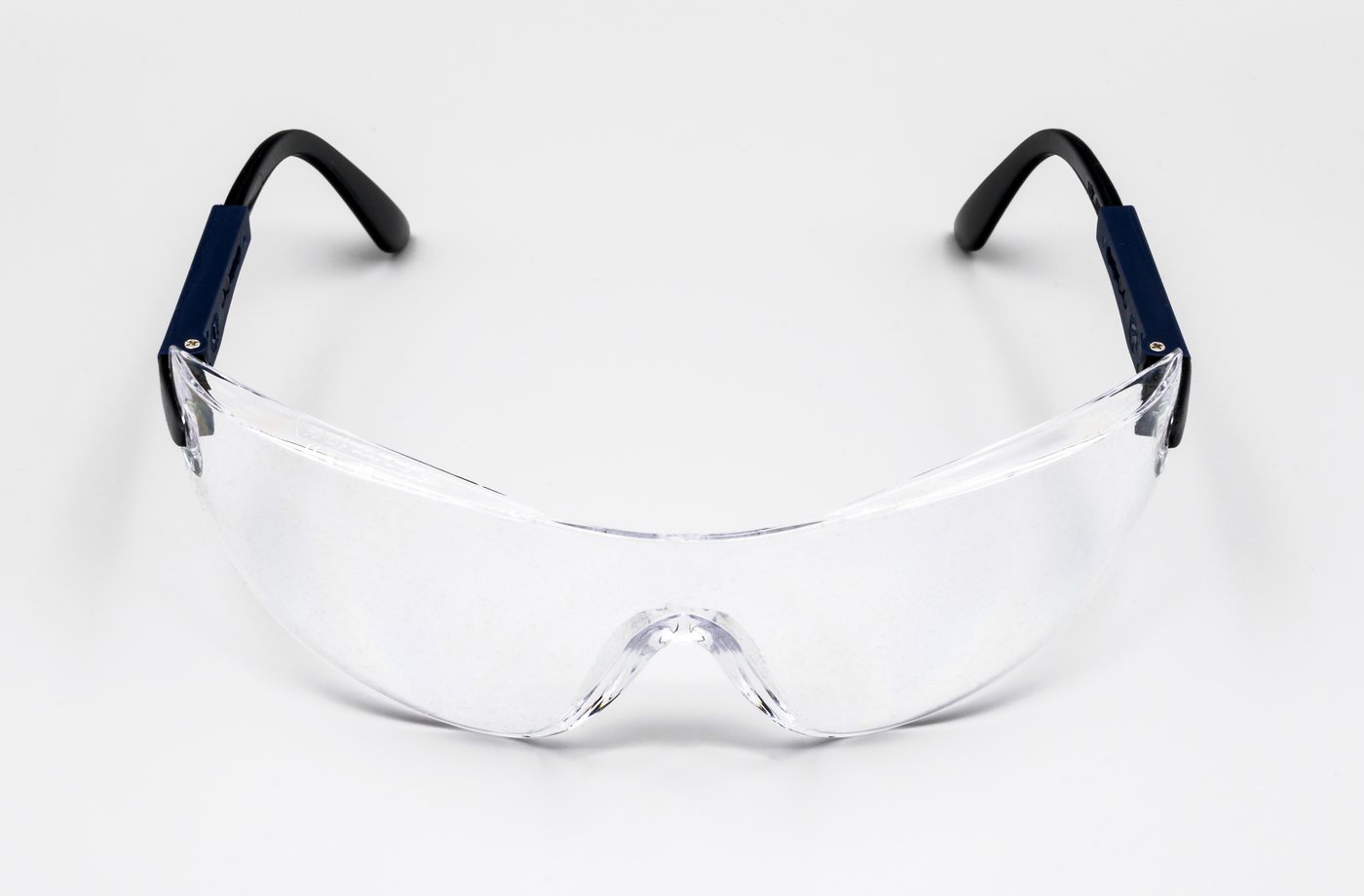
Clear safety goggles for eye protection (Source: Wikimedia Commons)
Gloves: Chemical-resistant gloves made of nitrile or latex protect hands from direct contact with paint, solvents, and cleaning agents. For example, employees at a retail business repainting their premises use gloves to avoid skin irritation and chemical burns.
Coveralls and Aprons: These garments prevent paint from contacting the skin and clothing, reducing the risk of dermatitis and contamination.
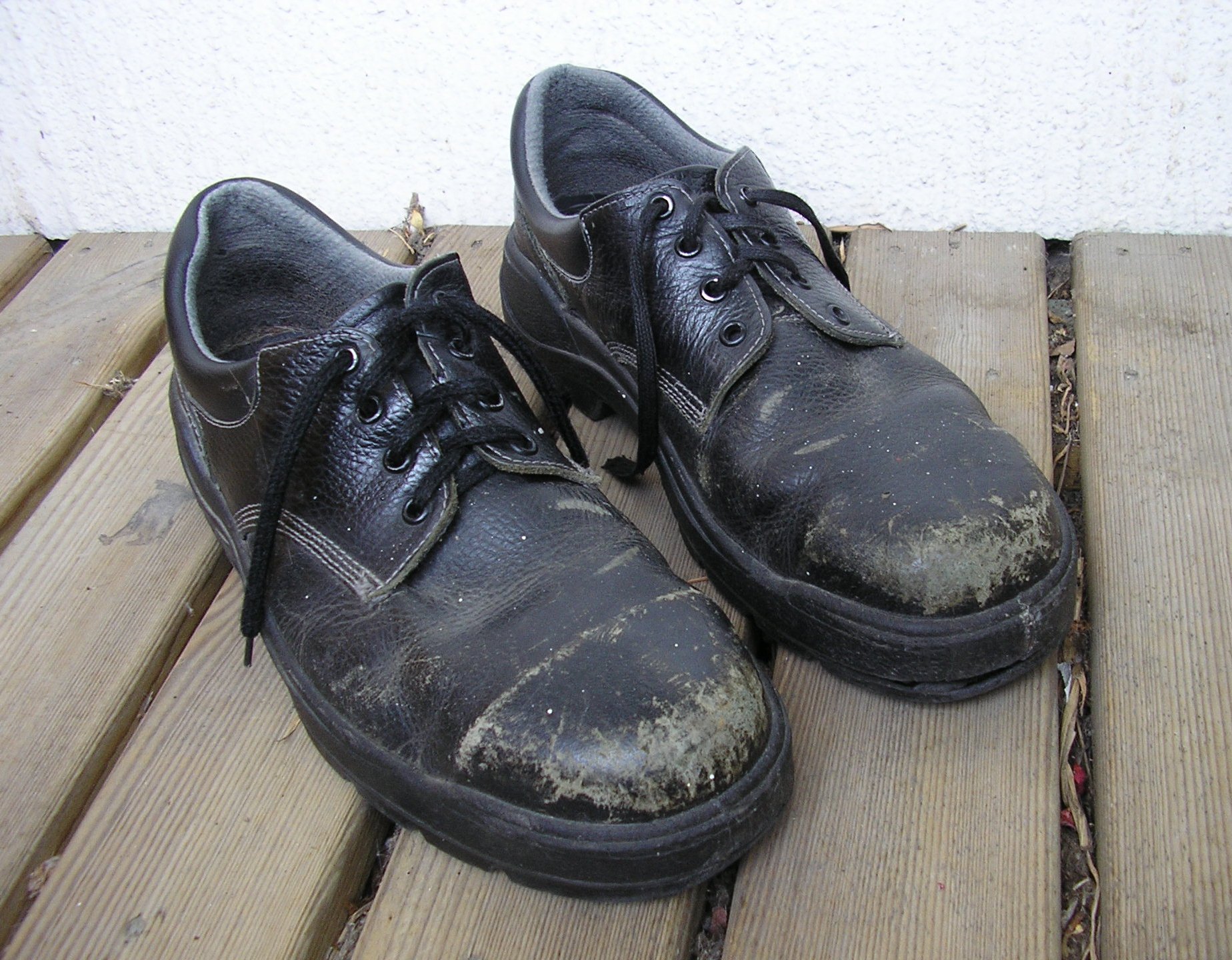
worn black safety boots on wooden floor (Source: Wikipedia (Steel-toe boot))
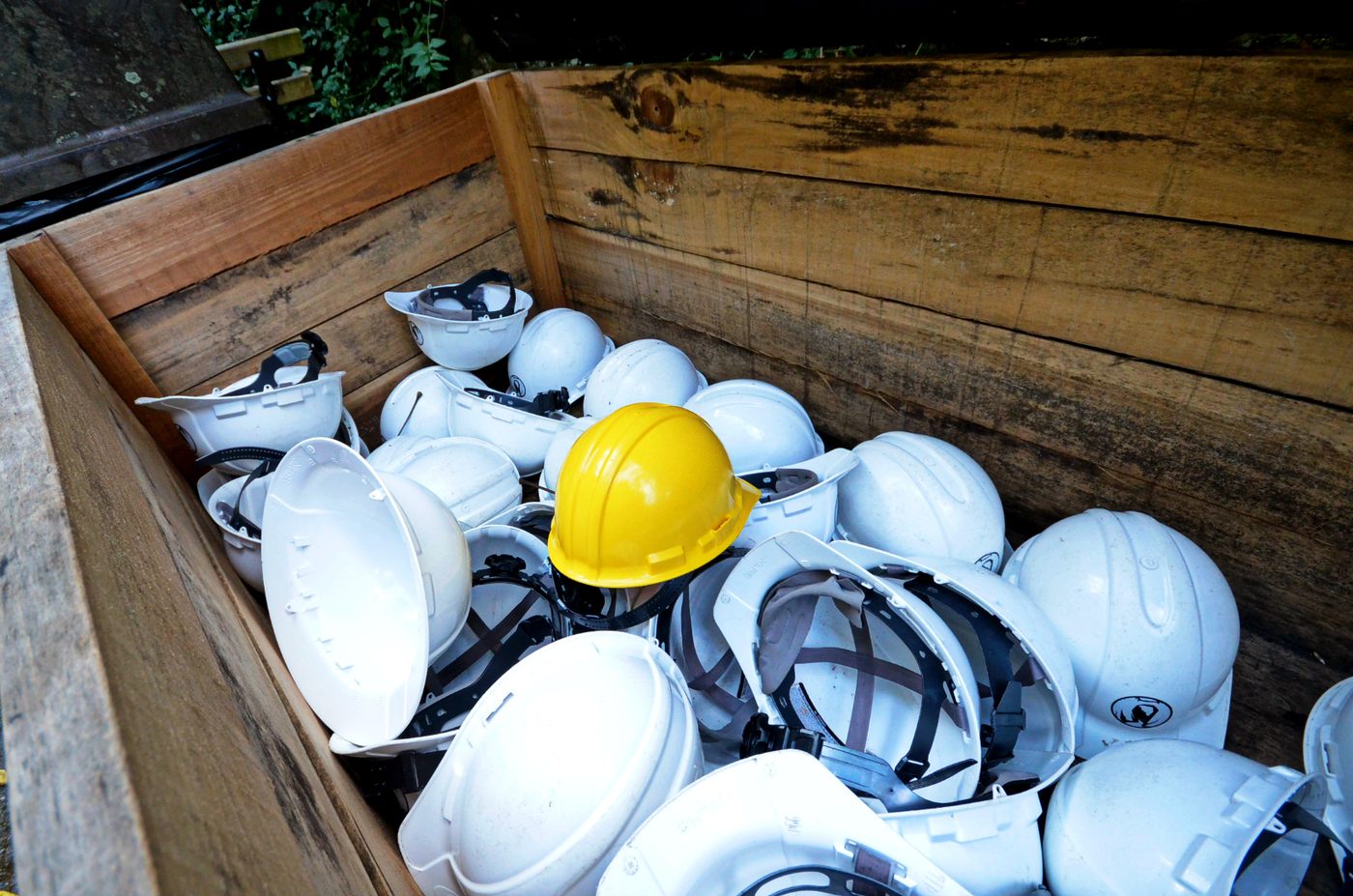
Yellow and white hard hats in a wooden crate (Source: Wikimedia Commons)
Proper use of PPE not only protects workers from immediate hazards but also ensures compliance with Kenyan occupational safety laws such as the Occupational Safety and Health Act (OSHA) 2007. The correct selection and application of PPE depend on the task, environment, and type of paint used.
Create a free account to open more of this chapter.
Free: practical guides, quick cards, workplace scenarios and more.
Create a free accountThis chapter covered essential aspects of applying paint in masonry works finishes. It began with the types and uses of personal protective equipment necessary to safeguard workers during painting tasks. The discussion then moved to cordoning off methods, including physical and temporary barriers, safety signage, masking and taping, and work site zoning to ensure safety and minimize contamination. Working platform methods focused on scaffolding as a critical means for accessing elevated surfaces safely. Surface preparation techniques such as applying filler, sanding, and scraping existing paint were detailed to ensure proper adhesion and a smooth finish. The chapter also explained the setting out of the painting area to organize the work efficiently. Various paint mixing methods were described, including manual, mechanical, and computerized techniques to achieve consistent paint quality. Finally, the chapter explored different paint application methods like brush, roller, and spray painting, followed by guidelines for maintaining painting equipment to sustain performance and longevity.
Type: Individual
| Tools & Equipment | Materials |
|---|---|
| Hammer | Timber Posts 75mm x 50mm x 1500mm |
| Measuring Tape (5 meters) | Timber Runners 75mm x 50mm x 1200mm |
| Spirit Level | Plastic Warning Tape |
| Safety Signage Boards | |
| 3-inch Nails | |
| Safety Cones | |
| PPE (Helmet, Gloves, Dustcoat/Overall, Safety Boots) |
| S/N | Item | Quantity |
|---|---|---|
| 1 | Timber Posts 75mm x 50mm x 1500mm | 3 pcs per Candidate |
| 2 | Timber Runners 75mm x 50mm x 1200mm | 4 pcs per Candidate |
| 3 | Plastic Warning Tape (Yellow and Black Stripes) | 10 meters per Candidate |
| 4 | Safety Signage Boards (e.g. 'Danger: Painting in Progress', 'No Entry') | 3 pcs per Candidate |
| 5 | 3-inch Nails | 20 pcs per Candidate |
| 6 | Hammer | 1 pc per Candidate |
| 7 | Measuring Tape (5 meters) | 1 pc per Candidate |
| 8 | Spirit Level | 1 pc per Candidate |
| 9 | Safety Cones (Plastic) | 4 pcs per Candidate |
| 10 | PPE: Helmet, Gloves, Dustcoat/Overall, Safety Boots | 1 set per Candidate |
| Items to be Evaluated | Marks Available | Marks Obtained | Comments |
|---|---|---|---|
| TASK 1: Setup of Cordoning Off and Safety Signage | |||
| Wore PPE (Helmet, Gloves, Dustcoat/Overall, Safety Boots) (Award one mark for each PPE donned as per workplace procedures 4 x 1 = 4 Marks) | 4 | ||
| Measured and marked the 3m x 3m painting area accurately (Award 4 marks for accurate measurement and marking) | 4 | ||
| Installed timber posts vertically at the four corners of the marked area (Award 1 mark for each correctly positioned and fixed post x 4 plus 1 mark for vertical alignment) | 5 | ||
| Fixed timber runners horizontally between posts to form a stable barrier (Award 1 mark for each runner fixed correctly x 4 plus 1 mark for secure nailing) | 5 | ||
| Attached plastic warning tape around the timber framework to form a physical barrier (Award 5 marks for continuous, properly tensioned and securely fixed tape) | 5 | ||
| Placed safety cones appropriately around the cordoned area (Award 1 mark for each correctly placed cone x 3) | 3 | ||
| Installed at least three safety signage boards visibly around the cordoned area (Award 1 mark for each sign correctly positioned and fixed x 3 plus 1 mark for legibility and correct messaging) | 4 | ||
| Ensured the entire cordoning off and signage setup complies with work site zoning safety standards (Award 4 marks for compliance with safety and zoning standards) | 4 | ||
| Sub-Total | 34 | ||
| PRODUCT CHECKLIST | |||
| Cordoned area dimensions are 3m x 3m ± 50mm (Award 5 marks for correct dimensions within tolerance) | 5 | ||
| Timber posts and runners are plumb, levelled, and securely fixed (Award 3 marks for plumb posts and 3 marks for level runners and secure fixing) | 6 | ||
| Plastic warning tape forms an unbroken barrier around the area (Award 4 marks for continuous and properly installed tape) | 4 | ||
| Safety signage boards are correctly positioned, legible, and relevant (Award 5 marks for correct signage installation and messaging) | 5 | ||
| Safety cones are evenly spaced and positioned to enhance visibility (Award 3 marks for correct positioning and spacing of cones) | 3 | ||
| Overall neatness and housekeeping of the cordoned area (Award 3 marks for clean and tidy work area after setup) | 3 | ||
| Sub-Total | 26 | ||
| GRAND TOTAL | 60 | ||
Type: Individual
| Tools & Equipment | Materials |
|---|---|
| Hammer | Timber posts 50mm x 50mm x 1500mm |
| Measuring tape (5 m) | Timber runners 50mm x 100mm x 1800mm |
| Spirit level (600 mm) | Plywood sheets 1200mm x 600mm x 18mm |
| Carpenters square | 3 inch Nails |
| Ladder 2.5 meters | 4 inch Nails |
| Rope 10 meters |
| S/N | Item | Quantity |
|---|---|---|
| 1 | Timber posts 50mm x 50mm x 1500mm | 4 Pcs per Candidate |
| 2 | Timber runners 50mm x 100mm x 1800mm | 3 Pcs per Candidate |
| 3 | Plywood sheets 1200mm x 600mm x 18mm | 2 Pcs per Candidate |
| 4 | 3 inch Nails | 30 Pcs per Candidate |
| 5 | 4 inch Nails | 20 Pcs per Candidate |
| 6 | Rope 10 meters | 1 Roll per Candidate |
| 7 | Ladder 2.5 meters | 1 Pc per Candidate |
| 8 | Safety helmet | 1 Pc per Candidate |
| 9 | Safety gloves | 1 Pair per Candidate |
| 10 | Safety boots | 1 Pair per Candidate |
| 11 | Dust coat/Overall | 1 Pc per Candidate |
| 12 | Hammer | 1 Pc per Candidate |
| 13 | Measuring tape (5 m) | 1 Pc per Candidate |
| 14 | Spirit level (600 mm) | 1 Pc per Candidate |
| 15 | Carpenters square | 1 Pc per Candidate |
| Items to be Evaluated | Marks Available | Marks Obtained | Comments |
|---|---|---|---|
| TASK 1: Erect working platform and scaffolding | |||
| Wore PPE: safety helmet, gloves, dust coat/overall, safety boots (Award one mark for each PPE donned as per workplace procedures 4 x 1 = 4 Marks) | 4 | ||
| Measured and marked positions for timber posts accurately (Award 1 mark each for four correctly marked positions) | 4 | ||
| Dug or prepared post bases ensuring stability (Award 3 marks for correct preparation of post bases) | 3 | ||
| Fixed timber posts vertically and checked plumbness using spirit level (Award 1 mark for each post fixed and plumbed correctly 4 x 1 = 4 Marks) | 4 | ||
| Nailed timber runners securely at correct heights to posts (Award 1 mark for each runner fixed correctly 3 x 1 + 1 for correct height = 4 Marks) | 4 | ||
| Positioned and fixed plywood sheets as platform decking (Award 3 marks for secure and level fixing of plywood sheets) | 3 | ||
| Installed ladder securely and ensured safe access to platform (Award 3 marks for safe ladder installation and access) | 3 | ||
| Checked horizontal level and vertical plumbness of entire scaffolding (Award 2 marks for horizontal level and 2 marks for vertical plumbness) | 4 | ||
| Ensured all nails and joints are secure to prevent hazards (Award 3 marks for secure and safe joints) | 3 | ||
| Conducted site housekeeping and cleared debris after completion (Award 2 marks for thorough cleaning and clearing of workspace) | 2 | ||
| Sub-Total | 34 | ||
| PRODUCT CHECKLIST | |||
| Platform width 1800mm ±10mm (Award 3 marks for correct platform width within tolerance) | 3 | ||
| Platform height 1500mm ±10mm (Award 3 marks for correct platform height within tolerance) | 3 | ||
| Platform decking level and stable (Award 4 marks for uniform level and stability of platform decking) | 4 | ||
| Scaffolding vertical posts plumb within 5mm tolerance (Award 3 marks for all posts plumb within tolerance) | 3 | ||
| Scaffolding horizontal runners level within 5mm tolerance (Award 3 marks for all runners level within tolerance) | 3 | ||
| Ladder securely fixed and safe for access (Award 2 marks for safe ladder installation and secure fixing) | 2 | ||
| All joints and nails secure with no loose parts (Award 3 marks for secure joints and nails) | 3 | ||
| Overall scaffolding safety and compliance with standards (Award 5 marks for overall safety and compliance with OSHA and workplace standards) | 5 | ||
| Sub-Total | 26 | ||
| GRAND TOTAL | 60 | ||
At the start of this chapter we promised you would be able to:
Tick each one you can genuinely do.
So, are you there yet?
You're competent when you can confidently do 50% or more of what this chapter promised.
Sign in to record how you're doing.