Building Technology  ·  Level 6
Building Site Preliminary Works I
Chapter 1: Carry out site clearance
📚 6 Topics
⚑ What you will be able to do

By the end of this chapter, you will be able to:

  • Wear the correct personal protective equipment (PPE) needed for site clearance, following all safety procedures.
  • Assemble the tools and equipment required for site clearance correctly and efficiently.
  • Carry out site clearance safely and accurately, meeting the National Building Code 2015 requirements.
  • Identify and apply the proper methods of site clearance as outlined in the National Building Code.
  • Perform demolition work safely and correctly, following the given work specifications.
  • Dispose of debris properly and safely according to the work requirements.

Mastering these skills ensures a safe and efficient start to any building project, protecting yourself and others while preparing the site for success.

Compiled by: Wambui Muriuki

Site clearance is a foundational activity in any construction or development project, ensuring that the area is safe and ready for subsequent works. In Kenya, this process is crucial for projects ranging from school expansions to hospital renovations and urban infrastructure development. Effective site clearance minimizes hazards, protects workers, and complies with regulatory standards, fostering a safe working environment. Personal protective equipment (PPE) plays a vital role in safeguarding personnel during this phase, especially given the diverse risks encountered on site.

1.1 PPEs

Personal Protective Equipment (PPE) refers to specialized clothing and gear designed to protect workers from physical, chemical, biological, and environmental hazards encountered during site clearance. In the Kenyan workplace, especially at county government offices or retail business construction sites, the correct use of PPE reduces injury rates and ensures compliance with occupational safety laws such as the Occupational Safety and Health Act (OSHA) of Kenya.

1.1.1 Types

Understanding the various types of PPE is essential for choosing the correct protection for specific site clearance tasks. The diversity of hazards on a site demands a range of equipment tailored to different risks.
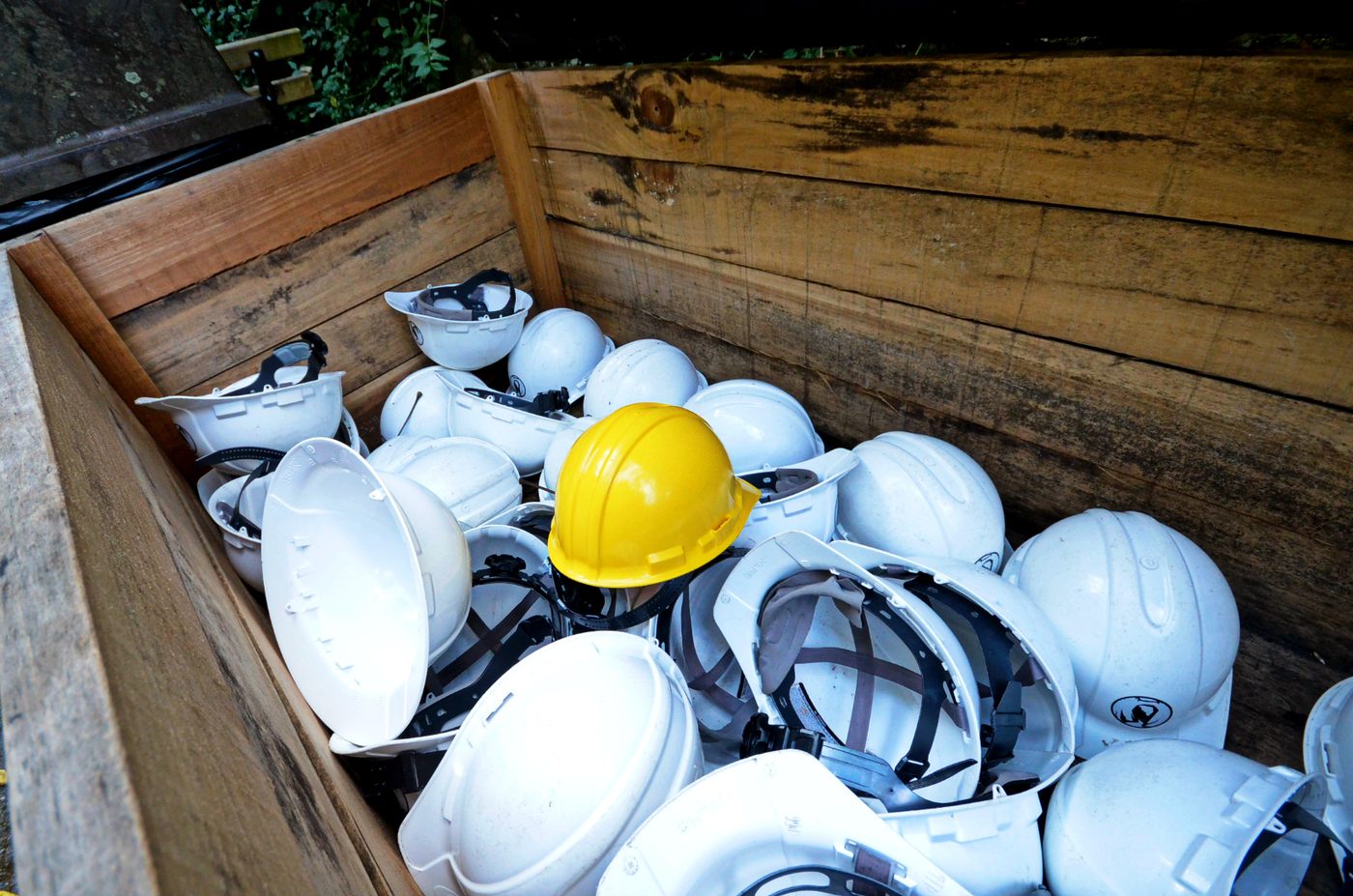
Head Protection

  • Hard Hats are critical for protecting against head injuries caused by falling objects, collisions, or overhead hazards. They are commonly used in school construction projects where cranes or scaffolding present risks.

Yellow and white hard hats in a wooden crate
Yellow and white hard hats in a wooden crate (Source: Wikimedia Commons)

  • Bump Caps offer protection against minor bumps in low-clearance areas, suitable for indoor clearance activities in hospital renovations.

Eye and Face Protection

  • Safety Goggles shield eyes from dust, flying debris, and chemical splashes, essential in environments such as pharmaceutical factory site clearances.

Clear safety goggles for eye protection
Clear safety goggles for eye protection (Source: Wikimedia Commons)
  • Face Shields provide full-face protection during activities involving grinding or cutting, as seen in hotel renovation projects.

Hand Protection

  • Gloves made from various materials protect against cuts, punctures, chemicals, and abrasions. For example, leather gloves are used in agricultural equipment dismantling at farms, while chemical-resistant gloves are necessary in pharmaceutical sites.

Foot Protection

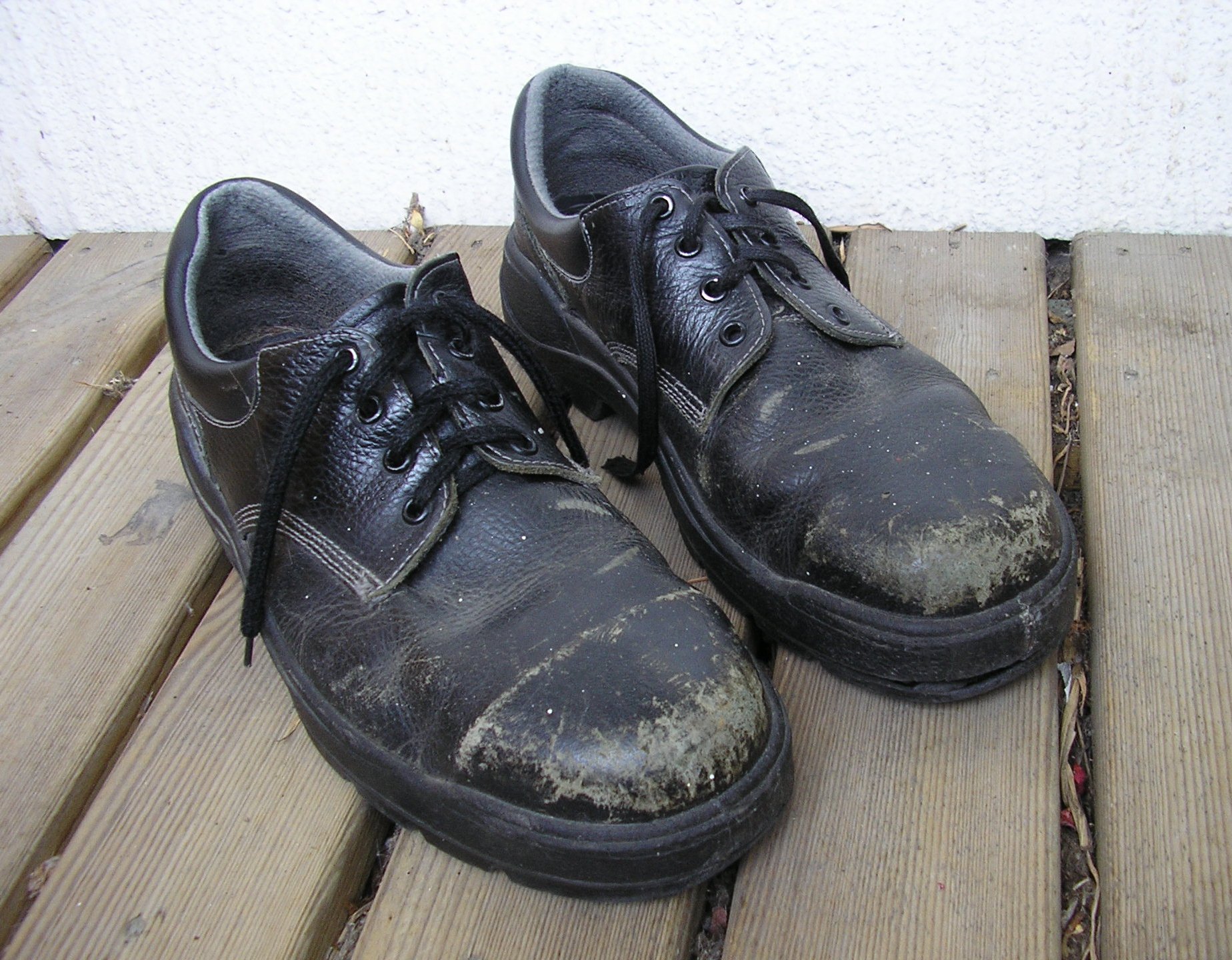
  • Safety Boots with steel toes protect feet from heavy objects and sharp debris. In county hospital site clearances, these boots prevent injuries from nails or broken glass.

worn black safety boots on wooden floor
worn black safety boots on wooden floor (Source: Wikipedia (Steel-toe boot))

  • Slip-resistant Soles are important in wet or muddy conditions common in rural cooperative farm site clearances.

Respiratory Protection

  • Dust Masks and Respirators protect against inhalation of harmful dust and fumes. Dust masks are frequently used during demolition of old retail outlets, while respirators are necessary in chemical storage clearance at manufacturing plants.

1.1.2 Uses

Each type of PPE serves specific functions tailored to the hazards present during site clearance. Correct use enhances worker safety and project efficiency.

Protection Against Physical Injuries

  • PPE such as hard hats and safety boots prevent injuries from falling objects and sharp debris. For instance, during clearance at a county government office site, workers use hard hats to avoid injury from dismantled ceiling materials.
  • Gloves protect hands when handling rubble or sharp materials, reducing cuts and punctures in hotel site clearance.

Prevention of Respiratory Issues

  • Dust masks limit exposure to airborne particles, which is crucial when clearing sites at agricultural cooperatives where soil dust is prevalent.
  • Respirators protect workers from toxic fumes encountered in chemical warehouse clearances within industrial estates.

Enhancing Visibility

  • High-visibility vests and clothing ensure workers are seen by machinery operators and colleagues, particularly in busy retail business construction sites, reducing accident risks.

Compliance with Legal Requirements

  • Kenyan occupational safety laws mandate PPE use to minimize workplace hazards. Non-compliance during site clearance at university projects can result in fines from NEMA or OSHA inspections.

Promoting Worker Confidence and Efficiency

  • When adequately protected, workers can perform site clearance tasks more confidently and efficiently, as observed in hospital expansion projects where PPE is strictly enforced.

Practice Questions

  1. Explain the importance of using different types of PPE during site clearance at a county government office. (10 marks)
  2. Identify and describe five types of PPE and their specific uses in a retail business site clearance. (15 marks)
  3. Discuss how PPE contributes to compliance with occupational safety laws during site clearance in a university construction project. (10 marks)
The rest of this chapter
🔒

Create a free account to open more of this chapter.

Free: practical guides, quick cards, workplace scenarios and more.

Create a free account
🔒1.2 Site clearance tools and equipment

Site clearance is a critical phase in preparing any location for construction, landscaping, or agricultural use. Selecting the appropriate tools and equipment ensures safety, efficiency, and environmental compliance. In Kenya, professionals working at county g…

🔒1.3 Site clearance

Site clearance is a critical preliminary activity in any construction or development project, ensuring the site is prepared and safe for subsequent works. In Kenya, site clearance is essential for projects ranging from county government office expansions to ho…

🔒1.4 Methods of Site Clearance

Site clearance is a critical preliminary stage in any construction or development project in Kenya, ensuring the land is prepared for safe and efficient works. This process involves removing all obstacles, debris, vegetation, and unwanted materials that could…

🔒1.5 Demolition

Demolition is the controlled dismantling or destruction of existing structures to prepare a site for new construction. This process requires careful planning and execution to ensure safety, environmental compliance, and minimal disruption. In Kenya, demolition…

🔒1.6 Methods of Debris Disposal

Effective management of debris generated during site clearance is essential to maintain environmental sustainability, comply with Kenyan regulations, and ensure safety at the construction or development site. Different methods of debris disposal offer unique b…

Chapter Summary

This chapter provided a comprehensive overview of carrying out site clearance, beginning with the identification and use of various personal protective equipment essential for safety during the process. It detailed the different tools and equipment commonly employed such as slasher, mattock, rake-sledge hammer, fork jembe, and machete, explaining their specific uses in clearing a site. The chapter then explored the key activities involved in site clearance, including demarcation, demolition, grabbing of shrubs, diversion of water channels and services, site stripping, and trimming of hedges. Various methods of site clearance were examined, highlighting mechanical, manual, and the controlled use of explosives or detonators as options depending on the site conditions. The section on demolition outlined the procedures for safely dismantling existing structures. Finally, the chapter concluded with an explanation of methods for debris disposal, focusing on incineration, composting, and recycling as environmentally responsible practices.

Self-Assessment

🔒 PDFDownload this self-assessment, with answers

A. Written Assessment

  1. Identify five different types of personal protective equipment used during site clearance and briefly describe their primary function. (10 marks)
  2. Which tool would be most appropriate for removing deep-rooted shrubs during site clearance and why? (3 marks)
🔒20 more in this section.

Chapter Examination Questions

🔒 PDFDownload these examination questions, with worked answers

SECTION A (40 Marks) - Answer ALL Questions

  1. Identify five types of personal protective equipment (PPE) commonly used during site clearance and briefly describe their purpose. (4 marks)
  2. Explain the primary use of a slasher and a mattock in site clearance activities. (4 marks)
🔒18 more in this section.

Chapter Practical Activities

Practical 1: Demarcate Site Boundaries for a 20m x 30m Building Plot

Building Technology · Level 6
Building Site Preliminary Works I
PRACTICAL ASSESSMENT
TIME: 4 HOURS
⬇ PDFCandidate Instructions (Candidate Tool)

Type: Individual

INSTRUCTIONS TO CANDIDATE:
1.  You are required to perform the following task:
i.  Demarcate and mark the site boundaries of a rectangular plot measuring 20,000mm by 30,000mm using pegs and builders line as per the site plan provided.
2.  You have been provided with the following resources for the practical task:
Tools & EquipmentMaterials
Measuring tape (30 meters)Field book
PegsSafety boots
Builders lineDust coat/Overall
Plumb bob
Spirit level
Hammer
Pencil
Chalk
⬇ PDFResources Required (Cutting List)
S/NItemQuantity
1Measuring tape (30 meters)1 Pc per Candidate
2Pegs20 Pcs per Candidate
3Builders line1 Pc per Candidate
4Plumb bob1 Pc per Candidate
5Spirit level1 Pc per Candidate
6Hammer1 Pc per Candidate
7Pencil1 Pc per Candidate
8Chalk1 Pc per Candidate
9Field book1 Pc per Candidate
10Safety boots1 Pair per Candidate
11Dust coat/Overall1 Pc per Candidate
⬇ PDFAssessor Guide
Items to be EvaluatedMarks AvailableMarks ObtainedComments
TASK 1: Site Boundary Demarcation
Wore Personal Protective Equipment including safety boots and dust coat
(Award 1 mark for each PPE donned as per workplace procedures)
2
Cleared the working area free from obstacles
(Award 2 marks for clear and safe working area)
2
Measured and marked the positions for the 20 pegs accurately on the ground
(Award 1 mark for each correctly measured and marked position)
4
Drove pegs vertically into the ground at the marked positions using a hammer
(Award 1 mark for each correctly driven peg in key positions)
3
Checked vertical alignment of each peg using plumb bob
(Award 1 mark for checking each corner peg's plumbness)
3
Attached builders line tightly between pegs to mark boundary lines
(Award 1 mark for each correctly fixed builders line on three sides, 1 mark for the fourth side)
3
Ensured builders line is horizontal and taut using spirit level
(Award 1 mark for checking line level and tension at three locations)
3
Recorded all measurements and observations correctly in the field book
(Award 1 mark for neat and accurate recording of each boundary length)
3
Used chalk to mark boundary lines on ground and pegs clearly
(Award 1 mark for clear marking on ground and 1 mark for marking pegs)
2
Removed any debris and cleaned the site after demarcation
(Award 2 marks for proper site clearance post-task)
2
Sub-Total27
PRODUCT CHECKLIST
Site boundary marked accurately to 20,000mm by 30,000mm with correct spacing between pegs
(Award 3 marks for length accuracy and 3 marks for width accuracy within ±25mm tolerance)
6
Pegs driven vertically and aligned plumb with builders line taut and level
(Award 2 marks for vertical peg alignment and 3 marks for builders line tension and level)
5
Boundary clearly marked on ground and pegs with chalk
(Award 3 marks for clarity and neatness of markings)
3
Field book contains complete and accurate measurements and notes
(Award 4 marks for completeness and accuracy of recording)
4
Sub-Total18
GRAND TOTAL45
ASSESSMENT OUTCOME:   ☐ Competent    ☐ Not Yet Competent (competent if at least 50%)

Practical 2: Manual Clearing of Shrubs on a 5m x 5m Site Area

Building Technology · Level 6
Building Site Preliminary Works I
PRACTICAL ASSESSMENT
TIME: 4 HOURS
⬇ PDFCandidate Instructions (Candidate Tool)

Type: Individual

INSTRUCTIONS TO CANDIDATE:
1.  You are required to perform the following task:
i.  Manually clear shrubs and vegetation from a 5m x 5m site area using hand tools as per site instructions.
2.  You have been provided with the following resources for the practical task:
Tools & EquipmentMaterials
MacheteGloves
SlasherSafety boots
Measuring tape 10mDust coat/Overall
ChalkPlastic sacks for cleared vegetation
⬇ PDFResources Required (Cutting List)
S/NItemQuantity
1Machete1 Pc per Candidate
2Slasher1 Pc per Candidate
3Gloves1 Pair per Candidate
4Safety boots1 Pair per Candidate
5Dust coat/Overall1 Pc per Candidate
6Measuring tape 10m1 Pc per 5 Candidates
7Chalk1 Pc per Candidate
8Plastic sacks for cleared vegetation2 Pcs per Candidate
⬇ PDFAssessor Guide
Items to be EvaluatedMarks AvailableMarks ObtainedComments
TASK 1: Manual Clearing of Shrubs
Wore Personal Protective Equipment including gloves, safety boots, and dust coat/overall
(Award 1 mark for each PPE worn as per workplace procedures)
3
Measured and marked out the 5m x 5m site area using measuring tape and chalk
(Award 3 marks for accurate marking of clearing boundary)
3
Cleared shrubs and vegetation manually using machete and slasher within the marked area
(Award up to 10 marks for effective manual clearing using correct tools and techniques)
10
Collected cleared vegetation and placed it into plastic sacks
(Award 4 marks for proper collection and containment of cleared vegetation)
4
Ensured the cleared area is free from roots and stumps to allow for further site works
(Award 5 marks for thorough clearing including removal of roots/stumps)
5
Maintained safety and tidiness throughout the clearing process
(Award 3 marks for adherence to safety and site cleanliness)
3
Used tools correctly and maintained them during the task
(Award 2 marks for correct and safe use of tools)
2
Sub-Total30
PRODUCT CHECKLIST
Site cleared manually to full 5m x 5m area with shrubs and vegetation removed
(Award 10 marks for complete and uniform clearing of the specified site area)
10
Cleared area free from roots, stumps, and debris
(Award 5 marks for thorough removal of roots and stumps)
5
Vegetation collected and contained properly in sacks
(Award 5 marks for neat collection and disposal-ready condition)
5
Site left safe and tidy with no hazards present
(Award 5 marks for site safety and cleanliness after clearing)
5
Marking dimensions (5m x 5m) correctly set out and visible
(Award 5 marks for accurate marking of clearing boundary maintained)
5
Sub-Total30
GRAND TOTAL60
ASSESSMENT OUTCOME:   ☐ Competent    ☐ Not Yet Competent (competent if at least 50%)
🔒

Free: practical guides, quick cards, workplace scenarios and more.

Create a free account
🔒Vegetation Clearing Using Slasher and MachetePractical 3
🔒Loosen and clear soil using mattock and fork jembePractical 4
🔒Use of Rake to Collect Debris on SitePractical 5
🔒Demolish small concrete block wall using a sledge hammerPractical 6
🔒Mechanical Site Clearance of Vegetation and Debris on a 20m x 20m PlotPractical 7
🔒Site Stripping Operations for Topsoil RemovalPractical 8
🔒Trimming Site Boundary Hedges Neatly Using Hand ToolsPractical 9
🔒Construct Temporary Diversion Channels for Water and ServicesPractical 10
🔒Demolition of a Concrete Wall Section Using Explosives and DetonatorsPractical 11
🔒Controlled Incineration of Site DebrisPractical 12
🔒Prepare and manage a compost pile using organic site wastePractical 13
🔒Sorting and Processing Site Waste Materials for RecyclingPractical 14
🔒Overall Site Clearance Using Combined Manual and Mechanical MethodsPractical 15
Flashcards 20 cards Study deck ▾
Question
1

↻ Tap card to reveal answer
🔒

18 more in this section.

Create a free account
Test Yourself 19 questions Start quiz ▾
0%
0 / 2
🔒

17 more in this section.

Create a free account
Am I competent?

At the start of this chapter we promised you would be able to:

  • Wear the correct personal protective equipment (PPE) needed for site clearance, following all safety procedures.
  • Assemble the tools and equipment required for site clearance correctly and efficiently.
  • Carry out site clearance safely and accurately, meeting the National Building Code 2015 requirements.
  • Identify and apply the proper methods of site clearance as outlined in the National Building Code.
  • Perform demolition work safely and correctly, following the given work specifications.
  • Dispose of debris properly and safely according to the work requirements.

Tick each one you can genuinely do.

So, are you there yet?

You're competent when you can confidently do 50% or more of what this chapter promised.

Sign in to record how you're doing.