Variable valve timing technology is a fundamental advancement in modern vehicle fuel systems, enhancing engine efficiency, performance, and emission control. In Kenya, where diverse sectors such as county government fleets, university transport services, and agricultural machinery rely on vehicles, understanding these technologies supports effective maintenance and operational cost savings. This chapter explores key intelligent fuel system technologies including Variable Valve Timing (VVT), Variable Valve Timing with Intelligence (VVTI), Mazda’s Skyactiv technology, Turbo Stratified Injection (TSI), and Turbocharged Diesel Injection (TDI). Each technology offers unique mechanisms to optimize fuel combustion and engine responsiveness under varying driving conditions.
5.1 Variable Valve Timing (VVT)
Variable Valve Timing (VVT) is an engine technology that adjusts the timing of valve opening and closing to improve performance, fuel economy, and emissions. This system is crucial for vehicles operating in Kenya’s varied environments, from urban traffic in Nairobi to rural farms where vehicles often run at different speeds and loads.
Variable Valve Timing Mechanism
Variable Valve Timing systems alter the phase relationship between the camshaft and crankshaft, changing when intake and exhaust valves open and close during the engine cycle. This adjustment allows the engine to optimize air-fuel mixture intake and exhaust gas expulsion based on speed and load.
Components of VVT Systems
- Camshaft actuator: Controls the rotation angle of the camshaft relative to the crankshaft, enabling timing adjustments.
- Oil control valve: Regulates oil flow to the camshaft actuator, responding to engine control unit (ECU) commands.
- ECU (Engine Control Unit): Processes sensor input to determine optimal valve timing and directs the oil control valve accordingly.
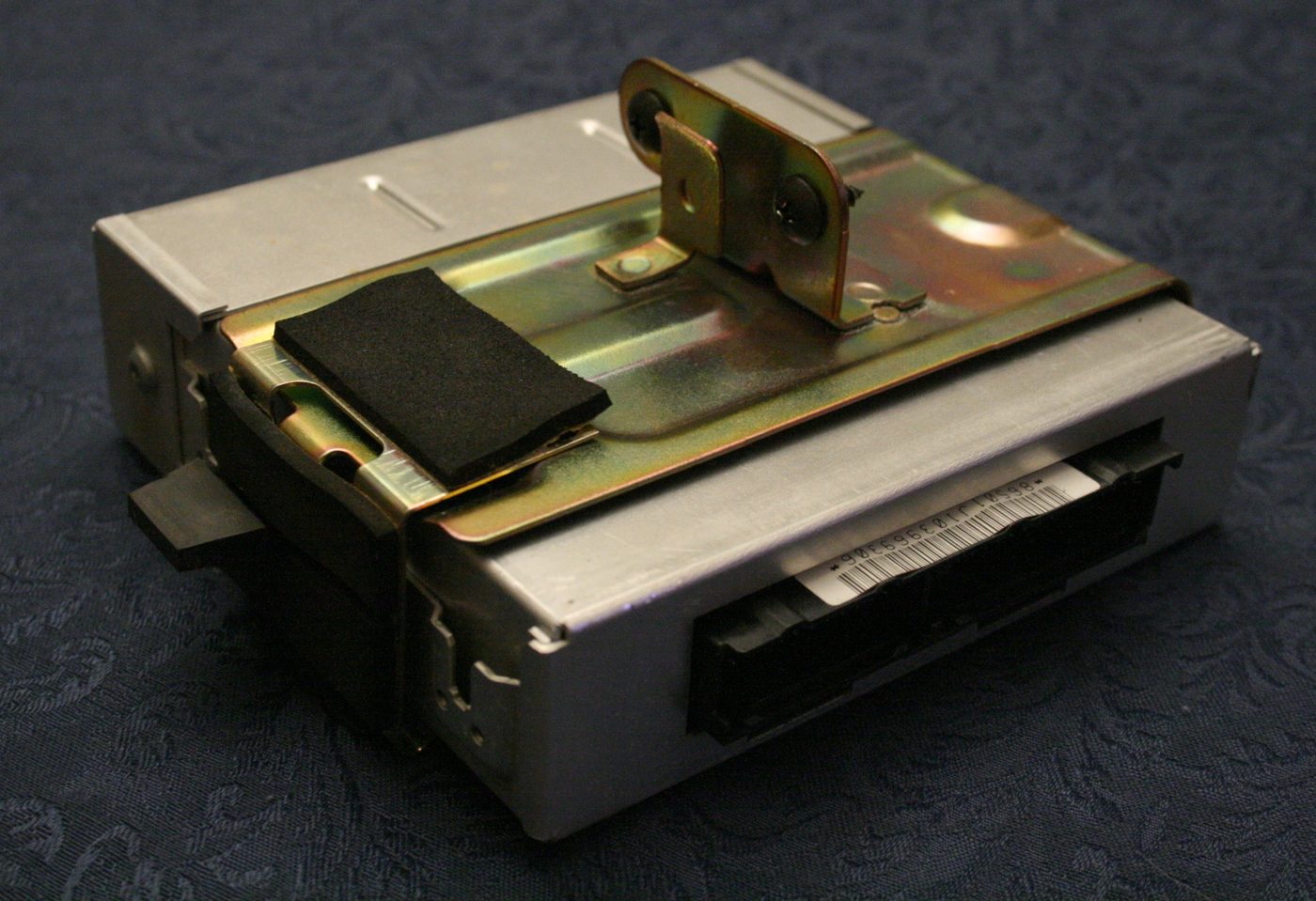
Automotive engine control unit (ECU) (Source: Wikipedia (Electronic control unit))
- Camshaft position sensor: Provides real-time camshaft position data to the ECU for precise timing control.
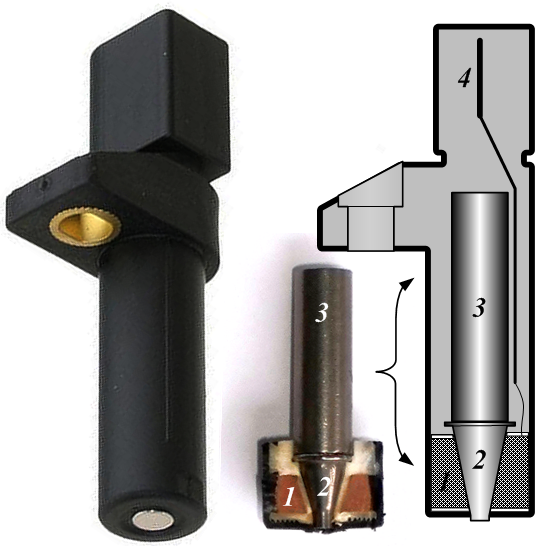
Camshaft position sensor with internal diagram (Source: Wikipedia (Crankshaft position sensor))
- Hydraulic system: Uses engine oil pressure to move the camshaft actuator, facilitating valve timing changes.
Benefits of Variable Valve Timing
VVT offers numerous advantages that are particularly relevant to Kenyan vehicle operators managing fuel costs and emissions regulations.
- Improved fuel efficiency: By optimizing valve timing, the engine consumes less fuel under varying load conditions, reducing operating costs for commercial fleets such as county government vehicles.
- Enhanced engine performance: Adjusting valve timing improves torque and power output across different engine speeds, beneficial for vehicles used in hospitality logistics requiring quick acceleration.
- Reduced emissions: Efficient combustion lowers harmful exhaust gases, helping institutions like Nairobi City County meet environmental standards.
- Smoother idling and acceleration: VVT facilitates smoother transitions between engine speeds, enhancing passenger comfort in public transport vehicles.
- Extended engine life: By reducing mechanical stress during valve operation, VVT contributes to longer engine durability, lowering maintenance costs for agricultural cooperatives.
Types of Variable Valve Timing Systems
Several VVT designs exist, each differing in complexity and application.
- Cam-phasing systems: Adjust the camshaft angle relative to the crankshaft; widely used due to simplicity and cost-effectiveness.
- Cam-changing systems: Switch between different cam profiles for variable valve lift and timing; found in high-performance vehicles.
- Variable valve lift systems: Adjust valve lift and duration in addition to timing, offering finer control.
- Electromechanical systems: Use electric actuators for faster and more precise valve timing adjustments.
- Hydraulic systems: Employ engine oil pressure to actuate timing changes; common in many production vehicles due to reliability.
Maintenance Considerations for VVT
Proper maintenance ensures VVT systems operate effectively, especially under Kenyan conditions where fuel quality and road environments vary.
- Regular oil changes: Clean engine oil is critical as it controls the hydraulic actuators; contaminated oil can cause timing faults.
- Use of recommended oil grades: Ensures correct oil pressure and flow within the system.
- Inspection of oil control valves: Prevents clogging that can impair valve timing adjustments.
- Sensor diagnostics: Regular checks on camshaft position sensors help avoid engine misfires and performance loss.
- Monitoring ECU updates: Software updates can optimize VVT operation and should be applied during servicing.
Practice Questions
- Explain how the camshaft actuator and oil control valve interact in a Variable Valve Timing system. (6 marks)
- Describe five benefits of Variable Valve Timing technology for vehicles used in county government fleets. (10 marks)
- Compare cam-phasing and cam-changing VVT systems, highlighting their operational differences. (8 marks)
5.1.1 Variable Valve Timing with Intelligence (VVTI)
Variable Valve Timing with Intelligence (VVTI) is an advanced form of VVT that incorporates electronic control and sensors to optimize valve timing dynamically for different driving conditions. This system is increasingly common in vehicles used by Kenyan institutions such as universities and banks, where fuel efficiency and emission compliance are priorities.
Principles of VVTI Operation
VVTI integrates input from multiple sensors including throttle position, engine speed, and coolant temperature to adjust valve timing in real-time. Unlike basic VVT, VVTI uses intelligent algorithms within the ECU to anticipate driving demands and optimize combustion accordingly.
Components Unique to VVTI
Advantages of VVTI over Standard VVT
VVTI offers superior adaptability and efficiency compared to traditional VVT systems.
- Improved fuel economy: More precise timing adjustments reduce fuel consumption, critical for institutions like county referral hospitals managing large vehicle fleets on tight budgets.
- Lower emissions: Enhanced control over combustion reduces pollutants, supporting compliance with Kenya’s environmental regulations.
- Better engine responsiveness: Vehicles can adjust quickly to varying road conditions encountered in urban and rural Kenya.
- Reduced engine knock: Intelligent timing prevents premature combustion, protecting engine components.
- Extended component lifespan: Optimized valve timing reduces wear and tear on engine parts.
Maintenance and Troubleshooting of VVTI Systems
Maintaining VVTI requires attention to both mechanical and electronic system components.
- Regular sensor calibration: Ensures accurate data for the ECU to process.
- Software updates: Keep the ECU’s adaptive algorithms current.
- Inspection of electronic actuators: Prevents failure due to electrical faults.
- Oil quality checks: Similar to VVT, clean oil is essential for hydraulic components.
- Diagnostic scanning: Use of OBD-II tools to detect system faults early.
Practice Questions
- Identify and explain five components that distinguish VVTI from standard VVT systems. (10 marks)
- Discuss how VVTI improves fuel efficiency in vehicles used by Kenyan banks. (6 marks)
- Outline six maintenance practices critical for the longevity of VVTI systems. (12 marks)
5.1.2 Valve Mastic
Valve mastic is a specialized sealant used in vehicle fuel system maintenance to ensure airtight and oil-tight sealing around valve components. Its use is essential in preventing leaks that can degrade engine performance and increase emissions. Kenyan workshops servicing vehicles for hotel fleets and retail businesses often rely on valve mastic for reliable repairs.
Properties and Composition of Valve Mastic
Valve mastic is designed to withstand high temperatures and pressures within the engine. It typically consists of synthetic rubber compounds combined with fillers to enhance durability and flexibility.
Applications of Valve Mastic in Fuel Systems
Valve mastic is applied during assembly or repair of valve covers, intake manifolds, and other components requiring a flexible seal. It prevents oil leaks that can lead to contamination of the combustion chamber and loss of engine efficiency.
Types of Valve Mastic
- High-temperature resistant mastic: Suitable for sealing around hot engine components.
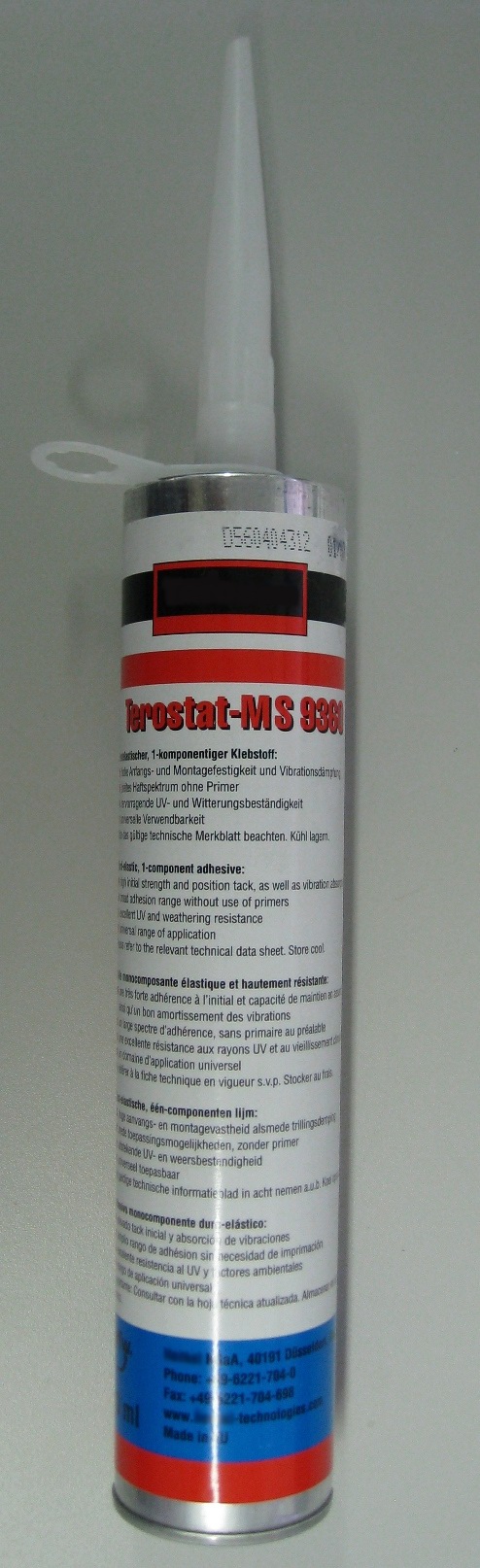
Tube of high-temperature resistant mastic (Source: Wikimedia Commons)
- Oil-resistant mastic: Designed to prevent degradation from engine oils and fuel.
- Non-hardening mastic: Retains flexibility to accommodate engine vibrations.
- Fast-curing mastic: Allows quick repairs with reduced downtime.
- Silicone-based mastic: Provides excellent adhesion and durability.

Silicone-based mastic being dispensed from a tube (Source: Wikipedia (Silicone))
Best Practices for Using Valve Mastic
Applying valve mastic correctly is vital to ensure effective sealing.
- Surface preparation: Clean and dry surfaces improve adhesion.
- Proper application thickness: Avoid excessive or insufficient mastic to prevent leaks or interference.
- Curing time adherence: Allow recommended drying time before engine operation.
- Compatibility checks: Ensure mastic is compatible with engine materials and fluids.
- Use of manufacturer-recommended products: Guarantees performance and warranty compliance.
Practice Questions
- Explain five key properties of valve mastic that make it suitable for use in vehicle fuel systems. (10 marks)
- Describe the steps necessary to prepare an engine surface before applying valve mastic. (6 marks)
- Compare two types of valve mastic and their specific applications in vehicle maintenance. (8 marks)
5.1.3 Skyactiv
Skyactiv technology, developed by Mazda, represents a holistic approach to improving fuel efficiency and engine output through innovations in engine design, transmission, and chassis. Kenyan transport operators, such as university shuttle services, benefit from Skyactiv engines due to their balance of power and fuel economy.
Core Principles of Skyactiv Technology
Skyactiv combines high compression ratios with advanced fuel injection and lightweight components to maximize combustion efficiency and reduce energy losses.
Skyactiv-G Engine Features
- High compression ratio (up to 14:1): Enhances thermal efficiency and power output.
- Direct fuel injection: Precise fuel delivery improves combustion.
- Reduced engine friction: Use of low-friction components extends engine life.
- Optimized valve timing: Improves breathing efficiency.
- Lightweight engine block: Reduces overall vehicle weight, improving fuel economy.
Benefits of Skyactiv in Kenyan Vehicle Fleets
- Lower fuel consumption: Important for cost-conscious commercial operators.
- Reduced CO2 emissions: Aligns with environmental sustainability goals of institutions like NEMA.
- Improved driving dynamics: Smooth acceleration enhances passenger comfort.
- Durability in diverse conditions: Reliable performance across Kenya’s varied terrains.
- Lower maintenance costs: Fewer moving parts and advanced design reduce service frequency.
Maintenance Requirements for Skyactiv Engines
- Use of recommended fuel grades: To prevent knocking and maintain compression.
- Regular oil changes with specified lubricants: Preserve engine components.
- Inspection of direct injection system: Prevents carbon build-up.
- Monitoring sensor performance: Essential for ECU-managed combustion control.
- Periodic software updates: Maintain optimal engine management.
Practice Questions
- Outline five distinctive features of the Skyactiv-G engine that contribute to improved fuel efficiency. (10 marks)
- Discuss how Skyactiv technology benefits public transport services in Kenyan universities. (6 marks)
- List six maintenance practices necessary to keep a Skyactiv engine operating efficiently. (12 marks)
5.1.4 Turbo Stratified Injection (TSI)
Turbo Stratified Injection (TSI) technology integrates turbocharging with direct fuel injection to enhance engine power and fuel efficiency. This technology is gaining popularity among commercial vehicle operators such as county government offices and retail delivery services in Kenya.
Working Principle of TSI Engines
TSI engines use a turbocharger to force more air into the combustion chamber, while direct injection precisely sprays fuel directly into the cylinder. The stratified charge allows for leaner fuel mixtures, improving efficiency and power.
Key Components of TSI Systems
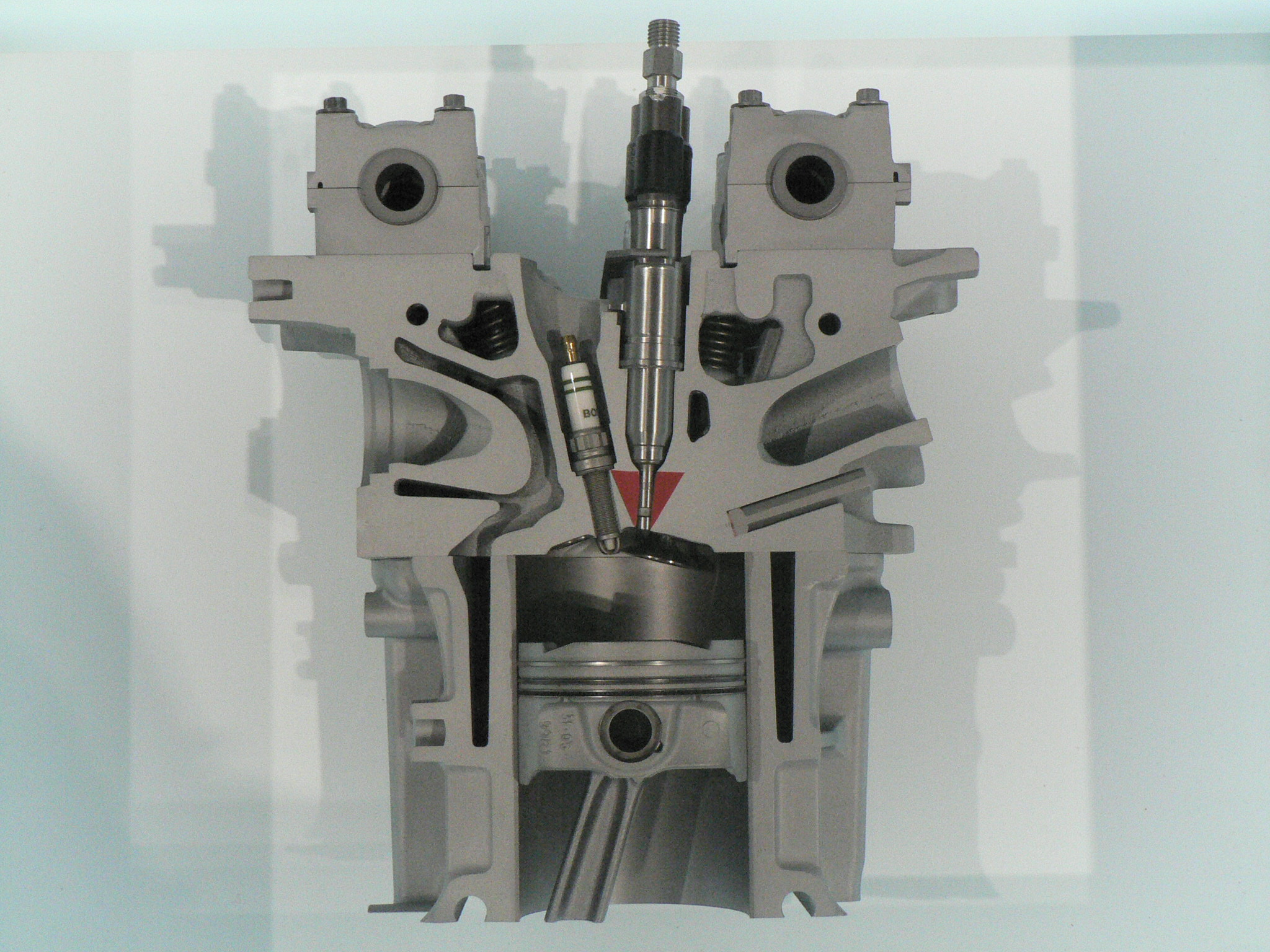
Direct fuel injector in engine cross-section (Source: Wikipedia (Fuel injection))
- Intercooler: Cools compressed air to increase density.
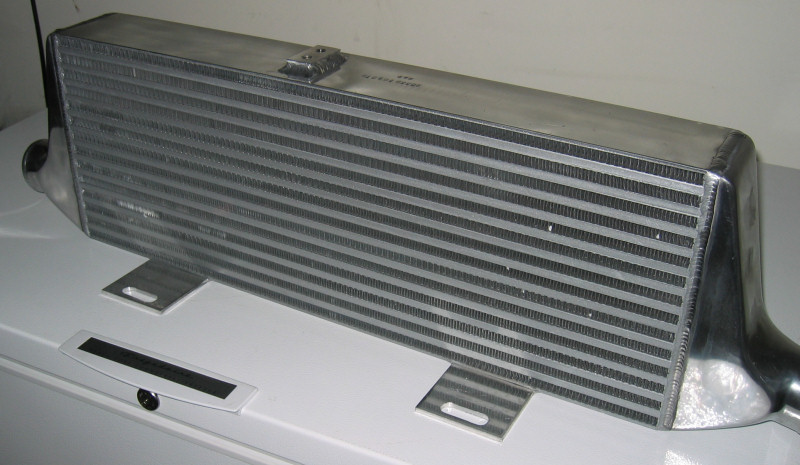
Automotive intercooler on display (Source: Wikipedia (Intercooler))
- ECU with advanced mapping: Controls fuel injection and turbo boost.
- Exhaust gas recirculation (EGR): Reduces nitrogen oxide emissions.
Advantages of TSI for Kenyan Vehicle Operators
- Enhanced power output: Useful for heavy loads in agricultural transport.
- Improved fuel economy: Reduces operational costs for hotel shuttle vehicles.
- Lower emissions: Supports compliance with Kenya’s vehicle emission standards.
- Compact engine design: Saves space and weight, beneficial for urban delivery vans.
- Better throttle response: Facilitates safer maneuvering in busy traffic.
Maintenance Challenges and Solutions for TSI Engines
- Turbocharger wear: Regular inspection and oil changes prevent damage.
- Fuel injector clogging: Use of quality fuel and periodic cleaning extends injector life.
- Intercooler leaks: Timely detection avoids power loss.
- Sensor calibration: Ensures accurate ECU control.
- Cooling system maintenance: Prevents overheating of turbo components.
Practice Questions
- Explain how Turbo Stratified Injection improves engine performance compared to naturally aspirated engines. (8 marks)
- Identify five components critical to the operation of a TSI engine and describe their roles. (10 marks)
- Describe six maintenance practices to address common issues in TSI engines. (12 marks)
5.1.5 Turbocharged Diesel Injection (TDI)
Turbocharged Diesel Injection (TDI) combines turbocharging with direct injection in diesel engines to maximize power, torque, and fuel efficiency. This technology is prevalent in vehicles used by Kenyan agricultural cooperatives and county government service vehicles due to its robustness and efficiency.
Operating Principles of TDI Engines
TDI engines use a turbocharger to compress incoming air, improving oxygen availability for combustion, while direct injection sprays fuel directly into the combustion chamber at high pressure. This ensures efficient combustion and high torque output at low engine speeds.
Components Specific to TDI Systems
Benefits of TDI Engines in Kenyan Context
- High torque at low RPM: Ideal for heavy-duty vehicles in farming and construction.
- Fuel efficiency: Reduces fuel expenses for cooperatives managing transport fleets.
- Durability: Robust design withstands harsh operating environments.
- Lower emissions: Compliance with Kenya’s diesel emission standards.
- Improved drivability: Smooth power delivery enhances vehicle control.
Maintenance Protocols for TDI Engines
- Regular fuel filter replacement: Protects injectors and pump from contaminants.
- Turbocharger inspection: Prevents failures from carbon deposits or oil starvation.
- Common rail system servicing: Maintains injection precision.
- Exhaust after-treatment maintenance: Ensures emission control devices function properly.
- Monitoring ECU parameters: Detects early signs of engine or injection system faults.
Practice Questions
- Describe the role of the high-pressure fuel pump in TDI engine performance. (6 marks)
- List and explain five benefits of TDI engines for agricultural cooperative vehicles in Kenya. (10 marks)
- Outline six critical maintenance steps for ensuring the longevity of TDI engines. (12 marks)
The rest of this chapter
🔒Create a free account to open more of this chapter.
Free: practical guides, quick cards, workplace scenarios and more.
Create a free account 🔒5.2 Layout
The layout of a vehicle fuel system determines how fuel is delivered from the tank to the engine combustion chamber. In Kenya's diverse professional sectors, ranging from county government vehicle fleets to agricultural transport vehicles, understanding variou…
🔒5.3 Diesel Injection Systems
Diesel injection systems are crucial components in diesel engines, responsible for delivering fuel into the combustion chamber under high pressure. In Kenya's diverse sectors such as agriculture, transport, and public service fleets, efficient diesel injection…
🔒5.4 Diesel Electronic Fuel Injection
Diesel electronic fuel injection (EFI) systems have revolutionized the operation and efficiency of diesel engines in Kenya’s diverse sectors such as county government transport fleets, agricultural machinery cooperatives, and commercial delivery vehicles. The…
🔒5.5 Fuel system diagnosis
Vehicle fuel system diagnosis is an essential skill for maintaining engine performance and reliability in various sectors across Kenya. Whether in a county referral hospital ambulance, a university transport fleet, a hotel delivery van, or a SACCO service vehi…
🔒5.6 Fuel system inspection
Fuel system inspection is a critical maintenance activity that ensures the efficient and safe operation of vehicles used across diverse sectors in Kenya. From ambulances at county referral hospitals to delivery trucks at retail businesses, a well-maintained fu…
🔒5.7 Fuel system components service/replacement
In Kenya’s diverse professional environments, from county referral hospitals to agricultural cooperatives, maintaining vehicle fuel systems is essential for operational efficiency and cost control. Regular servicing and timely replacement of fuel system compon…
🔒5.8 Fuel system re installation checks
After servicing or replacing fuel system components, reinstallation checks are vital to ensure the system functions correctly and safely. These checks prevent operational failures and safeguard personnel and assets in sectors relying heavily on vehicle transpo…
🔒5.9 Fuel System Service Documentation
Accurate and comprehensive documentation of fuel system services is critical for maintaining vehicle reliability and safety. In Kenya, organizations such as county referral hospitals and universities rely heavily on transport fleets for daily operations, makin…
Chapter Summary
This chapter explored advanced concepts in vehicle fuel system intelligence, beginning with variable valve timing technologies such as VVTI, valve mastic, Skyactiv, TSI, and TDI, which optimize engine performance and fuel efficiency. It then examined the layout of fuel injection systems, including throttle body injection, multipoint injection, and direct petrol injection, highlighting their distinct designs and operational advantages. The discussion progressed to diesel injection systems, differentiating direct and indirect injection methods and their impact on combustion. Diesel electronic fuel injection was analyzed in terms of its layout and operational phases, including filling, spill, injection, pressure drop, and the role of the common rail system. Diagnostic techniques for fuel systems were covered, focusing on detecting short circuits, open circuits, and pressure fluctuations that affect functionality. The chapter also detailed fuel system inspection procedures addressing serviceability, leakages, clogging, and spray patterns to ensure optimal operation. Finally, it outlined the service and replacement of fuel system components, reinstallation checks, and the importance of thorough service documentation to maintain system integrity and performance.
Self-Assessment
🔒 PDFDownload this self-assessment, with answers
A. Written Assessment
- What is the primary function of Variable Valve Timing with Intelligence (VVTI) in modern vehicle engines? (3 marks)
- Identify two key differences between throttle body injection and multipoint injection systems. (4 marks)
🔒20 more in this section.
Chapter Examination Questions
🔒 PDFDownload these examination questions, with worked answers
SECTION A (40 Marks) - Answer ALL Questions
- Explain the principle of Variable Valve Timing with Intelligence (VVTi) and describe how it improves engine performance in vehicles used by county government offices. (4 marks)
- Identify three common symptoms of fuel system clogging and explain how they affect vehicle operation in a cooperative farm transport fleet. (4 marks)
🔒18 more in this section.
Chapter Practical Activities
Practical 1: Variable Valve Timing Systems Inspection and Adjustment
Automotive Engineering Technology · Level 6
Vehicle Fuel System Maintenance
PRACTICAL ASSESSMENT
TIME: 4 HOURS
⬇ PDFCandidate Instructions (Candidate Tool)
Type: Individual
INSTRUCTIONS TO CANDIDATE:
1. You are required to perform the following task:
i. Inspect and adjust the variable valve timing system of the vehicle engine, ensuring valve clearance is set to 0.15 mm and valve mastic condition is verified and reapplied if necessary.
2. You have been provided with the following resources for the practical task:
| Tools & Equipment | Materials |
|---|
| Torque wrench | Valve mastic |
| Combination spanners | |
| Screwdrivers | |
| Feeler gauge set | |
| Cleaning cloths | |
| Gloves | |
| Safety boots | |
| Overalls | |
| Safety goggles | |
⬇ PDFResources Required (Cutting List)
| S/N | Item | Quantity |
|---|
| 1 | Complete vehicle with Variable Valve Timing (VVT) system | 1 Pc per Candidate |
| 2 | Workshop manual for the specific vehicle model | 1 Pc per Candidate |
| 3 | Torque wrench | 1 Pc per Candidate |
| 4 | Set of combination spanners | 1 Set per Candidate |
| 5 | Screwdrivers (Philips and flathead) | 1 Set per Candidate |
| 6 | Feeler gauge set | 1 Set per Candidate |
| 7 | Valve mastic | 50 g per Candidate |
| 8 | Cleaning cloths (cotton waste) | 100 g per Candidate |
| 9 | Gloves | 1 Pair per Candidate |
| 10 | Safety boots | 1 Pair per Candidate |
| 11 | Overalls | 1 Pc per Candidate |
| 12 | Safety goggles | 1 Pc per Candidate |
⬇ PDFAssessor Guide
| Items to be Evaluated | Marks Available | Marks Obtained | Comments |
|---|
| TASK 1: Preparation and Safety |
Wore personal protective equipment: overalls, safety boots, gloves, and goggles
(Award 1 mark for each correctly worn PPE or zero) | 4 | | |
Parked vehicle on level surface and applied wheel chocks
(Award 2 marks if done correctly or zero) | 2 | | |
Turned off ignition and disconnected battery negative terminal
(Award 2 marks if done correctly or zero) | 2 | | |
| Sub-Total | 8 | | |
| TASK 2: Inspection of Variable Valve Timing System |
Removed engine covers to access VVT components using appropriate tools
(Award 2 marks or zero) | 2 | | |
Checked condition of timing chain/belt and VVT actuator for wear or damage
(Award 3 marks or zero) | 3 | | |
Inspected valve mastic condition on valve stems and seats
(Award 2 marks or zero) | 2 | | |
Cleaned valve areas using cleaning cloths and prepared surface for adjustment
(Award 2 marks or zero) | 2 | | |
| Sub-Total | 9 | | |
| TASK 3: Adjustment of Variable Valve Timing System |
Measured valve clearance using feeler gauge set and compared with 0.15 mm specification
(Award 3 marks or zero) | 3 | | |
Adjusted valve clearance to 0.15 mm where necessary using correct tools
(Award 4 marks or zero) | 4 | | |
Applied valve mastic to valve stems/seats where deterioration found
(Award 3 marks or zero) | 3 | | |
Tightened all bolts and fasteners to manufacturer’s torque specifications
(Award 3 marks or zero) | 3 | | |
| Sub-Total | 13 | | |
| TASK 4: Final Checks and Clean Up |
Reinstalled engine covers securely
(Award 2 marks or zero) | 2 | | |
Reconnected battery negative terminal
(Award 2 marks or zero) | 2 | | |
Started engine and checked for normal operation and absence of unusual noises
(Award 3 marks or zero) | 3 | | |
Cleaned work area and disposed of waste materials properly
(Award 2 marks or zero) | 2 | | |
| Sub-Total | 9 | | |
| PRODUCT CHECKLIST |
Valve clearance correctly adjusted to 0.15 mm within ±0.02 mm tolerance
(Award 4 marks or zero) | 4 | | |
Valve mastic properly applied and in good condition with no excess or deficiency
(Award 3 marks or zero) | 3 | | |
VVT system components properly reassembled and tightened to torque specifications
(Award 3 marks or zero) | 3 | | |
Engine operates smoothly without abnormal noise after adjustment
(Award 3 marks or zero) | 3 | | |
| Sub-Total | 13 | | |
| GRAND TOTAL | 52 | | |
ASSESSMENT OUTCOME: ☐ Competent ☐ Not Yet Competent (competent if at least 50%)
Practical 2: Skyactiv Fuel System Components Servicing
Automotive Engineering Technology · Level 6
Vehicle Fuel System Maintenance
PRACTICAL ASSESSMENT
TIME: 4 HOURS
⬇ PDFCandidate Instructions (Candidate Tool)
Type: Individual
INSTRUCTIONS TO CANDIDATE:
1. You are required to perform the following task:
i. Disassemble, service, and replace Skyactiv fuel system components on a Mazda vehicle following the workshop manual procedures.
2. You have been provided with the following resources for the practical task:
| Tools & Equipment | Materials |
|---|
| Assorted workshop hand tools (wrenches, screwdrivers, pliers) | Cotton waste |
| Fuel pressure test kit | Personal Protective Equipment: overall, safety boots, gloves, goggles, mask |
| Fuel injector cleaning kit | Workshop manual for Mazda Skyactiv system |
| Multimeter | |
⬇ PDFResources Required (Cutting List)
| S/N | Item | Quantity |
|---|
| 1 | Complete Mazda vehicle with Skyactiv EFI system | 1 Pc per Candidate |
| 2 | Assorted workshop hand tools (wrenches, screwdrivers, pliers) | 1 Set per Candidate |
| 3 | Fuel pressure test kit | 1 Pc per Candidate |
| 4 | Fuel injector cleaning kit | 1 Pc per Candidate |
| 5 | Multimeter | 1 Pc per Candidate |
| 6 | Cotton waste | 100 g per Candidate |
| 7 | Workshop manual for Mazda Skyactiv system | 1 Pc per Candidate |
| 8 | Personal Protective Equipment: overall, safety boots, gloves, goggles, mask | 1 Set per Candidate |
⬇ PDFAssessor Guide
| Items to be Evaluated | Marks Available | Marks Obtained | Comments |
|---|
| TASK 1: Preparation and Safety |
Wore complete personal protective equipment: overall, safety boots, gloves, goggles, mask
(Award 1 mark for each or zero) | 3 | | |
Parked the vehicle on a level surface and chocked the wheels
(Award 2 marks or zero) | 2 | | |
Disconnected the negative battery terminal safely
(Award 2 marks or zero) | 2 | | |
| Sub-Total | 7 | | |
| TASK 2: Fuel System Pressure Relief and Disassembly |
Turned ignition switch ON to prime fuel pump and confirmed operation
(Award 2 marks or zero) | 2 | | |
Relieved fuel system pressure according to Mazda Skyactiv procedure
(Award 2 marks or zero) | 2 | | |
Disconnected fuel pipe from fuel rail safely without fuel spillage
(Award 2 marks or zero) | 2 | | |
Removed fuel injectors and other serviceable components carefully
(Award 3 marks or zero) | 3 | | |
| Sub-Total | 9 | | |
| TASK 3: Component Servicing and Replacement |
Cleaned fuel injectors using cleaning kit according to manual
(Award 2 marks or zero) | 2 | | |
Checked fuel lines and clamps for wear or damage and replaced if necessary
(Award 2 marks or zero) | 2 | | |
Replaced faulty fuel pump or components as per diagnosis
(Award 3 marks or zero) | 3 | | |
Tightened clamps and fittings securely
(Award 2 marks or zero) | 2 | | |
| Sub-Total | 9 | | |
| TASK 4: Reassembly and Functional Testing |
Reconnected all fuel injectors and fuel pipes correctly
(Award 2 marks or zero) | 2 | | |
Switched ON ignition to prime the fuel pump and checked for leaks
(Award 2 marks or zero) | 2 | | |
Attached fuel pressure gauge to fuel rail and confirmed pressure within Mazda specifications
(Award 2 marks or zero) | 2 | | |
Started engine and ran at idle to confirm proper operation of fuel system
(Award 2 marks or zero) | 2 | | |
Checked for leaks or faults during engine run
(Award 2 marks or zero) | 2 | | |
| Sub-Total | 10 | | |
| PRODUCT CHECKLIST |
Fuel system components serviced or replaced correctly and securely with no leaks
(Award 5 marks or zero) | 5 | | |
Fuel pressure confirmed within manufacturer’s specification (approx. 350 kPa)
(Award 5 marks or zero) | 5 | | |
Engine runs smoothly at idle with no abnormal noises or faults
(Award 4 marks or zero) | 4 | | |
| Sub-Total | 14 | | |
| GRAND TOTAL | 49 | | |
ASSESSMENT OUTCOME: ☐ Competent ☐ Not Yet Competent (competent if at least 50%)
🔒Diagnostic Testing of Turbocharged Petrol and Diesel Injection SystemsPractical 3
🔒Fuel Injection System Layout Identification and ExplanationPractical 4
🔒Service and Replace Components of Throttle Body and Multipoint Injection SystemPractical 5
🔒Inspection and Maintenance of Direct Petrol Injection (GDI) Spray PatternPractical 6
🔒Diesel Injection Systems Operation and MaintenancePractical 7
🔒Injection Phases Demonstration on Diesel Injection System ModelPractical 8
🔒Common Rail Fuel System Servicing and Pressure Fluctuation Fault DiagnosisPractical 9
🔒Locate and Repair Electrical Faults in Fuel System Wiring HarnessPractical 10
🔒Fuel System Leakages and Clogging InspectionPractical 11
🔒Fuel system reinstallation checks and serviceability testPractical 12
🔒Fuel System Spray Pattern Testing of Diesel Fuel InjectorsPractical 13
🔒Service and replace diesel electronic fuel injection components on a 4-cylinder enginePractical 14
🔒Fuel System Service Documentation and ReportingPractical 15
