Automotive Engineering Technology  ·  Level 6
Vehicle Suspension And Steering System Maintenance
Chapter 5: Vehicle Wheel Alignment
📚 4 Topics
⚑ What you will be able to do

By the end of this chapter, you will be able to:

  • Organise your work area neatly and safely by following workplace procedures.
  • Gather and prepare all the tools, equipment, and materials needed for wheel alignment accurately.
  • Align vehicle wheels correctly by following the manufacturer’s manual step-by-step.
  • Test vehicle wheel alignment accurately to ensure it meets the manufacturer’s specifications.
  • Prepare a clear and complete vehicle wheel alignment service document following workplace procedures.

Mastering these skills helps you ensure vehicles drive safely and smoothly, making you a valuable part of any automotive service team.

Vehicle wheel alignment is a critical procedure in automotive engineering that ensures proper orientation of the wheels relative to the vehicle frame and road surface. Correct alignment improves vehicle handling, enhances tire life, and promotes safety on Kenyan roads, where diverse terrain and frequent potholes can quickly disrupt suspension geometry. Professionals working in automotive workshops and service centres must maintain an organized work area and use precise equipment to deliver accurate wheel alignment services. This chapter explores the organization of the workspace, proper tool management, and the advanced machines used in wheel alignment.

5.1 Work Area Organization and Maintenance

Maintaining an orderly and well-equipped workshop is essential for efficient and safe wheel alignment services. In Kenya’s automotive service industry, where time and precision influence customer satisfaction and operational costs, organizing the work area reduces errors and enhances technician productivity. Proper storage, cleanliness, and systematic arrangement of tools and equipment facilitate smooth workflow and prevent damage to sensitive alignment instruments.

5.1.1 Setting Up the Workplace

Establishing a dedicated space for wheel alignment involves more than just clearing an area; it requires strategic planning of layout and safety considerations to optimize technician efficiency and protect equipment.

Layout Planning for Workflow Efficiency

  • Designated Alignment Bay: Allocate a specific bay within the workshop with sufficient space for vehicle entry, movement around the vehicle, and setup of alignment equipment. This reduces time lost in relocating tools and vehicles.
  • Clear Floor Markings: Use paint or tape to mark alignment zones and pathways for vehicles and technicians, minimizing accidents and confusion during busy service hours.
  • Adequate Lighting: Ensure bright, shadow-free lighting focused on the wheel alignment area to allow precise observation of alignment indicators and measurement screens.

Safety and Ergonomics

  • Non-Slip Flooring: Install anti-slip mats or coatings to prevent falls, especially important given the presence of lubricants and water.
  • Ergonomic Tool Placement: Position commonly used tools and controls at waist height or within easy reach to reduce technician fatigue and risk of repetitive strain injuries.
  • Ventilation and Cleanliness: Maintain good airflow and regular cleaning schedules to remove dust and fumes, protecting both equipment and personnel health.

Power and Data Connectivity

  • Electrical Outlets: Install multiple grounded sockets near the alignment bay to power digital alignment machines and ancillary equipment without the use of extension cords.

  • Data Ports and Wi-Fi Access: Provide stable network connectivity to enable software updates and data transfer for modern digital wheel alignment systems.

5.1.2 Proper Storage and Labelling of Tools, Equipment and Materials

In a busy Kenyan automotive workshop, efficient storage and clear labelling of tools and materials prevent loss, damage, and misuse, which could compromise wheel alignment accuracy.
Tool Storage Systems

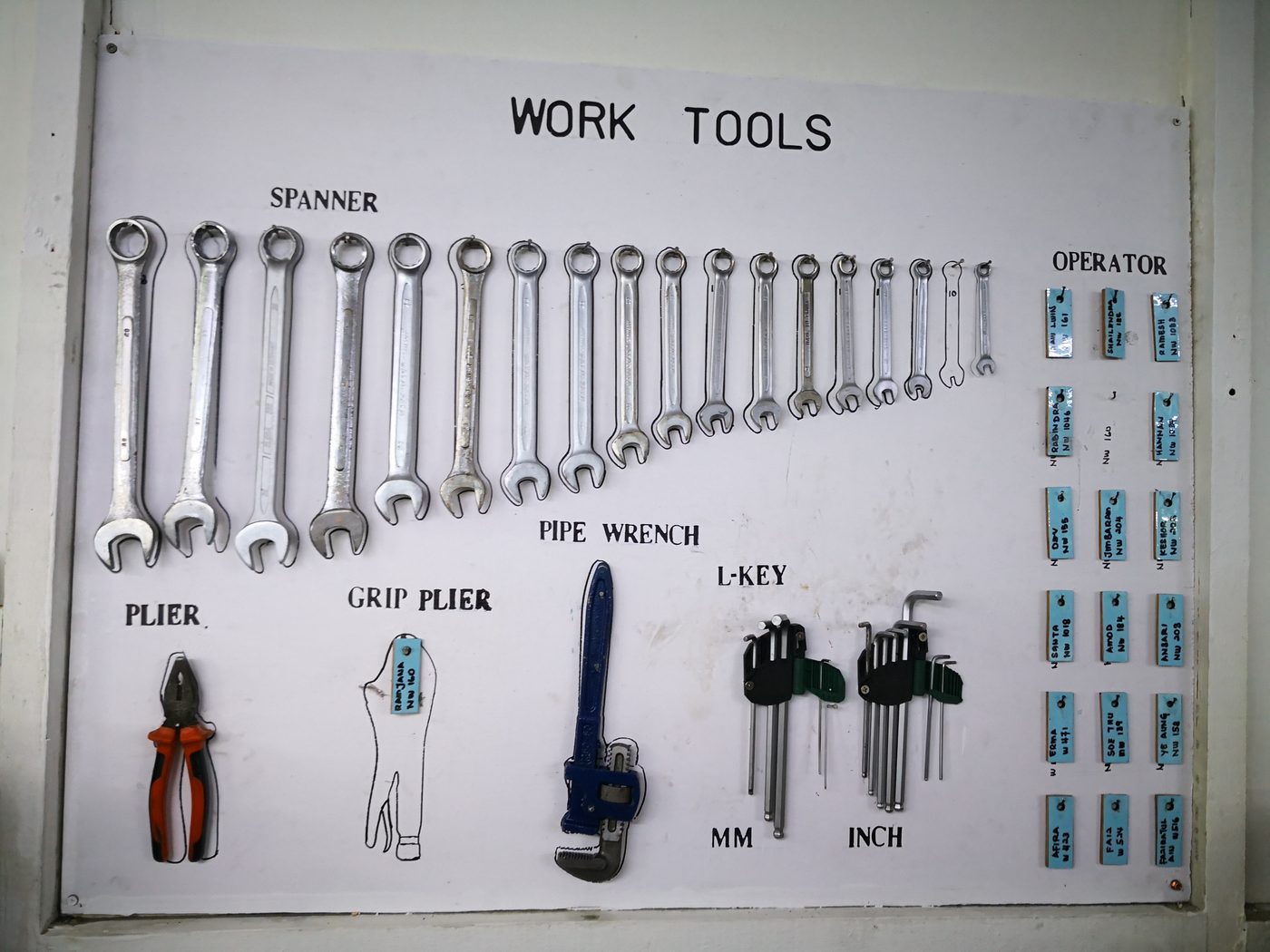
  • Shadow Boards: Use boards with outlines of each tool to ensure immediate visual recognition of missing items, promoting accountability among technicians.

Shadow board with outlined tool shapes and tools
Shadow board with outlined tool shapes and tools (Source: Wikipedia (Shadow board))
  • Lockable Cabinets: Secure sensitive electronic equipment such as alignment sensors in lockable cabinets to prevent theft and environmental damage.
  • Mobile Tool Carts: Employ wheeled carts with compartments to transport tools easily between bays while keeping them organized.

Labelling Practices

  • Colour-Coded Labels: Assign coloured labels to different categories of tools (e.g., red for calibration devices, blue for hand tools) to simplify identification during busy operations.
  • Durable Tags: Use waterproof and oil-resistant labels to withstand harsh workshop conditions, ensuring labels remain legible over time.
  • Inventory Lists: Maintain updated inventory sheets or digital logs indicating tool location, condition, and calibration dates to support maintenance schedules.

Material Handling

  • Proper Storage of Consumables: Store wheel alignment consumables such as calibration targets and sensor batteries in climate-controlled drawers to preserve their functionality.
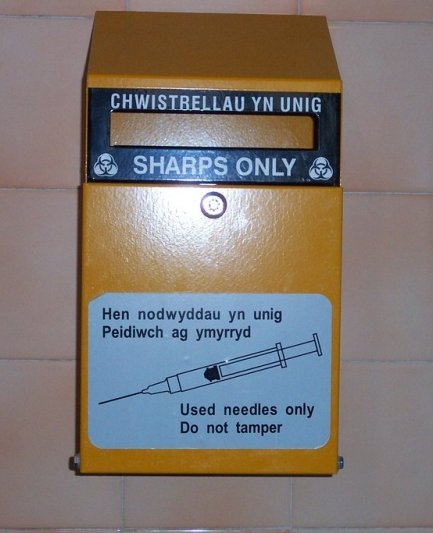
  • Safe Disposal Bins: Provide bins for disposal of worn or damaged parts and used consumables, adhering to environmental regulations enforced by bodies like NEMA.

Yellow sharps disposal bin for used needles
Yellow sharps disposal bin for used needles (Source: Wikimedia Commons)

Material Storage and Management

Proper management of materials used in wheel alignment is essential to maintain service quality and comply with Kenyan regulations. The following practices should be observed:

  • Segregated Storage Areas: Allocate separate shelves or bins for different materials such as alignment targets, calibration weights, and cleaning agents. This prevents cross-contamination and makes retrieval easier during busy operations at workshops like Toyota Kenya service centres.
  • Climate Control: Store sensitive materials, such as electronic calibration targets and adhesives, in areas with controlled temperature and humidity. This is particularly important in regions like Mombasa where high humidity can degrade materials quickly.
  • First-In, First-Out (FIFO) System: Implement a FIFO system for consumables to ensure older stock is used before new supplies, reducing wastage and ensuring materials like adhesives and lubricants remain effective. This is standard practice at large fleet maintenance depots such as Kenya Power’s vehicle workshops.
  • Hazardous Material Handling: Store hazardous substances, such as cleaning solvents and battery acids, in compliance with NEMA guidelines. Use lockable, ventilated cabinets and ensure Material Safety Data Sheets (MSDS) are accessible to all staff.
  • Regular Inventory Audits: Conduct monthly audits of material stocks to identify shortages or expired items. This supports uninterrupted service delivery and helps meet the documentation requirements of the Kenya Bureau of Standards during audits.
The rest of this chapter
🔒

Create a free account to open more of this chapter.

Free: practical guides, quick cards, workplace scenarios and more.

Create a free account
🔒5.2 Tools, Equipment and Materials

Wheel alignment technology has evolved with digital and optical systems offering increased precision and efficiency. Understanding the specifications and correct use of these machines is vital for Kenyan automotive technicians aiming to meet international serv…

🔒5.3 Wheel Alignment Procedure

In the Kenyan automotive service industry, accurate wheel alignment is critical for vehicle safety, performance, and tyre longevity. Workshops serving Nairobi, Mombasa, and other urban centres rely on systematic alignment procedures to meet customer expectatio…

🔒5.4 Wheel Alignment Documentation

Accurate documentation of wheel alignment procedures is vital for quality control, warranty claims, and customer trust in Kenya’s automotive service sector. Well-maintained records support transparency and help workshops demonstrate compliance with industry st…

Chapter Summary

This chapter on Vehicle Wheel Alignment emphasizes the importance of organizing and maintaining the work area by properly setting up the workplace to ensure efficiency and safety. It highlights the necessity of correct storage and labelling of tools, equipment, and materials to prevent damage and facilitate easy access during maintenance tasks. The chapter introduces key tools such as digital wheel balancing machines, digital wheel alignment machines, and optic wheel alignment machines, explaining their roles in achieving precise alignment results. A detailed wheel alignment procedure is covered, outlining the steps required to adjust the wheels accurately for optimal vehicle performance and tyre longevity. Finally, the chapter discusses the importance of comprehensive wheel alignment documentation to record service details, support quality assurance, and provide a reference for future maintenance. Together, these components form a structured approach to maintaining vehicle suspension and steering systems effectively.

Self-Assessment

🔒 PDFDownload this self-assessment, with answers

A. Written Assessment

  1. What are the key steps involved in setting up a workplace for vehicle wheel alignment? (3 marks)
  2. Why is proper storage and labelling of tools important in a vehicle suspension and steering workshop? (2 marks)
🔒20 more in this section.

Chapter Examination Questions

🔒 PDFDownload these examination questions, with worked answers

SECTION A (40 Marks) - Answer ALL Questions

  1. Explain the importance of organizing and maintaining the work area before performing vehicle wheel alignment at a busy Nairobi county garage. (4 marks)
  2. Describe the key steps involved in setting up a workplace for wheel alignment to ensure safety and efficiency. (4 marks)
🔒18 more in this section.

Chapter Practical Activities

Practical 1: Organize and Maintain Wheel Alignment Work Area

Automotive Engineering Technology · Level 6
Vehicle Suspension And Steering System Maintenance
PRACTICAL ASSESSMENT
TIME: 4 HOURS
⬇ PDFCandidate Instructions (Candidate Tool)

Type: Individual

INSTRUCTIONS TO CANDIDATE:
1.  You are required to perform the following task:
i.  Prepare and organize a 3m x 3m wheel alignment work area ensuring cleanliness, safety, and correct equipment arrangement as per workshop standards.
2.  You have been provided with the following resources for the practical task:
Tools & EquipmentMaterials
Wheel chocksDegreaser solution
Broom and dustpanWaste disposal bin
Cleaning cloths
Wheel alignment tools kit
Tool trolley
⬇ PDFResources Required (Cutting List)
S/NItemQuantity
1Safety boots1 pair per Candidate
2Overall/dust coat1 per Candidate
3Wheel chocks2 pcs per Candidate
4Cleaning cloths5 pcs per Candidate
5Broom and dustpan1 set per Candidate
6Degreaser solution (1 litre)0.5 litre per Candidate
7Wheel alignment tools kit (including tape measure, spirit level, chalk)1 kit per Candidate
8Tool trolley1 per Candidate
9Waste disposal bin1 per Candidate
⬇ PDFAssessor Guide
Items to be EvaluatedMarks AvailableMarks ObtainedComments
TASK 1: Work Area Preparation and Organization
Wore personal protective equipment including safety boots and overall/dust coat
(Award 1 mark each or zero)
2
Cleared the workspace of debris and unnecessary items using broom and dustpan
(Award up to 3 marks for thorough cleaning or zero)
3
Applied degreaser and cleaned the floor and surfaces with cleaning cloths
(Award 3 marks for effective cleaning or zero)
3
Arranged wheel alignment tools kit and tool trolley in an accessible and orderly manner
(Award 3 marks for correct and safe arrangement or zero)
3
Positioned wheel chocks appropriately for vehicle safety
(Award 2 marks for correct placement or zero)
2
Ensured waste disposal bin was available and used for waste materials
(Award 2 marks for proper waste management or zero)
2
Checked that the workspace meets safety standards with no hazards present
(Award 3 marks for full safety compliance or zero)
3
Sub-Total18
PRODUCT CHECKLIST
Work area is clean, free of hazards, and measures approximately 3m x 3m
(Award 4 marks for correct dimensions and cleanliness or zero)
4
Tools and equipment are properly arranged and easily accessible
(Award 3 marks for neat and logical arrangement or zero)
3
Safety equipment and wheel chocks are correctly positioned
(Award 3 marks for correct and safe positioning or zero)
3
Sub-Total10
GRAND TOTAL28
ASSESSMENT OUTCOME:   ☐ Competent    ☐ Not Yet Competent (competent if at least 50%)

Practical 2: Proper Storage and Labelling of Wheel Alignment Tools and Materials

Automotive Engineering Technology · Level 6
Vehicle Suspension And Steering System Maintenance
PRACTICAL ASSESSMENT
TIME: 3 HOURS
⬇ PDFCandidate Instructions (Candidate Tool)

Type: Individual

INSTRUCTIONS TO CANDIDATE:
1.  You are required to perform the following task:
i.  Store and label the wheel alignment gauge, camber/caster adjustment tool, and toe alignment bar properly inside a toolbox of dimensions 600mm x 400mm x 200mm as per workshop standards.
2.  You have been provided with the following resources for the practical task:
Tools & EquipmentMaterials
Wheel alignment gaugeAdhesive labels
Camber/caster adjustment toolClean lint-free cloth
Toe alignment bar
Toolbox with compartments
Permanent marker pen
Adhesive labels
Clean lint-free cloth
⬇ PDFResources Required (Cutting List)
S/NItemQuantity
1Wheel alignment gauge1 Pc per Candidate
2Camber/caster adjustment tool1 Pc per Candidate
3Toe alignment bar1 Pc per Candidate
4Clean lint-free cloth2 Pcs per Candidate
5Toolbox with compartments1 Pc per Candidate
6Adhesive labels1 Sheet per Candidate
7Permanent marker pen1 Pc per Candidate
8Protective gloves1 Pair per Candidate
9Safety boots1 Pair per Candidate
⬇ PDFAssessor Guide
Items to be EvaluatedMarks AvailableMarks ObtainedComments
TASK 1: PPE and Preparation
Wore protective gloves and safety boots correctly
(Award 1 mark each or zero)
2
Prepared the work area to be clean and free from hazards
(Award 1 mark or zero)
1
Sub-Total3
TASK 2: Tool Cleaning and Inspection
Cleaned wheel alignment tools using lint-free cloth removing dirt and grease
(Award 2 marks or zero)
2
Inspected tools for damage or wear before storage
(Award 2 marks or zero)
2
Sub-Total4
TASK 3: Label Preparation and Application
Prepared adhesive labels with correct tool names using permanent marker
(Award 2 marks or zero)
2
Applied labels neatly on designated toolbox compartments
(Award 2 marks or zero)
2
Sub-Total4
TASK 4: Tool Storage
Placed wheel alignment gauge in labelled compartment inside the toolbox
(Award 1 mark or zero)
1
Stored camber/caster adjustment tool in the correct labelled compartment
(Award 1 mark or zero)
1
Stored toe alignment bar in its labelled compartment without overlapping other tools
(Award 1 mark or zero)
1
Closed the toolbox securely to protect tools from damage
(Award 1 mark or zero)
1
Sub-Total4
TASK 5: Housekeeping
Cleaned the work area and disposed of used cloths and waste materials properly
(Award 2 marks or zero)
2
Sub-Total2
PRODUCT CHECKLIST
Tools are clean, undamaged, and correctly stored in labelled compartments inside the toolbox of 600mm x 400mm x 200mm
(Award 5 marks or zero)
5
Sub-Total5
GRAND TOTAL22
ASSESSMENT OUTCOME:   ☐ Competent    ☐ Not Yet Competent (competent if at least 50%)
🔒

Free: practical guides, quick cards, workplace scenarios and more.

Create a free account
🔒Identify and Use Wheel Alignment Tools and EquipmentPractical 3
🔒Operate digital wheel balancing machine to balance vehicle wheelsPractical 4
🔒Operate digital wheel alignment machine to measure and adjust wheel alignment anglesPractical 5
🔒Operate optic wheel alignment machine to align front wheels of a sedanPractical 6
🔒Perform complete wheel alignment procedure on a passenger vehiclePractical 7
🔒Document Vehicle Wheel Alignment Results and AdjustmentsPractical 8
🔒Set up workplace for digital wheel balancing and alignmentPractical 9
🔒Set up workplace for optic wheel alignment on a passenger vehiclePractical 10
Flashcards 20 cards Study deck ▾
Question
1

↻ Tap card to reveal answer
🔒

18 more in this section.

Create a free account
Test Yourself 18 questions Start quiz ▾
0%
0 / 2
🔒

16 more in this section.

Create a free account
Am I competent?

At the start of this chapter we promised you would be able to:

  • Organise your work area neatly and safely by following workplace procedures.
  • Gather and prepare all the tools, equipment, and materials needed for wheel alignment accurately.
  • Align vehicle wheels correctly by following the manufacturer’s manual step-by-step.
  • Test vehicle wheel alignment accurately to ensure it meets the manufacturer’s specifications.
  • Prepare a clear and complete vehicle wheel alignment service document following workplace procedures.

Tick each one you can genuinely do.

So, are you there yet?

You're competent when you can confidently do 50% or more of what this chapter promised.

Sign in to record how you're doing.