Identify potential risks related to stored goods accurately.
Follow the required procedures to assess and manage these risks.
Understand how to maintain the safety and security of stored goods.
Mastering this skill helps you protect valuable inventory and ensures smooth, safe warehouse operations in your future trade.
Compiled by: Simon Ngugi
Securing stored goods is a critical responsibility in procurement management, ensuring that procured items remain intact, accessible, and protected from threats such as theft, damage, or deterioration. In Kenya, where public and private sector organizations face challenges like pilferage and environmental risks, effective storage security safeguards investments and supports operational continuity. This chapter explores the principles and practices essential for maintaining the security of stored goods within procurement warehousing, emphasizing practical measures tailored to Kenyan institutional contexts.
6.1 Stored goods security
Stored goods security refers to the measures put in place to protect inventory from loss, damage, deterioration and unauthorised access while it is held in the warehouse. Procured goods represent a large investment, and their loss affects operations, customers and the financial results of the organisation. Securing stored goods follows a clear sequence: identify the risks the goods face, assess how likely and how serious each risk is, classify the risks so that suitable controls can be chosen, and put in place measures that reduce the risks to an acceptable level.
Importance of stored goods security
Prevention of losses: Reduces theft, pilferage and damage.
Maintaining quality: Goods stay fit for use.
Accountability: Controlled access and records make staff answerable for the goods in their care.
Continuity of operations: Goods are available when needed.
Reputation: Reliable custody builds the trust of users, customers and auditors.
6.1.1 Risks associated with stores
A risk associated with stores is any event or condition that can cause loss of, or damage to, stored goods, or harm to people working in the store. Stores face risks from people inside and outside the organisation, from the nature of the goods, from the building and equipment and from the natural environment. For example, a Kenyan electronics distributor's warehouse faces a high risk of theft because its goods are small, valuable and easy to sell, while a fertiliser warehouse faces greater risk from moisture and caking.
Theft and burglary: Goods may be stolen by outsiders breaking in or by armed robbers, especially high-value and easily sold items.
Pilferage by staff: Small quantities may be taken repeatedly by employees, often unnoticed until a stock take.
Fraud and collusion: Staff may falsify records, issue goods against fake documents or collude with suppliers, drivers or security guards to remove goods.
Fire: Fire from faulty wiring, smoking, hot work, flammable goods or arson can destroy goods and the building.
Flooding and water damage: Leaking roofs, blocked drains and floods damage goods stored on the floor.
Pests and vermin: Rodents, insects, termites and birds damage packaging, foodstuffs, grain, paper and textiles.
Deterioration and expiry: Goods spoil from heat, humidity, light or age, or pass their expiry dates.
Damage in handling: Goods are dropped, crushed or punctured through poor stacking or careless use of handling equipment.
Obsolescence: Goods become out of date or no longer needed because of changes in technology or demand.
Contamination: Goods are spoiled by contact with chemicals, dust, strong smells or leaking containers.
Vandalism and sabotage: Deliberate damage by disgruntled people or intruders.
Accidents to people: Falling stacks, collapsing racks, forklift accidents and chemical spills can injure staff and damage goods.
Failure of services: Power failure can stop refrigeration, lighting, alarms and computer systems.
6.1.2 Risk assessment
Risk assessment is the core tool of stores security planning. It gives the stores manager an organised view of what could go wrong, how likely it is and how serious it would be, so that money and effort are directed at the risks that matter most rather than spread evenly or spent on minor issues.
6.1.2.1 Definition of risk assessment
Risk assessment is the systematic process of identifying the hazards and threats to stored goods and people in the store, analysing the likelihood that each will occur and the impact if it does, evaluating which risks are acceptable and which need action, and deciding the control measures needed. The results are recorded and reviewed regularly. A hazard is something with the potential to cause loss or harm, such as stacked flammable liquids; risk is the combination of how likely the loss is and how severe it would be.
6.1.2.2 Importance of conducting risk assessment
Prevents losses: Vulnerabilities are found and corrected before theft, fire or damage occurs.
Prioritises resources: Limited security funds are spent first on the highest risks.
Protects people: Hazards to staff, such as unstable stacks or unsafe chemical storage, are identified and controlled.
Supports compliance: It helps the organisation meet occupational safety and health, fire safety and insurance requirements.
Ensures continuity of supply: Goods needed for operations remain available.
Improves accountability: Clear controls and responsibilities make it easier to trace losses to their cause.
Supports insurance and planning: It shows which risks to insure, which to control and which to accept, and informs emergency plans.
6.1.2.3 Steps of conducting risk assessment
Identify the hazards and threats: inspect the store, review records of past losses and incidents, and consult staff to list everything that could cause loss or harm.
Identify what and who could be harmed: note which goods, people, records and equipment are exposed to each hazard.
Analyse each risk: estimate the likelihood that it will occur and the impact if it does, using a scale such as 1 (very low) to 5 (very high).
Evaluate and prioritise the risks: calculate a risk score or rating, compare it with the level the organisation accepts and rank the risks from highest to lowest.
Decide the control measures: for each significant risk choose how to avoid, reduce, transfer (for example through insurance) or accept it, and decide specific measures.
Record the findings: enter the risks, ratings, controls, responsible persons and deadlines in a risk register or assessment form.
Implement the controls: put the agreed measures in place and inform and train the staff concerned.
Monitor and review: check that controls are working, investigate incidents and repeat the assessment regularly or whenever goods, layout or conditions change.
6.1.2.4 Tools for conducting risk assessment
Checklists: Lists of common hazards and controls used during inspections, so that no area or common risk is missed.
Risk matrix: A grid that rates each risk by likelihood and impact to give a risk score and priority.
Risk register: A record of all identified risks, their ratings, controls, owners and review dates.
Inspection and security audit forms: Structured forms for physical inspection of fences, locks, lighting, fire equipment and storage conditions.
Process flowcharts: Diagrams of the receiving, storage and issuing process, used to find the points where goods could be lost or stolen.
Incident and loss records: Past records of theft, damage, discrepancies and accidents, which show where risks have occurred before.
Stock records and discrepancy reports: Repeated discrepancies on certain items point to theft or poor control.
Brainstorming and interviews: Discussions with storekeepers, security staff and drivers who know the weak points in practice.
Example of a risk matrix: a stores manager rates likelihood and impact from 1 to 5 and multiplies them. The organisation may set its own bands, for example 1 to 4 low, 5 to 12 medium and 15 to 25 high.
Risk
Likelihood (1 to 5)
Impact (1 to 5)
Score
Priority
Theft of mobile phone stock
4
4
16
High
Fire in solvents area
2
5
10
Medium
Rodent damage to cartons
3
2
6
Medium
Water damage from roof leak
2
3
6
Medium
Minor breakage in handling
4
1
4
Low
The theft risk is dealt with first, although fire has the highest possible impact, because its combination of likelihood and impact gives the highest score.
6.1.3 Classification of risks associated with goods
Classifying risks groups them by their source or nature, so that each group can be handled by the right type of control and the right people. A risk may fall into more than one class.
Physical risks: Damage to or loss of the goods themselves through fire, breakage, crushing, leakage or contamination.
Security (human) risks: Losses caused by people, such as theft, burglary, pilferage, fraud, vandalism and sabotage. These can be internal (staff) or external (intruders, drivers, visitors).
Environmental (natural) risks: Losses from floods, heavy rain, heat, humidity, dust, lightning and pests.
Operational risks: Losses from errors and failures in operations, such as poor handling, wrong storage, recording errors, equipment breakdown and power failure.
Deterioration and obsolescence risks: Loss of value through expiry, spoilage, ageing or goods becoming out of date.
Financial risks: Losses in the value of stock, such as falling prices, uninsured losses or money tied up in excess stock.
Legal and compliance risks: Penalties or losses from breaking laws and regulations on storage of hazardous goods, safety, customs or tax.
Health and safety risks: Injury to people from the goods or the storage conditions, such as falling stacks or chemical exposure.
Insurable and non-insurable risks
Risks can also be classified by whether they can be transferred to an insurer. Fire, burglary and flood damage are usually insurable; losses from obsolescence, poor management or price falls usually are not, and must be controlled by the organisation itself.
6.1.4 Measures to ensure security of stores
Security measures are the physical, procedural and technological controls that reduce the likelihood or impact of the risks identified. Effective security combines all three, because each covers weaknesses in the others.
Physical security measures
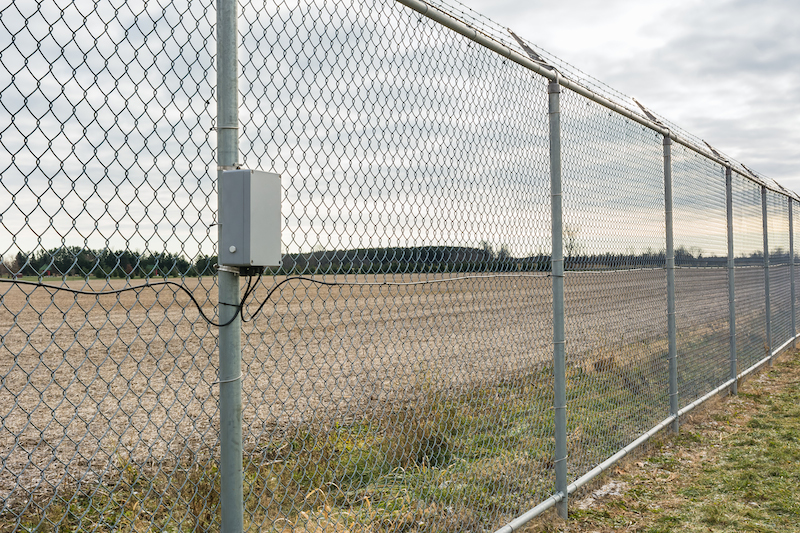
Perimeter fencing: Establishes a clear boundary around the storage facility, deterring unauthorised entry.
Perimeter fencing with electrical enclosure (Source: Wikimedia Commons)
Secure doors and locks: Robust locks and reinforced doors restrict access to authorised personnel only; keys are controlled and recorded.
Lighting: Adequate lighting inside and around storage areas discourages intruders and supports surveillance.
Security guards and gate control: Guards control entry and exit and check vehicles and gate passes.
Secure cages and safes: High-value and attractive items are kept in locked cages or rooms within the warehouse.
Fire protection systems: Fire alarms, extinguishers, hose reels and, where suitable, sprinkler systems prevent and limit fire damage.
Environmental controls: Temperature and humidity control, ventilation and raising goods off the floor on pallets protect sensitive goods from spoilage and water damage.
Pest control: Regular inspection, sealing of openings and pest control treatment protect goods from vermin.
Procedural security controls
Access authorisation: Defining who can enter storage areas and under what conditions, documented through access logs and visitor registers.
Documentation controls: Goods are received and issued only against authorised, pre-numbered documents.
Segregation of duties: Ordering, receiving, storing and recording are done by different people.
Inventory audits: Regular stocktaking, spot checks and verification to confirm the presence and condition of stored goods.
Receiving and dispatch protocols: Clear procedures for checking goods on arrival and before release to prevent theft or errors.
Incident reporting: Mechanisms for reporting and investigating security breaches, losses or damage.
Staff vetting, rotation and training: Background checks on new staff, rotation of duties and training on security policies and responsibilities.
Good housekeeping: Clean, orderly stores make missing goods and hazards easier to notice.
Insurance: Insurance cover for fire, burglary and other insurable risks transfers part of the financial loss.
Technological security solutions
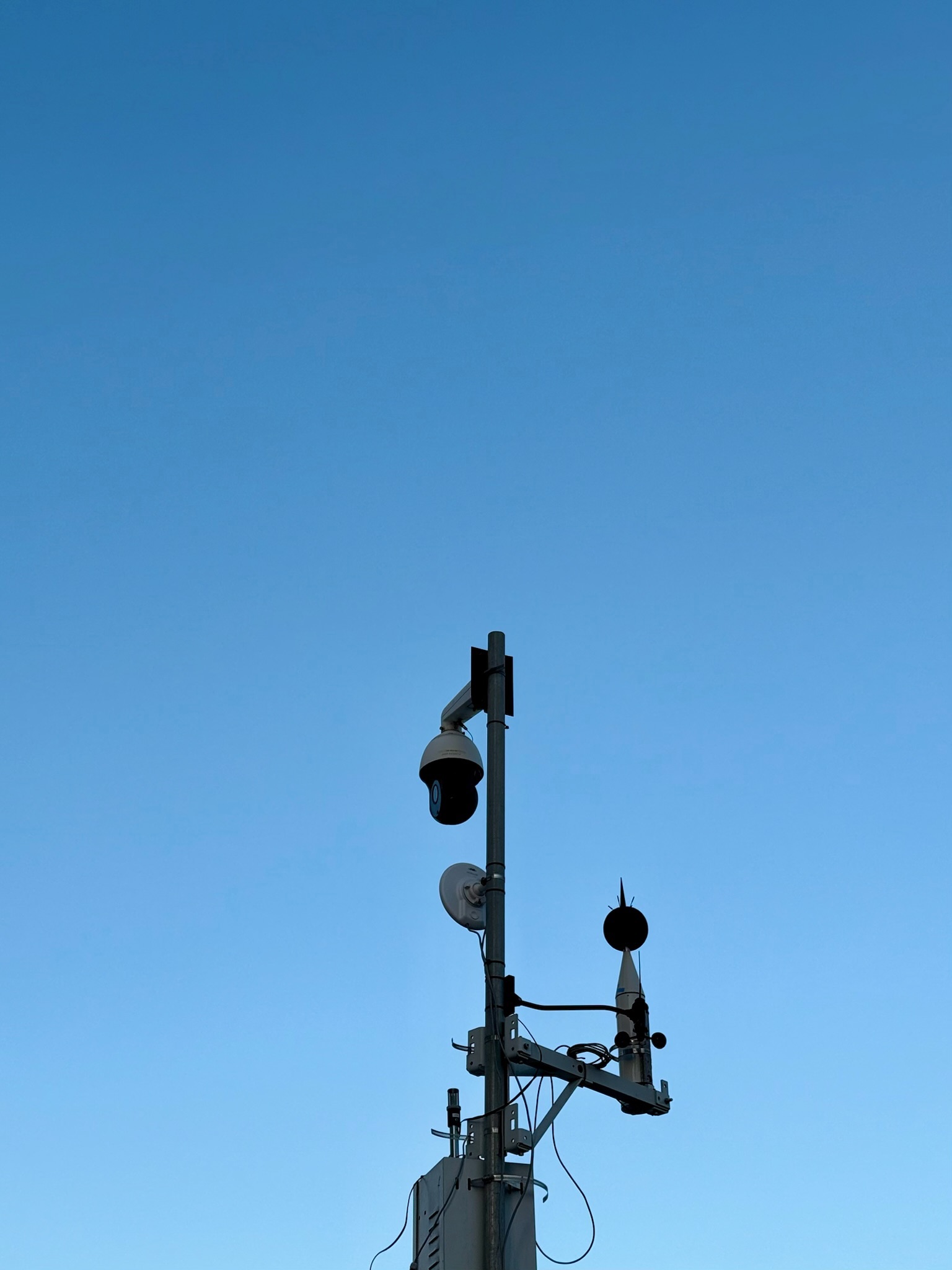
Surveillance cameras (CCTV): Continuous monitoring to deter theft and provide evidence if incidents occur.
Surveillance camera mounted on a pole (Source: Wikimedia Commons)
Alarm systems: Sensors and alarms that activate in case of unauthorised access, fire or other hazards.
Electronic access control: Keycards, biometric systems or PIN codes restrict and record entry.
Inventory management software: Digital tracking of goods enhances visibility and shows unusual movements.
Barcodes and RFID tags: Identify items and record their movement accurately.
Communication systems: Radios or phones allow staff to coordinate security responses quickly.
Implementing security within budget constraints
Prioritise cost-effective measures such as good locks, lighting and simple CCTV systems that give substantial protection without excessive investment.
Upgrade facilities in phases, starting with sealing entry points and improving perimeter security.
Integrate inventory management software with security controls to monitor stock movement and detect anomalies.
Use the services of reputable private security firms and coordinate with the police for patrols and rapid response.
Promote a culture of integrity, with clear roles and accountability for breaches or negligence.
Challenges in securing stored goods and mitigation
Resource limitations: Budget constraints may restrict security investment. Mitigation: allocate funds to the highest risks identified in the risk assessment.
Inadequate infrastructure: Poorly built stores may lack proper doors, windows or fencing. Mitigation: phased improvements to the building and perimeter.
Human error and collusion: Staff negligence or involvement in theft undermines security. Mitigation: vetting, rotation of duties, supervision and disciplinary measures.
Environmental risks: Floods, pests and heat damage goods despite security measures. Mitigation: pallets, drainage, ventilation and pest control.
Weak monitoring and enforcement: Lapses in following procedures. Mitigation: regular audits, surprise inspections and technology to monitor compliance.
Practice Questions
Explain the significance of stored goods security in the procurement function of a county government office. (10 marks)
Identify and describe five physical security measures that can be used to protect stored goods in a healthcare facility. (10 marks)
Discuss the role of technology in enhancing stored goods security and provide examples relevant to Kenyan procurement contexts. (10 marks)
Outline six steps a procurement manager should take to implement an effective stored goods security plan. (12 marks)
Analyze three common challenges faced in securing stored goods in Kenyan public institutions and suggest appropriate mitigation strategies for each. (15 marks)
Chapter Summary
The chapter on securing stored goods addresses the critical importance of protecting inventory within storage facilities by first identifying the various risks associated with stores, such as theft, damage, and environmental hazards. It emphasizes the role of risk assessment, defining it as a systematic process to identify, analyze, and evaluate potential threats to stored goods. The chapter outlines why conducting risk assessments is essential for preventing losses and ensuring operational continuity. Detailed steps for carrying out risk assessment are presented, guiding learners through identifying hazards, evaluating risks, and implementing control measures. Various tools that support effective risk assessments are also discussed, enhancing accuracy and decision-making. Classification of risks is examined to distinguish between physical, human, and environmental factors that could compromise goods security. Finally, the chapter explores practical measures and strategies for securing stores, including access controls, surveillance, and proper handling protocols, to safeguard procured goods throughout the warehousing process.
Define risk assessment in the context of stores management. (3 marks)
Identify four common risks associated with the storage of procured goods. (4 marks)
Explain why conducting a risk assessment is crucial for securing stored goods. (4 marks)
List and briefly describe the main steps involved in conducting a risk assessment for a warehouse. (6 marks)
Name three tools commonly used to conduct risk assessments in warehousing and explain their purpose. (6 marks)
Classify the types of risks that can affect stored goods and provide an example for each category. (5 marks)
Outline five measures that can be implemented to enhance the security of goods in storage. (5 marks)
Multiple Choice: Which of the following is NOT typically considered a physical risk to stored goods?
a) Theft
b) Fire
c) Supplier insolvency
d) Pest infestation (2 marks)
Multiple Choice: What is the first step in conducting a risk assessment?
a) Risk evaluation
b) Risk identification
c) Risk control
d) Risk monitoring (2 marks)
Short answer: Describe how a county government warehouse can apply risk assessment tools to prevent loss of medical supplies. (4 marks)
Show Answers
Risk assessment is the systematic process of identifying, analyzing, and evaluating potential hazards or risks that could negatively impact the security and condition of stored goods in a warehouse.
Common risks include theft, fire, pest infestation, damage due to poor handling, and environmental factors such as humidity or flooding.
Conducting risk assessment helps in proactively identifying vulnerabilities, enabling management to implement appropriate controls and prevent losses, thus safeguarding the organization's assets and ensuring uninterrupted supply chains.
Risk analysis: Assessing the likelihood and impact of each risk.
Risk evaluation: Prioritizing risks based on their severity.
Risk control: Developing and implementing measures to mitigate risks.
Monitoring and review: Continuously checking the effectiveness of controls and updating the assessment.
Tools include:
Checklists: Ensure all common risks are considered during assessment.
Risk matrices: Help in visualizing and prioritizing risks by likelihood and impact.
Flowcharts: Map processes to identify points where risks may arise.
Classification of risks:
Physical risks (e.g., theft of goods)
Environmental risks (e.g., flood damage)
Operational risks (e.g., poor inventory management leading to stock loss)
Security risks (e.g., unauthorized access)
Financial risks (e.g., loss due to supplier bankruptcy)
Measures to secure stores:
Installing surveillance cameras and alarm systems.
Controlling access through security personnel and restricted entry points.
Implementing proper inventory management systems.
Ensuring appropriate fire detection and suppression equipment is in place.
Training staff on security protocols and emergency procedures.
c) Supplier insolvency is not a physical risk to stored goods but a financial risk.
b) Risk identification is the first step in conducting risk assessment.
A county government warehouse can use checklists to identify vulnerabilities such as unlocked storage rooms or expired fire extinguishers, apply risk matrices to prioritize risks like theft versus fire, and implement controls such as installing CCTV cameras and training staff on handling medical supplies securely to prevent loss.
B. Oral Assessment
Discuss how risk assessment contributes to effective management of procured goods in a retail warehouse within a Kenyan county government context. Include examples of specific risks and mitigation strategies.
Explain the challenges of implementing security measures in a large-scale pharmaceutical storage facility and propose practical solutions to enhance stored goods security.
Answer Guide
Question 1 key points:
Risk assessment identifies vulnerabilities such as theft, fire hazards, and environmental damage.
It enables prioritization of risks to allocate resources effectively for mitigation.
Examples include installing CCTV to deter theft, fire alarms to reduce fire damage, and proper pest control to protect goods.
Helps in compliance with public procurement and storage regulations.
Question 2 key points:
Challenges include high volume of sensitive goods, strict regulatory requirements, and potential for theft or contamination.
Solutions involve advanced access control systems, regular staff training on handling and security, use of temperature and humidity monitors, and integration of inventory management software for real-time tracking.
Collaboration with security agencies and regular audits to ensure compliance and security.
C. Case Study
The Nairobi County Health Services warehouse manages large volumes of medical supplies procured for public hospitals. Recently, there have been reports of missing stock and occasional damage due to poor storage conditions.
Tasks:
a) Conduct a risk assessment for the Nairobi County Health Services warehouse identifying key risks to stored medical supplies. (10 marks)
b) Recommend appropriate security measures to address the identified risks and improve the overall security of the warehouse. (8 marks)
c) Outline how the warehouse management can monitor and review the effectiveness of the implemented security measures. (7 marks)
Suggested Approach
a) Identify risks such as theft by unauthorized personnel, damage from humidity or pests, fire hazards, inaccurate record-keeping leading to stock discrepancies, and delays in stock rotation causing expiry. Use risk matrices to prioritize these risks based on likelihood and impact.
b) Recommend installing CCTV cameras and alarms, employing trained security personnel, implementing climate control systems to regulate humidity, using electronic inventory management systems for accurate tracking, conducting regular pest control, and establishing strict access controls with authorized entry lists.
c) Monitoring can be done through regular security audits, reviewing CCTV footage, conducting stock takes and reconciliation routinely, gathering staff feedback on security challenges, and updating risk assessments periodically to respond to new threats or vulnerabilities. This ensures continuous improvement of security protocols.
Chapter Examination Questions
🔒 PDFDownload these examination questions, with worked answers
SECTION A (40 Marks) - Answer ALL Questions
Explain four common risks associated with stores in a public procurement warehousing context such as at a county government office. (4 marks)
Define risk assessment in the context of securing stored goods in procurement management. (4 marks)
Discuss the importance of conducting risk assessments in managing security of procured goods stored in a warehouse. (4 marks)
List and explain four steps involved in conducting a risk assessment for stored goods security. (4 marks)
Identify and describe three tools used to conduct risk assessments in warehousing of procured goods. (4 marks)
Classify the risks associated with stored goods by providing five categories relevant to procurement warehousing. (4 marks)
Describe four measures that can be implemented to ensure the security of stores in a procurement environment. (4 marks)
Explain how theft risk can impact the procurement process and suggest mitigation strategies. (4 marks)
Discuss the role of personnel training in enhancing the security of procured goods stored in warehouses. (4 marks)
Describe how technology can be used to improve the security of stored goods in a procurement warehouse. (4 marks)
Section A - Answers
Common risks include theft by insiders or outsiders, fire hazards due to poor electrical wiring, damage from pests or rodents, and spoilage due to improper storage conditions. For example, at a Nairobi County warehouse, theft risk may arise from inadequate access control.
Risk assessment is a systematic process of identifying, analysing, and evaluating potential threats to stored goods to determine their likelihood and impact, enabling informed security decisions.
Conducting risk assessments helps identify vulnerabilities, prioritise security resources, prevent losses, and comply with regulatory requirements, thereby protecting public funds and ensuring accountability.
Steps include: (a) Identifying hazards or risks, (b) Analysing the likelihood and impact, (c) Evaluating risk levels, (d) Implementing control measures and monitoring effectiveness.
Tools include risk matrices for rating risks, checklists for hazard identification, and software applications for risk documentation and tracking.
Measures include: (a) Access control systems, (b) Surveillance cameras, (c) Proper inventory management, (d) Staff vetting and training.
Theft can cause financial losses and delays in service delivery; mitigation includes strict access control, regular audits, and employee awareness programmes.
Trained personnel can detect and respond to security breaches promptly, maintain accurate records, and follow protocols that reduce vulnerabilities.
Technologies such as CCTV, electronic locks, and inventory management software enhance monitoring, restrict unauthorized access, and improve traceability.
SECTION B (60 Marks) - Answer any TWO Questions
Question 11 (Compulsory - 20 marks)
The Nairobi City County procurement department has experienced frequent losses due to theft and mismanagement of stored medical supplies at its central warehouse.
a) Conduct a detailed risk assessment plan to address these security challenges, including identification, analysis, and mitigation strategies. (10 marks)
b) Recommend specific security measures and tools that can be implemented to secure the medical supplies effectively. (10 marks)
Question 12 (20 marks)
Discuss the classification of risks associated with stored goods in procurement warehouses and explain how understanding these classifications can guide security planning.
Question 13 (20 marks)
Outline and explain the step-by-step process of conducting a risk assessment for stored goods in a procurement warehouse, illustrating your answer with relevant examples from a retail business context.
Question 14 (20 marks)
Evaluate the importance of continuous monitoring and review in the risk management process for securing procured goods, and suggest how technology can support this in a county government stores setting.
Section B - Answers
Question 11
a) The risk assessment plan should start with identifying all possible threats such as theft by staff or intruders, fire hazards, and damage from poor storage. Next, analyse the likelihood of each risk and its impact on medical supply availability and public health. Following this, evaluate which risks require urgent controls and develop mitigation plans such as improved access control, fire safety systems, and staff training. Regular monitoring and documentation complete the plan.
b) Recommended measures include installing CCTV cameras at entry and exit points, using electronic access cards to restrict entry, implementing a computerized inventory management system for real-time stock tracking, conducting periodic audits, and sensitizing staff on security protocols.
Question 12
Risks can be classified into physical risks like fire and flooding, security risks such as theft and vandalism, environmental risks including humidity and temperature fluctuations, operational risks like human error or equipment failure, and legal risks involving non-compliance with procurement regulations. Recognizing these classifications helps procurement managers develop targeted security controls addressing specific vulnerabilities, thereby enhancing protection of stored goods.
Question 13
The risk assessment process involves: (1) Identifying hazards such as theft or spoilage; for example, a retail shop may face risk of pilferage during stock transfers. (2) Analysing likelihood and impact, such as evaluating how often theft occurs and consequences on stock levels. (3) Evaluating the risk to prioritize controls. (4) Implementing controls like improved locking systems. (5) Monitoring and reviewing the effectiveness of controls. (6) Documenting the assessment for accountability and future reference.
Question 14
Continuous monitoring ensures that security controls remain effective against evolving threats and that any new risks are promptly identified. Regular reviews enable corrective actions before losses occur. Technology such as automated alert systems, CCTV with remote access, and integrated inventory management software can provide real-time data and analytics, supporting proactive risk management in county government stores.
TVET CDACC - Manage Warehousing Of Procured Goods Occupational Standards
Public Procurement and Asset Disposal Act, 2015
Occupational Safety and Health Act, 2007
National Construction Authority Act, 2011 (relevant for security in construction material storage)
Chapter Practical Activities
Practical 1: Conducting a Risk Assessment for a Warehouse Store
Time: 2 Hours | Type: Individual
Resources Required:
Laptop with Microsoft Excel or Google Sheets installed
Risk assessment template form (printed or digital)
Pen and clipboard
PPE: Safety boots, reflective vest
You are assigned to conduct a risk assessment at a county government warehouse in Nakuru that stores medical supplies procured for local health facilities.
Tasks:
i. Identify and list all potential risks associated with the warehouse store environment.
ii. Assess the likelihood and impact of each identified risk using a risk matrix.
iii. Prioritize the risks based on their risk scores.
iv. Record the findings in the risk assessment template form.
Assessor Observation Criteria:
[ ] Comprehensive identification of warehouse-related risks
[ ] Accurate use of risk matrix to assess likelihood and impact
[ ] Logical prioritization of risks based on scores
[ ] Clear and organized documentation of the assessment results
Practical 2: Classification of Risks Associated with Stored Goods
Time: 1 Hour | Type: Individual
Resources Required:
Printed list of stored goods categories (e.g. electronics, perishables, pharmaceuticals)
Flip chart or whiteboard
Marker pens
At a retail supermarket’s central warehouse in Kisumu, classify typical risks associated with different categories of stored goods to inform procurement management decisions.
Tasks:
i. Group the stored goods into appropriate categories.
ii. For each category, identify five distinct types of risks (e.g. theft, spoilage, damage).
iii. Present the classification and risk types on the flip chart or whiteboard.
iv. Explain how these risks impact procurement and warehousing operations.
Assessor Observation Criteria:
[ ] Correct classification of stored goods categories
[ ] Identification of relevant and diverse risks per category
[ ] Clear presentation on flip chart or whiteboard
[ ] Ability to explain implications for procurement management
Practical 3: Using Tools to Conduct Warehouse Security Risk Assessment
Time: 1.5 Hours | Type: Individual
Resources Required:
Risk assessment checklist specific to warehousing
Digital camera or smartphone with camera
Laptop or tablet for data entry
PPE: Safety boots, gloves
You are tasked to perform a security risk assessment at a pharmaceutical warehouse managed by the Kenya Medical Supplies Authority (KEMSA) in Mombasa.
Tasks:
i. Inspect the warehouse and use the checklist to identify security vulnerabilities.
ii. Take photographs of identified risk points for documentation.
iii. Enter the findings into a digital risk assessment report.
iv. Suggest at least three mitigation measures for the highest risks.
Assessor Observation Criteria:
[ ] Thorough use of the checklist during inspection
[ ] Clear photographic evidence of risk points
[ ] Accurate and complete data entry into the report
[ ] Practical and relevant mitigation suggestions
Practical 4: Drafting a Risk Mitigation Plan for Stored Goods Security
Time: 2 Hours | Type: Individual
Resources Required:
Laptop with word processing software
Previous risk assessment report (provided)
Access to procurement policy documents of a county government office
Pen and notebook
Based on a risk assessment report from a county government warehouse in Kisii, prepare a detailed risk mitigation plan to enhance stored goods security.
Tasks:
i. Review the risk assessment report focusing on identified security risks.
ii. Draft a mitigation plan detailing specific actions, responsible persons, and timelines.
iii. Incorporate relevant procurement policies and compliance requirements.
iv. Submit the plan in a formal report format.
Assessor Observation Criteria:
[ ] Comprehensive review of risk report informing mitigation plan
[ ] Clear articulation of mitigation actions with assigned responsibilities
[ ] Integration of procurement policies for compliance
[ ] Professional and structured report writing
Practical 5: Inspecting Physical Security Measures in a Warehouse
Time: 1.5 Hours | Type: Pairs
Resources Required:
Inspection checklist for physical security (locks, fencing, lighting)
Measuring tape (5m)
Torchlight
PPE: Safety boots, reflective vests
At a SACCO’s central store in Eldoret, conduct a physical security inspection to evaluate the adequacy of security measures protecting procured goods.
Tasks:
i. Measure the dimensions of fencing and check for any breaches or weaknesses.
ii. Inspect locks, gates, and access points for functionality and security level.
iii. Evaluate lighting adequacy inside and around the warehouse at night.
iv. Complete the inspection checklist and recommend improvements.
Assessor Observation Criteria:
[ ] Accurate measurement and identification of fencing issues
[ ] Thorough inspection of locks and access controls
[ ] Valid assessment of lighting conditions
[ ] Detailed completion of checklist and practical recommendations
Practical 6: Simulating a Security Breach and Response Plan
Time: 2 Hours | Type: Group of 4
Resources Required:
Warehouse layout plan
Role-play scripts for security breach scenarios
Communication devices (e.g. mobile phones)
PPE: Safety boots
In a training exercise at a Nairobi-based hotel’s procurement warehouse, simulate a security breach and test the team’s response and reporting procedures.
Tasks:
i. Assign roles: security officer, store manager, procurement officer, and response team member.
ii. Enact a scenario of attempted theft or unauthorized access.
iii. Execute the warehouse’s security breach response plan including communication and containment.
iv. Debrief and document lessons learned from the exercise.
Assessor Observation Criteria:
[ ] Realistic enactment of roles and scenario
[ ] Effective communication and coordination during response
[ ] Proper execution of breach containment steps
[ ] Clear documentation of debrief outcomes
Practical 7: Installing a Basic Access Control System for a Store
Time: 3 Hours | Type: Pairs
Resources Required:
Electronic keypad lock system kit
Screwdrivers, drills, and hand tools
Power supply (mains or battery)
PPE: Safety gloves, safety glasses, dust mask
At a retail shop’s storeroom in Thika, install an electronic keypad lock to enhance access control and security of procured goods.
Tasks:
i. Select the appropriate location on the storeroom door for installation.
ii. Install the keypad lock system according to manufacturer instructions.
iii. Program the access codes and test the locking mechanism.
iv. Provide a demonstration to the store manager on system use and maintenance.
Assessor Observation Criteria:
[ ] Correct selection and preparation of installation site
[ ] Safe and accurate installation of keypad lock
[ ] Successful programming and testing of access codes
[ ] Clear and effective demonstration of system operation
Practical 8: Developing a Warehouse Security Policy Document
Time: 2 Hours | Type: Individual
Resources Required:
Laptop with word processing software
Sample security policies from a public institution
Procurement management guidelines from the Public Procurement Regulatory Authority (PPRA)
Pen and notebook
You are tasked to develop a security policy document for the stores department at a county referral hospital in Meru to safeguard procured medical equipment and supplies.
Tasks:
i. Research and review relevant security and procurement guidelines.
ii. Draft a security policy covering access controls, surveillance, and incident reporting.
iii. Include roles and responsibilities of store personnel.
iv. Format the document professionally for institutional approval.
Assessor Observation Criteria:
[ ] Inclusion of comprehensive security measures aligned with guidelines
[ ] Clear definition of roles and responsibilities
[ ] Logical and coherent policy structure
[ ] Professional formatting suitable for formal submission
Practical 9: Conducting a Security Audit of Warehouse Inventory Records
Time: 1.5 Hours | Type: Individual
Resources Required:
Warehouse inventory ledger or digital inventory management system
Audit checklist for inventory security
Calculator
PPE: None required
At a county government agricultural cooperative store in Kericho, perform a security audit focused on inventory records of procured farming inputs.
Tasks:
i. Review inventory records for consistency and completeness.
ii. Compare physical stock counts with recorded data.
iii. Identify discrepancies and possible security risks.
iv. Prepare an audit report highlighting findings and recommendations.
Assessor Observation Criteria:
[ ] Careful and systematic review of inventory records
[ ] Accurate comparison between physical and recorded stock
[ ] Identification of discrepancies and security concerns
[ ] Clear and concise audit report preparation
Practical 10: Setting Up CCTV Surveillance for a Procurement Store
Time: 3 Hours | Type: Group of 3
Resources Required:
CCTV camera system with cables and power supply
Monitor and recording device (DVR/NVR)
Hand tools (drill, screwdrivers)
PPE: Safety gloves, safety boots, safety glasses
At a Nairobi-based insurance company’s procurement store, install and configure a CCTV surveillance system to monitor stored goods.
Tasks:
i. Plan camera placement to cover all critical areas of the store.
ii. Install cameras and connect them to the recording device.
iii. Configure the system to record continuously and enable remote viewing.
iv. Train the storekeeper on basic system operation and troubleshooting.
Assessor Observation Criteria:
[ ] Strategic and effective camera placement plan
[ ] Safe and correct installation of equipment
[ ] Proper system configuration for recording and monitoring
[ ] Clear and practical user training delivery
Practical 11: Monitoring and Reporting Security Incidents in Stores
Time: 1 Hour | Type: Individual
Resources Required:
Incident report forms
Pen and clipboard
Sample security incident scenarios
As a procurement stores officer at a county government education office in Kisii, you are required to monitor and report security incidents affecting stored goods.
Tasks:
i. Review sample incident scenarios and identify key security breaches.
ii. Complete incident report forms accurately for each scenario.
iii. Propose immediate corrective actions for each incident.
iv. Submit the reports to the stores manager for further action.
Assessor Observation Criteria:
[ ] Accurate identification of security breaches
[ ] Complete and precise incident report form filling
[ ] Practical corrective action proposals
[ ] Timely submission of reports
Practical 12: Implementing Access Control Procedures for Warehouse Staff
Time: 1.5 Hours | Type: Pairs
Resources Required:
Access control logbook or digital attendance system
Staff ID cards or badges
Pen and clipboard
PPE: None required
At a county health department warehouse in Nakuru, implement access control procedures to regulate entry and exit of warehouse personnel.
Tasks:
i. Register all warehouse staff in the access control logbook or system.
ii. Issue and document staff ID cards or badges.
iii. Monitor and record daily access to the warehouse for one week (simulation).
iv. Identify and report any unauthorized access attempts.
Assessor Observation Criteria:
[ ] Accurate registration and documentation of warehouse staff
[ ] Proper issuance and recording of ID cards or badges
[ ] Consistent monitoring and recording of access activity
[ ] Correct identification and reporting of unauthorized access
At a tea processing factory store in Kericho, evaluate environmental risks that could affect the quality of procured goods in storage.
Tasks:
i. Measure and record temperature and humidity levels inside the store.
ii. Inspect the store for signs of pest infestation or water leakage.
iii. Use the checklist to assess environmental risk factors.
iv. Recommend practical control measures to mitigate identified risks.
Assessor Observation Criteria:
[ ] Accurate measurement and recording of environmental parameters
[ ] Detailed inspection for pest and moisture issues
[ ] Comprehensive assessment using the checklist
[ ] Feasible and relevant recommendations provided
Practical 14: Preparing a Security Briefing for Warehouse Staff
Time: 1 Hour | Type: Individual
Resources Required:
Flip chart or projector with presentation slides
Notes on warehouse security policies and procedures
Pen and notebook
At a county government procurement office in Machakos, prepare and deliver a security briefing to warehouse staff focusing on stored goods protection.
Tasks:
i. Develop a clear and concise briefing outline covering key security topics.
ii. Prepare visual aids such as flip chart notes or slides.
iii. Present the briefing to a group of peers simulating warehouse staff.
iv. Respond to questions and clarify security procedures.
Assessor Observation Criteria:
[ ] Logical and comprehensive briefing outline
[ ] Effective use of visual aids to support presentation
[ ] Clear and confident delivery of briefing content
[ ] Ability to address questions accurately
Practical 15: Maintaining Security Equipment in a Procurement Store
Time: 2 Hours | Type: Individual
Resources Required:
Security equipment maintenance checklist
Cleaning materials (cloth, mild detergent)
Basic tools (screwdriver, wrench)
PPE: Gloves, safety goggles
At a county government warehouse in Kitui, conduct routine maintenance on security equipment including locks, alarms, and surveillance cameras.
Tasks:
i. Inspect all security equipment for signs of wear or faults.
ii. Clean and lubricate mechanical locks and hinges.
iii. Test alarm systems and replace batteries if needed.
iv. Document maintenance activities in the security logbook.
Assessor Observation Criteria:
[ ] Detailed inspection and identification of equipment issues
[ ] Proper cleaning and lubrication of mechanical components
[ ] Functional testing and maintenance of alarm systems
[ ] Accurate and complete maintenance records kept