Research in office administration demands a firm theoretical foundation to guide inquiry, analysis, and interpretation of data. When office administrators undertake research projects, especially in Kenyan institutions such as county governments or financial cooperatives, applying relevant theories ensures findings are credible and contextually meaningful. This chapter focuses on identifying and understanding the principal theories that underpin research studies in office administration, aiding professionals to frame their investigations systematically and interpret results with analytical rigor.
2.1 Relevant Theories of the Study
Theories provide conceptual frameworks that explain phenomena, predict outcomes, and guide research design and analysis. In office administration research, selecting appropriate theories aligns the study with existing knowledge and clarifies the relationships between variables such as organizational behaviour, communication, and management processes. Kenyan office administrators benefit from theories that reflect organizational dynamics prevalent in public service offices, banks, or educational institutions, enabling practical application of research findings.
2.1.1 Organizational Theory
Organizational theory examines how organizations function, structure themselves, and interact with their environments. This theory is critical in office administration research since offices operate as formal organizations with hierarchies, roles, and communication channels that influence performance and outcomes.
Components of Organizational Theory
- Structure and Design: Explores how offices arrange departments and roles to achieve efficiency and clarity in responsibilities. For example, a county government office may adopt a functional structure to separate finance, human resources, and administration units.
- Organizational Culture: Investigates shared values, beliefs, and norms within an office that shape behaviour and decision-making. A cooperative society with a culture emphasizing member participation will influence office processes differently than a strict bureaucratic setting.
- Leadership and Management Styles: Studies how leadership approaches, such as participative or authoritarian, affect staff motivation and productivity in administrative offices.
- Communication Patterns: Examines formal and informal communication flows that impact information dissemination and collaboration among office staff.
- Environmental Adaptation: Looks at how offices respond to external pressures like policy changes from the Ministry of Public Service or technological advancements in document management systems.
2.1.2 Systems Theory
Systems theory views an organization as an interrelated set of components working together to achieve common goals. This perspective is valuable in office administration because offices depend on the smooth operation of various subsystems including human resources, finance, and information management.
Key Principles of Systems Theory
- Interdependence: Highlights how different departments or units rely on each other; for example, the procurement unit depends on finance for budget approvals.
- Input-Process-Output Model: Describes how resources (input) are transformed through office processes into services or reports (output).
- Feedback Mechanism: Emphasizes the importance of feedback loops for continuous improvement, such as performance evaluations guiding staff training.
- Equifinality: Suggests that offices can achieve similar results through different processes, allowing flexibility in administrative procedures.
- Boundary Management: Focuses on how an office manages interactions with external entities like suppliers or government agencies.
2.1.3 Communication Theory
Effective communication is central to office administration. Communication theory provides insights into how messages are transmitted, received, and interpreted within organizational settings, which is crucial for research on office workflows and employee relations.
Fundamental Concepts in Communication Theory
- Sender-Message-Receiver Model: Describes the basic process of communication, highlighting potential barriers such as noise or misinterpretation that can occur in office memos or emails.
- Channels of Communication: Differentiates between formal channels like official reports and informal channels such as staff chats, affecting information flow.
- Feedback: Stresses the role of feedback for confirming message reception and clarity, essential in supervisory communications.
- Context: Recognizes how physical, social, and cultural contexts influence communication effectiveness in diverse office environments.
- Nonverbal Communication: Considers body language and tone in face-to-face meetings, impacting office interpersonal relations.
2.1.4 Motivation Theory
Research in office administration often investigates staff performance and satisfaction. Motivation theory explains what drives employee behaviour and productivity, helping administrators devise strategies to enhance workplace morale.
Major Elements of Motivation Theory
- Maslow’s Hierarchy of Needs: Proposes that employees seek to satisfy needs from basic (salary, security) to higher levels (recognition, self-actualization), influencing job satisfaction in offices.
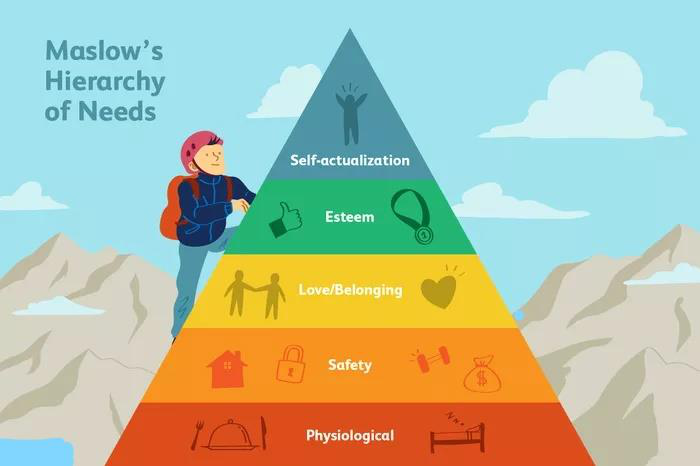
Maslow's Hierarchy of Needs as a pyramid (Source: Entrepreneurship-Skills-Pdf-notes-Level-6-psgv3l)
- Herzberg’s Two-Factor Theory: Distinguishes between hygiene factors (working conditions, salary) and motivators (achievement, responsibility) that affect employee motivation.
- Expectancy Theory: Suggests motivation depends on employees’ expectations that effort leads to performance and rewards, relevant in performance appraisal systems.
- Equity Theory: Focuses on perceived fairness in the workplace, which can impact staff turnover in institutions such as banks or universities.
- Goal-Setting Theory: Emphasizes the motivational impact of clear, challenging goals, guiding office administrators in setting targets for clerical teams.
Practice Questions
- Explain how organizational theory can be applied to improve performance in a county government office. (10 marks)
- Describe the input-process-output model in systems theory and illustrate its relevance to office administration. (10 marks)
- Discuss five barriers to effective communication in an office setting and suggest ways to overcome them. (15 marks)
- Compare and contrast Maslow’s Hierarchy of Needs and Herzberg’s Two-Factor Theory in motivating office employees. (15 marks)
The rest of this chapter
🔒Create a free account to open more of this chapter.
Free: practical guides, quick cards, workplace scenarios and more.
Create a free account 🔒2.2 Empirical Literature Review
In the context of Office Administration in Kenya, conducting an empirical literature review is essential for grounding research in verifiable data and observed phenomena. Empirical literature consists of studies that report original research based on experimen…
🔒2.3 Conceptual framework
In the context of office administration research in Kenya, a conceptual framework serves as a critical blueprint that guides the entire research process. This framework outlines the key variables and concepts relevant to the study and illustrates the presumed…
🔒2.4 Research gaps
In the context of Office Administration in Kenya, identifying research gaps is a vital step in advancing knowledge and improving administrative practices. Research gaps represent areas within existing literature where information is incomplete, outdated, or co…
Chapter Summary
This chapter focused on reviewing research literature by first examining the relevant theories that underpin the study, providing a foundation for understanding the topic in depth. It then explored empirical literature, analyzing previous research findings and studies that relate directly to the research questions. The discussion moved to the development of a conceptual framework, which visually and logically organizes the key variables and their relationships within the study. Finally, the chapter identified research gaps by highlighting areas that previous studies have not fully addressed, thereby justifying the need for the current research. Together, these elements establish a comprehensive background that informs the research design and methodology. The review of theories and empirical evidence ensures that the study is grounded in existing knowledge while the conceptual framework guides the investigation systematically. Recognizing research gaps further emphasizes the contribution the study aims to make to the field.
Self-Assessment
🔒 PDFDownload this self-assessment, with answers
A. Written Assessment
- What is the primary purpose of reviewing relevant theories in a research project? (2 marks)
- Identify two characteristics of empirical literature in research. (2 marks)
🔒20 more in this section.
Chapter Examination Questions
🔒 PDFDownload these examination questions, with worked answers
SECTION A (40 Marks) - Answer ALL Questions
- Explain the role of relevant theories in guiding a research project in Office Administration. Illustrate your answer with an example from a Kenyan public institution. (4 marks)
- Differentiate between theoretical literature and empirical literature in the context of a research project. (4 marks)
🔒18 more in this section.
