Store keeping duties form a critical component of effective supply chain management in business organizations. In Kenya, where many enterprises operate in competitive markets, efficient store keeping ensures the availability of materials, controls costs, and prevents losses through theft or damage. This chapter explores the core concepts underpinning store keeping, stock taking procedures, and the security measures necessary to safeguard inventory. Business managers and supply chain professionals in sectors such as retail, manufacturing, and public service will find these practices essential for maintaining operational continuity and financial accountability.
3.1 Definition of Terms
This section clarifies fundamental terms related to store keeping activities, providing a foundational understanding for business management professionals. Precise definitions help standardize communication and enhance the implementation of best practices across Kenyan organizations.
3.1.1 Store Keeping Duties
Store keeping duties encompass the responsibilities and tasks involved in managing and controlling the inventory and materials within an organization. These duties are vital for ensuring that stock levels meet operational needs without excessive overstock or shortages. In Kenyan businesses such as retail outlets or county government procurement offices, store keepers act as custodians of valuable resources, balancing orderliness with accessibility.
Responsibilities of Store Keepers
- Receiving and Inspecting Goods: Store keepers verify incoming deliveries against purchase orders to confirm quantity and quality, preventing acceptance of substandard or incorrect items. For example, at a Nairobi-based pharmaceutical warehouse, careful inspection ensures medicines meet regulatory standards before storage.
- Organizing and Storing Stock: Proper arrangement of items using categorization and labeling facilitates easy retrieval and reduces damage. A hotel’s kitchen store may separate perishables from dry goods to maintain freshness.
- Maintaining Inventory Records: Accurate documentation of stock movements through ledger books or digital systems supports transparency and audit readiness. SACCO offices often employ computerized stock control to monitor office supplies.
- Issuing Stock on Request: Controlled distribution of materials to authorized personnel prevents misappropriation and ensures accountability. For instance, a county health department issues medical supplies only upon approved requisitions.
- Conducting Regular Stock Audits: Periodic physical checks reconcile actual stock with records to detect discrepancies early. Retail businesses in Nairobi’s central business district often schedule quarterly audits to manage shrinkage.
Skills Required for Effective Store Keeping
- Attention to Detail: Ensures correct recording and handling of stock items.
- Organizational Ability: Facilitates systematic storage and retrieval.
- Integrity: Builds trust with management by safeguarding assets.
- Communication Skills: Enables coordination with procurement and operations teams.
- Basic Computer Literacy: Supports use of inventory management software.
3.1.2 Stock Taking
Stock taking refers to the physical counting, verification, and recording of inventory items at a particular point in time. This process is fundamental to maintaining accurate stock records, essential for financial reporting and operational planning in Kenyan enterprises such as supermarkets or manufacturing firms.
Purpose of Stock Taking
- Verification of Inventory Records: Confirms that recorded quantities match physical stock, identifying errors or theft.
- Valuation for Financial Statements: Provides data for calculating inventory value, influencing profit and loss accounts.
- Assessment of Stock Condition: Detects damaged or obsolete items for appropriate action.
- Improvement of Stock Control: Highlights trends in usage and loss, aiding better forecasting.
- Compliance with Regulatory Requirements: Ensures adherence to standards set by bodies like the Kenya Revenue Authority (KRA).
Types of Stock Taking
- Periodic Stock Taking: Conducted at fixed intervals, such as monthly or quarterly, to update records comprehensively.
- Continuous Stock Taking: Ongoing checks integrated into daily operations, often using cycle counting methods.
- Annual Stock Taking: A thorough physical inventory usually conducted at the end of the financial year for auditing purposes.
- Spot Checking: Random, unscheduled counts targeting specific stock items to verify accuracy.
- Blind Stock Taking: Counting stock without prior knowledge of recorded quantities to ensure objectivity.
Challenges in Stock Taking and Mitigation
- Disruption of Operations: Stock taking can interrupt normal business activities; scheduling during off-peak hours minimizes impact.
- Human Errors in Counting: Training and use of barcode scanners reduce inaccuracies.
- Stock Misplacement: Well-organized storage and clear labeling prevent lost items.
- Time Consumption: Use of technology like inventory management software speeds up the process.
- Theft and Pilferage: Strong security measures and supervision during stock taking deter losses.
3.1.3 Store Security
Store security involves the measures and systems put in place to protect inventory from theft, damage, or unauthorized access. In Kenya, where pilferage and stock losses can significantly affect business profitability, robust store security practices are indispensable, especially in sectors such as retail, manufacturing, and public procurement.
Components of Store Security
- Physical Security Measures: Includes locks, security doors, fencing, and surveillance cameras to prevent unauthorized entry. For example, a Nairobi supermarket uses CCTV cameras and secure locks to safeguard its warehouse.
- Access Control Systems: Restrict entry to store premises to authorized personnel only, often using key cards or biometric systems.
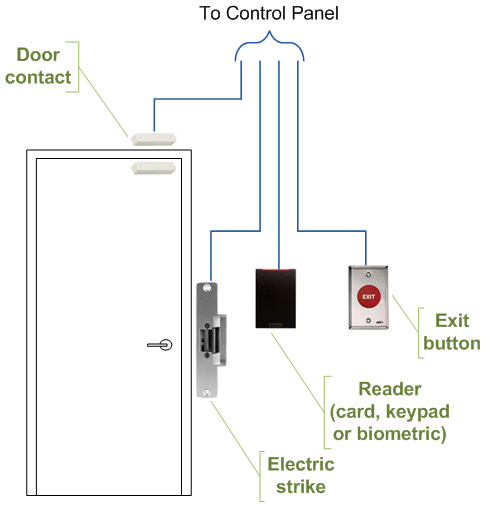
Access control system components at a door (Source: Wikimedia Commons)
- Inventory Monitoring: Regular stock audits and reconciliation help identify discrepancies early.
- Security Personnel: Employing guards to monitor store premises deters theft and vandalism.
- Alarm Systems: Installation of alarms alerts managers and security teams to unauthorized access attempts.
Importance of Store Security
- Prevention of Stock Loss: Protects against theft, reducing financial losses.
- Safeguarding of Valuable Assets: Maintains the integrity of expensive or sensitive items.
- Compliance with Legal Requirements: Meets standards set by regulatory bodies such as the Public Procurement and Asset Disposal Act.
- Enhancement of Operational Efficiency: Reduces stock discrepancies and ensures reliable inventory availability.
- Promotion of Staff Accountability: Clear security protocols encourage responsible behavior among employees.
Best Practices for Maintaining Store Security
- Regular Staff Training: Educates employees on security protocols and fraud prevention.
- Segregation of Duties: Divides responsibilities among different staff to reduce risk of collusion.
- Use of Technology: Employs inventory management systems with audit trails.
- Routine Security Audits: Periodic reviews of security measures to identify and address vulnerabilities.
- Clear Documentation: Maintains records of stock movements and security incidents for accountability.
Practice Questions
-
Explain the key responsibilities involved in store keeping duties and how they contribute to effective inventory management in a Kenyan business context. (10 marks)
-
Discuss the different types of stock taking and their significance in maintaining accurate inventory records. (10 marks)
-
Describe essential store security measures and their importance in preventing stock loss in Kenyan organizations. (10 marks)
The rest of this chapter
🔒Create a free account to open more of this chapter.
Free: practical guides, quick cards, workplace scenarios and more.
Create a free account 🔒3.2 Store keeping duties
Store keeping is a critical function within supply chain activities, especially for business management professionals in Kenya who oversee inventory control and material handling. Effective store keeping ensures that stock is accurately accounted for, safely s…
🔒3.3 Performance Appraisal of Store Staff
Performance appraisal of store staff is a critical function in business management that ensures employees in the stores department meet organisational goals and maintain operational efficiency. In Kenya’s dynamic business environment, effective appraisal syste…
Chapter Summary
This chapter explored key concepts related to store keeping duties, including the definition of store keeping, stock taking, store security, and stock taking routines. It detailed essential store keeping duties such as conducting accurate stock taking, ensuring safe storage of materials, managing store staff effectively, and continuously monitoring stock levels to maintain inventory accuracy. The importance of maintaining security within the store to prevent loss and damage was emphasized alongside the role of systematic stock taking routines in supporting efficient stock control. Furthermore, the chapter highlighted the responsibilities of store staff in executing these duties and the need for their performance to be regularly appraised. Performance appraisal was presented as a tool to enhance the productivity and accountability of store personnel, ensuring that store operations align with organizational objectives. Overall, the chapter provided a comprehensive understanding of the activities and management practices required for effective store keeping in supply chain operations.
Self-Assessment
🔒 PDFDownload this self-assessment, with answers
A. Written Assessment
- Define the term store keeping duties in the context of supply chain management. (3 marks)
- What is the primary purpose of stock taking in a business store? (2 marks)
🔒20 more in this section.
Chapter Examination Questions
🔒 PDFDownload these examination questions, with worked answers
SECTION A (40 Marks) - Answer ALL Questions
- Define store keeping duties and explain their importance in a Kenyan retail business such as Naivas Supermarket. (4 marks)
- What is stock taking, and why is it critical for a county government procurement store? (4 marks)
🔒18 more in this section.
