Value addition in herb and spice production is a critical aspect of enhancing the profitability and marketability of these crops within Kenya’s horticulture sector. It involves processes that improve the quality, shelf life, and usability of herbs and spices, enabling farmers and agribusinesses to access higher-value markets both locally and internationally. Observation plays a vital role in monitoring these processes to ensure standards are met, losses are minimized, and consumer expectations are satisfied.
5.1 Procedures for Occupational Safety and Health
In Kenya's horticultural sector, especially within protected environments such as greenhouses and shade nets, maintaining occupational safety and health (OSH) is critical to safeguarding workers from hazards associated with herb and spice production. The controlled environment often involves the use of chemicals, electrical equipment, and machinery, which pose unique risks. Compliance with OSH procedures not only ensures worker wellbeing but also aligns with Kenyan laws such as the Occupational Safety and Health Act (OSHA) 2007, which mandates safe working conditions. For horticulture professionals, understanding and implementing these procedures reduces accidents, enhances productivity, and fosters a culture of safety within farms, nurseries, and processing units.
5.1.1 Identification and Assessment of Workplace Hazards
Identifying and assessing hazards is the foundational step in occupational safety and health management. In protected herb and spice production environments, hazards can be biological, chemical, physical, or ergonomic. Recognizing these risks enables the design of effective control measures to prevent injuries and illnesses among workers.
Identification of Hazards
- Chemical Hazards: Exposure to pesticides, herbicides, and fertilizers used in herb and spice cultivation can cause respiratory problems, skin irritation, or poisoning if not handled properly. Workers in a herbal farm using chemical sprays must be aware of safe handling and storage procedures.
- Biological Hazards: Contact with plant pathogens, molds, or bacteria can lead to allergic reactions or infections. For instance, workers handling fresh herbs in a processing unit may be exposed to fungal spores.
- Physical Hazards: Slips, trips, and falls are common in greenhouses due to wet floors or cluttered walkways. Electrical equipment used for climate control can also pose electrocution risks if not maintained.
- Ergonomic Hazards: Repetitive movements such as pruning or harvesting herbs in confined spaces can cause musculoskeletal disorders. Poor workstation design in packaging areas increases strain on workers.
- Psychosocial Hazards: Stress from long working hours or inadequate breaks can affect mental health, impacting concentration and increasing accident risks.
Assessment of Hazards
- Risk Evaluation: Assess the likelihood and severity of harm from each identified hazard. For example, the risk of pesticide poisoning is high if workers do not use personal protective equipment (PPE).
- Workplace Inspection: Regular inspections in nurseries and greenhouses help detect unsafe conditions like damaged irrigation pipes or faulty electrical wiring.
- Worker Consultation: Engaging employees in hazard identification provides practical insights and promotes safety ownership.
- Documentation: Keeping detailed records of hazards and assessments facilitates monitoring and compliance with OSHA regulations.
- Prioritization: Focus on hazards with the greatest potential impact, such as chemical exposure, to allocate resources effectively.
5.1.2 Use and Maintenance of Personal Protective Equipment (PPE)
Personal Protective Equipment (PPE) forms a critical barrier between workers and occupational hazards in herb and spice production under protected environments. Proper selection, use, and maintenance of PPE reduce exposure to chemicals, physical injuries, and biological contaminants.
Selection of Appropriate PPE
-
Gloves: Chemical-resistant gloves protect hands from pesticides and herbicides during spraying and mixing operations.
-
Respirators and Masks: Masks prevent inhalation of dust, spores, and chemical fumes, essential when working with dried spices or during fumigation.
- Protective Clothing: Overalls or aprons shield the body from spills and splashes of hazardous substances.
- Eye Protection: Goggles or face shields guard against chemical splashes and debris during pruning or processing.

clear safety glasses for eye protection (Source: Wikimedia Commons)
- Footwear: Rubber boots prevent slips and protect feet from sharp objects or chemical spills.
Proper Use of PPE
- Correct Fitting: PPE must fit properly to provide effective protection; oversized gloves or loose masks reduce safety.
- Training: Workers should be trained on when and how to wear PPE, including donning and doffing techniques to avoid contamination.
- Compliance Monitoring: Supervisors in herbal farms should ensure consistent PPE use, especially during high-risk tasks like pesticide application.
Maintenance of PPE
- Regular Cleaning: PPE should be cleaned after each use to remove contaminants, preventing cross-contamination.
- Inspection for Damage: Damaged PPE such as torn gloves or cracked goggles must be replaced immediately to maintain protection.
- Storage: PPE should be stored in clean, dry areas away from sunlight to prevent degradation.
- Replacement Schedule: Establish timelines for replacing PPE based on manufacturer guidelines and usage frequency.
- Record Keeping: Maintain logs of PPE issuance and maintenance to ensure accountability and compliance.
5.1.3 Emergency Preparedness and Response Procedures
Emergencies such as chemical spills, fire outbreaks, or worker injuries can occur in protected herb and spice production facilities. Preparedness and effective response minimize damage, safeguard lives, and ensure business continuity.
Emergency Identification and Planning
- Risk Scenarios: Anticipate emergencies including pesticide spills, electrical fires, and heat exhaustion incidents common in greenhouse settings.
- Emergency Plans: Develop clear action plans detailing evacuation routes, assembly points, and roles for staff during emergencies.
- Communication Systems: Establish reliable communication channels such as alarms, mobile radios, or public address systems for rapid alerting.
Training and Drills
- Worker Training: Conduct regular training sessions on emergency procedures, including first aid, fire extinguisher use, and spill containment.
- Simulation Drills: Organize mock drills to practice evacuation and response, enhancing readiness and identifying gaps in procedures.
- Coordination with Authorities: Liaise with local fire services and health facilities to ensure swift external support when needed.
Emergency Equipment and Supplies
- Fire Extinguishers: Ensure availability and accessibility of appropriate fire extinguishers in greenhouses and storage areas.
- First Aid Kits: Stock first aid kits with supplies to manage injuries such as cuts, burns, or chemical exposure.
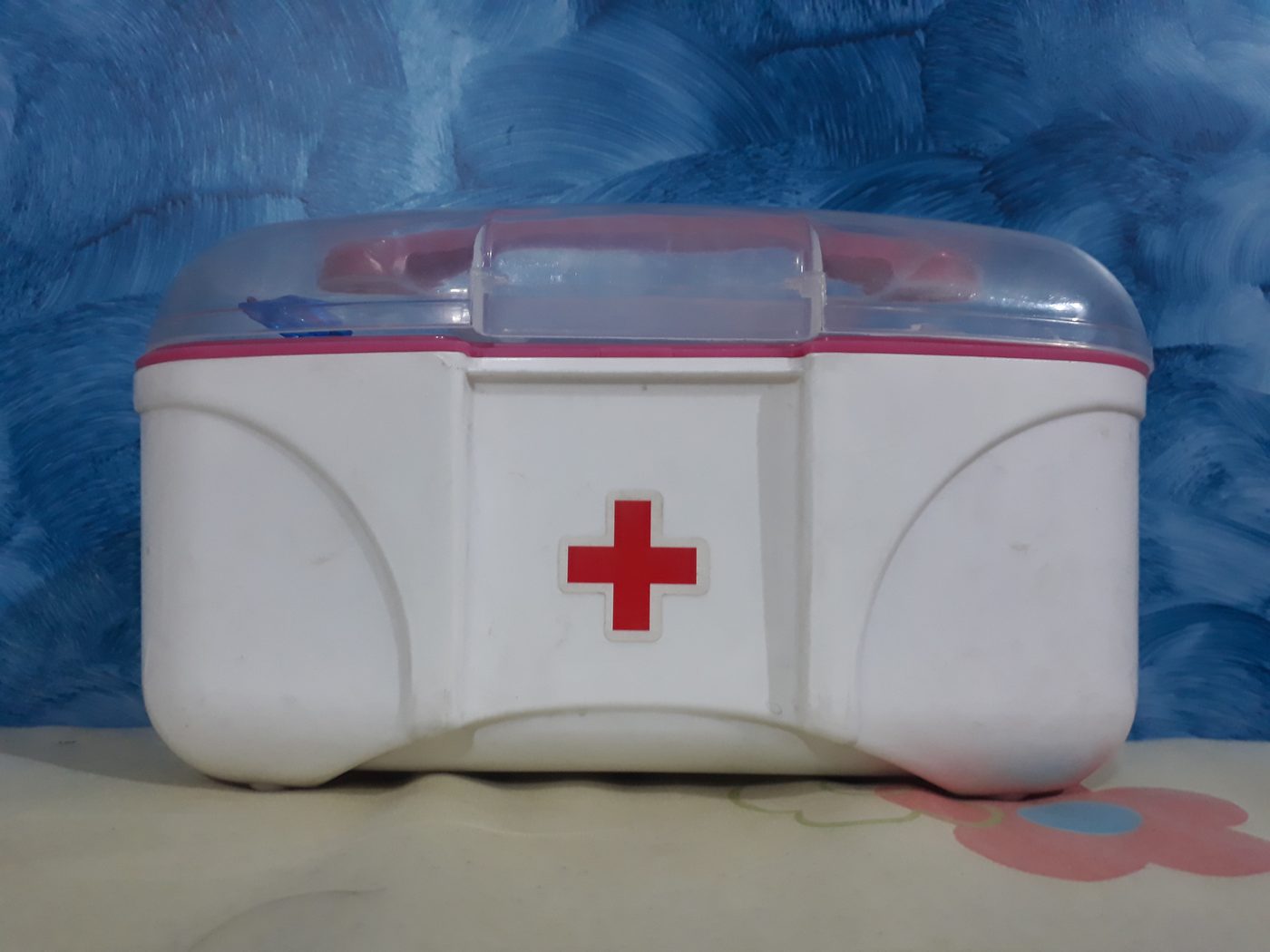
Plastic first aid kit box with red cross (Source: Wikimedia Commons)
- Spill Kits: Maintain spill containment materials like absorbents and neutralizers for chemical incidents.
- Personal Protective Gear: Keep additional PPE for emergency responders to safely handle hazardous situations.
- Maintenance and Inspection: Regularly check and replenish emergency equipment to maintain operational readiness.
5.1.4 Compliance with National Occupational Safety and Health Regulations
Adherence to Kenya’s Occupational Safety and Health Act (OSHA) 2007 and related regulations is mandatory for all horticultural enterprises. Compliance ensures legal operation, protects worker rights, and promotes sustainable production practices.
Understanding OSHA Requirements
- Workplace Safety Standards: OSHA outlines minimum safety standards including hazard communication, use of PPE, and machinery safety.
- Health Surveillance: Employers must conduct regular health checks for workers exposed to hazardous substances, such as pesticide applicators.
- Accident Reporting: All workplace accidents and incidents must be reported to the Directorate of Occupational Safety and Health Services (DOSHS) within stipulated timelines.
- Training Obligations: Employers are responsible for providing safety training and information to employees, ensuring awareness of risks and safe practices.
- Safety Committees: Establishment of workplace safety committees with worker representation is required to monitor and promote OSH activities.
Enforcement and Penalties
- Inspections: DOSHS conducts routine and surprise inspections to verify compliance in horticultural businesses.
- Penalties for Non-Compliance: Violations of OSH regulations can result in fines, work stoppages, or prosecution, impacting business operations and reputation.
- Remedial Actions: Employers must implement corrective measures following inspection reports to address identified hazards.
- Worker Rights: Employees have the right to refuse unsafe work without penalty and to report unsafe conditions confidentially.
- Continuous Improvement: Compliance is an ongoing process requiring regular review and updating of safety policies and practices.
Practice Questions
-
Explain the process of hazard identification and assessment in a protected environment herb farm, highlighting at least five types of hazards. (10 marks)
-
Discuss the importance of proper PPE use and maintenance in spice production, detailing the types of PPE commonly used. (10 marks)
-
Outline six steps involved in preparing for and responding to emergencies in a greenhouse setting. (12 marks)
-
Describe key requirements of Kenya’s Occupational Safety and Health Act that horticultural enterprises must comply with, including the consequences of non-compliance. (13 marks)
The rest of this chapter
🔒Create a free account to open more of this chapter.
Free: practical guides, quick cards, workplace scenarios and more.
Create a free account 🔒5.2 Tools, Equipment, Supplies and Materials
In the context of herb and spice production within protected environments such as greenhouses and shade nets in Kenya, the selection and use of appropriate tools, equipment, supplies, and materials are critical to achieving quality and efficiency. These assets…
🔒5.3 Meaning of Value Addition
In the horticultural sector in Kenya, especially in the production of herbs and spices under protected environments, value addition plays a critical role in enhancing the economic worth of raw produce. By transforming herbs and spices into processed or package…
🔒5.4 Importance of Value Addition
Value addition in the production of herbs and spices is a critical process that transforms raw agricultural products into forms that have enhanced economic worth and consumer appeal. In Kenya, where smallholder farmers and commercial enterprises engage in herb…
🔒5.5 Food Safety During Value Addition
Food safety is a critical concern in the value addition of herbs and spices within Kenya’s horticultural sector. Ensuring safe handling, processing, and packaging protects consumers from contamination and preserves the quality and marketability of the products…
🔒5.6 Value addition techniques and methods
Value addition in horticulture, especially for herbs and spices grown in protected environments, is crucial for enhancing product quality, extending shelf life, and increasing market competitiveness. In Kenya, where smallholder farmers and agribusinesses seek…
🔒5.7 Record Keeping
In the horticulture industry, especially in the production of herbs and spices under protected environments such as greenhouses or screen houses, meticulous record keeping is essential. Kenyan horticulture professionals rely on accurate records to monitor crop…
🔒5.8 Waste Management Practices
Waste management in the production of herbs and spices within protected environments is a critical component of sustainable horticultural practices in Kenya. Proper handling and disposal of waste not only protect the environment but also enhance farm hygiene,…
🔒5.9 Emerging Trends
In Kenya's horticulture sector, especially in the production of herbs and spices within protected environments, staying abreast of emerging trends is essential for competitiveness and sustainability. The dynamic nature of consumer preferences, technological ad…
Chapter Summary
This chapter began by emphasizing the importance of careful observation in monitoring the value addition processes to ensure quality and safety. It proceeded to highlight oral assessment as a critical component of maintaining health standards during production activities. Effective waste management practices were outlined as essential for environmental protection and operational efficiency. The chapter then detailed procedures for occupational safety and health, underscoring the need to protect workers in the production environment. It introduced the various tools, equipment, supplies, and materials used in value addition, explaining their roles in enhancing product quality. The meaning of value addition was clarified, followed by a discussion on its importance in increasing product marketability and profitability. Food safety principles during value addition were explored to prevent contamination and ensure consumer health. Techniques and methods such as blending were explained as practical approaches to enhance product characteristics, while the chapter concluded with the necessity of accurate record keeping to track production activities and outcomes.
Self-Assessment
🔒 PDFDownload this self-assessment, with answers
A. Written Assessment
- What is the primary purpose of value addition in the production of herbs and spices? (2 marks)
- Identify three common tools used in value addition processes in a protected environment. (3 marks)
🔒20 more in this section.
Chapter Examination Questions
🔒 PDFDownload these examination questions, with worked answers
SECTION A (40 Marks) - Answer ALL Questions
- Explain the importance of observing hygiene standards during value addition processes in herb production at a Nairobi-based herbal farm. (4 marks)
- Identify four common health concerns that may arise during oral assessments of workers involved in value addition of spices in a county government horticulture office. (4 marks)
🔒18 more in this section.
Chapter Practical Activities
Practical 1: Observation and Recording of Value Addition Process for Herb Drying
Horticulture · Level 4
Production Of Herbs And Spices In Protected Environment
PRACTICAL ASSESSMENT
TIME: 4 HOURS
⬇ PDFCandidate Instructions (Candidate Tool)
Type: Individual
INSTRUCTIONS TO CANDIDATE:
1. You are required to perform the following task:
i. Observe and record the drying temperature, humidity, weight changes, and packaging details of 200g fresh mint leaves over a 3-hour drying period in a protected environment.
2. You have been provided with the following resources for the practical task:
| Tools & Equipment | Materials |
|---|
| Digital Thermometer | Logbook |
| Hygrometer | Drying racks |
| Weighing scale | Protective gloves |
| Pen | Overall/Dust coat |
| Face mask |
| Plastic packaging bags |
| Label stickers |
| Herbs sample (freshly harvested mint leaves) |
⬇ PDFResources Required (Cutting List)
| S/N | Item | Quantity |
|---|
| 1 | Logbook | 1 per Candidate |
| 2 | Pen | 1 per Candidate |
| 3 | Digital Thermometer | 1 per 3 Candidates |
| 4 | Hygrometer | 1 per 3 Candidates |
| 5 | Drying racks | 1 per Candidate |
| 6 | Weighing scale (0-5kg capacity) | 1 per 3 Candidates |
| 7 | Protective gloves | 1 pair per Candidate |
| 8 | Overall/Dust coat | 1 per Candidate |
| 9 | Face mask | 1 per Candidate |
| 10 | Plastic packaging bags (50g capacity) | 10 pcs per Candidate |
| 11 | Label stickers | 10 pcs per Candidate |
| 12 | Herbs sample (freshly harvested mint leaves) | 200 g per Candidate |
⬇ PDFAssessor Guide
| Items to be Evaluated | Marks Available | Marks Obtained | Comments |
|---|
| TASK 1: Observation and Recording of Drying Process |
Wore PPEs (gloves, overall/dust coat, face mask)
(Award 1 mark for each PPE worn) | 3 | | |
Assembled all required tools and materials as per procedure
(Award 1 mark for each tool/material assembled: thermometer, hygrometer, weighing scale) | 3 | | |
Measured and recorded initial weight of fresh mint leaves
(Award 4 marks for correct measurement and recording) | 4 | | |
Recorded initial temperature and humidity in drying environment
(Award 2 marks each for temperature and humidity recorded correctly) | 4 | | |
Observed and recorded temperature and humidity every 30 minutes for 3 hours
(Award 1 mark for each correct observation and recording, total 6 marks) | 6 | | |
Recorded weight of dried herbs after 3 hours
(Award 4 marks for correct measurement and recording) | 4 | | |
Packed dried herbs in plastic bags and labeled correctly
(Award 2 marks for proper packing, 2 marks for labeling) | 4 | | |
Cleaned and stored tools and equipment as per workplace procedures
(Award 3 marks for proper cleaning and storage) | 3 | | |
Disposed of waste materials appropriately
(Award 3 marks for proper waste disposal) | 3 | | |
| Sub-Total | 34 | | |
| PRODUCT CHECKLIST |
Accurate and complete recording of all observations in the logbook
(Award up to 6 marks for completeness, accuracy, and neatness of records) | 6 | | |
| Sub-Total | 6 | | |
| GRAND TOTAL | 40 | | |
ASSESSMENT OUTCOME: ☐ Competent ☐ Not Yet Competent (competent if at least 50%)
Practical 2: Oral Assessment on Health and Safety Procedures in Value Addition of Herbs and Spices
Horticulture · Level 4
Production Of Herbs And Spices In Protected Environment
PRACTICAL ASSESSMENT
TIME: 3 HOURS
⬇ PDFCandidate Instructions (Candidate Tool)
Type: Individual
INSTRUCTIONS TO CANDIDATE:
1. You are required to perform the following task:
i. Verbally explain the health and safety procedures applicable during value addition of herbs and spices in a protected environment.
2. You have been provided with the following resources for the practical task:
| Tools & Equipment | Materials |
|---|
| Grinding machine | Personal Protective Equipment |
| Drying trays | Health and Safety Procedure Manual |
| Packaging materials | |
⬇ PDFResources Required (Cutting List)
| S/N | Item | Quantity |
|---|
| 1 | Personal Protective Equipment (Gloves, Overall/Dust coat, Gumboots, Face Mask) | 1 set per Candidate |
| 2 | Sample value addition tools (e.g. grinding machine, drying trays, packaging materials) | 1 set per Candidate |
| 3 | Health and Safety Procedure Manual | 1 copy per Candidate |
⬇ PDFAssessor Guide
| Items to be Evaluated | Marks Available | Marks Obtained | Comments |
|---|
| TASK 1: Oral Explanation of Health and Safety Procedures |
Candidate correctly identifies and explains the use of PPE (gloves, overall/dust coat, gumboots, face mask)
(Award 1 mark for each PPE correctly identified and explained) | 4 | | |
Candidate explains safe handling and operation of value addition tools and equipment
(Award up to 5 marks for clear, accurate explanation of safety procedures with tools) | 5 | | |
Candidate describes proper hygiene and sanitation practices in the value addition process
(Award up to 4 marks for detailed explanation of hygiene and sanitation) | 4 | | |
Candidate explains procedures for waste disposal and environmental safety during value addition
(Award up to 3 marks for proper explanation of waste management and environmental safety) | 3 | | |
Candidate articulates emergency procedures including first aid and reporting accidents
(Award up to 4 marks for clear explanation of emergency response and accident reporting) | 4 | | |
| Sub-Total | 20 | | |
| PRODUCT CHECKLIST |
Clarity, completeness, and accuracy of verbal health and safety explanation
(Award up to 20 marks for overall quality and thoroughness of oral presentation) | 20 | | |
| Sub-Total | 20 | | |
| GRAND TOTAL | 40 | | |
ASSESSMENT OUTCOME: ☐ Competent ☐ Not Yet Competent (competent if at least 50%)
🔒Implement Waste Management Practices during Value Addition of Herbs and SpicesPractical 3
🔒Apply vacuum drying technique to value add dried herbsPractical 4
🔒Identify and demonstrate correct use of tools and materials for value addition of herbs and spicesPractical 5
🔒Explain the Meaning and Importance of Value Addition in Herbs and Spices ProductionPractical 6
🔒Ensure Food Safety during Value Addition of Herbs and SpicesPractical 7
🔒Blend herbs and spices to produce a 500g value-added herbal spice mixPractical 8
🔒Maintain Occupational Safety and Health Compliance during Value Addition of Herbs and SpicesPractical 9
🔒Organize Work Area for Value Addition of Herbs and SpicesPractical 10
🔒Documenting Value Addition Process Records for Herbs and SpicesPractical 11
