Animal Production Technology  ·  Level 6
Fish Farm Management

Chapter 4: Maintain fish hatcheries

📚 10 Topics
⚑ What you will be able to do

By the end of this chapter, you will be able to:

  • Wear the correct personal protective equipment (PPE) safely for each task.
  • Maintain accurate and complete records following the right work procedures.
  • Assemble hatchery tools, equipment, and materials correctly and efficiently.
  • Perform pre-stocking activities safely and accurately using Fish Farm Management (FPM) guidelines.
  • Source brood stock properly according to FPM procedures.
  • Sort and stock brood stock into ponds correctly following FPM standards.
  • Feed brood stock accurately as per FPM feeding guidelines.
  • Monitor water quality and take the right corrective actions following FPM procedures.
  • Identify signs of infection and stress in brood stock and respond correctly.
  • Produce healthy fingerlings by following FPM guidelines carefully.

Mastering these skills will help you manage a successful fish hatchery and contribute to sustainable fish farming in the real world!

Compiled by: Fredrick Okoth

4.1 Personal protective gears

Personal protective gear is the clothing and equipment a hatchery worker wears to stay safe while working with water, fish, chemicals and machines. A hatchery is a wet, busy workplace: floors are slippery, tanks hold several hundred litres of water, hydrated lime irritates the skin and eyes, and some fish, such as catfish, have sharp pectoral spines that can cut a hand. Protective gear also protects the fish. Soiled boots, bare hands and street clothes carry disease organisms into the tanks, so gear that is clean and used correctly keeps both the worker and the stock healthy.

Gear is the last line of defence. A well-run hatchery first removes hazards where it can, for example by fitting non-slip flooring and storing chemicals in labelled containers, and then gives each worker the gear needed for the hazards that remain.

Types of protective gear

The table lists the gear a worker in a tilapia or African catfish hatchery normally needs.

Gear Specification Use in the hatchery
Gumboots Waterproof rubber or PVC, non-slip sole, calf height Walking on wet floors and between tank rooms, and keeping foot contact with water and chemicals to a minimum
Waterproof apron PVC or rubber, reaching below the knee Keeps clothes dry while netting fish, washing tanks and mixing disinfectant
Gloves Long-cuff rubber or nitrile; thin disposable gloves for fish and egg handling Protect hands from lime, potassium permanganate, cuts from spines and contact with pathogens
Safety goggles Clear, close-fitting, splash-proof Protect the eyes when pouring lime, mixing disinfectant or scrubbing tanks under pressure
Dust mask Disposable or reusable particle mask Worn when scooping or spreading hydrated lime or any fine powder
Head cover Cap or hat Keeps hair out of the tanks and shades the head during outdoor pond work
Life jacket Buoyancy aid sized to the wearer Worn when working from a boat or raft on a deep pond or cage

Gumboots

Gumboots are the main protection for the feet. A non-slip sole matters because algae and fish slime make a hatchery floor very slippery. Each work area should have its own pair, kept at the door, so that boots worn in the grow-out section never enter the hatching room. A footbath of disinfectant at the entrance cleans the soles before a worker steps inside.

Waterproof apron and clothing

A waterproof apron keeps the worker's own clothes dry and clean. Overalls or a clean work shirt are worn underneath and are changed once they are wet or soiled. Aprons are rinsed after each shift and hung to dry, because a damp apron that is thrown in a corner grows bacteria.

Gloves

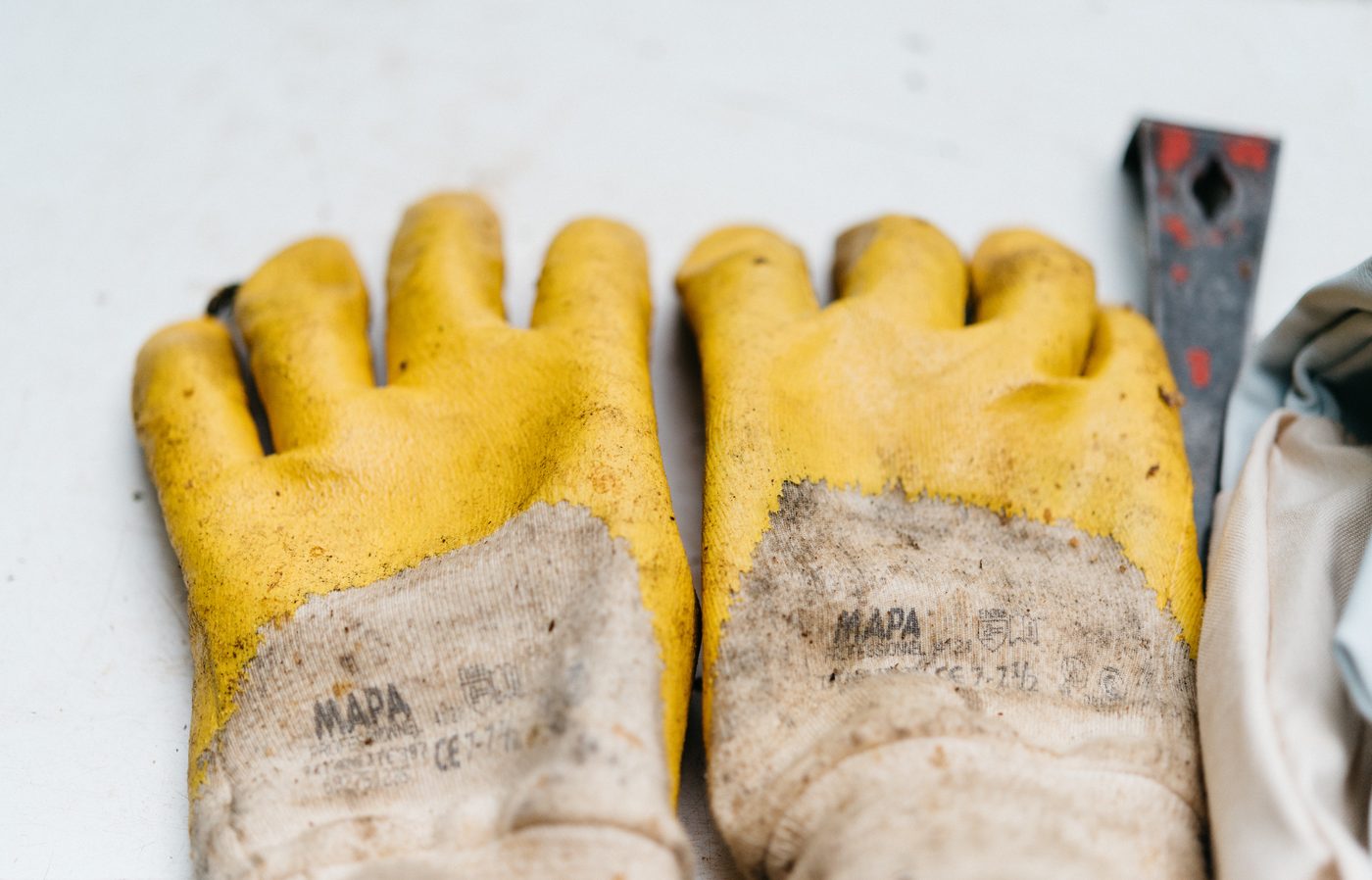
Different jobs need different gloves:

  • Long-cuff rubber gloves: used for scrubbing tanks, handling disinfectant and handling lime.
  • Nitrile gloves: used when handling brood stock, eggs or samples, because they are thin enough to feel the fish and protect against infection.
  • Heavy-duty gloves: used when handling large catfish with sharp spines, and when carrying rough items such as concrete blocks or pipes.

Pair of yellow work gloves used in carpentry
Pair of yellow work gloves used in carpentry (Source: Wikimedia Commons)

Disposable gloves are single use: they are thrown away after the job and never washed for reuse. Reusable rubber gloves are rinsed inside and out, disinfected and hung to dry after each use.

Eye, face and breathing protection

Hydrated lime and some disinfectants burn the eyes and the lining of the nose. Goggles and a dust mask are worn whenever a worker spreads lime on a tank floor, mixes powder into water or sprays disinfectant. If lime or a chemical splashes into an eye, the worker rinses it with clean running water for several minutes and reports to the hatchery manager before going back to work.
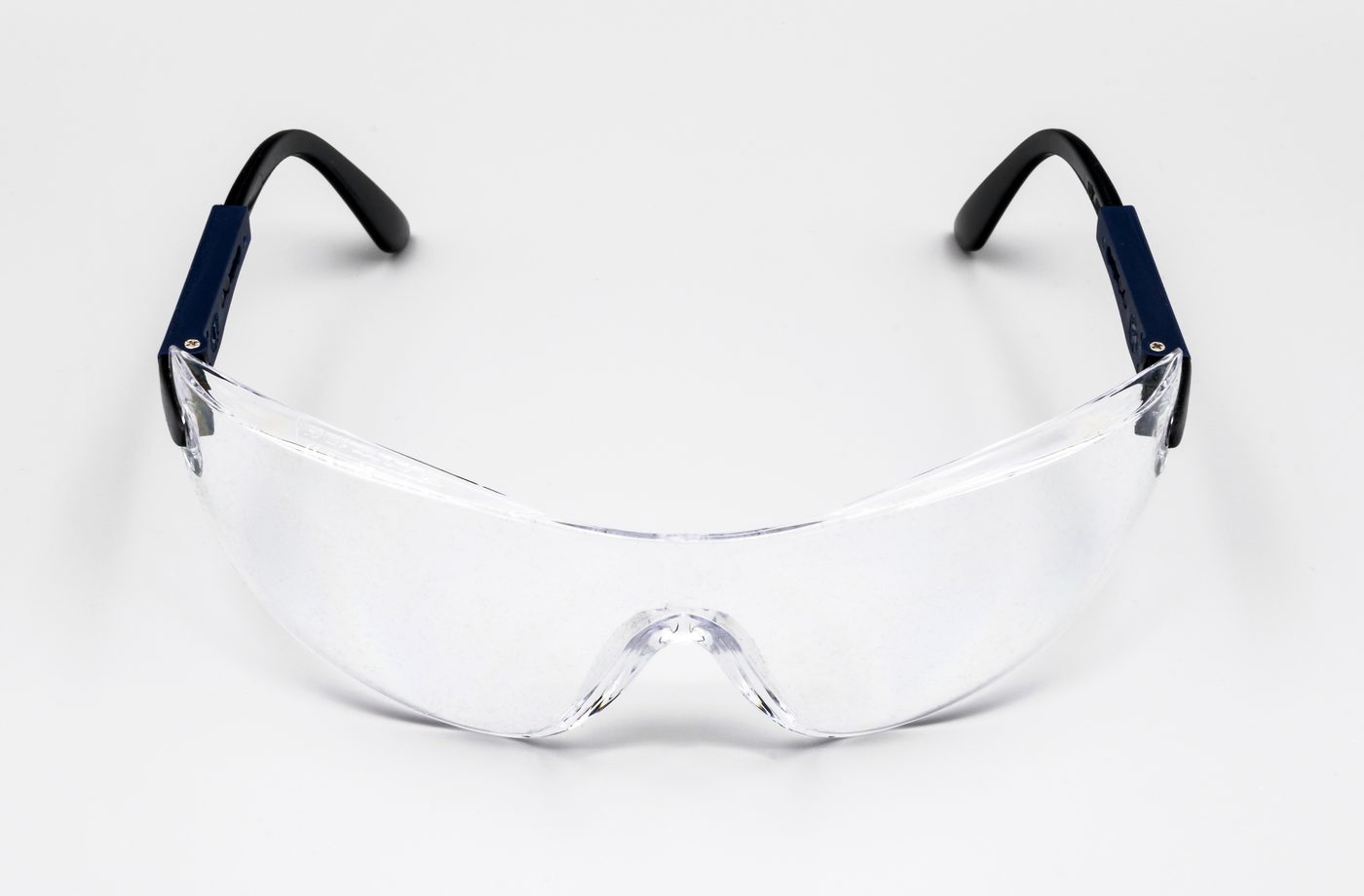
Clear protective eyewear for safety
Clear protective eyewear for safety (Source: Wikimedia Commons)

Putting on, removing and caring for gear

  1. Wash and dry the hands, then collect the gear needed for the day's tasks from the clean store.
  2. Put on the apron over a clean work shirt and tie it firmly.
  3. Pull on the gumboots and tuck the trouser legs inside them so that water cannot run down the legs.
  4. Put on goggles and a mask before opening any chemical container.
  5. Put on gloves last and pull the cuffs over the sleeves, or fold the sleeve cuff over the glove.
  6. When the job is done, take off gloves first by turning them inside out, then goggles, apron and mask.
  7. Wash the hands with soap and clean water.
  8. Rinse the gear, disinfect it where required and hang it to dry in a place that is out of the sun, away from the fish tanks.
  9. Check the gear for cracks, holes and worn soles before the next use and replace anything damaged.

Choosing gear for each task

Matching the gear to the task prevents both accidents and waste.

  • Cleaning and scrubbing tanks: gumboots, apron, long-cuff gloves and goggles.
  • Handling lime or disinfectants: all of the above, plus a dust mask.
  • Netting and sorting brood stock: gumboots, apron and heavy-duty or nitrile gloves.
  • Collecting eggs or counting fry: clean apron, nitrile gloves and a head cover.
  • Working from a boat, raft or deep pond: a life jacket, with gumboots removed if they would fill with water.
  • Working near pumps and aerators: gumboots, snug clothing without loose ends, and dry hands before touching any electrical switch.
The rest of this chapter
🔒

Create a free account to open more of this chapter.

Free: practical guides, quick cards, workplace scenarios and more.

Create a free account
🔒4.2 Hatchery management tools, equipment

A hatchery produces eggs, fry and fingerlings under controlled conditions, and it can only do so with the right tools and equipment. Some items keep the water in good condition, some are used to handle the fish and eggs gently, and others measure what is happe…

🔒4.3 Hatchery pre-stocking activities

Pre-stocking activities are the jobs done on tanks, troughs, hatching ponds and their water supply before eggs, larvae or fry are put in. Young fish are far more delicate than grow-out fish: a trace of chlorine, a layer of old sludge or a leaking joint that dr…

🔒4.4 Brood stock sourcing

Brood stock are the adult male and female fish kept to produce eggs and milt for the hatchery. Sourcing means choosing where these fish come from and bringing them to the hatchery in good condition. The quality of the fingerlings a hatchery sells depends direc…

🔒4.5 Brood stock sorting

Brood stock sorting is the separation of the hatchery's adult fish into groups according to sex, size, maturity and health. Sorting makes breeding planned instead of accidental. Without it, small and large fish compete for feed, mature fish spawn at the wrong…

🔒4.6 Brood stock feeding

Brood stock feeding is the supply of the right feed in the right amount to the adult fish that produce the hatchery's eggs. What the parents eat before spawning determines how many eggs they carry, how well those eggs hatch and how strong the larvae are. Under…

🔒4.7 Water quality parameters

Water quality parameters are the measurable features of hatchery water that decide whether eggs hatch, larvae feed and fry survive. In a hatchery the margin for error is small: eggs and larvae cannot swim away from bad water, and their bodies are less able to…

🔒4.8 Signs of infections and stress in brood stock

Brood stock are the most valuable fish in a hatchery, and an infected or stressed parent produces few eggs, poor eggs or none at all. Worse, a sick parent can pass disease to its eggs and larvae and to the other fish in the unit. Early detection is therefore p…

🔒4.9 Fingerlings production

Fingerlings production is the full cycle from breeding the brood stock to delivering young fish that are strong enough to be stocked in ponds, cages or tanks. A fingerling is a young fish that has passed the egg, larval and fry stages and is large enough to be…

🔒4.10 Fish hatchery records

Fish hatchery records are written or electronic notes of what happens in the hatchery, kept every day. Without them the manager cannot know how many eggs a female produced, how many larvae survived, how much feed was used or why a batch failed. Records show wh…

Chapter Summary

Maintaining fish hatcheries requires the consistent use of personal protective gears to ensure safety and prevent contamination during hatchery operations. Proper management tools and equipment are essential for efficient hatchery functioning, enabling tasks such as water quality monitoring and feeding to be carried out effectively. Pre-stocking activities prepare the hatchery environment to support healthy fish development, including cleaning and conditioning of tanks. Sourcing brood stock involves a structured recruitment process that starts with advertising vacant positions to attract qualified personnel. Shortlisting candidates narrows down applicants based on relevant skills and experience, followed by interviews to assess suitability for hatchery roles. Recruitment formalizes the selection of staff, who then undergo training to acquire the necessary knowledge and skills for hatchery management. Finally, motivation strategies are critical to maintain staff commitment and productivity, ensuring the hatchery operates smoothly and meets production goals.

Self-Assessment

🔒 PDFDownload this self-assessment, with answers

A. Written Assessment

  1. What are the essential types of personal protective gear used in fish hatcheries? (2 marks)
  2. Explain why proper maintenance of hatchery tools and equipment is critical for fish production. (3 marks)
🔒20 more in this section.

Chapter Examination Questions

🔒 PDFDownload these examination questions, with worked answers

SECTION A (40 Marks) - Answer ALL Questions

  1. Explain the importance of using personal protective gear when working in a fish hatchery in Kenya. (4 marks)
  2. Identify four essential tools or equipment used in hatchery management and describe their functions. (4 marks)
🔒18 more in this section.
Flashcards 20 cards Study deck ▾
Question
1

↻ Tap card to reveal answer
🔒

18 more in this section.

Create a free account
Test Yourself 19 questions Start quiz ▾
0%
0 / 2
🔒

17 more in this section.

Create a free account
Am I competent?

At the start of this chapter we promised you would be able to:

  • Wear the correct personal protective equipment (PPE) safely for each task.
  • Maintain accurate and complete records following the right work procedures.
  • Assemble hatchery tools, equipment, and materials correctly and efficiently.
  • Perform pre-stocking activities safely and accurately using Fish Farm Management (FPM) guidelines.
  • Source brood stock properly according to FPM procedures.
  • Sort and stock brood stock into ponds correctly following FPM standards.
  • Feed brood stock accurately as per FPM feeding guidelines.
  • Monitor water quality and take the right corrective actions following FPM procedures.
  • Identify signs of infection and stress in brood stock and respond correctly.
  • Produce healthy fingerlings by following FPM guidelines carefully.

Tick each one you can genuinely do.

So, are you there yet?

You're competent when you can confidently do 50% or more of what this chapter promised.

Sign in to record how you're doing.