The ability to understand and apply knowledge of animal physiological functions is essential for animal production professionals in Kenya. This chapter explores the major organ systems that maintain life and productivity in livestock and other farm animals. Mastery of these systems enables effective management of animal health, nutrition, reproduction, and welfare, which directly impacts production efficiency and profitability. Knowledge of physiological functions also facilitates early detection of disease and implementation of appropriate interventions on farms and in veterinary settings.
3.1 Identification and illustration of Animal organ systems
Understanding the anatomical organization and physiological roles of animal organ systems is foundational for animal production. Each system contributes uniquely to the animal's survival and productive capacity, such as growth, reproduction, and resistance to disease. Kenyan livestock professionals encounter diverse species whose physiological adaptations influence management practices. The following sections describe the main organ systems, highlighting their structure and function in the context of livestock production.
3.1.1 Circulatory system
The circulatory system transports nutrients, gases, hormones, and waste products throughout the animal’s body. It plays a crucial role in maintaining homeostasis and supporting metabolic activities essential for growth and reproduction in livestock. In Kenyan dairy farms, efficient circulation ensures optimal milk production by delivering oxygen and nutrients to the mammary glands.
Components of the Circulatory System
- Heart: A muscular organ that pumps blood through the body, ensuring continuous circulation.
- Blood vessels: Arteries carry oxygenated blood from the heart, veins return deoxygenated blood, and capillaries facilitate exchange between blood and tissues.
- Blood: Composed of plasma, red blood cells, white blood cells, and platelets, blood transports oxygen, nutrients, immune cells, and clotting factors.
- Lymphatic vessels: Though part of the lymphatic system, they assist in returning interstitial fluid to circulation.
- Valves: Present in the heart and veins, valves prevent backflow and maintain unidirectional blood flow.
Functions of the Circulatory System
- Transport of oxygen and nutrients: Blood delivers essential substances to cells to sustain metabolism and growth.
- Removal of waste products: Carbon dioxide and metabolic wastes are carried to lungs and kidneys for excretion.
- Immune defense: White blood cells circulate to detect and neutralize pathogens.
- Temperature regulation: Blood flow to skin adjusts to dissipate or conserve heat, vital in Kenya’s varying climates.
- Hormonal distribution: Endocrine secretions are transported to target organs, coordinating physiological responses.
Circulatory System Adaptations in Livestock
- Ruminant heart size: Larger relative heart size in cattle supports high metabolic demands of fermentation.
- Blood volume variation: Adaptations in blood volume and composition help camels and goats survive in arid Kenyan regions.
- Capillary density: Muscle capillary networks increase in working animals like draught oxen to enhance oxygen delivery.
- Blood cell counts: Variations in red and white blood cell counts reflect health status and disease resistance.
- Cardiac output regulation: Adjustments enable animals to cope with physical exertion during herding or grazing.
Circulatory System Disorders Affecting Production
- Anemia: Reduces oxygen delivery, causing weakness and reduced weight gain.
- Heart diseases: Congenital or acquired defects can limit exercise tolerance, affecting work animals.
- Infections like endocarditis: Impair heart function and lead to systemic illness.
- Blood parasites (e.g., East Coast fever): Damage red blood cells, causing severe production losses.
- Circulatory shock: Resulting from trauma or toxins, it can be fatal if not promptly managed.
Practice Questions
- Describe the main components of the circulatory system and explain their roles in livestock production. (10 marks)
- Explain how the circulatory system contributes to temperature regulation in farm animals. (8 marks)
- Identify common circulatory disorders in animals and their impact on production. (12 marks)
3.1.2 Digestive system
The digestive system enables animals to convert feed into energy and nutrients necessary for maintenance, growth, reproduction, and lactation. Understanding the digestive anatomy and physiology is vital for optimizing feed formulation and management in Kenyan livestock enterprises. Differences between monogastric and ruminant digestive systems dictate feeding strategies for pigs versus cattle, for example.
Structure of the Digestive System in Livestock
- Mouth and teeth: Adapted for feed intake and mechanical breakdown; ruminants have specialized dental pads and molars for grinding fibrous material.
- Esophagus: A muscular tube transporting food from mouth to stomach; in ruminants, it allows regurgitation for rumination.
- Stomach compartments: Ruminants have four compartments (rumen, reticulum, omasum, abomasum) facilitating microbial fermentation and enzymatic digestion; monogastrics have a simple stomach.
- Small intestine: Site of enzymatic digestion and nutrient absorption, including proteins, fats, and carbohydrates.
- Large intestine: Absorbs water and electrolytes, forms feces, and in some species hosts microbial fermentation.
Digestive Processes and Enzymatic Functions
- Ingestion and mastication: Chewing reduces particle size and mixes feed with saliva containing enzymes and buffers.
- Fermentation: In ruminants, microbes break down cellulose into volatile fatty acids, the primary energy source.
- Enzymatic digestion: Proteases, lipases, and amylases degrade macronutrients into absorbable units.
- Absorption: Nutrients cross the intestinal lining into the bloodstream or lymph for distribution.
- Elimination: Undigested material and microbial biomass are excreted as feces.
Nutritional Implications of Digestive Physiology
- Feed selection: Knowledge of digestive capacity helps tailor diets to species and production stages.
- Supplementation: Minerals and vitamins may be required to compensate for deficiencies in basal feeds.
- Feed conversion efficiency: Maximizing digestion and absorption improves growth rates and milk yields.
- Health management: Digestive disorders like bloat or acidosis can severely impact animal welfare and productivity.
- Use of by-products: Understanding digestion allows incorporation of agro-industrial residues safely into rations.
Digestive System Disorders in Livestock
- Bloat: Excessive gas accumulation in the rumen causing distension and respiratory distress.
- Acidosis: Resulting from rapid fermentation of high-energy feeds leading to rumen pH drop and microbial imbalance.
- Parasitic infestations: Gastrointestinal worms impair nutrient absorption and cause weight loss.
- Enteritis: Inflammation of intestines leading to diarrhea and dehydration.
- Impaction: Blockage of the digestive tract from indigestible materials causing colic.
Practice Questions
- Compare the digestive system structure of ruminants and monogastrics and explain how this affects feeding practices. (12 marks)
- Describe the main digestive processes that occur in the rumen and their importance for energy production. (10 marks)
- Discuss common digestive disorders in cattle and their impact on production. (8 marks)
3.1.3 Reproductive system
The reproductive system ensures the continuation of livestock species and is central to herd improvement and productivity. Animal production professionals must understand reproductive anatomy and physiology to manage breeding, pregnancy, and parturition effectively. In Kenya, reproductive management of cattle, goats, and sheep influences milk and meat supply chains.
Male Reproductive Anatomy and Function
- Testes: Produce spermatozoa and testosterone, essential for fertility and secondary sexual characteristics.
- Epididymis: Site for sperm maturation and storage.
- Vas deferens: Conducts sperm from epididymis to urethra during ejaculation.
- Accessory glands: Seminal vesicles, prostate, and bulbourethral glands secrete fluids that nourish and transport sperm.
- Penis and urethra: Facilitate delivery of sperm into the female reproductive tract.
Female Reproductive Anatomy and Function
- Ovaries: Produce ova (eggs) and hormones like estrogen and progesterone regulating the estrous cycle.
- Oviducts (fallopian tubes): Transport ova to the uterus and are the site of fertilization.
- Uterus: Supports implantation and growth of the embryo/fetus.
- Cervix: Acts as a barrier to protect the uterus and controls sperm entry.
- Vagina and vulva: Serve as the birth canal and copulatory organ.
Hormonal Regulation and Reproductive Cycles
- Follicle-stimulating hormone (FSH): Stimulates follicle development in ovaries.
- Luteinizing hormone (LH): Triggers ovulation and corpus luteum formation.
- Estrogen: Prepares reproductive tract for mating and pregnancy.
- Progesterone: Maintains pregnancy by supporting uterine lining.
- Prostaglandins: Involved in regression of corpus luteum and initiation of parturition.
Reproductive Challenges in Kenyan Livestock
- Infertility and low conception rates: Often due to poor nutrition, disease, or management.
- Estrous detection difficulties: Affect timing of artificial insemination.
- Dystocia: Complicated births requiring veterinary intervention.
- Neonatal mortality: Losses of offspring reduce herd growth.
- Reproductive diseases: Brucellosis and trichomoniasis impact fertility and herd health.
Practice Questions
- Describe the main anatomical structures of the male and female reproductive systems in livestock. (10 marks)
- Explain the roles of key hormones in regulating the estrous cycle and pregnancy in farm animals. (12 marks)
- Identify reproductive challenges common in Kenyan livestock and suggest management strategies. (8 marks)
3.1.4 Respiratory system
The respiratory system facilitates gas exchange, supplying oxygen to the bloodstream and removing carbon dioxide. Efficient respiration supports metabolic demands and physical activity in livestock. In Kenya’s diverse climates, respiratory health is critical to sustaining performance in animals exposed to dust, heat, and infectious agents.
Anatomy of the Respiratory System
- Nasal cavity: Warms, moistens, and filters inhaled air.
- Pharynx and larynx: Conduct air to the trachea and prevent aspiration of food.
- Trachea: A rigid tube conducting air to the bronchi.
- Bronchi and bronchioles: Branching airways distributing air into the lungs.
- Alveoli: Microscopic sacs where gas exchange occurs between air and blood.
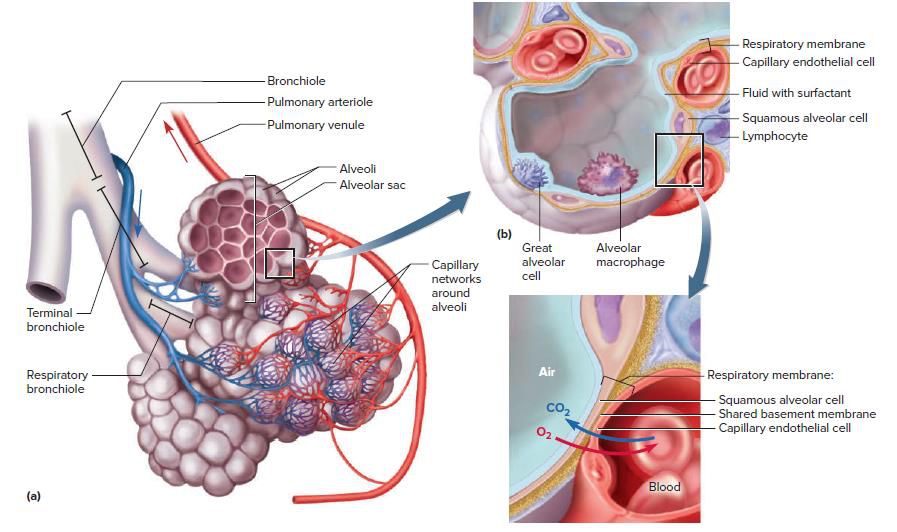
The detailed structure of the alveoli in the lungs (Source: e342927be8e0e562)
Mechanism of Breathing
- Inhalation: Diaphragm and intercostal muscles contract, expanding thoracic cavity and drawing air into lungs.
- Exhalation: Muscles relax, thoracic cavity volume decreases, pushing air out.
- Ventilation rate: Adjusts according to oxygen demand during rest or activity.
- Gas diffusion: Oxygen moves from alveoli to capillaries; carbon dioxide moves from blood to alveoli.
- Regulation: Respiratory centers in the brainstem control breathing rhythm based on blood gas levels.
Respiratory Adaptations in Livestock
- Nasal turbinates: Increase surface area for humidifying air in arid environments.
- Large lung capacity: Supports high oxygen demands in active animals like draught oxen.
- Efficient mucociliary clearance: Removes inhaled dust and pathogens, crucial in dusty Kenyan farms.
- Tolerance to hypoxia: Some highland breeds adapt to lower oxygen levels.
- Heat dissipation: Panting assists in cooling during high ambient temperatures.
Respiratory Diseases Affecting Production
- Pneumonia: A major cause of mortality in calves and young stock.
- Parasitic bronchitis: Lungworm infections reduce growth and feed efficiency.
- Tuberculosis: Zoonotic disease affecting cattle and humans.
- Dust-induced respiratory irritation: Leads to chronic coughing and reduced performance.
- Bovine respiratory disease complex: Multifactorial illness impacting beef and dairy herds.
Practice Questions
- Outline the anatomical structures involved in the respiratory system of livestock and their functions. (10 marks)
- Explain the physiological mechanism of breathing and how it supports metabolic activity. (12 marks)
- Discuss common respiratory diseases in Kenyan farm animals and their impact on production. (8 marks)
3.1.5 Excretory system
The excretory system removes metabolic waste products and helps regulate fluid and electrolyte balance. Proper function of this system is essential for maintaining health and productivity in livestock. Kenyan animal producers must understand excretory physiology to manage hydration and prevent conditions such as kidney failure and urinary infections.
Structure of the Excretory System
- Kidneys: Filter blood to remove wastes and regulate water and electrolyte balance.
- Ureters: Transport urine from kidneys to the bladder.
- Urinary bladder: Stores urine until elimination.
- Urethra: Conducts urine from bladder to the exterior.
- Skin and lungs: Also contribute to excretion via sweat and exhaled gases.
Kidney Function and Urine Formation
- Filtration: Blood plasma is filtered in the glomerulus, removing waste and excess substances.
- Reabsorption: Useful substances like glucose and ions are reabsorbed into the bloodstream.
- Secretion: Additional waste products are secreted into the tubules.
- Concentration: Water reabsorption concentrates urine to conserve body fluids.
- Excretion: Urine is expelled via the urinary tract.
Role in Homeostasis
- Water balance: Regulates hydration status critical in Kenya’s dry regions.
- Electrolyte regulation: Maintains sodium, potassium, and chloride levels for nerve and muscle function.
- Acid-base balance: Controls blood pH by excreting hydrogen ions and bicarbonate.
- Blood pressure regulation: Kidneys influence vascular resistance and fluid volume.
- Detoxification: Eliminates nitrogenous wastes like urea and creatinine.
Excretory Disorders in Livestock
- Kidney failure: Leads to toxin accumulation, weakness, and death if untreated.
- Urinary tract infections: Cause discomfort and reduce feed intake.
- Bladder stones: Obstruct urine flow, causing pain and secondary infections.
- Dehydration: Impairs kidney function, often due to inadequate water supply.
- Toxic nephropathies: Result from ingestion of poisonous plants or chemicals.
Practice Questions
- Describe the main anatomical components of the excretory system and their functions in livestock. (10 marks)
- Explain how the kidneys contribute to urine formation and maintenance of homeostasis. (12 marks)
- Identify common excretory system disorders in Kenyan farm animals and their management. (8 marks)
3.1.6 Nervous system
The nervous system controls and coordinates bodily functions by transmitting signals between different body parts. It is essential for responding to environmental stimuli, maintaining balance, and regulating physiological processes in animals. Kenyan animal production benefits when workers understand nervous system functions to recognize signs of neurological disease or stress.
Organization of the Nervous System
- Central nervous system (CNS): Comprises the brain and spinal cord, processing information and issuing commands.
- Peripheral nervous system (PNS): Consists of nerves connecting CNS to limbs and organs.
- Autonomic nervous system (ANS): Regulates involuntary functions like heart rate and digestion.
- Sensory neurons: Transmit information from sensory receptors to CNS.
- Motor neurons: Carry commands from CNS to muscles and glands.
Functions of the Nervous System
- Sensory input: Detects changes inside and outside the body.
- Integration: Processes sensory data to make decisions.
- Motor output: Executes responses via muscle contraction or gland secretion.
- Reflex actions: Rapid involuntary responses protecting animals from harm.
- Coordination of physiological functions: Regulates heartbeat, respiration, and digestion.
Nervous System Adaptations in Livestock
- Highly developed senses: Livestock species have acute hearing, smell, or vision adapted to survival.
- Reflexes: Protect animals from injury during handling or predator encounters.
- Learning and memory: Important for conditioning animals to management routines.
- Stress response: Nervous system mediates fight-or-flight reactions influencing productivity.
- Neural plasticity: Ability to adapt to environmental changes or injuries.
Neurological Disorders Affecting Production
- Rabies: Fatal viral disease causing neurological symptoms and posing zoonotic risk.
- Botulism: Toxin-induced paralysis affecting muscle control.
- Nervous coccidiosis: Causes neurological signs in young stock.
- Trauma: Spinal injuries lead to paralysis and loss of function.
- Metabolic encephalopathies: Result from nutritional imbalances causing brain dysfunction.
Practice Questions
- Outline the structural organization of the nervous system in livestock and its major components. (10 marks)
- Explain the functions of the nervous system and how it supports animal behaviour and physiology. (12 marks)
- Discuss common neurological disorders in Kenyan livestock and their implications. (8 marks)
3.1.7 Lymphatic system
The lymphatic system supports immune function and fluid balance by returning interstitial fluid to the bloodstream and filtering pathogens. In livestock production, a robust lymphatic system is vital for disease resistance and recovery. Kenyan farmers benefit from understanding lymphatic anatomy to optimize vaccination and health management programs.
Components of the Lymphatic System
- Lymph: A clear fluid containing white blood cells that circulates through lymph vessels.
- Lymph vessels: Transport lymph from tissues back to the circulatory system.
- Lymph nodes: Filter lymph and trap pathogens, facilitating immune responses.
- Spleen: Filters blood, recycles red blood cells, and supports immune cell production.
- Thymus: Site of T-cell maturation important in adaptive immunity.
Functions of the Lymphatic System
- Fluid balance maintenance: Returns excess tissue fluid to the blood, preventing edema.
- Immune surveillance: Detects and responds to infections and foreign substances.
- Fat absorption: Transports dietary lipids absorbed from the intestines.
- Removal of cellular debris: Clears dead cells and waste products from tissues.
- Production of immune cells: Supports lymphocyte development and activation.
Lymphatic System in Disease Resistance
- Lymph nodes as infection sites: Swollen nodes indicate active immune response.
- Spleen involvement: Removes blood-borne pathogens, crucial in systemic infections.
- Thymus role: Essential for developing effective immunity in young animals.
- Lymphatic circulation: Facilitates dissemination of immune cells to infection sites.
- Vaccination response: Depends on lymphatic activation to generate protective immunity.
Lymphatic Disorders in Livestock
- Lymphadenitis: Inflammation of lymph nodes due to bacterial infection.
- Edema: Fluid accumulation from lymphatic obstruction or heart failure.
- Lymphoma: Cancer of lymphatic tissues affecting animal health.
- Filariasis: Parasitic infection causing lymphatic dysfunction.
- Immunodeficiency: Compromises disease resistance and recovery.
Practice Questions
- Describe the main components of the lymphatic system and their roles in livestock health. (10 marks)
- Explain how the lymphatic system contributes to disease resistance and fluid balance. (12 marks)
- Identify common lymphatic disorders in Kenyan farm animals and their effects. (8 marks)
3.1.8 Cardiovascular system
The cardiovascular system comprises the heart and blood vessels, facilitating blood circulation to sustain life and production. While closely related to the circulatory system, it emphasizes the heart’s pumping action and vascular network dynamics. Kenyan animal producers must understand cardiovascular physiology to manage stress, exercise, and disease in livestock.
Structure of the Cardiovascular System
- Heart chambers: Two atria and two ventricles coordinate to pump blood effectively.
- Arteries and arterioles: Carry oxygenated blood under high pressure.
- Veins and venules: Return deoxygenated blood to the heart.
- Capillaries: Microscopic vessels enabling nutrient and gas exchange.
- Heart valves: Ensure unidirectional blood flow through the heart chambers.
Cardiac Cycle and Blood Flow
- Atrial systole: Atria contract to fill ventricles with blood.
- Ventricular systole: Ventricles contract to eject blood into arteries.
- Diastole: Relaxation phase allowing heart chambers to fill.
- Heart rate regulation: Adjusts to metabolic demands and stress.
- Blood pressure maintenance: Vascular resistance and cardiac output determine pressure.
Cardiovascular Adaptations in Livestock
- Bradycardia in resting animals: Conserves energy during periods of inactivity.
- Increased cardiac output during exercise: Supports oxygen delivery in working animals.
- Vascular tone adjustments: Regulate heat loss and blood distribution.
- Endurance adaptations: High-altitude breeds exhibit enhanced oxygen-carrying capacity.
- Stress-induced cardiovascular changes: Elevated heart rate and blood pressure affect performance.
Cardiovascular Diseases in Livestock
- Heart failure: Limits exercise capacity and productivity.
- Arrhythmias: Abnormal heart rhythms can cause sudden death.
- Vascular disorders: Thrombosis or embolism impair blood flow.
- Infectious endocarditis: Bacterial infection damages heart valves.
- Hypertension: Rare but can occur secondary to kidney disease.
Practice Questions
- Explain the structure and function of the cardiovascular system in livestock. (10 marks)
- Describe the phases of the cardiac cycle and their significance in blood flow. (12 marks)
- Discuss cardiovascular adaptations and common diseases affecting Kenyan livestock. (8 marks)
3.1.9 Musculoskeletal system
The musculoskeletal system provides structural support, enables movement, and protects vital organs. It is critical for animal mobility, work capacity, and overall productivity. Kenyan farmers rely on healthy musculoskeletal function in draught animals and breeding stock to sustain agricultural activities.
Components of the Musculoskeletal System
Functions of the Musculoskeletal System
- Support and protection: Skeleton supports body weight and protects organs like the brain and heart.
- Movement: Muscles contract to move bones at joints enabling locomotion and feeding.
- Mineral reservoir: Bones store calcium and phosphorus vital for metabolic processes.
- Blood cell production: Bone marrow produces red and white blood cells.
- Posture maintenance: Muscles and bones maintain body position and balance.
Musculoskeletal Adaptations in Livestock
- Strong limb bones: Adapted in draught oxen to bear heavy loads.
- Muscle fiber types: Variations in fast and slow fibers influence endurance and strength.
- Joint flexibility: Allows efficient movement in grazing and browsing species.
- Bone density changes: Reflect nutritional status and workload.
- Regenerative capacity: Healing ability after fractures or muscle injuries.
Musculoskeletal Disorders Affecting Production
- Fractures and breaks: Immobilize animals and reduce productivity.
- Arthritis: Causes joint pain and reduced mobility in older animals.
- Muscle atrophy: Results from disuse or nerve damage.
- Nutritional deficiencies: Lack of minerals like calcium causes rickets or osteomalacia.
- Lameness: Affects weight-bearing and causes economic losses.
Practice Questions
- Identify the main components of the musculoskeletal system and their roles in livestock. (10 marks)
- Explain the functions of the musculoskeletal system and how it supports animal productivity. (12 marks)
- Discuss common musculoskeletal disorders in Kenyan livestock and their management. (8 marks)
The rest of this chapter
🔒Create a free account to open more of this chapter.
Free: practical guides, quick cards, workplace scenarios and more.
Create a free account 🔒3.2 Animal physiological processes
Physiological processes are vital for maintaining life and productivity in animals. In Kenya’s livestock sector, understanding these processes equips animal production professionals to manage health, nutrition, and welfare effectively. This section focuses on…
🔒3.3 Adaptations Animal Body Organs
Adaptations of animal body organs are essential for survival and productivity in diverse environments, particularly within Kenya's varied climatic zones. For animal production professionals, understanding how organs such as the heart, lungs, kidneys, skin, liv…
Chapter Summary
This chapter provided a detailed examination of animal organ systems, including the circulatory, digestive, reproductive, respiratory, excretory, nervous, lymphatic, cardiovascular, and musculoskeletal systems, highlighting their structure and function. It then explored key physiological processes such as respiration, thermoregulation, and osmoregulation, explaining how animals maintain homeostasis and adapt to their environments. The discussion extended to the specific adaptations of vital organs, focusing on the heart, lungs, kidney, skin, liver, and pancreas, illustrating how these organs are specialized to support survival and efficient functioning. Understanding these systems and processes is essential for comprehending how animals sustain life, respond to internal and external changes, and optimize their physiological performance. The chapter integrated anatomical knowledge with physiological mechanisms to provide a comprehensive view of animal biology. This foundation supports further study in animal health, management, and veterinary sciences.
Self-Assessment
🔒 PDFDownload this self-assessment, with answers
A. Written Assessment
- Which organ system in animals is primarily responsible for transporting nutrients and oxygen to body tissues? (2 marks)
- Describe the main function of the nephron in the excretory system of livestock animals. (3 marks)
🔒20 more in this section.
Chapter Examination Questions
🔒 PDFDownload these examination questions, with worked answers
SECTION A (40 Marks) - Answer ALL Questions
- Describe the main components of the circulatory system in cattle and explain their role in nutrient transport. (4 marks)
- Illustrate the four compartments of the ruminant stomach and briefly state their functions. (4 marks)
🔒18 more in this section.
