
By the end of this chapter, you will be able to:
Mastering these skills will help you build strong, safe sheep structures that protect animals and support your work as a skilled sheep producer.
Compiled by: Joyce Waweru
Constructing appropriate sheep housing structures is vital for effective sheep production, which is an important agricultural activity across Kenya. Properly designed and built sheep structures protect animals from harsh weather, predators, and disease, thereby enhancing productivity and welfare. In various sectors such as county farms, agricultural cooperatives, and rural development projects, knowledge of construction tools, equipment, and materials ensures that sheep housing meets both functional and economic requirements.
Construction of sheep structures requires a combination of suitable tools, equipment and materials to ensure durability, safety and comfort for the animals. This section details the essential components used in building sheep housing, focusing on their specifications, applications and the considerations a technician must make when choosing them for pens, lambing sheds, feeding areas and handling facilities.
Tools are hand-operated instruments that facilitate the physical construction work involved in building sheep structures. They are essential for measuring, cutting, shaping and assembling materials on site, and their choice and condition strongly influence construction quality and efficiency. Example: a sharp saw and an accurate level make the difference between a lambing pen with square, rigid partitions and one that sags and leaves gaps where lambs can be trapped.
| Name | Specification | Use |
|---|---|---|
| Hammer | Claw hammer, about 450 g head | Driving and removing nails in timber framing and partitions |
| Screw drivers | Flat-head and cross-head (Phillips), several sizes | Driving and removing screws in hinges, latches and feeders |
| Tape measures | Steel, retractable, at least 5 m | Measuring lengths, widths and setting out the building |
| Level | Spirit level, 600 mm or longer | Checking that walls, floors and frames are horizontal and vertical |
| Saw | Hand saw for timber, hacksaw for metal | Cutting timber, rods and pipes to size |
| Drill | Cordless, 18 V battery, with assorted bits | Drilling holes and driving screws |
| Pliers | Combination pliers, about 200 mm | Gripping, bending and cutting wire |
| Chisel | Wood chisel, 12 to 25 mm blade; cold chisel for masonry | Shaping joints in wood and cutting masonry or concrete |
A hammer is a hand tool with a heavy steel head and a handle, used to drive nails and to remove them with the claw. In sheep construction it is used to nail rafters, purlins, pen partitions and slatted floor battens. A claw hammer of about 450 g suits most framing work, while a lighter hammer is better for fixing small items such as latches.
Hold the handle near its end for a controlled swing and strike the nail head squarely. Check regularly that the head is firmly wedged on the handle. Nails must not be left protruding inside pens, since they can injure sheep.
A screw driver turns screws into timber or metal, giving a stronger and more easily dismantled joint than nails. Flat-head and cross-head types are both needed, and the tip must match the screw head to avoid damaging it. Example: when hanging a pen gate or fixing a hay rack to a post, screws hold better against the constant pushing and pulling of sheep.

Red-handled screwdriver on rock outdoors (Source: Wikimedia Commons)
Keep tips clean and unworn, and never use a screw driver as a chisel or lever.
A tape measure is a retractable steel ruler used to measure lengths and distances accurately. It is used to set out the building outline, to check pen dimensions and to measure timber before cutting. A steel tape of at least 5 m is suitable for most work, and a longer 30 m tape is useful for laying out whole sheds. Measure twice before cutting, because mistakes waste timber and roofing sheets.
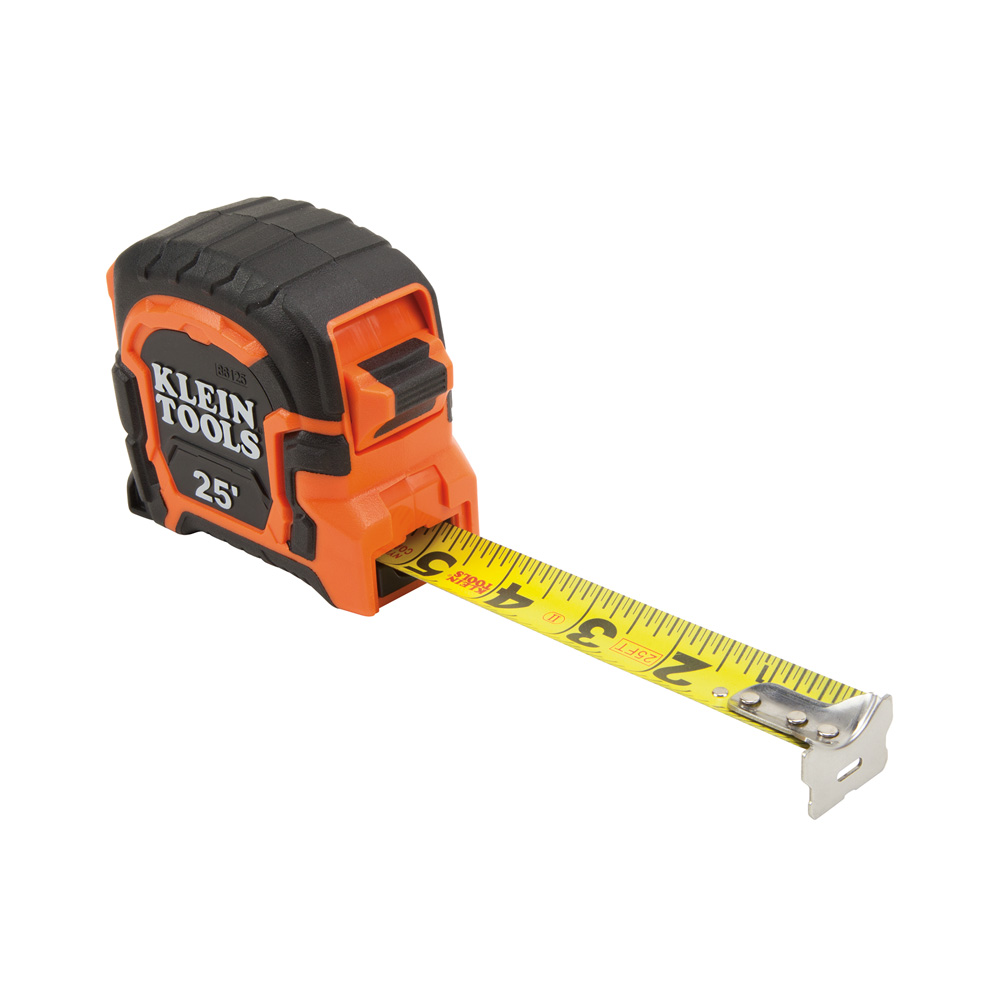
Retractable tape measure with yellow measuring tape (Source: Wikipedia (Tape measure))
Do not let the blade snap back, and wipe off cement and mud to keep the markings readable.
A level, usually a spirit level, contains a liquid-filled vial with an air bubble that shows when a surface is horizontal (level) or vertical (plumb). It ensures that walls, posts, door frames and roof members are properly aligned, which is crucial for the stability of the structure. Example: a floor laid with a slight deliberate fall toward the drain must first be checked with a level and a straight edge so that the fall is even and urine does not pond in the pen.
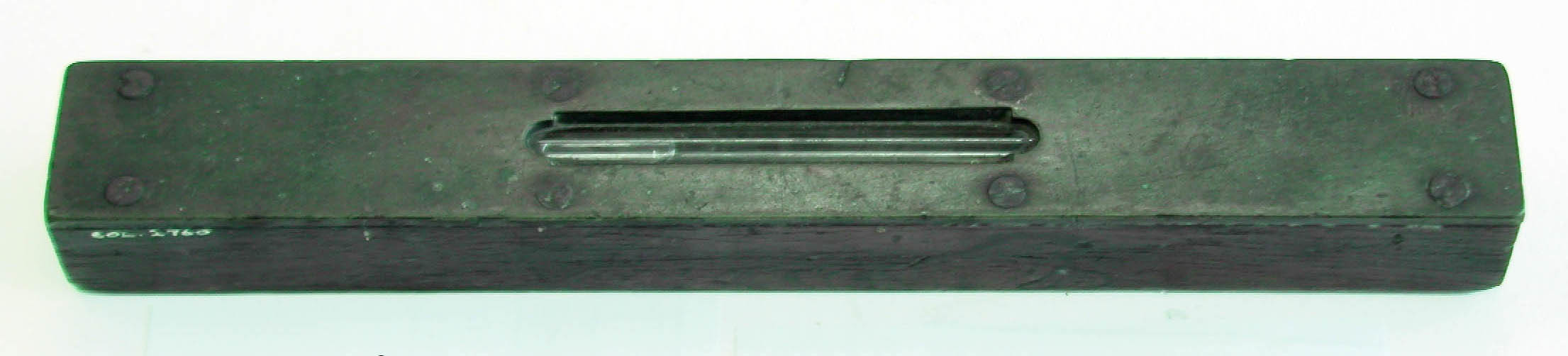
A traditional spirit level tool (Source: Wikimedia Commons)
Check the level occasionally by reading it, turning it end for end and reading again; the bubble should sit in the same place.
A saw cuts material by the action of its toothed blade. A hand saw is used to cut timber for framing, partitions and roof members, while a hacksaw cuts metal rods, pipes and bolts used in reinforcement and fencing. Choose the saw by material and use the full length of the blade with steady strokes. Example: cutting treated poles to equal lengths for a feeding trough frame.
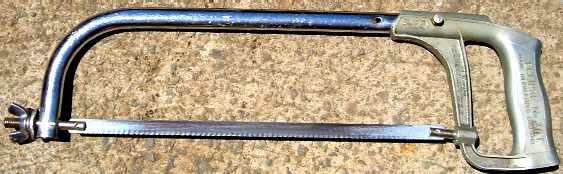
Metal hacksaw with blade and handle (Source: Wikipedia (Hacksaw))
Support the work firmly, keep fingers clear of the blade path, and replace blunt or broken blades.
A drill makes holes and drives screws and bolts. A cordless power drill with an 18 V battery is convenient on sites without electricity, which is common at remote sheep farms. Use wood bits for timber, metal bits for steel and masonry bits for blocks. Example: drilling bolt holes through posts and rails when assembling a handling race.
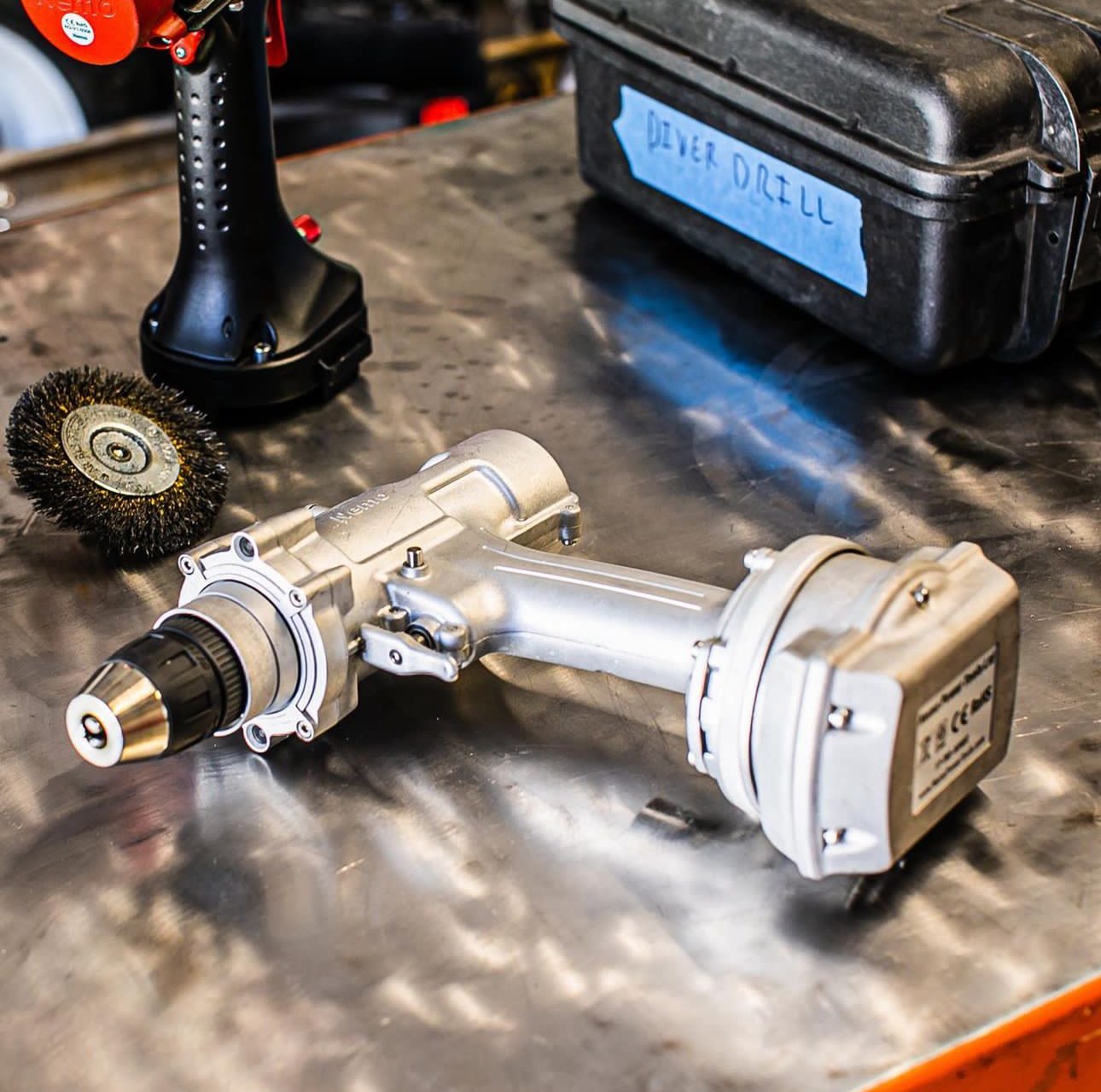
Cordless power drill on workbench (Source: Wikimedia Commons)
Keep the battery charged, lubricate moving parts as the manufacturer advises, and replace bits when they become worn or blunt.
Pliers grip, bend, twist and cut wire and small fixings. Combination pliers are used when installing wire mesh and fencing, twisting binding wire around reinforcement and pulling out bent nails. Example: tying wire mesh to timber posts around an outdoor paddock yard. Use pliers with insulated handles near electric fencing, and never use them on nuts when a spanner is available, because the jaws will round the nut.
A chisel is a hardened steel blade with a sharp bevelled edge, struck with a mallet or pushed by hand to shape or remove material. A wood chisel cuts housings and notches so that joints fit snugly, for example where a rail slots into a post of a pen partition. A cold chisel, which is thicker, cuts masonry, concrete and metal.
Keep the edge sharp, cut away from the body and keep both hands behind the cutting edge. Never use a wood chisel on masonry or metal.
The following tools help to set out and mark the structure accurately before cutting and building:
These tools complement the saws and chisels for trimming roofing, wire and site materials:
Foundations, floors and walls need these hand tools:
Good housekeeping and protective gear keep tools in condition and workers safe:

Clear safety goggles for eye protection (Source: Wikimedia Commons)
Equipment refers to powered or mechanical machines that increase efficiency in construction tasks. In sheep structure construction, equipment reduces manual labour and speeds up work such as clearing the site, mixing concrete and moving heavy materials. For instance, in a large commercial sheep unit, a machine that clears and levels the building pad can save days of labour. Smaller farms often hire such machines for the day rather than own them.
| Name | Specification | Use |
|---|---|---|
| Bulldozer | Crawler tractor with a front blade | Clearing vegetation, levelling and shaping the building pad |
| Cranes | Mobile crane with lifting boom | Lifting heavy items such as steel roof trusses and tanks |
| Dump trucks | Tipping-body truck | Hauling sand, quarry dust, blocks, ballast and excavated soil |
| Mixer | Concrete mixer, drum capacity 100 litres | Mixing cement, sand, ballast and water for concrete and mortar |
| Forklifts | Pallet forklift with raised forks | Lifting and stacking pallets of blocks, cement and roofing sheets |
A bulldozer is a heavy tracked machine with a wide steel blade at the front. It clears bush, removes topsoil and levels the ground so that sheep housing sits on a firm, well-drained pad. Example: levelling a sloping site and forming a slight fall so that rainwater drains away from the shed and yards. Operation needs a trained, licensed driver, and other workers must stay clear of the machine's working area.
A crane lifts and places heavy loads using a boom and cable. On large sheep projects it is used to raise steel roof trusses, water tanks or prefabricated panels into position. Most small sheep houses with timber roofs do not need a crane, since the members can be lifted by hand. Cranes must be operated by certified operators, the load must never exceed the rated capacity, and nobody may stand under a suspended load.
A dump truck carries bulk materials and tips them by raising its body. It brings sand, quarry dust, ballast and blocks to the site and carries away spoil from excavations. Example: delivering several loads of quarry dust and sand for a floor base and mortar. Tip on firm, level ground and keep people away from the rear during tipping.
A concrete mixer has a rotating drum that blends cement, sand, ballast and water into uniform concrete or mortar, giving a stronger and more consistent mix than turning by hand. A 100 litre drum suits small jobs such as pen floors, trough bases and footbath slabs. It is operated by trained personnel who keep to the specified mix ratio and water content.
Clean the drum and blades with water immediately after use, so that cement does not harden inside. Check the engine or motor, guards and electrical connections before starting.
A forklift lifts, carries and stacks loads on pallets using two forks. At a construction site or a farm store it moves pallets of blocks, bagged cement and bundles of roofing sheets quickly and with little strain on workers. Operators must be trained, loads must be balanced and kept low while travelling, and the forklift must not be overloaded or driven on soft, uneven ground.
These smaller items are often used with the main machines:
| Name | Specification | Use |
|---|---|---|
| Wheelbarrow | Steel tray, pneumatic tyre | Transporting concrete, sand, blocks and other materials on site |
| Nail gun | Pneumatic, magazine-fed | Rapid nailing of timber components |
| Vibrator | Electric, handheld | Compacting concrete to remove air bubbles and increase strength |
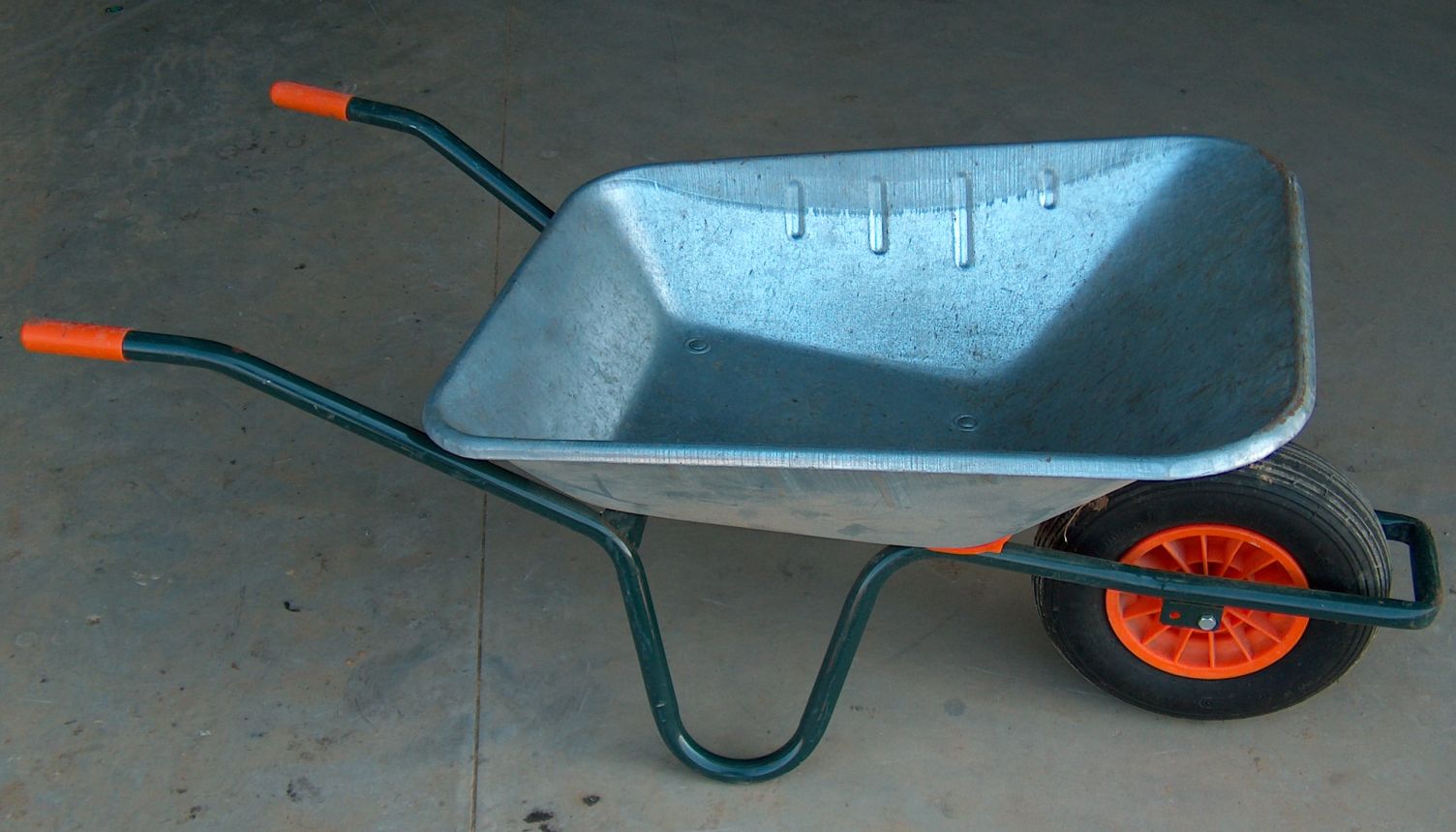
Metal wheelbarrow with one wheel (Source: Wikimedia Commons)
Safe habits protect workers and prevent damage on the construction site:
Materials form the physical substance of sheep structures and must be chosen to withstand local climatic conditions while ensuring animal comfort and hygiene. Selection balances cost, availability, durability and ease of cleaning. For example, a floor and walls made from cement, sand and blocks give a strong, easily cleaned lambing shed, while a lower-cost timber structure may be chosen for a temporary shelter.
Cement is the binding agent that sets hard when mixed with water and holds sand, ballast and blocks together. It is used for foundations, floors, mortar for laying blocks and plaster. Bags usually weigh 50 kg, and the bags must be kept dry because moisture makes cement lumpy and weak.
Store bags on a raised platform in a dry store, away from walls, and use them in the order they were delivered. A typical nominal concrete mix for floors is 1 part cement, 2 parts sand and 4 parts ballast by volume, and mortar for block laying often uses about 1 part cement to 4 parts sand. Follow the design specification for the structure.
Sand is the fine aggregate in mortar, plaster and concrete. It fills the spaces between larger particles and provides bulk and strength. Use clean, coarse and sharp sand that is free from clay, silt, salt and plant material, because dirty sand weakens the mix and causes cracks. Example: using washed river or pit sand for the mortar between blocks in a shed wall.
A simple field test is to rub a damp handful between the fingers: clean sand leaves little staining, while dirty sand leaves the hand muddy. Store sand on a clean hard surface so it does not mix with soil.
Blocks are walling units made from concrete or cut stone, laid in courses with mortar. They make strong, durable and easily cleaned walls for sheep houses, especially lambing sheds, milk-replacer stores and feed rooms. A typical hollow concrete block is about 400 × 200 × 150 mm. Blocks are stacked on level ground, not thrown, to avoid chipping and breakage.
Walls of blocks resist predators, weather and animal pushing. In sheep housing, they are often combined with open sections of timber or wire mesh above the wall so that there is adequate ventilation.
Quarry dust is the fine crushed-stone waste from quarries. It is cheaper than sand in many places and is used as a partial or full substitute for sand in mortar, plaster, block making and concrete, and as a compacted layer under floors. It must be free from excess clay and silt, which weaken the mix. Example: spreading and compacting a layer of quarry dust as a firm, well-drained base before pouring a pen floor.
Because quarry dust is very fine, the amount of water in the mix may need adjusting, and a small trial mix is a sensible check before large pours. Workers should wear dust masks when handling it.
Timber is widely used for framing walls, floors, partitions and roof structures. Species such as cypress, eucalyptus and pine are used where available. Timber should be seasoned and treated against decay, termites and borers, especially in humid areas, and treated posts set in the ground last longer. Take care that preservatives have dried before sheep contact the timber, because some chemicals are harmful to animals.
Concrete, a mixture of cement, sand, ballast and water, is used for foundations, floors, troughs, footbath slabs and sometimes walls. It provides durability and ease of cleaning, which reduces disease risk in sheep housing. It must be mixed in the correct proportions, placed, compacted and kept damp while it cures so that it gains full strength.
The roof protects sheep from rain, sun and wind:
These materials form walls, boundaries and handling facilities:
Floors must be dry, easy to clean and comfortable for sheep:
Fasteners join the parts of the structure together:
Create a free account to open more of this chapter.
Free: practical guides, quick cards, workplace scenarios and more.
Create a free accountThis chapter covered the essential tools, equipment, and materials needed for constructing sheep structures, emphasizing their appropriate use to ensure durability and functionality. It highlighted the importance of carefully selecting a suitable site for the structures, considering factors such as drainage, accessibility, and protection from harsh weather. The design process was explored, focusing on creating plans that accommodate sheep welfare, space requirements, and ease of management. The chapter then detailed the step-by-step construction procedures, ensuring that the structures meet the required standards for safety and efficiency. Proper maintenance practices were discussed to prolong the lifespan of the buildings and prevent damage. Additionally, the chapter addressed the importance of keeping accurate records related to construction activities and maintenance schedules. Finally, effective waste management strategies were presented to maintain hygiene and environmental sustainability within sheep farming operations.
At the start of this chapter we promised you would be able to:
Tick each one you can genuinely do.
So, are you there yet?
You're competent when you can confidently do 50% or more of what this chapter promised.
Sign in to record how you're doing.