Collecting accurate and relevant market data is essential for agripreneurs aiming to make informed decisions and develop competitive strategies. This chapter explores various methods of gathering data specific to agri-enterprises, highlighting their applicability within Kenya’s diverse agricultural landscape. Understanding these methods enables agripreneurs to assess market demand, monitor production factors, and optimize supply chains effectively. Each data collection approach is crucial in tailoring business decisions to the dynamic realities of Kenyan agriculture.
2.1 Selection of Agri-enterprise Data Collection Method
In the Kenyan agripreneurship context, selecting an appropriate data collection method depends on factors such as the type of crop or livestock-scale of operation, available resources, and the specific market information required. Each method offers unique advantages and limitations, which influence its suitability for different agri-enterprise scenarios. For example, smallholder farmers in Central Kenya might rely more on direct field observations and interviews, while larger commercial farms in Rift Valley may integrate sensor technology and crop monitoring software.
2.1.1 Field Observations
Field observations involve direct, systematic watching and recording of activities, conditions, and behaviors in the agricultural environment. This method is foundational for agripreneurs seeking firsthand insights into crop health, pest incidence, or market activities without relying on secondary data.
Purpose of Field Observations
- Assessing Crop and Livestock Conditions: Enables agripreneurs to visually inspect plant growth stages, identify pest or disease outbreaks, and evaluate livestock health, which informs timely interventions.
- Monitoring Farming Practices: Observations reveal the implementation quality of planting, irrigation, fertilization, and harvesting techniques, crucial for improving productivity.
- Understanding Market Interactions: Watching how produce is handled, transported, and sold at local markets helps identify inefficiencies and customer preferences.
- Verifying Data Accuracy: Field observations serve as a reality check against reported data from surveys or interviews, ensuring reliability.
- Supporting Training and Extension Services: Observing farmer practices facilitates tailored advisory services, as seen in county agricultural offices in Kisumu.
Techniques for Effective Field Observations
- Structured Checklists: Using predefined criteria ensures consistent recording across different observation sessions.
- Sampling Strategy: Selecting representative plots or farmers avoids bias and improves the generalizability of findings.
- Photographic Evidence: Capturing images supports documentation and later analysis, especially for pest or disease identification.
- Time Scheduling: Conducting observations at different times of day or growth stages captures comprehensive data.
- Note-taking and Recording: Detailed notes, possibly supplemented by audio recordings, enhance data richness.
Challenges in Field Observations
- Observer Bias: Personal interpretations may influence what is recorded, risking data distortion.
- Resource Intensive: Requires time, skilled personnel, and sometimes transportation to reach remote farms.
- Limited Scope: Observations provide snapshots rather than continuous data, possibly missing transient issues.
- Environmental Factors: Weather conditions can affect visibility and accessibility during field visits.
- Farmer Cooperation: Some farmers may be reluctant to allow close observation, fearing judgment or interference.
2.1.2 Field Survey
Field surveys systematically collect data from a sample of respondents using structured questionnaires or forms. This method is widely used across Kenya to gather quantitative and qualitative information on farming practices, input use, and market preferences.
Planning and Designing Field Surveys
- Defining Objectives: Clear research questions guide the choice of variables and survey scope.
- Sampling Design: Employing random, stratified, or cluster sampling ensures representativeness of the target population, such as maize farmers in Uasin Gishu.
- Questionnaire Development: Questions must be clear, unbiased, and translated appropriately into local languages like Kikuyu or Luo.
- Pre-testing Instruments: Pilot surveys detect ambiguities and improve respondent understanding.
- Enumerator Training: Skilled interviewers minimize errors and enhance data quality.
Data Collection Methods in Field Surveys
- Face-to-Face Interviews: Allow clarification of questions and probing for detailed responses, effective in rural areas with limited literacy.
- Self-Administered Questionnaires: Suitable for literate respondents but less common in Kenya’s rural farming communities.
- Mobile Data Collection: Using smartphones or tablets with apps like ODK (Open Data Kit) reduces errors and accelerates data processing.
- Telephone Surveys: Useful during disease outbreaks or security concerns but limited by phone ownership and network coverage.
- Focus Group Discussions: Complement surveys by exploring attitudes and motivations in depth.
Data Quality Assurance in Field Surveys
- Supervision and Spot Checks: Field supervisors verify enumerator work to detect inconsistencies.
- Data Cleaning: Identifying and correcting errors before analysis prevents misleading conclusions.
- Use of GPS Coordinates: Validates locations and reduces duplication or misclassification.
- Timely Data Entry: Minimizes memory decay and information loss.
- Respondent Anonymity: Encourages honest answers, especially on sensitive topics like income or input costs.
2.1.3 Interviews
Interviews involve direct interaction between the researcher and the respondent, allowing deep exploration of topics relevant to agri-enterprises. This qualitative approach is essential for understanding complex behaviors, motivations, and constraints.
Types of Interviews Used in Agripreneurship
- Structured Interviews: Follow a fixed set of questions, facilitating comparison across respondents, for example, assessing adoption of new maize varieties by farmers in Meru.
- Semi-Structured Interviews: Combine predetermined questions with flexibility to explore emerging issues, useful for extension officers collecting feedback.
- Unstructured Interviews: Open-ended and conversational, ideal for exploratory research on farmer challenges or innovations.
- Key Informant Interviews: Target experts such as cooperative leaders or input suppliers to gain specialized insights.
- Group Interviews: Engage multiple stakeholders simultaneously, fostering discussion and consensus building.
Preparing and Conducting Effective Interviews
- Developing an Interview Guide: Ensures coverage of all relevant topics while allowing probing.
- Building Rapport: Establishing trust improves openness and honesty in responses.
- Active Listening: Helps capture nuances and follow up on interesting points.
- Recording and Note-Taking: Audio recordings support accurate transcription; notes capture non-verbal cues.
- Managing Interview Duration: Balancing depth with respondent fatigue preserves data quality.
Ethical Considerations in Interviews
- Informed Consent: Participants must understand the purpose and agree voluntarily.
- Confidentiality: Protecting identities encourages candidness.
- Avoiding Leading Questions: Neutral phrasing prevents biasing answers.
- Cultural Sensitivity: Respecting local customs and language nuances enhances cooperation.
- Feedback to Participants: Sharing findings builds trust and encourages future participation.
2.1.4 Sensor Technology
Sensor technology refers to electronic devices that detect and measure physical or environmental parameters, providing real-time, precise data to agripreneurs. This method is increasingly accessible to Kenyan farmers through affordable innovations.
Types of Sensors Used in Agriculture
- Soil Moisture Sensors: Measure water content in the soil, guiding irrigation scheduling.
- Temperature Sensors: Monitor ambient or soil temperature affecting crop growth and pest activity.
- Light Sensors: Detect sunlight intensity, important for photosynthesis and greenhouse management.
- Nutrient Sensors: Analyze soil nutrient levels, informing fertilization decisions.
- Pest Detection Sensors: Use optical or chemical means to identify pest presence early.
Benefits of Sensor Technology in Agri-enterprises
- Precision Farming: Enables targeted interventions, reducing input costs and environmental impact.
- Continuous Monitoring: Provides data 24/7, allowing prompt responses to changing conditions.
- Data Integration: Sensors often link to software platforms for comprehensive farm management.
- Improved Yields: Optimizing water and nutrient application enhances productivity.
- Risk Mitigation: Early detection of stressors reduces crop losses.
Challenges and Limitations of Sensor Technology
- High Initial Costs: Although prices are decreasing, sensors may still be unaffordable for smallholders.
- Technical Skills Requirement: Farmers need training to install, interpret, and maintain sensors.
- Connectivity Issues: Remote farms may lack internet access for real-time data transmission.
- Calibration Needs: Sensors require regular calibration to maintain accuracy.
- Data Overload: Managing and analyzing large datasets can be overwhelming without proper tools.
2.1.5 Weather Stations
Weather stations collect meteorological data crucial for agricultural planning and risk management. In Kenya, localized weather information supports decisions on planting, irrigation, and pest control.
| Name |
Specification |
Use |
| Automatic Weather Station (AWS) |
Measures temperature, humidity, rainfall, wind speed/direction |
Provides continuous weather data for farm management decisions |
| Manual Weather Station |
Requires manual readings of temperature, rainfall, and wind |
Used in areas lacking electricity or internet for basic weather monitoring |
Components of Weather Stations
-
Thermometers: Measure air and soil temperatures, indicating suitable conditions for crops.
-
Rain Gauges: Capture precipitation amounts, essential for water budgeting.
-
Anemometers: Record wind speed and direction, influencing spraying schedules and erosion risk.
-
Hygrometers: Measure humidity, affecting disease development.
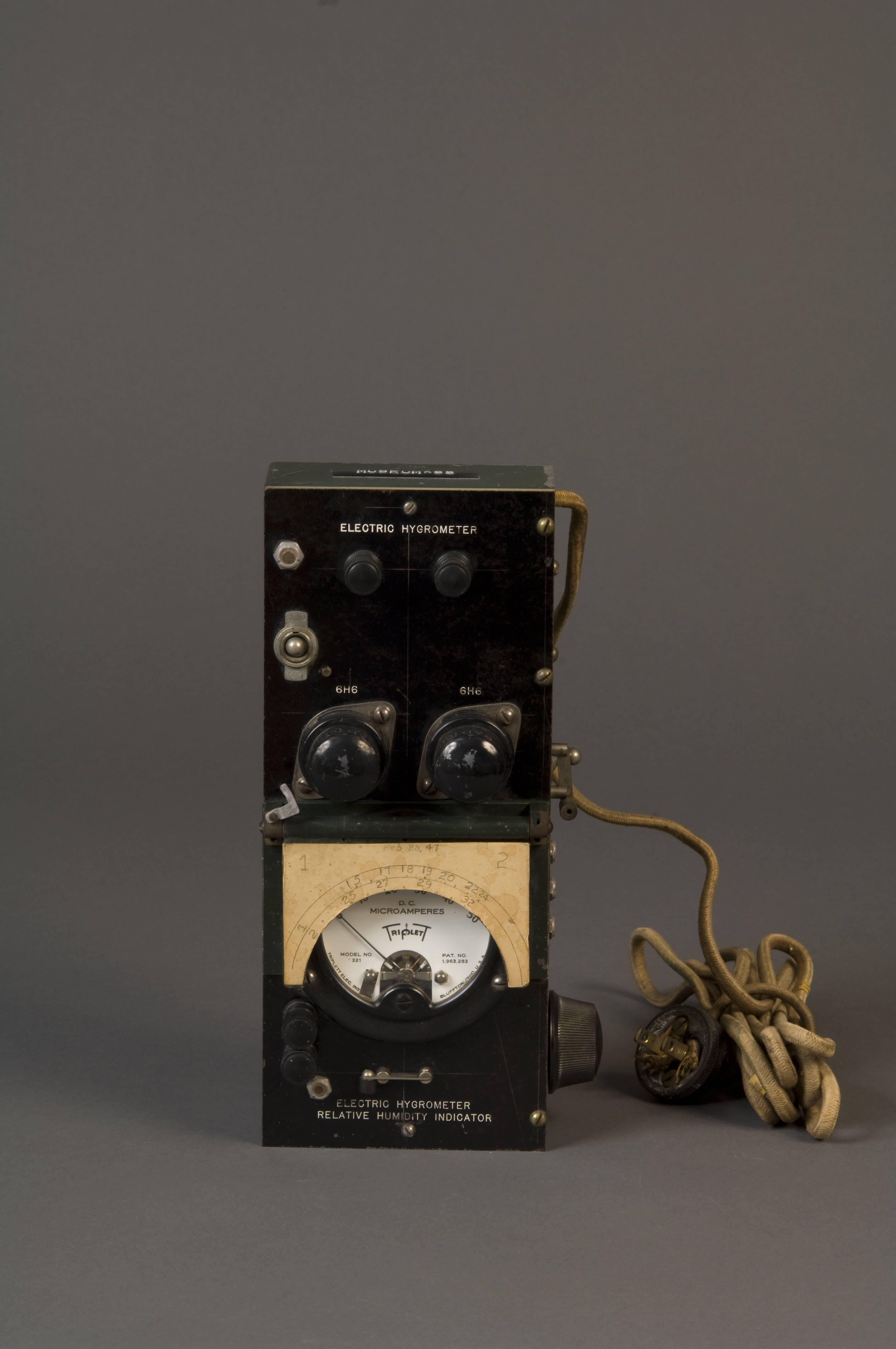
Vintage electric hygrometer device (Source: Wikimedia Commons)
- Data Loggers: Store and sometimes transmit collected data for analysis.
Role of Weather Stations in Kenyan Agriculture
- Crop Calendar Optimization: Helps farmers decide the best planting and harvesting dates based on rainfall patterns.
- Irrigation Scheduling: Guides efficient water use, particularly in semi-arid regions like Garissa.
- Pest and Disease Forecasting: Weather parameters predict outbreaks, enabling preventive measures.
- Disaster Preparedness: Early warning for floods or droughts reduces losses.
- Research Support: Provides data for agronomic studies by institutions like KALRO.
Challenges in Deploying Weather Stations
- Maintenance Requirements: Sensors and instruments need regular servicing to function accurately.
- Power Supply: Remote stations may struggle with electricity access, relying on solar panels.
- Data Accessibility: Farmers require platforms or extension services to interpret data effectively.
- Cost Constraints: Initial setup and upkeep can be expensive for community groups.
- Data Gaps: Sparse distribution leads to limited coverage in some regions.
2.1.6 Crop Monitoring Software
Crop monitoring software integrates data from various sources to provide agripreneurs with actionable insights on crop health, growth stages, and yield forecasts. These digital tools enhance decision-making and resource management.
| Name |
Specification |
Use |
| FarmLogs |
Mobile and web-based, supports remote sensing data integration |
Tracks crop progress, inputs, and weather impacts |
| AgroCares |
Includes soil and plant sensors, cloud-based analytics |
Diagnoses nutrient deficiencies and diseases |
| CropIn |
AI-powered platform, real-time data visualization |
Helps with farm digitization and market linkages |
Features of Crop Monitoring Software
- Remote Sensing Integration: Uses satellite or drone imagery to assess crop conditions.
- Data Visualization: Presents complex data in user-friendly dashboards.
- Alerts and Notifications: Warns users about potential threats like pests or water stress.
- Record Keeping: Stores historical data for trend analysis and reporting.
- Market Linkage Support: Connects farmers to buyers based on crop readiness.
Benefits of Crop Monitoring Software
- Improved Resource Use: Enables precise application of fertilizers and pesticides.
- Enhanced Productivity: Early detection of problems leads to timely interventions.
- Traceability: Supports certification schemes by documenting farm practices.
- Access to Expert Advice: Some platforms provide agronomic recommendations.
- Scalability: Suitable for both smallholders and large commercial farms.
Adoption Challenges
- Digital Literacy: Farmers may require training to navigate software interfaces.
- Internet Connectivity: Poor network coverage limits real-time data access.
- Cost of Subscription: Some platforms charge fees that may be prohibitive.
- Data Privacy Concerns: Farmers may hesitate to share sensitive information.
- Integration Complexity: Combining data from multiple sources can be technically challenging.
2.1.7 Supply Chain Tracking
Supply chain tracking involves monitoring the movement of agricultural products from production to end markets. This process enhances transparency, efficiency, and quality control in agri-enterprises.
Importance of Supply Chain Tracking
- Ensures Product Traceability: Vital for meeting standards required by exporters and supermarkets.
- Reduces Post-Harvest Losses: Identifying bottlenecks in transport and storage minimizes spoilage.
- Improves Inventory Management: Helps cooperatives and agribusinesses maintain optimal stock levels.
- Enables Market Price Monitoring: Tracks product flow to anticipate supply-demand dynamics.
- Supports Regulatory Compliance: Facilitates adherence to food safety and quality regulations enforced by KEBS.
Technologies Used in Supply Chain Tracking
- Barcode and QR Code Systems: Label products for easy identification and scanning.
- GPS Tracking Devices: Monitor transport routes and timing in real-time.
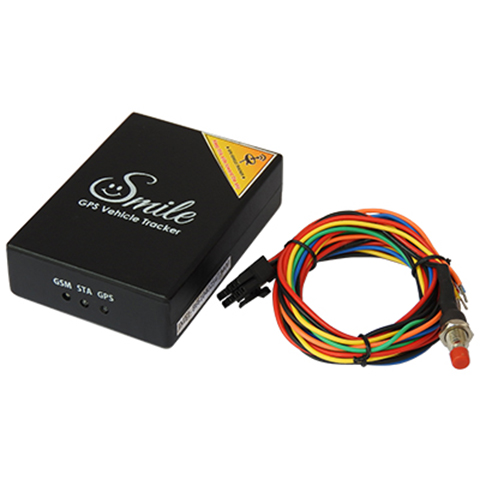
GPS vehicle tracking device with wiring (Source: Wikimedia Commons)
- Blockchain Platforms: Provide immutable records of product movement and transactions.
- Mobile Applications: Allow farmers and traders to update status and communicate.
- RFID Tags: Enable automated tracking and inventory control.
Challenges in Supply Chain Tracking
- Infrastructure Limitations: Poor roads and storage facilities hamper timely product movement.
- Cost of Technology: Small-scale operators may find tracking devices expensive.
- Data Management: Coordinating information from multiple actors requires robust systems.
- Resistance to Change: Traditional traders may be reluctant to adopt new technologies.
- Security Concerns: Risk of data breaches or theft during transport.
2.1.8 Market Surveys
Market surveys collect information on consumer preferences, competitor activities, pricing, and demand trends. For agripreneurs, these surveys provide insights critical for product positioning and marketing strategies.
Designing Effective Market Surveys
- Identifying Target Market: Defining the demographic and geographic scope ensures relevance.
- Selecting Survey Type: Options include consumer surveys, competitor analysis, or price monitoring.
- Developing Questionnaires: Questions should capture buying behavior, satisfaction levels, and unmet needs.
- Sampling Methods: Random or purposive sampling depends on survey objectives.
- Data Collection Tools: Use of electronic devices or paper forms depending on context.
Conducting Market Surveys in Kenya
- Engaging Local Enumerators: Familiarity with language and culture improves response rates.
- Timing Surveys Appropriately: Aligning with market cycles captures accurate demand patterns.
- Incorporating Visual Aids: Pictures of products help clarify questions.
- Ensuring Data Confidentiality: Builds trust among respondents.
- Utilizing Mobile Platforms: SMS or app-based surveys expand reach, especially among urban consumers.
Using Market Survey Data
- Pricing Strategy Development: Understanding consumer price sensitivity helps set competitive prices.
- Product Development: Feedback guides improvements or diversification.
- Market Segmentation: Identifies distinct customer groups for targeted marketing.
- Sales Forecasting: Anticipates demand fluctuations to optimize inventory.
- Promotion Planning: Tailors messages and channels based on consumer preferences.
Practice Questions
-
Explain five factors an agripreneur should consider when selecting a data collection method for their enterprise. (10 marks)
-
Describe the main components and uses of a weather station in Kenyan agriculture. (10 marks)
-
Discuss three benefits and three challenges of using sensor technology for market data collection in agri-enterprises. (12 marks)
-
Outline the steps involved in planning and conducting a field survey for an agripreneurship market research project. (12 marks)
-
Compare and contrast field observations and interviews as methods of collecting agricultural market data. (10 marks)
The rest of this chapter
🔒Create a free account to open more of this chapter.
Free: practical guides, quick cards, workplace scenarios and more.
Create a free account 🔒2.2 Recruitment of Agri-enterprise Data Collection Enumerators
Recruiting competent enumerators is a cornerstone of reliable agriculture market research. In Kenya’s agripreneurship sector, selecting the right individuals to gather data ensures accuracy, timeliness, and relevance of market information. Enumerators serve as…
🔒2.3 Orientation of Agri-enterprise Enumerators
Orientation equips newly recruited enumerators with the knowledge, skills, and attitudes necessary to collect high-quality market data. In Kenya’s agripreneurship environment, effective orientation ensures enumerators understand research objectives, ethical co…
🔒2.4 Obtaining Agri-enterprise Consent
Obtaining consent from agri-enterprises is a crucial step in conducting market research that respects ethical standards and legal requirements in Kenya. Consent ensures that data collection is transparent, respects the rights of participants, and builds trust…
🔒2.5 Collection of Agri-enterprise Production Data
In agripreneurship, gathering accurate production data is vital for making informed decisions that enhance productivity and profitability. Production data encompasses all information related to the inputs, processes, and outputs of agricultural activities. Ken…
Chapter Summary
This chapter focused on the selection of appropriate methods for collecting agri-enterprise market data, highlighting techniques such as field observations, surveys, interviews, sensor technology, weather stations, crop monitoring software, supply chain tracking, and market surveys. It then addressed the crucial process of recruiting skilled enumerators to gather accurate data, followed by orienting them to ensure consistency and reliability in data collection. The chapter emphasized the importance of obtaining informed consent from agri-enterprise participants to maintain ethical standards. Various types of production data were explored, including field data, weather conditions, market trends, financial records, supply chain information, customer insights, regulatory requirements, and operational research data. Together, these elements form a comprehensive approach to gathering detailed and relevant information that supports informed decision-making in agricultural enterprises. The chapter underscored the integration of traditional and technological tools to enhance data accuracy and utility in the dynamic agricultural market environment.
Self-Assessment
🔒 PDFDownload this self-assessment, with answers
A. Written Assessment
- Which data collection method involves directly observing farming activities without interference? (2 marks)
- List three advantages of using sensor technology in agricultural data collection. (3 marks)
🔒20 more in this section.
Chapter Examination Questions
🔒 PDFDownload these examination questions, with worked answers
SECTION A (40 Marks) - Answer ALL Questions
- Explain the advantages of using field observations as a data collection method in agripreneurship market research in Kenya. (4 marks)
- Describe how sensor technology can enhance data accuracy in agripreneur production monitoring. (4 marks)
🔒18 more in this section.
Chapter Practical Activities
Practical 1: Select Appropriate Data Collection Method for Agri-enterprise Market Research
Agripreneurship · Level 6
Carry Out Agriculture Market Research
PRACTICAL ASSESSMENT
TIME: 4 HOURS
⬇ PDFCandidate Instructions (Candidate Tool)
Type: Individual
INSTRUCTIONS TO CANDIDATE:
1. You are required to perform the following task:
i. Select and justify the most suitable data collection method for a dairy products market research scenario as per the provided brief.
2. You have been provided with the following resources for the practical task:
| Tools & Equipment | Materials |
|---|
| Pen | |
| Notebook | |
| Scenario brief document | |
| List of common data collection methods | |
| Reference materials on dairy market trends | |
⬇ PDFResources Required (Cutting List)
| S/N | Item | Quantity |
|---|
| 1 | Scenario brief document | 1 Pc per Candidate |
| 2 | Pen | 1 Pc per Candidate |
| 3 | Notebook | 1 Pc per Candidate |
| 4 | List of common data collection methods (questionnaire, interview, observation, focus group) | 1 Pc per Candidate |
| 5 | Reference materials on dairy market trends | 1 Pc per Candidate |
⬇ PDFAssessor Guide
| Items to be Evaluated | Marks Available | Marks Obtained | Comments |
|---|
| TASK 1: Selection of Data Collection Method |
Wore appropriate attire and identification tag
(Award 2 marks for correct attire and visible identification tag or zero) | 2 | | |
Read and understood the scenario brief
(Award 3 marks for clear evidence of understanding or zero) | 3 | | |
Listed at least three data collection methods
(Award 1 mark for each correct method listed, max 3 marks) | 3 | | |
Evaluated the suitability of each data collection method for the scenario
(Award 1 mark for each relevant evaluation point, max 5 marks) | 5 | | |
Selected the most appropriate data collection method with justification
(Award up to 7 marks for a justified selection relevant to scenario) | 7 | | |
Documented the selection and justification clearly in writing
(Award 5 marks for clear, concise, and well-organized documentation or zero) | 5 | | |
| Sub-Total | 25 | | |
| PRODUCT CHECKLIST |
Completed written report selecting and justifying the data collection method
(Award marks based on clarity, relevance, completeness, and correctness of the report, max 20 marks) | 20 | | |
| Sub-Total | 20 | | |
| GRAND TOTAL | 45 | | |
ASSESSMENT OUTCOME: ☐ Competent ☐ Not Yet Competent (competent if at least 50%)
Practical 2: Conduct Field Observations for Agricultural Enterprise Data Collection
Agripreneurship · Level 6
Carry Out Agriculture Market Research
PRACTICAL ASSESSMENT
TIME: 4 HOURS
⬇ PDFCandidate Instructions (Candidate Tool)
Type: Individual
INSTRUCTIONS TO CANDIDATE:
1. You are required to perform the following task:
i. Record crop type, field size, plant population, and pest incidence data for a maize field measuring approximately 20m x 15m using direct field observations.
2. You have been provided with the following resources for the practical task:
| Tools & Equipment | Materials |
|---|
| Measuring tape (5 m) | Field notebook |
| GPS device or smartphone with GPS | Ballpoint pen |
| Digital camera or smartphone camera | Identification tag |
| Clipboard | Protective clothing (dust coat) |
⬇ PDFResources Required (Cutting List)
| S/N | Item | Quantity |
|---|
| 1 | Field notebook | 1 Pc per Candidate |
| 2 | Ballpoint pen | 1 Pc per Candidate |
| 3 | Measuring tape (5 m) | 1 Pc per Candidate |
| 4 | GPS device or smartphone with GPS | 1 Pc per Candidate |
| 5 | Identification tag | 2 Pcs per Candidate |
| 6 | Protective clothing (dust coat) | 1 Pc per Candidate |
| 7 | Digital camera or smartphone camera | 1 Pc per Candidate |
| 8 | Clipboard | 1 Pc per Candidate |
⬇ PDFAssessor Guide
| Items to be Evaluated | Marks Available | Marks Obtained | Comments |
|---|
| TASK 1: Conduct Field Observations and Record Data |
Wore protective clothing and identification tags visibly pinned front and back near shoulders
(Award 1 mark each for front and back tags worn correctly) | 2 | | |
Accurately measured field dimensions using measuring tape
(Award 3 marks if measurements within ±0.5m of actual field size) | 3 | | |
Used GPS device or smartphone to record field location coordinates
(Award 2 marks if coordinates are correctly recorded and legible) | 2 | | |
Observed and recorded crop type correctly
(Award 2 marks for correct identification and recording) | 2 | | |
Counted and recorded plant population within a 1m² sample area
(Award 4 marks if counting and recording is accurate and method described) | 4 | | |
Noted and recorded any pest or disease incidence observed
(Award 3 marks for accurate and detailed observation notes) | 3 | | |
Took clear photographs of the field and any pests/diseases
(Award 2 marks for photos clearly showing the required subjects) | 2 | | |
Recorded all observations legibly and systematically in the field notebook
(Award 2 marks for neat, organized, and complete notes) | 2 | | |
| Sub-Total | 20 | | |
| PRODUCT CHECKLIST |
Completed field data sheet with correct field size (20m x 15m) and GPS coordinates
(Award 4 marks if field size and location data match measurements and GPS readings) | 4 | | |
Accurate and legible recording of crop type, plant population, and pest incidence
(Award 5 marks if all data is complete, accurate, and clearly presented) | 5 | | |
Photographic evidence correctly labelled and attached to the report
(Award 3 marks if photos are relevant and properly documented) | 3 | | |
| Sub-Total | 12 | | |
| GRAND TOTAL | 32 | | |
ASSESSMENT OUTCOME: ☐ Competent ☐ Not Yet Competent (competent if at least 50%)
🔒Carry Out a Field Survey for Agri-enterprise Market Data CollectionPractical 3
🔒Conduct interviews for Agri-enterprise customer and market data collectionPractical 4
🔒Use sensor technology to collect and analyze crop growth dataPractical 5
🔒Set up and record weather data using a Stevenson screen and associated instrumentsPractical 6
🔒Track supply chain data for 500kg maize delivery from farm to marketPractical 7
🔒Recruit Enumerators for Agri-enterprise Data CollectionPractical 8
🔒Conduct Orientation Training for Agri-enterprise EnumeratorsPractical 9
🔒Obtain Informed Consent from Agri-enterprise Participants for Market Data CollectionPractical 10
🔒Collect Detailed Production and Financial Data from Agri-enterprisePractical 11
🔒Collect Market and Regulatory Data for Agri-enterprisePractical 12
🔒Collect and record Agri-enterprise research operational dataPractical 13
🔒Integrate Sensor and Weather Data for Crop MonitoringPractical 14
🔒Prepare a detailed data collection plan for an Agri-enterprise market surveyPractical 15
