
By the end of this chapter, you will be able to:
Mastering these skills helps you work efficiently and safely on the farm, ensuring healthy crops and reliable machinery for every planting season.
Compiled by: Beatrice Atieno
Operating planting machinery effectively and safely is a critical skill for agripreneurs managing modern farms in Kenya. This chapter focuses on the essential practices for handling planting equipment, ensuring optimal performance while safeguarding the operator’s health and safety. Given the diversity of planting machinery used in Kenyan agriculture, from seed drills to transplanters, understanding the correct use of personal protective equipment (PPE) becomes indispensable to prevent injuries and maintain operational efficiency.
Personal protective equipment, or PPE, is clothing and gear worn by the operator to reduce injury and exposure when working with planting machinery. Planting work combines moving tractor parts, noise, dust, treated seed and fertiliser, and uneven ground, so the operator is exposed to several hazards at once. PPE is the last line of defence: it is worn in addition to guarding on the machine, safe procedures and training, never instead of them.
The PPE chosen for planting machinery must match the hazards of the task: moving parts, dust, chemicals, noise and rough ground.
Four types of safety footwear commonly used in construction and engine (Source: PLUMB 5 LEARNING GUIDE-1 (1))
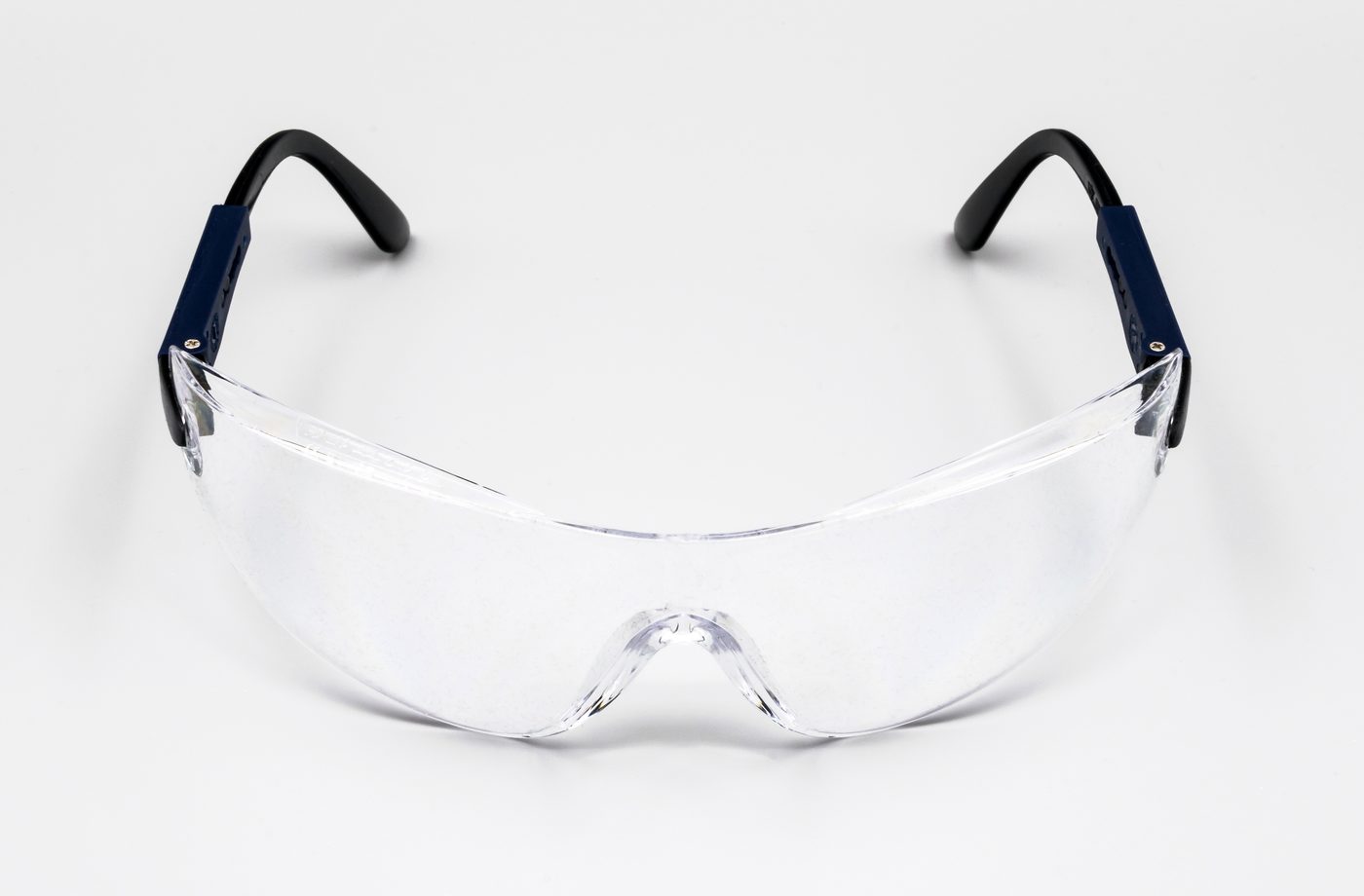
clear safety glasses for eye protection (Source: Wikimedia Commons)
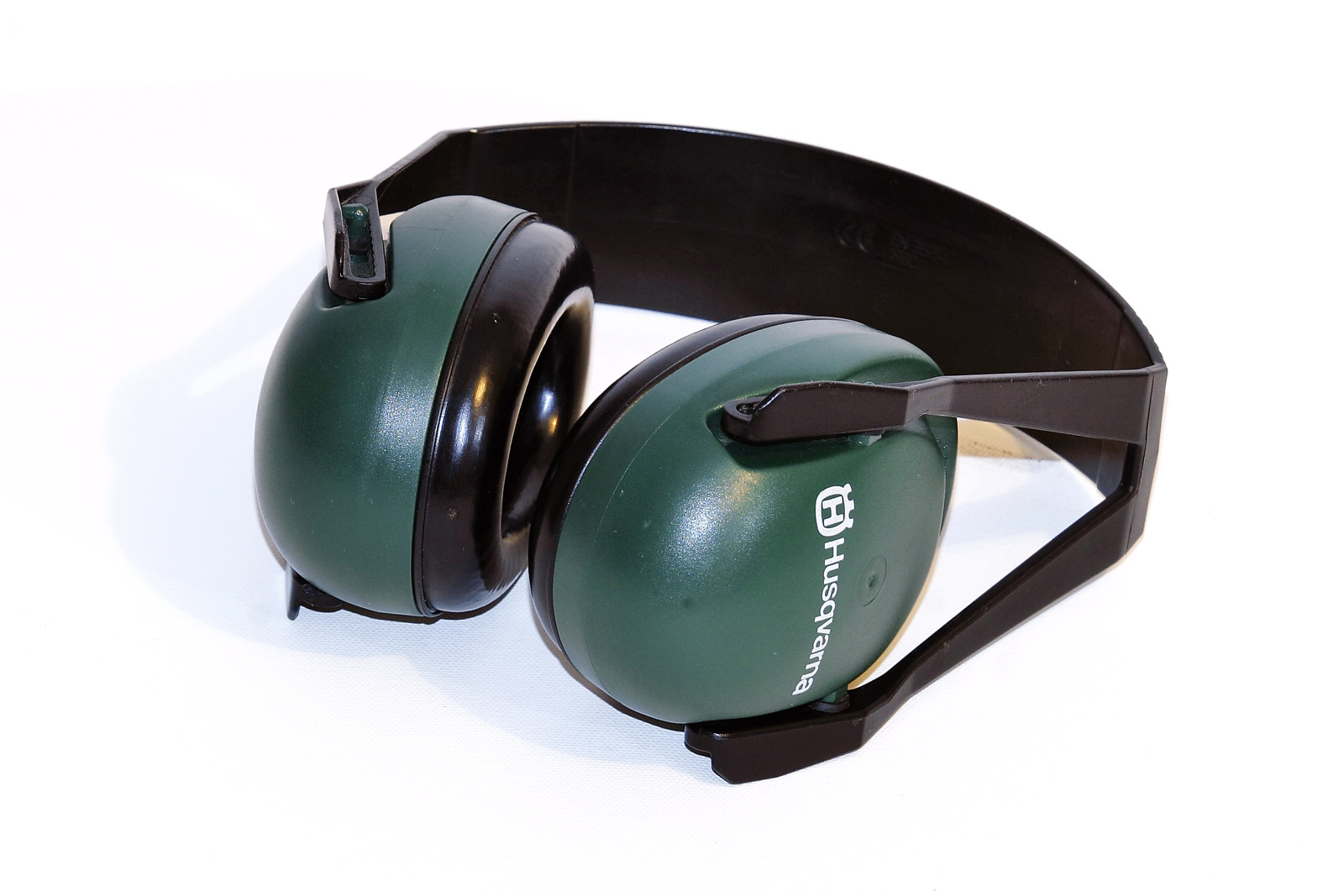
Green Husqvarna hearing protection earmuffs (Source: Wikimedia Commons)
Each item has a specific job, and the right one is worn for each task.
| Item | Hazard it protects against | When it is used in planting work |
|---|---|---|
| Gloves | Cuts, pinching, chemical contact | Loading seed and fertiliser into hoppers, adjusting and clearing blocked parts |
| Safety boots | Falling or crushing of feet, slipping | Hitching implements, walking on ploughed or wet ground |
| Goggles or face shield | Dust, flying particles, splashes | Filling hoppers, driving in dusty or windy conditions |
| Earmuffs or earplugs | Noise | Throughout tractor and engine operation |
| Overalls | Skin contact with chemicals, entanglement | Whenever the machine is running or treated seed is handled |
| Mask or respirator | Fertiliser, seed and soil dust | Filling and emptying hoppers and distributors |
| Hat or cap | Sun and heat | Long periods in the open |
Choose PPE for the actual hazards of the job, not by habit.
Create a free account to open more of this chapter.
Free: practical guides, quick cards, workplace scenarios and more.
Create a free accountThis chapter covered essential aspects of operating planting machinery on the farm. It began by emphasizing the importance of personal protective equipment to ensure safety during machinery use. The calibration of various planting machines was then explored in detail, including seed drills, planters, ridgers, fertilizer distributors, and manure spreaders, highlighting the need for precise adjustments to achieve optimal planting results. The operation of planting machinery was discussed with focus on correct techniques to enhance efficiency and crop yield. Proper maintenance practices were outlined to extend the lifespan of the equipment and prevent breakdowns. Finally, the chapter addressed the correct methods for storing planting machinery to protect it from damage and ensure readiness for future use. Overall, the chapter provided a comprehensive guide to safely and effectively managing planting machinery in agricultural operations.
Type: Individual
| Tools & Equipment | Materials |
|---|---|
| Screwdriver set | Precision seed planter |
| Wrench set | Maize seeds |
| Measuring tape | Calibration tray |
| Marker pen |
| S/N | Item | Quantity |
|---|---|---|
| 1 | Precision seed planter | 1 Pc per Candidate |
| 2 | Maize seeds (certified seed) | 2 kg per Candidate |
| 3 | Measuring tape (5 m) | 1 Pc per Candidate |
| 4 | Weighing scale (digital, 0.01 kg accuracy) | 1 Pc per 5 Candidates |
| 5 | Calibration tray (metal or plastic, 50 cm x 30 cm) | 1 Pc per Candidate |
| 6 | Screwdriver set | 1 Set per Candidate |
| 7 | Wrench set | 1 Set per Candidate |
| 8 | Marker pen | 1 Pc per Candidate |
| 9 | Notebook and pen | 1 Set per Candidate |
| 10 | Personal Protective Equipment (PPE): dust coat, gloves, closed shoes | 1 Set per Candidate |
| Items to be Evaluated | Marks Available | Marks Obtained | Comments |
|---|---|---|---|
| TASK 1: Calibration of precision seed planter | |||
| Wore appropriate PPE: dust coat, gloves, closed shoes (Award 1 mark for each or zero) | 3 | ||
| Inspected the seed planter for mechanical faults and cleanliness (Award 3 marks for thorough inspection or zero) | 3 | ||
| Set the row spacing to 750 mm using measuring tape and adjusted the planter accordingly (Award 5 marks for correct measurement and adjustment or zero) | 5 | ||
| Adjusted the seed metering mechanism to achieve 75 mm seed spacing (Award 6 marks for correct adjustment or zero) | 6 | ||
| Performed a test run by releasing seeds into the calibration tray and measured spacing between seeds (Award 5 marks for accurate test run and measurement or zero) | 5 | ||
| Weighed seeds released during test run to confirm seeding rate accuracy (Award 4 marks for correct weighing and recording or zero) | 4 | ||
| Made necessary fine adjustments to meet required seed spacing and rate (Award 4 marks for effective fine tuning or zero) | 4 | ||
| Recorded all calibration data accurately in the notebook (Award 3 marks for complete and neat records or zero) | 3 | ||
| Cleaned the equipment and working area after calibration (Award 2 marks for thorough cleaning or zero) | 2 | ||
| Sub-Total | 35 | ||
| PRODUCT CHECKLIST | |||
| Seed planter adjusted to 750 mm row spacing within ±5 mm tolerance (Award 5 marks for correct row spacing or zero) | 5 | ||
| Seed metering adjusted to achieve 75 mm seed spacing within ±5 mm tolerance (Award 5 marks for correct seed spacing or zero) | 5 | ||
| Seeding rate matches manufacturer's specification within ±2% tolerance (Award 5 marks for correct seeding rate or zero) | 5 | ||
| Calibration data accurately recorded and legible (Award 5 marks for complete and clear data or zero) | 5 | ||
| Sub-Total | 20 | ||
| GRAND TOTAL | 55 | ||
Type: Individual
| Tools & Equipment | Materials |
|---|---|
| Seed drill machine (single row, tractor-mounted) | Maize seeds (hybrid variety) |
| Measuring tape (5 m length) | Personal protective equipment (PPE): gloves, dust coat, closed shoes |
| Soil moisture meter | Notebook and pen |
| Hand hoe | |
| Field marker paint (red) |
| S/N | Item | Quantity |
|---|---|---|
| 1 | Seed drill machine (single row, tractor-mounted) | 1 Pc per Candidate |
| 2 | Maize seeds (hybrid variety) | 5 kg per Candidate |
| 3 | Measuring tape (5 m length) | 1 Pc per Candidate |
| 4 | Soil moisture meter | 1 Pc per 5 Candidates |
| 5 | Hand hoe | 1 Pc per Candidate |
| 6 | Personal protective equipment (PPE): gloves, dust coat, closed shoes | 1 Set per Candidate |
| 7 | Field marker paint (red) | 1 Can per 10 Candidates |
| 8 | Notebook and pen | 1 Set per Candidate |
| Items to be Evaluated | Marks Available | Marks Obtained | Comments |
|---|---|---|---|
| TASK 1: Operate Seed Drill for Maize Planting | |||
| Wore appropriate PPE including gloves, dust coat, and closed shoes (Award 1 mark for each PPE item worn correctly or zero) | 3 | ||
| Inspected and prepared seed drill for operation (checked seed box, calibration, and moving parts) (Award 4 marks if all checks are performed correctly or zero) | 4 | ||
| Set seed drill depth to 50 mm accurately using measuring tape (Award 5 marks for correct depth setting or zero) | 5 | ||
| Adjusted seed spacing to 250 mm between seeds (Award 5 marks for correct seed spacing setting or zero) | 5 | ||
| Operated the seed drill over a 20 m length plot maintaining straight planting lines (Award 6 marks for smooth, straight operation or zero) | 6 | ||
| Recorded seed quantity used and area planted accurately in notebook (Award 3 marks for accurate recording or zero) | 3 | ||
| Cleaned the seed drill and stored equipment properly after use (Award 4 marks for proper cleaning and storage or zero) | 4 | ||
| Sub-Total | 30 | ||
| PRODUCT CHECKLIST | |||
| Seed depth planted is uniform and approximately 50 mm deep throughout the 20 m plot (Award 5 marks for uniform and correct depth or zero) | 5 | ||
| Seed spacing is consistent at approximately 250 mm between seeds (Award 5 marks for consistent seed spacing or zero) | 5 | ||
| Planting lines are straight and aligned as per the working drawing (Award 5 marks for straight, aligned lines or zero) | 5 | ||
| Seed drill is clean and stored correctly after operation (Award 5 marks for cleanliness and correct storage or zero) | 5 | ||
| Sub-Total | 20 | ||
| GRAND TOTAL | 50 | ||
At the start of this chapter we promised you would be able to:
Tick each one you can genuinely do.
So, are you there yet?
You're competent when you can confidently do 50% or more of what this chapter promised.
Sign in to record how you're doing.