
By the end of this chapter, you will be able to:
These skills will help you grow healthy crops safely and successfully, making you a valuable part of the horticulture trade!
Compiled by: Fredrick Okoth
Produce horticulture crops is a crucial chapter for agripreneurs focusing on crop production in Kenya. It addresses the practical aspects of growing horticultural crops safely and efficiently, emphasizing the use of protective gear and proper land preparation. Mastery of personal protective equipment and land preparation tools not only improves crop yield but also safeguards the health of workers and ensures sustainable farming practices. This knowledge is vital for agripreneurs who must balance productivity with safety and environmental stewardship.
Personal protective equipment (PPE) is the gear worn to keep hazards off the body, and in horticulture the need for it is high because the work is intensive. Vegetable plots, flower houses, fruit orchards and plant nurseries are sprayed often, handled by hand daily, irrigated and fertilised throughout the season, and worked in sun, wet soil and enclosed spaces. These conditions expose workers to chemicals, cuts, thorns, heat and dust all within the same day. PPE does not remove a hazard. It is worn together with safe methods, training and maintained tools, and it works only when it fits and is in good condition. A horticulture enterprise that supplies it and requires its use protects its workers, its production schedule and its reputation with buyers.
The kit for horticulture matches the five items below. Each one covers a part of the body, and a task such as spraying a tomato crop needs all of them together.
| Name | Specification | Use |
|---|---|---|
| Overall | Long-sleeved, full-length coverall; chemical-resistant coverall or apron for spraying and mixing | Keeps spray, sap, soil and thorns off the skin |
| Headgear | Wide-brimmed sun hat, washable hood, safety helmet for overhead work under fruit trees | Shields against sun, spray and falling objects |
| Gloves | Unlined nitrile or neoprene for chemicals; cut-resistant or thick leather for thorny and sharp work | Protects the hands from chemicals, thorns and cuts |
| Gumboots | Rubber or PVC, calf-high, with a steel toe cap for heavy work | Protects against water, mud, spills and heavy objects |
| Goggles | Splash-proof goggles; face shield for pouring concentrates | Protects the eyes and face from splashes and debris |
A coverall that covers the body from the neck to the ankles is the base layer of horticultural PPE. In a rose house, it protects the arms from thorns and from contact with leaves that have just been sprayed. In a vegetable plot, it keeps soil, plant sap and fertiliser off the skin and clothing. For mixing and spraying, a chemical-resistant coverall, or an apron worn over the coverall, is added. The coverall is washed after every spraying day, apart from household laundry, and a disposable coverall is single-use and is thrown away after the task.
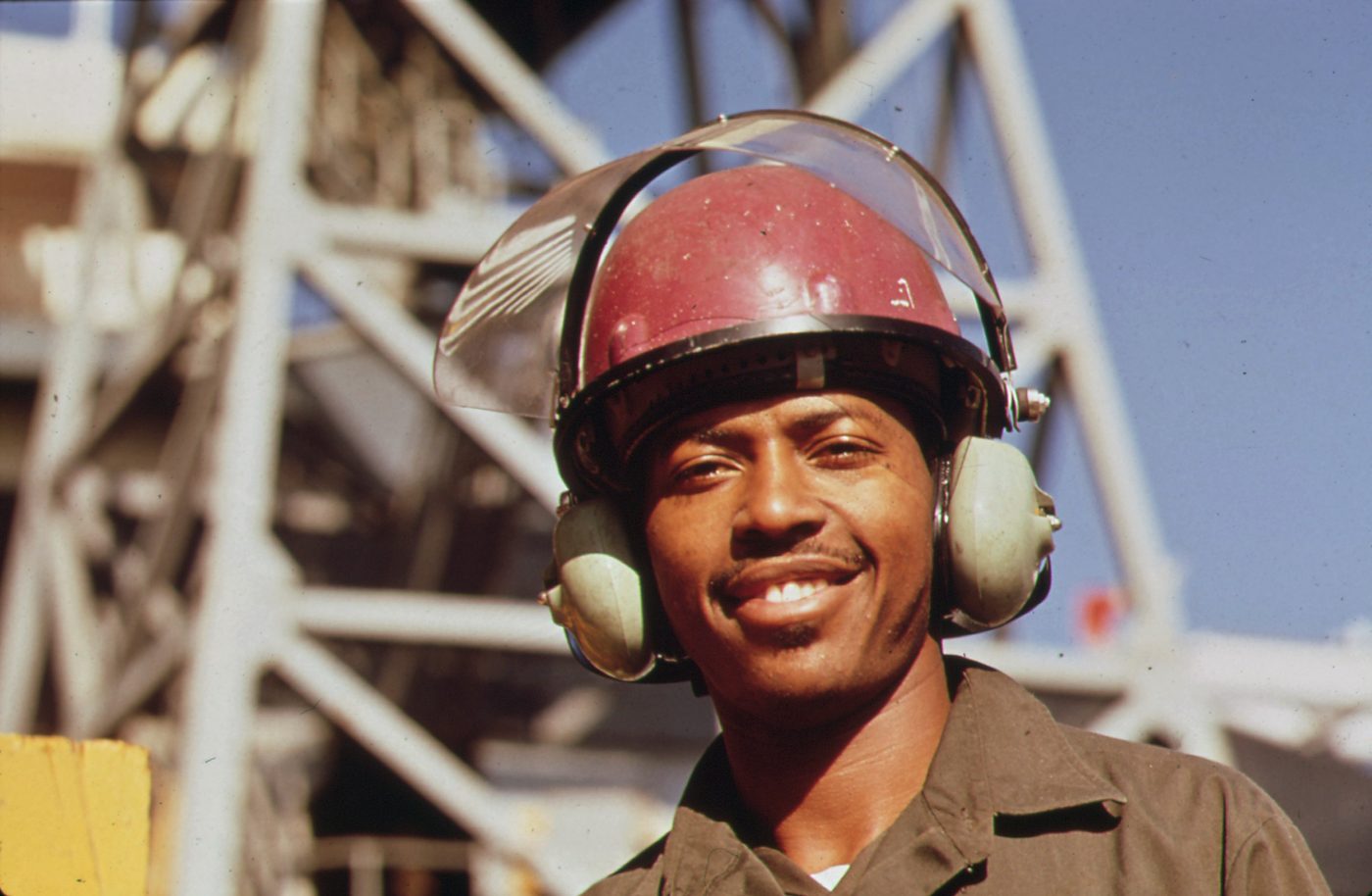
Man wearing a safety helmet (Source: Wikimedia Commons)
A hat gives no protection against a blow, so a helmet is the right choice wherever something can fall from above.
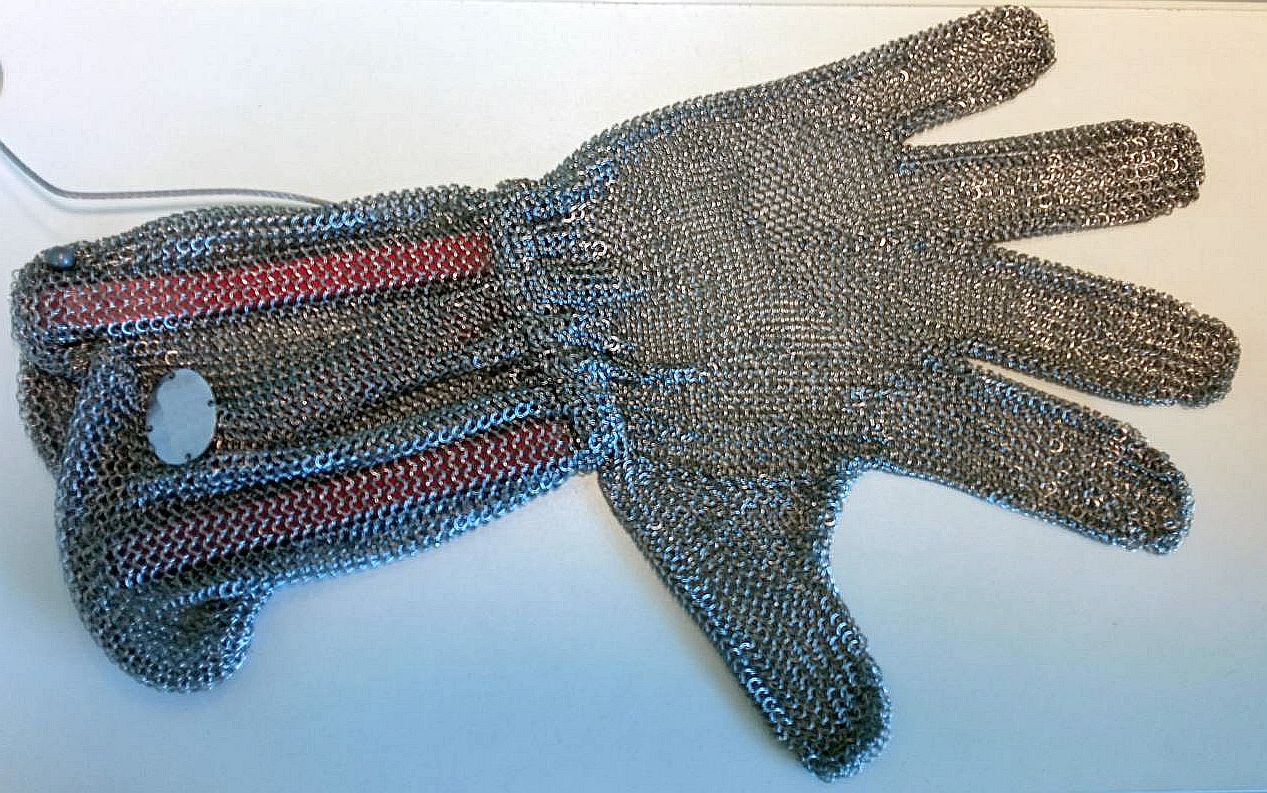
Metal mesh cut-resistant glove (Source: Wikimedia Commons)
Leather gloves are never used with chemicals, because leather absorbs them. A reusable chemical glove is checked for leaks, washed on the outside with soap and water before it is removed and left to dry. Disposable gloves are used once and thrown away.
During spraying, the legs of the trousers or coverall go outside the boot tops so that liquid does not run in. Leather and canvas shoes are not used for spraying, because they absorb chemicals. After use the boots are washed with clean water and stored upside down to drain.
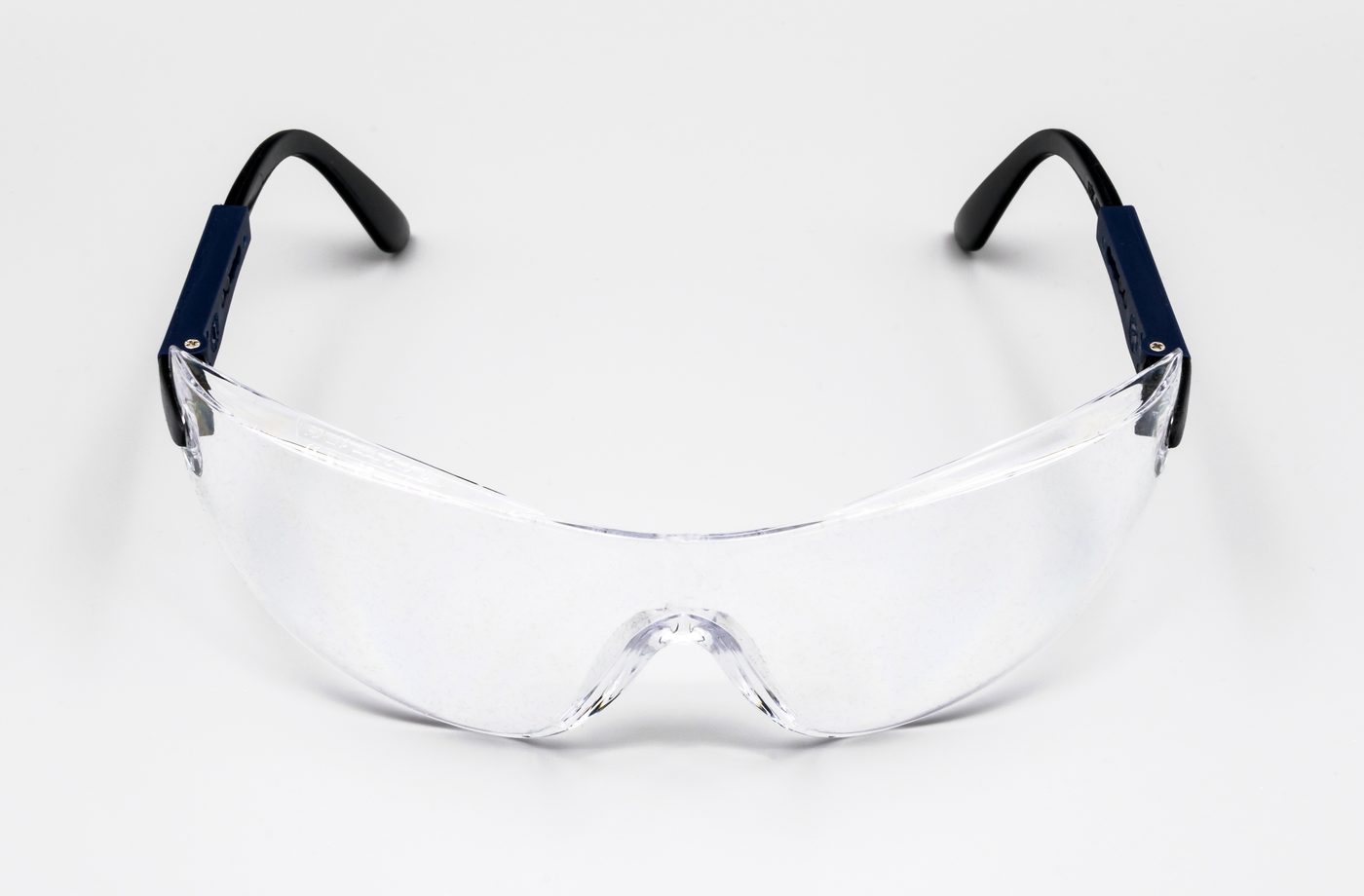
Clear safety goggles for eye protection (Source: Wikimedia Commons)
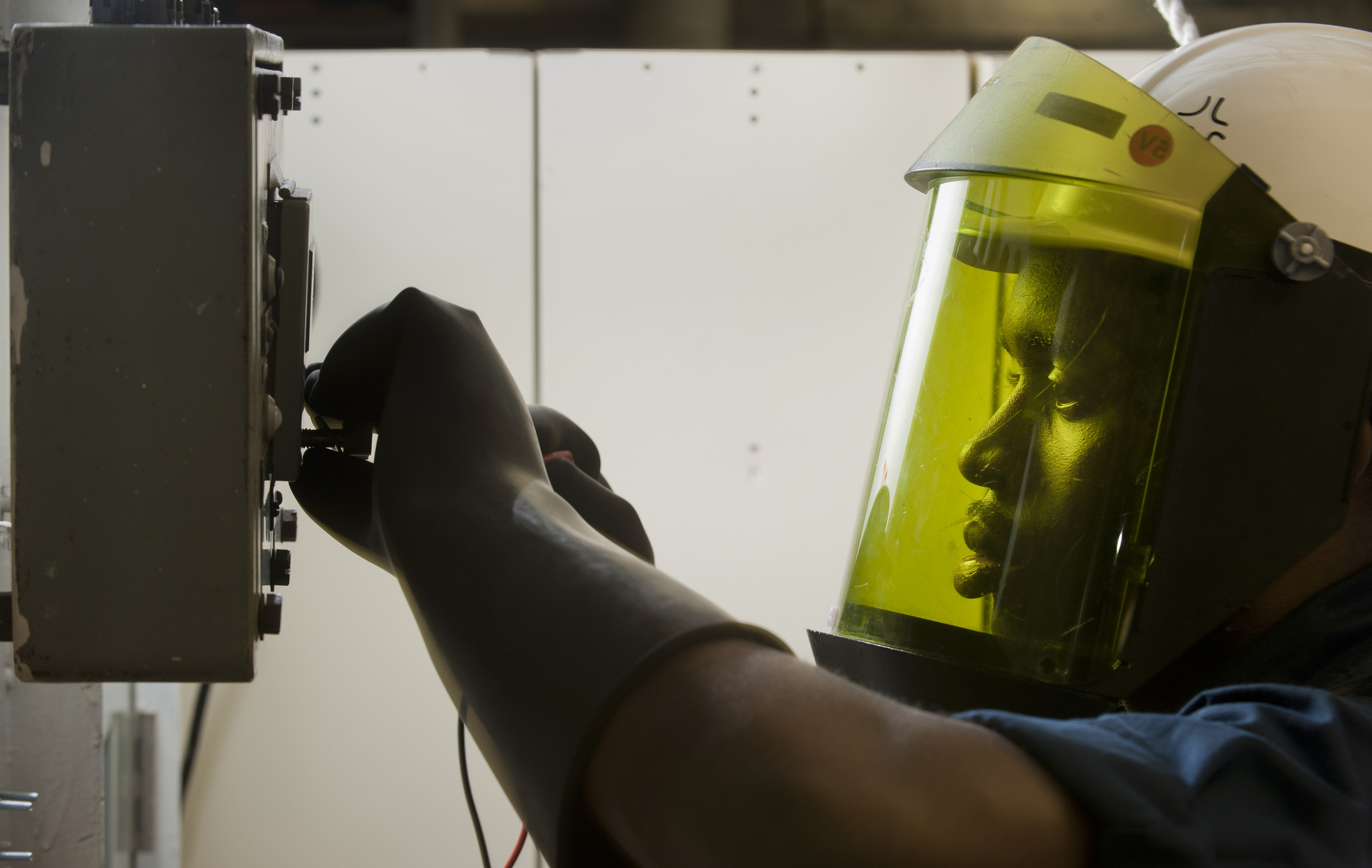
Person wearing a yellow face shield (Source: Wikipedia (Face shield))
Goggles are cleaned with clean water and a soft cloth, and scratched or cracked ones are replaced.
Respiratory protection is added to the five items above when the air holds dust or spray mist, which can build up inside a closed greenhouse after spraying.
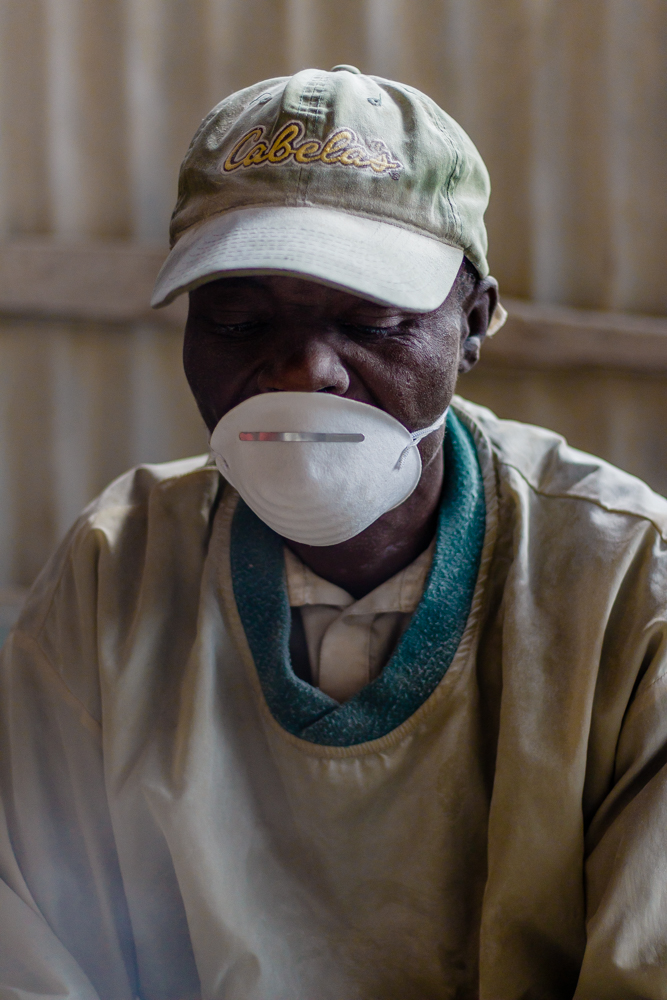
Person wearing a dust mask (Source: Wikimedia Commons)
PPE is used to stop harm before it happens. The set a worker puts on is chosen from the hazards of the task, and the table shows how it changes across common horticultural jobs.
| Task | PPE worn | Hazard it covers |
|---|---|---|
| Spraying a greenhouse crop | Chemical-resistant coverall, hood, nitrile gloves, gumboots, goggles, respirator | Spray on skin and eyes, vapour in a closed space |
| Pruning and harvesting roses | Coverall, thick leather gloves, safety glasses | Thorns, cuts, flying cuttings |
| Working under fruit trees | Helmet, gloves, gumboots, long sleeves | Falling fruit and branches, scratches |
| Preparing beds in a vegetable plot | Hat, gloves, gumboots, dust mask | Sun, dust, sharp tools, wet soil |
| Mixing fertiliser and pesticide | Goggles or face shield, nitrile gloves, apron, respirator | Splashes and dust from concentrates |
Pesticides, herbicides and fertilisers used in horticulture enter the body through the skin, the eyes and the lungs. A worker who sprays a vegetable crop wears gloves, a respirator and goggles to prevent toxic exposure, and a chemical-resistant coverall to prevent absorption through the skin. Each item blocks one route into the body, so leaving one out leaves that route open.
During pruning and land preparation in a plant nursery, helmets and gloves reduce the risk of cuts, bruises and head injuries. Footwear such as steel-toed boots protects against injuries from heavy objects and sharp tools on the farm.
Sun hats and breathable clothing reduce heat exhaustion and sunburn for workers in open-field vegetable production. Masks and respirators protect the lungs against dust during dry-season soil tilling and against mist in closed houses.
The Occupational Safety and Health Act, 2007 expects an employer to provide a safe workplace and expects workers to follow safety instructions and use the protective equipment provided. A horticulture enterprise that issues PPE, records who received it and replaces it when it wears out meets this duty.
Proper PPE use promotes a culture of safety, reducing absenteeism due to work-related illnesses. Availability and use of PPE help worker morale because safety concerns are addressed, so workers can keep their attention on the task. PPE also reduces downtime caused by accidents, contributing to consistent crop production schedules.
Create a free account to open more of this chapter.
Free: practical guides, quick cards, workplace scenarios and more.
Create a free accountThis chapter covered the essential practices involved in producing horticultural crops, beginning with the various types of personal protective equipment and their uses to ensure safety during farm operations. It then explored the tools and equipment necessary for land preparation, distinguishing between those used for land clearing and those for tillage. The discussion proceeded to detailed land preparation practices, including land clearing, primary, secondary, and tertiary cultivation, which collectively prepare the soil for planting. Various planting materials were examined, such as seeds, splits, suckers, corms, slips, setts, and cuttings, highlighting their roles in propagation. The chapter also described different planting methods appropriate for horticultural crops. Routine crop management practices were comprehensively addressed, covering pruning, irrigation, pest and disease control, weeding, staking, propping, de-suckering, fertilizer application, trellising, mulching, gapping, and thinning to maintain healthy crop growth. Finally, the chapter concluded with crop harvesting techniques, including picking, cutting, plucking, and digging, essential for effective yield collection.
Which of the following is NOT typically considered personal protective equipment (PPE) in horticultural crop production? (2 marks)
a) Gloves
b) Safety boots
c) Pruning shears
d) Face mask
Explain the primary function of tillage tools in land preparation for horticultural crops. (3 marks)
At the start of this chapter we promised you would be able to:
Tick each one you can genuinely do.
So, are you there yet?
You're competent when you can confidently do 50% or more of what this chapter promised.
Sign in to record how you're doing.