Bee production is a critical agricultural enterprise in Kenya, contributing significantly to food security, environmental conservation, and income generation for rural communities. Establishing a well-planned apiary is fundamental for successful beekeeping operations, requiring careful consideration of several factors to ensure healthy bee colonies and optimal honey yields. This chapter focuses on the essential steps and considerations for establishing a bee apiary, tailored for Agriculture and Extension professionals advising farmers and community groups.
1.1 Apiary establishment
Apiary establishment involves selecting an appropriate site, preparing the location, and setting up the necessary infrastructure and equipment to support bee colonies. This process ensures that bees have access to adequate forage, water, and protection from adverse conditions, which are critical for colony health and productivity in Kenya's diverse agro-ecological zones.
1.1.1 Site selection
Site selection is the foundational step in apiary establishment, directly influencing the success of the beekeeping venture. The site must meet specific environmental and logistical criteria to promote colony growth and honey production.
Environmental factors influencing site selection
- Availability of nectar and pollen sources: The site should be near abundant flowering plants, such as eucalyptus, acacia, or indigenous shrubs, which provide essential nectar and pollen throughout the year.
- Water source proximity: Bees require clean water for cooling, feeding larvae, and diluting honey. A nearby water source within 500 meters reduces stress and energy expenditure.
- Shelter from wind and extreme weather: Natural windbreaks like trees or hedges protect hives from strong winds and excessive sunlight, reducing colony stress and mortality.
- Altitude and climate suitability: Moderate altitudes with stable temperatures and humidity levels support bee health; extreme heat or cold can impair colony development.
- Absence of pesticide exposure: The site should be away from agricultural fields where harmful agrochemicals are frequently applied, to avoid bee poisoning.
Accessibility and security considerations
- Ease of access for management: The apiary should be reachable by vehicle or on foot for routine inspections, maintenance, and harvesting without difficulty.
- Protection from theft and vandalism: Locating the apiary within a secured area or community-monitored zone helps safeguard equipment and colonies.
- Distance from human settlements: A buffer of at least 100 meters from residential areas minimizes nuisance to people and reduces risk of hive disturbance.
- Legal and land ownership clarity: Confirming land tenure and obtaining necessary permissions prevents conflicts and ensures sustainable apiary management.
- Proximity to markets: Being near local markets or collection centers facilitates timely sale and reduces post-harvest losses.
Soil and topography factors
- Well-drained soil: Avoiding waterlogged or flood-prone areas prevents hive damage and disease proliferation.
- Level or gently sloping terrain: This simplifies hive placement, inspection, and harvesting activities.
- Vegetation cover: Partial shade from trees helps regulate hive temperature while allowing sufficient sunlight for hive drying.
- Distance from competing apiaries: Adequate spacing reduces competition for forage and lowers disease transmission risk.
- Minimal risk of natural hazards: Sites away from flood plains or areas prone to wildfires offer safer conditions for bees.
Socio-economic and cultural aspects
- Community acceptance: Engaging local communities ensures support and reduces conflicts related to beekeeping activities.
- Availability of local labour: Access to skilled or trainable workers supports apiary operations.
- Cultural attitudes toward bees: Understanding and respecting local beliefs about bees aids in smooth project implementation.
- Potential for extension services: Proximity to agricultural extension offices facilitates technical support.
- Opportunities for diversification: The site should allow integration with other farming activities, such as crop pollination or agroforestry.
1.1.2 Importance of site selection
Selecting the right apiary site is crucial for maximizing productivity, ensuring colony health, and achieving economic viability. Poor site choice can lead to colony losses, low honey yields, and increased operational costs.
Enhancing colony health and survival
- Proper site conditions reduce stressors such as extreme weather and pesticide exposure, lowering disease incidence and mortality rates.
- Access to diverse forage sources supports balanced nutrition, enhancing brood rearing and honey production.
- Adequate water availability prevents dehydration and assists in hive thermoregulation.
- Shelter from wind and sun prevents energy loss and overheating, promoting stable colony dynamics.
- Well-drained sites minimize fungal and bacterial infections by preventing moisture accumulation.
Increasing honey yield and quality
- Proximity to abundant flowering plants ensures continuous nectar flow, resulting in higher honey volumes.
- Reduced exposure to contaminants preserves honey purity and market value.
- Optimal microclimate conditions improve nectar secretion rates in plants, indirectly benefiting honey production.
- Minimizing hive disturbances by human activities supports consistent foraging behavior.
- Proper site layout facilitates efficient management, reducing colony stress during inspections.
Economic and operational benefits
- Easy access lowers transportation and labour costs for routine management and harvesting.
- Security reduces risks of theft, vandalism, and colony losses, protecting investments.
- Proximity to markets enables timely sale, improving cash flow and reducing spoilage.
- Integration with other farm enterprises enhances resource use efficiency and income diversification.
- Positive community relations reduce conflicts and enable collective management practices.
Environmental conservation and pollination
- Strategically placed apiaries support pollination of nearby crops, improving agricultural productivity.
- Bees contribute to biodiversity by pollinating indigenous plants, supporting ecosystem balance.
- Sustainable site selection prevents habitat destruction and promotes coexistence with wildlife.
- Apiaries can serve as monitoring points for environmental health and pesticide impacts.
- Conservation-minded apiary placement aligns with Kenya’s environmental policies and commitments.
1.1.3 Apiary construction tools and equipment
Successful apiary establishment depends on having the appropriate tools and equipment to build, manage, and maintain hives effectively. These items must be suited to the local context and available resources.
| Name |
Specification |
Use |
| Hive tool |
Steel, 20 cm length, flat and curved ends |
Opening hives, scraping wax and propolis |
| Bee smoker |
Metal or galvanized steel, bellows attached, 30 cm length |
Calming bees during hive inspection |
| Protective clothing |
Full-body suit, veil, gloves made of cotton or mesh |
Preventing bee stings during handling |
| Frame holder |
Wood or metal, adjustable size |
Holding frames during inspection or extraction |
| Hive stand |
Wood or metal, 30-40 cm height |
Elevating hives to prevent moisture and pests |
| Honey extractor |
Manual or electric, stainless steel, 3-4 frame capacity |
Extracting honey without damaging comb |
- The hive tool is essential for prying apart hive boxes and removing frames coated with propolis, which is sticky and difficult to handle.
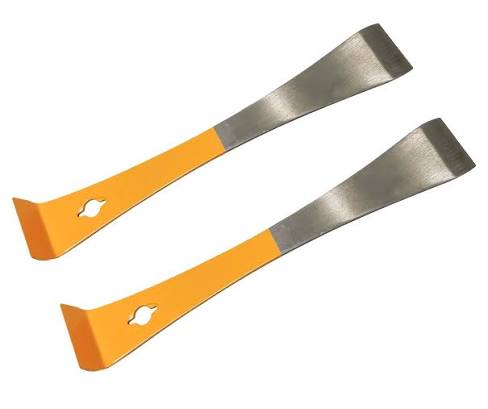
Figure: hive tool.
- The bee smoker produces cool smoke that masks alarm pheromones, reducing bee aggression and facilitating safer hive inspections.
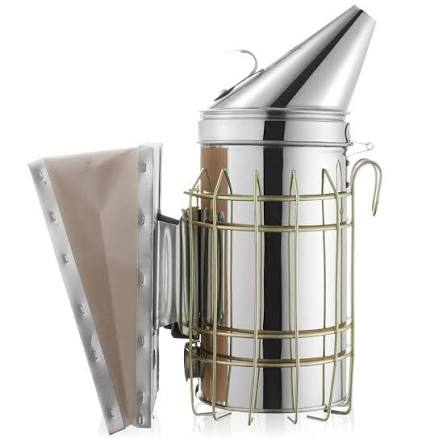
Figure: bee smoker.
- Protective clothing shields beekeepers from stings, increasing confidence and safety during hive management.
- A frame holder provides a stable platform for working with combs, minimizing damage and contamination.
- Hive stands keep hives off the ground, preventing moisture ingress, termite attacks, and facilitating easier access during inspections.
- The honey extractor allows for efficient harvesting of honey while preserving comb structure for reuse, increasing productivity.
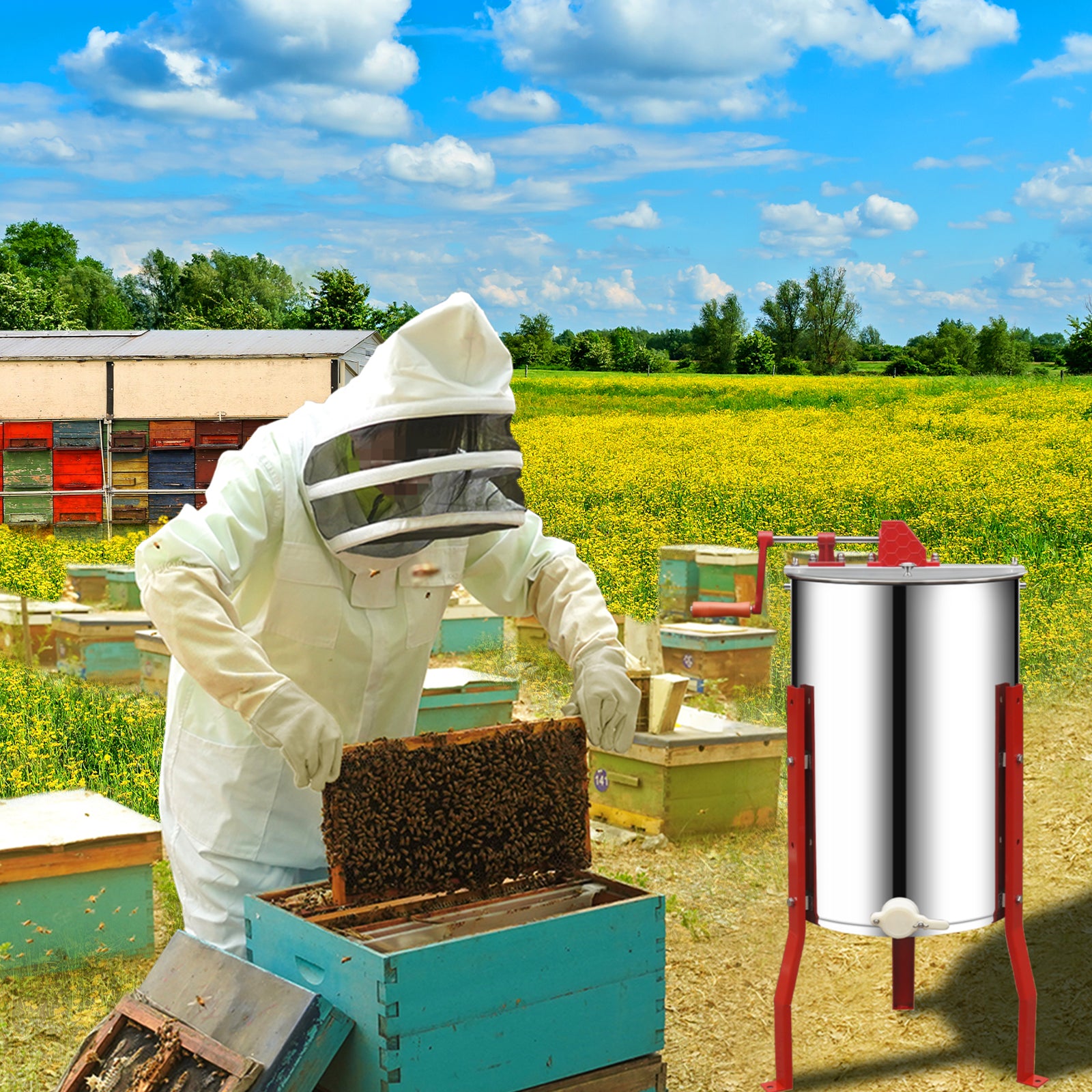
Figure: honey extractor
1.1.4 Uses of apiary site establishment materials, tools and equipment
Assignments related to apiary site establishment provide practical experience and reinforce theoretical knowledge for extension officers and farmers. These tasks are designed to develop skills necessary for successful beekeeping.
Site assessment and mapping
- Measuring and documenting site characteristics such as vegetation, water sources, and topography using GPS and field notes.
- Identifying potential hazards and environmental factors impacting apiary suitability.
- Creating maps that guide hive placement and management planning.
Community engagement and stakeholder analysis
- Consulting local residents and leaders to understand perceptions and gain support for apiary projects.
- Assessing land tenure and legal requirements for site use.
- Identifying potential collaborators for joint apiary ventures or market access.
Construction and installation practice
- Building hive stands, installing hives, and setting up protective barriers or windbreaks.
- Practicing the use of tools and equipment for hive assembly and maintenance.
- Simulating routine management activities such as frame inspection and honey harvesting.
Record keeping and monitoring
- Establishing logs for colony health, forage conditions, and production data.
- Tracking environmental changes and their impact on apiary performance.
- Using data to inform adaptive management and extension advice.
1.1.5 Maintenance of apiary establishment materials, tools and equipment
Maintaining an apiary involves regular activities to ensure hive integrity, colony health, and environmental suitability. Proper maintenance extends the lifespan of equipment and optimizes production.
Hive inspection and cleaning
- Conducting periodic inspections to detect signs of pests, diseases, or structural damage.
- Removing old combs and debris that harbor pathogens or parasites.
- Repairing or replacing damaged hive components promptly.
Pest and disease management
- Monitoring for common pests such as Varroa mites, wax moths, and ants.
- Applying integrated pest management techniques, including mechanical controls and approved treatments.
- Maintaining hygiene to reduce disease transmission within and between colonies.
Environmental management
- Ensuring surrounding vegetation remains conducive to bee forage by planting nectar-rich species.
- Managing water sources to prevent contamination and ensure availability.
- Maintaining windbreaks and shade trees to protect hives.
Equipment upkeep and storage
- Cleaning tools and protective gear after use to prevent contamination.
- Storing equipment in dry, secure locations to avoid rust and damage.
- Regularly servicing honey extractors and smokers to maintain functionality.
Record updating and analysis
- Keeping detailed records of maintenance activities, hive performance, and environmental conditions.
- Using records to identify trends, anticipate challenges, and plan interventions.
- Sharing findings with stakeholders to improve collective apiary management.
Practice Questions
-
Explain five critical environmental factors to consider when selecting a site for an apiary and how each affects bee colony health. (10 marks)
-
Describe the importance of proximity to water sources in apiary site selection and its impact on honey production. (6 marks)
-
List and explain six essential tools and equipment used in apiary construction and their specific functions. (12 marks)
-
Outline six key maintenance practices necessary to ensure the longevity and productivity of an apiary. (12 marks)
-
Discuss how community engagement can influence the success of apiary establishment projects in rural Kenya. (10 marks)
The rest of this chapter
🔒Create a free account to open more of this chapter.
Free: practical guides, quick cards, workplace scenarios and more.
Create a free account 🔒1.2 Apiary Site Preparation
Selecting and preparing a suitable apiary site is a fundamental step in establishing a productive bee production enterprise in Kenya. The location directly influences colony health, honey yield, and ease of management. Extension professionals working with farm…
🔒1.3 Bee hives construction
Constructing appropriate bee hives is a critical component of establishing a successful apiary. The design, materials, and construction quality directly affect colony health, honey production, and ease of management. In Kenya, extension professionals advise fa…
🔒1.4 Installation of Bee Hives into Apiary
Establishing a successful apiary in Kenya requires careful installation of bee hives to ensure the health and productivity of the colonies. Proper hive placement influences bee foraging efficiency, colony strength, and protection from environmental hazards and…
🔒1.5 Fencing Apiary
Protecting the apiary through effective fencing is essential to safeguard bee colonies from predators, vandalism, and accidental disturbance. In Kenya, apiaries are often located near farms, schools, or public spaces where human and animal traffic can pose ris…
🔒1.6 Stocking of Bee Hives
Stocking bee hives is a critical stage in establishing a productive apiary. For agricultural extension professionals in Kenya, understanding how to properly introduce bee colonies into hives ensures successful colony establishment, honey production, and pollin…
🔒1.7 Carry Out Construction of Bee Hives
Constructing bee hives properly is foundational for effective beekeeping. For agriculture and extension professionals advising farmers, understanding hive design, material selection, and construction techniques is essential to promote durable, bee-friendly str…
Chapter Summary
Establishing a bee apiary begins with careful site selection, which involves choosing a location that supports bee health and productivity. The importance of selecting the right site is emphasized by factors such as availability of forage, water sources, and protection from harsh weather or predators. Constructing the apiary requires specific tools and equipment, each serving a distinct purpose in the setup process, while the site must be maintained to ensure ongoing suitability for beekeeping activities. Preparing the apiary site involves clearing and organizing the area to accommodate the bee hives effectively. Different types of bee hives are constructed using materials like wood and timber, with tools such as claw hammers, nails, saws, and wire mesh playing key roles in the building process. Installing the bee hives in the apiary must be done carefully to promote colony establishment and growth, followed by fencing the apiary to protect the bees from external threats. Finally, stocking the hives with bee colonies completes the setup, enabling the beekeeper to begin production and management activities.
Self-Assessment
🔒 PDFDownload this self-assessment, with answers
A. Written Assessment
- What are the five key factors to consider when selecting a site for an apiary? (5 marks)
- Explain why site selection is critical for successful bee production. (3 marks)
🔒20 more in this section.
Chapter Examination Questions
🔒 PDFDownload these examination questions, with worked answers
SECTION A (40 Marks) - Answer ALL Questions
- Explain five factors to consider when selecting a site for establishing an apiary in a Kenyan agricultural setting. (4 marks)
- Describe four reasons why proper site selection is important in apiary establishment. (4 marks)
🔒18 more in this section.
Chapter Practical Activities
Practical 1: Select and prepare an apiary site measuring 10m by 10m
Agriculture And Extension · Level 6
Bee Production
PRACTICAL ASSESSMENT
TIME: 4 HOURS
⬇ PDFCandidate Instructions (Candidate Tool)
Type: Individual
INSTRUCTIONS TO CANDIDATE:
1. You are required to perform the following task:
i. Select and prepare a 10m by 10m apiary site ensuring proper clearing, marking, and leveling for hive placement.
2. You have been provided with the following resources for the practical task:
| Tools & Equipment | Materials |
|---|
| Measuring tape | Personal Protective Equipment (Dustcoat/Overall) |
| Sisal twine | Gumboots |
| Pegs | Gloves |
| Hoe | Face mask |
| Panga (machete) | |
| Rake | |
| Wheelbarrow | |
| Water container | |
⬇ PDFResources Required (Cutting List)
| S/N | Item | Quantity |
|---|
| 1 | Measuring tape | 1 pc per 2 Candidates |
| 2 | Sisal twine | 20 m per Candidate |
| 3 | Pegs | 10 pcs per Candidate |
| 4 | Hoe | 1 pc per Candidate |
| 5 | Panga (machete) | 1 pc per Candidate |
| 6 | Rake | 1 pc per Candidate |
| 7 | Wheelbarrow | 1 pc per 5 Candidates |
| 8 | Water container (20 litres) | 1 pc per 5 Candidates |
| 9 | Personal Protective Equipment (Dustcoat/Overall) | 1 pc per Candidate |
| 10 | Gumboots | 1 pair per Candidate |
| 11 | Gloves | 1 pair per Candidate |
| 12 | Face mask | 1 pc per Candidate |
⬇ PDFAssessor Guide
| Items to be Evaluated | Marks Available | Marks Obtained | Comments |
|---|
| TASK 1: SITE SELECTION AND PREPARATION |
Worn Personal Protective Equipment: Dustcoat/Overall, Gumboots, Gloves, Face mask
(Award 1 mark each or zero) | 4 | | |
Inspected potential apiary sites considering sunlight exposure, water availability, wind protection, and accessibility
(Award 1 mark each for correct consideration or zero) | 3 | | |
Measured and marked a 10m by 10m square site using measuring tape, pegs, and sisal twine
(Award 1 mark for each correct step: measuring length, width, pegging, tying twine, squareness) | 5 | | |
Cleared the site by cutting vegetation and removing debris using panga and hoe
(Award 2 marks each for clearing vegetation and removing debris or zero) | 4 | | |
Leveled the site using a rake to ensure flat surface suitable for hive placement
(Award 3 marks for proper leveling or zero) | 3 | | |
Disposed cleared vegetation and debris appropriately using wheelbarrow and designated area
(Award 2 marks for proper disposal or zero) | 2 | | |
| Sub-Total | 21 | | |
| PRODUCT CHECKLIST |
Apiary site measured accurately at 10m by 10m with square corners and straight sides
(Award 5 marks for accurate measurements and squareness or zero) | 5 | | |
Site cleared of all vegetation and debris, leveled flat and ready for hive placement
(Award 4 marks for thorough clearing and leveling or zero) | 4 | | |
Site marked clearly with pegs and tied sisal twine to define boundaries
(Award 3 marks for proper marking or zero) | 3 | | |
| Sub-Total | 12 | | |
| GRAND TOTAL | 33 | | |
ASSESSMENT OUTCOME: ☐ Competent ☐ Not Yet Competent (competent if at least 50%)
Practical 2: Construct Langstroth bee hive 450mm x 500mm x 300mm
Agriculture And Extension · Level 6
Bee Production
PRACTICAL ASSESSMENT
TIME: 4 HOURS
⬇ PDFCandidate Instructions (Candidate Tool)
Type: Individual
INSTRUCTIONS TO CANDIDATE:
1. You are required to perform the following task:
i. Construct a Langstroth bee hive box measuring 450mm length x 500mm width x 300mm height.
2. You have been provided with the following resources for the practical task:
| Tools & Equipment | Materials |
|---|
| Claw hammer | Untreated Pine timber boards |
| Hand saw | Nails 2 inch |
| Measuring tape | Bee hive frames (Langstroth type) |
| Try square | |
| Pencil | |
⬇ PDFResources Required (Cutting List)
| S/N | Item | Quantity |
|---|
| 1 | Untreated Pine timber boards (450mm x 500mm x 20mm) | 5 Pcs per Candidate |
| 2 | Bee hive frames (Langstroth type) | 10 Pcs per Candidate |
| 3 | Claw hammer | 1 Pc per Candidate |
| 4 | Hand saw | 1 Pc per Candidate |
| 5 | Nails 2 inch | 100 Pcs per Candidate |
| 6 | Measuring tape 1.5m | 1 Pc per Candidate |
| 7 | Try square | 1 Pc per Candidate |
| 8 | Pencil | 1 Pc per Candidate |
| 9 | Personal Protective Equipment (Dust coat/Overall, Gumboots) | 1 Set per Candidate |
⬇ PDFAssessor Guide
| Items to be Evaluated | Marks Available | Marks Obtained | Comments |
|---|
| TASK 1: CONSTRUCT LANGSTROTH BEE HIVE |
Wore Personal Protective Equipment (Dust coat/Overall, Gumboots)
(Award 1 mark each or zero) | 2 | | |
Measured and marked timber accurately using measuring tape and pencil
(Award 1 mark each for length, width, and height marks or zero) | 3 | | |
Used try square to mark right angles on timber pieces
(Award 2 marks for correct use or zero) | 2 | | |
Saw timber pieces to correct dimensions cleanly and safely
(Award 1 mark each for accurate cuts of all five boards or zero) | 5 | | |
Assembled timber pieces into hive box shape using nails and claw hammer
(Award 1 mark each for assembling base, sides, front, back, and top frame or zero) | 5 | | |
Fixed Langstroth bee hive frames inside the constructed box properly
(Award 3 marks for correct placement or zero) | 3 | | |
Cleaned working area and stored tools and unused materials properly
(Award 2 marks for cleanliness and proper storage or zero) | 2 | | |
| Sub-Total | 22 | | |
| PRODUCT CHECKLIST |
Hive box dimensions conform to 450mm length x 500mm width x 300mm height
(Award 5 marks for correct dimensions or zero) | 5 | | |
Hive box is square and plumb with right angles at corners
(Award 4 marks for squareness and plumb or zero) | 4 | | |
Joints are uniform and securely nailed with no loose parts
(Award 4 marks for uniform and secure joints or zero) | 4 | | |
Langstroth frames fixed neatly and securely inside the hive box
(Award 3 marks for proper frame installation or zero) | 3 | | |
| Sub-Total | 16 | | |
| GRAND TOTAL | 38 | | |
ASSESSMENT OUTCOME: ☐ Competent ☐ Not Yet Competent (competent if at least 50%)
🔒Construct Kenya Top Bar Hive 90cm x 45cm x 50cmPractical 3
🔒Construct a Traditional Log HivePractical 4
🔒Construct a Ware Hive 450mm x 450mm x 450mmPractical 5
🔒Install constructed bee hives into a prepared apiary sitePractical 6
🔒Fence a bee apiary site measuring 10m by 10mPractical 7
🔒Stock Bee Hives with Bee Colonies for Apiary EstablishmentPractical 8
🔒Maintain Apiary Establishment by Performing Routine Apiary MaintenancePractical 9
🔒Cut and Install Wire Mesh for Apiary ConstructionPractical 10
🔒Identify and demonstrate use of apiary construction toolsPractical 11
🔒Prepare timber components for a Langstroth bee hive 450mm x 450mm x 300mmPractical 12
🔒Assemble a Langstroth bee hive using nails and hammerPractical 13
🔒Set Out Apiary Layout According to Recommended Spacing and OrientationPractical 14
🔒Construct a Kenyan Top Bar Bee Hive 1000mm x 450mm x 350mmPractical 15
