Agriculture And Extension  ·  Level 6
Farm Machinery Operations
Chapter 1: Operate hand tools and equipment
📚 6 Topics
⚑ What you will be able to do

By the end of this chapter, you will be able to:

  • correctly assemble the hand tools and equipment needed for your farm tasks
  • use hand tools and equipment safely by following the right procedures
  • service hand tools and equipment accurately to keep them in good working order
  • store hand tools and equipment properly to maintain their condition and safety

Mastering these skills helps you work efficiently and safely on the farm, keeping your tools ready and your work smooth.

Operating hand tools and equipment is a fundamental skill for Agriculture and Extension professionals in Kenya. This chapter focuses on the safe and effective use of such tools, emphasizing the critical role of personal protective equipment (PPE) in preventing injuries and promoting health. Given the physical nature of farm work and the use of various mechanical implements, understanding PPE requirements, their importance, and proper care is essential for productivity and safety on farms and in extension services.

1.1 Personal protective equipment

Personal protective equipment (PPE) serves as the first line of defense against hazards encountered during farm machinery operations. In Kenyan agricultural settings, where workers may be exposed to sharp tools, chemicals, dust, and loud machinery, PPE minimizes risks and ensures compliance with occupational safety standards. This section explores the specific requirements for PPE, why it is indispensable, and how to maintain it for long-term use.

1.1.1 PPE requirements

PPE requirements specify the minimum protective gear that must be worn to safeguard workers from hazards associated with hand tools and machinery. These requirements are guided by Kenya’s Occupational Safety and Health Act and best practices in agricultural operations.
Types of PPE needed for farm machinery operations

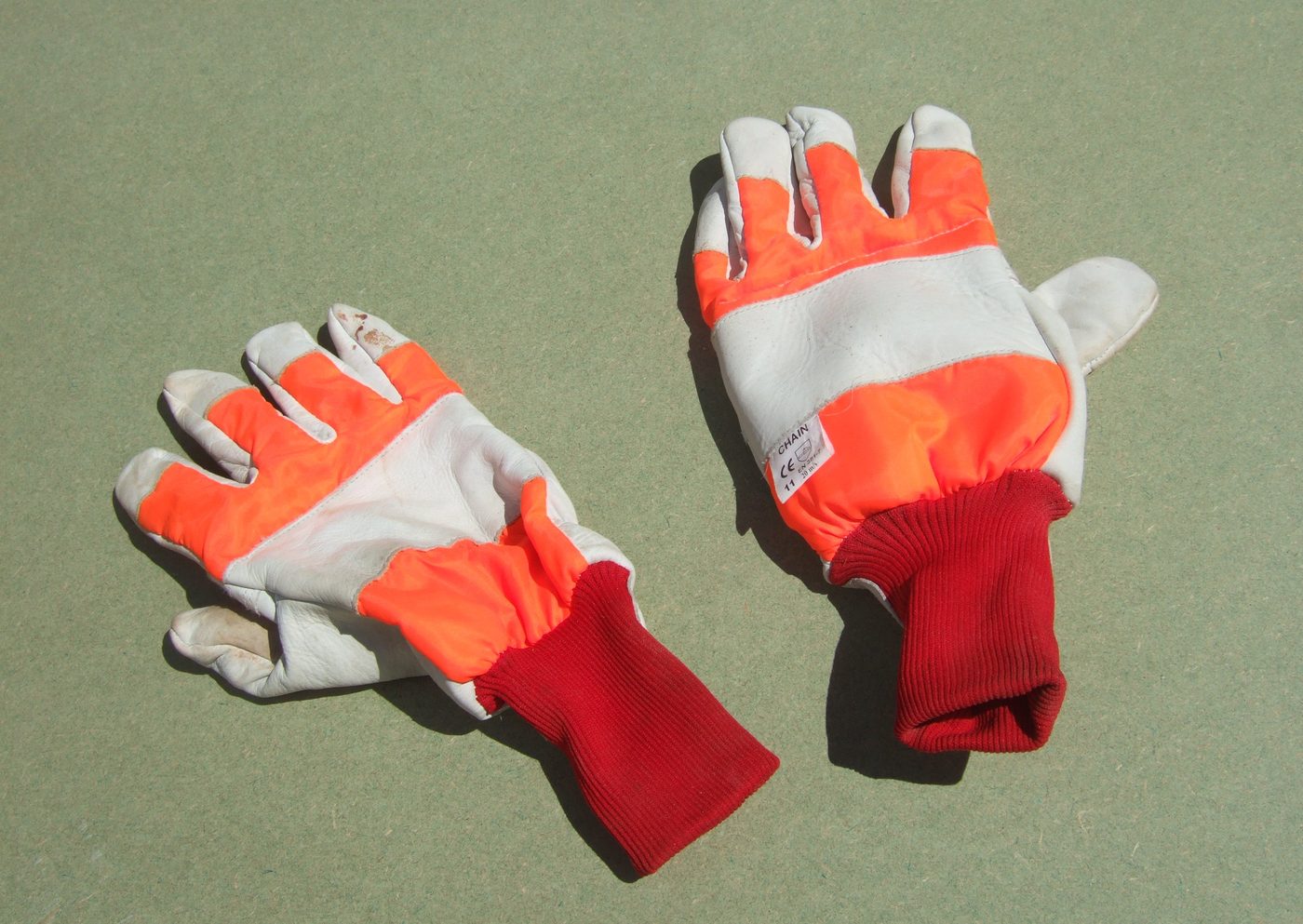
  • Protective gloves: Essential to prevent cuts, abrasions, and chemical exposure while handling tools like machetes or sprayers.

A pair of protective gloves
A pair of protective gloves (Source: Wikimedia Commons)

  • Safety boots: Provide foot protection against heavy falling objects, sharp implements, and uneven terrain common in farms.

Four types of safety footwear commonly used in construction and engine
Four types of safety footwear commonly used in construction and engine (Source: PLUMB 5 LEARNING GUIDE-1 (1))

  • Eye protection: Goggles or face shields guard against dust, flying debris, and chemical splashes during spraying or cutting activities.
  • Hearing protection: Earplugs or earmuffs reduce exposure to loud noise from powered equipment such as brush cutters or small engines.

  • Respiratory masks: Used when working with pesticides or in dusty environments to prevent inhalation of harmful particles.

Various types of respiratory masks on faces
Various types of respiratory masks on faces (Source: Wikimedia Commons)

Legal and institutional PPE standards

  • The Occupational Safety and Health Act (OSHA) of Kenya mandates employers to provide appropriate PPE and ensure workers use it correctly.
  • County agricultural departments often enforce PPE guidelines during farm inspections to reduce workplace accidents.
  • Extension officers must model PPE adherence to influence farmers and farm workers positively.

PPE selection criteria

  • PPE should be chosen based on the specific hazards present, such as chemical exposure or mechanical risks.
  • Comfort and fit are critical to ensure workers consistently wear PPE without hindrance to movement.
  • Durability and ease of cleaning affect the longevity and hygiene of PPE in outdoor agricultural settings.

Training and awareness for PPE use

  • Workers must receive training on when and how to use each type of PPE effectively.
  • Demonstrations on correct wearing and removal prevent contamination, especially with chemical-resistant gloves and masks.
  • Regular refresher sessions help maintain high compliance and awareness of PPE importance.

Record-keeping and PPE audits

  • Farms and extension offices should keep records of PPE issuance and maintenance.
  • Periodic audits ensure that PPE remains in good condition and that workers adhere to safety protocols.

1.1.2 Importance of PPE

Understanding the importance of PPE is crucial for Agriculture and Extension professionals tasked with promoting safe farming practices. PPE reduces the severity and frequency of injuries, enabling workers to maintain productivity and reducing health costs.

Prevention of physical injuries

  • PPE such as gloves and boots protect workers from cuts, punctures, and crushing injuries common when using sharp or heavy hand tools.
  • Eye protection prevents damage from flying particles, which can lead to partial or total vision loss.

Protection against chemical hazards

  • Respirators and chemical-resistant gloves are vital during pesticide application to avoid skin absorption and respiratory illnesses.
  • Proper PPE use reduces cases of poisoning, which can have fatal consequences on farms.

Reducing occupational diseases

  • Dust masks help prevent respiratory conditions like farmer’s lung and chronic bronchitis caused by exposure to dust and organic materials.
  • Hearing protection prevents noise-induced hearing loss, a common issue with prolonged use of powered farm equipment.

Enhancing worker confidence and productivity

  • Workers feel safer and more confident when adequately protected, leading to better focus and efficiency.
  • Reduced downtime due to injuries or illness translates to increased farm output and income.

Compliance with safety regulations

  • Use of PPE ensures farms meet legal safety standards, avoiding fines and shutdowns.
  • Extension workers advocating PPE use help build a culture of safety in farming communities.

1.1.3 Uses and care

Proper use and maintenance of PPE ensure that protective gear remains effective over time and provides maximum safety benefits. Neglecting PPE care can lead to equipment failure and increased risk of injury.

Correct usage practices

  • PPE should be worn at all times when hazards are present, never removed prematurely during tasks.
  • Gloves and boots must fit well to avoid accidents caused by loose or tight equipment.
  • Eye and respiratory protection should be adjusted to seal properly against the face to prevent exposure.

Cleaning and storage

  • Regular cleaning of PPE removes contaminants such as soil, chemicals, and sweat that degrade material integrity.
  • Gloves and masks should be washed or wiped according to manufacturer instructions after each use.
  • PPE must be stored in dry, clean areas away from direct sunlight to prevent material breakdown.

Inspection and replacement

  • Before each use, PPE should be inspected for tears, cracks, or other damage that compromises protection.
  • Damaged or worn-out PPE must be replaced immediately to avoid exposing workers to hazards.
  • Extension officers should encourage farmers to budget for timely PPE replacement.

Sharing and personal assignment

  • PPE should be assigned to individual users to prevent cross-contamination, especially with respiratory masks.
  • Sharing of gloves or masks is discouraged unless they are properly disinfected between uses.

Training on PPE care

  • Workers must be trained on how to clean, inspect, and store PPE effectively.
  • Extension services can organize demonstrations to reinforce proper PPE maintenance techniques.

Practice Questions

  1. Explain the key types of personal protective equipment required for operating hand tools in Kenyan farms and the rationale for each type. (10 marks)
  2. Discuss five reasons why the use of PPE is critical in agricultural operations involving machinery. (10 marks)
  3. Describe the best practices for the care and maintenance of PPE to ensure its effectiveness on farms. (10 marks)
The rest of this chapter
🔒

Create a free account to open more of this chapter.

Free: practical guides, quick cards, workplace scenarios and more.

Create a free account
🔒1.2 Hand tools and equipment

Hand tools and equipment are the basic working aids of a farm. They are used to prepare land, build and repair structures, and keep tractors and implements in working order. A farm machinery operator who can name a tool correctly, recognise its parts and know…

🔒1.3 Uses and operation of hand tools and equipment

In the Kenyan agricultural sector, hand tools and equipment form the backbone of daily farm activities. Their proper use and operation directly affect productivity, safety, and resource management on farms ranging from smallholder plots to large-scale commerci…

🔒1.4 Maintenance of hand tools and equipment

Maintenance of hand tools and equipment is essential in Kenya’s agricultural sector to ensure longevity, reliability, and safe operation. With many farmers operating on tight budgets, proper maintenance reduces the frequency of costly replacements and repairs.…

🔒1.5 Operate farm hand tools and equipment as per the checklist

Operating farm hand tools and equipment correctly protects the operator, speeds up the job and keeps the tools in working order. A checklist turns this into a routine: the operator confirms the task, selects the right tool, inspects it, uses it with the correc…

🔒1.6 Maintain farm hand tools and equipment in 1.5

Maintaining farm hand tools and equipment is crucial for agricultural productivity and safety in Kenya. Proper maintenance extends the lifespan of tools, reduces repair costs, and ensures efficient operation. For extension officers advising farmers, understand…

Chapter Summary

This chapter covered the essential aspects of operating hand tools and equipment in farm machinery operations. It began with the requirements, importance, and proper care of personal protective equipment to ensure safety during tool use. Key terms were defined before exploring various types of hand tools and equipment, including garden, workshop, carpentry, and masonry tools. The chapter then detailed the correct uses and operational procedures for these tools, emphasizing efficiency and safety. Maintenance was addressed through discussions on servicing, repair, and proper storage to prolong tool lifespan and reliability. Finally, students learned to operate and maintain farm hand tools and equipment according to established checklists, ensuring consistent performance and safety standards in agricultural settings.

Self-Assessment

🔒 PDFDownload this self-assessment, with answers

A. Written Assessment

  1. What are the essential components of personal protective equipment (PPE) used in farm machinery operations? (3 marks)
  2. Explain two reasons why PPE is important when operating hand tools on a farm. (4 marks)
🔒20 more in this section.

Chapter Examination Questions

🔒 PDFDownload these examination questions, with worked answers

SECTION A (40 Marks) - Answer ALL Questions

  1. Explain the importance of using personal protective equipment (PPE) when operating hand tools in a horticultural farm setting in Kenya. (4 marks)
  2. Describe the care and maintenance procedures for garden hand tools commonly used in small-scale Kenyan farms. (4 marks)
🔒18 more in this section.

Chapter Practical Activities

Practical 1: Identification and Selection of Hand Tools for Farm Operations

Agriculture And Extension · Level 6
Farm Machinery Operations
PRACTICAL ASSESSMENT
TIME: 3 HOURS
⬇ PDFCandidate Instructions (Candidate Tool)

Type: Individual

INSTRUCTIONS TO CANDIDATE:
1.  You are required to perform the following task:
i.  Identify and select the correct hand tools to prepare a 2m x 2m seedbed, stating their uses and demonstrating their proper care.
2.  You have been provided with the following resources for the practical task:
Tools & EquipmentMaterials
Hand Hoe (Jembe)Dustcoat/Overall
SpadeGumboots/Safety boots
RakeGloves
Garden ForkEngine Oil (for tool care)
Measuring Tape (5m)
Watering Can
Wheelbarrow
Machete (Panga)
Sharpening File
Clean Cloth
⬇ PDFResources Required (Cutting List)
S/NItemQuantity
1Dustcoat/Overall1 Pc per Candidate
2Gumboots/Safety boots1 Pair per Candidate
3Gloves1 Pair per Candidate
4Hand Hoe (Jembe)1 Pc per Candidate
5Spade1 Pc per Candidate
6Rake1 Pc per Candidate
7Garden Fork1 Pc per 2 Candidates
8Measuring Tape (5m)1 Pc per Candidate
9Watering Can1 Pc per Candidate
10Wheelbarrow1 Pc per 2 Candidates
11Machete (Panga)1 Pc per Candidate
12Sharpening File1 Pc per 2 Candidates
13Clean Cloth1 Pc per Candidate
14Engine Oil (for tool care)50 ml per Candidate
⬇ PDFAssessor Guide
Items to be EvaluatedMarks AvailableMarks ObtainedComments
TASK 1: Preparation and PPE
Wore appropriate PPEs (Dustcoat/Overall, Gloves, Gumboots/Safety boots)
(Award 1 mark for each PPE worn correctly or zero x 3 = 3 Marks)
3
Collected and assembled all required hand tools and materials at the work area
(Award 2 marks for assembling all correct items or zero)
2
Sub-Total5
TASK 2: Identification and Selection of Hand Tools
Correctly identified each hand tool (Hoe, Spade, Rake, Garden Fork, Measuring Tape, Watering Can, Wheelbarrow, Machete, Sharpening File, Clean Cloth)
(Award 0.5 mark for each tool correctly identified x 10 = 5 Marks)
5
Selected the appropriate hand tools required for preparing a 2m x 2m seedbed
(Award 1 mark for each correct tool selected: Hoe, Spade, Rake = 3 Marks)
3
Sub-Total8
TASK 3: Stating Uses and Demonstrating Tool Care
Correctly stated the use of each selected tool for seedbed preparation
(Award 1 mark for each tool use stated: Hoe, Spade, Rake = 3 Marks)
3
Demonstrated correct cleaning of tools after use using clean cloth and water
(Award 2 marks for proper cleaning or zero)
2
Applied engine oil to metal parts of tools to prevent rust
(Award 2 marks for correct oiling or zero)
2
Stored tools safely and appropriately after use
(Award 2 marks for correct storage or zero)
2
Sub-Total9
PRODUCT CHECKLIST
All required hand tools for preparing a 2m x 2m seedbed correctly identified and selected (Hoe, Spade, Rake)
(Award 1 mark for each correctly identified and selected tool x 3 = 3 Marks)
3
Tools cleaned, oiled, and stored in safe condition after use
(Award 3 marks if all tools are clean, oiled, and stored properly or zero)
3
Candidate accurately stated the function of each selected tool
(Award 1 mark for each function stated correctly x 2 = 2 Marks)
2
Sub-Total8
GRAND TOTAL30
ASSESSMENT OUTCOME:   ☐ Competent    ☐ Not Yet Competent (competent if at least 50%)

Practical 2: Repair of a Metal Farm Gate Using Workshop Hand Tools

Agriculture And Extension · Level 6
Farm Machinery Operations
PRACTICAL ASSESSMENT
TIME: 4 HOURS
⬇ PDFCandidate Instructions (Candidate Tool)

Type: Individual

INSTRUCTIONS TO CANDIDATE:
1.  You are required to perform the following task:
i.  Repair the metal farm gate (1200mm x 900mm) by replacing the broken hinge (100mm x 35mm) and securing the loose rivet (8mm).
2.  You have been provided with the following resources for the practical task:
Tools & EquipmentMaterials
Claw HammerSteel Rivet 8mm
Adjustable SpannerReplacement Hinge (100mm x 35mm)
Bench ViceMetal Farm Gate (1200mm x 900mm)
Metal File
Hacksaw
Rivet Gun
Drill with 8mm Bit
Measuring Tape
⬇ PDFResources Required (Cutting List)
S/NItemQuantity
1Claw Hammer1 Pc per Candidate
2Adjustable Spanner1 Pc per Candidate
3Bench Vice1 Pc per Candidate
4Metal File1 Pc per Candidate
5Hacksaw1 Pc per Candidate
6Rivet Gun1 Pc per Candidate
7Drill with 8mm Bit1 Pc per Candidate
8Measuring Tape1 Pc per Candidate
9Steel Rivet 8mm2 Pcs per Candidate
10Replacement Hinge (100mm x 35mm)1 Pc per Candidate
11Metal Farm Gate (1200mm x 900mm)1 Pc per Candidate
12Safety Gloves1 Pair per Candidate
13Safety Boots1 Pair per Candidate
14Dustcoat/Overall1 Pc per Candidate
15Eye Goggles1 Pc per Candidate
⬇ PDFAssessor Guide
Items to be EvaluatedMarks AvailableMarks ObtainedComments
TASK 1: Workshop Preparation and PPE
Wore correct PPEs (Safety Gloves, Safety Boots, Dustcoat/Overall, Eye Goggles)
(Award 1 mark for each PPE worn correctly or zero x 4 = 4 Marks)
4
Checked and assembled all required hand tools and materials
(Award 1 mark for tools, 1 mark for materials assembled or zero x 2 = 2 Marks)
2
Sub-Total6
TASK 2: Removal and Replacement of Damaged Hinge
Secured gate in bench vice for safe operation
(Award 2 marks if gate is properly secured in vice or zero)
2
Removed damaged hinge using claw hammer and adjustable spanner
(Award 2 marks for correct removal procedure or zero)
2
Cleaned hinge area with metal file for smooth fitting
(Award 2 marks for proper cleaning or zero)
2
Fitted new hinge (100mm x 35mm) and aligned with gate
(Award 2 marks for correct fitting and alignment or zero)
2
Sub-Total8
TASK 3: Securing Loose Rivet
Located loose rivet and measured for correct replacement (8mm)
(Award 2 marks for correct identification and measurement or zero)
2
Drilled rivet hole to 8mm diameter using drill with 8mm bit
(Award 2 marks for correct drilling or zero)
2
Inserted steel rivet and secured with rivet gun
(Award 2 marks for correct riveting or zero)
2
Sub-Total6
TASK 4: Finishing and Housekeeping
Smoothed all sharp edges with metal file
(Award 2 marks for thorough smoothing or zero)
2
Cleaned and stored all tools after use
(Award 2 marks for cleaning and storage or zero)
2
Sub-Total4
PRODUCT CHECKLIST
Gate dimensions after repair (1200mm x 900mm) within ±5mm tolerance
(Award 3 marks if dimensions are within tolerance or zero)
3
Hinge replaced and secured (100mm x 35mm) with proper alignment
(Award 3 marks for correct hinge fit and alignment or zero)
3
Rivet (8mm) firmly fixed with no movement
(Award 2 marks for secure rivet or zero)
2
Gate opens and closes smoothly without obstruction
(Award 2 marks for smooth operation or zero)
2
Sub-Total10
GRAND TOTAL34
ASSESSMENT OUTCOME:   ☐ Competent    ☐ Not Yet Competent (competent if at least 50%)
🔒

Free: practical guides, quick cards, workplace scenarios and more.

Create a free account
🔒Assembly of a Wooden Farm Tool Rack Using Carpentry Hand ToolsPractical 3
🔒Construction of a Masonry Farm Wall Section Using Hand ToolsPractical 4
🔒Prepare and Plant a Rectangular Garden Plot Using Hand ToolsPractical 5
🔒Routine Servicing of Workshop Hand Tools and EquipmentPractical 6
🔒Sharpening and Servicing of Carpentry ToolsPractical 7
🔒Servicing and Maintenance of Masonry ToolsPractical 8
🔒Cleaning and Oiling Garden Tools for StoragePractical 9
🔒Repair of Workshop Hand Tool (Hammer) to Restore FunctionPractical 10
🔒Repair and Replace Wooden Handle of a Claw HammerPractical 11
🔒Repair and Restoration of a Masonry TrowelPractical 12
🔒Repair and Reattach Blade on Broken Garden HoePractical 13
🔒Storage of Hand Tools and Equipment After UsePractical 14
🔒Operation and Maintenance of Farm Hand Tools Using a ChecklistPractical 15
Flashcards 20 cards Study deck ▾
Question
1

↻ Tap card to reveal answer
🔒

18 more in this section.

Create a free account
Test Yourself 19 questions Start quiz ▾
0%
0 / 2
🔒

17 more in this section.

Create a free account
Am I competent?

At the start of this chapter we promised you would be able to:

  • correctly assemble the hand tools and equipment needed for your farm tasks
  • use hand tools and equipment safely by following the right procedures
  • service hand tools and equipment accurately to keep them in good working order
  • store hand tools and equipment properly to maintain their condition and safety

Tick each one you can genuinely do.

So, are you there yet?

You're competent when you can confidently do 50% or more of what this chapter promised.

Sign in to record how you're doing.